

East Patchogue sits right on the edge of the bay. The Swan River cuts through the hamlet, groundwater tables run high, and the South Shore humidity doesn’t take a season off. That combination does real damage to concrete slabs over time and it’s exactly why so many floors in this area bubble, peel, and fail within a year or two of being coated.
The homes and commercial buildings along Route 27A and the Sunrise Highway corridor were largely built in the 1940s through the 1960s. Those slabs are 60 to 70 years old. They’ve absorbed decades of moisture, they’ve cracked, and they’ve been painted over more times than anyone can count. A floor system that isn’t specified for that kind of substrate and that environment isn’t going to last.
When the installation is done right, the difference is obvious. You get a seamless surface that doesn’t harbor bacteria, doesn’t stain, doesn’t crack under forklift loads, and doesn’t require you to shut down your operation for days to install. Whether you’re running a commercial kitchen near the Patchogue restaurant district, managing a warehouse on the Sunrise Highway service road, or dealing with a garage slab that’s been failing for years the right floor system changes how that space functions every single day.
We’ve been installing commercial and industrial epoxy flooring systems in Suffolk County for over 35 years, with deep roots in East Patchogue and the surrounding South Shore communities. Danny Harmer, our founder and president, has more than 40 years of hands-on installation experience not managing crews from an office, but actually doing the work. In 1996, he installed the kitchen floor at the White House. That’s not a marketing line. It’s a verifiable fact, and it’s the kind of track record that answers the question you’re really asking before you call.
We hold Sherwin-Williams High Performance Flooring certification and Res Tech certification factory-trained credentials, not self-reported experience claims. Our installers are OSHA 40 certified, and most of our crew has been with us for over a decade. For East Patchogue property owners and facility managers in the Town of Brookhaven, that continuity matters. You’re not getting a subcontracted team that was onboarded last week. You’re getting people who have worked in this coastal environment, on these aging South Shore slabs, for years.
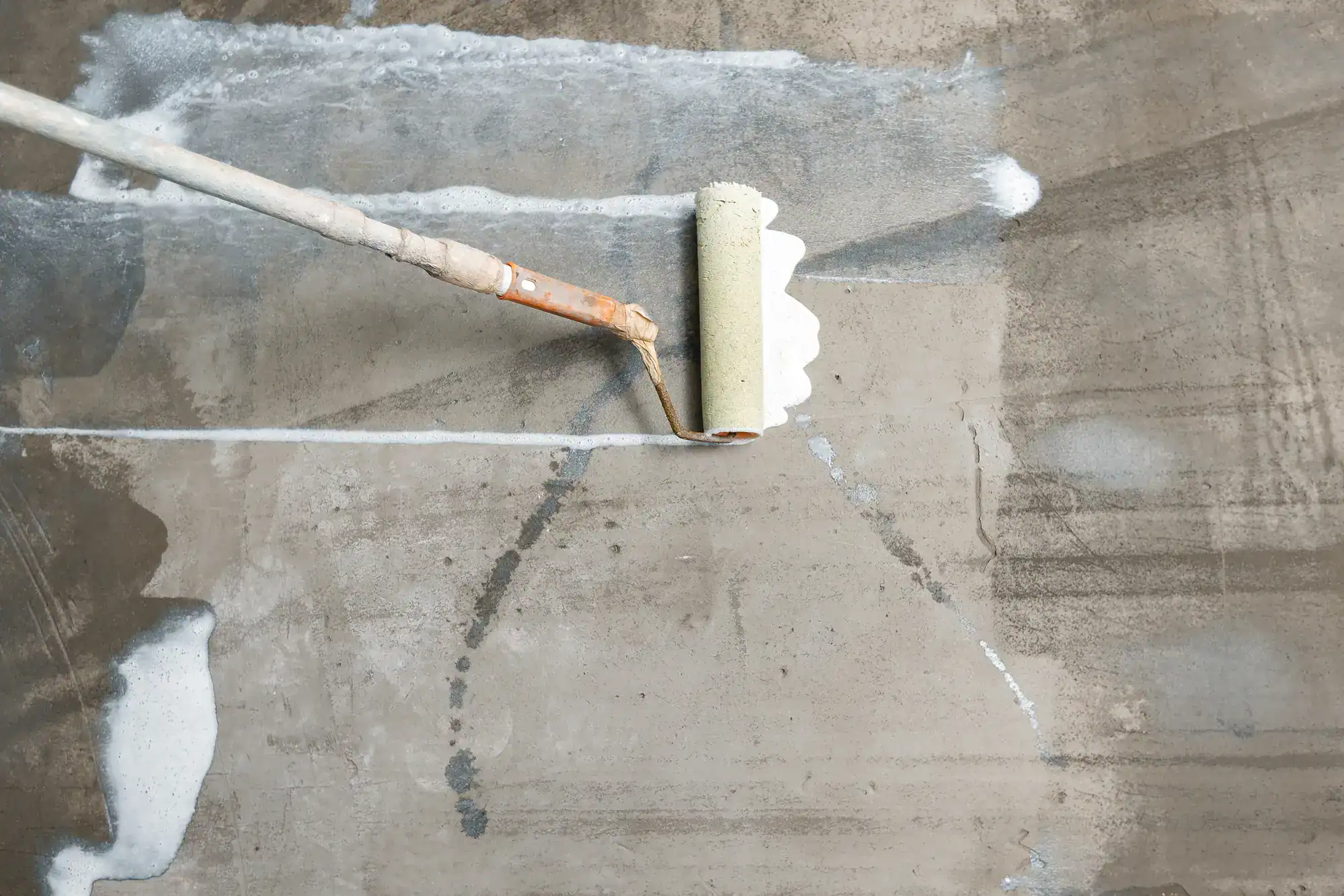
The first thing that happens on any job in East Patchogue is a moisture test. Given the proximity to the Swan River and Patchogue Bay, moisture vapor transmission through concrete slabs is a documented, recurring issue in this area not a theoretical one. Skipping that test is the single most common reason epoxy floors fail on the South Shore. Before anything else is specified, the slab gets tested.
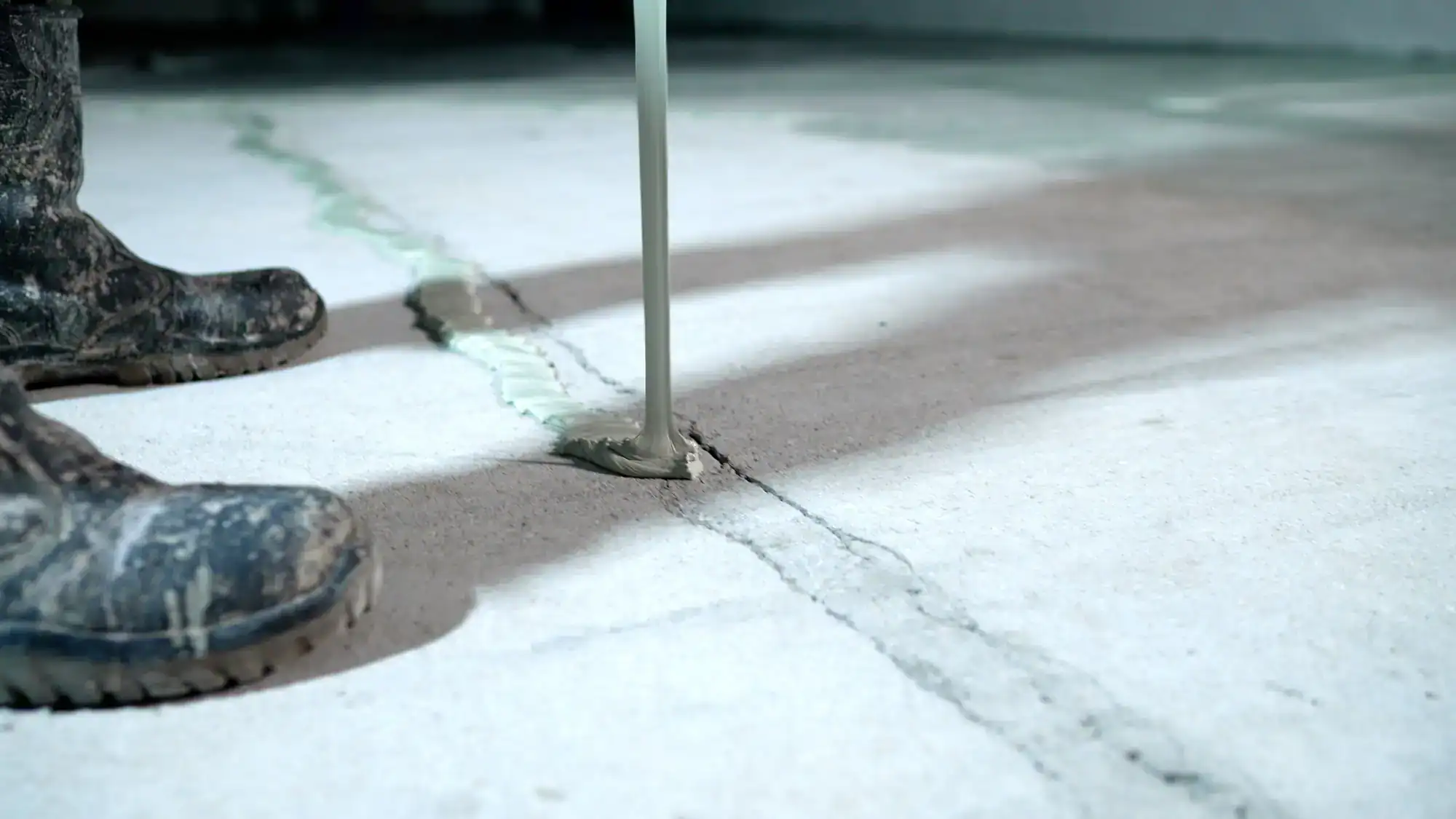
After moisture is assessed, we prepare the surface using diamond grinding not acid etching, not a pressure wash. Diamond grinding creates the concrete surface profile that industrial-grade epoxy systems need to bond correctly. It removes old coatings, levels surface irregularities, and opens the slab in a way that nothing else replicates. This step alone separates a floor that lasts 15 years from one that starts peeling in 18 months. If there’s crack repair or surface patching needed and on a 60-year-old East Patchogue slab, there usually is we handle that before any coating goes down.
From there, the system is specified to the actual demands of your space. A commercial kitchen near the Patchogue restaurant corridor gets a different spec than a warehouse bay on the Sunrise Highway service road. Curing timelines are scheduled around ambient conditions epoxy application windows narrow when South Shore summer humidity climbs, and your installation gets timed accordingly. For commercial clients who can’t afford extended downtime, we offer overnight installation. You close, our crew arrives, and you open on schedule.
Ready to get started?
There’s no single epoxy system that works for every facility in East Patchogue. A food service floor has to meet USDA compliance standards and handle the thermal shock of commercial kitchen cleaning cycles. A warehouse floor on the Sunrise Highway corridor has to hold up under forklift axle loads and pallet jack traffic without cracking or delaminating. An automotive service bay needs chemical resistant epoxy finishes that won’t absorb oil, hydraulic fluid, or battery acid. A healthcare facility has its own set of ADA, OSHA, and infection control requirements. Each of those environments gets a system built for it not a generic spec applied across the board.
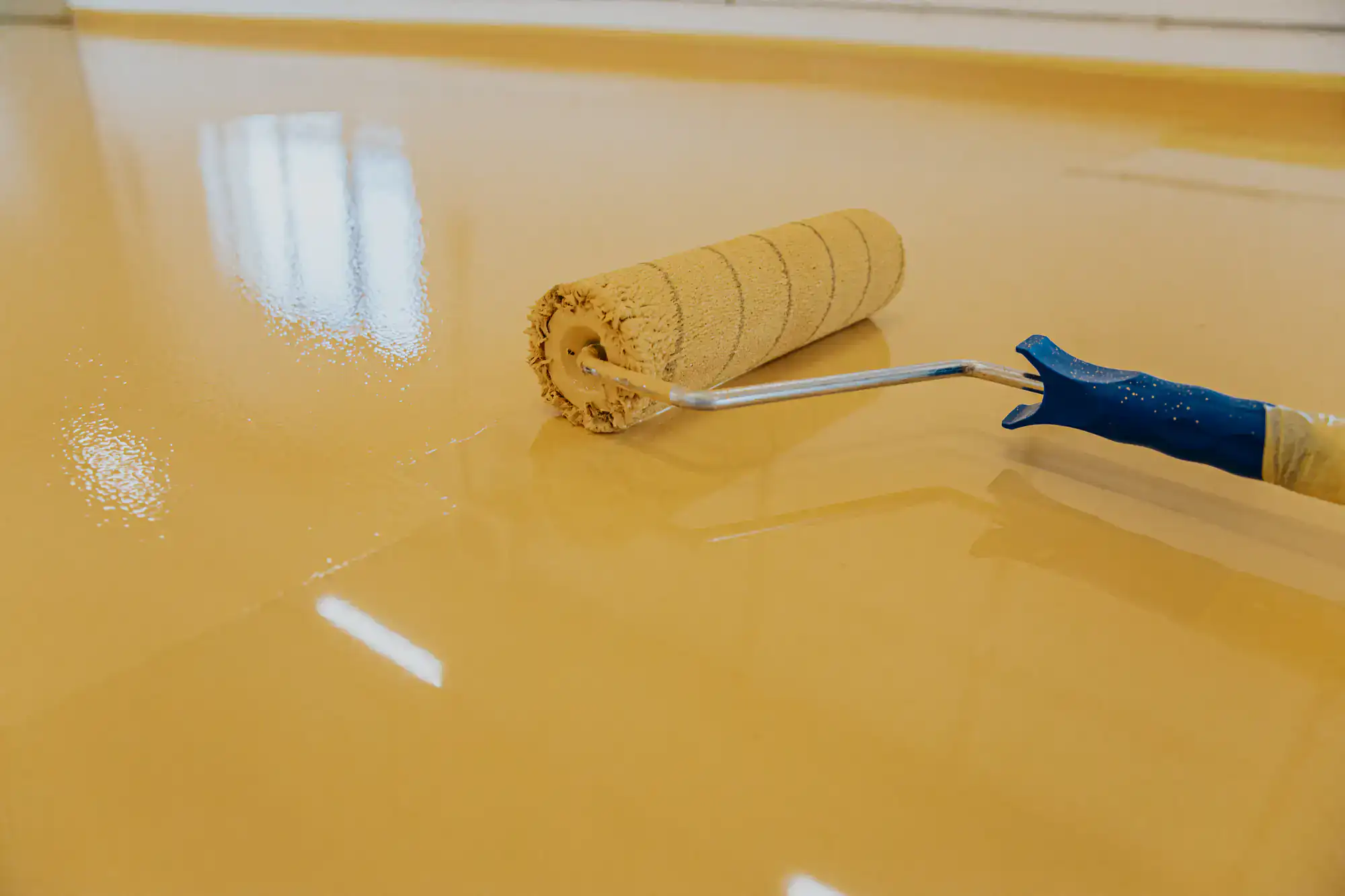
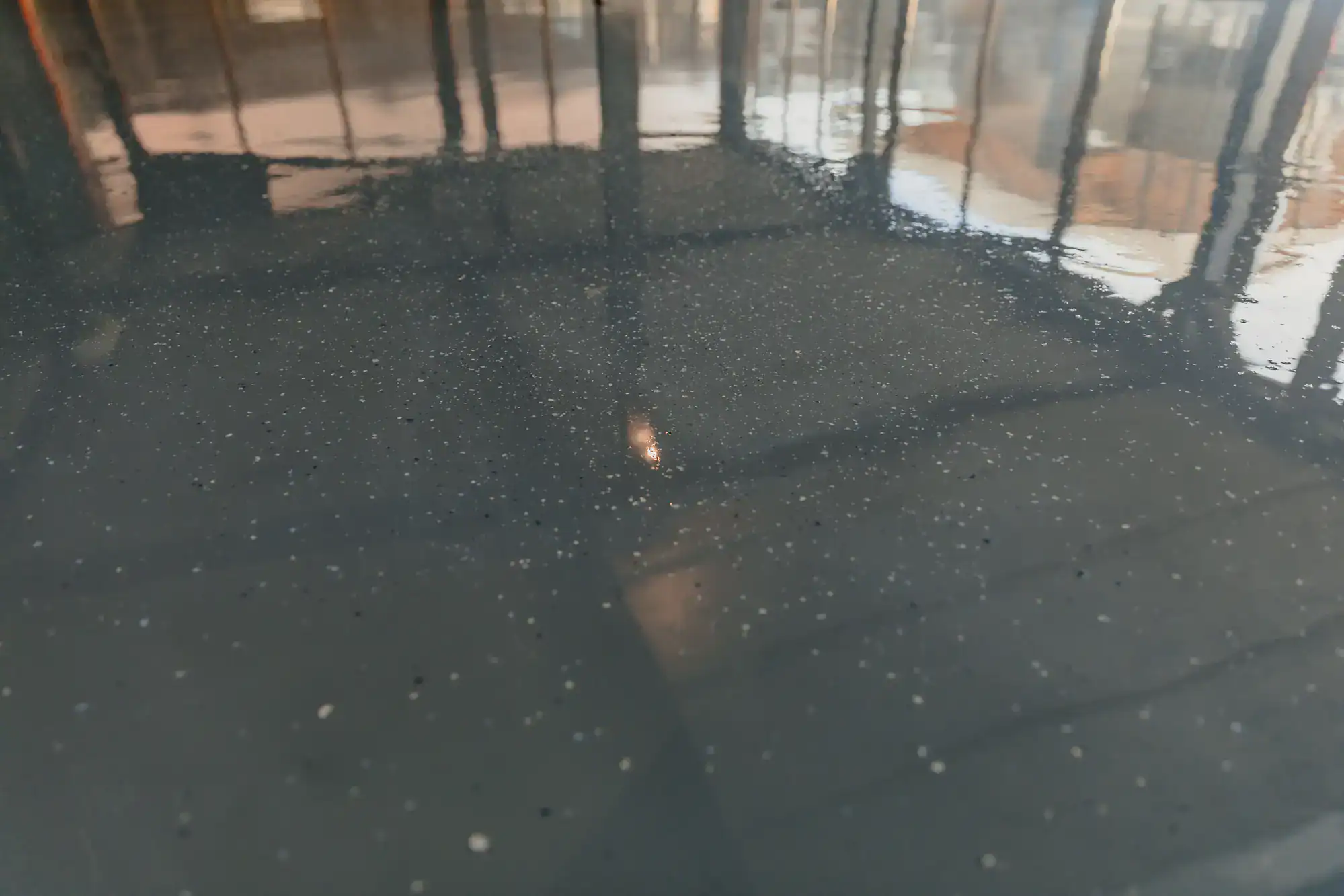
For heavy-duty industrial applications, we specify systems at 14 to 30 mils of dry film thickness, with quarter-inch mortar trowel systems available for the most demanding loads. For commercial kitchens and food service environments, we install seamless resinous floor coatings that eliminate every grout line and joint where bacteria accumulates the same approach that meets Suffolk County Department of Health Services standards. For high traffic commercial epoxy applications in retail and hospitality spaces, we use polyaspartic topcoats for their UV stability, abrasion resistance, and slip-resistance retention when wet.
The products we install on every job come from Sherwin-Williams High Performance Flooring and Res Tech manufacturer-certified systems, not off-the-shelf materials. That certification matters because it means the products are being applied by someone trained by the manufacturer to apply them correctly, and there’s a manufacturer-backed warranty behind the work not just a contractor’s word.
The most common reason is moisture vapor transmission and East Patchogue has more of it than most places in Suffolk County. The hamlet sits adjacent to Great South Bay, the Swan River runs through it, and groundwater tables in this area run consistently high. Moisture vapor moves upward through concrete slabs constantly, and if a contractor doesn’t test for it before installing, the epoxy loses its bond to the slab from underneath. The result is bubbling, blistering, and delamination usually within the first year.
The second most common reason is inadequate surface preparation. Acid etching creates an inconsistent surface profile that doesn’t give industrial-grade epoxy systems the adhesion they need. Diamond grinding is the correct method, and it’s the method we use on every job. If the contractor you’re talking to doesn’t mention moisture testing and diamond grinding in the same breath, that’s worth paying attention to before you sign anything.
A properly specified and installed 100% solids industrial epoxy system lasts 10 to 20 years with normal maintenance. That range depends on the traffic load, the environment, and how well the surface preparation was done. In a South Shore environment like East Patchogue where humidity runs higher than inland Suffolk County towns and coastal storm events can push moisture through slabs getting the prep and specification right from the start has a direct impact on where in that range your floor lands.
The lifecycle cost math is straightforward. A professional system installed at $7 to $12 per square foot that lasts 15 years costs less per year than a consumer-grade system at $3 to $5 per square foot that fails in two years and requires full removal and reinstallation. The removal alone often costs as much as the original installation. When you run those numbers, the decision tends to get a lot clearer.
The core difference is in the product specification and film thickness. Residential systems the kind sold at big box stores or offered by contractors who primarily do garage floors typically cure to 3 to 8 mils of dry film thickness. Commercial and industrial systems are specified at 14 to 30 mils, with mortar trowel systems going even thicker for the heaviest loads. The chemistry is also different: 100% solids industrial epoxy has no solvents, which means it cures denser and bonds more aggressively to a properly prepared slab.
For East Patchogue homeowners with aging ranch homes and Cape Cods, the residential system question usually comes down to garage floors and basement slabs. Those 1940s and 1960s pours have had decades of moisture exposure, and they often need more prep work than a newer slab. The system that gets specified for your floor should reflect what that specific slab actually needs not what’s easiest to install or cheapest to quote.
Yes and for food service businesses in and around the Patchogue area, this is usually the deciding factor. We install commercial kitchen epoxy flooring overnight. Our crew arrives after you close, completes the installation, and the floor is ready for your opening the next morning. The system used is a seamless resinous coating that meets USDA compliance standards, handles the thermal shock of commercial kitchen cleaning cycles, and eliminates the grout lines that tile creates the same lines that harbor bacteria and create ongoing maintenance headaches.
The key is scheduling. Epoxy application has humidity and temperature windows, and South Shore summer nights can push ambient humidity toward the upper threshold for application. Installations are scheduled with those conditions in mind. That’s not a limitation it’s part of working in a coastal environment correctly, and it’s something a contractor with 35 years on Long Island knows how to navigate.
For most standard commercial epoxy flooring installations surface preparation, coating application, and topcoat a separate building permit specific to the flooring work is not typically required. However, East Patchogue is an unincorporated hamlet within the Town of Brookhaven, so any structural floor repairs, modifications to the slab, or work that intersects with other building systems would fall under Brookhaven Building Department oversight. If your project involves significant crack repair, slab leveling, or work within a food service or healthcare facility that requires health department sign-off, that’s handled through the appropriate Suffolk County and Town of Brookhaven channels.
The practical answer for most commercial clients is that the permitting landscape for epoxy flooring in East Patchogue is straightforward but it depends on the scope of the job. After 35 years of commercial work in Suffolk County, we know what triggers a permit requirement and what doesn’t, and that gets sorted out before the project starts, not after.
The right system depends on three things: what the slab is actually doing, what the space is used for, and what the environment is putting it through. A warehouse on the Sunrise Highway service road with daily forklift traffic needs a completely different specification than a retail space on Route 27A or a commercial kitchen near the Patchogue waterfront district. Those environments have different load requirements, different chemical exposures, different hygiene standards, and different moisture profiles.
The assessment starts with a site visit looking at the slab condition, testing for moisture, understanding the operational demands of the space, and then specifying a system that matches all of that. There’s no standard package that gets applied to every job. The South Shore environment, the age of the building stock in East Patchogue, and the specific use of your facility all factor into what we install. That’s the conversation worth having before any numbers are put on paper.
Other Services we provide in East Patchogue