
East Patchogue sits at 23 feet above sea level. The Swan River runs south through the hamlet, the Great South Bay is right there, and the water table in lower-elevation streets near Conklin Avenue and Pine Neck Avenue is closer to the surface than most people realize. That matters enormously when you’re talking about a concrete subfloor. Moisture vapor migrates upward through slabs constantly in this kind of environment, and if it isn’t measured and addressed before any self leveling material goes down, you’re looking at delamination, cracking, and a floor that fails within months not years.
Then there’s the winter. Long Island’s freeze-thaw cycle isn’t gentle. Temperatures swing from the teens to the mid-40s within days, and every time that happens, water inside your concrete expands, pushes, and widens whatever cracks are already there. For homes built in the 1940s, 50s, and 60s which make up a significant portion of East Patchogue’s housing stock those slabs have been through 60 to 80 years of that. The unevenness you’re seeing isn’t random. It’s the result of real physics working on real concrete over a long time.
What you get after a properly executed self leveling job is a flat, stable surface that your new tile, vinyl plank, or hardwood can actually bond to and stay bonded to. No lippage. No hollow spots. No installer coming back six months later saying the floor moved. When the prep is done right and the product is matched to the actual conditions of your slab, the result holds through South Shore winters, through humidity season, through all of it.
We’re based in Bohemia, NY about ten miles west of East Patchogue on Sunrise Highway. This isn’t a national brand dispatching a crew that’s never worked a South Shore job. We’re a Suffolk County operation that’s been doing this work since 1996, on the same kinds of post-war slabs, coastal foundations, and commercial floors that exist right here in East Patchogue and throughout Brookhaven.
Danny Harmer, our president and CEO, brings over 40 years of hands-on installation experience to every project. Most of our crew has been with us for more than a decade. We’re OSHA 40 certified, factory-trained in cementitious and advanced resinous systems, and we hold an A+ rating with the Better Business Bureau. That’s not a marketing stack it’s just what 30 years of doing the work correctly looks like.
We’ve installed floors across the country, internationally, and yes in the White House kitchen in 1996. But the job in front of us right now is yours, and that’s where our focus goes.
It starts with the slab assessment. Before anything is mixed or poured, we test the concrete for moisture relative humidity to ASTM F2170 standards and moisture vapor emission rate against the 5 lbs./1,000 sq. ft./24-hour threshold. In East Patchogue, especially in homes near the Swan River corridor or on the lower-elevation streets close to Patchogue Bay, this step isn’t a formality. It’s the step that determines whether the job will last. If the slab is too wet, we address that condition first. No exceptions.
Once the slab clears moisture testing, surface preparation begins. That means grinding, crack repair, and priming the work that most people never see but that makes everything else stick. The primer creates the bond layer between your existing concrete and the self leveling underlayment. Skip it or rush it, and the underlayment separates. Do it right, and the system performs the way it’s supposed to.
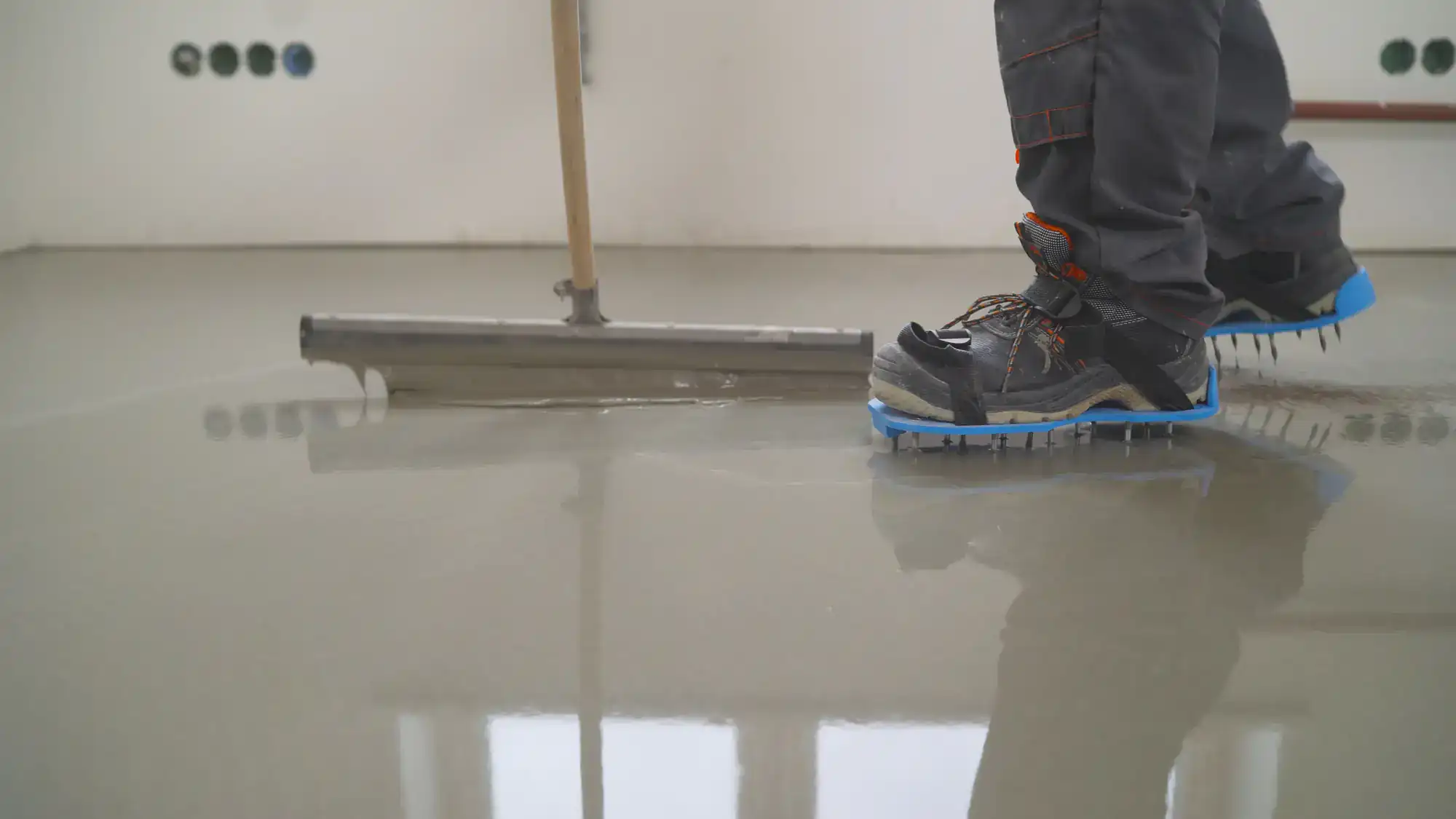
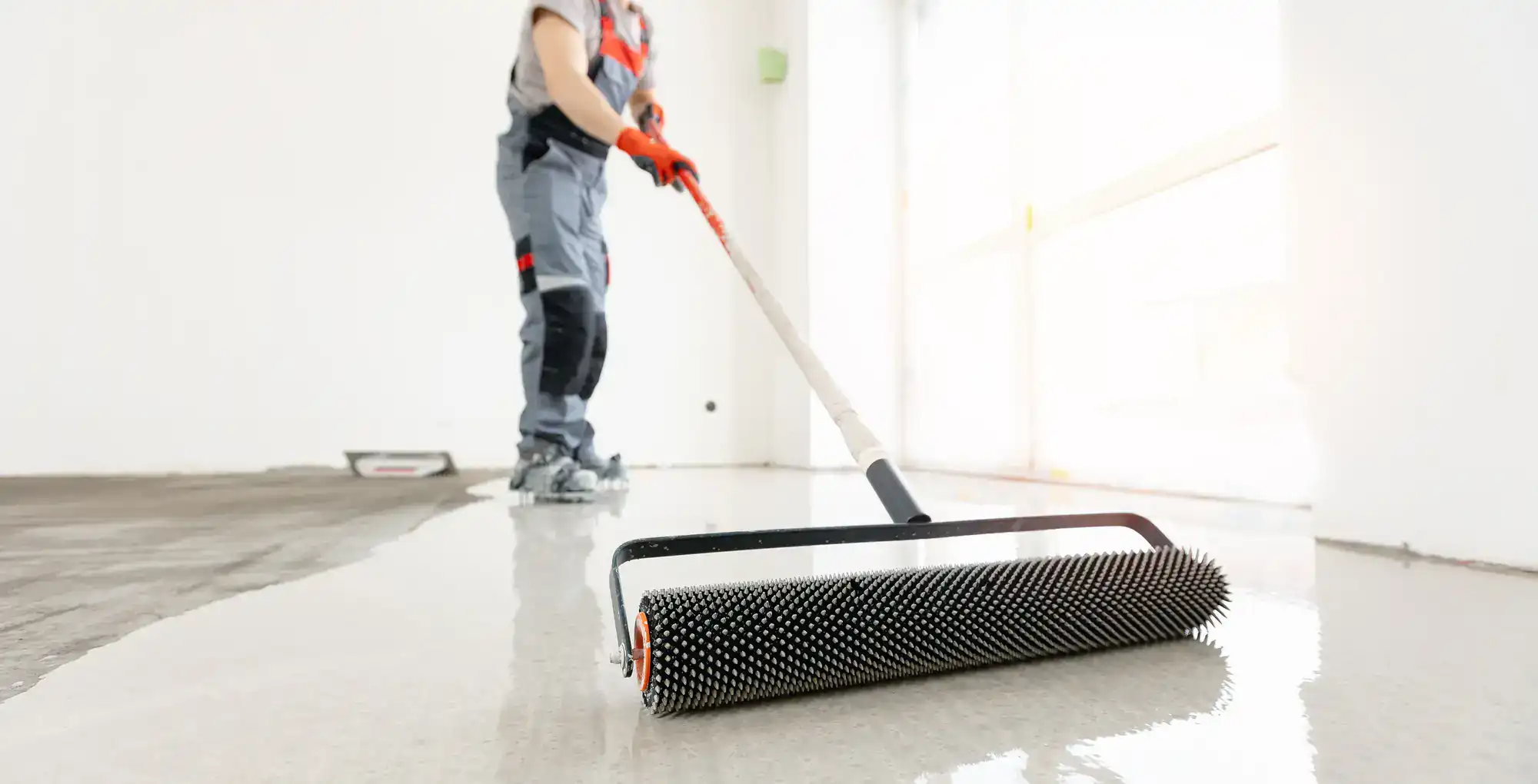
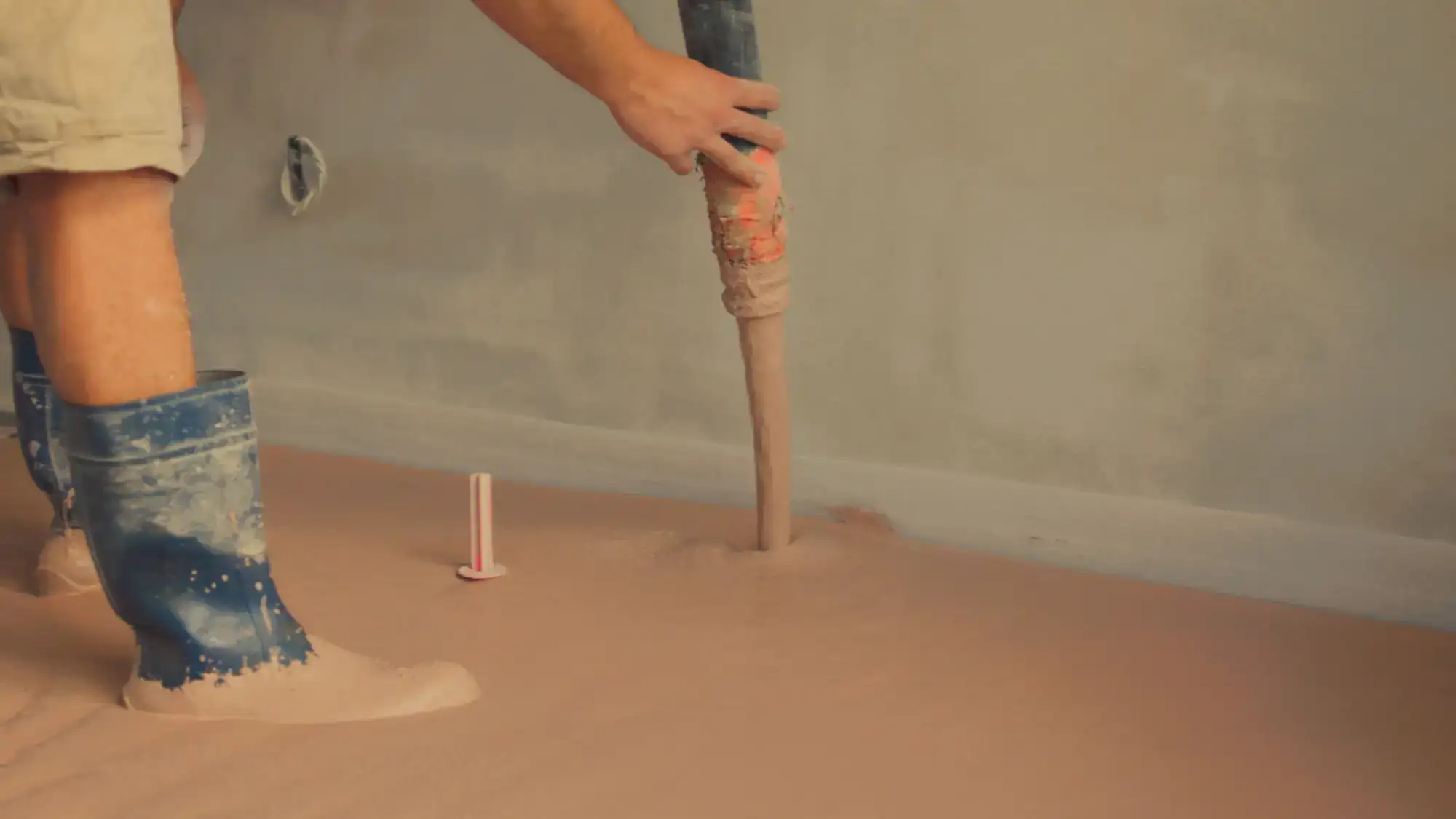
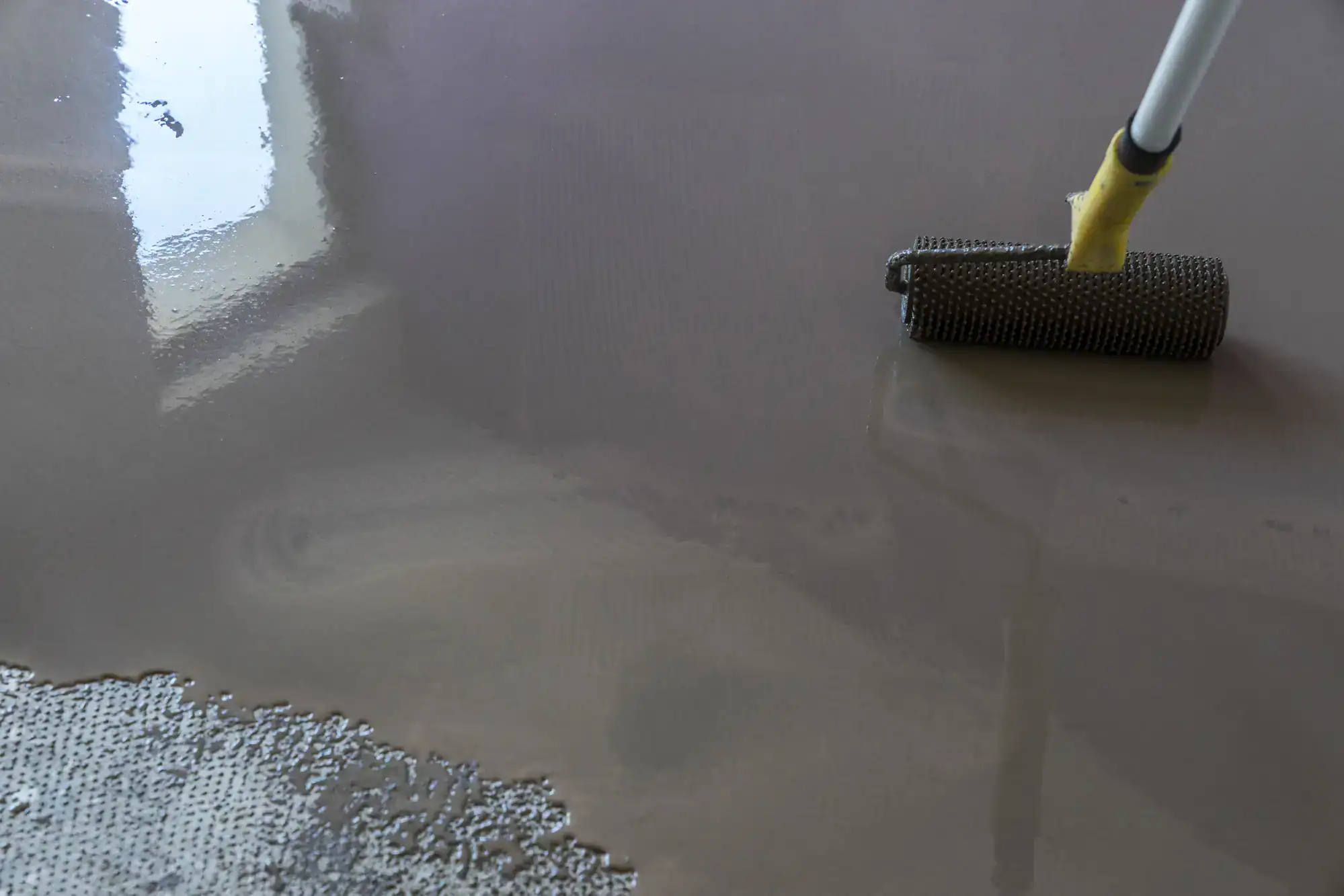
The pour itself uses a high-strength, polymer-modified cementitious underlayment with a long working time and low shrinkage characteristics important in a coastal climate where temperature and humidity fluctuate. The system installs from a quarter inch up to two inches neat, and up to five inches with aggregate, so whatever correction depth your slab needs, it’s handled in one mobilization. Foot traffic is typically possible within four to six hours. For commercial spaces along the Montauk Highway corridor, that kind of turnaround matters. You’re not losing a week of business to a floor project.
Ready to get started?
One of the most common ways a self leveling project goes sideways is the handoff. One contractor pours the underlayment, a different contractor installs the final floor, and when something fails, they point at each other. We eliminate that entirely. We handle moisture testing, concrete preparation, the self leveling underlayment pour, and the final floor system all under one roof, one standard, one point of accountability.
For residential projects in East Patchogue, that typically means correcting slabs in basements, main-level living areas, and garages before new tile, luxury vinyl plank, or hardwood goes down. For commercial floor leveling solutions in East Patchogue, the scope often includes higher-traffic environments retail spaces along East Main Street, food service and kitchen floors, and facilities in the healthcare-adjacent commercial corridor near Brookhaven Memorial Hospital Medical Center. Healthcare and institutional environments have specific flatness tolerances and load requirements, and we understand how to meet them.
The self leveling underlayment commercial work we perform in East Patchogue is spec-driven, not approximate. We select the product based on the actual conditions of the slab depth of correction needed, moisture levels, substrate type, and what the final floor covering requires. If your project involves a below-grade slab in a low-lying area near the water, that changes the product selection and the prep protocol. That’s the kind of decision-making that comes from 30 years of real-world Suffolk County installations, not a sales sheet.
Yes and it’s one of the most important things to get right before any pour happens in East Patchogue. The hamlet’s low elevation and proximity to the Swan River, Patchogue Bay, and the Great South Bay mean the water table sits close to the surface in many parts of the area. That translates directly to moisture vapor moving upward through concrete slabs, particularly in below-grade spaces and older slab-on-grade construction.
If a self leveling underlayment is poured over a slab that’s too wet, the material won’t bond properly. It may look fine initially, but within months you’ll see cracking, bubbling, or full delamination. The fix is to test before you pour relative humidity testing to ASTM F2170 standards and moisture vapor emission rate testing against the 5 lbs./1,000 sq. ft./24-hour threshold. If the slab exceeds those limits, we address the moisture condition first. That’s not optional in a South Shore environment like East Patchogue. It’s the foundation of a floor that actually holds.
It depends on how much correction the slab actually needs, which is why a proper assessment matters before anyone starts talking numbers. For most residential basement floors in East Patchogue particularly in homes built in the 1940s through 1960s that have been through decades of freeze-thaw cycling the correction depth typically ranges from a quarter inch for minor surface irregularities up to two inches or more for slabs with significant settlement or damage.
The system we use installs from a quarter inch to over two inches neat, and up to five inches when aggregate is added. That covers the full range of what you’re likely to encounter in East Patchogue’s older housing stock without needing a second visit or a second contractor. The key is matching the product and depth to what the slab actually requires not defaulting to a standard pour and hoping it’s enough. A proper slab assessment before the job starts tells you exactly what you’re working with.
For most self leveling underlayment systems, light foot traffic is possible within four to six hours of the pour. But that’s not the same as being ready for flooring installation. Most manufacturers specify a waiting period of 16 to 24 hours before installing tile, vinyl plank, or hardwood over the cured underlayment and in some cases longer, depending on the product, the pour depth, and the ambient conditions in the space.
In East Patchogue, temperature and humidity matter here. Cold weather slows the curing chemistry, and the coastal humidity that comes with being close to the Great South Bay can extend dry times if the space isn’t properly conditioned. Winter pours in unheated commercial spaces along the Montauk Highway corridor, for example, require temperature management to hit the manufacturer’s minimum installation thresholds. We account for these conditions when scheduling the work not just when mixing the material. If your project has a hard deadline for flooring installation, that timeline needs to be part of the conversation before the pour date is set.
In most cases, yes but the existing concrete has to be properly prepared first. Self leveling underlayment bonds to the substrate beneath it, so if that substrate is dusty, contaminated with old adhesive, painted, or structurally unsound, the bond will fail regardless of how good the product is. Surface preparation grinding, cleaning, crack repair, and priming is what makes the system work over existing concrete.
For East Patchogue homes with post-war slabs, you’re often dealing with concrete that has surface scaling, hairline cracking from decades of freeze-thaw cycling, or old adhesive residue from previous flooring installations. None of that is disqualifying on its own, but it all has to be addressed before the underlayment goes down. The primer layer in particular is critical it creates the chemical bond between the old concrete and the new material. A self leveling pour over unprimed or poorly prepped concrete is a pour that’s going to fail. Do the prep, and the system performs the way it’s designed to.
Concrete patching is a spot repair you’re filling a specific crack, hole, or low area with a repair mortar. It’s appropriate for isolated damage, but it doesn’t create a uniformly flat surface across the entire floor. If you’re preparing a slab for a new floor covering, patching individual spots and calling it done usually isn’t enough. The transitions between patched and unpatched areas create high and low points that show up through the finished floor over time, especially with thinner materials like luxury vinyl plank.
Self leveling underlayment is a full-surface correction. It flows across the entire slab, finds its own level, and creates a continuous, flat substrate that a floor covering can bond to uniformly. For East Patchogue homeowners getting ready to install new flooring over aging concrete, self leveling is typically the right call not because patching is bad, but because the goal is a flat floor from wall to wall, not a series of individually repaired spots. If there are structural cracks or significant damage, we repair those first, and then the self leveling goes over the top.
The range for a professional self leveling concrete job typically runs from around $750 on the low end for smaller, straightforward pours to $4,000 or more for larger spaces, deeper corrections, or projects that require significant moisture mitigation before the underlayment can go down. The biggest variables are square footage, the depth of correction needed, the condition of the existing slab, and whether moisture testing reveals a problem that has to be addressed first.
In East Patchogue specifically, the moisture factor is worth understanding before you get quotes. Homes near the Swan River corridor or on lower-elevation streets close to the bay are more likely to have elevated slab moisture levels, which can add a mitigation step to the project scope. That’s not a reason to avoid the work it’s a reason to get the slab tested before you commit to a number. A contractor who quotes you without testing the slab first is quoting you without knowing what the job actually involves. The testing is what makes the price honest, and it’s what separates a floor that lasts from one that has to be redone.
Other Services we provide in East Patchogue