
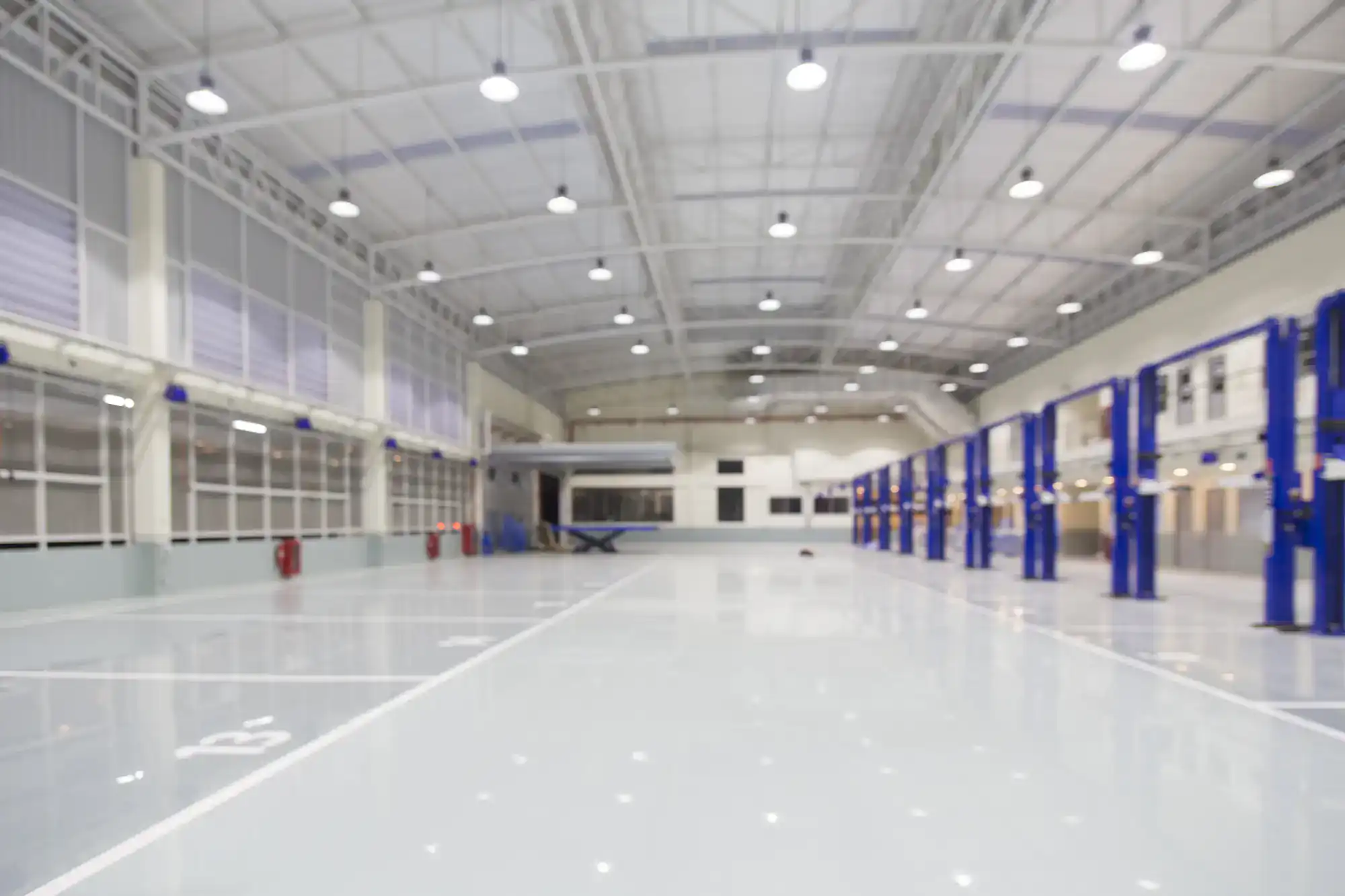
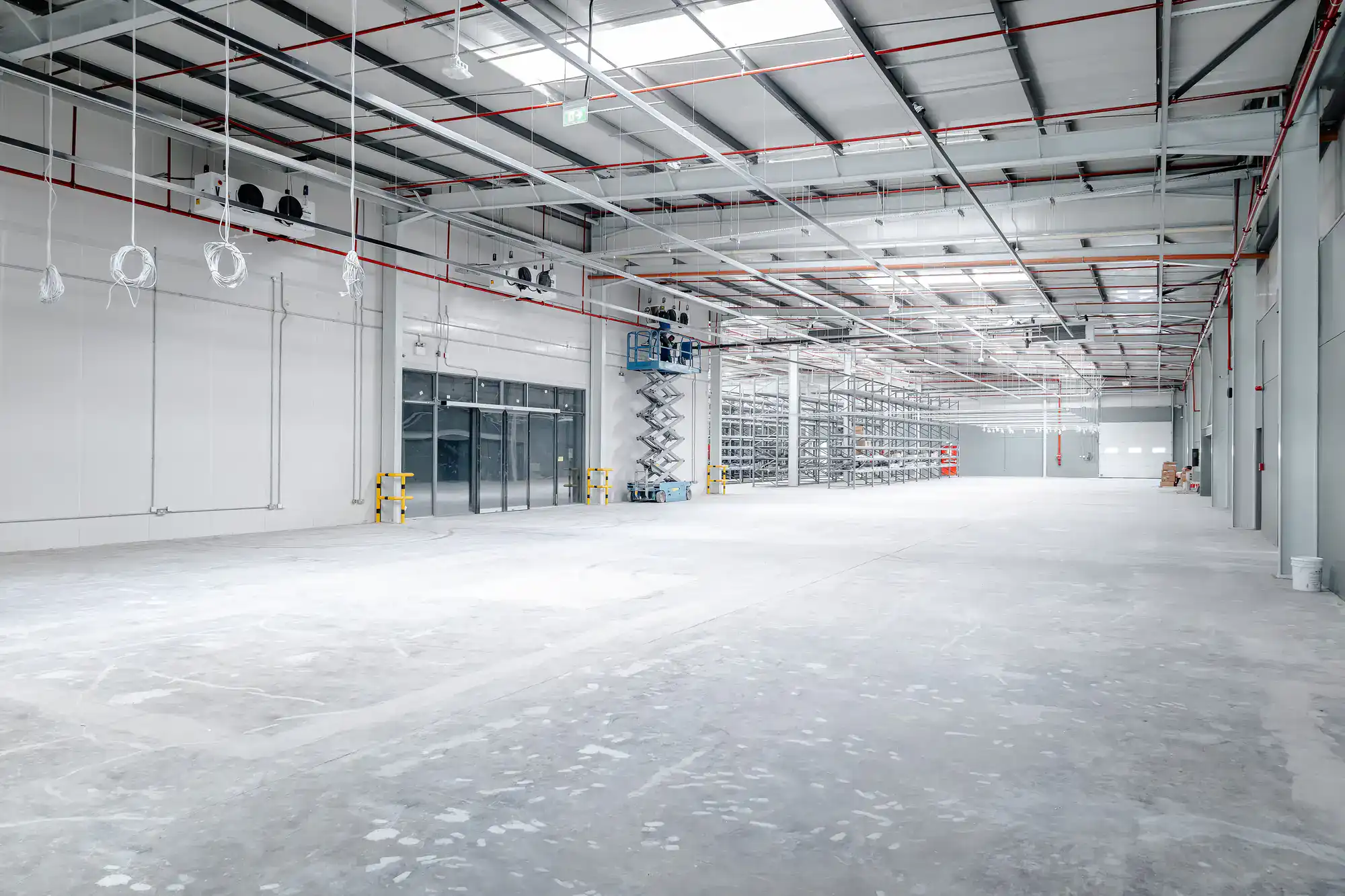
Most hangar floor failures on Long Island’s South Shore come down to two things: the wrong product and skipped prep. Coastal humidity along the Great South Bay drives moisture vapor up through concrete slabs year-round and if that wasn’t tested and addressed before the coating went down, delamination isn’t a question of if, it’s when. A properly installed aviation-grade system seals that slab, stops fluid infiltration, and actually extends the structural life of your concrete.
Inside an active hangar near Brookhaven Calabro Airport, your floor takes a beating that a standard commercial coating was never designed to handle. Jet fuel, Skydrol hydraulic fluid, heavy rolling loads from aircraft and ground support equipment these aren’t occasional spills, they’re routine. The right aircraft hangar floor coating in East Patchogue, NY holds up to all of it without staining, softening, or peeling at the edges.
There’s also a safety angle that doesn’t get talked about enough. A high-gloss, light-colored floor reflects overhead lighting and makes spills, dropped tools, and foreign object debris immediately visible. Pilots and mechanics working in low-light conditions know the difference. It’s not aesthetics it’s how you keep a working hangar safe.
We’re based in Bohemia, NY about ten to twelve miles west of East Patchogue along Sunrise Highway. That’s not a detail we mention just to sound local. It means we know the South Shore climate intimately, we understand what salt air from the Great South Bay does to concrete over time, and we can be on-site for a pre-installation assessment without a cross-country logistics operation.
Danny Harmer, our President and CEO, has over 40 years of hands-on installation experience. We’ve been operating for more than 30 years, hold dual certifications from Sherwin-Williams High Performance Flooring and Res Tech, and every installer on our crew carries OSHA 40 certification which matters in aviation environments where workplace safety isn’t optional. Most of our field team has been with us for over a decade. Our named supervisors Javier, Eduardo, and Fredith bring more than 40 combined years in the field.
We’ve installed floors across the country, in the Bahamas, in Moscow, and in the White House kitchen in 1996. We’re not telling you that to impress you we’re telling you because when accountability is absolute, the process has to be right. That’s the same standard we bring to every hangar floor in Suffolk County and throughout East Patchogue.
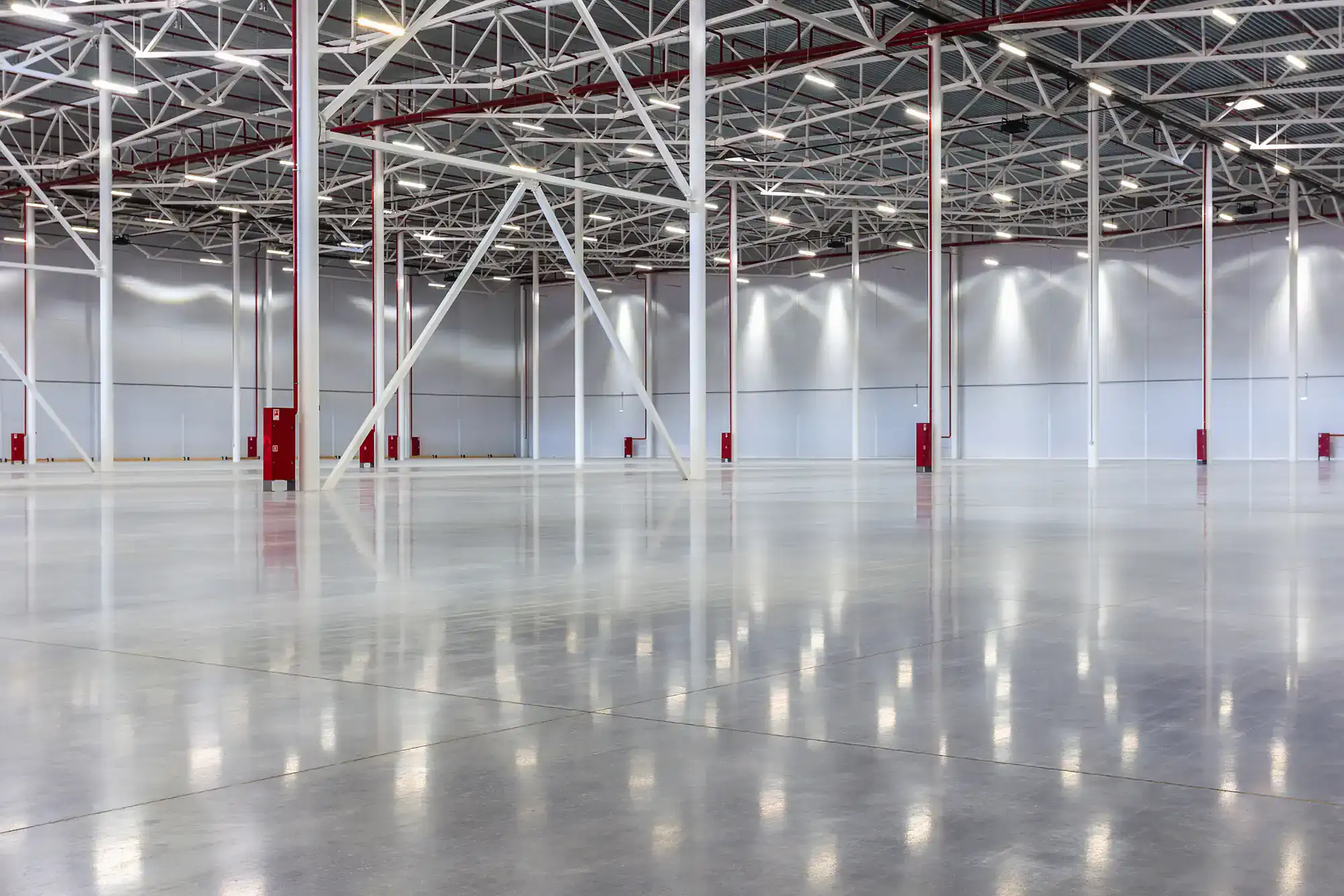
Before anything goes on the floor, we test for moisture. This isn’t a formality in East Patchogue and along the South Shore, concrete slabs near the Great South Bay regularly show elevated moisture vapor transmission readings, especially in spring after winter accumulation. Skipping this step is the single most common reason epoxy floors fail in coastal environments. If the numbers call for a moisture mitigation primer, that goes down first.
Once moisture is addressed, the concrete gets mechanically diamond ground to create the right surface profile for adhesion. No grinding means no real bond and in a hangar with aircraft jack points, rolling loads, and chemical exposure, a coating that wasn’t properly anchored to the concrete will eventually let go. After grinding, we apply a primer, a build coat, and a topcoat in sequence, allowing each layer to fully cure before the next one goes down. That cure discipline is what separates a floor that lasts from one that looks fine for eighteen months and then starts lifting at the seams.
For hangar operators at Brookhaven Calabro Airport who can’t afford extended downtime, we offer polyaspartic systems that return your hangar to service within 24 hours of completion. If your project falls under the Town of Brookhaven’s building permit requirements for commercial facility modifications, we’ll walk you through what that coordination looks like before the job starts no surprises.
Ready to get started?
The flooring systems we install for aircraft hangars in East Patchogue, NY aren’t pulled from a general commercial catalog. Aviation facility epoxy flooring has to meet NFPA 409 the federal standard that requires hangar floor surfaces in aircraft storage and servicing areas to be noncombustible. Most standard epoxy products used by general flooring contractors don’t meet that requirement. Ours do. For FBO operators and commercial hangar owners at Brookhaven Calabro Airport, that compliance isn’t a bonus feature it’s a baseline that affects your insurance, your code standing, and your liability exposure.
Every system we install includes a full multi-coat build: primer, body coat, and a topcoat with verified slip resistance that meets the National Flooring Safety Institute’s requirements. That non-slip rating is tested and certified, not just a textured finish someone added at the end. For aircraft maintenance bay flooring specifically, we specify coatings with documented resistance to Skydrol, jet fuel, lubricants, and the industrial solvents used in routine maintenance because those are the actual chemicals your floor will see.
If you’re weighing epoxy versus polyaspartic for your hangar, the short version is this: polyaspartic systems cure faster, handle UV exposure better near large door openings, and carry a longer service life often 15 to 20 years versus 5 to 7 for standard epoxy. For a working hangar near the South Shore, where salt air and humidity are constant, that extended durability is worth the conversation.
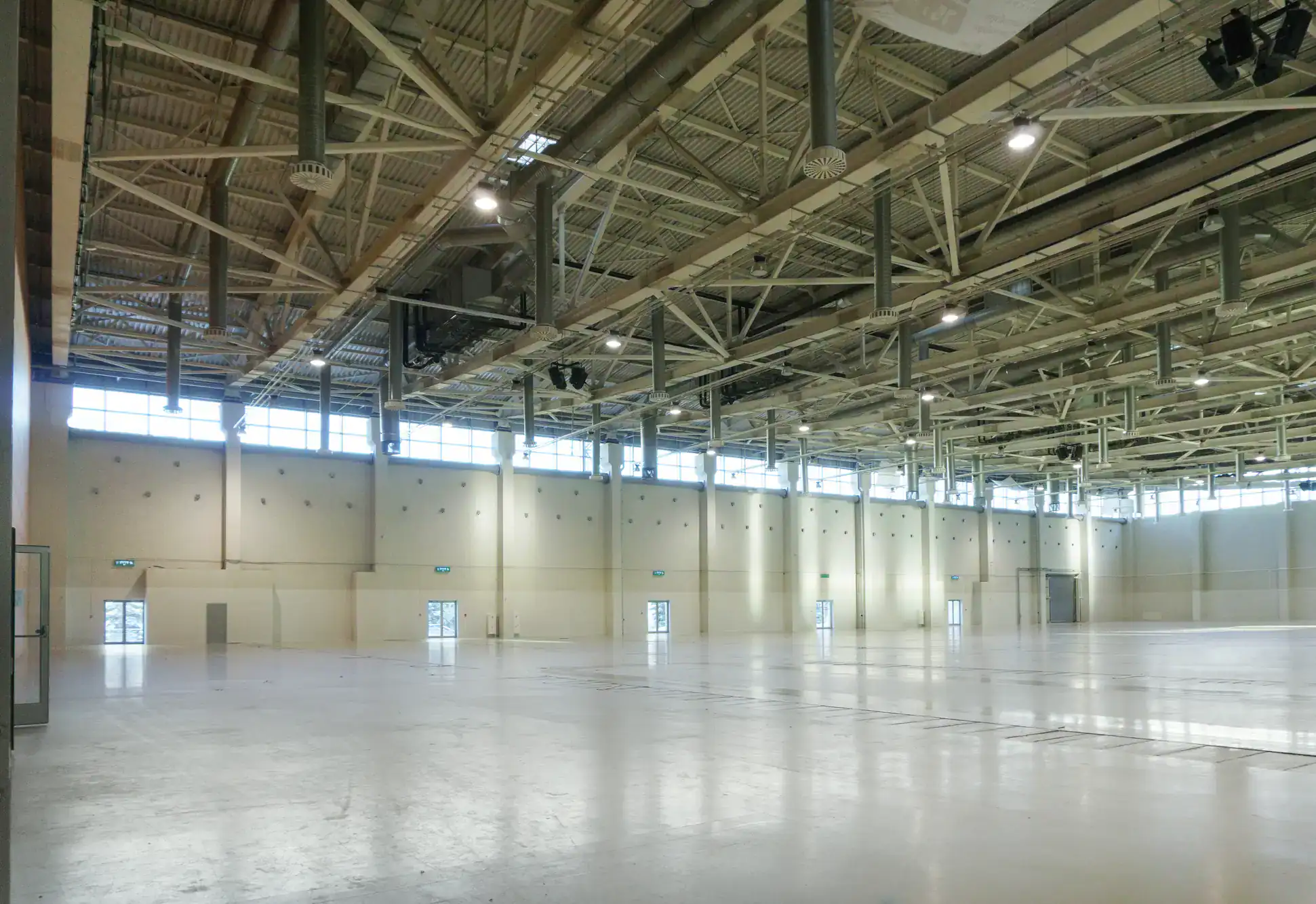
Yes and this is one of the most important questions to ask before you hire anyone to coat your hangar floor. NFPA 409 is the federal standard governing aircraft hangars, and it specifically requires that floor surfaces in aircraft storage and servicing areas be noncombustible. This applies to commercial hangars at Brookhaven Calabro Airport and throughout the Town of Brookhaven, regardless of whether you’re leasing a T-hangar or operating a full FBO facility.
The problem is that many general flooring contractors in the East Patchogue area use standard commercial epoxy products that were never tested for noncombustibility in an aviation context. If your coating doesn’t meet the standard, you’re exposed to code violations, insurance complications, and potential liability. Before any contractor puts a product on your hangar floor, ask them specifically whether it meets NFPA 409 requirements. If they hesitate or pivot to a vague answer, that tells you what you need to know.
It’s one of the most underestimated factors in floor coating failures on Long Island’s South Shore. East Patchogue sits directly on the Great South Bay, and the ambient humidity here especially in summer runs consistently in the 65 to 80 percent range. That moisture doesn’t just sit on the surface. It works its way into concrete slabs over time, and if the moisture vapor transmission rate is too high when a coating is applied, you get delamination. The coating lifts, bubbles, or peels sometimes within a year or two of installation.
The fix is straightforward, but it requires a contractor who actually does it: moisture testing before installation, and a moisture mitigation primer if the readings call for one. We test every slab before we coat it. In a coastal environment like East Patchogue, that step isn’t optional it’s the difference between a floor that lasts a decade and one that fails before your next annual inspection.
Both are legitimate systems for aviation facility epoxy flooring, but they perform differently in ways that matter for a working hangar. Standard epoxy is durable and chemical-resistant, but it takes longer to cure typically several days before you can move aircraft back in and it can yellow or dull over time when exposed to UV light near large hangar door openings. For hangars at Brookhaven Calabro Airport that see regular sunlight through wide door openings, that UV degradation is a real consideration.
Polyaspartic systems cure fast enough to return aircraft to the hangar within 24 hours, which is a significant operational advantage for active hangars. They also hold up better under UV exposure and typically carry a longer service life 15 to 20 years versus 5 to 7 for standard epoxy. The tradeoff is that polyaspartic requires a more precise installation window and a crew that knows what they’re doing. Both systems can be specified to meet NFPA 409 noncombustibility requirements and Skydrol resistance the right choice depends on your hangar’s activity level, downtime tolerance, and budget.
For a standard T-hangar or small conventional hangar, the installation itself typically runs one to two days depending on square footage and system type. Add in cure time, and a traditional epoxy system may keep your hangar out of service for three to five days. A polyaspartic system cuts that significantly most aircraft can return within 24 hours of the final coat.
In East Patchogue, the best installation windows are late spring through early fall roughly May through October. Warmer temperatures support proper cure, and the longer daylight hours give our crew more working time. Spring installations require extra attention to moisture testing, since winter moisture accumulates in concrete slabs and can produce elevated vapor readings that need to be addressed before coating. Winter installations are possible with polyaspartic systems, which cure at lower temperatures than standard epoxy, but they require more planning and the right conditions inside the hangar. If you’re planning around the season at Brookhaven Calabro, booking in late summer or early fall typically gives you the most flexibility.
It depends entirely on how the system was specified. Not all epoxy products are formulated to resist Skydrol a phosphate ester-based hydraulic fluid used in aircraft brake and flight control systems that is aggressive enough to eat through standard coatings and permanently stain bare concrete. If your hangar sees regular maintenance work, including brake servicing, hydraulic system repairs, or any work on flight control components, your floor needs to be specified explicitly for Skydrol resistance.
The same goes for jet fuel and the industrial solvents used in routine aircraft cleaning and maintenance. We specify aircraft maintenance bay flooring systems with documented chemical resistance to these compounds not because it sounds good on paper, but because those are the actual conditions your floor will face. A coating that handles warehouse traffic but wasn’t built for aviation chemicals will show the damage within a season or two of active use. Ask any contractor you’re evaluating to show you the chemical resistance data for the specific product they’re proposing. If they can’t produce it, that’s your answer.
For aviation-grade hangar floor coatings in the East Patchogue and Brookhaven Calabro Airport area, most projects run somewhere between $4 and $8 per square foot depending on the system type, the condition of the existing concrete, and the scope of surface preparation required. A standard T-hangar at roughly 1,000 square feet might come in between $4,000 and $8,000 installed. Larger conventional hangars or FBO facilities with more square footage and more complex prep requirements will land higher.
The variable that moves the number most is the condition of your existing slab. Concrete that has significant cracking, spalling, or previous coating residue requires more prep time and materials before any new system goes down and that prep is what makes the coating last. Skipping it to save money on the front end typically means paying to redo the floor in three to four years. On Long Island, where the cost of living runs well above the national average and hangar lease rates reflect that, the math on doing it right the first time is usually straightforward. We assess every slab before quoting, so you get a number that reflects your actual floor not a ballpark based on square footage alone.
Other Services we provide in East Patchogue