

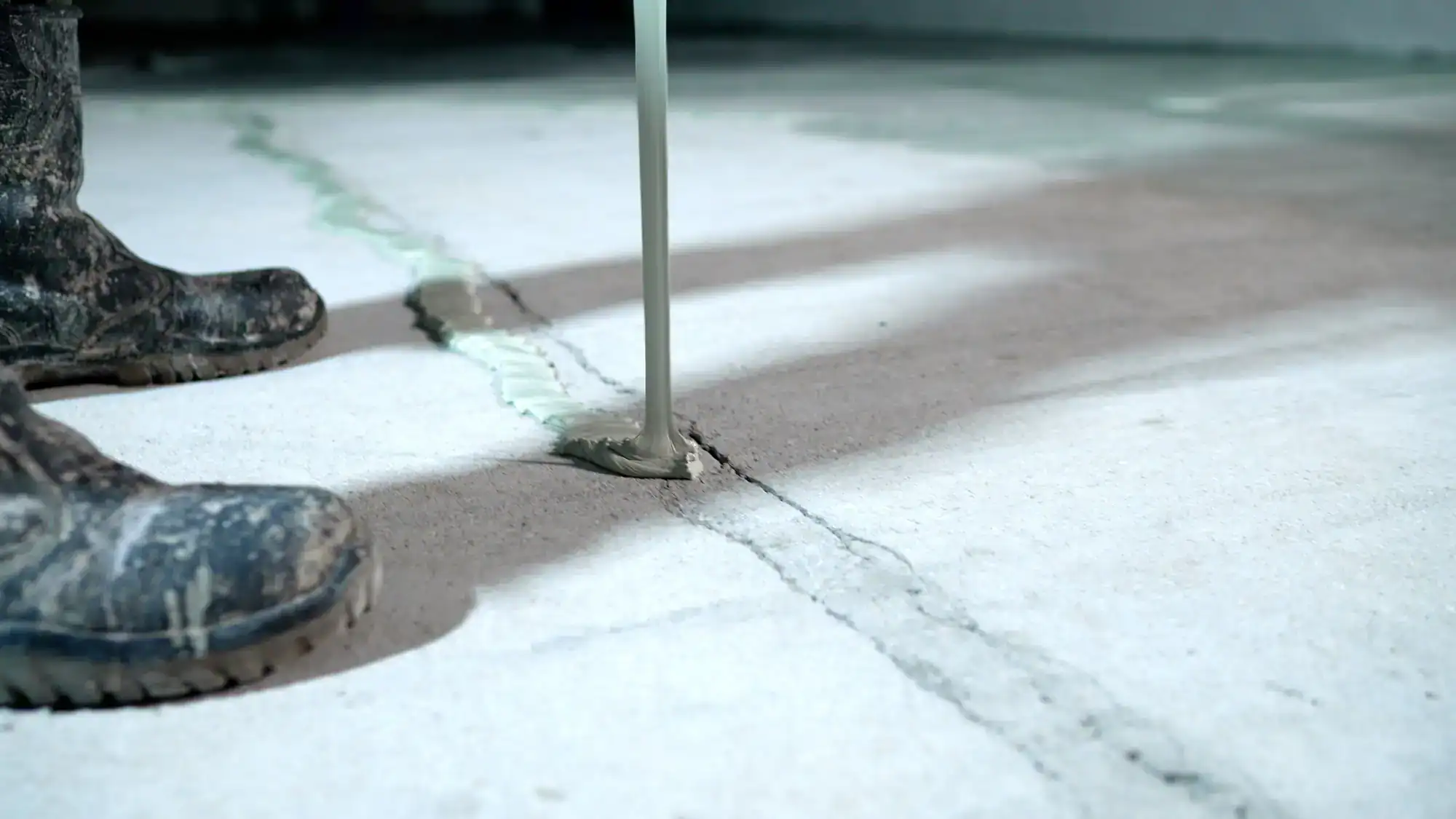
Most epoxy floors don’t fail because of the coating. They fail because nobody tested the slab first. Deer Park’s housing and industrial stock was largely built in the 1960s concrete poured before vapor barriers were standard, on ground that holds moisture year-round in this humid Long Island climate. That combination is exactly why so many floors bubble, peel, and delaminate within a year or two of installation. It’s not bad luck. It’s skipped prep.
When the process is done correctly, the difference is immediate and lasting. You get a surface that handles forklift traffic, chemical spills, cleaning cycles, and temperature swings without cracking or lifting. For warehouse and distribution tenants off the I-495 corridor near Deer Park, that means a floor that doesn’t become a liability. For restaurant operators along Deer Park Avenue, it means a seamless, slip-resistant surface that passes inspection and doesn’t require you to shut down for a week to install it.
The real outcome isn’t just a better-looking floor. It’s fewer repairs, less downtime, and a surface that actually performs for the environment it’s in whether that’s a loading dock, a commercial kitchen, or a 60-year-old garage slab that’s finally getting done right.
We’ve been operating out of Bohemia about 10 miles east of Deer Park on the I-495 corridor for over 35 years. That’s not a franchise operation. We’re an independent, owner-led company where the person running the job has 40-plus years of hands-on installation experience and has worked on everything from local warehouses in Suffolk County to the kitchen floor of the White House in 1996.
Most of our installation crew has been with us for over a decade. That matters because the person showing up to your facility in Deer Park isn’t learning on your floor. They’ve seen Long Island concrete in every condition moisture-saturated slabs from older industrial buildings near Heartland Business Center, oil-contaminated bays in automotive shops, worn warehouse floors that have been neglected for years. They know what they’re dealing with before the first grinder turns on.
We hold Sherwin-Williams High Performance Flooring certification, Res Tech certification, OSHA 40 for every installer, and an A+ BBB rating with zero complaints across our entire operating history. Those aren’t marketing claims they’re verifiable credentials with named issuing organizations.
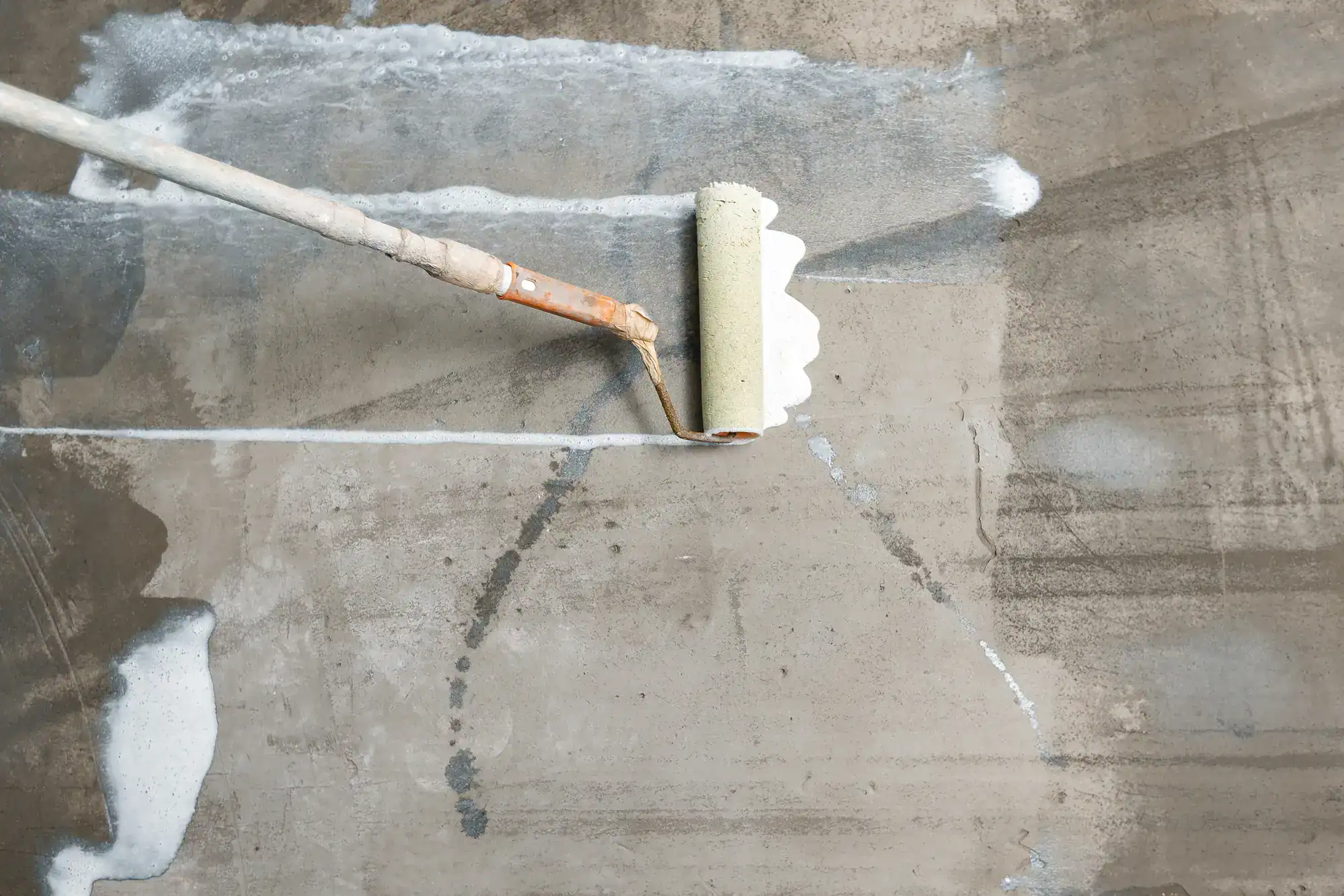
The first thing that happens on any job in Deer Park is a slab assessment not a sales pitch. The concrete gets evaluated for moisture vapor transmission, surface contamination, existing coatings, cracks, and profile. Given that most of Deer Park’s commercial and residential slabs were poured in the 1960s without modern vapor barriers, moisture testing isn’t optional. It determines everything: which system we specify, what primer goes down, and whether any mitigation work is needed before coating begins. Skipping this step is how floors fail.
Once the slab is assessed, surface preparation starts with diamond grinding to achieve the correct concrete surface profile. This creates the mechanical bond that holds the system in place for years, not months. Any cracks get repaired, contaminated areas get degreased, and the substrate is brought to the right condition before anything is applied. For commercial kitchens and food service operations on Deer Park Avenue, this entire process can be completed overnight arriving after close, finishing before open, with no lost revenue days.
The installation itself follows a multi-layer process: primer coat, body coat, broadcast aggregate if specified, and a polyaspartic topcoat that handles the temperature cycling Long Island winters and summers create. Cure times are communicated clearly upfront. When we leave, the floor is ready for real use not “be careful for a few weeks” use.
Ready to get started?
The systems we install for commercial and industrial clients in Deer Park are 100% solids or high-solids epoxy not the diluted, water-based products sold in big-box stores. For warehouse and distribution environments handling forklift loads exceeding 10,000 lbs, that means a urethane mortar or heavy-build epoxy system specified to the actual load profile of the space. For manufacturing and light industrial tenants in Deer Park’s multi-tenant industrial buildings, chemical resistant epoxy finishes are selected based on the actual chemicals in the facility motor oil, hydraulic fluid, cutting fluids, battery acid from forklift charging stations not a generic “chemical resistant” label.
For healthcare environments and institutional spaces including facilities near the Suffolk Community College Grant Campus or Northwell-affiliated operations in the area we install seamless resinous floor coatings with integrated cove base to eliminate the wall-floor junction as a bacterial harborage point. These systems meet ADA, OSHA, CDC, and FGI compliance requirements. For commercial kitchens and food service operations, the system is USDA-compliant and thermally shock-resistant.
High traffic commercial epoxy in Deer Park is installed at 14 to 30 mils of finished thickness for commercial applications not the 3 to 8 mils of a consumer product. Every system finishes with a polyaspartic topcoat that resists UV yellowing, abrasion, and the cleaning chemicals used in daily commercial operations. What you get is a floor specified for your environment, not averaged across every environment.
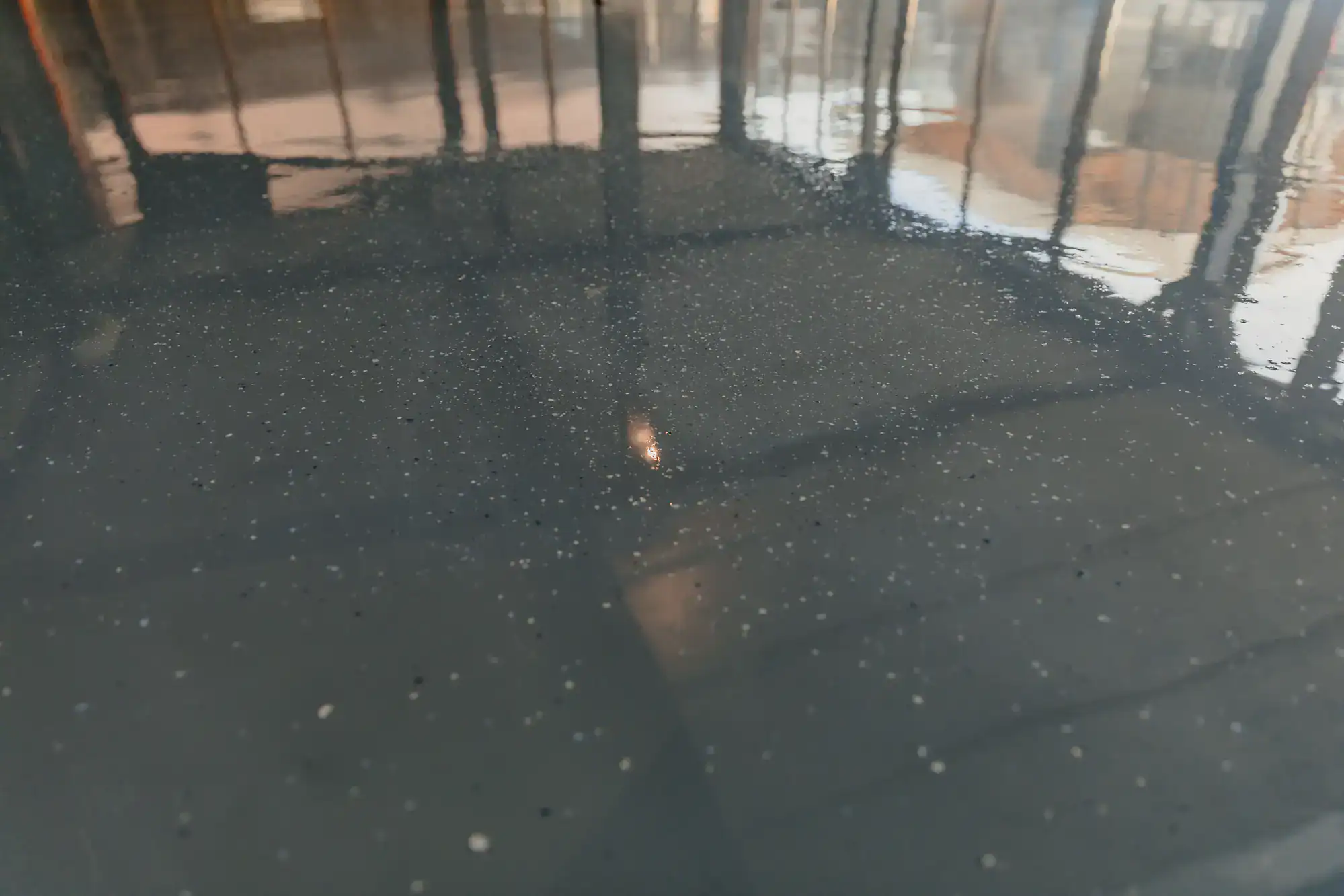
The most common cause of epoxy floor failure in Deer Park and across Long Island generally is moisture vapor transmission. Concrete slabs in this area, especially those poured in the 1950s and 1960s without modern vapor barriers, allow ground moisture to migrate upward through the slab. When a coating is applied over that moisture without proper testing and mitigation, the pressure builds beneath the surface and eventually pushes the coating up. That’s the bubbling and peeling you’ve likely seen or heard about.
Preventing it starts before any product is opened. Every slab gets moisture-tested using calcium chloride or relative humidity probe testing to establish the actual vapor emission rate. If the reading exceeds the threshold for the specified system, a moisture-mitigating primer or vapor barrier coating gets built into the installation. The surface also gets diamond ground to remove laitance, carbonation, and contamination all of which prevent proper adhesion. Done in that order, the system bonds to the concrete mechanically and chemically, and moisture doesn’t have a pathway to cause failure.
A properly installed commercial epoxy flooring system in a warehouse or industrial facility typically lasts 10 to 20 years under normal operating conditions. The range depends on the system we specify, the traffic it handles, and whether the surface prep was done correctly at installation. A 100% solids epoxy with a polyaspartic topcoat, installed over a properly prepared slab, holds up significantly longer than a thin-build system applied over a contaminated or moisture-compromised surface.
For Deer Park’s industrial tenants facilities handling forklifts, pallet jacks, and heavy rolling loads in multi-tenant buildings along the I-495 corridor the system needs to be specified to the actual load profile of the space. A floor that was installed correctly for a light-use environment will degrade quickly under real industrial traffic. The upfront cost difference between a properly specified industrial system at $7 to $12 per square foot and a light-duty coating at $3 per square foot is real, but the lifecycle math favors the industrial system significantly when you factor in the cost of removal, reinstallation, and downtime when a cheaper floor fails ahead of schedule.
Yes and for most food service operations on Deer Park Avenue or in the Tanger Outlets area, overnight installation is the standard approach, not an exception. The process starts after the kitchen closes, typically in the late evening. Surface prep, application, and initial cure all happen during the overnight window. Depending on the system and square footage, most commercial kitchen floors are ready for foot traffic and equipment by the time the next morning’s prep shift begins.
The system we use in commercial kitchen environments is a seamless, USDA-compliant epoxy with thermal shock resistance meaning it handles the rapid temperature changes from steam cleaning, hot water, and cooking equipment without cracking or delaminating. It’s also slip-resistant and impervious to the caustic cleaning chemicals used in food service environments. The key is that the slab has to be in the right condition before the overnight window begins, which is why a pre-installation site visit is always part of the process. Showing up the night of the job without having assessed the floor first is how overnight installs turn into multi-day problems.
For most standard epoxy coating installations in commercial and industrial spaces in Deer Park, a separate building permit is not required through the Town of Babylon Building Department provided the work involves applying a coating to an existing concrete slab without any structural modification or change in occupancy. The coating itself is a surface treatment, not a structural alteration, so it typically falls outside the permit threshold.
That said, there are situations where permits do come into play. If the epoxy installation is part of a larger renovation project, if it involves removing and replacing an existing flooring system in a way that affects the structure, or if the facility is in a regulated use category like healthcare or food service with its own inspection requirements, the scope of the overall project may trigger permit obligations. The safest approach is to confirm the specific requirements with the Town of Babylon Building Department before work begins. As part of every commercial project scoping process, we review and clarify this upfront so there are no surprises during or after installation.
The products sold in retail stores are typically water-based epoxy coatings with a solids content of 40 to 50 percent. When they cure, a significant portion of the product evaporates, leaving behind a thin, relatively soft film usually 3 to 8 mils of finished thickness. For a light-use residential garage with no moisture issues and no heavy loads, they can work adequately. For anything beyond that, they’re undersized for the job.
Commercial and industrial systems are 100% solids or high-solids epoxy, meaning essentially all of the product you apply stays in the floor when it cures. Finished thickness for commercial applications runs 14 to 30 mils, and industrial systems go heavier depending on the load requirements. The mechanical bond achieved through diamond grinding which retail kits replace with acid etching is categorically stronger and more durable. In Deer Park’s older building stock, where slabs have surface contamination, carbonation, and moisture history, the retail approach isn’t just less effective. It’s likely to fail outright within the first year, leaving you with a delaminated floor and the cost of professional removal before a proper installation can begin.
Deer Park sits in a humid subtropical climate hot, humid summers and cold winters with regular freeze-thaw cycles. Both ends of that range create real constraints on epoxy installation. Most epoxy systems require a substrate temperature above 50°F and a relative humidity below 85 percent, with the dew point at least 5 degrees below the surface temperature. During Deer Park’s summer months, humidity regularly pushes into ranges that require careful scheduling, particularly for facilities without climate control. Winter installations in unheated warehouses or industrial buildings require temporary heating and temperature monitoring throughout the cure process.
The practical implication for scheduling is that spring roughly March through May and fall September through November are the most reliable installation windows for commercial and industrial projects in this area. That’s not to say summer and winter installs can’t be done correctly, because they can with the right preparation and monitoring. But if you have flexibility on timing, planning a major floor project during those shoulder seasons reduces the variables and gives the system the best possible conditions to cure and bond. For clients in Deer Park who are planning ahead for a warehouse, manufacturing space, or facility renovation, that timing conversation is worth having early.