
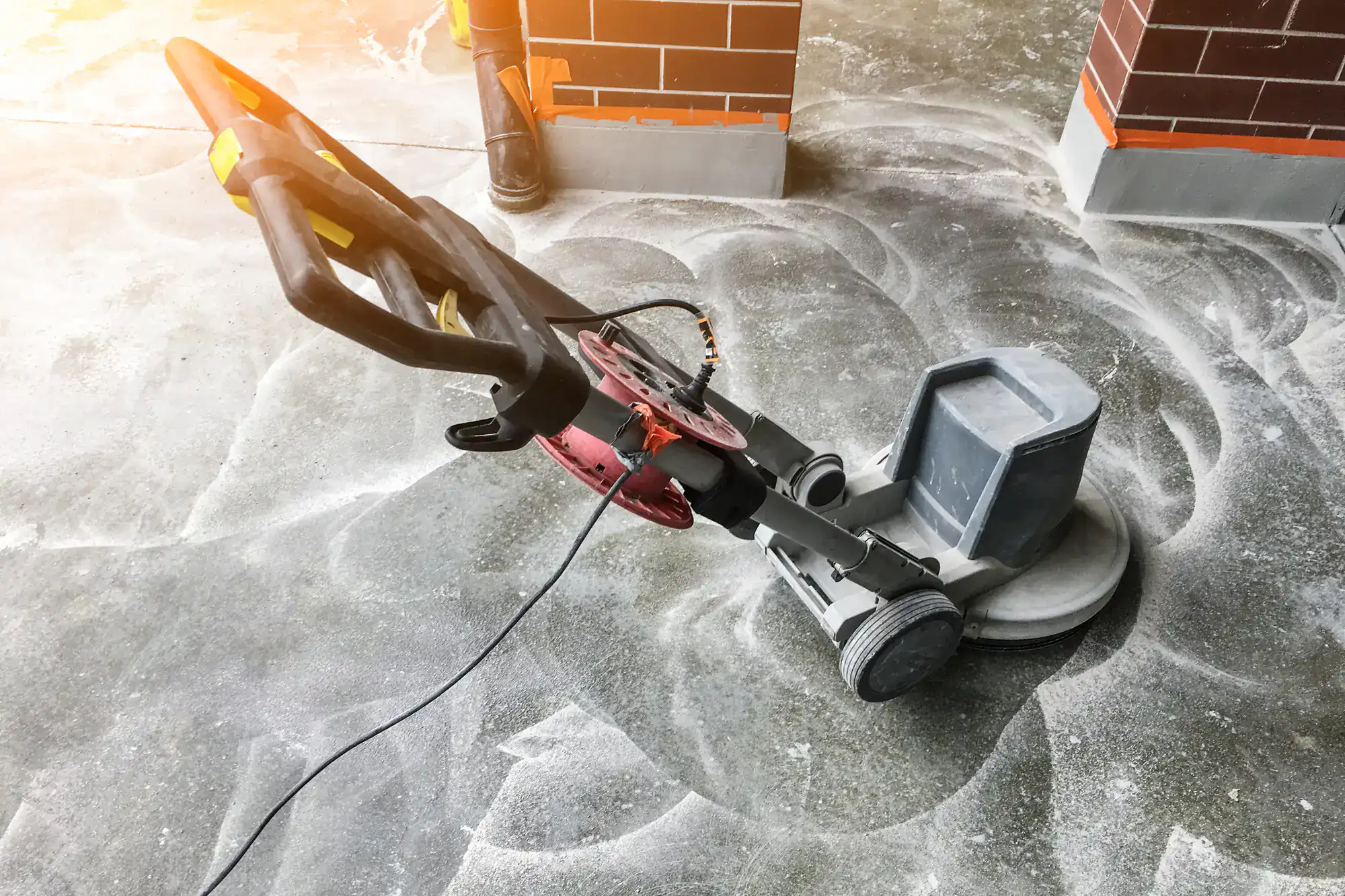
If your concrete floor is dusting, cracking, or covered with a coating that’s starting to peel, you’re not dealing with a cosmetic issue you’re dealing with a maintenance cycle that doesn’t end. Every year, another patch. Another coat. Another invoice. Polished and densified concrete breaks that cycle entirely.
Here’s what actually changes: the surface gets harder, not softer, over time. The densification process works at the chemical level, filling the pores of the slab from the inside out. That means no more dusting under forklift traffic, no more surface breakdown from cleaning chemicals, and no floor that looks worn out six months after it was “fixed.”
For Deer Park specifically, this matters more than people realize. Long Island’s freeze-thaw winters force moisture into any unprotected slab and once that moisture gets in and expands, small surface problems become serious ones by spring. A properly densified floor closes that door entirely. And if you’re operating in or near the Tanger Outlets corridor on Commack Road, where retail presentation standards are set by national brands running 100-plus stores, your floor is part of your first impression whether you think about it that way or not.
Danny Harmer has been doing this hands-on for over 40 years. Not managing crews from an office actually on the job, reading slabs, selecting tooling, and making the calls that determine whether a floor comes out right or gets redone. That distinction matters more in concrete polishing than in almost any other trade, because the quality of the result lives entirely in the execution.
The credential that tends to stop people mid-sentence: in 1996, we completed flooring work at the White House kitchen. That’s not a marketing line it’s a reference point for what “no margin for error” actually looks like in practice. We also hold Sherwin-Williams High Performance Flooring certification and Res Tech certification, both of which require demonstrated product knowledge and application standards that most contractors in Suffolk County simply haven’t pursued.
When you’re running a warehouse off Long Island Avenue or managing a commercial property in Deer Park, you need someone who’s worked on the same types of slabs, in the same climate, under the same real-world conditions. That’s what you get with us.
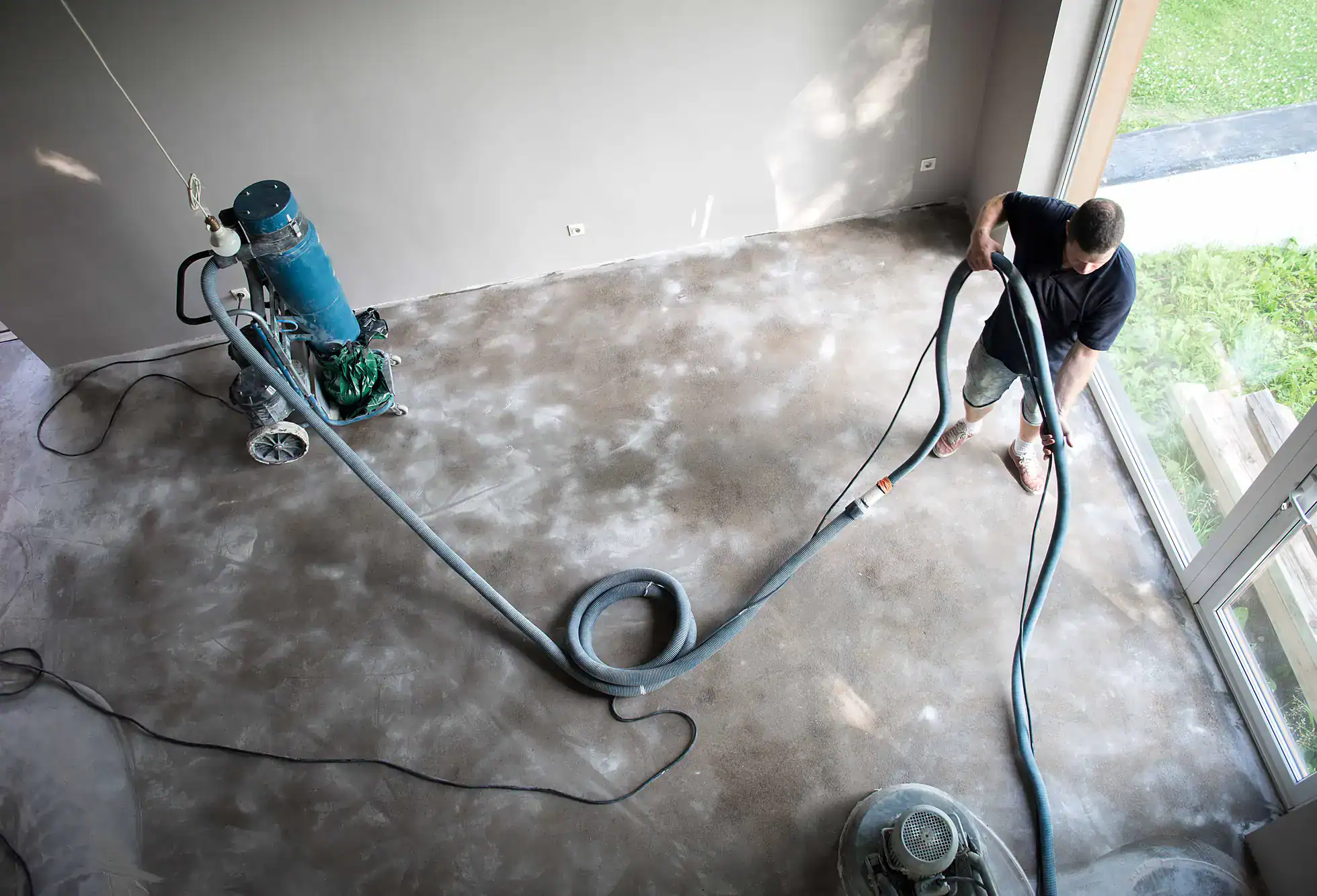
It starts with a real slab assessment not a quick walk-through, but an actual evaluation of hardness, surface contamination, existing coatings, and moisture profile. Deer Park’s commercial building stock skews heavily toward post-WWII construction, which means a lot of the slabs we see are 40 to 70 years old, often covered with VCT adhesive residue, old epoxy, or decades of surface buildup. That history has to be understood before any grinding begins, because the wrong tooling choice on an older slab costs you time and money.
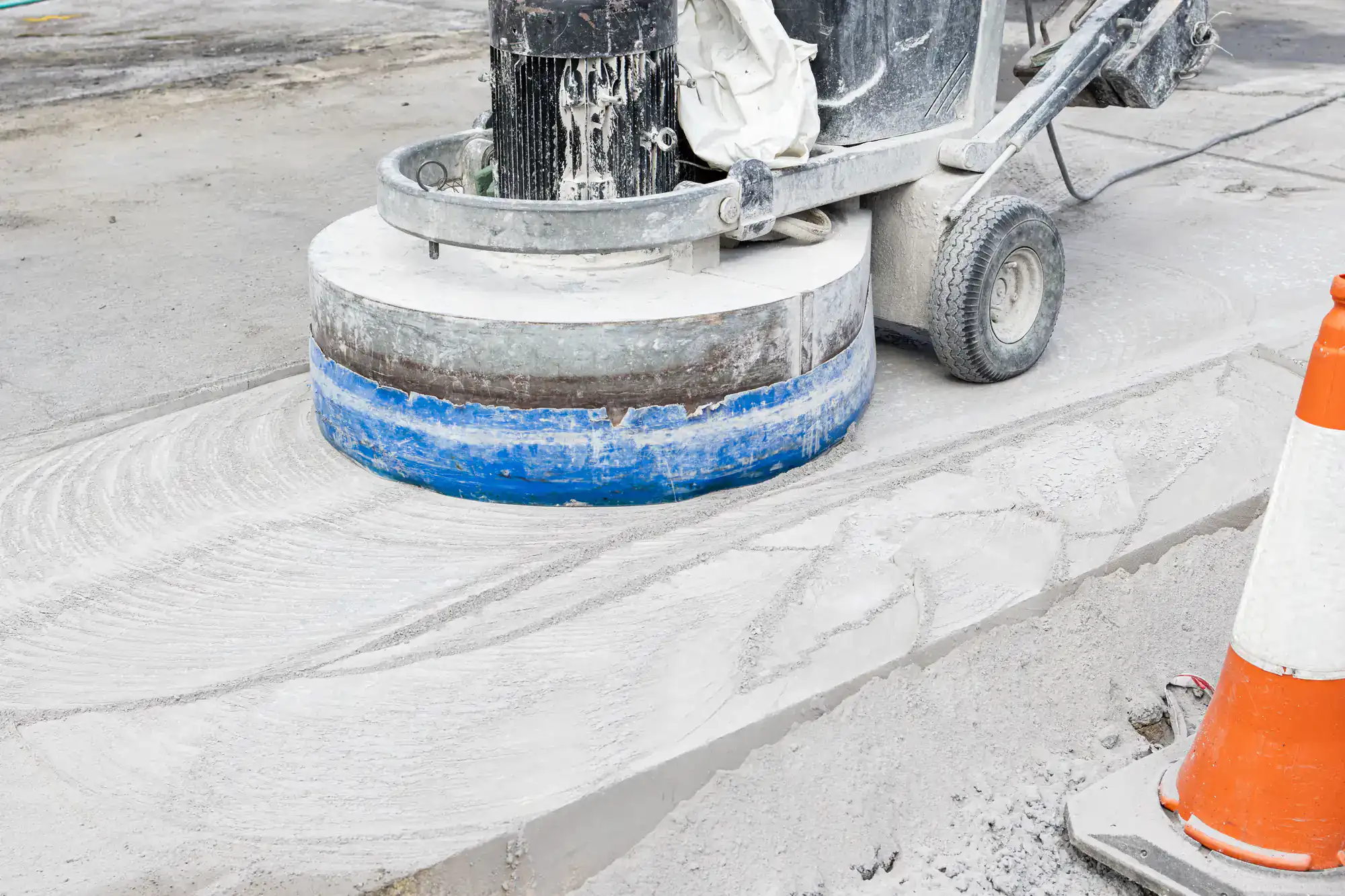
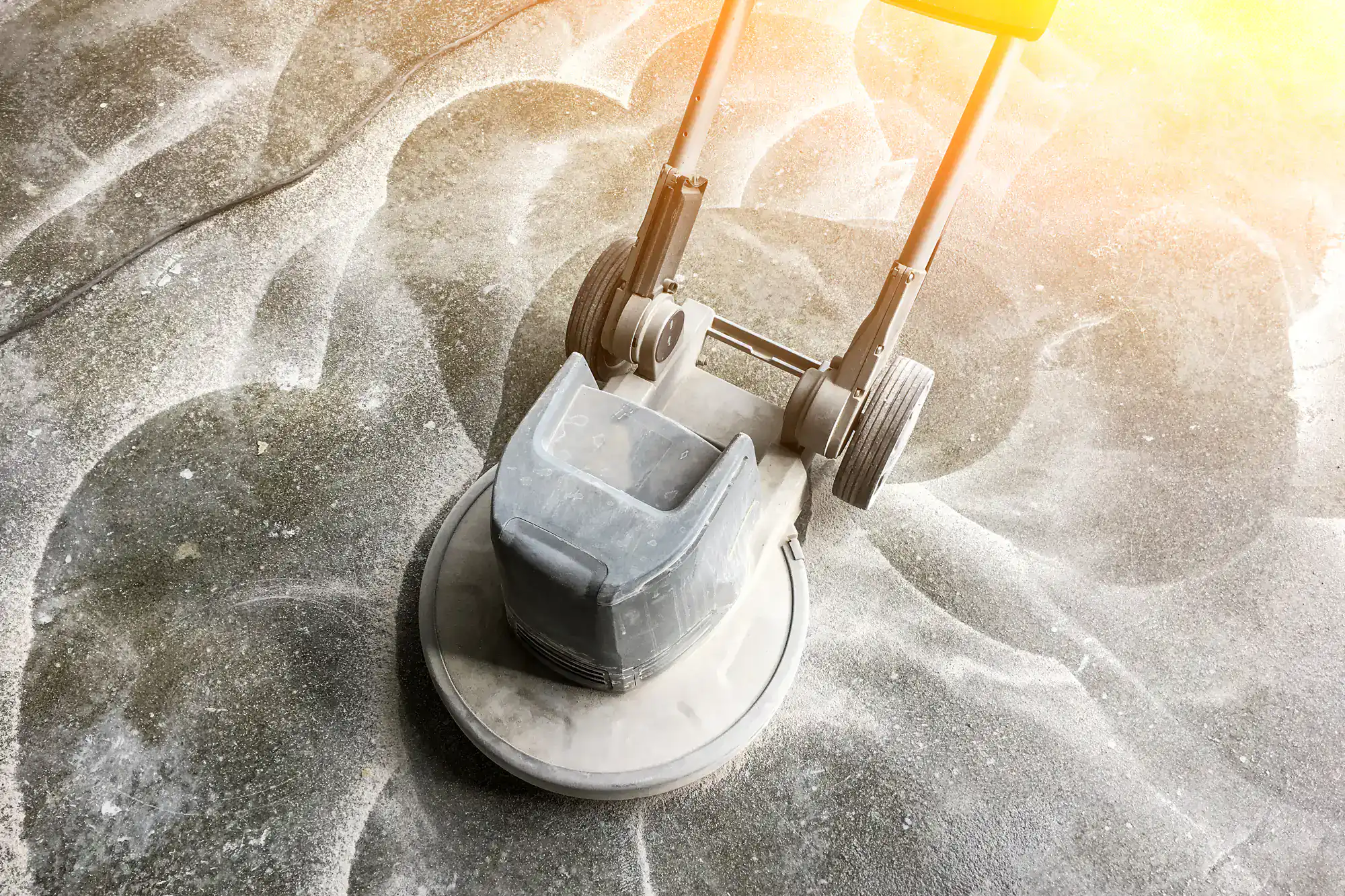
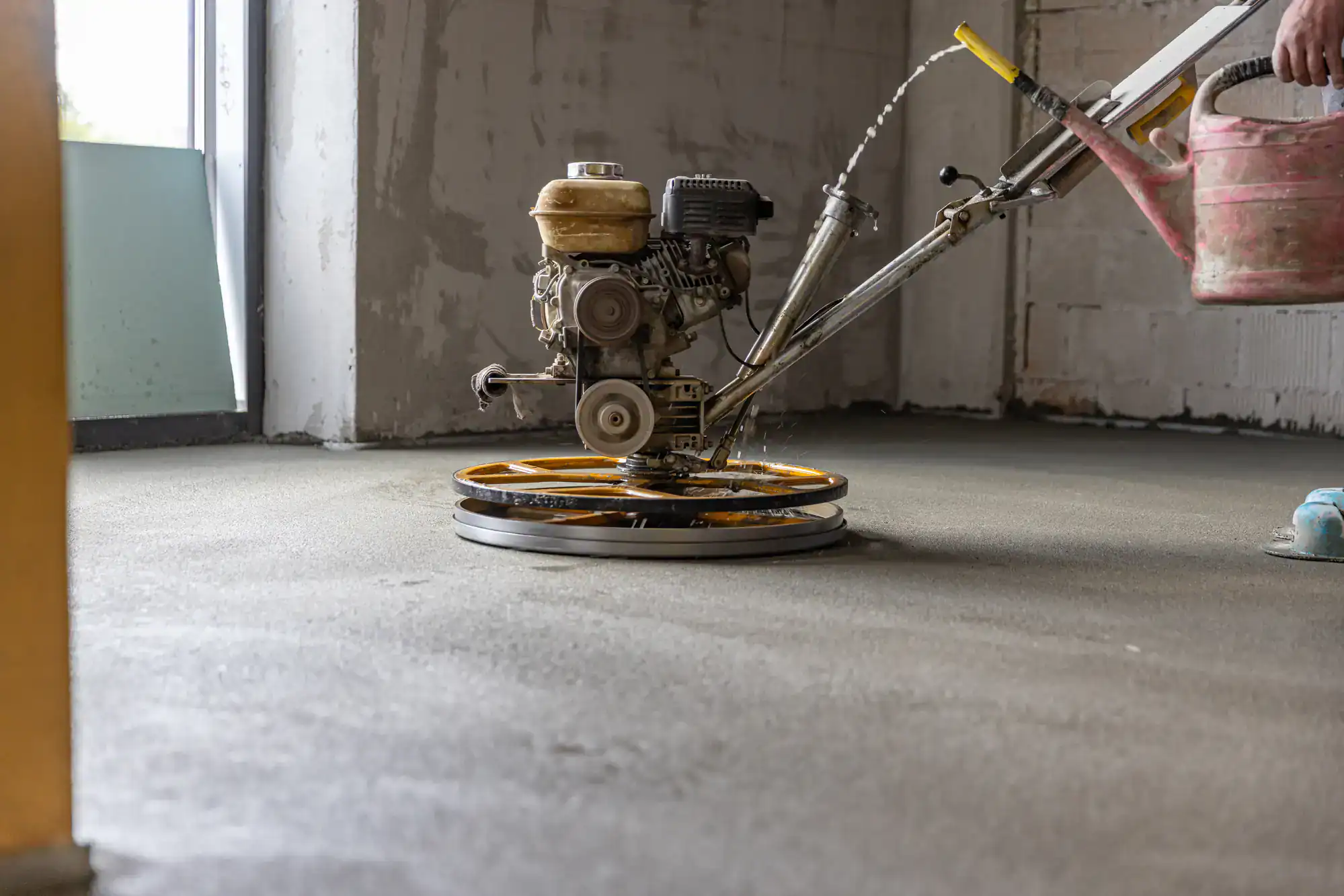
Once the slab is assessed, the process moves through a structured diamond tooling sequence coarse grinding to remove existing coatings or level the surface, followed by progressively finer grit passes that refine the surface profile. At the right stage, a lithium silicate densifier is applied and worked into the slab. This is where the chemistry happens: the densifier reacts with calcium hydroxide in the concrete to form calcium silicate hydrate, which fills the pore structure and significantly increases surface hardness. After that cures, polishing continues through the final grit stages to reach the specified finish class.
For commercial and industrial spaces in Deer Park, we sequence the work to minimize your operational downtime whether that means phasing sections, working after hours, or scheduling around your specific business hours. The finish you end up with is determined by your application: a Class 1 matte finish for a warehouse floor that needs durability without shine, or a Class 4 high-gloss finish for a retail showroom that needs to compete visually with the national brands down the road.
Ready to get started?
Commercial concrete polishing in Deer Park, NY covers a wider range of applications than most people expect when they first call. Retail spaces along Deer Park Avenue need a finish that holds up under constant foot traffic and still looks sharp under commercial lighting. Warehouse and manufacturing facilities in the BU3-zoned industrial corridors off Long Island Avenue and Corbin Avenue need a floor that can take forklift abuse without chipping or delaminating. Food service businesses and there’s no shortage of them on this stretch of Route 231 need a seamless, non-porous surface that meets commercial kitchen hygiene standards and holds up under chemical cleaning agents.
Every project includes the full sequence: surface preparation and coating removal if needed, slab assessment, densifier application, and finish polishing to your specified class level. Concrete grinding and leveling is included when the slab requires it, which is common in Deer Park’s older commercial buildings where decades of use have created surface irregularities. Slip-resistance profiling is available for any finish level, which matters in retail and food service environments where foot traffic and wet conditions are a daily reality.
What you won’t get is a crew that shows up, grinds the surface, and calls it polished. The densification step is what separates a floor that lasts from one that starts breaking down within a year. For Deer Park commercial and industrial property owners who are done paying for the same floor twice, that difference is the whole point.
In most cases, yes and the older the slab, the better it often polishes. Concrete that’s been curing for 40 or 50 years, which is common in Deer Park’s industrial zones off Long Island Avenue and Corbin Avenue, has had time to harden and develop a density that newer slabs haven’t reached yet. That actually works in your favor when it comes to polishability and final finish quality.
The main variables we assess before committing to a finish specification are surface contamination, existing coatings, and moisture conditions. If your slab has old VCT adhesive, failed epoxy, or significant surface cracking, those issues get addressed in the preparation phase before polishing begins. Very few slabs are genuinely unworkable but we’ll tell you honestly after the assessment if yours is one of them, rather than starting a job we can’t finish properly.
For a typical commercial space in the 2,000 to 5,000 square foot range, the full process preparation, densification, and polishing to final finish generally runs two to four days depending on the condition of the slab and the finish class specified. Larger industrial spaces in Deer Park’s warehouse corridors can take longer, particularly if coating removal or concrete grinding and leveling is required before polishing begins.
The more important question for most business owners is how to handle operations during that window. We work around your schedule phasing sections of the floor so you maintain partial access, scheduling work after business hours, or running weekend installations when your space is closed. Deer Park Avenue businesses that can’t afford a full shutdown during the week have used all three approaches. The goal is to deliver the finished floor without forcing you to lose days of revenue in the process.
The core difference is where the surface lives. Epoxy is a topical coating it sits on top of the concrete and bonds to the surface. Polished concrete is the concrete itself, refined and densified from within. That distinction drives every performance difference between the two systems.
Epoxy coatings can delaminate, chip under impact, and show wear patterns in high-traffic zones over time. When they fail, you’re stripping the floor and recoating which is a recurring cost. Polished and densified concrete doesn’t have a coating to fail. The surface hardness is built into the slab, which means it handles forklift traffic, chemical exposure, and the kind of sustained commercial use common in Deer Park’s industrial and retail environments without breaking down the same way. For building owners managing properties in the Town of Babylon who are evaluating long-term maintenance costs, the lifecycle math almost always favors polished concrete over repeated epoxy recoats.
Long Island’s freeze-thaw cycle is one of the most damaging forces on unprotected or inadequately prepared concrete. When moisture gets into the pore structure of a slab and then freezes, it expands and that expansion progressively degrades the surface from the inside out. By the time you see dusting, pitting, or surface cracking, the damage has already been building for seasons.
Proper densification addresses this at the source. When lithium silicate is applied and reacts within the concrete matrix, it fills the pore structure with calcium silicate hydrate physically closing the pathways that moisture would otherwise use to enter the slab. A densified floor is dramatically less permeable than an untreated one, which means it holds up through Deer Park winters in a way that surface-only coatings simply don’t. This is one of the reasons we emphasize densification as a non-negotiable step, not an upgrade in a Suffolk County climate, skipping it means the floor starts degrading before the next winter is over.
This is one of the most common concerns, and it’s worth addressing directly. A polished concrete floor at a lower grit finish Class 1 or Class 2 has a surface profile that provides meaningful traction under normal foot traffic conditions. Higher-gloss finishes at Class 3 and Class 4 are smoother, but slip resistance can be built into any finish level through aggregate additives or surface treatments applied during the final stages of the process.
For Deer Park food service businesses particularly along the Route 231 commercial corridor where restaurant and quick-service operations deal with wet floors as a daily reality we specify slip-resistance profiles that meet commercial kitchen safety standards without sacrificing the clean, professional appearance the finish is meant to deliver. The same applies to retail environments near the Tanger Outlets area where high customer traffic and occasional wet-weather foot traffic are part of the operating reality. The finish class and slip profile get determined together, not separately.
In the Northeast commercial market, polished concrete typically runs between $3 and $12 per square foot depending on the condition of the slab, the finish class specified, and the scope of preparation work required. A straightforward warehouse floor in Deer Park’s industrial zone that needs basic densification and a Class 1 or Class 2 matte finish will sit toward the lower end of that range. A retail showroom requiring coating removal, concrete grinding and leveling, and a high-gloss Class 4 finish will sit higher.
The more useful number for most commercial property owners isn’t the upfront cost it’s what you’re spending on floor maintenance over five to ten years with your current system versus what you’d spend maintaining a properly densified polished floor. VCT requires annual waxing and stripping cycles. Epoxy coatings need recoating every few years. Polished concrete needs routine dust mopping and occasional damp mopping with a pH-neutral cleaner that’s essentially the full maintenance requirement. For Deer Park business owners and property managers who are managing real operating budgets, that comparison tends to reframe the conversation pretty quickly.