
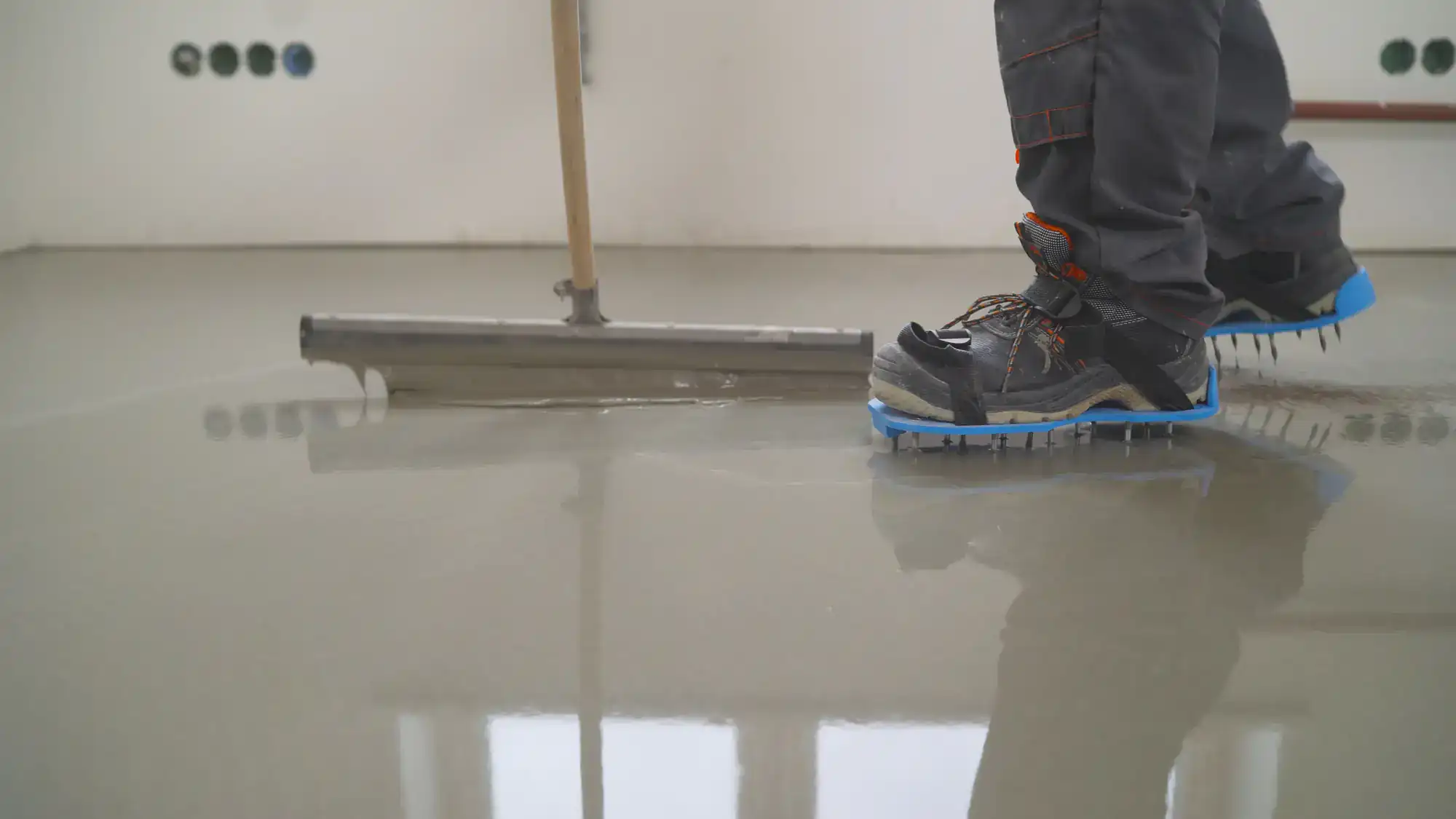
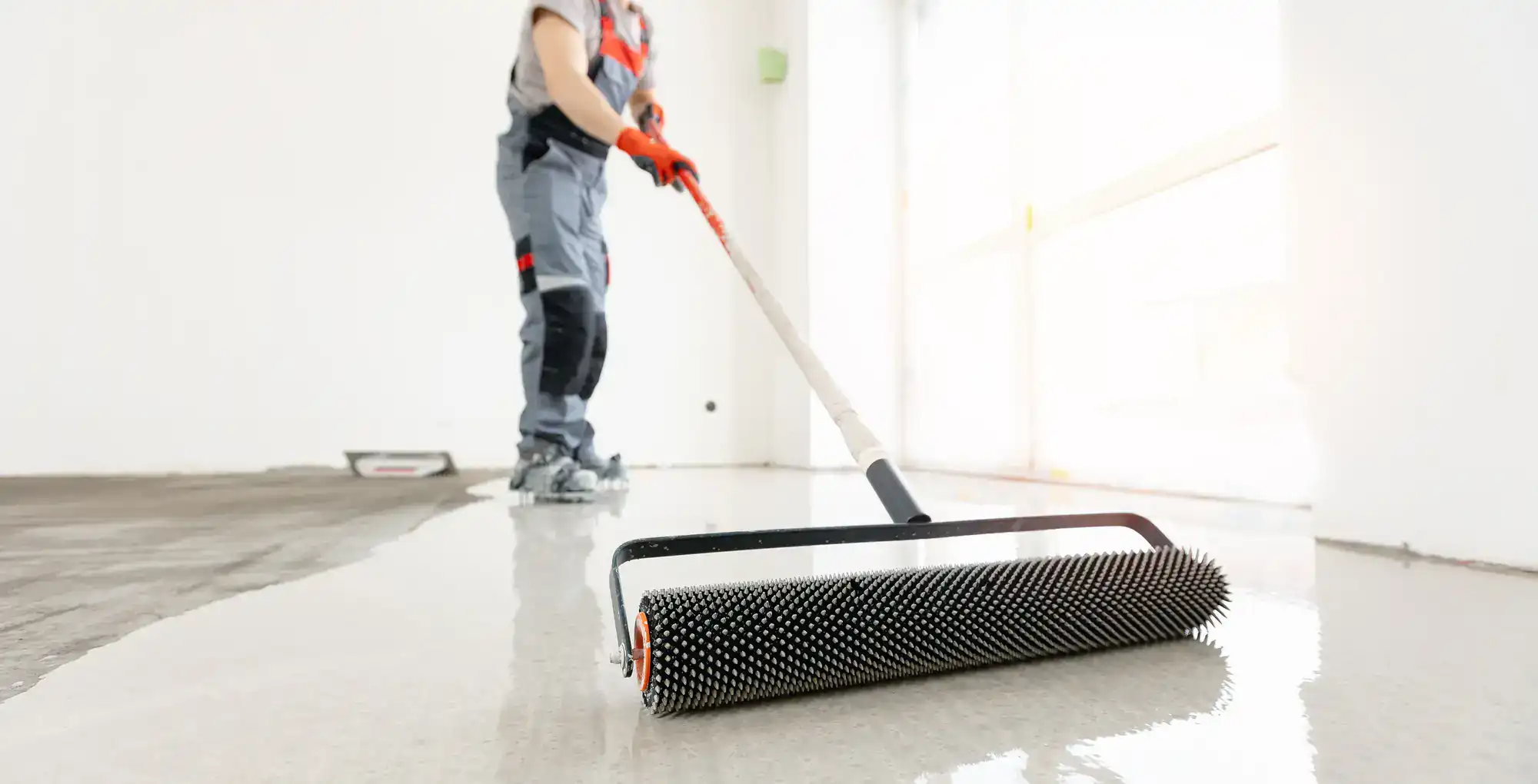
If you’re planning to put down new flooring LVP, large-format tile, hardwood and someone told you the subfloor isn’t flat enough, that’s not a small problem. Modern flooring materials are thinner and less forgiving than what was installed in homes 40 or 50 years ago. A slab that’s off by even a fraction of an inch can cause tiles to crack, vinyl to buckle, and grout lines to fail within a year or two. The leveling work underneath is what makes everything on top last.
Deer Park’s housing stock is almost entirely post-WWII capes and ranches built in the 1950s and 60s, sitting on concrete slabs that are now 60 to 75 years old. Those slabs were poured under standards that predate modern ASTM requirements by decades, and they’ve been through a lot: Long Island’s full freeze-thaw cycle, decades of soil movement under flat inland terrain, and the kind of slow, incremental settling that only shows up when you go to install something new. This is not a rare situation in Deer Park. It’s the norm.
On the commercial side, if you’re operating out of one of the warehouse or industrial spaces off Commack Road or the E Industry Court corridor, the floor conditions are different but the stakes are just as real. A substrate that isn’t level or properly prepared will compromise any coating or covering you put on top of it and in a high-traffic environment, that failure happens fast.
Advanced Epoxy Flooring is based in Bohemia, NY about 12 to 15 miles east of Deer Park along the Long Island Expressway. We’ve been doing this work on Long Island for over 30 years, and our president has more than 40 years of personal installation experience. That’s not a number we throw out to sound impressive it means the person running this company has seen more slab conditions, more moisture problems, and more flooring failures than most contractors will encounter in a lifetime.
Our crew is OSHA 40-certified, factory-trained in advanced cementitious systems, and unusually for this trade most of them have been with us for over a decade. That kind of consistency matters when the job requires real process discipline, not just a fast pour. We hold an A+ rating with the Better Business Bureau, and our work has taken us across the country, to the Bahamas, to Moscow, and to the White House kitchen in 1996. The jobs we do in Deer Park and across Suffolk County get the same level of attention as all of it.
The first thing we do is test. Before any product goes down, we check the concrete for moisture vapor transmission using ASTM F2170 relative humidity testing and MVER evaluation. This step gets skipped more often than it should and it’s the single most common reason self leveling underlayment fails. In Deer Park specifically, where the majority of residential slabs were poured in the 1950s and 60s on sandy-loamy soil, moisture vapor is a real and present risk. Skipping this test is how a contractor sets you up for a callback.
Once moisture is confirmed within acceptable limits, we assess the surface itself identifying low spots, high spots, cracks, and any areas that need concrete repair before leveling can begin. Surface preparation isn’t an add-on in our process. It’s the foundation of it. We grind, clean, and prime the substrate so the self leveling material bonds properly and flows the way it’s designed to.
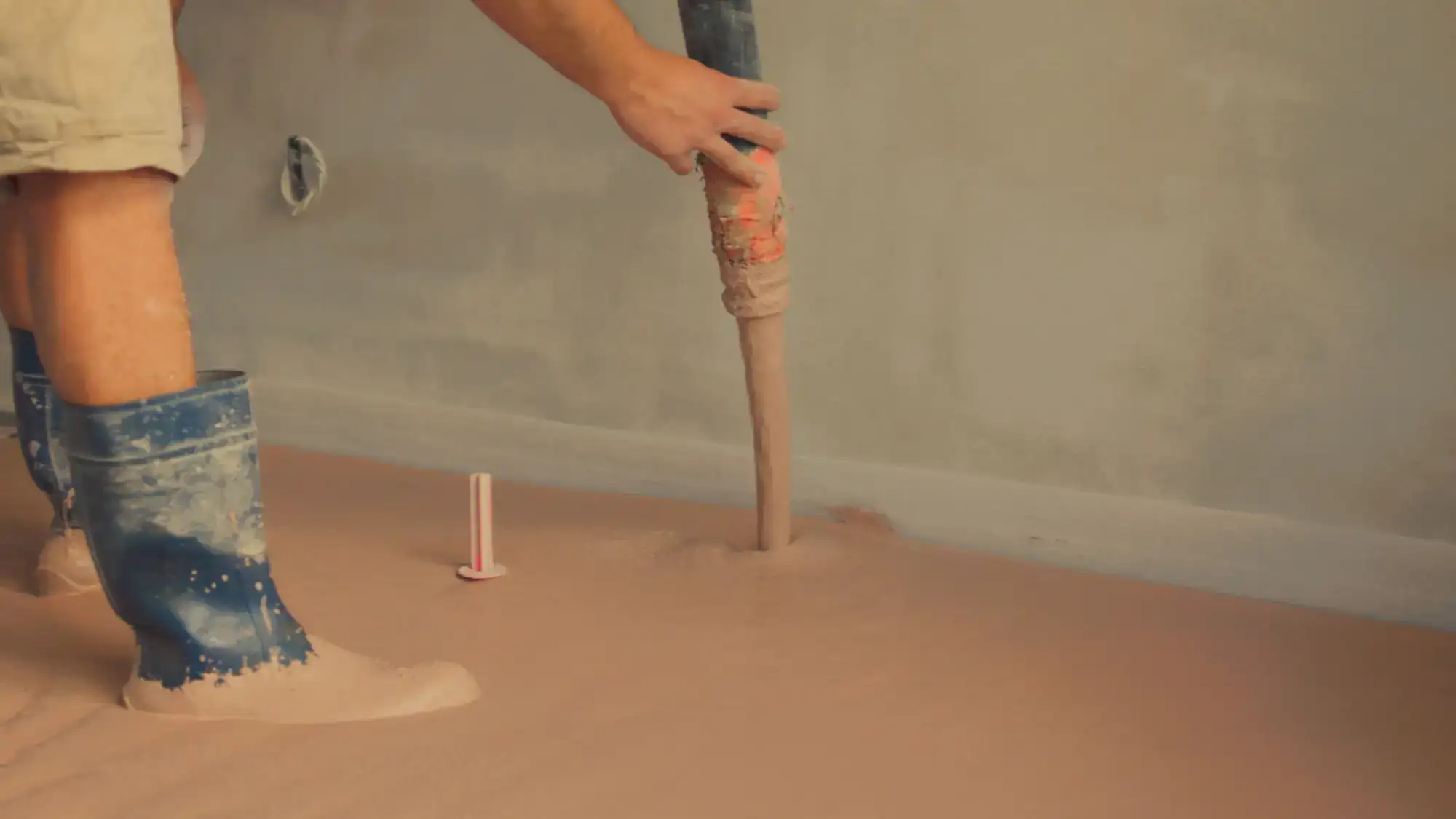
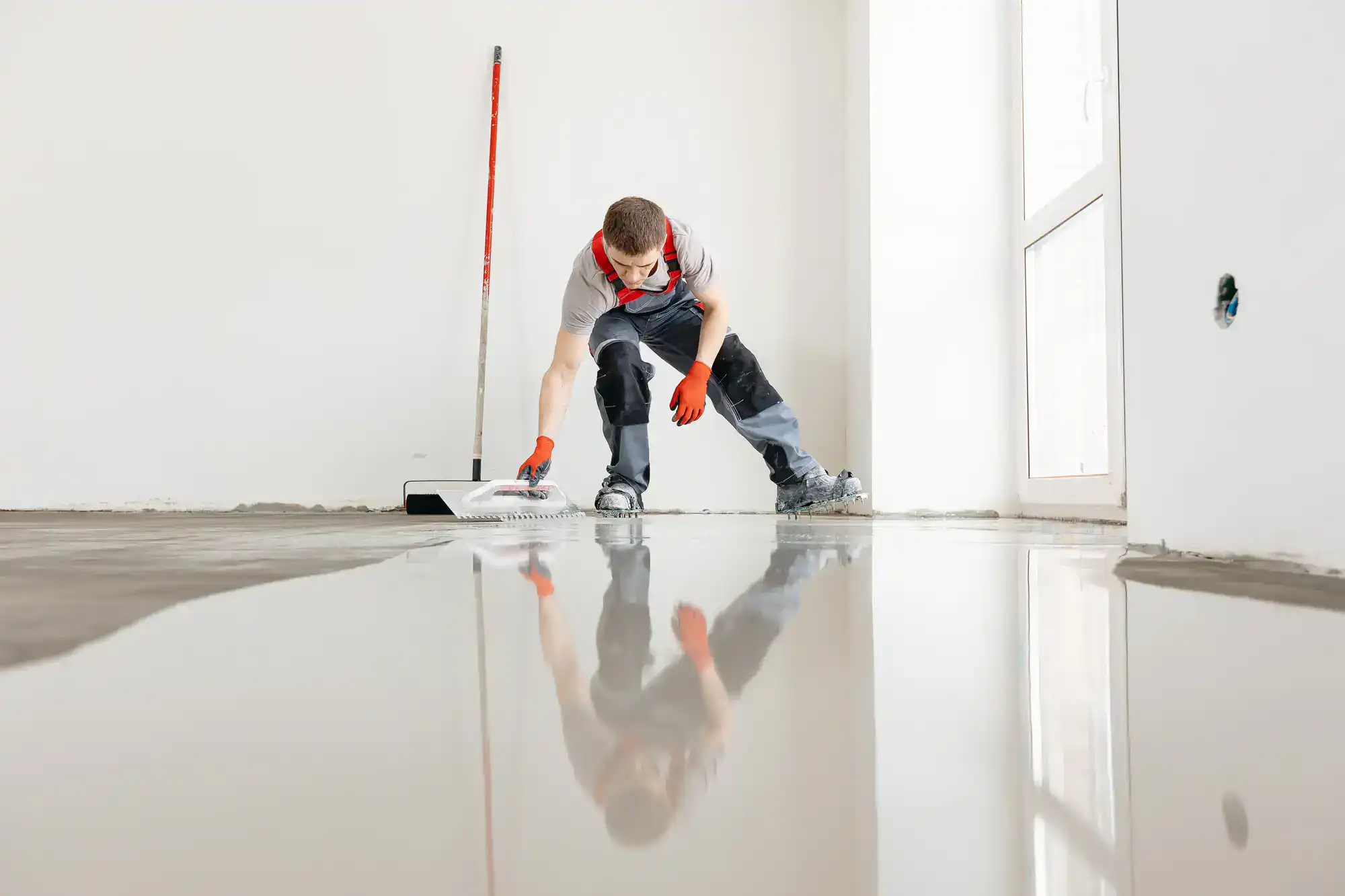
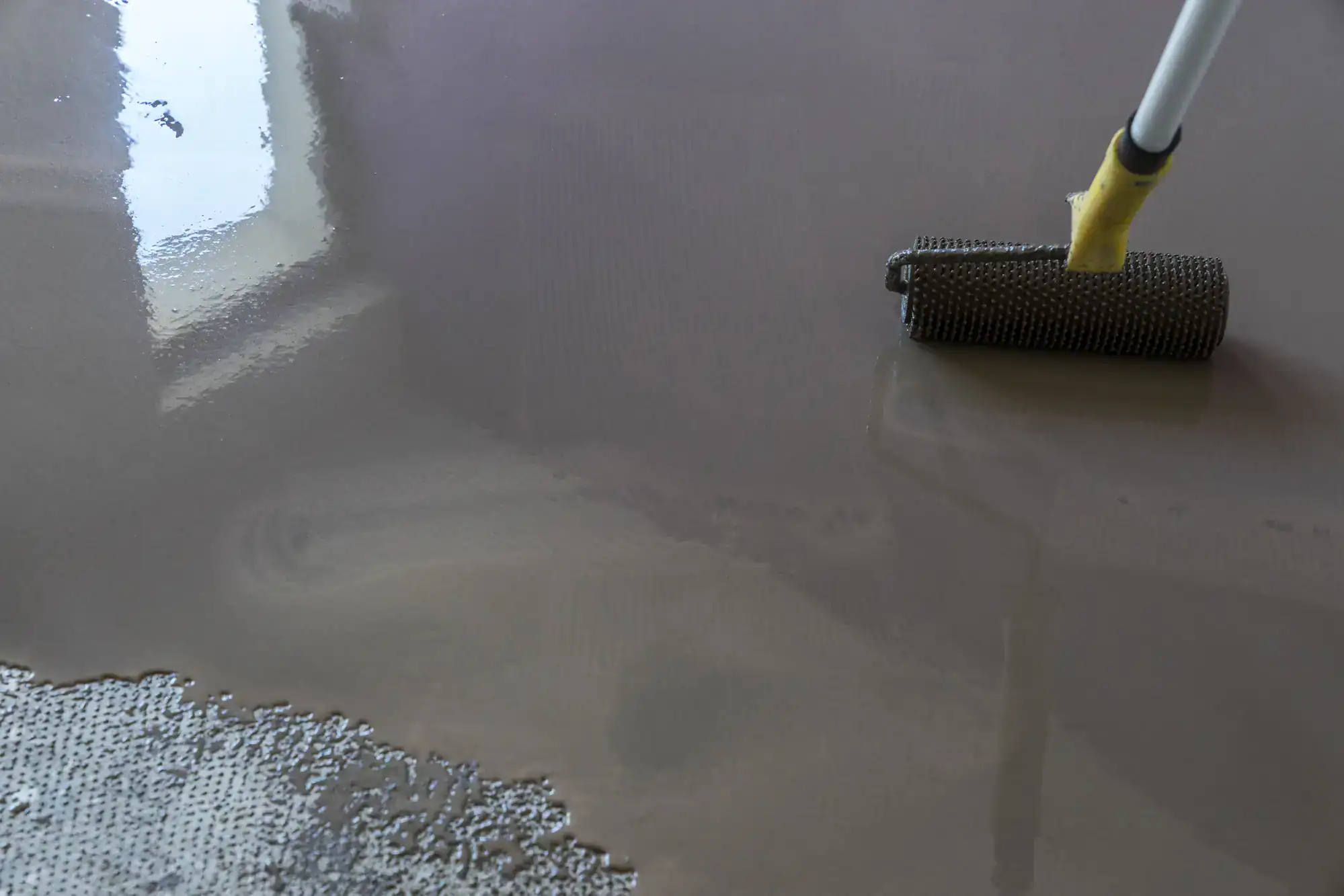
Then we pour. Our high-strength, polymer-modified cementitious system flows to a flat plane and can be installed from a quarter inch up to two inches neat or up to five inches with aggregates for deeper corrections. For commercial jobs in Deer Park’s warehouse and industrial corridor, that depth range matters. For residential projects where you’re prepping for new flooring, the precision of the finished surface is what matters. Either way, foot traffic is typically possible within four to six hours, and heavy commercial use within 24 to 48 hours.
Ready to get started?
The self leveling system we use is a polymer-modified, cement-based material with high flow characteristics specifically formulated for low shrinkage and superior flatness. It’s not a hardware store floor leveler. The polymer modification gives it both flowability and compressive strength at the same time, which is what allows it to achieve a genuinely flat surface without the cracking and delamination that cheaper products produce under load stress and thermal cycling. For a Deer Park slab that’s been through 60 winters, that durability matters.
For residential homeowners in Deer Park preparing for new flooring installation whether that’s LVP over an old ranch slab or large-format tile in a kitchen or bathroom the finish tolerances we achieve are what modern flooring manufacturers actually require. That’s not marketing language. It’s an ASTM standard, and most of the flooring products on the market today will void their warranty if installed over a substrate that doesn’t meet it.
For commercial operators in Deer Park retail tenants near the Tanger Outlets corridor, warehouse and logistics businesses along Commack Road, or any business managing a tenant fit-out we deliver fast-curing concrete leveling solutions that minimize downtime without cutting corners on prep. The floor is done right, and it’s done on a schedule your operation can work around. That combination is what keeps commercial clients coming back.
The most common reason is moisture specifically, moisture vapor transmitting up through the slab that was never tested for before the pour. In Deer Park, where most residential slabs were poured in the 1950s and 60s on sandy-loamy soil, this is a genuine and recurring issue. Those older slabs weren’t built to modern vapor barrier standards, and over decades of Long Island’s freeze-thaw cycling and seasonal groundwater fluctuation, they develop micro-cracks and permeability that allows moisture vapor to move upward through the concrete.
When a contractor skips moisture testing and pours self leveling underlayment directly over a slab with active vapor transmission, the product debonds from the substrate over time. You get bubbling, cracking, and eventually full delamination sometimes within a year or two of installation. The fix is straightforward: test first, address any moisture issues before the pour, and use a properly primed substrate. That’s the process we follow on every job in Deer Park, residential or commercial.
It depends on what you’re correcting and what’s going on top of it. For most residential projects in Deer Park a ranch or cape cod where you’re prepping for LVP, tile, or hardwood the correction needed is typically between a quarter inch and three-quarters of an inch. That range handles the kind of surface irregularity that accumulates in a slab over 50 to 70 years of seasonal movement and settling. The self leveling material flows to fill low spots and feathers out at high spots, producing a flat plane that meets the tolerances modern flooring products require.
For deeper corrections commercial slabs in Deer Park’s warehouse corridor that have taken years of forklift traffic and heavy equipment loads, for example the system can go up to two inches neat, or up to five inches with the addition of aggregates. We assess the actual depth needed during the evaluation phase, before any product is mixed. You’re not paying for more material than the job requires, and you’re not getting less than what the substrate actually needs.
Yes but the cracks need to be addressed before the pour, not covered over and hoped for. Self leveling underlayment is not a structural repair product. If there are active cracks in the slab cracks that are still moving with seasonal temperature changes or soil shift pouring over them without repair will result in those cracks reflecting up through the underlayment over time. In Deer Park’s climate, where slabs go through a full freeze-thaw cycle every winter, active crack movement is common in older concrete.
The right approach is to evaluate each crack individually: determine whether it’s dormant or active, repair it with the appropriate product, and then allow the repair to cure before the self leveling pour begins. We do this as part of our standard surface preparation process. It adds a step, but it’s the step that determines whether the finished floor holds up for 20 years or starts showing problems in two.
For light foot traffic, most cementitious self leveling systems are ready within four to six hours of installation. For installing flooring on top tile, LVP, hardwood you’re typically looking at 16 to 24 hours before the surface is ready to receive adhesive or a floating floor system. For heavy commercial use, including forklift traffic or high-volume foot traffic in a retail environment, 24 to 48 hours is the standard window.
One thing worth noting for Deer Park projects specifically: ambient and substrate temperature matters during cure. Self leveling underlayment requires temperatures above 50°F for proper hydration and cure. During Long Island winters which regularly drop below that threshold from December through February the work environment needs to be temperature-controlled before and during installation. We account for this on every cold-weather job. If you’re planning a winter renovation, it’s worth discussing timing and site conditions upfront so there are no surprises on installation day.
It depends on the condition of the existing slab and what you’re putting on top of it. For warehouse and industrial spaces in Deer Park’s commercial corridor particularly along Commack Road and the E Industry Court area self leveling underlayment is commonly used as a base preparation layer before applying an epoxy or polyaspartic coating system, or before installing commercial flooring materials that require a flat, sound substrate. If the existing slab has significant surface irregularity from years of heavy equipment traffic, self leveling is often the most efficient way to correct it.
That said, if the slab has structural damage deep spalling, significant heaving, or load-related cracking self leveling underlayment alone won’t solve the underlying problem. A proper evaluation of the slab condition is the starting point. We assess moisture, surface profile, and structural integrity before recommending a course of action. For commercial clients in Deer Park who are managing a tenant transition or a facility upgrade, that evaluation is the conversation we start with not the product we’re trying to sell you.
The most important thing to ask about is process specifically, what happens before the pour. A contractor who shows up ready to mix and pour without discussing moisture testing, surface preparation, or concrete repair is skipping the steps that determine whether the job holds up. In Deer Park, where the majority of residential slabs are 60-plus years old and the commercial inventory has its own history of heavy use, those pre-installation steps aren’t optional. They’re what separates a floor that lasts from one that fails.
Beyond process, look for verifiable credentials: OSHA certification for commercial work, factory training in the specific systems being installed, and a track record that includes projects similar in scope to yours. Contractors who specialize in resinous and cementitious flooring systems bring deeper expertise than general contractors who occasionally pour underlayment. Ask how long the crew has been doing this work specifically not just how long the company has been in business. Experience with the product and the process is what you’re actually hiring, and in a trade where the failure rate is high, that distinction is worth asking about directly.