
Your current concrete is probably showing cracks around the joints. Maybe you’re dealing with potholes from forklift traffic, or dust settling on everything in your facility. Those aren’t just cosmetic problems—they’re costing you money in equipment damage, product contamination, and safety liability.
A proper forklift traffic resistant coating in Deer Park, NY changes that. You get a surface that’s 4-5 times more durable than standard epoxy, which means your floor actually holds up under the daily punishment of heavy equipment. No more watching your concrete deteriorate. No more scheduling expensive repairs every few months.
The floor becomes dust-proof, so you’re not dealing with silica particles settling on inventory or getting into machinery. It’s chemical resistant, so spills don’t eat through to the concrete. And because we add anti-slip texture, your team has better traction even when conditions get wet—which directly reduces your slip-and-fall risk.
When your floor can handle the load without breaking down, your operation runs smoother. Equipment lasts longer because it’s not bouncing over uneven surfaces. Downtime drops because you’re not constantly patching problem areas. That’s what a high-traffic concrete sealer in Deer Park, NY is supposed to do.
Advanced Epoxy Flooring has been handling large scale warehouse flooring in Deer Park, NY and across Long Island for years. Our crew supervisors have over 40 combined years of experience, and most of our installers have been with us for more than a decade. That’s not common in this industry.
Every installer is OSHA 40 certified and current with training standards. We’re not sending rookies into your facility to figure things out as they go. You’re getting people who know how to prep concrete correctly, test for moisture issues, and apply coating systems that actually last.
Deer Park’s industrial corridor means we’ve worked in facilities just like yours—distribution centers running 24/7, warehouses with constant forklift traffic, spaces where downtime costs thousands per hour. We understand what you’re dealing with because we’ve seen it hundreds of times. And we know how to install a floor that holds up under those exact conditions.
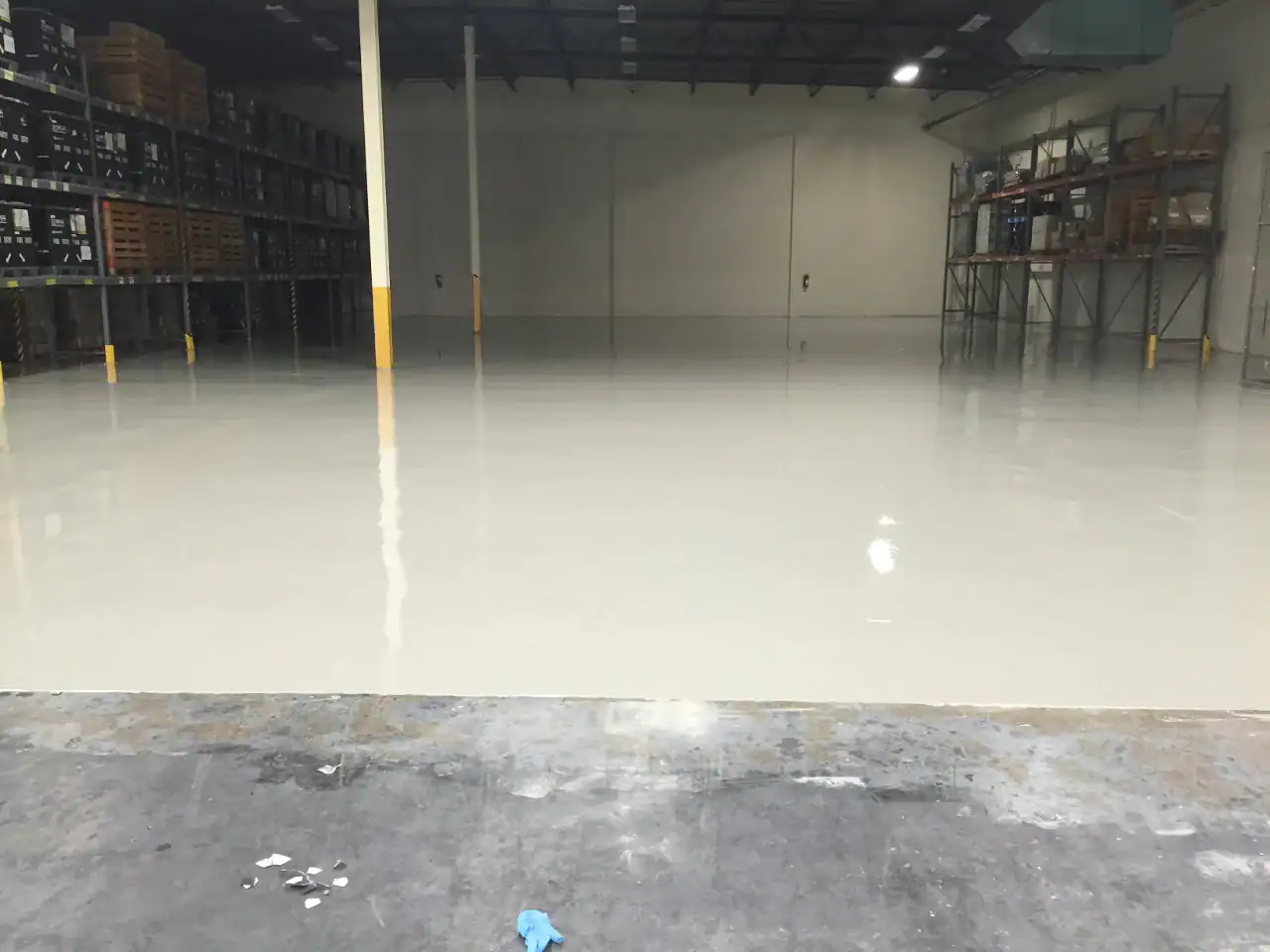
First, we test your concrete for moisture. This isn’t optional—if there’s a moisture issue and we skip this step, the coating will fail. Period. Once we know the slab is ready, we move to surface prep.
That means diamond grinding for warehouses in Deer Park, NY. We mechanically remove any old coatings, open up the concrete pores, and create the profile needed for proper adhesion. If there are cracks, spalls, or joint damage, we repair those before any coating goes down. Skipping this destroys the entire system later.
After prep, we apply the polyaspartic or polyurea coating system. This isn’t standard epoxy—it cures faster and handles abuse better. We add anti-slip aggregate where you need traction, and we make sure the finish is seamless so there aren’t weak points where forklifts will chew through.
The timeline depends on your square footage and how much prep work is needed, but we work with your schedule to minimize operational disruption. Most installations cure quickly enough that you’re not shut down for weeks. You get a floor that’s ready to handle your equipment without the extended downtime that kills productivity.
Ready to get started?
You’re getting a complete system—not just a coating slapped over damaged concrete. That includes moisture testing to catch problems before they ruin the floor. It includes full surface preparation using diamond grinding or shot blasting, depending on what your slab needs. And it includes concrete repairs for cracks, spalls, and joint damage.
The coating itself is a polyaspartic or polyurea blend engineered specifically for warehouse environments in Deer Park, NY. It’s designed to resist the impact and abrasion from forklift wheels, the chemical exposure from whatever you’re storing or moving, and the wear patterns that destroy standard floors. We add anti-slip texture in high-traffic areas or anywhere moisture is a concern.
Deer Park’s warehouses deal with everything from food distribution to manufacturing, and each operation puts different demands on the floor. We customize the system based on your traffic patterns, load weights, and exposure risks. If you’re running heavy equipment all day, you need a thicker build. If you’re dealing with chemical spills, you need specific resistance. We don’t use a one-size-fits-all approach because that’s how floors fail early.
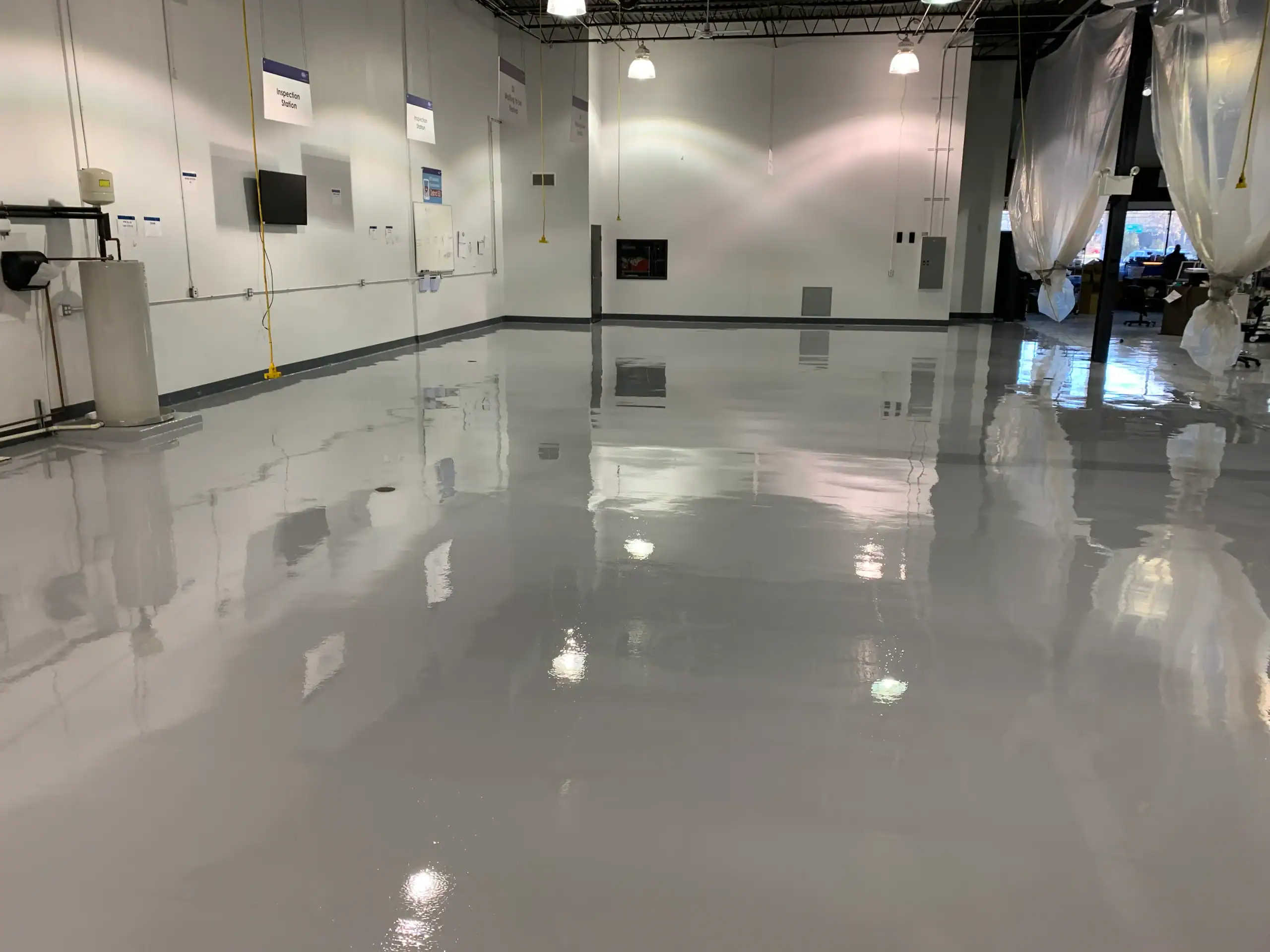
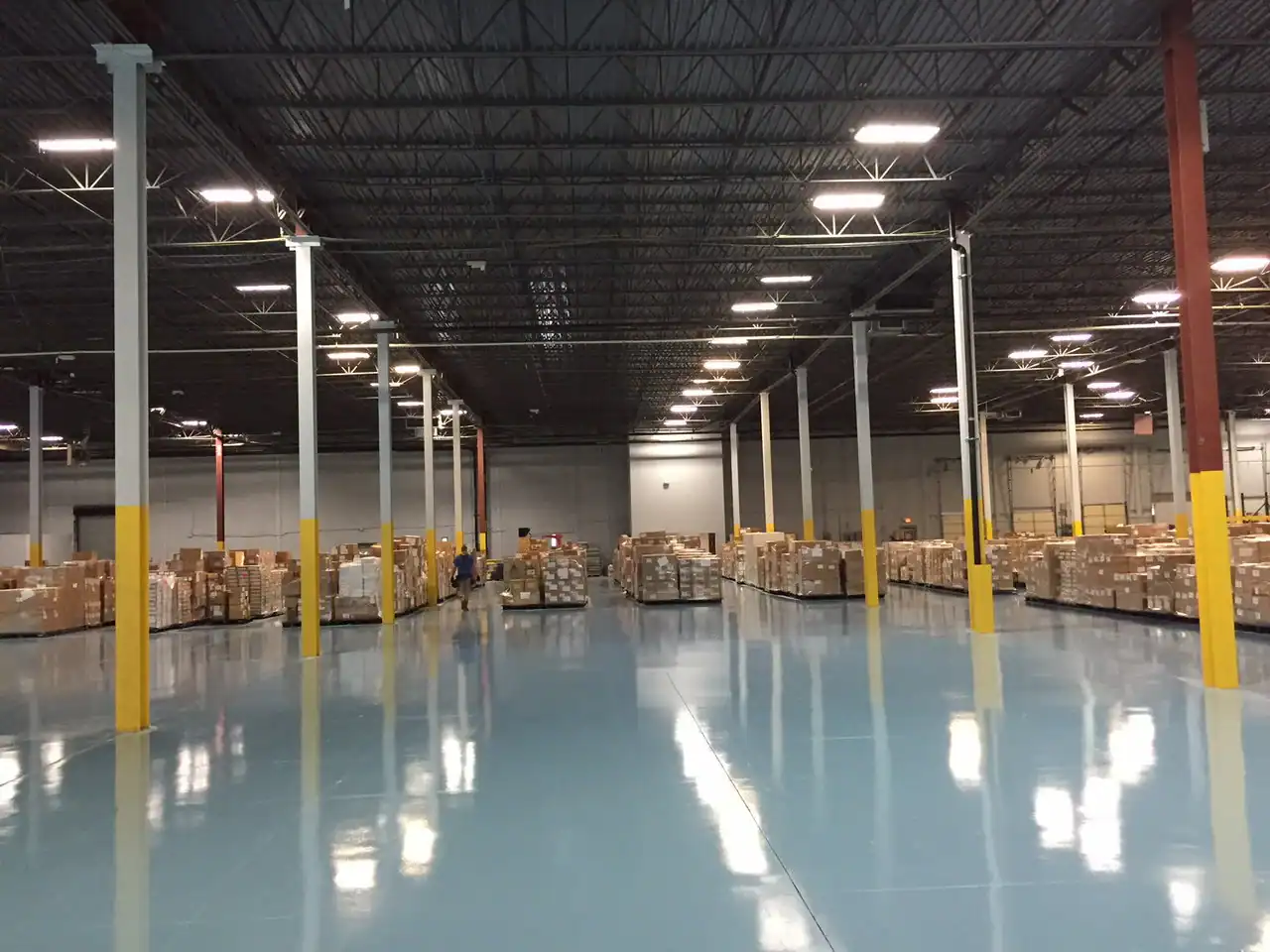
The result is a floor that stops dust, resists damage, improves lighting by up to 200%, and lasts 20+ years when maintained correctly. That’s the difference between a proper installation and a cheap coating job.
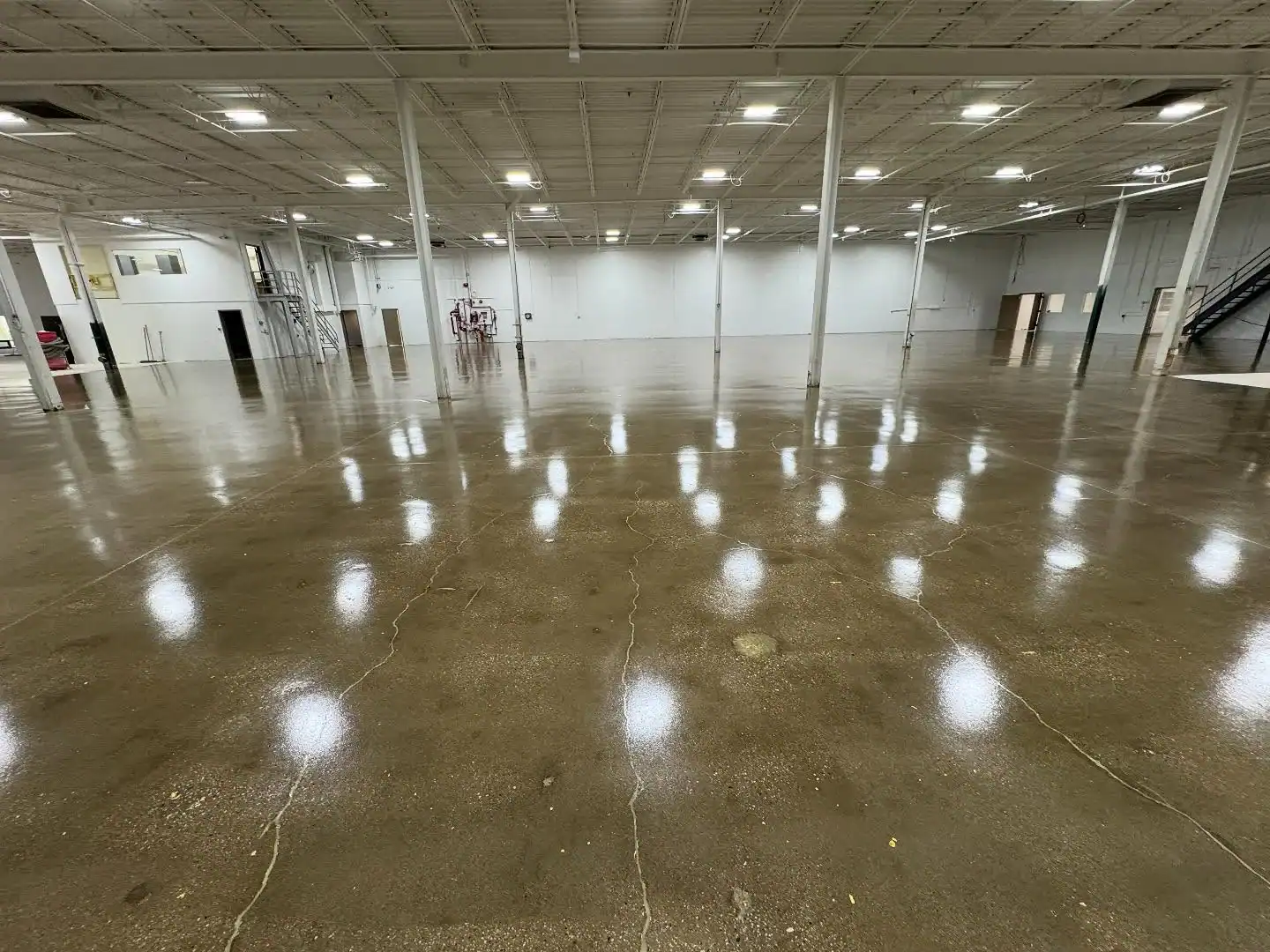
If it’s installed correctly with proper prep and the right coating system, you’re looking at 20+ years even under heavy forklift traffic. That’s assuming you’re using a polyaspartic or polyurea system, not basic epoxy. Standard epoxy breaks down much faster under the kind of abuse warehouses dish out.
The lifespan depends entirely on the prep work. If the concrete isn’t ground or shot-blasted to create proper adhesion, the coating will delaminate within a few years no matter how good the product is. If moisture issues aren’t addressed before installation, you’ll see bubbling and failure even sooner.
Your maintenance matters too. Regular sweeping and occasional mopping keep the floor in good shape. Ignoring spills or letting debris build up will wear down any coating faster. But compared to bare concrete—which starts deteriorating immediately under forklift traffic—a properly installed system gives you decades of reliable performance without constant repairs.
Yes, but only if you’re using the right system. A polyaspartic or polyurea coating is 4-5 times more durable than standard epoxy, and it’s specifically designed to absorb the impact from hard forklift wheels without cracking or spalling. Standard epoxy won’t hold up the same way.
The key is in the prep and the build thickness. If the concrete underneath has existing cracks or joint damage, those need to be repaired before coating. Otherwise, the floor will crack right through the coating at those weak points. We also build up the thickness in high-traffic lanes where forklifts run constantly.
Bare concrete fails under forklift traffic because the wheels grind down the surface, creating dust and eventually potholes. A proper coating creates a harder, more impact-resistant surface that distributes the load instead of crumbling under it. You’ll still need to maintain it, but you’re not looking at the constant deterioration you get with unprotected concrete.
It depends on your square footage and how much repair work the concrete needs, but most warehouse floors can be prepped and coated in sections to keep part of your operation running. If we’re doing the entire floor at once, you’re typically looking at 3-7 days from start to full cure.
Polyaspartic and polyurea systems cure much faster than traditional epoxy, which is why we use them for commercial and industrial jobs. Some systems are ready for light traffic within 24 hours and full traffic within 48-72 hours. That’s a huge difference compared to older epoxy systems that could take a week or more to fully cure.
We work with your schedule to minimize disruption. If you can’t shut down completely, we’ll section off areas and rotate through the space so you can keep critical operations moving. The goal is to get you a floor that lasts without killing your productivity during installation. Rushing the prep to save a day will cost you years of performance, so we balance speed with doing it right.
Polyaspartic coatings cure faster, handle temperature swings better, and are significantly more durable under heavy abuse. Standard epoxy works fine for light-duty spaces, but it’s not built for the kind of punishment a warehouse floor takes daily. That’s why we use polyaspartic or polyurea blends for industrial applications.
Epoxy is more brittle, which means it’s more likely to crack under impact from forklift traffic or thermal shock when temperatures change. It also takes longer to cure, which extends your downtime. Polyaspartic systems are more flexible, so they absorb impact better without cracking. They’re also UV-stable, so they won’t yellow or degrade if your warehouse has skylights or large doors that let in sunlight.
The cost difference exists, but it’s not as big as you’d think when you factor in longevity. A polyaspartic floor that lasts 20+ years without major repairs is cheaper over time than an epoxy floor that needs replacement or heavy maintenance every 5-7 years. For warehouse environments, the durability upgrade pays for itself.
Absolutely. If you coat over cracks, spalls, or joint damage without repairing them first, those problems will telegraph right through the coating and get worse. The coating might hide the damage temporarily, but it won’t stop it from spreading. Within months, you’ll see the cracks reappear and the coating will start failing at those points.
Concrete repairs need to be done with the right materials—not just patching compound from a big box store. We use epoxy or polyurea crack fillers that bond to the existing concrete and flex with the slab. For larger spalls or joint damage, we’ll grind out the damaged area and rebuild it so it’s level with the surrounding floor.
This is one of the biggest reasons DIY coating jobs fail early. People skip the repair work because it’s time-consuming and requires the right tools. But if you want a floor that actually lasts, you have to address the underlying concrete issues before any coating goes down. Fixing a failed coating job later costs more than doing the repairs correctly the first time.
Yes. One of the biggest benefits of a properly installed coating system is that it seals the concrete and stops it from releasing dust. Bare concrete sheds silica dust constantly, especially under forklift traffic. That dust settles on products, gets into equipment, and creates health risks for your team.
When we apply a coating, we’re creating an impermeable barrier over the concrete surface. That stops the dusting completely. You’ll notice the difference immediately—less cleaning, less contamination on stored goods, and better air quality in the facility. If you’re in food distribution or any industry where cleanliness matters, this is a major operational improvement.
The coating also makes cleaning easier. Instead of dust and spills soaking into porous concrete, everything stays on the surface where you can sweep or mop it up. You’re not dealing with stains that penetrate deep into the slab. For warehouses in Deer Park, NY where cleanliness and efficiency matter, a dust-proof floor is a significant upgrade that pays off every single day.