
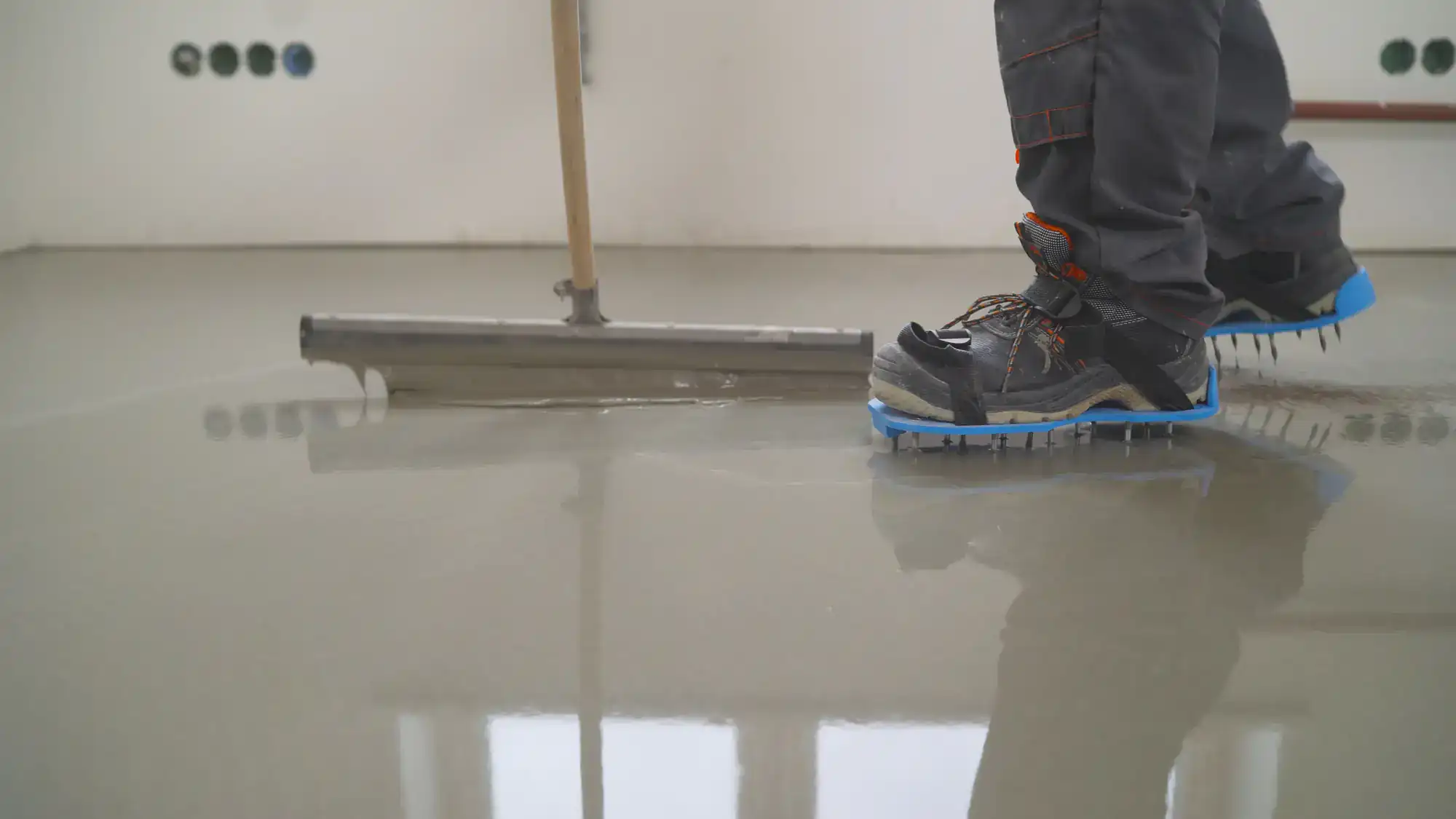
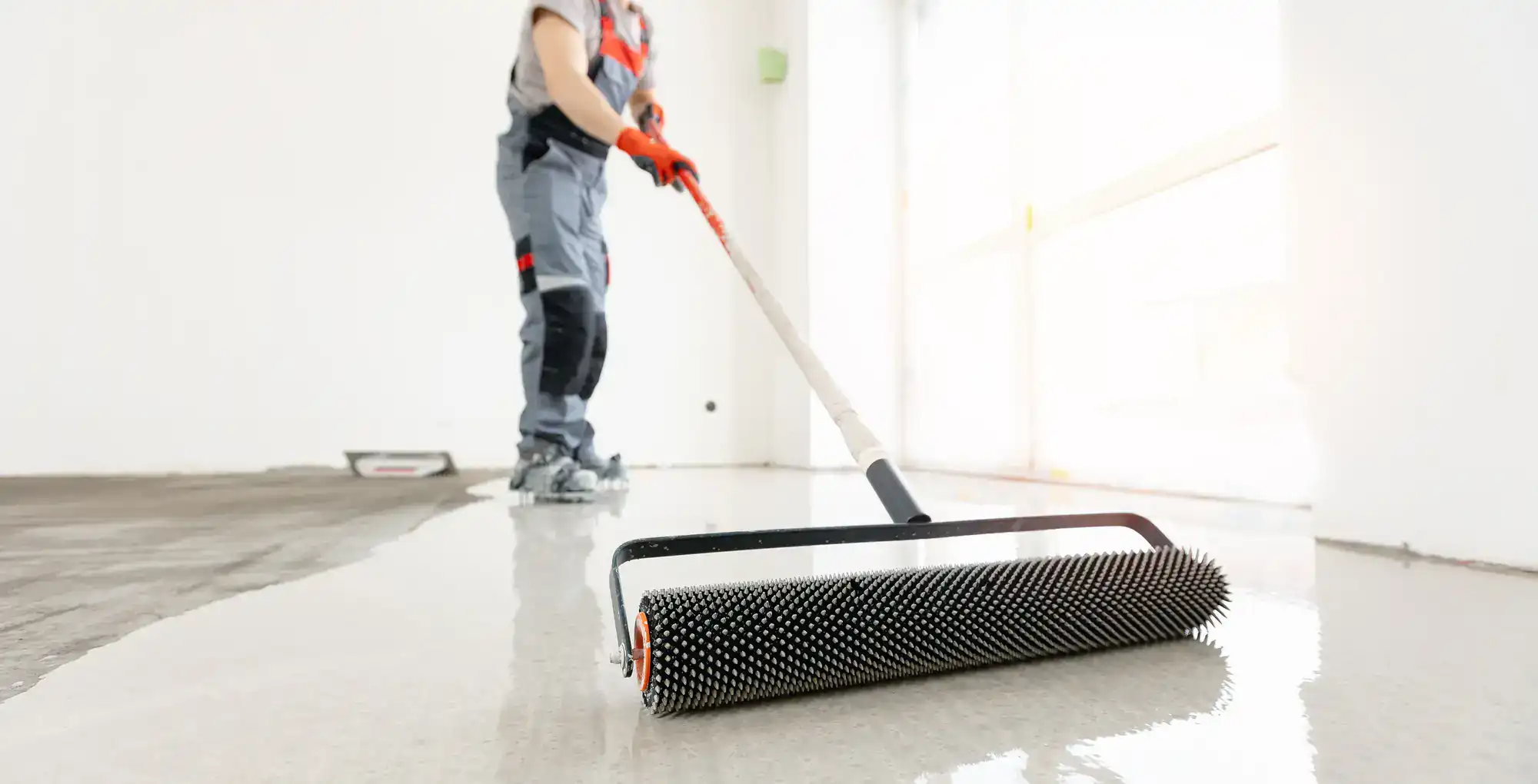
When a floor is uneven, it’s rarely just a surface problem. In Islip, where homes along the Great South Bay have been absorbing coastal humidity, seasonal flooding, and decades of freeze-thaw cycling, the concrete underneath tells a longer story. Cracked tile, lifting vinyl, and doors that won’t close right are symptoms. The question is what’s actually driving them.
Getting self leveling underlayment installed in a home like this a 1960s ranch, a bay-front colonial, a property that’s been through more than a few nor’easters means the prep work matters just as much as the pour. Moisture vapor coming up through a slab that’s been sitting near the water table for 50 years will destroy a new floor if it’s not identified and addressed first. That’s not a worst-case scenario here. That’s routine.
What changes after a proper installation is straightforward: your new tile, vinyl plank, or hardwood has a flat, stable base that won’t shift, crack, or telegraph movement through the surface above it. The floor you’re putting money into actually lasts. And for commercial spaces on Montauk Highway dealing with constant foot traffic and kitchen moisture, a correctly leveled and prepared subfloor means fewer closures, fewer callbacks, and a surface that holds up under real conditions.
We’ve been doing this work for over 30 years, operating out of Bohemia which sits within the Town of Islip itself, roughly 10 miles north of the hamlet. That proximity isn’t a talking point. It means the crew showing up to your property knows what South Shore concrete looks like, how bay-adjacent moisture behaves, and what older housing stock in Islip and across Suffolk County typically needs before any material goes down.
Our president brings more than 40 years of personal installation experience to every project. Most of our crew has been with us for over a decade. That kind of continuity is uncommon in this industry, and it shows in the work. Our installations have ranged from residential homes across Long Island to commercial kitchens, institutional facilities, and projects that have crossed state and international lines including a floor installation in the White House kitchen in 1996. The same standards apply on every job, regardless of size.
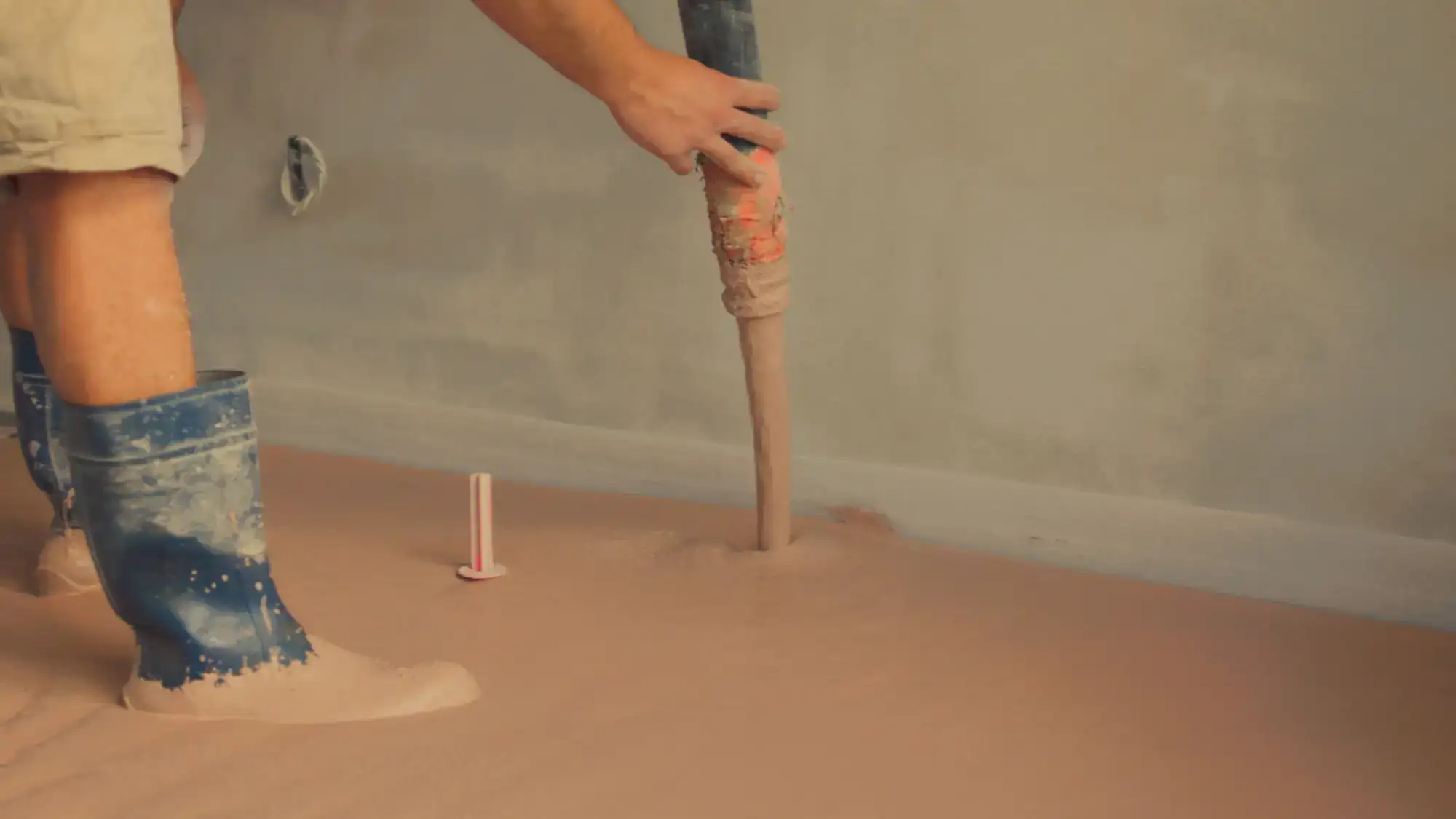
We start every project with moisture testing every time, no exceptions. In Islip, where FEMA Zone AE flood designations cover portions of the residential core and the water table sits close to the surface, skipping this step isn’t a shortcut. It’s how floors fail. We use ASTM F2170 relative humidity testing and MVER testing to confirm whether the slab is ready to accept a self leveling underlayment, or whether moisture mitigation needs to happen first.
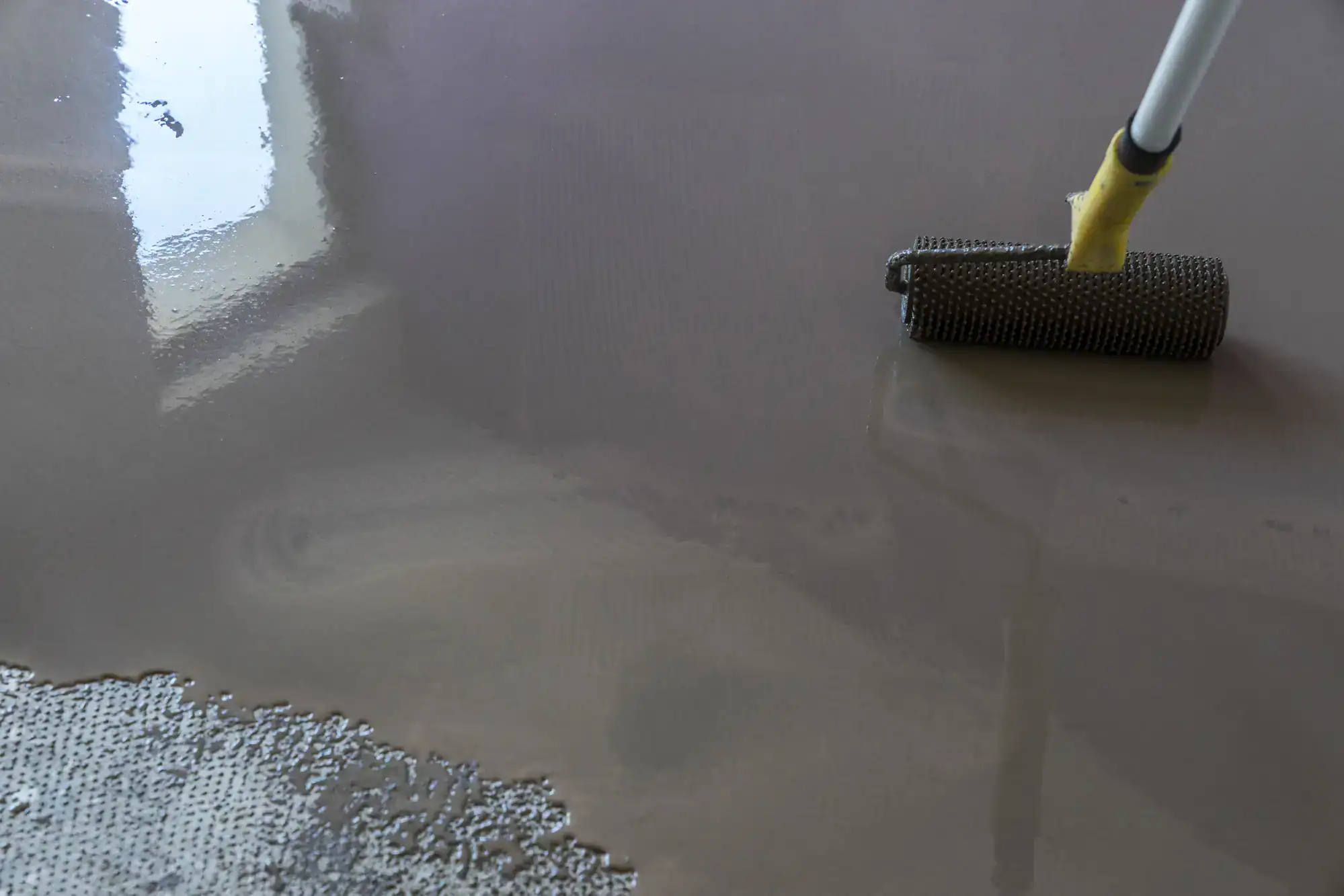
Once the slab clears moisture testing, we prepare the surface. That means grinding, cleaning, and repairing any cracks, spalls, or compromised areas before anything is poured. If there’s old adhesive residue and in homes built before 1980, there often is we address that too. The self leveling compound we use is a high-strength, cement-based, polymer-modified material with high flow characteristics. It can be installed from a quarter inch up to over two inches neat, and up to five inches with aggregate additions. That range covers the minor correction before a luxury vinyl install and the deeper underlayment pour a commercial kitchen subfloor might need.
After the pour, the material is ready for foot traffic in four to six hours. Heavy commercial use is typically cleared within 24 to 48 hours. For a restaurant on Montauk Highway or a homeowner on a renovation timeline, that return-to-service window matters. And because we handle moisture testing, prep, self leveling underlayment, and final coatings under one roof, there’s no gap between what the prep crew did and what the finishing crew expected.
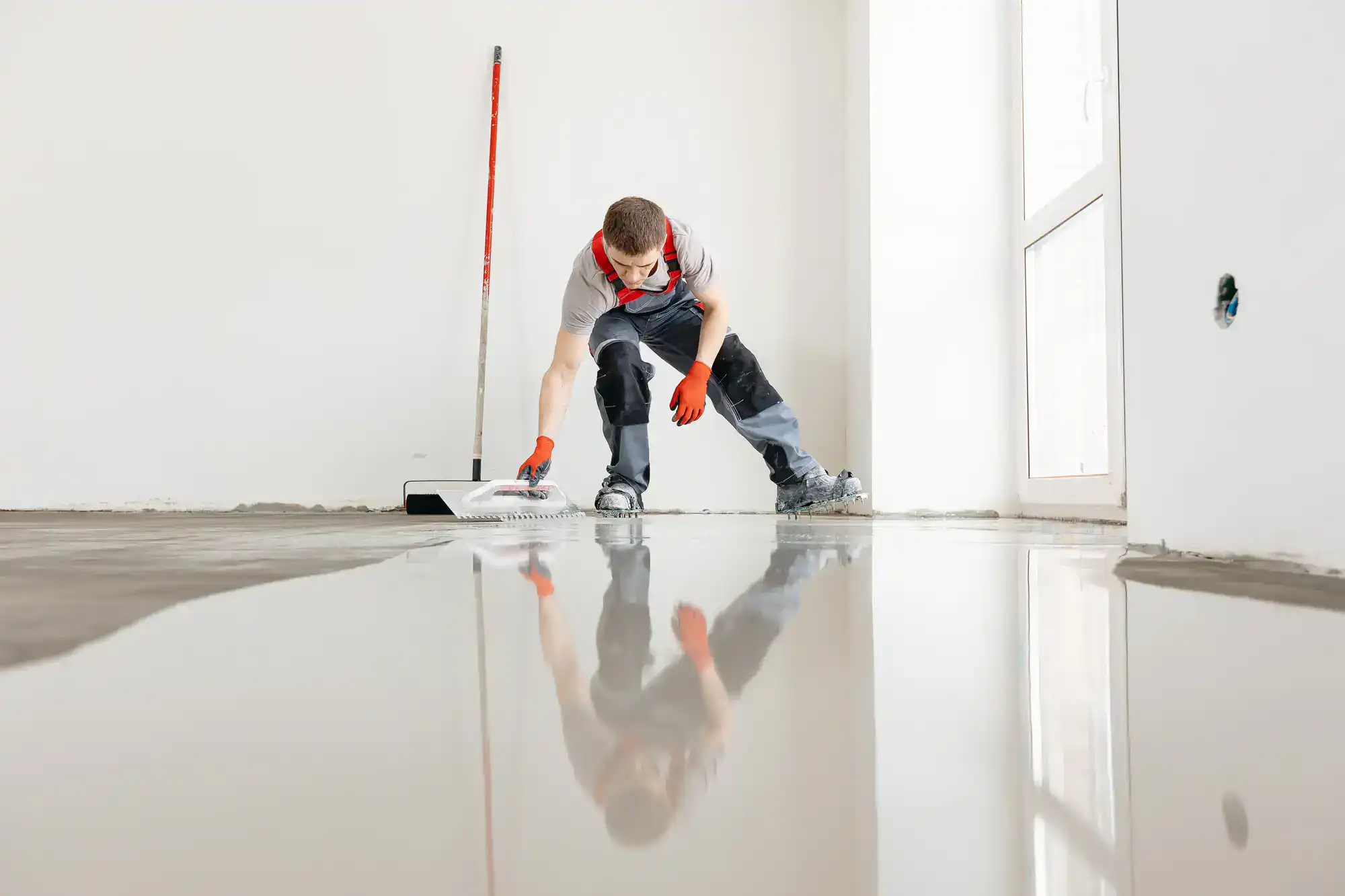
Ready to get started?
The self leveling underlayment system we use on Islip jobs is a commercial-grade, polymer-modified cementitious material not a consumer bag mix from a hardware store. The polymer modification is what gives it the flow to self-level while maintaining the compressive strength needed for long-term performance. In a coastal environment where salt air accelerates concrete degradation and thermal cycling stresses flooring systems year-round, the material difference between a professional-grade system and a DIY product is the difference between a floor that holds for 20 years and one that cracks in the first winter.
Every installation includes the full scope: moisture testing, surface grinding and preparation, concrete crack repair, the underlayment pour itself, and coordination with whatever final floor covering is going on top. For commercial clients restaurants along Route 27A, retail spaces, multi-unit properties we account for schedule constraints. Work can be coordinated around business hours to limit downtime, and the fast-curing system means you’re not locked out of your space for days.
For residential customers in Islip dealing with older homes and legacy subfloors, the assessment before the pour is often where the most important decisions get made. Understanding what you’re working with slab age, moisture history, prior adhesive layers is what makes the difference between a self leveling job that performs and one that becomes a second project six months later.
Yes, and it’s one of the first things worth understanding before any self leveling work gets started in Islip. Properties close to the Great South Bay sit on low-lying terrain with a water table that runs shallow in many areas. Over time, that proximity drives moisture vapor up through concrete slabs often at levels that exceed what standard flooring adhesives and underlayments can tolerate.
We measure relative humidity inside the slab itself using ASTM F2170 testing, and we measure how much moisture vapor is escaping through the surface with MVER testing. Both have industry thresholds that need to be met before a self leveling underlayment goes down. In bay-adjacent communities like Islip, it’s not unusual for a slab to test above those thresholds on the first pass especially in summer months when ambient humidity is already elevated. The answer isn’t to skip the pour. It’s to identify the moisture level accurately and address it with the right mitigation step before the underlayment is applied.
It depends on what you’re correcting and what’s going on top. A minor surface irregularity before luxury vinyl plank might only need a quarter inch. A significantly settled slab common in older Islip homes that have been through decades of freeze-thaw cycling and coastal soil movement could need an inch or more to bring the floor to a flat, workable surface. The polymer-modified cementitious system we use can be installed from a quarter inch up to over two inches neat, and up to five inches with the addition of aggregates.
The right thickness isn’t something to guess at. We determine it during the assessment phase, after we’ve measured the floor for flatness and mapped any high or low spots. Getting this right upfront is what prevents the floor covering above it from showing movement, cracking at grout lines, or developing soft spots under foot. A proper assessment before the pour is the step that makes the rest of the project work.
This comes up regularly in Islip homes built before 1980. Black mastic the adhesive used under vinyl tile in that era often contains asbestos and requires specific handling before any surface preparation begins. If the mastic is intact and not friable, it can sometimes be encapsulated rather than removed, but that determination needs to be made by a qualified professional, not assumed.
Even non-asbestos adhesive residue creates a bond problem for self leveling underlayments. Most self leveling compounds require a clean, porous concrete surface to achieve proper adhesion. Old adhesive layers, sealers, and paint create a barrier that prevents the underlayment from bonding correctly and a self leveling pour over a contaminated surface is a delamination waiting to happen. Surface preparation, including grinding and cleaning down to bare concrete, is part of our standard process before any underlayment is applied. If legacy adhesive is present, we assess and address it before the prep work begins.
Light foot traffic is typically cleared within four to six hours after the pour. For residential projects, that usually means you can walk through the space by the end of the same day. Heavy commercial use equipment, rolling carts, sustained foot traffic is generally cleared within 24 to 48 hours. Full cure, which is when the material reaches its rated compressive strength, takes about 28 days, but that doesn’t mean the floor is out of service during that window.
For businesses on Montauk Highway or in Islip’s commercial corridor, the return-to-service timeline is a real operational consideration. The fast-curing system we use is specifically suited for commercial environments where extended closures aren’t an option. Scheduling the pour at the end of a business day or over a weekend can minimize downtime significantly. If you’re working around a specific reopening date or a renovation deadline, that’s worth discussing during the assessment so the timeline can be planned accordingly.
For most finish flooring types ceramic and porcelain tile, luxury vinyl plank, hardwood, laminate, and epoxy coatings a properly installed self leveling underlayment creates the flat, stable substrate those materials need to perform correctly. Large-format tile in particular is unforgiving of any variation in the subfloor. Lippage, where one tile edge sits higher than the adjacent tile, is almost always a subfloor flatness problem. A self leveling underlayment that brings the slab into spec eliminates that issue before the tile goes down.
The one exception worth noting is radiant heat systems. If there’s an in-floor radiant heating system involved, the self leveling compound selected needs to be compatible with the thermal cycling that system produces. That’s a conversation to have during the assessment phase, not after the pour. Most commercial-grade cementitious underlayments handle radiant heat applications, but the system design and the underlayment product need to be matched correctly for long-term performance.
For most residential projects in Islip, self leveling underlayment work falls somewhere in the range of $750 to $3,500 depending on the square footage, the depth of correction needed, and what surface preparation the slab requires. Larger commercial projects a restaurant kitchen, a retail space, a multi-unit building can run higher, typically $3,000 to $6,000 or more depending on scope.
What affects the number most is what the slab needs before the pour. A straightforward surface correction on a clean, dry slab costs less than a project that requires moisture mitigation, crack repair, and grinding down legacy adhesive first. In Islip, where older housing stock and coastal moisture conditions are common, it’s not unusual for the prep work to be a meaningful part of the total. That’s not an upsell it’s what separates a floor that performs from one that fails and needs to be redone. Getting an accurate assessment of the slab’s actual condition upfront is the only way to give you a number that reflects what the job actually requires.