
The North Fork doesn’t slow down between June and November. Tasting rooms are packed, restaurants are full, and boutique inns are booked out. Your floor takes all of it foot traffic, wine spills, cleaning chemicals, the works. When it’s properly polished and densified, it doesn’t just survive that kind of use. It stays looking sharp through all of it without a wax cycle, a recoat, or a repair call.
What most people don’t think about until it’s a problem is what the coastal environment here does to an untreated slab. Long Island Sound to the north, Peconic Bay to the south the humidity and salt air on the North Fork are relentless. Moisture works its way into untreated concrete and starts breaking it down from the inside. A properly densified floor closes those pores at the chemistry level, so the slab itself becomes the barrier. That’s not a coating sitting on top waiting to peel. That’s the concrete hardened from within.
And because Southold winters still bring freeze-thaw cycles temperatures swinging from the teens to the forties in the same week that same densification protects against the internal expansion damage that cracks and degrades untreated slabs over time. The result is a floor built for this specific environment, not just a generic finish that looks good on install day and starts failing by spring.
Danny Harmer has been doing this work personally for over 40 years. Not managing crews from a distance actually on the job, assessing slabs, running equipment, and making the calls that determine whether a floor lasts 20 years or starts failing in 18 months. When you hire us in Southold, that’s who shows up.
The credentials are real and specific. In 1996, Danny completed flooring work at the White House kitchen the most scrutinized commercial kitchen in the country. He holds Sherwin-Williams High Performance Flooring certification, meaning the manufacturer itself has vetted how he applies their systems. He also carries Res Tech certification, adding another layer of technical training that most contractors in the Long Island market simply don’t have.
Southold’s commercial environment wineries along Route 25 through Cutchogue and Peconic, hospitality operations from Mattituck to Greenport, agricultural facilities spread across the whole peninsula demands a contractor who understands what these spaces actually go through. We do.
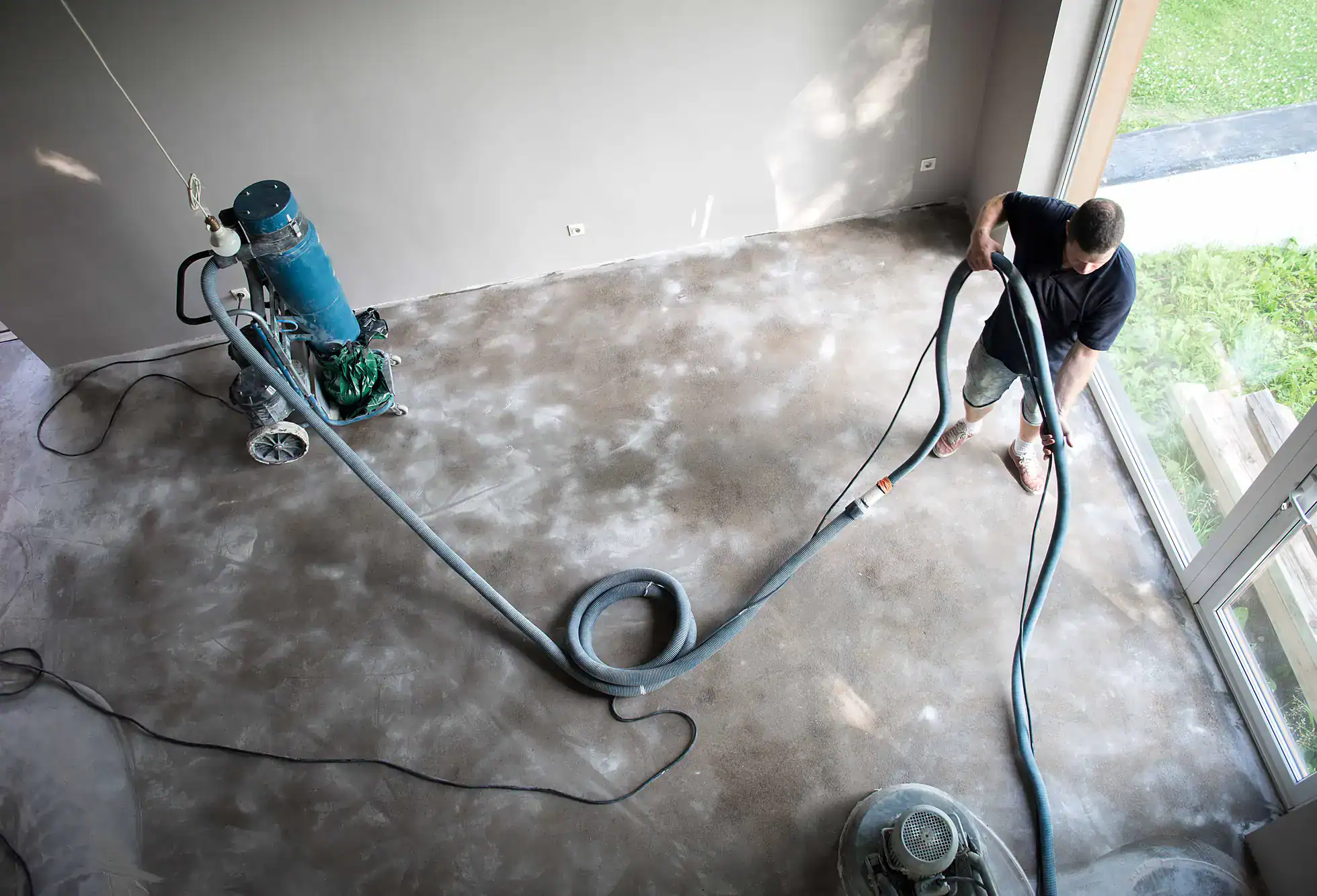
The first step is always the slab assessment. Before any equipment touches your floor, we evaluate the condition of the concrete existing coatings, cracks, moisture levels, surface hardness, and what the mix design tells us about how the slab will respond to grinding. In coastal buildings along the North Fork, moisture readings matter more than they do inland. A slab that’s been sitting in a building exposed to bay-side humidity for decades behaves differently than a newer pour, and the process has to account for that.
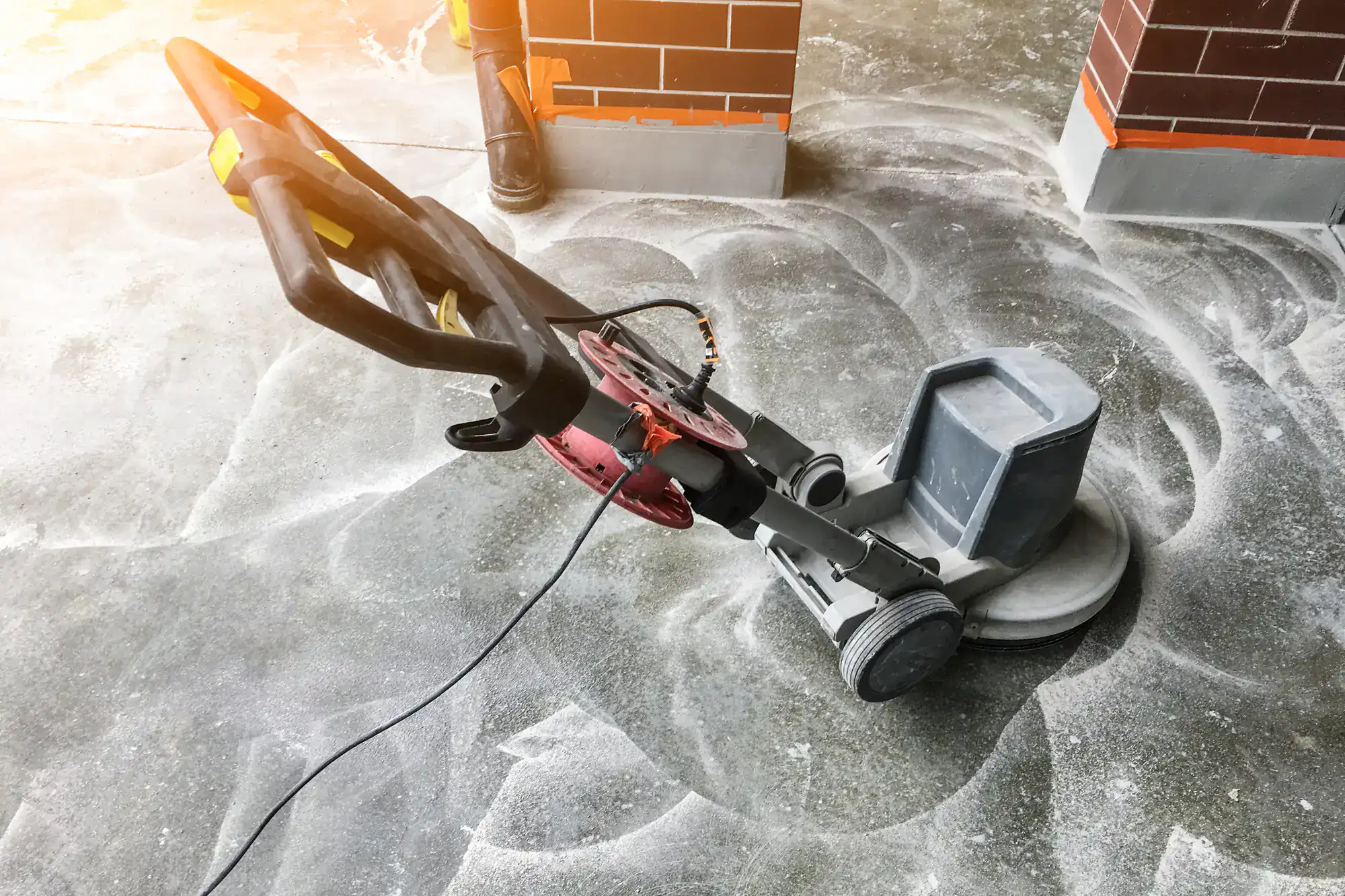
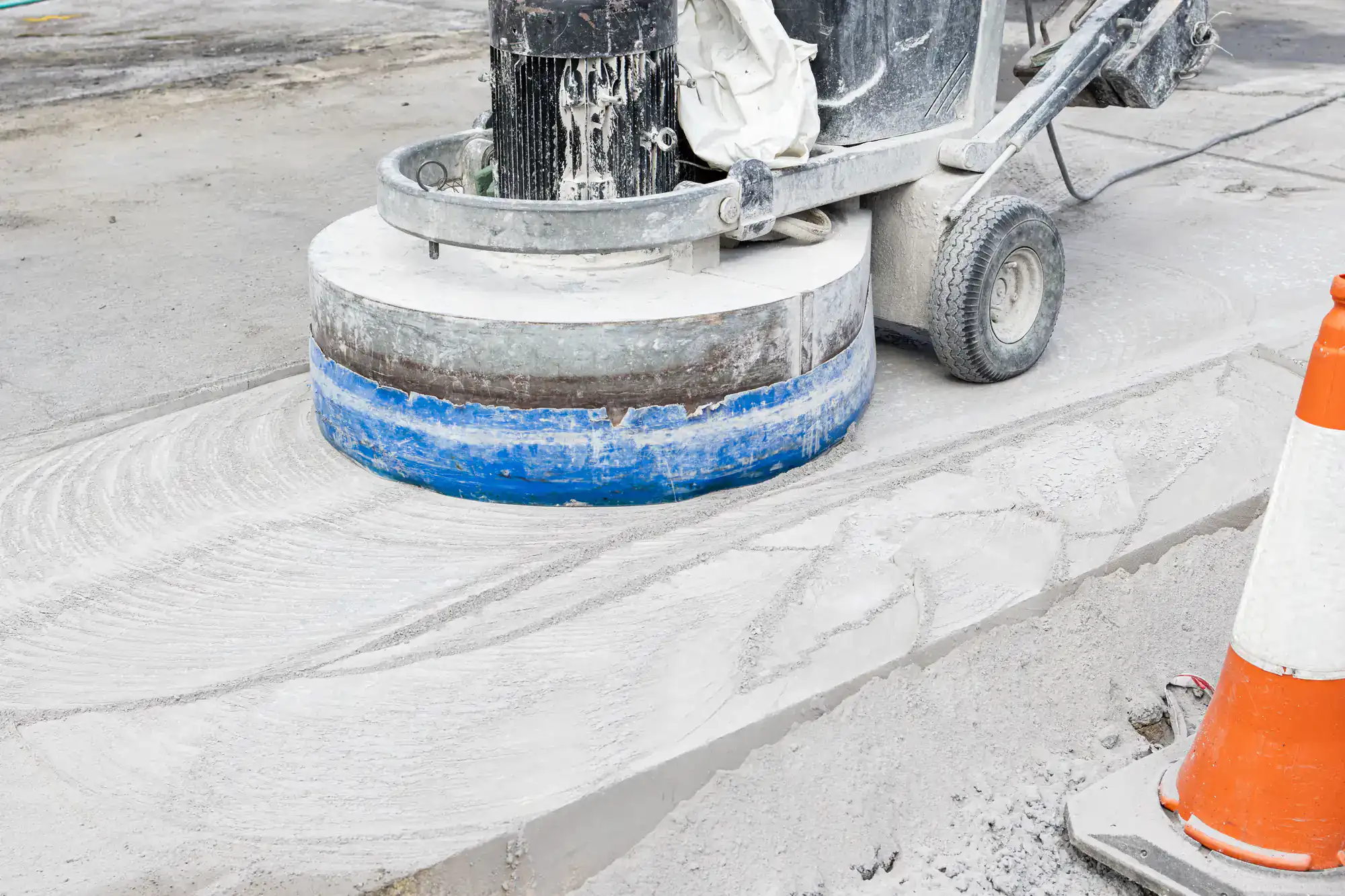
From there, the grinding sequence begins. Diamond tooling removes surface contamination and opens the concrete to accept the densifier. The grit progression moves from coarse to fine in deliberate stages this is where the finish class gets built. Whether the space calls for a Class 2 satin finish in a production facility or a Class 4 high-gloss floor in a tasting room, the diamond sequence determines the outcome. Skipping steps here is how you get a floor that hazes within a year.
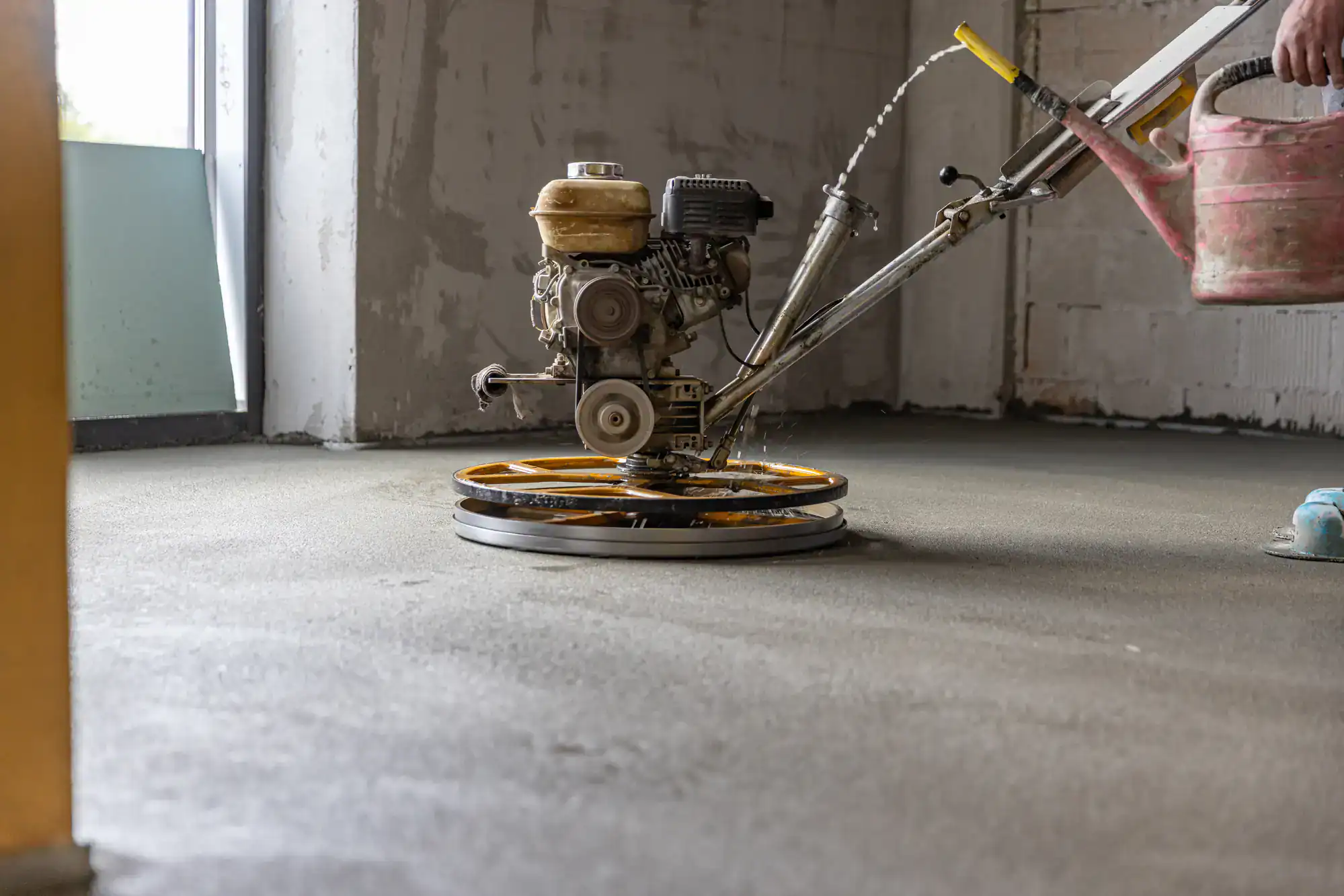
Once the surface is prepared, the chemical densifier goes down. It penetrates the slab and reacts with the calcium hydroxide in the concrete to form a harder, denser surface matrix. After that cures, the final polishing passes bring the gloss to spec, and a stain guard seals the surface. For hospitality and restaurant environments in Southold, we work anti-slip additives into that final coat without changing the appearance so the floor meets OSHA’s 0.5 COF standard without sacrificing the finish.

Ready to get started?
The commercial spaces on the North Fork aren’t all the same, and the flooring approach shouldn’t be either. A winery production floor in Cutchogue has different demands than a tasting room in Peconic or a boutique hotel lobby in Greenport. Production areas need a floor that handles forklift traffic, chemical cleaning agents, and moisture without flinching. Tasting rooms and hospitality spaces need a floor that does all of that while also looking like it belongs in a premium environment. Polished and densified concrete handles both it’s the same slab, refined to the finish level the space requires.
For retail showrooms, farm-to-table restaurants, and high-end inn interiors along the North Fork corridor, the finish class matters. We specify the right gloss level for your space before the job starts not after. That conversation happens during the assessment, where the slab condition, the lighting, the use case, and the aesthetic expectations all get factored in together.
Agricultural and production facilities across Southold Town also benefit from the industrial concrete polishing process. There’s no coating to delaminate, nothing to chip or peel under pallet jack traffic, and the surface is cleanable to food-safe standards. For a sector where the floor takes real abuse, that durability isn’t a luxury it’s the baseline requirement. Suffolk County’s commercial building stock across this peninsula deserves a floor system that was actually designed for what it’s going through.
It’s one of the best fits you’ll find for that environment. Tasting rooms in Southold deal with wine spills, foot traffic from tastings and events, and cleaning chemicals on a regular basis sometimes all in the same afternoon. Polished and densified concrete handles all of that without staining, without degrading, and without needing to be recoated between seasons. The surface is non-porous once properly sealed, which means wine doesn’t penetrate it the way it would an unsealed or improperly finished floor.
From an aesthetic standpoint, the material also works naturally in the North Fork wine country context. The reflectivity of a Class 3 or Class 4 finish amplifies natural light, which is something tasting rooms along Route 25 and through the Cutchogue and Peconic hamlets tend to have in abundance. The floor becomes part of the experience rather than something guests step over without noticing. And because the lifespan of a properly installed polished concrete floor runs 15 to 25 years with basic maintenance, you’re not revisiting this decision every time you do a renovation.
The timeline depends on square footage, slab condition, and the finish class you’re going for but most commercial installations in the range typical for North Fork hospitality and retail spaces run anywhere from two to five days. Larger production facilities or phased projects can take longer, but the process is designed to be sequenced in a way that minimizes downtime where possible.
For Southold business owners, timing the project during the off-season window roughly late October through early April is the practical approach. That’s when tasting rooms, restaurants, and inns are at their lowest occupancy, and it’s the natural installation window before the tourism and harvest season picks back up. We’ve structured projects in sections before to allow partial facility operation during the work, so if a complete closure isn’t an option, that conversation happens during the assessment. The goal is a finished floor ready before your season opens, not a remediation project after it already has.
This is one of the most common concerns, and it’s worth addressing directly because the assumption is wrong. Gloss and slip resistance are independent properties a floor can have a high-gloss finish and still meet or exceed OSHA’s minimum coefficient of friction standard of 0.5 for level commercial surfaces. The finish level affects how light reflects off the surface. It doesn’t determine how much traction the surface provides.
For restaurant kitchens, bar areas, or any space in a Southold hospitality operation that sees regular wet traffic, we incorporate anti-slip additives into the final stain guard coat. This is a standard specification decision that gets made during the assessment phase, not something tacked on after the fact. The additive doesn’t change the appearance of the floor in any meaningful way guests won’t notice it, but the friction rating will reflect it. If your space has a commercial kitchen or an entry that opens directly to the outdoors, this is a conversation worth having before the job starts.
Commercial polished concrete in the Northeast typically runs between $3 and $12 per square foot, and where your project lands in that range depends on a few real factors: the condition of the existing slab, the finish class you’re specifying, the square footage, and any prep work required before grinding can begin. A large, clean slab in a production facility going to a Class 1 matte finish is going to cost less per square foot than a tasting room floor with an old coating that needs removal before going to a Class 4 high-gloss finish.
For Southold commercial properties where median property values are approaching or exceeding a million dollars and the commercial environment is built around premium consumer experiences the more useful frame is lifecycle cost rather than install cost. A properly installed polished concrete floor lasts 15 to 25 years with basic maintenance and no recoating cycles. Compare that to VCT, which requires annual waxing and stripping in commercial use, or carpet, which needs replacement every seven to ten years. The upfront investment is higher than the cheapest alternative. The 10-year and 20-year cost is consistently lower.
Existing slabs can absolutely be polished and in fact, most commercial polished concrete work is done on existing concrete, not new pours. The assessment process exists specifically to evaluate what the slab is working with: age, hardness, existing coatings or adhesives, moisture content, cracks, and surface contamination. All of those factors influence the preparation approach, but very few of them are disqualifying on their own.
Older buildings along the North Fork and there are plenty of them, given Southold’s historic commercial stock often have slabs that have been covered with VCT, carpet, or other flooring materials for decades. Removing that material and assessing what’s underneath is part of the standard process. Slabs in coastal buildings sometimes show moisture-related surface issues that need to be addressed before densification, which is why the assessment includes moisture readings. The point is that the process adapts to what the slab actually is, not what you’d ideally want it to be. We’ve worked with slabs in far worse condition than most of what exists in Southold’s commercial building stock, and the outcome is still a durable, properly finished floor.
Most contractors who list Southold as a service area are general Long Island flooring companies without demonstrated experience in the specific commercial environments the North Fork runs on wineries, boutique hospitality, agricultural production facilities, coastal commercial buildings. There’s a real difference between a contractor who knows how to apply a product and one who understands the chemistry behind why it works, what happens when it’s applied incorrectly, and how coastal humidity, salt air, and freeze-thaw cycling affect a slab’s long-term performance.
Danny Harmer built Advanced Epoxy Flooring specifically because he saw contractors applying flooring systems without that understanding and watched the results fail. After 40 years of hands-on work, Sherwin-Williams HPF certification, Res Tech certification, and a project list that includes the White House kitchen, the technical foundation here is not a marketing angle. It’s the actual reason the floors hold up. For a Southold business owner investing in a space that needs to perform for the next two decades, that difference matters more than a lower install quote from a contractor who won’t be around when something goes wrong.