
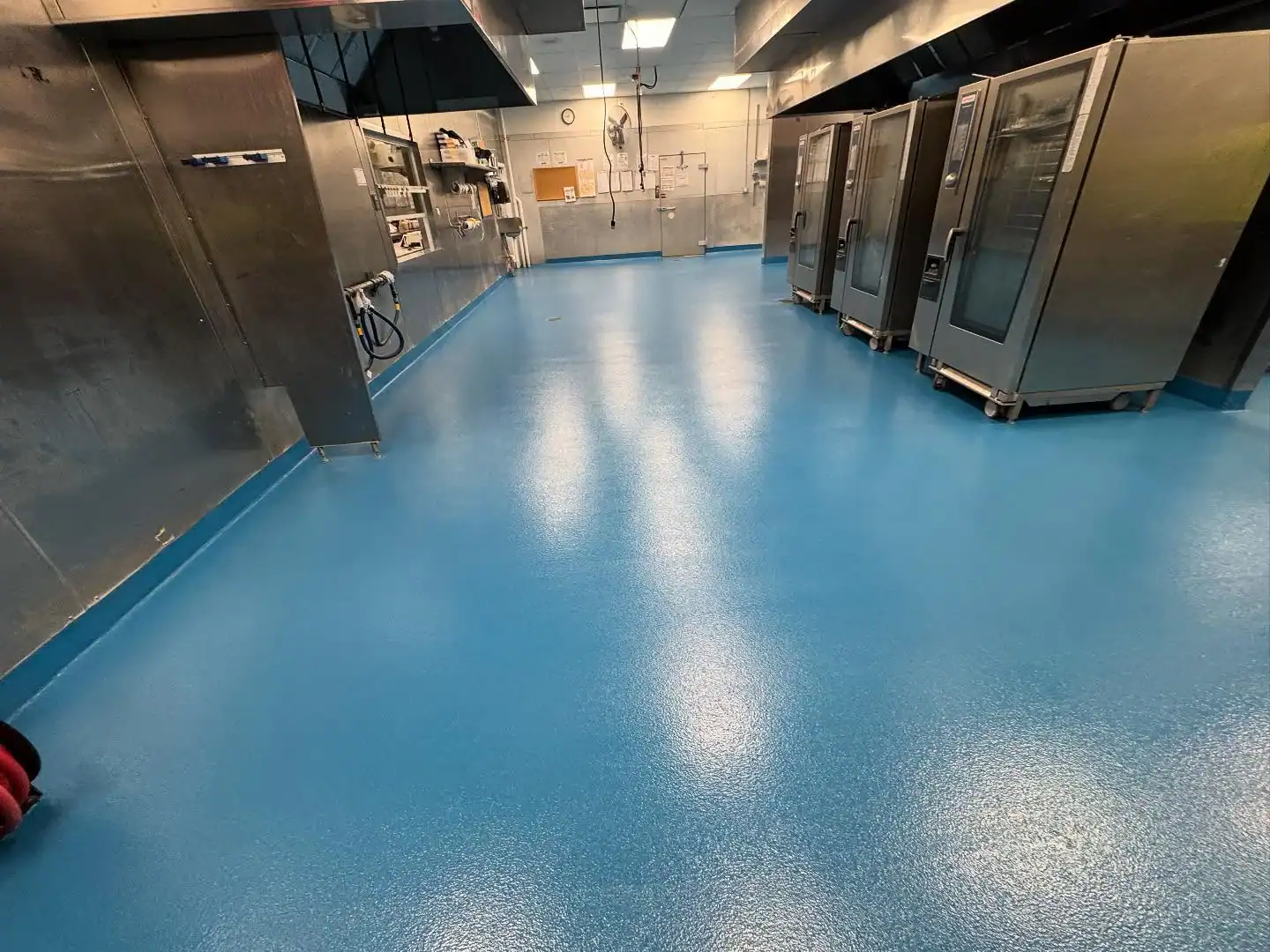
Southold kitchens deal with conditions that most flooring systems aren’t designed for. The peninsula is surrounded by water on three sides Long Island Sound to the north, Peconic Bay to the south and that moisture doesn’t stay outside. It works its way into concrete slabs, and when a floor goes down over untested, moisture-laden concrete, delamination is only a matter of time. We eliminate that cycle entirely with properly installed food-grade epoxy flooring.
For restaurant owners along Route 25, winery prep kitchens out in Peconic and Cutchogue, and farm-to-table operations that run hard from Memorial Day through October, a seamless floor also means no grout lines trapping grease, no cracked tile giving a health inspector something to write up, and no surface that can’t be fully sanitized after a busy Saturday night service. That’s critical when Suffolk County’s health department is doing its rounds in Southold.
The building stock on the North Fork is older, too. Most commercial structures along the Main Road were built around 1970, and those slabs have had decades to crack and deteriorate. A floor installation that skips proper surface prep on concrete like that won’t last and you’ll be doing this again in two years. Done right the first time, a commercial kitchen floor in Southold, NY should last twenty years or more.
We’ve been installing commercial and industrial floors for 35 years, and this isn’t a side service we picked up along the way. It’s all we do. Based in Bohemia, NY right here in Suffolk County we work in the same coastal conditions, on the same aging Long Island slabs, and under the same health department scrutiny that every Southold food service operator deals with.
We hold Sherwin-Williams High Performance Flooring ATP certification and Res Tech certification two manufacturer-backed credentials that require demonstrated competency in concrete assessment, surface prep, and full system installation. That kind of training isn’t common among Long Island flooring contractors, and it matters when you’re putting a food-grade system down in a Southold kitchen that can’t afford to fail a health inspection.
Our process is built around getting it right the first time. That means moisture testing the slab before anything goes down, proper diamond grinding, crack remediation, and a multi-layer system matched to your specific kitchen environment. We’ve been doing this long enough to know that the prep work is what determines whether a floor lasts two years or twenty.
Every installation starts with a concrete assessment not a visual glance, but actual moisture testing. This is the step most contractors skip, and it’s the reason most epoxy floors on the North Fork fail within a few years. Southold’s coastal environment means moisture vapor transmission in concrete is almost always a factor. We test first, and we don’t move forward until we know what we’re working with.
Once the slab is assessed, we diamond grind the surface to the correct profile for adhesion, fill cracks, and level any uneven areas. On older commercial slabs the kind you’ll find under most kitchens along Route 25 or County Road 48 this stage takes real time and attention. Rushing it is exactly how you end up with a floor that looks fine for six months and then starts peeling.
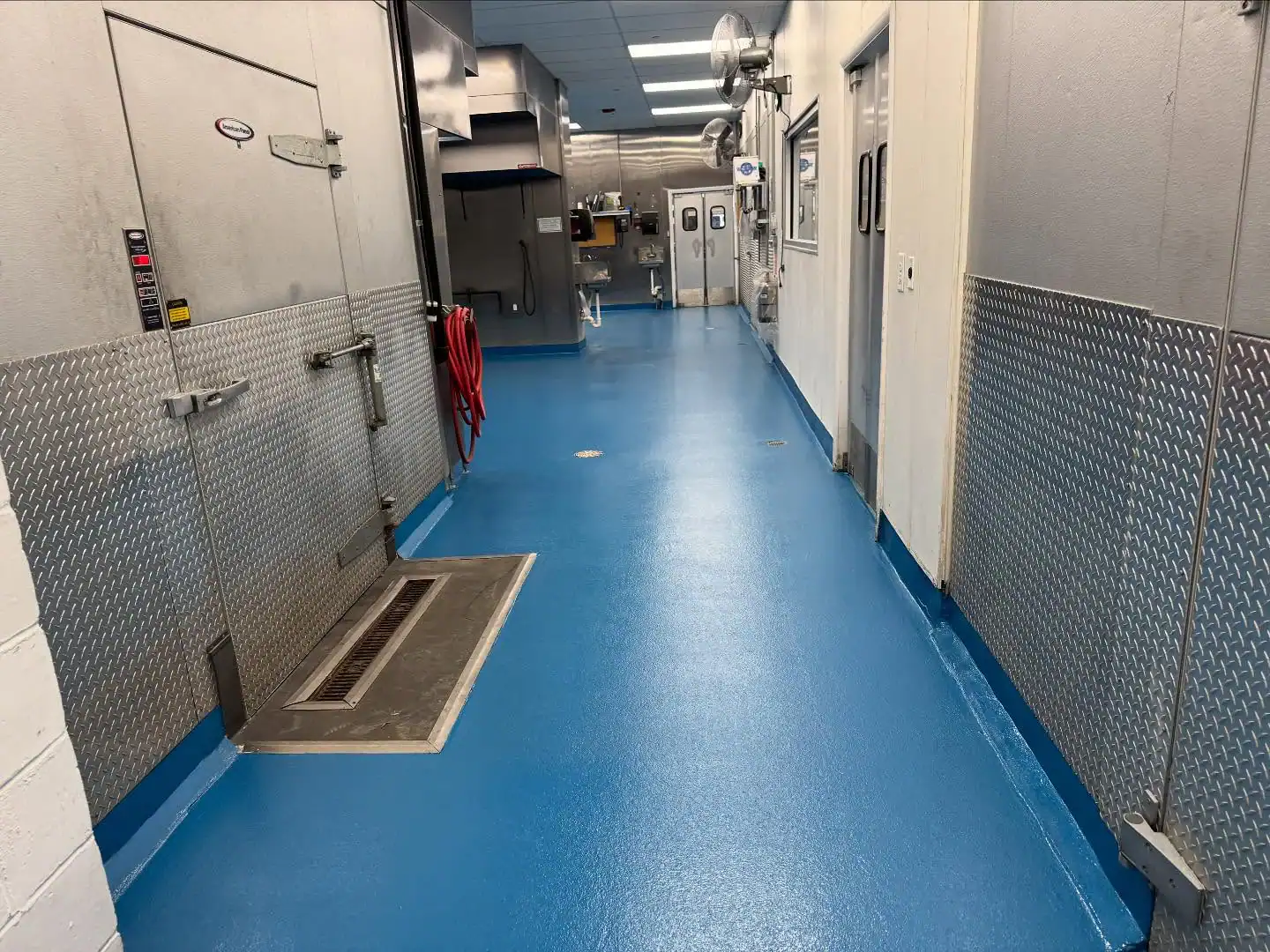
From there, we apply the full system: base coat, build coats for thickness and impact resistance, and a slip-resistant, chemical-resistant topcoat specified for food service environments. We also install integral coved base at floor-to-wall junctions a detail Suffolk County health inspectors look for specifically. Scheduling is something we take seriously in a seasonal market like Southold. The best window for most operators here is the winter off-season, January through March, when kitchens are closed or running light. We also do overnight and weekend installations when the timeline calls for it, and fast-cure polyaspartic systems can have your kitchen back in service within 24 to 36 hours when the season is pressing.
Ready to get started?
Not every commercial kitchen in Southold has the same needs. A high-volume restaurant running double covers on a summer Saturday is a different environment than a winery tasting room kitchen in Peconic or Cutchogue that does weekend events and private dinners. We assess your specific conditions foot traffic, cooking equipment, cleaning protocols, proximity to walk-in coolers, and the layout of the space before we recommend a system. The goal is a floor that’s right for your kitchen, not the closest thing on a price sheet.
For cooking zones with heavy heat and thermal shock, urethane cement mortar systems are the right call. For areas exposed to frequent wet cleaning and commercial sanitizers, chemical-resistant topcoats are built into the system. Every installation includes a seamless surface with no joints or grout lines, integral coved base at the floor-to-wall transition, and a slip-resistant finish all of which align directly with what the Suffolk County Department of Health Services requires for food establishment floors under New York State Sanitary Code.
Whether you’re running a restaurant in Greenport, a catering kitchen in Mattituck, or a farm stand prep area in Cutchogue, the floor system we install is designed to pass a health inspection, hold up through your busiest season, and not need to be replaced before you’ve gotten your money’s worth out of it.
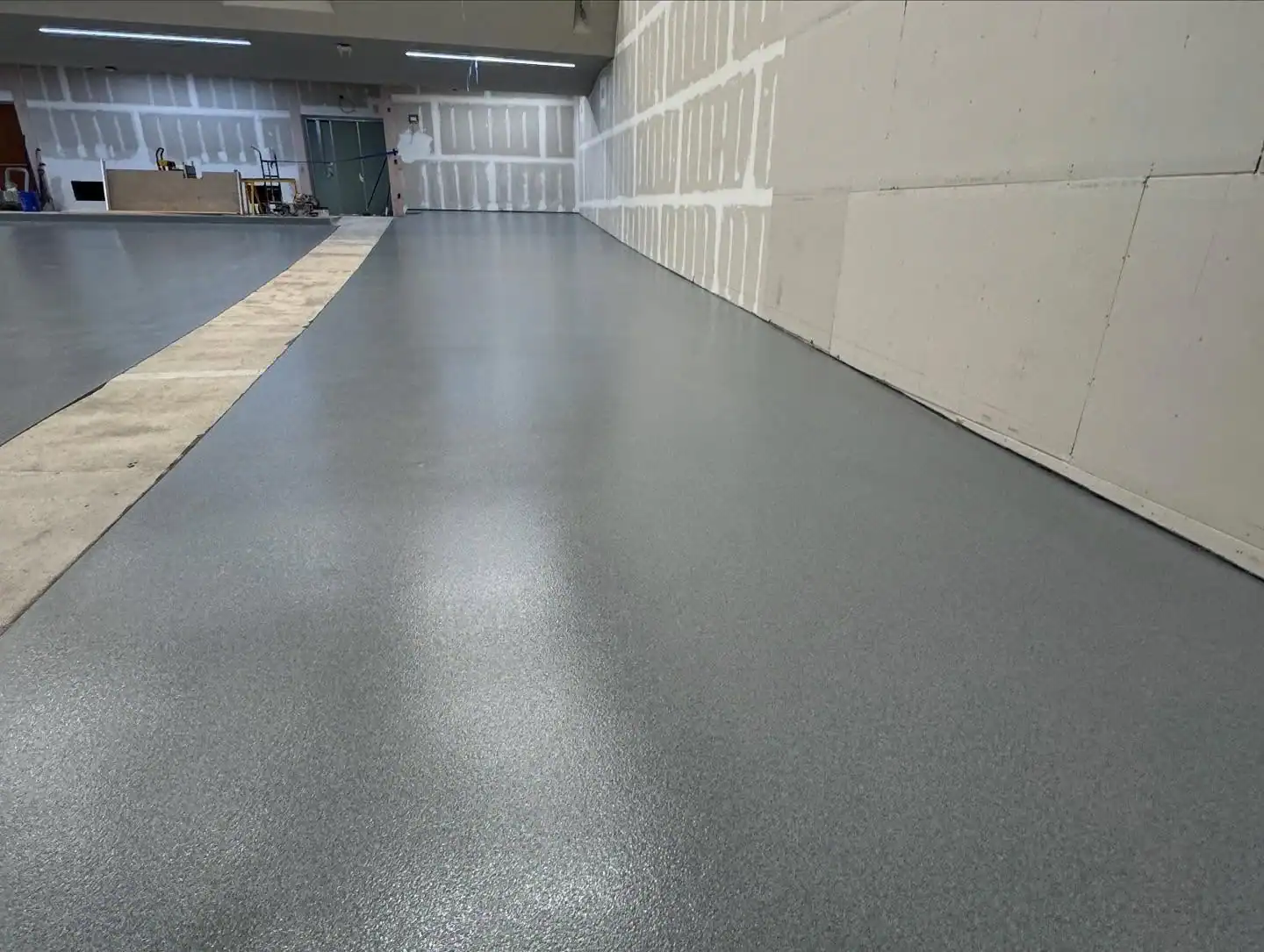
Suffolk County food service establishments are permitted and inspected by the Suffolk County Department of Health Services, Bureau of Public Health Protection. The standards we follow are based on the New York State Sanitary Code, which requires kitchen floors to be smooth, non-porous, non-absorbent, and easily cleanable. Floors also have to be maintained free of cracks, chips, and open gaps all of which are documented inspection points.
In Southold specifically, grout-lined tile floors are a recurring problem for operators. Grout absorbs grease and bacteria no matter how aggressively you clean it, and inspectors know it. A seamless food-grade epoxy system with integral coved base at the floor-to-wall junction satisfies every one of these requirements in a single installation. If you’re going through a plan review for a new food service operation or a significant renovation, the flooring material and finish will be part of the documentation the health department reviews before you open.
The short answer is moisture. Southold sits on a narrow peninsula surrounded by Long Island Sound and Peconic Bay, and the water table is close to the surface throughout the North Fork. Concrete slabs in this environment have elevated moisture vapor transmission meaning water is constantly trying to push up through the slab from below. When a coating goes down over concrete that hasn’t been properly tested and prepared for moisture, the bond between the coating and the slab breaks down. That’s delamination, and it typically shows up within one to three years.
The fix isn’t a different brand of epoxy. It’s testing the slab before anything goes down and using a system primer, build coats, topcoat that’s specified for the actual moisture conditions present. On older commercial slabs along Route 25 or County Road 48 in Southold, where the concrete may be 50 years old and has never been assessed, this step is especially important. We don’t skip it.
A properly installed food-grade epoxy floor in a commercial kitchen should last 15 to 20 years with normal maintenance. The variables that affect that timeline are the quality of surface preparation, whether the system was specified correctly for the environment, and how the floor is maintained after installation. A floor installed over unprepped or moisture-laden concrete even with a good product will fail early. A floor installed over properly prepared concrete with the right system for the conditions will hold up through years of heavy commercial use.
In Southold’s climate, where temperatures swing from below 25°F in winter to over 80°F in summer and coastal humidity is a year-round factor, system selection matters. Urethane cement and polyaspartic systems handle thermal cycling and moisture better than standard epoxy alone. We match the system to the conditions of your specific kitchen, which is a big part of why properly installed floors in environments like this last as long as they do.
For most food service operators on the North Fork, the best window is the winter off-season January through March. That’s when restaurants, winery tasting rooms, and catering operations are closed or running at minimal capacity, which means the installation causes the least disruption to your revenue. It also gives the floor adequate cure time before the Memorial Day rush, so you’re not opening the season on a floor that hasn’t fully hardened.
If you missed the winter window, the shoulder periods in April and early May or in October and November are workable alternatives. We also do overnight and weekend installations for operators who can’t take a kitchen fully offline during the week. Fast-cure polyaspartic topcoat systems can return a kitchen to light use within hours and full commercial use within 24 to 36 hours which matters a lot when you’re trying to minimize downtime before the season opens.
For most flooring replacements that don’t involve structural changes to the building, a separate building permit from the Town of Southold’s Building Department isn’t typically required. However, if you’re operating a food service establishment and the project is part of a new opening or a significant renovation, you’ll need to go through a plan review with the Suffolk County Department of Health Services before work begins. That plan review process includes documentation of your flooring materials and finishes in food preparation areas.
It’s worth confirming the specifics of your project scope with the Town of Southold Building Department, located at Town Hall on Route 25, before you start. Requirements can vary depending on the nature of the work. We can walk you through what a food-grade epoxy system looks like on paper and what documentation is typically needed for a Suffolk County health department plan review that’s a conversation we’ve had many times with operators across Long Island.
The core system is similar, but the specification depends on how the kitchen is actually used. A winery tasting room kitchen in Peconic or Cutchogue that does weekend events and private dinners has different demands than a high-volume restaurant running service five nights a week. The cleaning protocols, foot traffic levels, cooking equipment, and exposure to spills and sanitizers all factor into which system is the right fit.
For winery and event kitchen environments, we typically look closely at chemical resistance wine, acidic cleaning agents, and the sanitizers used in food service can degrade a topcoat that isn’t specified for that exposure. We also factor in aesthetics, because a winery tasting room kitchen is a visible extension of the brand, and the floor should look as deliberate as the rest of the space. A seamless, food-grade epoxy floor can be finished in a range of colors and textures that hold up to inspection requirements while still looking intentional which matters when your guests can see into the kitchen.