
When your apparatus rolls back into the bay after a winter call on Route 25, it brings road salt, brine, and de-icing chemicals straight onto the floor. If your floor isn’t sealed right, that stuff soaks in. Over time, you’re looking at surface degradation, peeling coating, and concrete that’s breaking down from the inside not because the floor was cheap, but because it wasn’t spec’d for what Southold actually throws at it.
The North Fork’s coastal exposure makes this worse than most places. With Long Island Sound to the north and Peconic Bay to the south, salt air is a constant not a seasonal issue. It works on bare or poorly sealed concrete year-round, accelerating the same deterioration that road salt drives from the surface. A properly installed polyaspartic system creates a seamless, non-porous barrier that stops both. It doesn’t peel from hot tires, it doesn’t yellow from UV exposure when the bay doors are open all summer, and it doesn’t crack under the weight of a fully loaded engine or ladder truck.
For Southold’s volunteer departments which are responding to more calls than ever before the floor also needs to clean up fast. After a brush fire out near the farms in Cutchogue or a barn fire off one of the agricultural roads, apparatus comes back contaminated. A sealed, smooth surface wipes down completely. Bare or failed concrete doesn’t.
We’re based in Bohemia, NY right in the heart of Suffolk County, about 50 miles from Southold via Route 25. That’s not a coincidence. This area is our market, and we understand what Long Island’s coastal climate does to concrete and floor coatings in ways that a national company or an out-of-region contractor simply doesn’t.
Our CEO Danny Harmer has been installing commercial and industrial resinous floors for over 40 years. We hold the Sherwin-Williams High Performance Flooring certification one of the most rigorous manufacturer-approved installer credentials in the industry along with Res Tech certification. Every installer on our crew is OSHA 40 certified. Most have been with us for over a decade.
Our work speaks for itself. Our portfolio includes the White House kitchen, international installations, and decades of commercial and industrial flooring across Long Island and beyond. When Southold’s fire districts are making a capital expenditure decision they’ll need to defend to their neighbors, that kind of track record matters.
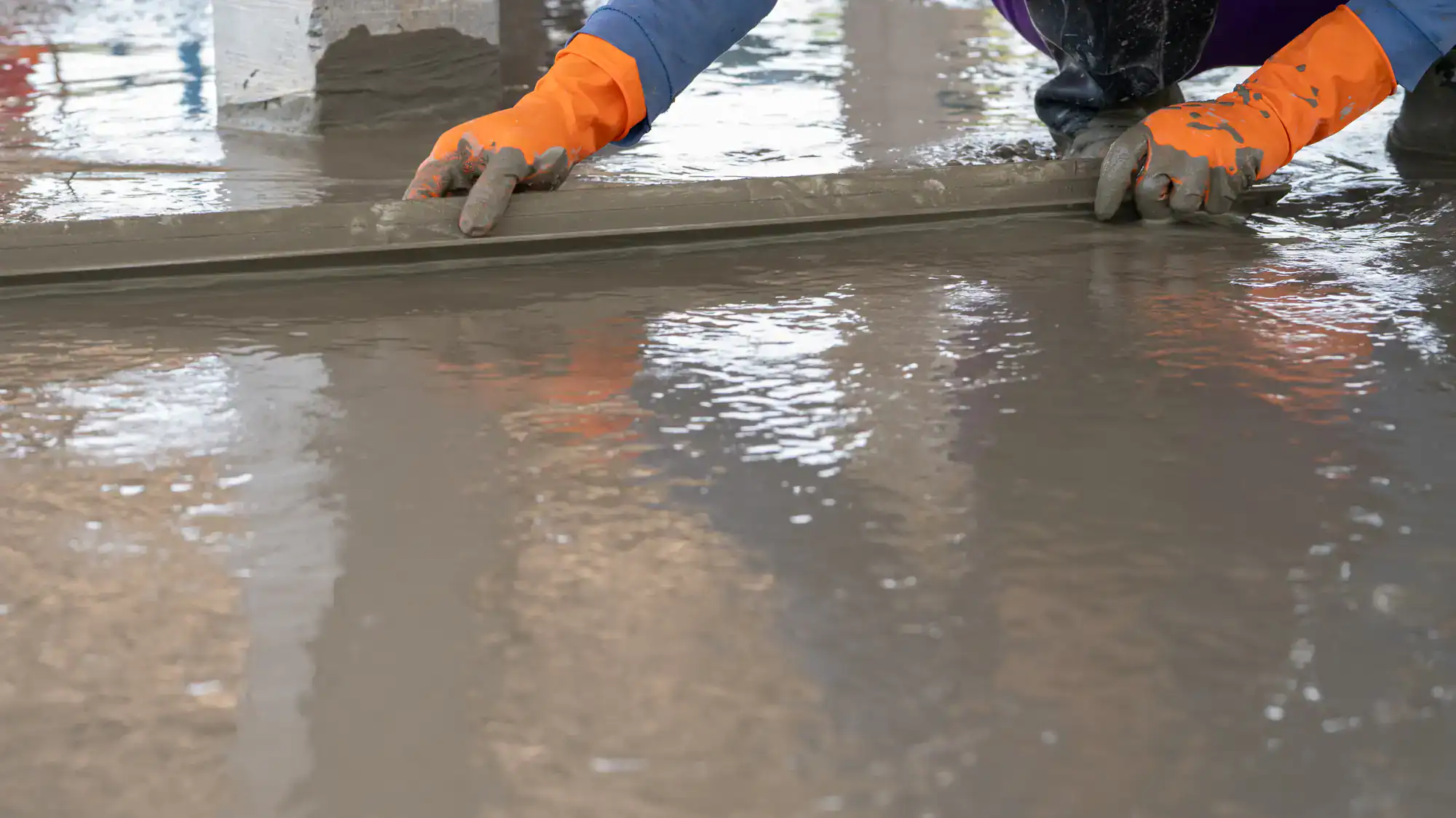
The prep work is where most floor installations fail and it’s where we start. Before any coating touches your apparatus bay floor, we diamond grind the concrete. That’s multi-head mechanical grinding that opens the concrete’s capillary structure and creates a true mechanical bond. Not acid etching, which introduces moisture into the slab before sealing it. In Southold’s coastal environment, where humidity is elevated year-round from the surrounding water, trapped moisture under a coating is a guaranteed delamination problem. We test for moisture before anything goes down.
Once the surface is properly prepared, the system goes in layers: a penetrating primer, a high-build epoxy base coat, an aggregate broadcast for compressive strength and slip resistance, an encapsulating coat, and a rapid-cure polyaspartic topcoat. That final layer is what handles the thermal shock of hot tires, the UV exposure from open bay doors during long North Fork summers, and the chemical load from road salt and agricultural responses.
The polyaspartic topcoat cures in 24 hours. That means your apparatus is back in the bay the next morning not after a week of parking engines outside. For an all-volunteer department serving a rural community spread across 60 square miles of farmland and waterfront, that turnaround isn’t just convenient. It’s the only reason a floor upgrade is operationally possible at all.
Ready to get started?
The apparatus bay is the most demanding floor in the building, but it’s not the only one that matters. We install commercial-grade resinous systems throughout the entire station and each area gets a system matched to what it actually needs to do.
In the apparatus bay, the full multi-layer polyaspartic system handles vehicle loads, thermal cycling, road salt, and the contamination loads that come with agricultural and marine responses common across Southold Town. In decontamination zones, the floor needs to meet NFPA 1581 standards a seamless, non-porous surface that can be fully decontaminated after a response. That’s not a surface you can improvise with a standard coating. In living quarters and kitchens, the system shifts to a cleanable, durable finish that holds up under daily use without harboring contaminants.
One certified crew handles all of it. That matters for Southold’s volunteer departments, which don’t have time to coordinate multiple contractors or manage a patchwork of systems that weren’t designed to work together. From the bay floor to the bunk room, you get consistent quality, compatible materials, and a single point of accountability for every square foot of the job.
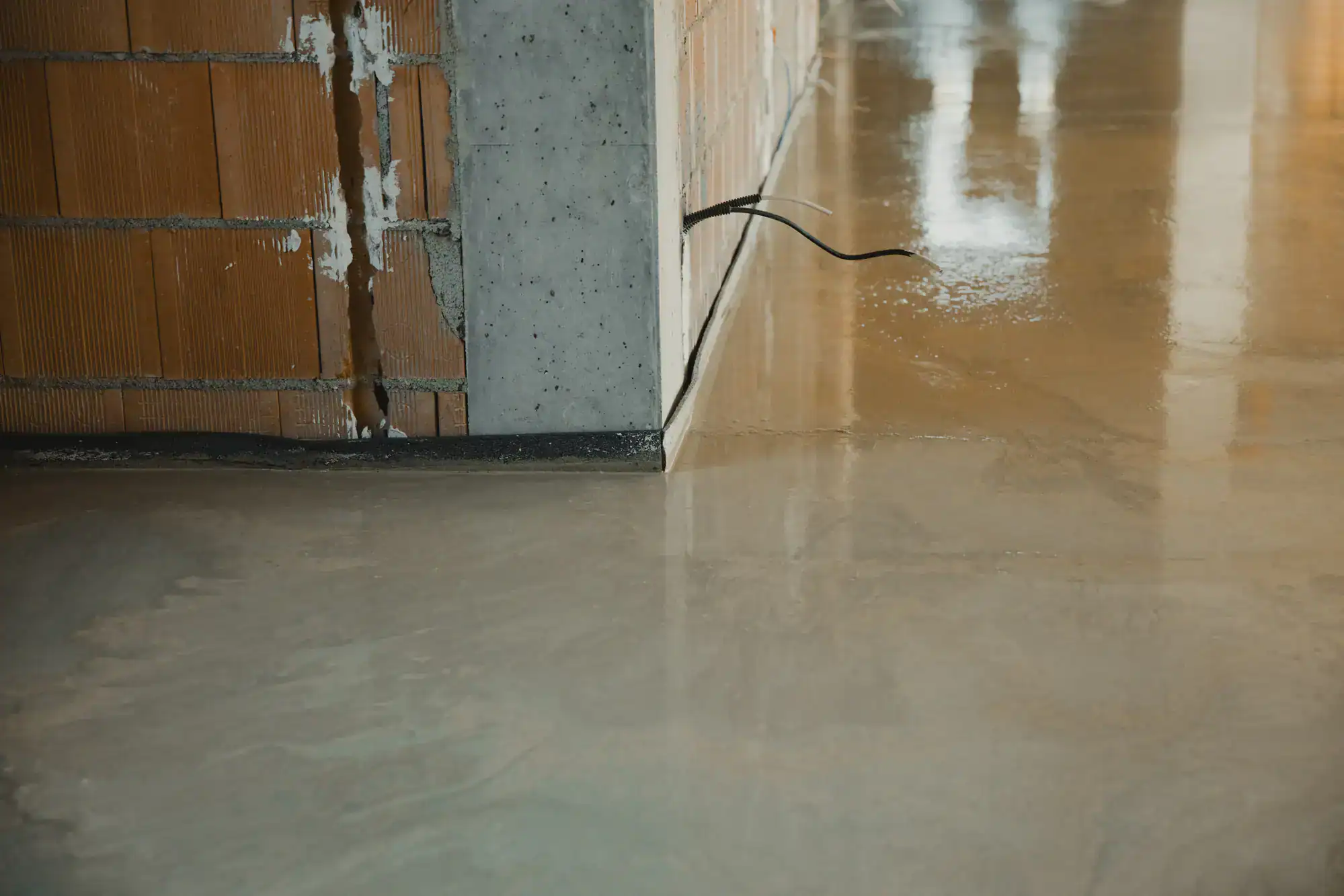
A properly installed polyaspartic system over diamond-ground, moisture-tested concrete lasts 20 or more years in normal apparatus bay conditions. In Southold’s environment specifically, the key variables are salt air exposure and road salt from winter responses. Both accelerate concrete degradation and attack coatings that weren’t formulated for chemical resistance. The polyaspartic topcoat we use is chemically resistant to road salt and brine, UV-stable for the long summers when bay doors stand open, and thermally resistant so hot tires don’t bond and peel the surface.
The honest answer is that longevity comes down almost entirely to what happens before the coating goes down. A system installed over acid-etched or improperly prepared concrete especially in a coastal environment where ambient humidity is elevated year-round will fail in three to five years regardless of how good the topcoat is. Diamond grinding and moisture testing before installation are what separate a 20-year floor from one you’re redoing in five.
Yes and this is the question most North Fork departments lead with, because the answer with traditional epoxy systems is no. Standard epoxy requires three to seven days of cure time before heavy vehicle traffic. For an all-volunteer department with no mutual aid arrangement that keeps apparatus in service during a floor project, that’s operationally impossible. The polyaspartic systems we use cure in 24 hours. Your engines, tanker, and ladder are back in the bay the next morning.
This isn’t a workaround it’s the right system for the application. Polyaspartic outperforms standard epoxy in every relevant category for apparatus bays: it’s four times more flexible, delivers twice the abrasion resistance, and handles the thermal and chemical stresses that apparatus bay floors face. The 24-hour cure time is a byproduct of a better-performing material, not a compromise. For Southold’s departments serving a rural community spread across Route 25 from Laurel to Orient, keeping apparatus available isn’t optional.
The load profile is different, the thermal demands are different, and the chemical exposure is different. A commercial warehouse floor sees forklifts and foot traffic. An apparatus bay sees a 60,000-pound ladder truck with hot tires rolling in from a highway response, road salt and brine dripping from the undercarriage, diesel and hydraulic fluid, and the freeze-thaw cycling that comes with a North Fork winter. Standard commercial epoxy systems aren’t engineered for that combination.
The coating thickness matters too. A polyaspartic apparatus bay system goes down at 15 mils significantly thicker than the four to eight mils typical of standard polyurethane or commercial epoxy. The multi-layer build primer, base coat, aggregate broadcast, encapsulating coat, polyaspartic topcoat is an engineered structural system. It’s not a cosmetic finish. The aggregate broadcast layer specifically adds compressive strength under vehicle loads and provides the slip resistance that NFPA and OSHA standards require in active apparatus bays.
Road salt is one of the most aggressive threats to both bare concrete and improperly specified floor coatings. When apparatus returns from a winter call on Route 25 or County Route 48, tires and undercarriage carry salt, brine, and de-icing chemicals directly onto the bay floor. Bare concrete is porous it absorbs that material, and the chloride ions begin attacking the concrete from within, accelerating cracking and spalling. Thin-mil or improperly sealed coatings discolor, delaminate, and fail at the edges where salt water pools.
In Southold, this problem is compounded by the coastal environment. Salt air from Long Island Sound and Peconic Bay is already working on the concrete year-round, so winter road salt hits a substrate that’s already under chemical stress. The polyaspartic system we install creates a seamless, non-porous surface with genuine chemical resistance to road salt and brine not just a surface that looks sealed, but one that’s been tested and formulated to handle exactly this kind of repeated exposure over the long term.
It can be, and it’s worth looking into before you assume the full cost comes out of the district’s operating budget. New York State’s Volunteer Fire Infrastructure and Response Equipment Grant Program has made capital grants available to volunteer fire departments, with a current cycle running through 2026. Apparatus bay floor systems particularly those that support contamination control compliance under NFPA 1581 can potentially qualify as infrastructure improvements under these programs. FEMA’s Assistance to Firefighters Grant program is another pathway that has historically funded station improvements.
The case for a floor upgrade is easier to make when it’s framed correctly. A 20-year polyaspartic system that eliminates repeated five-year replacement cycles, reduces maintenance labor, and supports NFPA contamination control protocols is a fundamentally different budget conversation than repainting a floor. For Southold’s fire district commissioners who are elected by their neighbors and accountable for every dollar spent the total cost of ownership argument, potentially backed by grant funding, is a straightforward one to bring to a board.
The honest answer is that the conditions in Southold’s apparatus bays are more demanding than most and that’s exactly why the system specification and installation process matter so much. Three-sided coastal exposure from Long Island Sound, Peconic Bay, and Gardiners Bay means elevated ambient humidity year-round. Winters bring road salt and freeze-thaw cycling. Summers bring UV exposure and thermal stress from hot tires. Agricultural and brush fire responses add contamination loads beyond what a standard urban department sees. A generic commercial epoxy system installed without proper moisture testing and surface prep will not hold up to that combination.
What we install is a Sherwin-Williams High Performance Flooring certified system not a kit, not a residential product scaled up, and not a system applied without the concrete prep that creates a true mechanical bond. The diamond grinding, moisture testing, multi-layer build, and polyaspartic topcoat are all part of the same engineered approach. The Sherwin-Williams HP Flooring certification exists specifically because manufacturer performance guarantees are tied to certified installation. That certification is verifiable, and no local North Fork competitor currently holds it for apparatus bay applications.