
When your subfloor isn’t flat, everything built on top of it is working against itself. Large-format tile cracks. Luxury vinyl plank develops soft spots. Hardwood shifts. The finish floor gets the blame, but the real problem started underneath and it was skipped.
Getting self leveling concrete done correctly in Southold means your finish floor has a foundation that will actually hold. That’s not just about aesthetics. It’s about not tearing out a $15,000 tile job two years from now because the substrate wasn’t right the first time.
Southold’s environment makes this more critical than most places. The town sits between the Long Island Sound and the Peconic Bay, and that dual-water-body geography keeps moisture vapor pressure elevated in concrete slabs year-round. Properties along the North Fork whether it’s a tasting room in Cutchogue, a renovated farmhouse in Peconic, or a commercial building on Main Road carry more moisture risk than an inland slab would. That moisture, when it’s not tested and accounted for before the pour, is exactly what causes underlayment to delaminate. We execute self leveling jobs here with moisture management accounted for from the start, not after something goes wrong.
We’ve been installing flooring systems across Suffolk County since 1996, and our president brings over 40 years of hands-on installation experience to every job. Most of our crew has been with us for more than a decade. That kind of continuity shows up in the work consistent standards, job after job, without the variation you get from a rotating crew.
Our project history speaks for itself. We’ve installed systems across the continental United States, the Bahamas, and Moscow, Russia including the White House kitchen in 1996. That’s not a footnote. It’s proof that we’ve handled the most demanding, highest-stakes flooring installations in existence.
For Southold property owners whether you’re renovating a winery tasting room before the North Fork tourist season or updating a high-value home on the East End you’re working with a crew that has seen every condition, solved every problem, and earned an A+ rating with the Better Business Bureau to back it up.
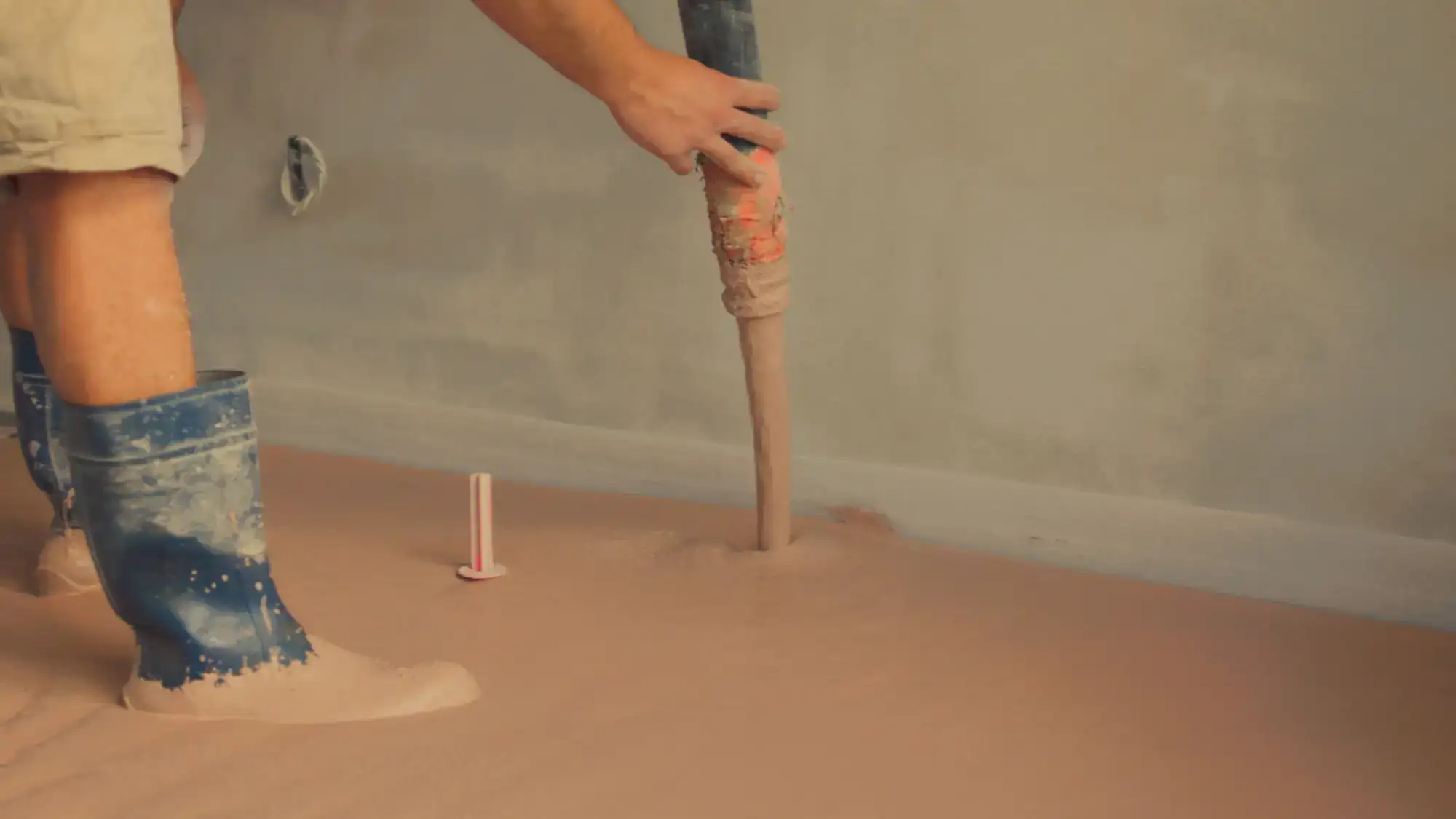
Before anything gets mixed or poured, we test the slab. Moisture vapor emission is the number one reason self leveling underlayment fails especially in a coastal environment like Southold’s, where salt air and proximity to tidal water keep humidity elevated. ASTM F2170 relative humidity testing is standard on every job, not an upsell. If the slab has a moisture problem, you’ll know before the pour, not after.
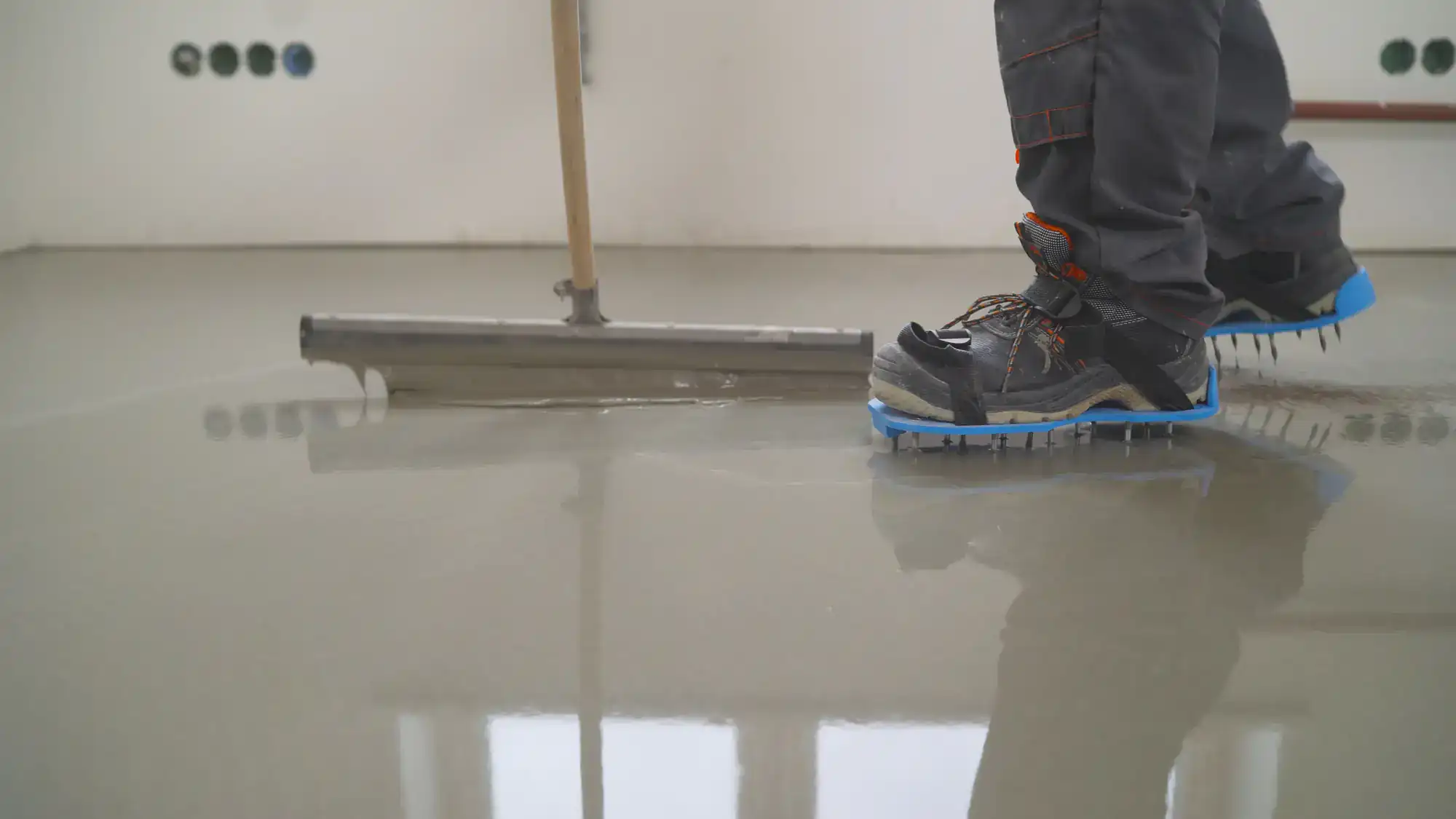
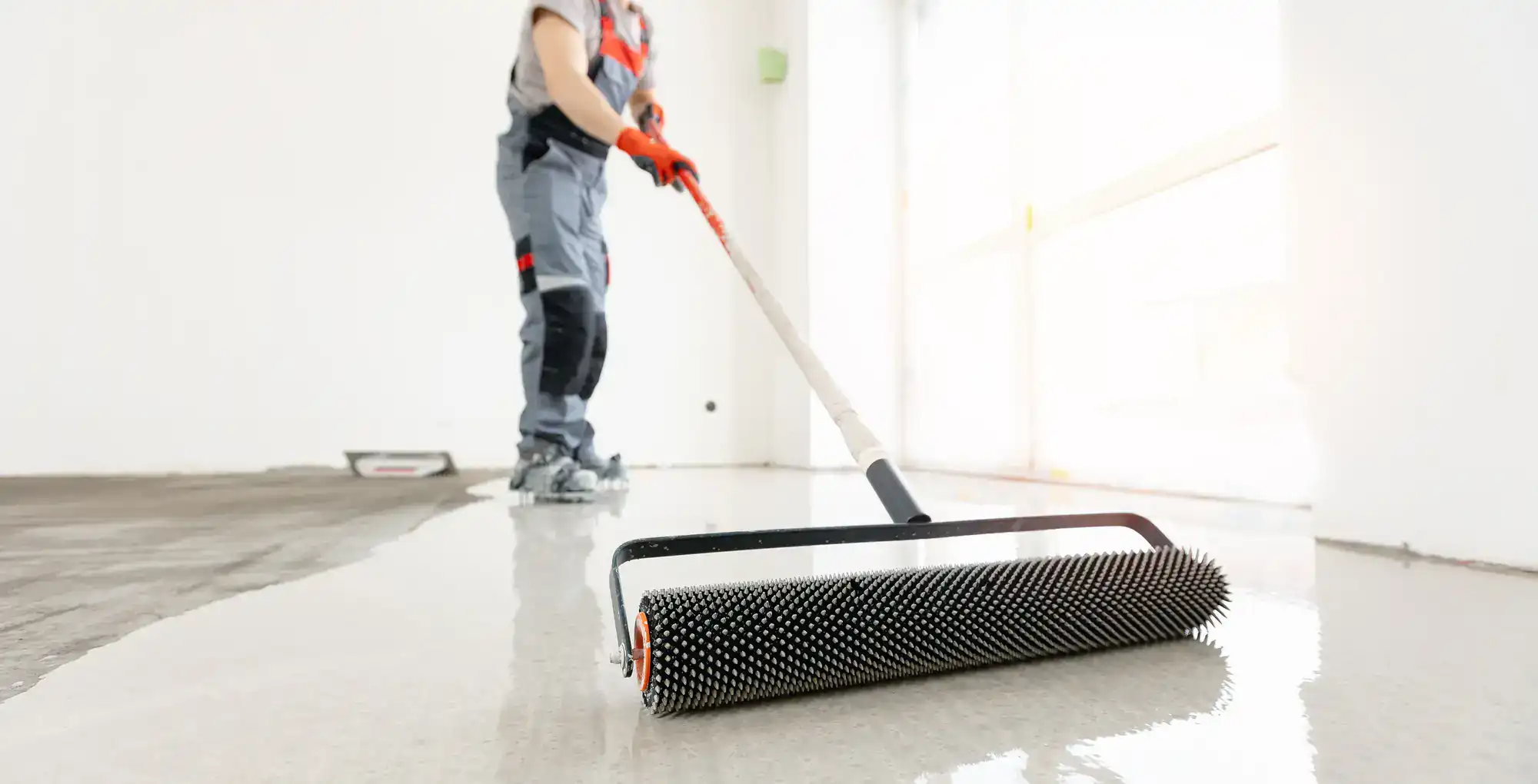
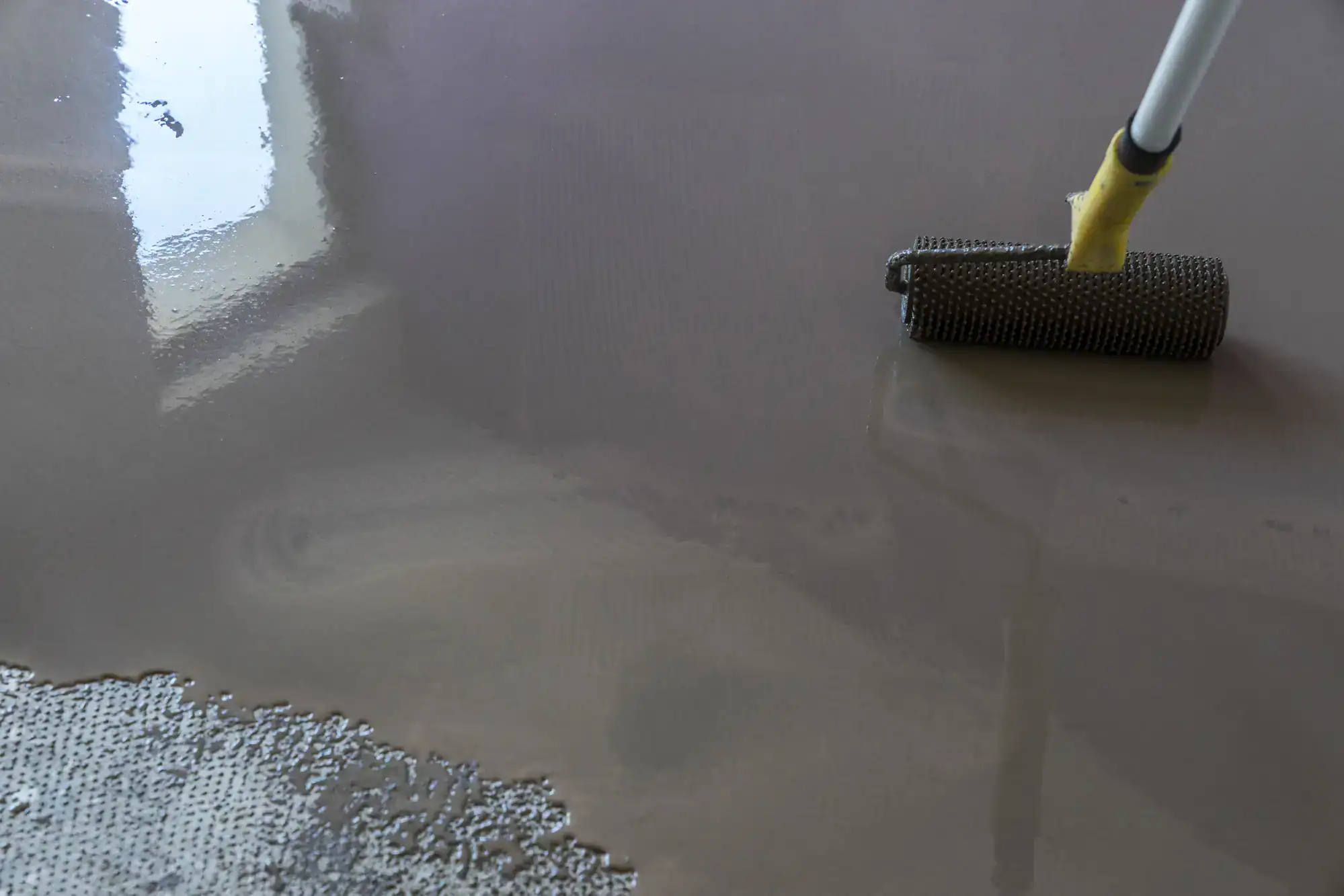
Once the substrate is confirmed, we prepare the surface properly grinding, cleaning, and priming so the underlayment bonds the way it’s supposed to. The self leveling material is then mixed and poured, flowing into low spots and correcting the surface from as little as a quarter inch up to two inches neat, or deeper with aggregate when the correction requires it. That range matters in Southold, where older commercial buildings and historic properties along Route 25 often have slabs that have settled significantly over time.
After the pour, the material self-levels and begins curing. Foot traffic is typically possible within four to six hours. Heavy commercial use a winery reopening, a restaurant back in service is generally ready within 24 to 48 hours. For North Fork businesses working against a seasonal reopening deadline, that turnaround is the difference between being ready for Memorial Day weekend and not.
Ready to get started?
The self leveling underlayment systems we use are polymer-modified cementitious products which means they flow true, shrink minimally, and bond to the substrate with the kind of strength that holds up under real-world conditions. In Southold’s seasonal climate, where concrete moves with freeze-thaw cycles and moisture cycling through the slab is a constant, low shrinkage isn’t a technical detail. It’s what keeps the floor from developing hairline cracks within a year of installation.
This service covers the full range of what Southold properties actually need. Winery tasting rooms and commercial hospitality spaces along the North Fork wine trail get the same high-strength cementitious underlayment that a large-scale commercial job would require because the foot traffic, spill exposure, and finish floor demands are just as serious. Residential properties, including the high-value second homes and primary residences that define Southold’s $1.1 million median home price market, get the same moisture testing, surface prep, and material quality. We don’t offer a separate residential-grade product that cuts corners.
All our installers are OSHA 40 certified and factory-trained in advanced cementitious systems. For commercial property owners in Southold winery operators, restaurant owners, hospitality venue managers that certification matters when you’re managing a renovation in a working facility. The Southold Town Building Department enforces the New York State Uniform Code on all construction and alteration work, and our process is built to meet those standards without making compliance your problem to manage.
Yes, and it’s one of the most important factors to account for before any pour on the North Fork. Southold sits between the Long Island Sound and the Peconic Bay, and that geography keeps ambient humidity elevated and drives persistent moisture vapor pressure through concrete slabs especially in older structures. When that moisture isn’t measured and managed before the self leveling material goes down, the underlayment loses its bond with the slab over time. That’s delamination, and it means the floor has to come back up.
The fix isn’t complicated, but it has to happen before the pour. ASTM F2170 relative humidity testing measures what’s actually happening inside the slab not just on the surface so you know what you’re working with. If moisture levels are elevated, we adjust the prep process before anything is mixed. Skipping this step is the single most common reason self leveling jobs fail in coastal environments like Southold’s, and it’s the step that most lower-cost operators leave out.
It depends on the condition of the existing slab, and that’s something we assess on-site before any material is specified. For minor surface irregularities the kind you’d find in a newer residential property or a recently updated commercial space a quarter-inch application is often enough to create the flat, smooth surface that large-format tile or luxury vinyl plank requires. For more significant settling or damage, the material can be installed up to two inches neat, or deeper with aggregate added.
In Southold specifically, older building stock is common. Historic commercial buildings along Main Road, farm structures being converted to winery tasting rooms, and residential properties that have been through multiple renovation cycles often have slabs that have settled more than a standard correction would handle. The range of correction depth available through a professional system not a hardware-store bag mix is what makes the difference between a surface patch and a substrate that will actually support a long-term finish floor installation.
For most commercial applications, foot traffic is possible within four to six hours of the pour. Heavy commercial use the kind of load and traffic a working tasting room or restaurant floor sees is typically ready within 24 to 48 hours. That timeline is one of the most important factors for North Fork hospitality businesses, where the tourist season runs from late spring through early fall and the renovation window is essentially the off-season between Columbus Day and Memorial Day.
The key is that the fast cure time doesn’t come at the expense of strength. The polymer-modified cementitious systems we install are engineered for both high early strength and a working timeline that doesn’t hold up your reopening. If you’re planning a tasting room renovation in Cutchogue or Mattituck before the spring season, the floor prep timeline shouldn’t be the bottleneck. Planned correctly, self leveling underlayment can be installed, cured, and ready for finish flooring within a two-day window.
The most common scenarios are large-format tile installations, luxury vinyl plank, and hardwood floors going over existing concrete slabs that have settled, cracked, or were never poured to a consistent level. Large-format tile is particularly unforgiving any variation in the substrate greater than about 3/16 of an inch over a ten-foot span will eventually show up as a cracked tile or a hollow spot. Luxury vinyl plank has similar requirements, and hardwood over an uneven slab will develop squeaks and movement over time.
In Southold, the building stock skews older. The town was founded in 1640 and many of its commercial and residential structures have been renovated multiple times over the decades. Slabs in these properties often have areas of significant settlement, old patch repairs that have failed, or moisture damage that has compromised the surface. Before any quality finish floor goes down especially in a high-value property or a commercial space that needs to perform under real use the slab needs to be assessed and corrected first.
In most cases, the existing slab stays. Self leveling underlayment is designed to bond to a properly prepared concrete surface it doesn’t require demolition unless the existing slab has structural damage that goes beyond surface correction. What it does require is proper surface preparation: the slab needs to be ground, cleaned of any contaminants, and primed so the underlayment bonds correctly. Skipping surface prep is the other common failure point, alongside skipping moisture testing.
For Southold properties with older slabs especially those that have had previous coatings, adhesive residue from old tile, or surface contamination from years of use prep work is more involved, but it doesn’t mean starting over. The goal is to give the self leveling material a clean, porous, mechanically sound surface to bond to. When that’s done right, the underlayment performs as a permanent part of the floor assembly, not a temporary patch sitting on top of a compromised slab.
The most important thing to verify is whether the contractor includes moisture testing as a standard step not an optional add-on. In Southold’s coastal environment, this is non-negotiable. A contractor who skips ASTM moisture testing before a pour is taking a shortcut that will likely cost you more money down the road when the underlayment delaminates. Ask directly whether they test, what protocol they use, and what they do if moisture levels come back elevated.
Beyond that, look for demonstrated experience with the range of correction depths your slab actually needs. A contractor who only works with thin-pour applications may not be equipped for the deeper corrections that older Southold building stock sometimes requires. OSHA 40 certification matters for commercial properties winery operators and restaurant owners have compliance obligations during renovation that not every contractor can meet. Crew tenure and company history also matter in a small, word-of-mouth community like the North Fork. A company that has been operating in Suffolk County for over 30 years, with a stable crew and a documented project history, is a different category of contractor than one you found through a one-page website with no verifiable track record.