
When a floor is polished correctly, you stop thinking about it. No more dusting, no more hazing, no more wondering when it’s going to start peeling at the edges. That’s the real outcome here a surface that handles daily use without demanding constant attention.
In Long Beach, that matters more than it does almost anywhere else on Long Island. You’re running a business on a barrier island where salt air and ocean humidity are facts of life, not seasonal inconveniences. Topical coatings epoxies, waxes, surface sealers sit on top of the concrete and eventually lose the battle with moisture. Properly densified polished concrete works differently. The densifier penetrates the slab and hardens it from within, eliminating the surface porosity that lets moisture in. The result doesn’t delaminate, doesn’t bubble, and doesn’t need recoating every few years.
For the restaurants, retail shops, and fitness studios along Park Avenue and West Beech Street, there’s another layer to this. Your space is compact. Every square foot of floor is visible to every customer who walks through the door. A high-gloss polished concrete finish doesn’t just perform it reflects light, makes a tight space feel bigger, and signals to customers that this is a business that takes quality seriously. That’s not a small thing when your competition is a few doors down.
We are a Long Island-based commercial and industrial flooring contractor with over 40 years of hands-on experience. Danny Harmer, our owner, has been working directly on floors not managing crews from a distance for his entire career. When you hire Advanced Epoxy Flooring, Danny is on the job. That’s not a selling point. That’s just how we work.
The credential that tends to stop people mid-conversation: Danny completed flooring work at the White House kitchen in 1996. That’s the most scrutinized commercial kitchen in the country. The same level of technical rigor he brought to that project is what he brings to every commercial slab on Long Island including the post-Sandy rebuild slabs that now form the foundation of many Long Beach commercial properties.
We also hold a Sherwin-Williams High Performance Flooring (HPF) certification and a Res Tech certification. These aren’t self-declared credentials they’re manufacturer and industry-issued, which means someone outside our company has independently verified the quality of our work. That’s the kind of accountability that matters when you’re making a long-term investment in your space.
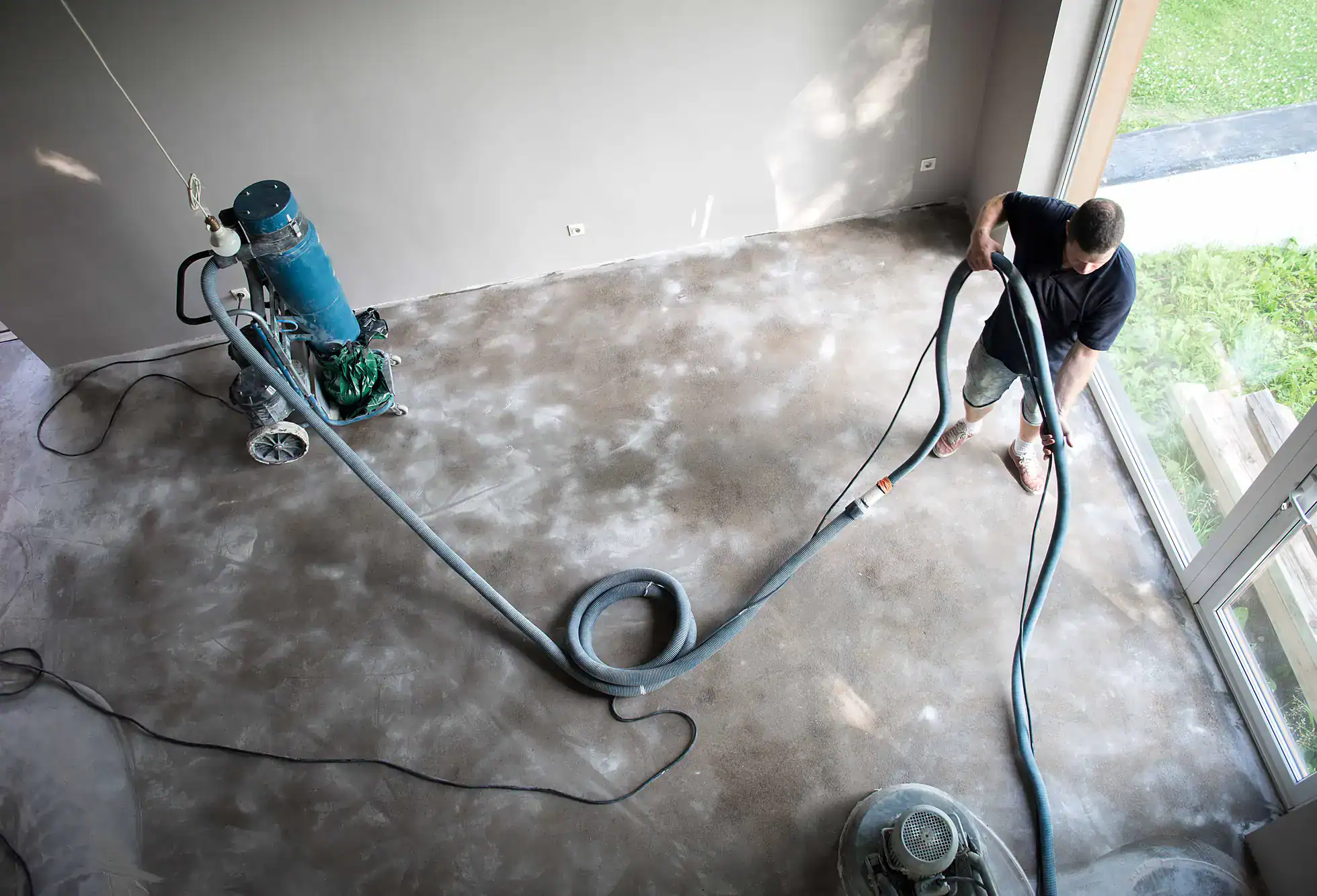
It starts with a real assessment of your slab. Before any equipment comes out, the condition of your concrete gets evaluated its age, hardness, aggregate profile, and whether there are existing coatings, cracks, or surface repairs that need to be addressed. A lot of Long Beach business owners assume their floor isn’t a candidate for polishing, especially if it’s a post-Sandy rebuild slab from 2013 or 2014. In most cases, that assumption is wrong. Surface preparation grinding, crack filling, coating removal can make nearly any slab workable.
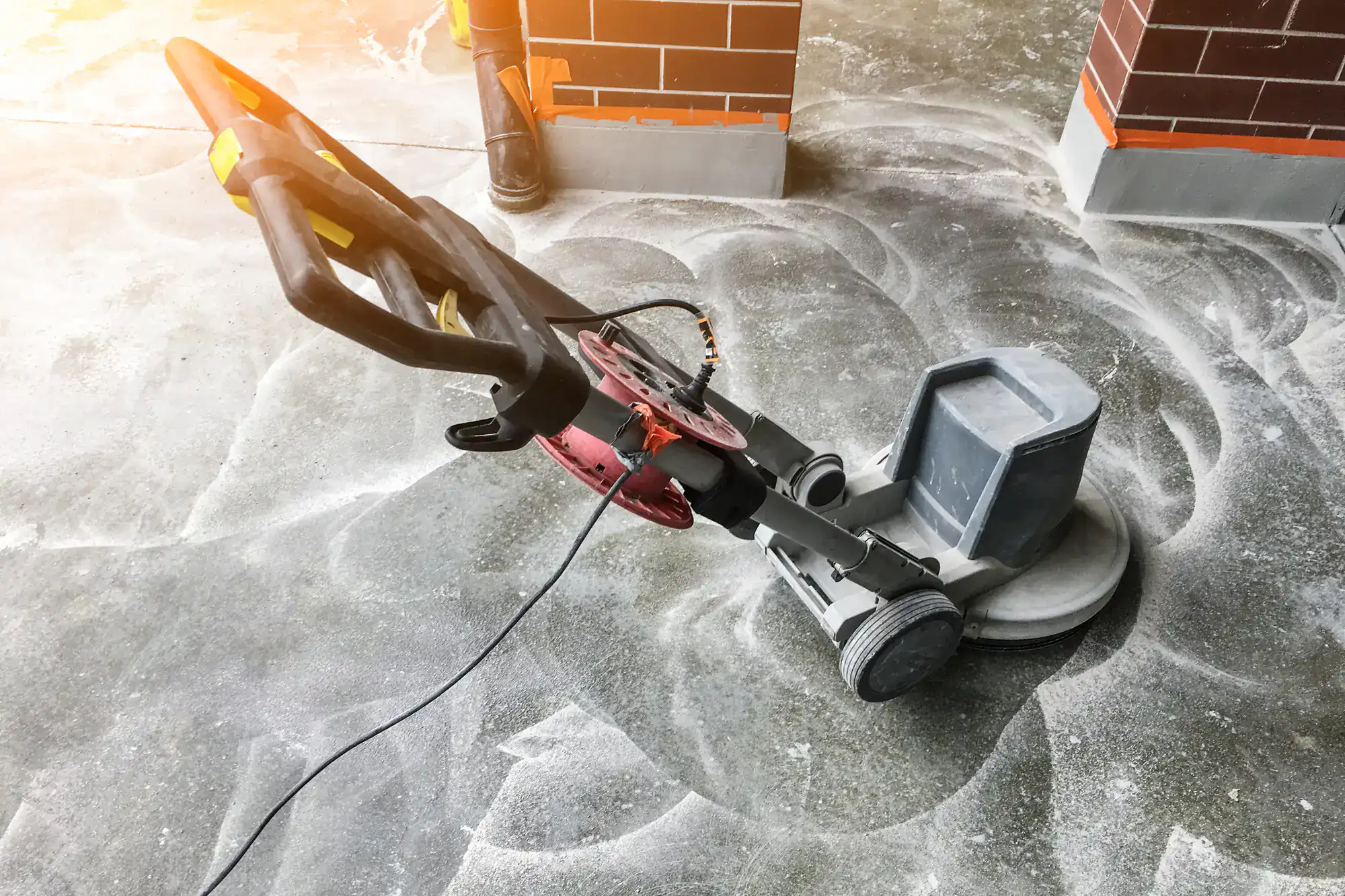
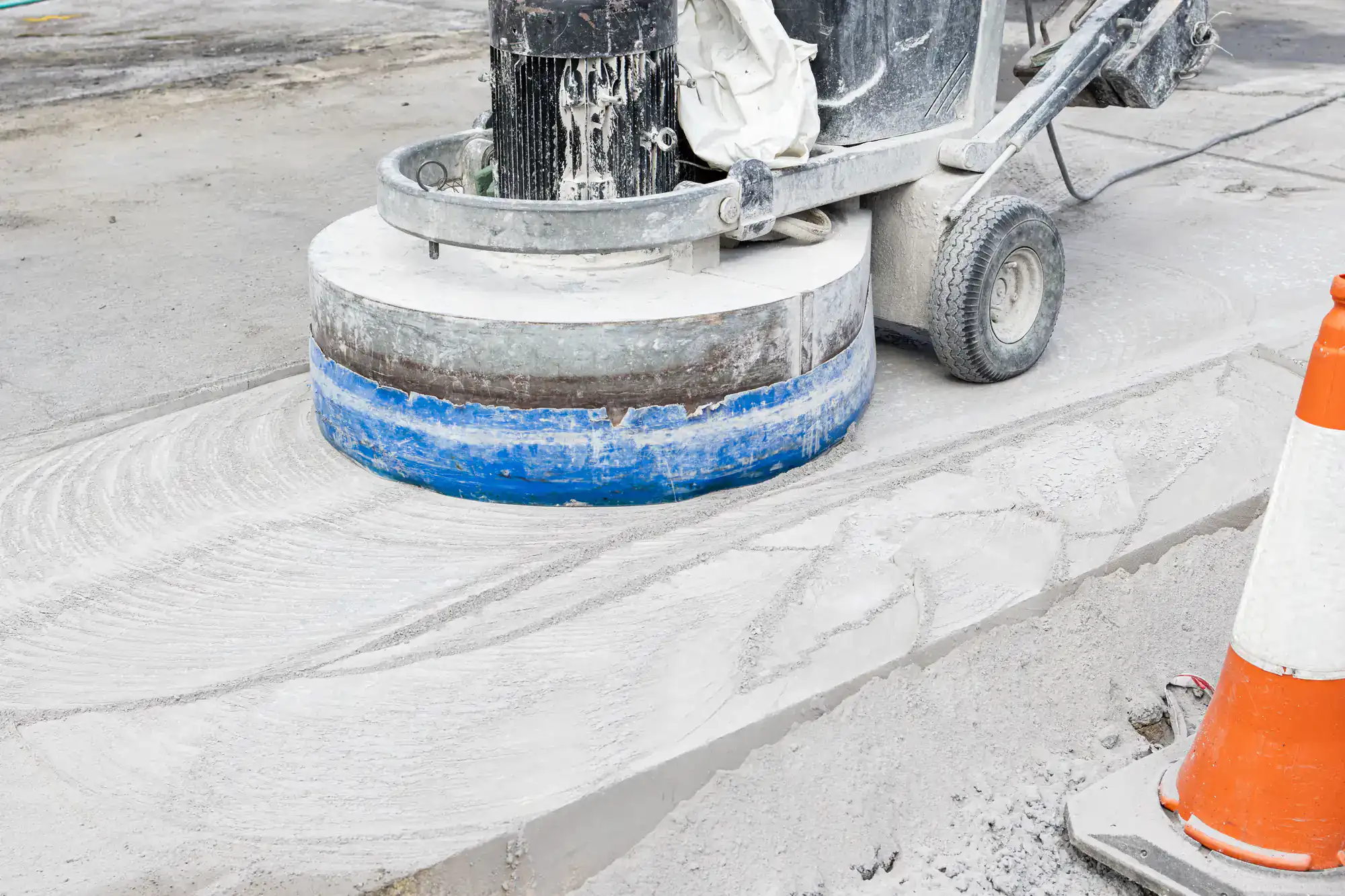
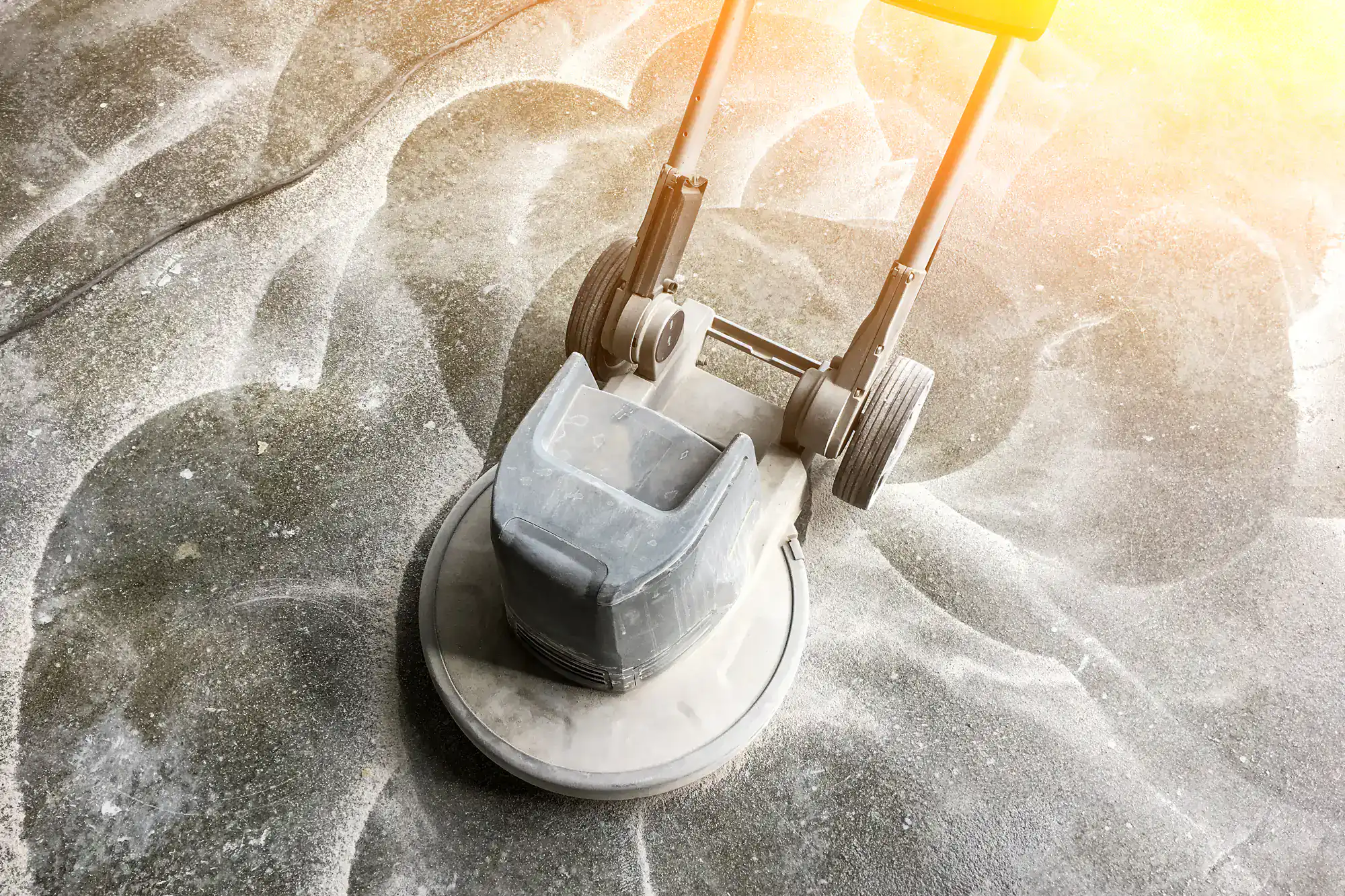
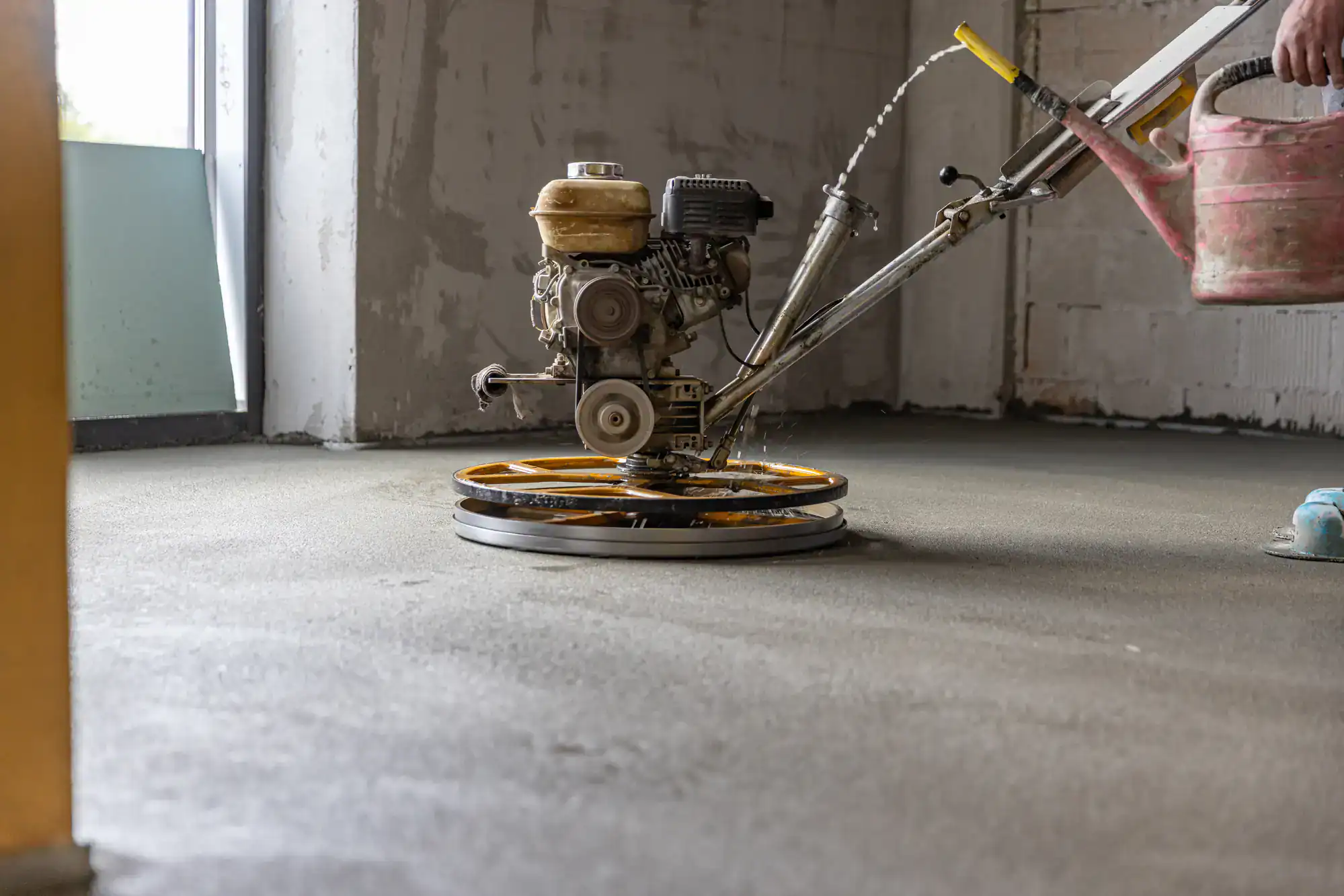
Once the slab is prepped, the process moves through a diamond tooling progression. Coarser grits open the surface and remove imperfections. Finer grits refine it. Between stages, a lithium silicate densifier is applied, penetrating the concrete and reacting chemically with the calcium hydroxide in the slab to harden it from within. This is what separates a true polished concrete floor from a floor that’s just been ground smooth and sealed on top.
The final stage brings the surface to the specified finish class from a low-sheen matte to a high-reflectivity gloss, depending on what your space calls for. For a restaurant or boutique on Park Avenue, that’s usually a Class 3 or Class 4 finish. For a commercial space that prioritizes function over aesthetics, something lower on the scale may be the right call. Scheduling is always planned around your business calendar which in Long Beach means avoiding the summer season entirely for most commercial clients and working in the fall, winter, or early spring windows when your space can be offline without costing you revenue.
Ready to get started?
We handle commercial concrete polishing across a range of project types restaurant and bar floors, retail showroom concrete finishes, fitness studio slabs, professional office spaces, and common areas in multi-unit commercial buildings. The scope of what’s included depends on the condition of your slab and the finish you’re after, but our core process is consistent: proper preparation, correct diamond grit progression, chemical densification, and a verified finish class at completion.
What makes the Long Beach context specific is the coastal environment your floor has to perform in. Salt air accelerates the degradation of surface-applied coatings. A floor that’s only sealed on top not densified from within will show signs of moisture-related failure faster here than it would in an inland Nassau County location. Every project through Advanced Epoxy Flooring accounts for that. The densification step isn’t optional, and the sealer we specify is chosen for compatibility with the coastal humidity conditions your building actually faces.
For business owners in Nassau County’s Innovation District along Long Beach Boulevard, or in the retail corridors on Park Avenue and West Beech Street, there’s also the question of slip resistance. High-gloss polished concrete meets OSHA’s minimum coefficient of friction standard for commercial surfaces. If your space sees wet foot traffic beachgoers, summer visitors, customers coming in off the boardwalk anti-slip additives can be worked into the finish without affecting the appearance. You get the look and the safety standard, not one or the other.
This is one of the most common questions from Long Beach business owners, and the short answer is: probably yes. A lot of slabs that were poured during the 2013 to 2016 rebuild wave were done quickly and under pressure, which sometimes means variable hardness, surface repairs, or residual coatings from the original post-construction finish. None of that automatically disqualifies a slab from polishing.
The first step is always a proper assessment. Slab hardness, aggregate exposure, existing coatings, and the condition of any cracks or repairs all factor into what preparation is needed and what finish is achievable. In most cases, surface grinding and preparation can bring even a rough or previously coated slab to a point where quality polishing is possible. The assessment tells you where you stand before any work begins no assumptions, no surprises.
Timeline depends on the square footage of the space, the condition of the slab, and the finish class being targeted. A straightforward commercial space with a clean slab and a mid-range finish can often be completed in two to three days. A larger space, a heavily coated slab that needs significant prep, or a high-gloss Class 4 finish requiring additional diamond stages will take longer.
For Long Beach businesses, the more relevant question is usually about scheduling around operations rather than raw project duration. Most commercial clients on the island schedule flooring work during the fall or winter off-season, when the tourism-driven revenue pressure is off and a temporary closure doesn’t cost what it would in July. Projects can also be phased by section if a full closure isn’t feasible, though that adds time to the overall timeline. The scheduling conversation happens before any contract is signed so you know exactly what to expect.
The concern is understandable, especially in a place like Long Beach where your customers include people walking in from the beach, wet from the boardwalk, or just caught in a summer rain. The good news is that gloss level and slip resistance are independent of each other a highly polished floor is not inherently slippery.
OSHA requires a minimum coefficient of friction of 0.5 for level commercial surfaces. Properly polished concrete meets that standard. For environments where wet foot traffic is frequent a beachside restaurant, a surf shop, a busy café near the boardwalk anti-slip additives can be incorporated into the stain guard applied at the end of the polishing process. This doesn’t affect the appearance of the finish. You get the reflective, high-gloss surface and the traction your space requires. The specification is matched to the actual use case of your floor, not applied as a one-size-fits-all solution.
Better than most alternatives, and specifically because of how the system works at a chemical level. Salt air and coastal humidity are hard on topical coatings epoxies, surface sealers, and wax-based finishes all rely on adhesion to the top of the concrete, and moisture infiltration over time breaks that bond. You’ve probably seen this in other Long Beach properties: coatings that bubble, peel, or haze within a few years of installation.
Densified polished concrete doesn’t have that vulnerability. The densifier reacts with the concrete itself, forming calcium silicate hydrate within the slab. The surface isn’t coated it’s hardened. Moisture doesn’t have the same pathway to cause failure because the porosity that would allow infiltration has been chemically reduced. Long-term, a properly installed polished concrete floor in a Long Beach commercial space will outlast any topical coating system, typically by a significant margin. Maintenance is minimal routine dust mopping and occasional damp mopping with a pH-neutral cleaner is all it takes to keep the surface performing and looking correct.
The American Concrete Institute’s ACI 310.1-20 standard defines four finish classes for polished concrete, measured in Gloss Units. Class 1 is a flat matte finish. Class 4 is a highly polished, high-reflectivity surface at 61 or more Gloss Units. For most retail showroom concrete finishes and restaurant floors in Long Beach particularly the compact spaces along Park Avenue or West Beech Street a Class 3 or Class 4 finish is the right call.
Here’s why that matters in a small commercial space: a high-gloss floor reflects ambient light, which makes a tight room feel larger and brighter. In a 1,200-square-foot restaurant or boutique, that’s a meaningful visual effect. It also signals quality to customers immediately not in a showy way, but in the way that a well-maintained, professionally finished space always does. The finish class is specified in writing before the project begins and verified with a gloss meter at completion. You know what you’re getting before the work starts.
In the Northeast, commercial polished concrete typically runs between $3 and $12 per square foot, depending on the finish class, the condition of the slab, and the scope of preparation required. A basic matte finish on a clean, well-conditioned slab sits at the lower end of that range. A high-gloss Class 4 finish on a slab that needs significant prep work coating removal, crack repair, grinding to open the surface sits higher.
For Long Beach specifically, a few factors tend to affect where a project lands in that range. Post-Sandy rebuild slabs sometimes require more preparation than a newer or better-conditioned slab would. Compact commercial spaces can increase the per-square-foot cost relative to large open-floor projects where equipment efficiency is higher. The more useful frame for evaluating the investment isn’t the upfront cost it’s the total cost of ownership. A properly installed polished concrete floor in a coastal environment like Long Beach will outlast multiple cycles of epoxy coating, VCT replacement, or other alternatives. When you factor in the elimination of periodic recoating, stripping, and replacement, the math tends to favor polished concrete by a wide margin over a ten-to-fifteen-year window.