
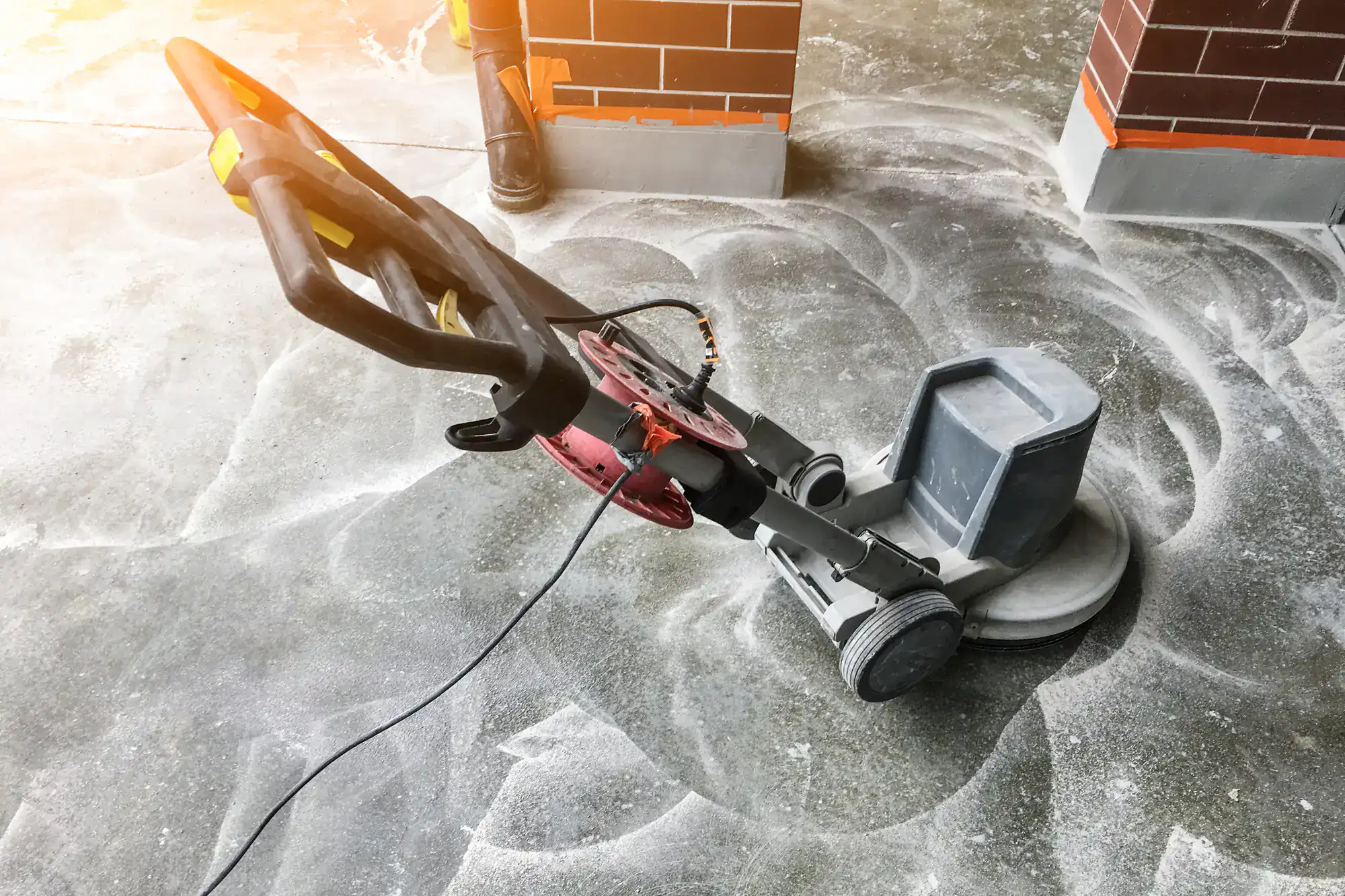
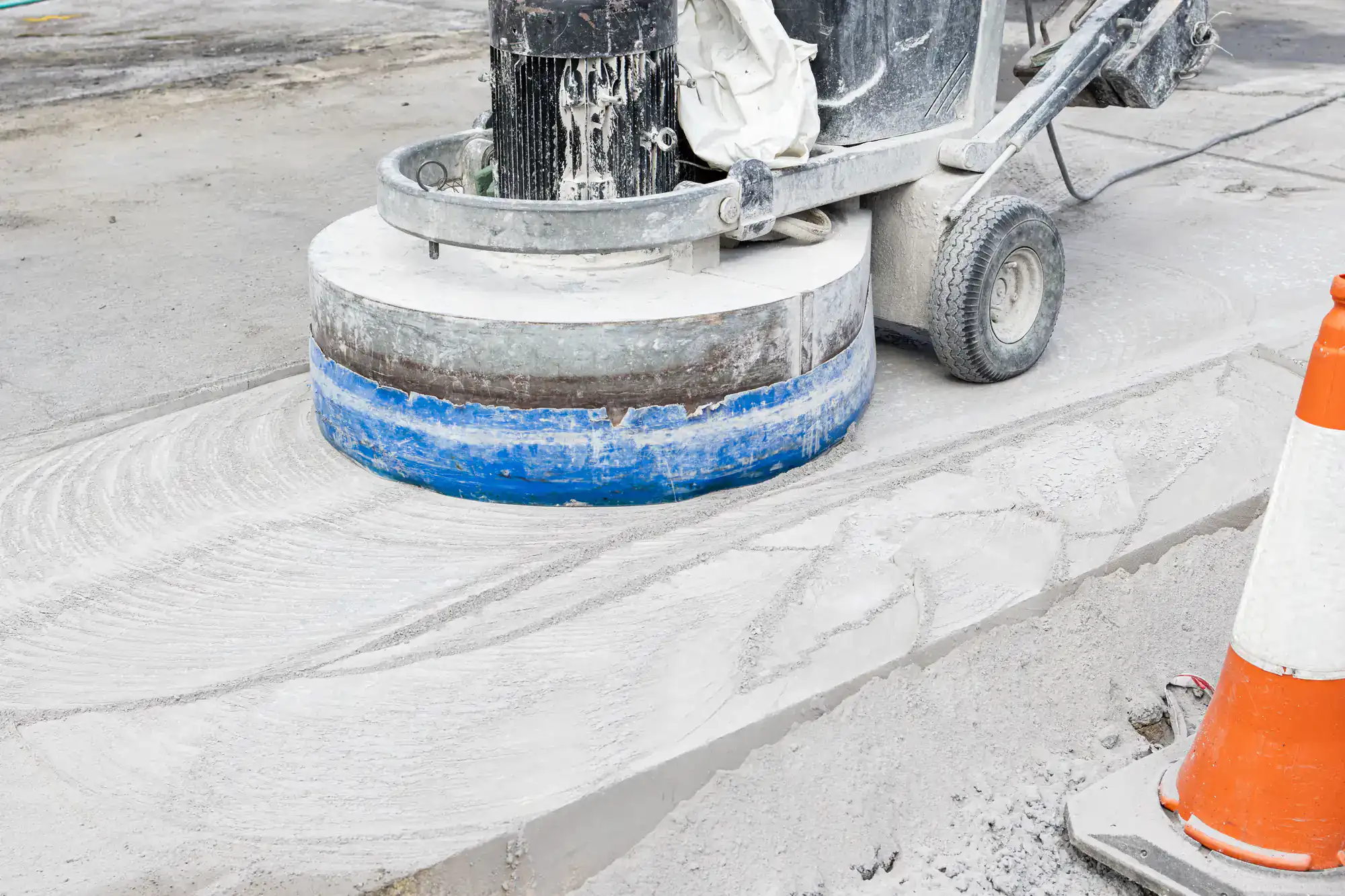
Most commercial floors in Islip are losing the battle quietly. VCT tiles crack and yellow. Coatings peel. Bare concrete dusts and degrades under foot traffic, forklifts, or the kind of daily grind that South Shore businesses deal with year-round. Polished and densified concrete changes that equation entirely it hardens the slab from within, eliminates surface dusting, and creates a finish that doesn’t need waxing, stripping, or replacing every few years.
The coastal location of Islip matters here more than most contractors will tell you. Buildings along the Great South Bay corridor deal with real moisture pressure vapor coming up through the slab, salt air working on the surface, and humidity levels that cause topical coatings to delaminate over time. A properly densified floor handles that. The lithium silicate penetrates the concrete and chemically bonds with it, so there’s nothing sitting on top to bubble, peel, or trap moisture underneath.
For businesses on Main Street, in the Town of Islip’s industrial parks, or anywhere along the Sunrise Highway corridor the long-term math on polished concrete is hard to argue with. Lower maintenance, longer life, and a surface that actually improves with proper care instead of slowly falling apart.
Danny Harmer started Advanced Epoxy Flooring because he kept seeing the same problem: contractors applying flooring systems they didn’t fully understand. The chemistry was wrong, the prep was rushed, and the floors showed it within a year or two. He built this company around doing it the other way understanding the science first, then applying it correctly.
That approach earned us a Sherwin-Williams High Performance Flooring (HPF) certification, a Res Tech certification, and a project history that includes the White House kitchen in 1996. Those aren’t marketing lines they’re the kind of credentials that show up when someone actually checks.
Danny has been working on Long Island slabs for over four decades, including the older South Shore commercial buildings that line Route 27A in Islip and the heavy-duty industrial facilities throughout the Town of Islip’s industrial parks. He knows what these floors deal with, and he knows how to make them last.
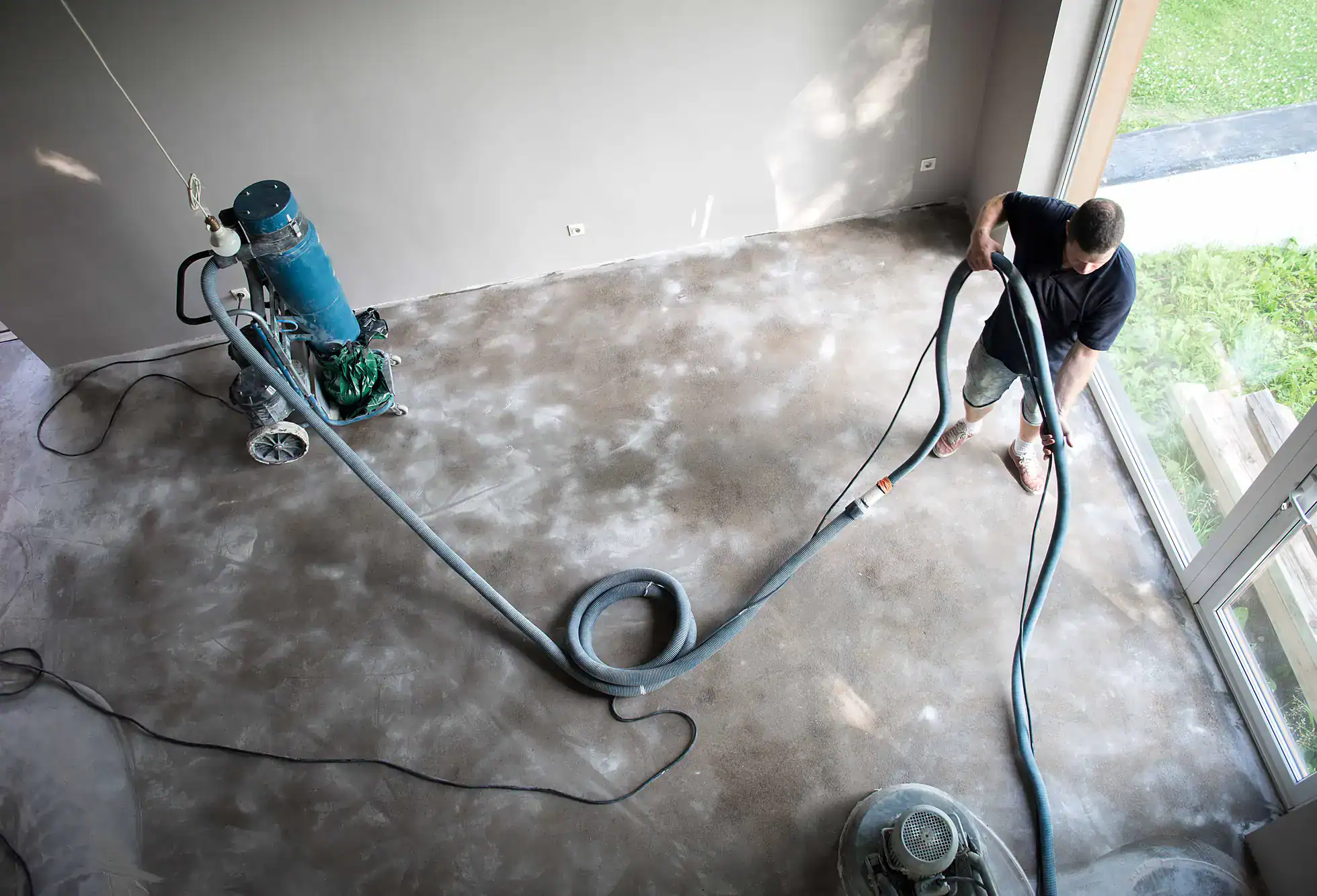
It starts with a real assessment of your slab. Not a quick glance an actual evaluation of the concrete’s condition, hardness, existing coatings or adhesive residue, and any moisture-related concerns. For older commercial buildings in Islip and surrounding South Shore communities, that moisture assessment step is critical. Slabs near the bay can carry vapor pressure that most contractors skip past entirely. That shortcut is usually what causes problems down the road.
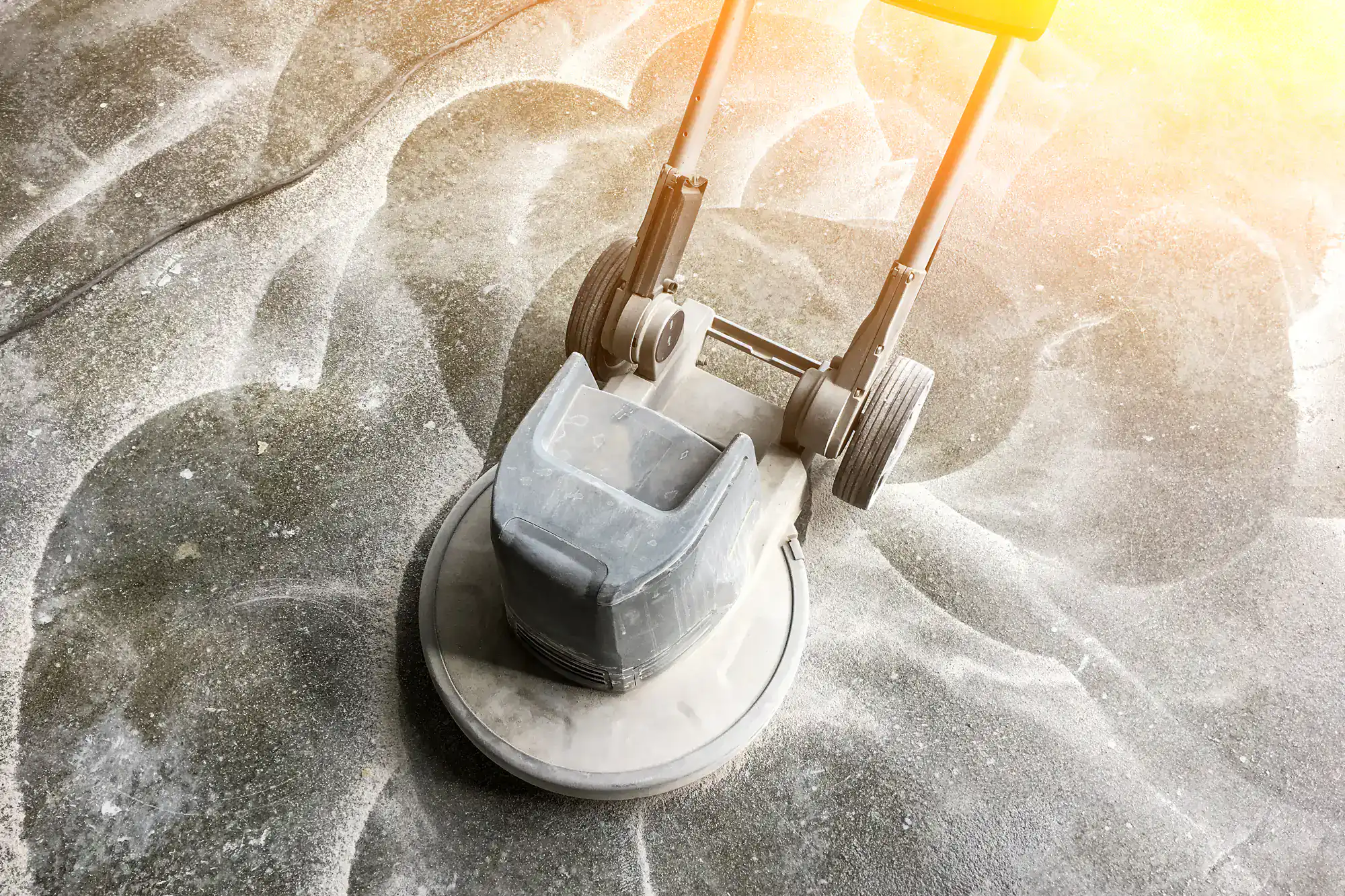
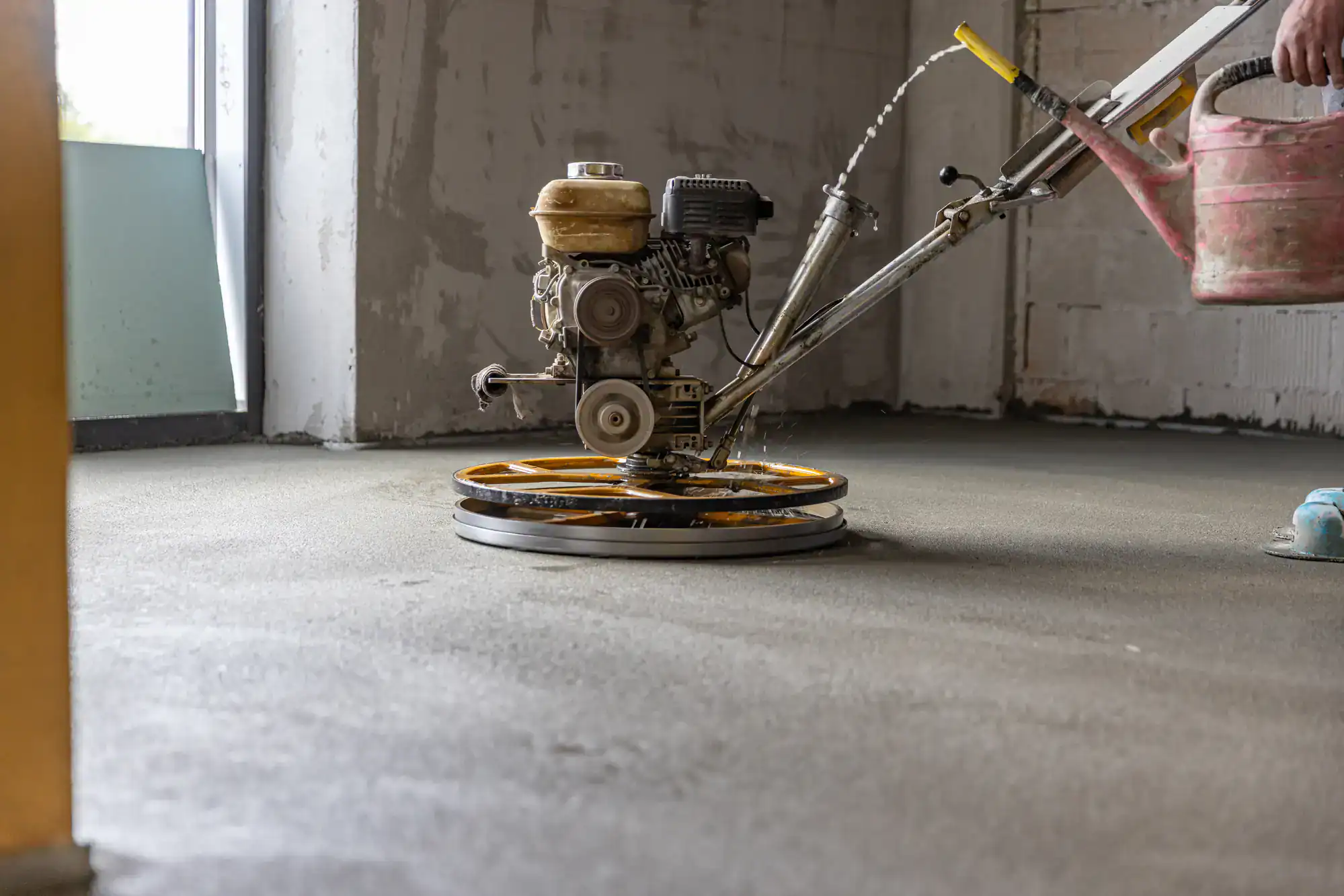
Once the slab is evaluated, the grinding phase begins. Diamond tooling removes surface contamination, levels uneven areas, and opens the concrete’s pores to accept the densifier. The grit progression is deliberate moving through coarser to finer diamonds in sequence until the surface reaches the right profile for the finish class you’re after, whether that’s a low-sheen industrial matte or a high-gloss showroom finish.
After grinding, the lithium silicate densifier is applied. It penetrates the slab, reacts with the calcium in the concrete, and hardens the surface from the inside out. From there, the polishing sequence continues until you hit the target finish. The result is a surface that’s sealed, hardened, and ready for whatever your operation throws at it without the ongoing maintenance burden of coatings or coverings.
Ready to get started?
The Town of Islip has one of the largest concentrations of industrial-zoned land in the New York metro area over 4,200 acres across more than a dozen industrial parks, including the Hauppauge Industrial Park. The businesses operating in those facilities need floors that can handle forklift traffic, chemical exposure, heavy equipment loads, and the demands of precision manufacturing. That’s a different standard than a residential garage, and the polishing process reflects it.
For retail and showroom businesses along Main Street or Sunrise Highway in Islip, the priorities shift toward aesthetics and low maintenance a high-gloss polished concrete finish that holds up under foot traffic and still looks sharp years later without ongoing floor care programs. For food service businesses and restaurants in the area, the goal is a seamless, cleanable surface that meets health department expectations and doesn’t require grout lines or coating reapplications.
Every project starts with a conversation about what your floor actually needs to do. From there, the finish class, densifier specification, and sealer selection are matched to your specific environment not pulled from a standard package. Whether you’re in a Bay Shore warehouse, a Bohemia manufacturing facility, or a boutique on Route 27A, we build the approach around your floor’s real working conditions.
It’s a real factor, and it’s one that doesn’t get enough attention. Buildings near the Great South Bay deal with elevated ambient humidity, salt air, and vapor transmission from below the slab all of which affect how a polished floor holds up over time. Topical coatings that sit on the surface are especially vulnerable here. When moisture vapor builds up beneath a coating that can’t breathe, you get blistering, delamination, and surface failure that looks like a product problem but is actually a preparation and specification problem.
Properly densified concrete handles this environment significantly better. The densifier penetrates the slab and bonds chemically with the concrete itself, so there’s no membrane sitting on top for moisture to undermine. That said, moisture mitigation still needs to be part of the assessment for any South Shore slab especially in older buildings along the Route 27A corridor in Islip or near the waterfront. Skipping that step is where most concrete polishing jobs in coastal communities go wrong.
They serve different purposes and perform differently under real-world conditions. Epoxy coatings are topical they sit on top of the concrete and create a protective film. They can be a strong solution for certain environments, especially where chemical resistance or color customization is a priority. But they’re also vulnerable to delamination if the slab isn’t properly prepared, and they’ll eventually need to be recoated or replaced.
Polished concrete works differently. The densification process hardens the slab itself, and the polishing is done to the concrete not applied over it. There’s nothing to peel, chip, or recoat. For high-traffic commercial floors in Islip’s industrial parks or retail corridors, that durability profile is often a better long-term investment. The right answer depends on your specific environment, your traffic loads, and what you need the floor to do which is exactly why the assessment conversation matters before any work starts.
Timeline depends on square footage, slab condition, and the finish class you’re targeting. A straightforward commercial floor in good condition might take one to two days. A larger industrial space with older concrete, existing coatings to remove, or significant surface damage could take longer especially if moisture mitigation steps are needed, which is common in South Shore buildings that have been around for decades.
The operational disruption question is one that comes up on almost every commercial job. For businesses on Main Street in Islip that can’t afford to close for a week, or manufacturing facilities in the Town of Islip’s industrial parks that run on tight production schedules, we can typically sequence the work in sections to keep part of the space operational. That kind of scheduling conversation happens upfront, before any equipment shows up so you’re not finding out about a five-day shutdown the morning the crew arrives.
This is one of the most common concerns, and the short answer is: it depends on the finish and the sealer. A high-gloss polished concrete floor without any anti-slip treatment can be slippery when wet which is a real concern for a restaurant on Main Street or a retail space with customer foot traffic. That’s not a reason to avoid polished concrete; it’s a reason to specify it correctly.
Anti-slip additives can be incorporated into the sealer without meaningfully affecting the appearance of the finish. The coefficient of friction on a properly specified polished and sealed concrete floor can meet or exceed the standards required by commercial building codes in New York State. For food service environments, the finish class and sealer selection are matched to the specific use a kitchen floor gets a different specification than a dining room floor, and both are chosen with safety and cleanability in mind, not just aesthetics.
For commercial polished concrete in the Northeast, the general range runs from roughly $3 to $8 per square foot for standard finishes on slabs in reasonable condition, up to $10 to $12 per square foot for high-gloss finishes, heavily damaged slabs, or spaces that require significant prep work before polishing can begin. Square footage, current slab condition, finish class, and any moisture mitigation requirements are the main cost drivers.
For Islip-area projects specifically, older commercial buildings particularly those along Route 27A or in the hamlet’s historic district sometimes require more prep than newer construction. Adhesive residue from removed floor coverings, surface contamination, and uneven wear from decades of use all add time and labor. The assessment conversation is where that gets scoped accurately. A number given without looking at the slab is just a guess, and a guess that comes in low upfront usually becomes a surprise on the invoice.
Older slabs are actually polished regularly and in many cases, the concrete in older commercial buildings is harder and more stable than newer pours, which makes it polish well. Islip has a significant number of mid-century and older commercial buildings along Main Street and the surrounding South Shore area, and the concrete in those buildings is absolutely workable. Age alone isn’t the issue.
What matters is the condition of the slab not how old it is. Existing coatings, adhesive residue, oil contamination, surface damage, and moisture issues all need to be addressed during prep before polishing begins. That’s standard practice for any experienced contractor working in established commercial buildings. The assessment will identify what the slab needs before a single diamond touches the floor, so there are no surprises mid-project. Older buildings in the Town of Islip are a routine part of our work not an exception to it.