
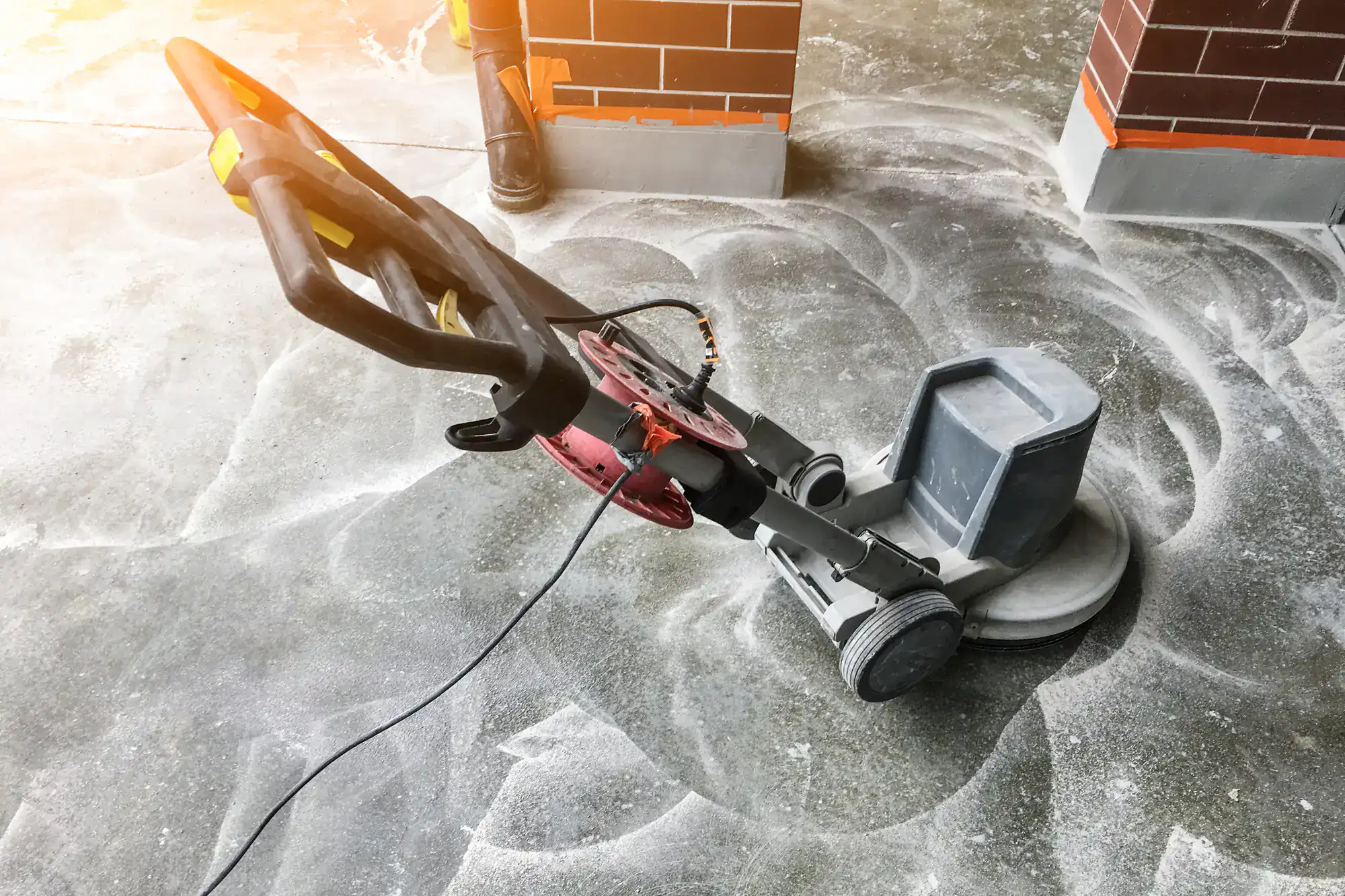
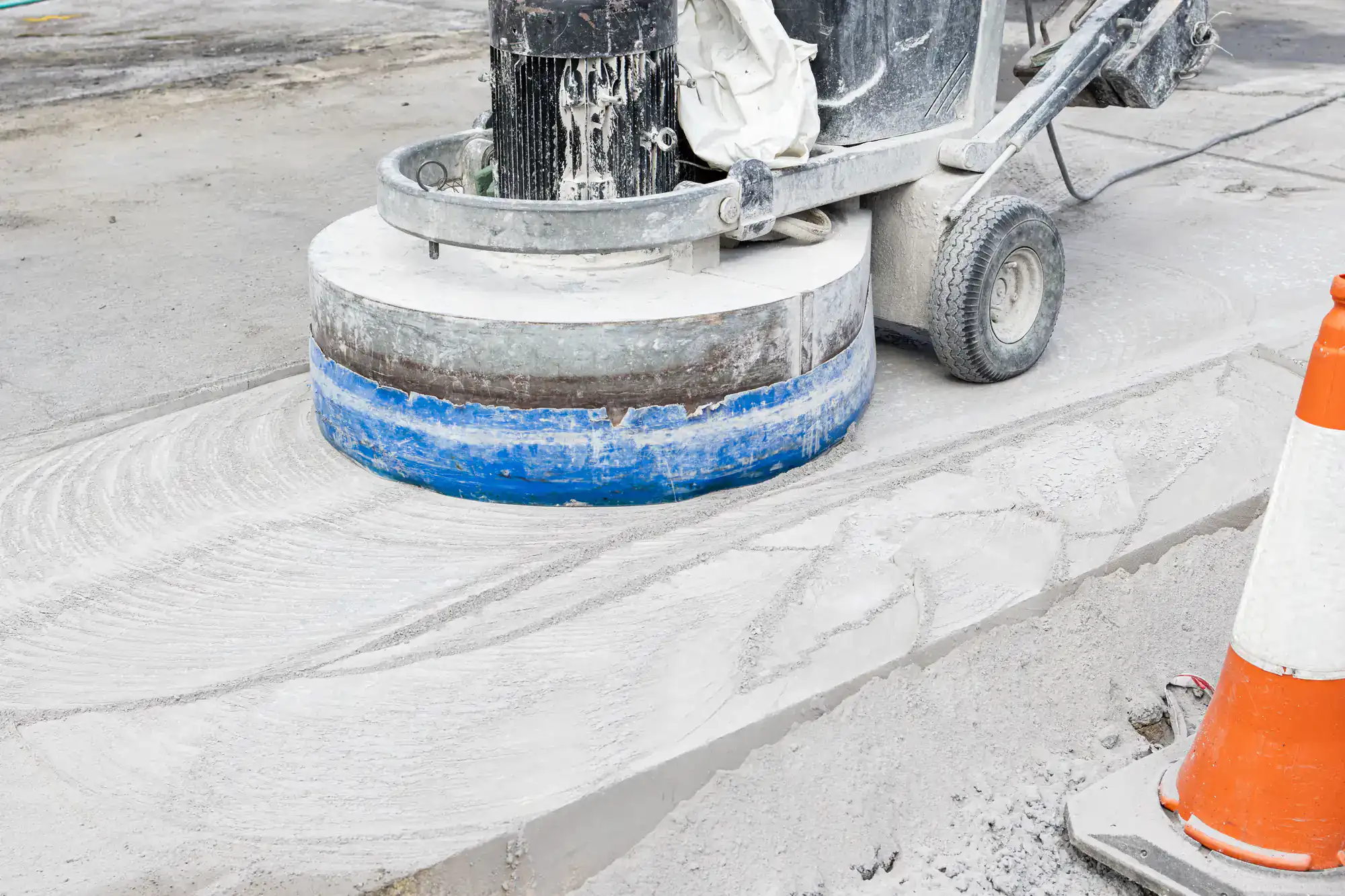
Most commercial floors in Central Islip are fighting a losing battle. Unprotected concrete absorbs everything deicing salt tracked in from parking lots, moisture from Long Island’s freeze-thaw winters, forklift traffic, foot traffic, spills. Over time, that adds up to dusting, surface scaling, and a floor that looks worn before its time.
Polished and densified concrete changes that equation. The densification process chemically hardens the slab from within, closing off the pores that let moisture and chloride contamination work their way in. What you’re left with is a surface that resists the kind of seasonal wear that Suffolk County winters dish out year after year and it does it without coatings that chip, peel, or need replacing on a cycle.
For the warehouse operators, retail businesses, and institutional facilities that make up Central Islip’s commercial base, the practical upside is real. We don’t charge for waxing. We don’t schedule stripping. We don’t manage recoating schedules. A properly polished concrete floor, installed correctly the first time, can hold up for 20-plus years with basic maintenance. That’s not a sales pitch that’s just what the math looks like when you stop treating flooring as a short-term fix.
Danny Harmer has been doing this work personally for more than 40 years. Not managing crews from an office actually doing the work, reading slabs, and understanding the chemistry behind why some floors last and others don’t. When you hire Advanced Epoxy Flooring, Danny is on the job. That’s not a detail buried in the fine print it’s how we built this business.
The credentials back it up. We hold a Sherwin-Williams High Performance Flooring certification and a Res Tech certification both named, verifiable, and earned through demonstrated technical knowledge, not just time in the industry. And in 1996, the same expertise we now bring to Central Islip businesses was trusted with the White House kitchen. That’s not a throwaway line it’s the clearest possible proof of what this level of work actually looks like.
We serve commercial clients across Suffolk County, including the growing business corridor along Carleton Avenue and the institutional facilities that anchor Central Islip’s economy. When you work with Advanced Epoxy Flooring, you’re getting the kind of experience that shows up in the finished floor not just the proposal.
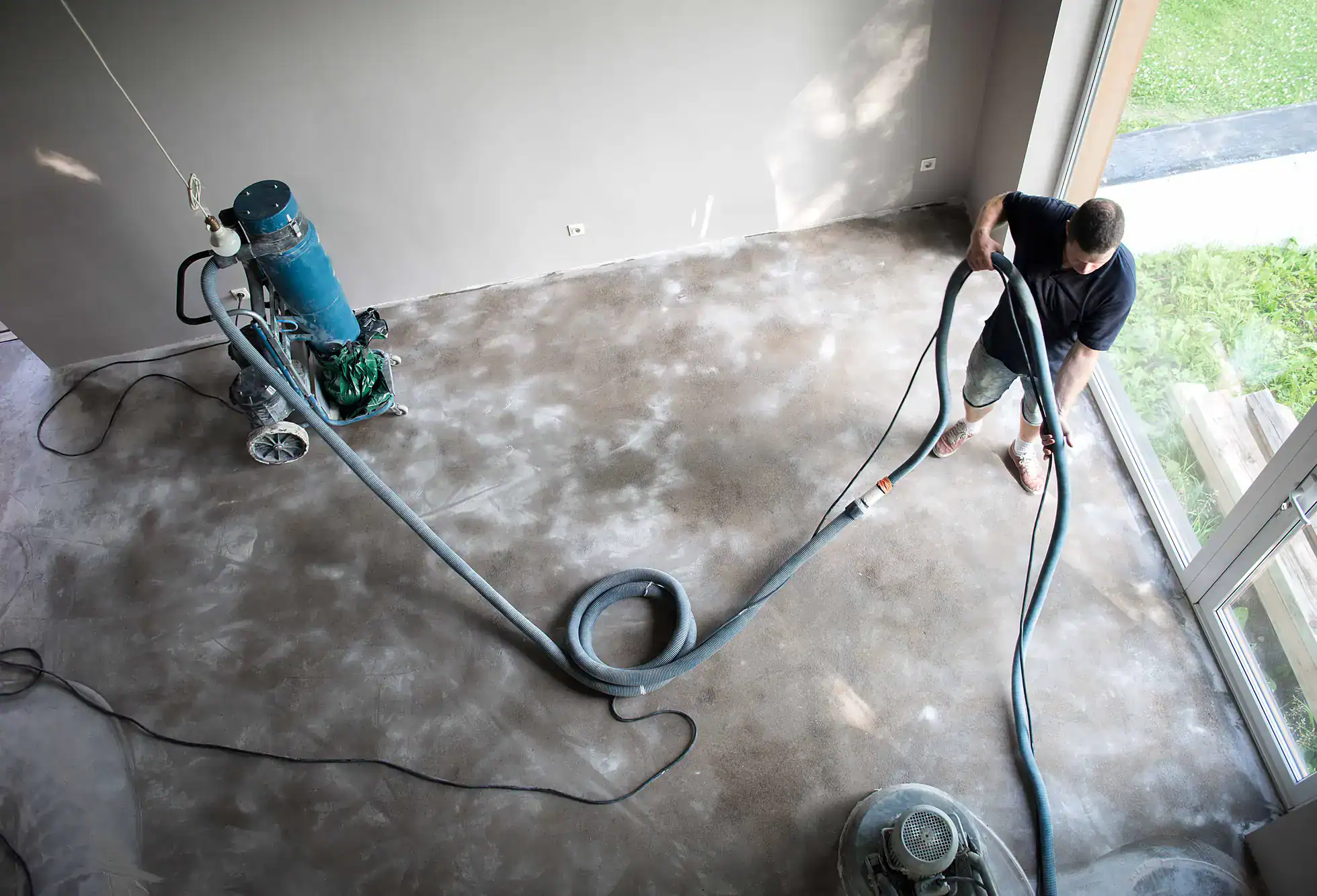
We start with an honest assessment of your slab. The age of the building, the condition of the surface, any existing coatings, cracks, or contamination all of it gets evaluated before a single piece of equipment touches the floor. Central Islip’s commercial building stock ranges from older light industrial structures to late-1990s government construction to brand-new mixed-use builds coming online through the Downtown Revitalization Initiative. Each of those slabs is different, and we adjust the process accordingly.
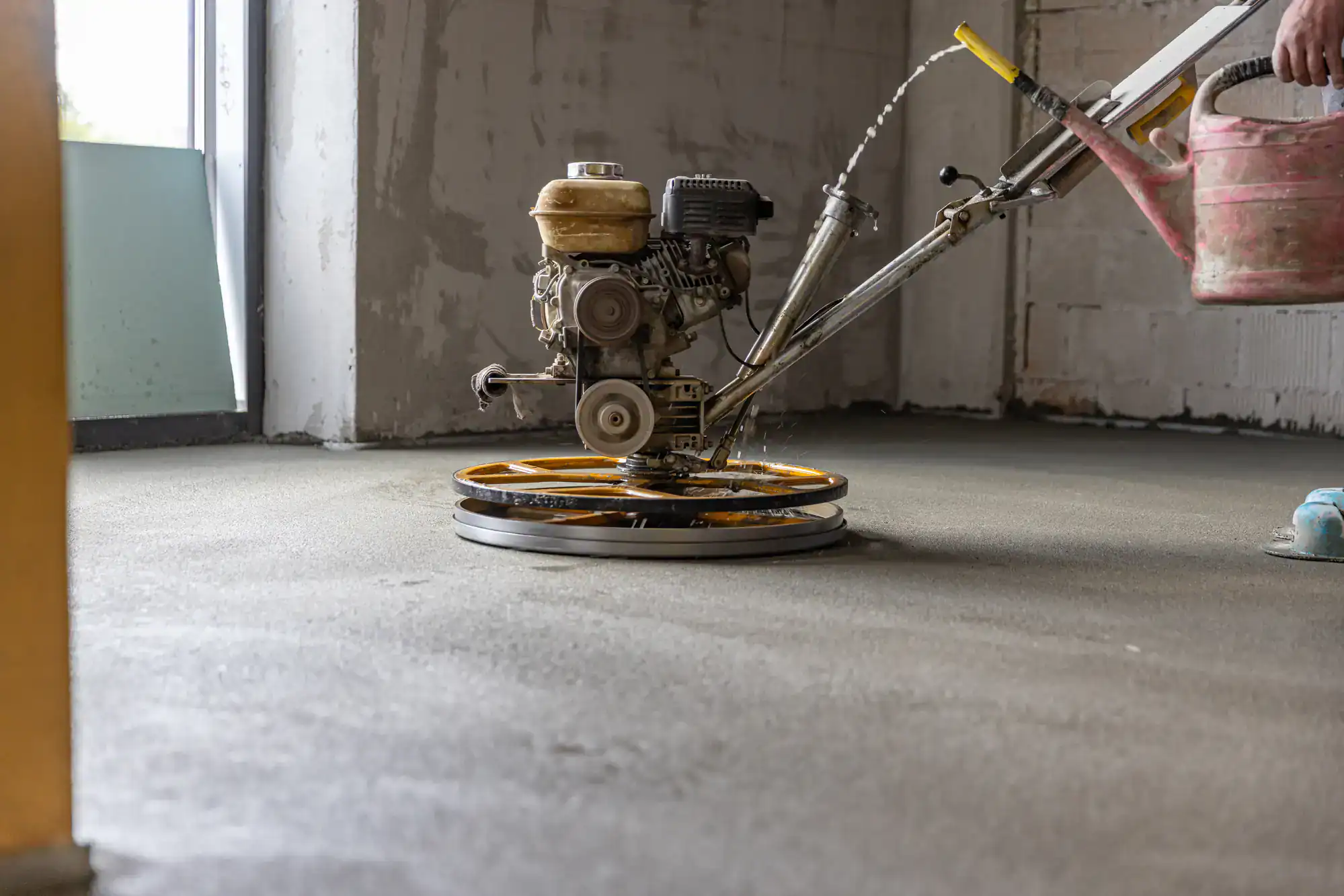
Once the slab is assessed, surface preparation comes first grinding down to a clean, even profile, removing old coatings or contamination, and filling any cracks or repairs with color-matched material. From there, the diamond tooling progression begins. This is where the technical knowledge matters most. Moving through the correct grit sequence coarse to fine is what produces a finish that holds up rather than one that looks good for six months and then hazes over.
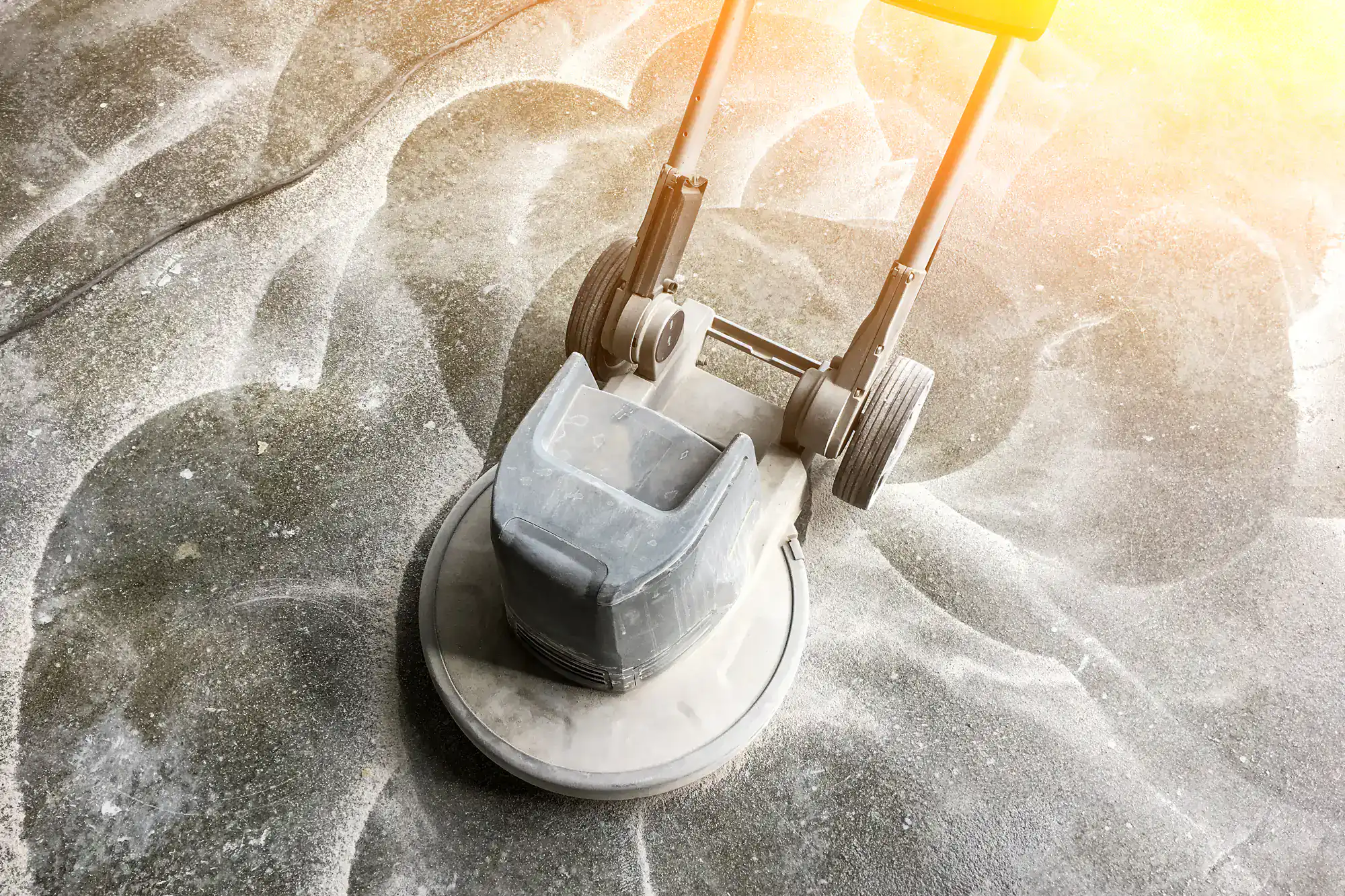
We apply densifier at the right stage of the process, not as an afterthought. It needs time to penetrate and react with the slab before the finishing passes begin. After that, the final polishing stages bring the floor to the specified finish level whether that’s a low-sheen industrial finish for a warehouse or a high-gloss surface for a showroom or institutional space. The result is a floor that’s ready for real use, not just photos.
Ready to get started?
Concrete polishing isn’t one thing the finish level, the preparation required, and the densification spec all depend on what your space actually needs. For Central Islip’s warehouse and industrial tenants, the priority is usually dust elimination, surface hardness, and forklift compatibility. For retail businesses along Carleton Avenue or institutional spaces like those near the courthouse complex, the goal is a high-gloss polished concrete finish that handles consistent foot traffic and looks the part.
Every project includes a full surface preparation phase grinding, contamination removal, crack repair followed by the diamond progression and densifier application that makes the floor actually last. The finish class is determined by your environment and use case, not by what’s easiest to install. Industrial concrete polishing services in Central Islip, NY typically call for a lower-sheen finish that maximizes durability under vehicle traffic, while retail showroom concrete finishes in Central Islip, NY lean toward a higher-gloss result that reflects light and reads as premium in a customer-facing space.
Commercial flooring work of this type in New York generally doesn’t require a separate building permit for interior surface work, but food service environments, healthcare spaces, and government facilities may have specific compliance requirements around chemical application and surface standards. Our Sherwin-Williams HPF certification means the products and methods we use meet manufacturer specifications which matters when you’re working in a regulated environment or need to document contractor qualifications for a facility manager or procurement process.
In most cases, yes. Older slabs including the kind found in Central Islip’s mid-20th-century light industrial buildings are actually good candidates for polishing, even when they’ve accumulated decades of coatings, contamination, or surface wear. The preparation phase handles most of what people assume disqualifies a floor: old epoxy coatings get ground off, surface cracks get filled, and uneven areas get leveled before the polishing sequence begins.
The honest answer is that slab condition determines the process, not whether polishing is possible. A harder, denser slab from a newer building will move through the diamond progression differently than an older, softer slab but both can be polished to a functional, durable finish. The assessment at the start of every project exists specifically to answer that question before any work begins, so there are no surprises mid-job.
Commercial concrete polishing in Central Islip, NY typically runs between $3 and $8 per square foot for most standard applications, with high-specification institutional or showroom finishes reaching $10 to $12 per square foot depending on slab condition, square footage, and the finish class required. Larger footprints like warehouse floors or the kind of open commercial space common in Central Islip’s industrial zones generally bring the per-square-foot cost down.
The more useful number to focus on isn’t the upfront cost it’s what you’re not paying over the next 15 to 20 years. No waxing cycles, no stripping, no recoating. For business owners in the Carleton Avenue corridor who are making DRI-funded interior improvements, a polished concrete floor is one of the few upgrades where the lifecycle math consistently justifies the investment. Get a real number for your specific space by having the slab assessed first square footage and condition are what drive the actual quote.
This is one of the most common concerns, and it’s based on a reasonable assumption a shiny floor looks like it should be slippery. But gloss and friction are independent properties. A properly polished concrete floor meets OSHA’s minimum coefficient of friction standard of 0.5 for level commercial surfaces, which is the same benchmark applied to tile, vinyl, and other common commercial flooring materials.
For environments that see frequent wet traffic a restaurant on Carleton Avenue, a food service facility, or a high-traffic institutional space we can incorporate anti-slip additives into the final stain guard without changing the appearance of the floor. The finish still reads as polished and professional. The slip resistance is there where it needs to be. For commercial operators in Central Islip who are managing customer-facing spaces or working in regulated environments, this isn’t a workaround it’s a standard part of the specification process.
Suffolk County winters are genuinely hard on unprotected concrete. The freeze-thaw cycle water infiltrating a porous slab, freezing, expanding, and creating micro-fractures that worsen each season is one of the primary reasons commercial concrete floors in this region deteriorate faster than owners expect. Add the deicing salt and chloride contamination tracked in from parking lots and loading docks, and an untreated slab is dealing with two separate deterioration mechanisms at once.
Densification addresses both. When lithium silicate densifier is applied correctly and given time to react with the slab, it chemically fills the pore structure that would otherwise let moisture and chloride work their way in. The result is a surface that’s measurably more resistant to freeze-thaw damage and salt contamination which, for a commercial floor in Central Islip that’s going to see Long Island winters for the next two decades, is the difference between a floor that holds up and one that needs remediation in year five.
Timeline depends on square footage, slab condition, and the finish level you’re working toward. A standard commercial space in the 2,000 to 5,000 square foot range can typically be completed in two to three days. Larger warehouse or institutional floors take longer, but we can usually sequence the work in sections to keep part of the space operational while other areas are being processed.
For Central Islip businesses whether you’re a retailer on Carleton Avenue trying to stay open through a renovation or an industrial operator who can’t afford a full shutdown that kind of scheduling flexibility matters. The assessment phase at the start of the project is where the timeline gets mapped out honestly, based on your specific space and what your operations actually require. No guessing, no surprises.
They solve different problems, and the right choice depends on what your space actually needs. Epoxy coatings sit on top of the concrete they’re a surface layer that can be customized with color, texture, and chemical resistance. They’re a strong choice for environments with heavy chemical exposure or specific aesthetic requirements. The tradeoff is that coatings eventually chip, peel, and need to be reapplied, especially under consistent forklift or vehicle traffic.
Polished concrete works with the slab itself. The densification process hardens the concrete from within, and the polishing removes material to create a finish that’s part of the slab not a layer on top of it. There’s nothing to peel, chip, or delaminate. For the warehouse operators, institutional facilities, and commercial tenants that make up a significant part of Central Islip’s business base, that durability difference is usually what drives the decision. If your floor is going to take real punishment over the next 20 years, polished and densified concrete is typically the lower-maintenance, longer-lasting choice.
Other Services we provide in Central Islip