
Central Islip’s housing stock is largely post-war construction homes and commercial buildings that have been absorbing Long Island’s winters for 50 to 70 years. That means slabs that have cracked, settled, and shifted through hundreds of freeze-thaw cycles. When water gets into those cracks, refreezes, and expands, it doesn’t just widen the crack it progressively destroys the slab surface from the inside out. By the time you’re calling about a new floor, the concrete underneath is usually in worse shape than it looks.
Professional self leveling concrete in Central Islip, NY addresses the actual problem, not just the surface. We create a flat, stable substrate that gives your final floor covering tile, LVP, hardwood, sheet vinyl something solid to bond to. That matters especially in Central Islip, where a lot of buildings are in active transition: former institutional spaces being converted, retail units getting refreshed, healthcare facilities that need seamless, hygienic floors that meet strict flatness tolerances.
What you get on the other side of a properly done job is simple. No more lippage in your tile. No soft spots under your vinyl. No callbacks six months later because the underlayment cracked. You get a floor that performs the way it was supposed to and one that doesn’t need to be redone in two years.
Advanced Epoxy Flooring has been installing floors across Long Island for over 30 years, operating out of Bohemia about 10 to 12 miles east of Central Islip along the LIE corridor. We know the building stock in Central Islip intimately. We show up fast when you need an assessment.
Our president brings more than 40 years of hands-on installation experience to every project. Our crew has been together for over a decade. That kind of consistency is rare in this trade, and it shows in the quality of the work. No rotating cast of unfamiliar faces on your job site the same experienced team that’s worked in government facilities, healthcare spaces, and commercial buildings throughout Suffolk County will be on your floor.
Our A+ BBB accreditation and OSHA 40 certification aren’t just credentials to list they matter when you’re working in institutional environments like the ones near the Cohalan Court Complex or in healthcare settings that serve Central Islip’s largest employment sector. We take compliance seriously, not as an afterthought.
The first thing that happens on any self leveling job in Central Islip, NY isn’t mixing it’s testing. Moisture vapor emission is one of the leading causes of self leveling failure on Long Island, and it’s almost always skipped by contractors who treat this as a simple pour. We perform ASTM F2170-compliant relative humidity testing before anything touches the slab. If moisture levels are too high, the pour waits or the right primer system gets specified to handle it. Skipping this step is how you end up with delaminated underlayment six months after installation.
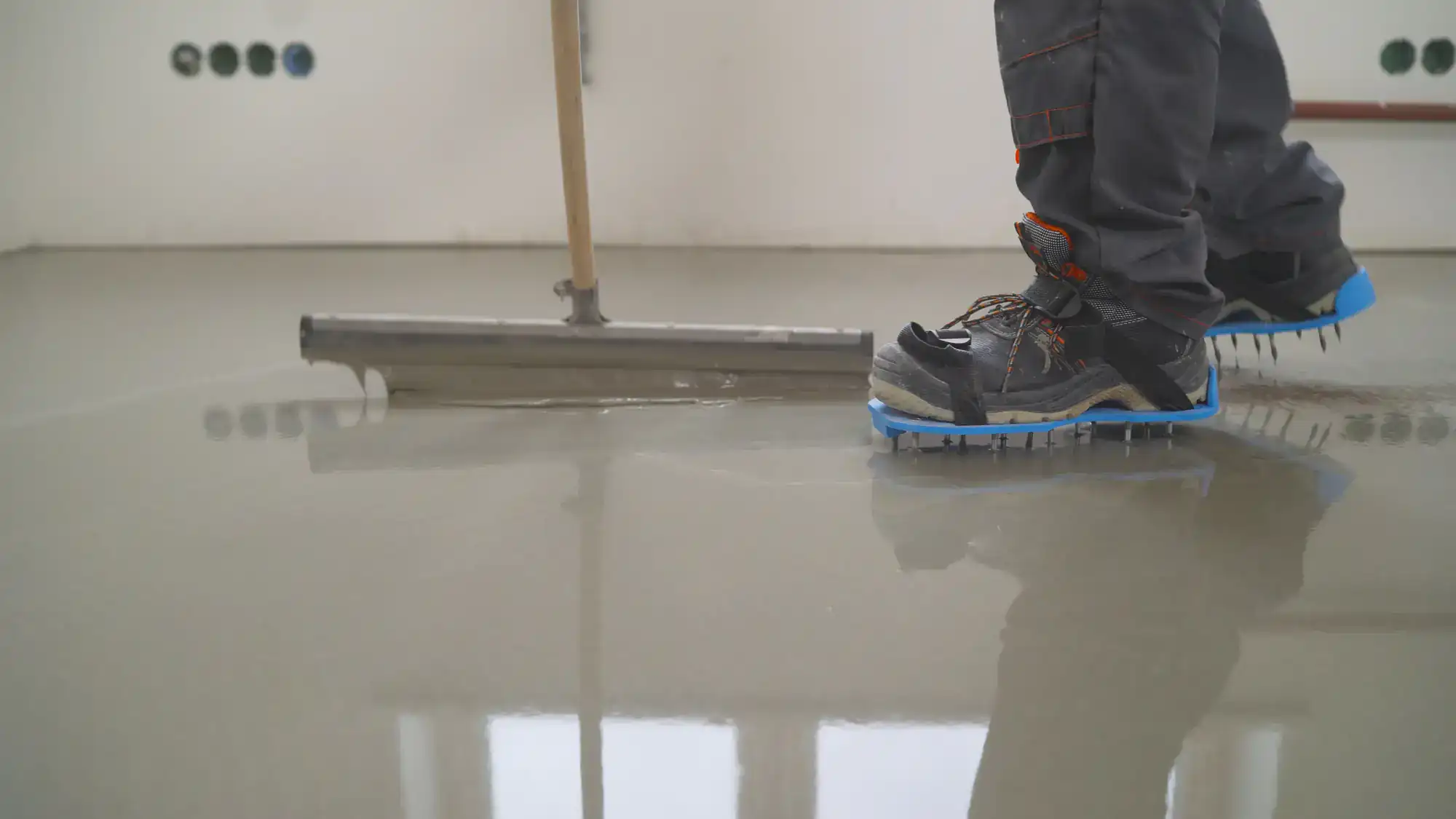
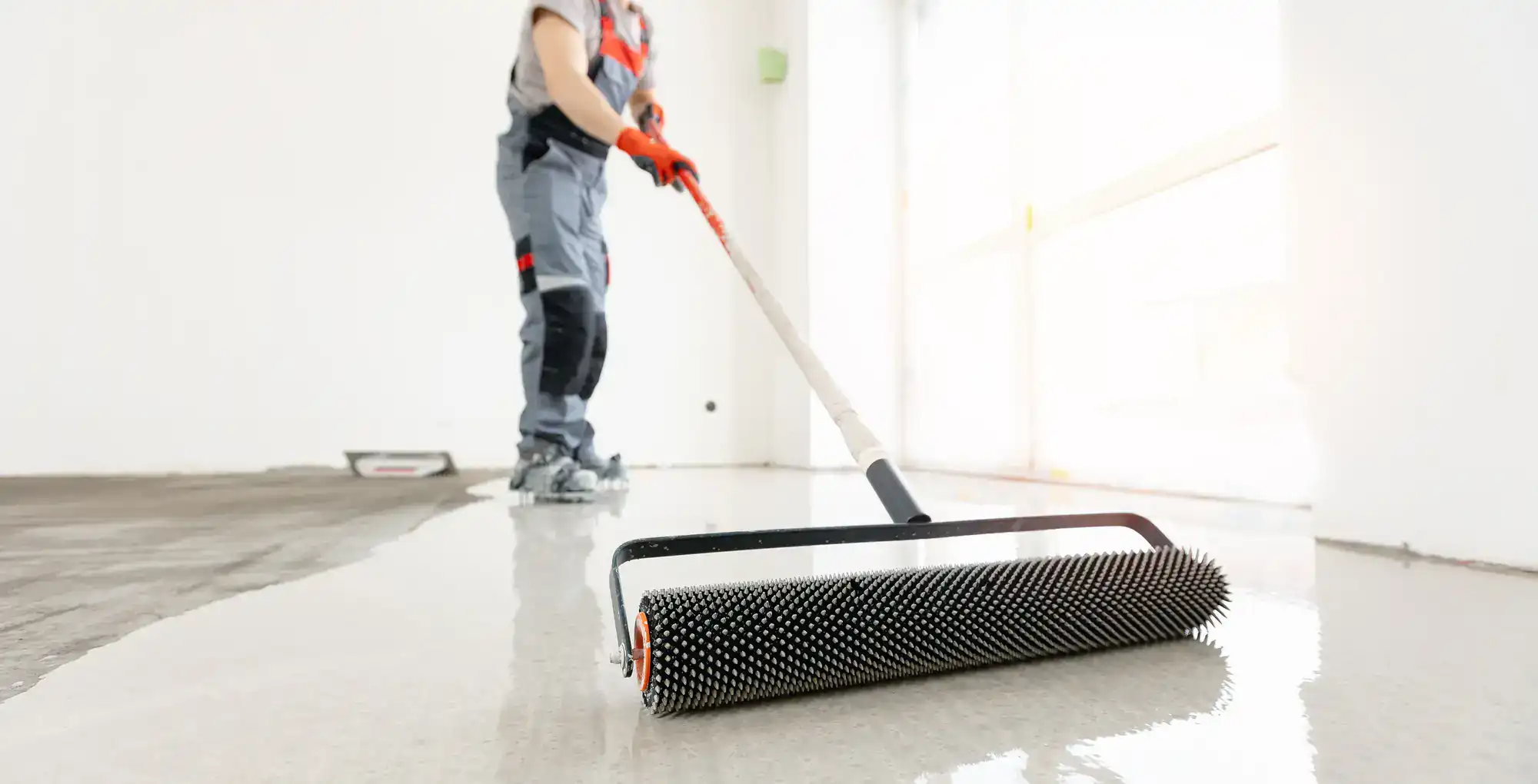
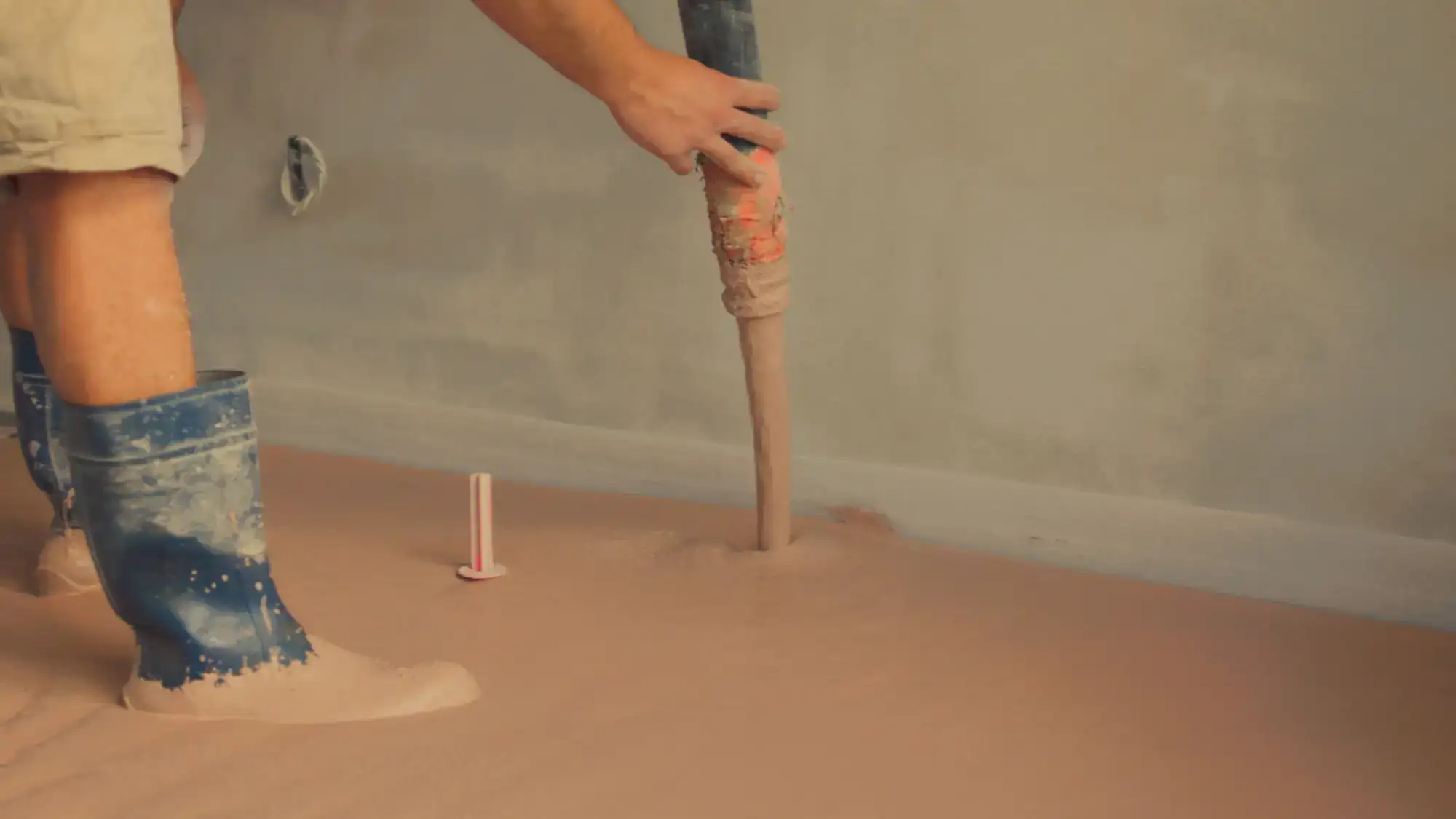
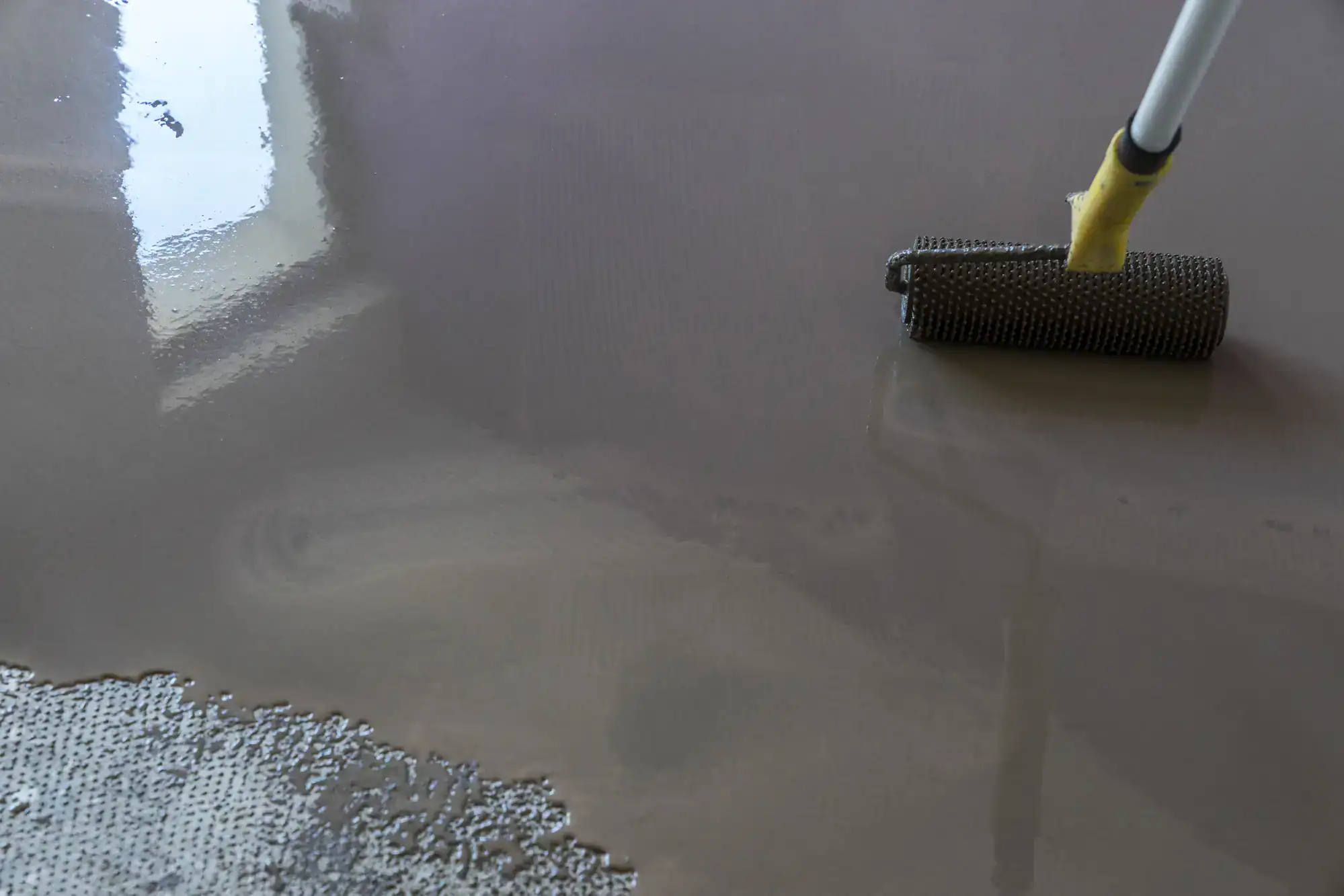
Once the slab passes moisture testing, the surface gets prepared grinding, profiling, patching any significant voids or cracks. This is the part most people don’t see, but it’s what determines whether the self leveling material bonds properly or eventually fails at the edges. Primer goes down next, matched to the specific substrate and the pour depth required. Then the self leveling material is poured and spread. Depending on the correction needed, that could be a ¼” skim coat before new LVP in a residential space, or a 2″ to 5″ pour with aggregate in a commercial or institutional building that needs serious correction.
Foot traffic is typically possible within four to six hours. Heavy commercial loads within 24 to 48 hours. For a business operating near Islip Avenue or a healthcare facility that can’t afford extended downtime, that turnaround matters. The final floor covering can go down once the underlayment has cured and the flatness has been verified not before.
Ready to get started?
Not every self leveling job is the same, and the material selection matters more than most people realize. A residential slab in one of Central Islip’s post-war neighborhoods needs a different product than a commercial floor in a converted institutional building near the NYIT campus or a warehouse in the light industrial corridor. We are factory-trained in advanced cementitious and resinous systems and select the right product based on the actual conditions pour depth, substrate type, moisture levels, and the final floor covering going on top.
Our system range covers ¼” to over 2″ neat, and up to 5″ with aggregate additions. That depth range handles everything from a light residential skim coat to a serious correction on a badly deteriorated commercial slab. For healthcare facilities Central Islip’s largest employment sector the flatness tolerances required for sheet vinyl and LVT are non-negotiable, and the underlayment has to meet them. For retail and light industrial spaces, the focus shifts to compressive strength and fast return to service.
Concrete surface preparation, crack repair, moisture testing, primer application, the pour itself all of it is handled by our crew under one roof. There’s no subcontracting, no handoff between a prep crew and a pour crew, and no gap in accountability if something needs attention after the job is done. One team, one process, one standard from start to finish.
The most obvious signs are visible: tile that’s cracked or lippage you can feel underfoot, LVP that’s separating at the seams, or a floor that just doesn’t feel solid when you walk on it. But sometimes the slab looks fine until a flooring installer shows up and tells you the subfloor is out of tolerance for the material they’re installing. Larger-format tiles and thinner vinyl plank products have much tighter flatness requirements than older flooring types what passed 20 years ago often won’t pass today.
In Central Islip specifically, the combination of aging concrete and Long Island’s freeze-thaw cycles means a lot of slabs that look acceptable on the surface have underlying issues hairline cracks that have been widening for decades, sections that have settled unevenly due to soil movement, or areas near exterior walls where moisture infiltration has been ongoing. If you’re planning a new floor installation in a post-war home or a commercial space that hasn’t had floor work done in years, it’s worth having the slab assessed before you commit to a finish product.
Nationally, concrete floor leveling services range from around $750 on the low end to $6,000 or more depending on the square footage, the depth of correction needed, and the condition of the existing slab. In the Long Island market including Central Islip labor costs run above the national average, so you should expect to be at the higher end of that range for professional commercial-grade work. That said, the actual cost varies significantly based on what the slab needs before the pour even starts.
The more important number to think about is what a failed job costs. If self leveling is installed over a slab that wasn’t properly tested for moisture, or if the wrong primer was used, or if the pour depth was misjudged, the underlayment can delaminate and when that happens, you’re looking at complete removal, reinstallation, and replacement of whatever finish floor was on top. Getting it done correctly the first time is almost always the cheaper option when you factor in the full cost of a redo. A straightforward assessment of your slab before any work starts is the best way to get an accurate number for your specific project.
Most professional self leveling systems are foot-traffic ready within four to six hours of the pour. Heavy commercial loads forklifts, pallet jacks, equipment typically require 24 to 48 hours. The final floor covering usually goes down after a full cure, which can range from 24 hours to several days depending on the product, the pour depth, and the ambient conditions in the space.
Temperature plays a role here, and it’s worth flagging for anyone planning a project during Long Island’s colder months. Self leveling cementitious materials are sensitive to low temperatures if the space isn’t climate-controlled and ambient temps drop significantly overnight, cure times extend and the risk of surface issues increases. This is something that experienced installers account for in the planning stage, not something you want to discover after the pour is already down. For commercial spaces in Central Islip that need to minimize downtime, scheduling around the cure window is part of the conversation from the start.
It depends on what’s under there and what condition it’s in. Self leveling underlayment can be installed over existing concrete, certain existing flooring materials, and wood subfloors but each scenario has specific requirements. The existing surface needs to be clean, structurally sound, and properly primed. If there’s old adhesive residue, paint, or a coating on the concrete, that typically needs to be ground off before the self leveling material will bond correctly. If the existing floor covering is loose, soft, or compromised, it usually needs to come up.
In Central Islip’s older commercial and institutional buildings particularly the converted spaces that have gone through multiple renovation cycles it’s common to find layers of old flooring materials that complicate the prep work. That’s not necessarily a problem, but it does need to be assessed honestly before a quote is given. A contractor who tells you self leveling can go over anything without looking at what’s there first is one to be cautious about. The prep work is what determines whether the final result holds.
Moisture vapor emission from concrete slabs is one of the most common and most preventable causes of flooring failure on Long Island. When moisture moves up through a slab and gets trapped under a self leveling underlayment that wasn’t properly primed or wasn’t installed over a moisture-mitigating system, it breaks the bond between the underlayment and the concrete. The result is delamination the self leveling material lifts, cracks, or becomes hollow-sounding underfoot, and the finish floor on top fails with it.
Central Islip’s mix of older slabs, converted institutional buildings, and new construction on former industrial lots means moisture is a genuine variable on nearly every project in this area. Slabs that were poured decades ago without vapor barriers, buildings that went through periods of neglect or water intrusion, and sites where the surrounding soil has high clay content all carry elevated moisture risk. ASTM F2170 relative humidity testing gives you an actual number not a guess before anything is poured. If the reading is too high, the right primer system or moisture mitigation layer gets specified. It’s a step that adds maybe an hour to the assessment process and can prevent a complete reinstallation down the road.
Patching compound is designed to fill specific voids, cracks, or damaged areas it’s a spot fix. Self leveling underlayment is a full-coverage system that flows across the entire surface and finds its own level, creating a continuous, flat substrate across the whole floor. They serve different purposes, and using patching compound where self leveling is needed is one of the more common mistakes in DIY floor prep.
The other key difference is compressive strength and long-term performance. Professional self leveling systems used in commercial applications the kind specified for healthcare facilities, retail spaces, and institutional buildings in Central Islip are engineered to high compressive strength ratings and formulated to bond to properly prepared concrete without shrinkage cracking. The bag of self leveling compound from a hardware store is a different product category entirely. It might work for a small residential skim coat in a low-traffic area, but it’s not the same material or the same result. If you’ve already tried a DIY pour and watched it crack or delaminate, that’s usually why and it’s exactly the kind of situation where a professional assessment of the slab conditions makes the difference between a fix that holds and one that doesn’t.
Other Services we provide in Central Islip