You’re managing a facility where every surface matters. Where one contamination event can trigger an investigation, cost you accreditation points, or worse—harm someone under your care.
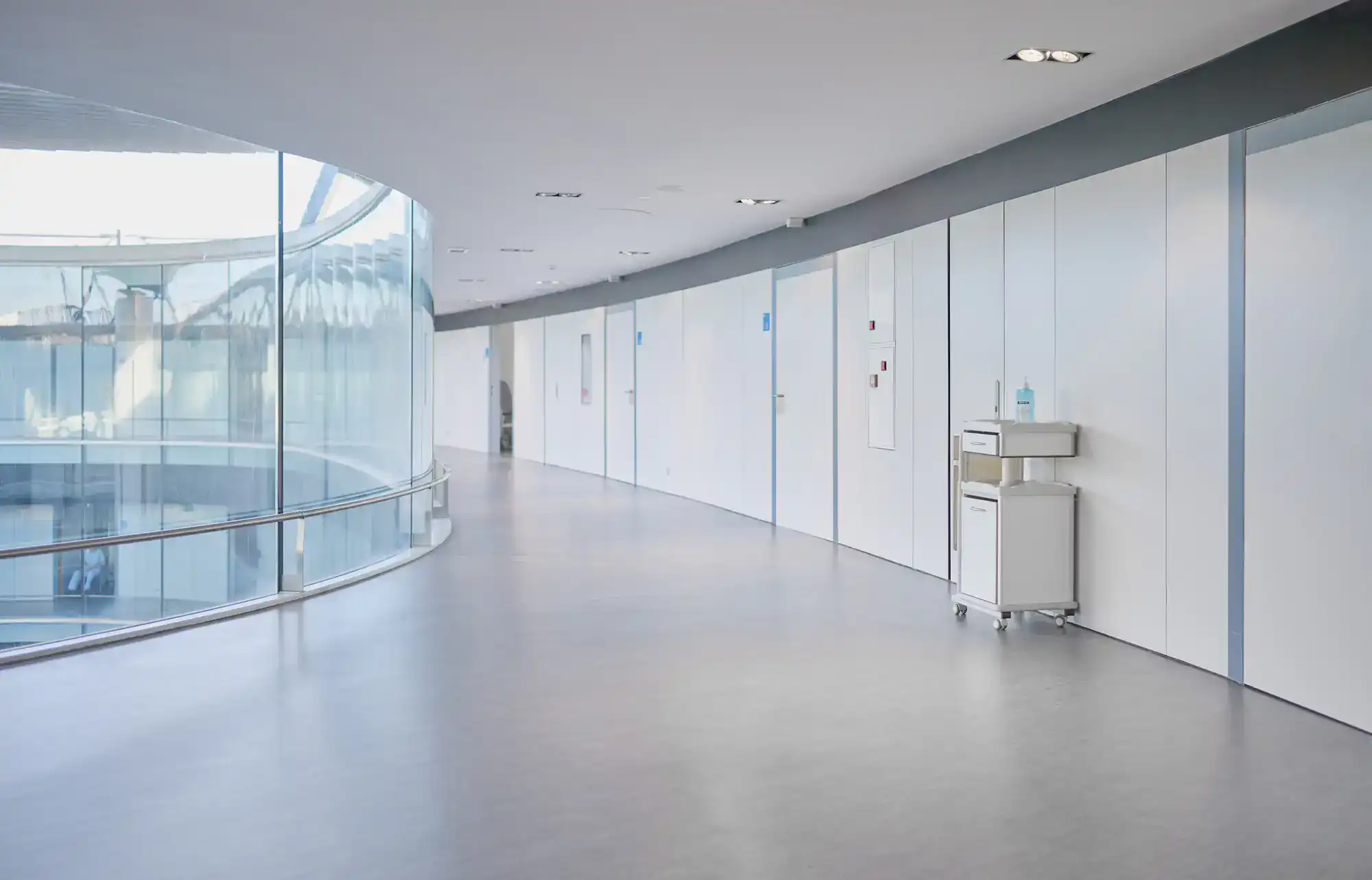
Your floors can’t just look clean. They need to be clean at a microbial level, withstand daily washdowns with hospital-grade disinfectants, and hold up under equipment that never stops rolling. That’s what seamless medical-grade epoxy in Central Islip, NY delivers—a monolithic surface with zero grout lines, no seams, and nowhere for bacteria to colonize.
These systems are built with antimicrobial protection integrated into the resin itself. Not a topical coating that wears off, but silver ion technology that actively inhibits bacterial growth for the life of the floor. You get a surface that meets USDA and FDA compliance standards, resists chemical degradation from quaternary ammonium compounds and bleach solutions, and maintains slip resistance even when wet.
The outcome is straightforward: fewer infection risks, easier daily maintenance, and flooring that doesn’t force you into costly replacements every few years because it couldn’t handle the workload.
We’ve been serving Long Island for over 30 years. Every installer on our team is OSHA 40 certified, and most have been with us for over a decade. Our field supervisors bring more than 40 years of combined experience to healthcare environments across Central Islip, NY and surrounding areas.
We work in occupied facilities. That means we understand what it takes to install sterile room floor coatings without disrupting patient care or triggering air quality complaints. We use low-VOC healthcare coatings in Central Islip, NY that emit virtually no odor—critical when you’re working in active clinical spaces.
You’re not hiring a general contractor trying to figure out healthcare compliance on your dime. You’re working with a team that knows what CDC and CMS inspectors look for, what your EVS staff needs for daily cleaning, and how to execute installations in tight windows without cutting corners.
First, we assess your substrate and existing conditions. Concrete prep matters more in healthcare than anywhere else because any failure point becomes a contamination risk. We diamond-grind the surface to open the pore structure, remove any existing coatings or contaminants, and create the mechanical bond needed for a long-term installation.
Next, we apply a moisture vapor barrier if needed, then build up the system in layers. For most healthcare applications in Central Islip, NY, that means a primer coat, a thick build epoxy body coat, and a chemical-resistant topcoat with antimicrobial additives. The thickness creates a true barrier—contaminants can’t penetrate, and the surface can handle the mechanical abuse of beds, carts, and lifts without cracking.
We customize slip resistance based on your space. Operating rooms need different traction than corridors. We add aggregate or texture to hit the COF values you need while keeping the surface seamless and scrubbable.
Cure times vary, but most systems are ready for light foot traffic within 24 hours and full service within 72. We schedule installations during low-census periods or work in phases so you’re never completely offline. Once cured, you have a floor that requires nothing more than daily mopping with a neutral cleaner—no waxing, no stripping, no ongoing maintenance contracts.

Ready to get started?
You’re getting a fully seamless, non-porous surface that meets or exceeds USDA and FDA performance standards. That means it’s impervious to moisture, can withstand thermal shock from hot washdowns, and resists chemical attack from the full range of hospital-grade disinfectants your EVS team uses daily.
The antimicrobial protection is permanent—not a coating that wears away after six months. Silver ions are embedded in the resin matrix and remain active for the life of the floor, continuously inhibiting bacterial colonization on the surface. This is especially critical in high-risk areas like surgical suites, ICUs, and sterile processing departments across Central Islip, NY.
You also get slip resistance that’s engineered, not accidental. We can dial in specific COF ratings to meet ADA requirements and your internal safety protocols without creating a surface that’s impossible to clean. The texture is part of the topcoat, so it doesn’t trap soil or require aggressive scrubbing.
Long Island healthcare facilities face unique challenges—high patient volumes, aging infrastructure, and regulatory scrutiny from multiple agencies. These floors are built to handle all of it. They last 15-20 years in high-traffic environments, don’t require costly refinishing, and give you one less thing to worry about during your next Joint Commission survey.
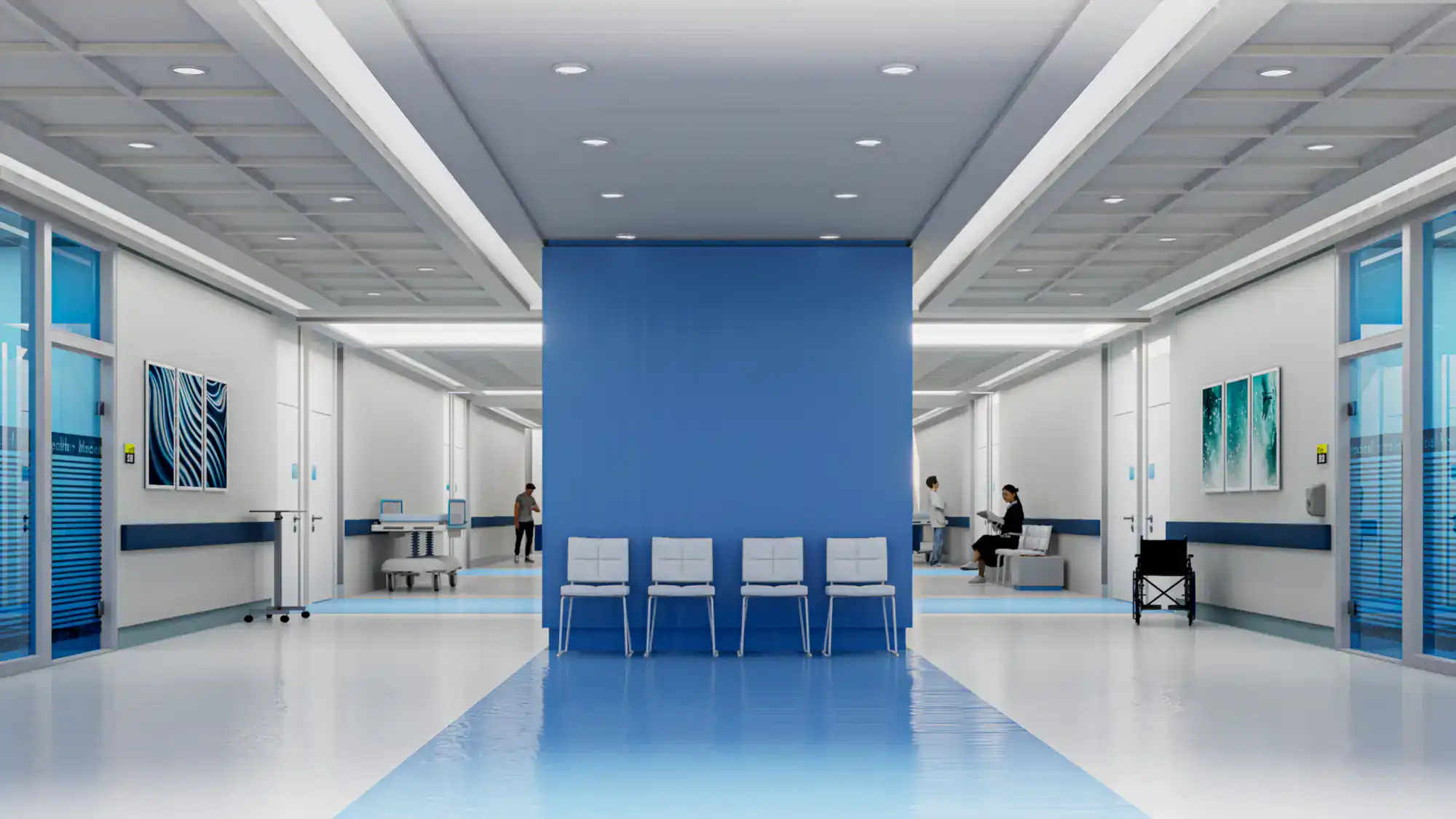
Antimicrobial flooring doesn’t replace your cleaning protocols—it adds another layer of protection between cleanings. The silver ion technology embedded in the epoxy resin actively disrupts bacterial cell walls when microorganisms land on the surface, preventing them from multiplying.
Here’s what matters: traditional flooring can harbor bacteria in grout lines, porous surfaces, or microscopic cracks that cleaning can’t reach. Seamless medical-grade epoxy eliminates those hiding spots entirely. There are no seams, no grout, no texture that traps organic matter. When your EVS team mops with a hospital-grade disinfectant, they’re cleaning a completely smooth, non-porous barrier.
The antimicrobial additive works 24/7, even between cleaning cycles. Studies show that healthcare-associated infections often spread through environmental contamination. Floors account for a significant portion of that risk because they’re constantly contacted by shoes, equipment wheels, and anything that drops. A floor that actively inhibits bacterial growth reduces that risk in a measurable way, especially in high-traffic areas where cleaning frequency might not keep pace with contamination events.
USDA and FDA regulations for healthcare and pharmaceutical environments require floors that are seamless, impervious to moisture, able to withstand chemical cleaning agents, and durable enough to handle heavy equipment without degrading. Epoxy and urethane cement systems meet all of those requirements when installed correctly.
The key word is “impervious.” These aren’t just water-resistant—they’re completely non-porous at a molecular level. Liquids, chemicals, and contaminants can’t penetrate the surface or seep into the substrate below. That prevents bacterial growth beneath the flooring, eliminates odor retention, and ensures that what you clean off the surface is actually gone.
Compliance also means durability under specific conditions. FDA-regulated facilities often require floors that can handle thermal shock from steam cleaning or hot washdowns without cracking or delaminating. Urethane cement systems are engineered for exactly that—they maintain bond strength and surface integrity even when exposed to rapid temperature changes. In Central Islip, NY, where healthcare facilities range from small clinics to large hospital networks, having a flooring system that meets federal standards across the board eliminates compliance headaches and gives you documentation to back up your infection control measures during audits.
Timing and material selection are everything. We use low-VOC healthcare coatings that emit virtually no odor during application or curing. That’s critical when you’re working in an occupied facility where patients might have respiratory sensitivities or where air quality complaints can shut down a project.
We schedule installations during low-census periods, after-hours, or in phases that allow you to keep adjacent areas operational. For example, if you’re renovating a clinic wing, we’ll work in sections so you can continue seeing patients in other parts of the building. Most epoxy systems are ready for light foot traffic within 24 hours, which means you’re not looking at week-long closures.
The process itself is cleaner than most people expect. Diamond grinding creates dust, but we use HEPA-filtered vacuums and containment barriers to keep particulates out of occupied spaces. Application is controlled and precise—no overspray, no fumes migrating through HVAC systems. We’ve installed sterile room floor coatings in active surgical centers, working overnight so the OR is ready for the first case in the morning. It requires coordination and experience, but it’s absolutely doable when you’re working with a team that understands healthcare operations and doesn’t treat your facility like a warehouse.
Daily mopping with a neutral pH cleaner. That’s it. No waxing, no buffing, no stripping, no periodic refinishing. The surface is inherently stain-resistant and doesn’t rely on a sacrificial wear layer that needs constant replacement.
Your EVS staff can use the same hospital-grade disinfectants they’re already using—quaternary ammonium compounds, bleach solutions, hydrogen peroxide—without worrying about damaging the floor. The chemical resistance is built into the topcoat, so repeated exposure doesn’t cause yellowing, hazing, or surface breakdown. That’s a significant operational advantage because you’re not restricting cleaning protocols to protect the flooring.
If you do get a stain from something particularly aggressive—say, iodine or certain dyes—it sits on the surface rather than soaking in. A slightly more concentrated cleaner or a light scrub removes it. Compare that to VCT, which absorbs stains into the tile and requires stripping and refinishing to look presentable again, or porous surfaces like unfinished concrete that become permanent contamination risks once stained.
Over time, high-traffic areas might show wear patterns, but even that’s minimal with a properly installed system. If you ever need a refresh, we can lightly abrade the surface and apply a new topcoat without tearing out the entire floor. Most healthcare facilities in Central Islip, NY see 15-20 years of service life before considering replacement, and that’s with intensive daily use.
Because the performance requirements are exponentially higher. You’re not just covering a concrete slab—you’re installing a critical component of your infection control infrastructure that has to meet federal compliance standards, withstand chemical warfare from cleaning agents, and last decades under conditions that would destroy standard flooring in months.
The materials themselves are more expensive. Antimicrobial additives, high-solids epoxy resins, and chemical-resistant topcoats cost more than basic coatings. The installation process is more labor-intensive because surface prep has to be perfect—any contamination or moisture issue that would be acceptable in a retail space becomes a failure point in a healthcare environment.
You’re also paying for expertise. Installing sterile room floor coatings in Central Islip, NY requires OSHA certification, understanding of healthcare regulations, and experience working in occupied facilities where mistakes have real consequences. That’s not something you get from the lowest bidder.
But here’s the cost conversation that actually matters: what does non-compliant flooring cost you? Failed inspections, infection outbreaks, constant maintenance, and premature replacement all carry price tags that dwarf the upfront investment in a proper system. Healthcare flooring done right is a 15-20 year solution. Done wrong, you’re looking at problems within the first year and a full replacement within five. The math isn’t complicated.
Yes, and that’s one of the major advantages of resinous flooring systems. Small areas of damage—chips, cracks, or localized wear—can be repaired without replacing the entire floor. We use high-performance, VOC-free repair materials that bond chemically to the existing system and cure with virtually no odor, which means we can make repairs in occupied spaces without triggering air quality complaints.
The process involves light surface prep of the damaged area, application of a compatible repair compound, and blending the topcoat so the repair is seamless with the surrounding floor. Color matching is precise, and once cured, the repair has the same chemical resistance and durability as the original installation.
This is especially valuable in healthcare environments where equipment impacts, dropped instruments, or chemical spills can cause isolated damage. Instead of living with a compromised surface that becomes a contamination risk, or shutting down an entire room for days to replace the floor, you get a same-day or next-day repair that restores full functionality.
Larger damage—say, from a major leak or structural issue—might require more extensive work, but even then, we can often remove and replace sections rather than the entire floor. The key is catching problems early and working with an installer who understands healthcare flooring systems well enough to execute repairs that actually hold up. In Central Islip, NY, where facility managers are juggling tight budgets and can’t afford extended downtime, having a flooring system that’s repairable rather than replaceable makes a real difference in long-term operational costs.
Other Services we provide in Central Islip