


When your concrete floor starts cracking under forklift traffic, those small divots turn into potholes fast. Loads shift. Equipment bounces. Workers trip. And every day you’re patching instead of operating costs you money.
Industrial warehouse floor epoxy in Central Islip eliminates that cycle completely. You get a seamless surface that absorbs impact, resists abrasion, and keeps your forklifts moving smoothly across the floor. No more dust clouding your inventory. No more chemical spills seeping into porous concrete. No more surprise repair bills eating into your budget.
The floor stays clean with a quick sweep or mop. Safety lines and color-coded zones stay visible for years. Your lighting improves because the surface reflects instead of absorbs. And when you’re moving thousands of pounds of product daily, that kind of durability isn’t a luxury—it’s what keeps your warehouse running without interruption.
We’ve been installing forklift traffic resistant coating in Central Islip and across Long Island for over 30 years. We’ve worked in distribution centers, manufacturing facilities, and logistics hubs throughout Suffolk County—places where the floor either holds up or shuts you down.
Our crews are OSHA 40 certified. Most have been with us for over a decade. They know how to prep concrete properly using diamond grinding, not shortcuts. They understand moisture testing, substrate repair, and which epoxy systems actually perform under the kind of load your operation puts down daily.
Central Islip’s industrial growth means more warehouses handling last-mile delivery for the city. That means heavier traffic, tighter turnarounds, and floors that need to work harder. We’ve installed floors that handle it—from small distribution spaces to facilities moving millions of square feet of product annually.

We start with moisture testing because trapped moisture will ruin any coating, no matter how good the product is. If your slab has issues, we address them before anything gets applied. No guessing. No hoping it holds.
Next comes diamond grinding for warehouses in Central Islip. This isn’t shot blasting or acid etching. Diamond tooling cuts through the concrete evenly, removes the top layer uniformly, and creates the profile your epoxy needs to bond permanently. It’s the difference between a floor that lasts three years and one that lasts thirty.
Once the surface is prepped, we apply your customized epoxy system. That might be a high-build coating for heavy forklift zones, a chemical-resistant blend for areas with spills, or a system with anti-slip aggregate for loading docks. We’re not selling you one product for every application—we’re matching the coating to what your floor actually endures.
Cure times vary based on the system, but most warehouses are back to full operation within days, not weeks. And once it’s down, you’re done worrying about your floor for decades.

Ready to get started?
You’re not just getting a high-traffic concrete sealer in Central Islip—you’re getting a complete floor system designed for your specific operation. That includes full moisture testing to catch problems before they start, concrete repair work on cracks or damaged areas, and diamond grinding that creates a surface your epoxy can actually bond to permanently.
The coating itself is customized based on your traffic patterns, chemical exposure, and operational needs. Heavy forklift zones get reinforced. Loading areas get slip-resistant finishes. You can add color-coded safety zones, aisle markings, or designated traffic lanes that stay visible under constant use.
Long Island’s industrial market has added nearly 4.5 million square feet of warehouse space since 2020, and Central Islip sits right in the middle of that growth. You’re competing with facilities that have newer floors and better logistics. A proper epoxy installation levels that playing field—your floor becomes an asset instead of a liability, and your facility looks like a place that takes operations seriously.
We’re not the cheapest option, and that’s intentional. Cheap epoxy fails under real warehouse conditions. You end up recoating in a few years, dealing with downtime, and spending more in the long run. We install it right the first time using materials that actually hold up, so you’re not calling us back to fix it.
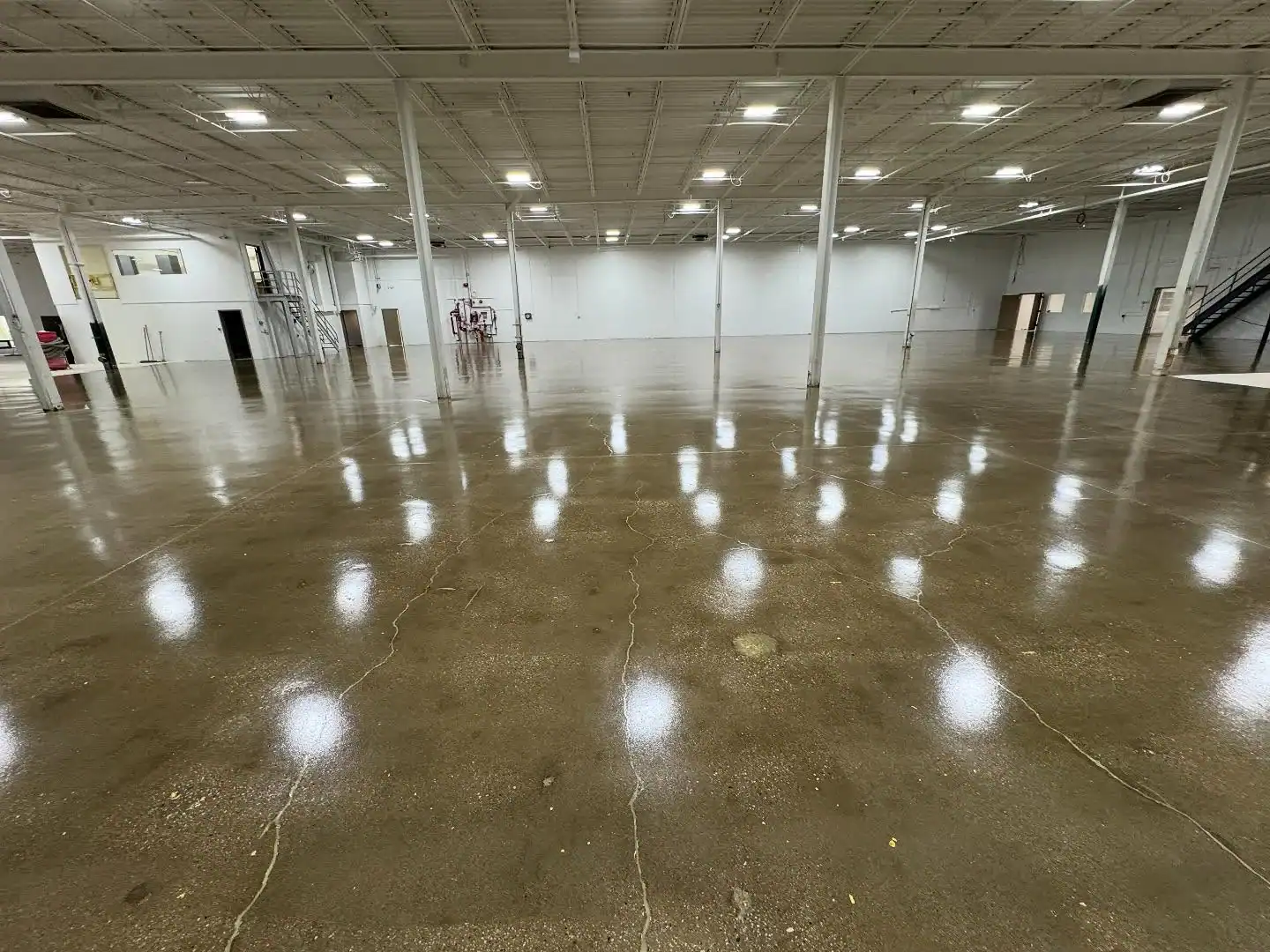
A properly installed industrial epoxy system lasts 20 to 30 years in high-traffic warehouse environments, assuming you’re using the right coating and the prep work was done correctly. The key word there is “properly.”
If someone skips diamond grinding, doesn’t test for moisture, or uses a thin mil coating in a heavy-use area, you’ll see failure in under five years. The epoxy will delaminate, crack, or wear through in forklift paths. But when the substrate is prepped right and the coating matches your traffic load, the floor outlasts most of the equipment running on it.
We’ve installed floors in Central Islip warehouses that are still performing after decades because the system was built for the application. That means thicker coatings in heavy zones, proper cure times, and materials that resist both impact and abrasion. Your floor isn’t a cosmetic upgrade—it’s infrastructure. Treat it like one.
Yes, but it requires planning. Most large scale warehouse flooring in Central Islip gets installed in phases so you can keep operating in sections while we work in others. We map out a schedule that minimizes disruption based on your traffic flow and storage layout.
The actual installation moves quickly once prep is done. Diamond grinding and coating application can often be completed in a section within a few days, and most epoxy systems cure enough for light traffic within 24 to 48 hours. Full cure for heavy equipment takes longer—usually three to seven days depending on the product—but you’re not looking at weeks of downtime.
The bigger variable is your concrete’s condition. If we find significant cracking, moisture issues, or substrate damage during prep, repairs add time. That’s why we assess everything upfront and give you a realistic timeline before we start. No surprises halfway through the job.
Epoxy creates a chemical bond with your concrete that makes the coating and the slab function as one unit. It’s not sitting on top like paint—it’s integrated into the surface. That’s why it handles impact and abrasion better than polyurethane, polyaspartic, or acrylic coatings in heavy industrial environments.
Polyurethane has better UV resistance, so it’s great for areas with sunlight exposure. Polyaspartic cures faster, which helps in time-sensitive projects. But for pure durability under forklifts, pallets, and constant traffic, epoxy is the standard in warehouse applications. It’s thicker, harder, and more resistant to the kind of abuse your floor takes daily.
The other advantage is customization. We can adjust epoxy formulations for chemical resistance, add anti-slip aggregates, or build up thickness in high-wear zones. You’re not locked into one product for your entire facility—you get a system designed around how you actually use the space.
We use diamond grinding for warehouses in Central Islip because it’s the only method that consistently delivers the surface profile epoxy needs to bond permanently. Shot blasting can work, but it’s uneven. Acid etching doesn’t cut deep enough for industrial coatings. Diamond tooling removes the top layer uniformly and opens the concrete’s pores so the epoxy penetrates and locks in.
Before grinding, we test for moisture using calcium chloride tests or relative humidity probes. If your slab is releasing too much moisture, the epoxy will fail no matter how good the prep is. Older warehouses often have moisture issues from cracked vapor barriers or groundwater intrusion, so this step isn’t optional.
Any cracks, spalling, or damaged areas get repaired with structural epoxy or cementitious patches before we grind. You can’t just coat over problems and hope they disappear. Once the surface is prepped, ground, and clean, we apply a primer that soaks into the concrete, then build up your coating system in layers. It’s more work than a quick coat-and-go, but it’s the only way the floor actually lasts.
Yes, if you’re using the right epoxy formulation. Standard epoxy resists most oils, solvents, and mild chemicals without issue. For facilities with heavy chemical exposure—hydraulic fluid, battery acid, aggressive cleaners—we use chemical-resistant epoxy blends specifically designed for those environments.
The coating creates a non-porous, seamless surface that repels liquids instead of absorbing them. Spills sit on top where you can wipe them up instead of soaking into the concrete and causing stains or deterioration. That’s a huge advantage in warehouses where leaks and drips are inevitable.
The key is matching the coating to your actual exposure. If you’re dealing with corrosive chemicals daily, we’ll recommend a thicker system with enhanced chemical resistance. If it’s occasional oil drips from equipment, a standard industrial epoxy handles it fine. We’re not upselling you on coatings you don’t need—we’re making sure what goes down actually protects your floor from what hits it.
Cost depends on your square footage, the condition of your existing concrete, and which epoxy system your operation requires. A basic industrial coating runs differently than a heavy-build system with chemical resistance and custom safety markings. Most warehouse projects in Central Islip range from a few dollars per square foot to higher depending on complexity.
If your concrete needs significant repair, moisture mitigation, or extensive prep work, that adds to the cost. But skipping those steps to save money upfront means you’ll be recoating in a few years when the floor fails. We price projects based on what it actually takes to install a floor that lasts, not what sounds good in a quote.
The better way to think about cost is per year of use. A cheap coating that fails in five years costs more annually than a proper system that lasts 25. You’re not paying for the installation—you’re paying to stop worrying about your floor for the next two or three decades. We’ll give you an accurate quote after assessing your space, and we’ll explain exactly what you’re getting for that number.
Other Services we provide in Central Islip