
Most hangar floors in the Central Islip area fail for the same reason they were installed by someone who treats a hangar like a garage. The chemistry is different. The chemical exposure is different. And the consequences of getting it wrong are a lot more expensive than a peeling floor in your driveway.
Skydrol hydraulic fluid alone will destroy a standard epoxy coating within months. Add jet fuel, lubricants, and the industrial cleaning solvents that come with regular aircraft maintenance, and you’ve got a floor that’s fighting for its life from day one. The right coating system handles all of it without blistering, lifting, or breaking down at the surface.
Long Island’s humidity is the other factor that catches people off guard. Concrete hangar slabs especially the large ones common near MacArthur Airport absorb moisture from below. When that moisture has nowhere to go, it pushes up through the coating and causes delamination. It’s not a matter of if it happens, it’s when unless the slab is properly tested and prepped before a single drop of coating goes down.
We’re based in Bohemia, NY a few miles east of Central Islip along the Long Island Expressway. That’s not a footnote. It means the crew showing up to your hangar knows exactly what Suffolk County humidity does to a concrete slab, and we’ve been working in this environment for decades.
Danny Harmer, our president, has over 40 years of hands-on installation experience. He’s installed floors in aircraft hangars, commercial kitchens, industrial facilities, and yes the White House kitchen in 1996. We’ve been operating for over 30 years, and most of our field crew has been with us for more than ten. That kind of retention doesn’t happen at a company that cuts corners.
Every installer we send carries OSHA 40 certification. We hold dual elite certifications from Sherwin-Williams High Performance Flooring and Res Tech. And our non-slip topcoat meets NFSI certification requirements which matters a great deal in a working hangar where fluid spills are routine.
It starts with the concrete. Before any coating gets applied, the slab gets diamond ground to create a proper adhesion profile. This isn’t optional prep work it’s the entire foundation of whether the floor lasts five years or twenty. Skipping it, or doing it halfway, is the single most common reason hangar floors delaminate. Every job starts here, no exceptions.
After grinding, the slab gets assessed for moisture. This step matters more in Central Islip than most people expect. Large concrete pads the kind under commercial and corporate hangars near MacArthur Airport sit on soil that holds moisture year-round in Long Island’s coastal climate. If that moisture vapor isn’t accounted for before coating, the floor will fail. The assessment determines whether a moisture-mitigation primer is needed before the system goes down.
From there, it’s a multi-layer installation: primer, base coat, and topcoat each allowed to fully cure before the next layer is applied. If your operation can’t afford extended downtime, a polyaspartic system can have your hangar back in service within roughly 24 hours. For facilities with more flexibility, a traditional epoxy system may be the better long-term fit depending on traffic load and chemical exposure. The recommendation comes after a real look at your floor, not a one-size-fits-all quote.
Ready to get started?
Commercial hangar floors in the Town of Islip fall under NFPA 409 the standard that requires floor surfaces in aircraft storage and servicing areas to be noncombustible. A lot of general flooring contractors don’t know this standard exists. The ones who do know it exists but don’t install systems that actually meet it are a liability problem waiting to happen for the facility operator. Every coating system we install is engineered to meet that requirement.
Beyond code compliance, the system is built for the real chemical environment of a working hangar. That means Skydrol resistance, jet fuel resistance, and resistance to the industrial solvents used in routine aircraft maintenance not just a coating that looks good on day one. The non-slip topcoat carries NFSI certification, which gives you documented proof of slip resistance for both safety compliance and insurance purposes.
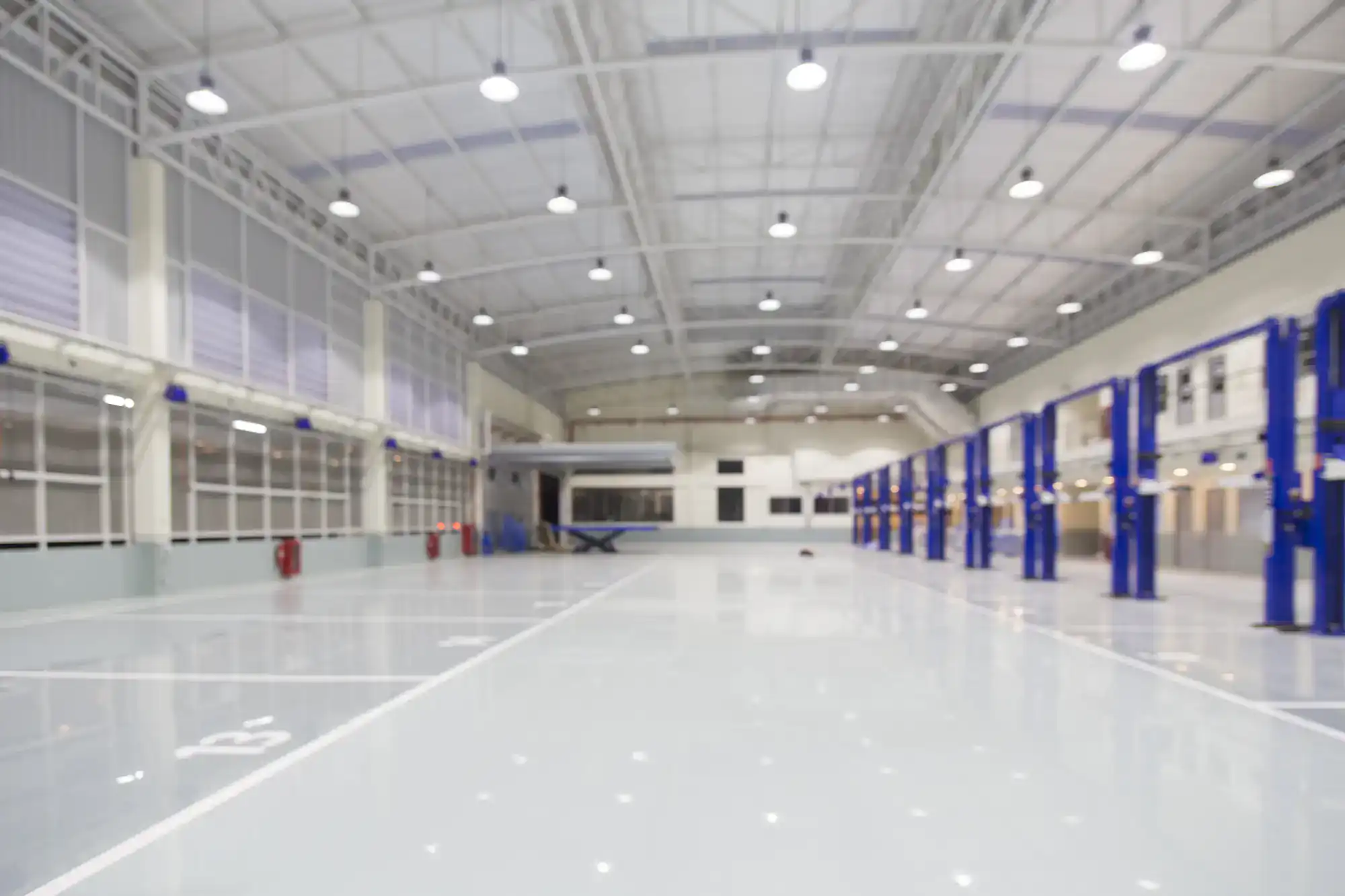
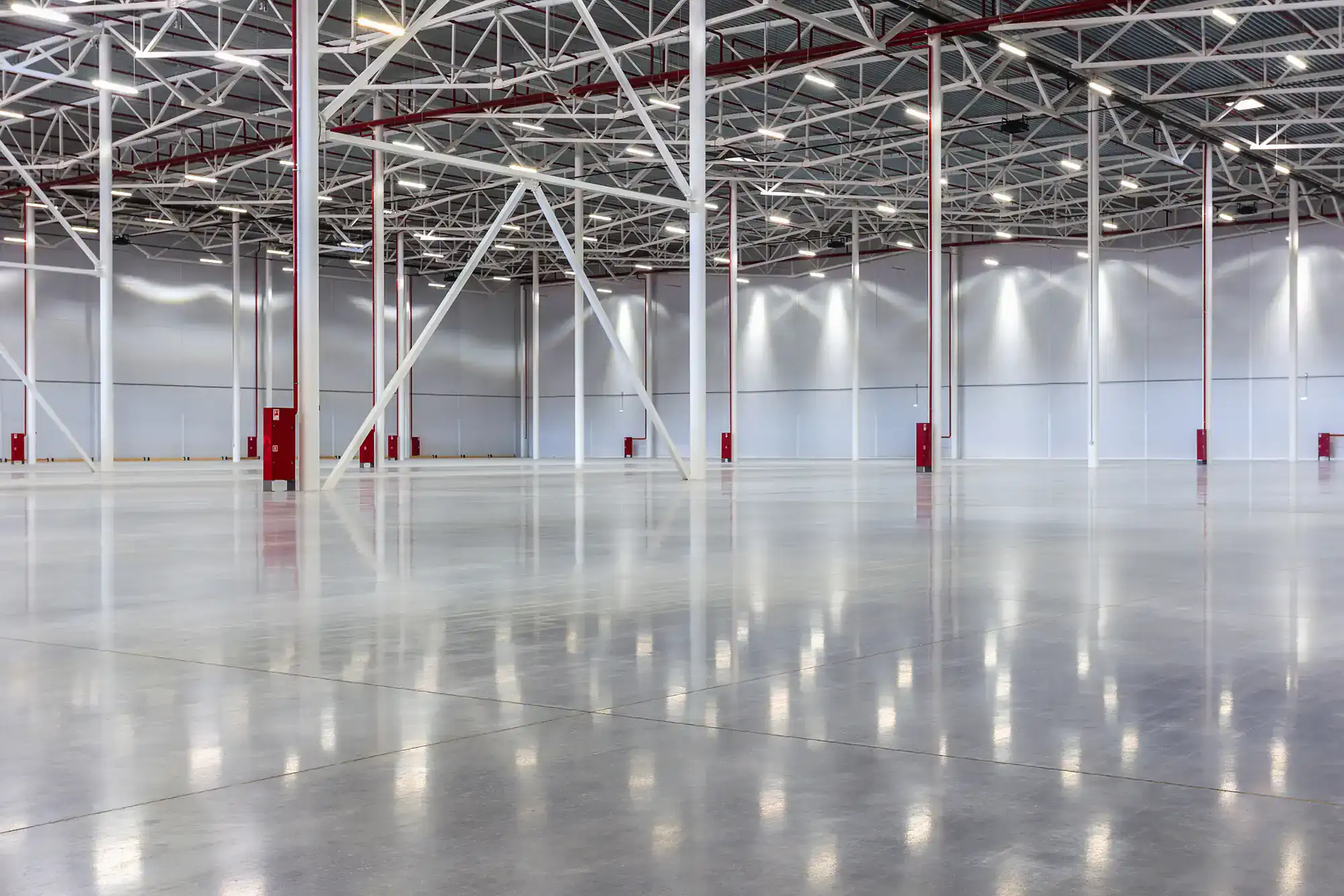
For FBO operators, maintenance shops, and private hangar owners near MacArthur Airport, the light-reflective finish is also worth understanding as a functional choice. A high-gloss white or light gray floor reflects overhead lighting and makes fluid spills, dropped tools, and foreign object debris immediately visible against the surface. In a working hangar, that’s not an aesthetic preference it’s a safety tool that protects both people and aircraft.
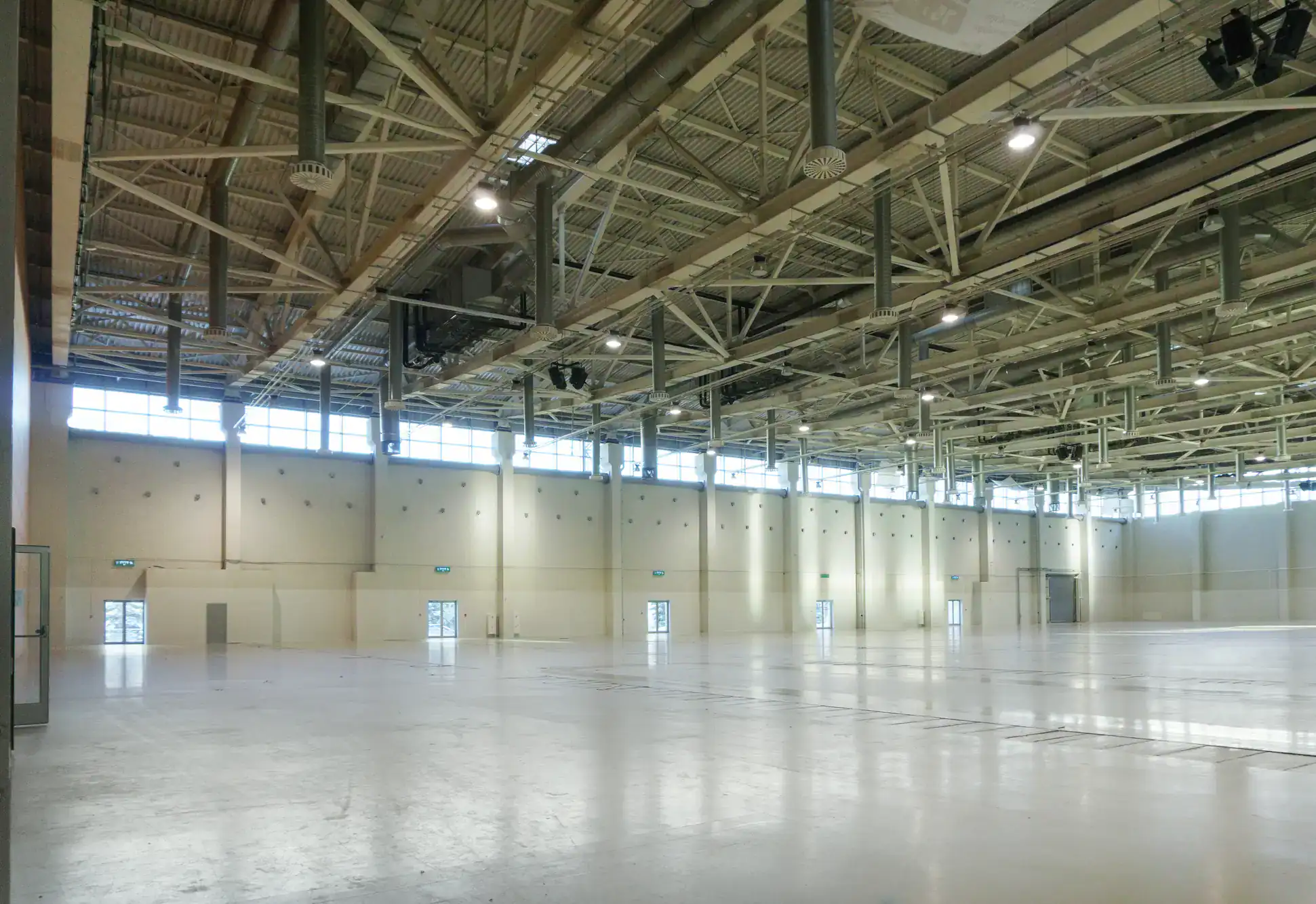
If you’re operating a commercial aircraft hangar in the Town of Islip which includes Central Islip and the area surrounding MacArthur Airport yes, NFPA 409 applies. This standard requires that floor surfaces in aircraft storage and servicing areas be noncombustible. It’s a mandatory code requirement, not a guideline, and it applies to FBO facilities, maintenance shops, corporate hangars, and any commercial operation where aircraft are stored or serviced.
The practical implication is that not all epoxy or polyaspartic products on the market qualify. Standard garage-grade coatings and many off-the-shelf commercial products don’t meet the noncombustibility requirement. If your floor gets inspected and the coating doesn’t comply, you’re looking at the cost of stripping it and starting over on top of whatever you paid the first time. Getting the right system installed from the start is the only way to avoid that situation.
Both systems work well in hangar environments, but they serve different situations. Epoxy is a slower-curing system that builds excellent chemical resistance and is well-suited for hangars with heavier long-term traffic loads. The tradeoff is cure time a multi-layer epoxy installation can require several days before the floor is ready for aircraft and equipment. For facilities near MacArthur Airport where the hangar is in active daily use, that downtime is a real operational cost.
Polyaspartic systems cure significantly faster typically allowing the hangar to return to service within about 24 hours. That makes them the preferred choice for active FBO operations, maintenance shops, and private hangars where extended shutdowns aren’t practical. The chemical resistance profile of a properly installed polyaspartic system is strong, though the specific product formulation matters. The right recommendation depends on your traffic load, chemical exposure, and how much downtime your operation can absorb which is why that conversation happens before any quote is written.
It can, and it does more often than most people realize. Central Islip’s climate runs warm and humid through the summer months, with humidity levels that regularly reach 60 to 89 percent depending on the season and conditions. Large concrete slabs, like the kind under commercial hangars near MacArthur Airport, are particularly susceptible to moisture vapor transmission in this environment. Moisture migrates upward through the slab, and if the coating was applied without accounting for it, that pressure has nowhere to go except under the coating itself causing bubbling and delamination.
The solution isn’t complicated, but it requires the right steps in the right order. Before any coating goes down, the slab needs to be tested for moisture vapor emission. If the reading is high enough to be a concern, a moisture-mitigation primer gets applied before the base coat. This adds a step to the process, but it’s the difference between a floor that holds for twenty years and one that starts failing within a season. Skipping moisture assessment to save time is one of the most common and most expensive mistakes made on Long Island hangar floor installations.
A well-installed, aviation-grade epoxy or polyaspartic system properly prepped, properly layered, and allowed to fully cure should realistically last fifteen to twenty years under normal hangar use. The key phrase there is “properly installed.” The lifespan of any floor coating is almost entirely determined by what happens before the first coat goes down: how the concrete was ground, whether moisture was assessed, and whether each layer was given adequate cure time before the next was applied.
Floors that fail early within two to five years almost always failed because one of those steps was rushed or skipped. In the Town of Islip’s industrial and aviation corridor, where floors are exposed to Skydrol, jet fuel, and heavy equipment on a regular basis, the chemical demands on the coating are real. A system that was installed correctly handles those demands without breaking down. One that wasn’t will show it quickly. The upfront investment in a properly installed floor is almost always less expensive than the cost of stripping and recoating a failed one.
For aviation-grade epoxy systems, you’re generally looking at a range of $4 to $10 per square foot depending on the size of the slab, the condition of the existing concrete, the system specified, and whether moisture mitigation is required. Polyaspartic systems typically run $5 to $12 per square foot. On a standard general aviation hangar, that translates to a meaningful capital investment but it’s worth understanding what that investment is actually buying.
A floor that fails in three years because moisture wasn’t tested or concrete wasn’t properly ground will cost you more in the long run than one that was done right the first time. For FBO operators and maintenance facilities near MacArthur Airport, there’s also the cost of downtime to consider. Shutting a hangar down for a second installation or for emergency repairs to a failing floor is an operational expense that doesn’t show up in the original quote but absolutely shows up in the bottom line. The per-square-foot number matters, but it’s the total cost of ownership that tells the real story.
The most important question is about surface preparation specifically, whether they diamond grind the concrete and test for moisture vapor before applying any coating. If the answer is vague or they try to skip past it, that’s a problem. Those two steps are non-negotiable on any serious hangar floor installation, and contractors who cut them are the reason so many floors in the Long Island area fail within a few years of installation.
Beyond prep, ask whether their coating system meets NFPA 409 noncombustibility requirements. Ask whether their crew carries OSHA 40 certification not just the owner, but the installers who will actually be working in your hangar. Ask whether they’ve worked on aviation facilities specifically, not just commercial floors in general. Hangars near MacArthur Airport deal with chemical exposures and code requirements that don’t apply to a warehouse or a retail space, and the contractor you hire should be able to speak to those specifics without hesitation. If they can’t, you already have your answer.
Other Services we provide in Central Islip