
Every time your apparatus rolls back into the bay after a run on Deer Park Avenue or the LIE, it brings road salt, hot tires, diesel residue, and whatever else came off that call. That’s not a once-in-a-while problem it’s a daily reality for a department running roughly 3,000 responses a year out of 94 Lake Avenue. A floor that can’t handle that cycle isn’t a floor. It’s a liability.
The freeze-thaw pattern in central Suffolk County is relentless. Bay doors open in the middle of January, cold air rushes in, moisture works its way into micro-cracks, and the concrete quietly degrades every single winter. An unprotected or improperly coated floor absorbs that damage and compounds it. We install seamless systems that stop that cycle before it starts sealing the slab against water infiltration and protecting the structural integrity of the concrete for decades, not years.
Then there’s the contamination piece. NFPA standards are pushing departments across Long Island toward tighter contamination control in apparatus bays and a porous or cracked floor makes that nearly impossible. A seamless, non-porous surface wipes down completely, doesn’t harbor carcinogens from smoke or diesel exhaust, and actually supports the decon protocols your career EMS staff and volunteer firefighters need to stay safe on the job.
We’re based in Bohemia about 15 miles from Deer Park and we’ve spent over 30 years installing commercial and industrial resinous floors across Long Island, the five boroughs, and beyond. We know exactly what the local environment in Deer Park and central Suffolk County demands because we work in it every day.
Our CEO Danny Harmer has been doing this work for over 40 years. Our field supervisors Javier, Eduardo, and Fredith bring a combined 40-plus years of installation experience between them, and most of our crew has been with us for more than a decade. That kind of continuity matters when you’re hiring someone to work inside an active fire station with career staff on site around the clock.
The credentials back it up too Sherwin-Williams High Performance Flooring certification, Res Tech certification, and OSHA 40 certification for every installer on our crew. These aren’t participation trophies. They’re the documented proof that the people working in your Deer Park station meet the standard a municipal facility requires.
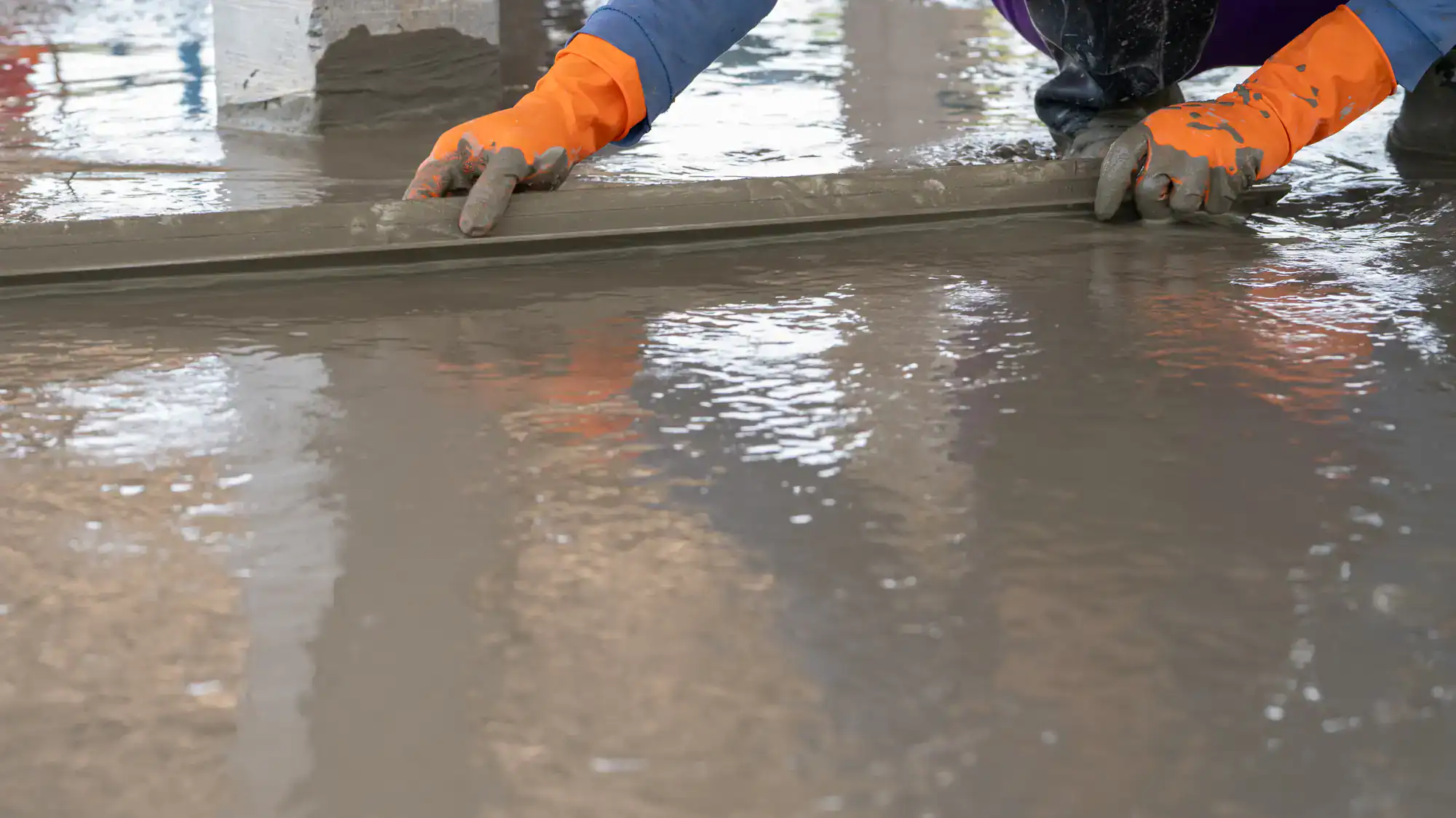
It starts before any coating ever touches the floor. We diamond-grind the concrete not acid-etch it to open the surface and create a true mechanical bond. Then we run moisture testing. This step gets skipped by a lot of contractors, and it’s the reason floors bubble and peel within a year. Long Island’s coastal humidity and the moisture vapor that migrates through concrete slabs in Suffolk County make this non-negotiable. If there’s a moisture problem, you need to know before the coating goes down, not after.
From there, we repair any existing cracks or damage, apply a penetrating primer, and then lay down a high-build epoxy base coat with aggregate broadcast that’s what gives the floor its compressive strength and the slip-resistant texture you need when the bay is wet from a washdown or a truck rolling in from a rainstorm. The final layer is a polyaspartic topcoat that’s UV-stable, chemically resistant, and engineered specifically to handle hot-tire contact without lifting.
The whole system cures fast. Foot traffic in roughly two to three hours. Apparatus back in the bay within 24 hours. For a combination department with career EMS running 24/7 out of Deer Park, that’s not a nice-to-have it’s the only way a floor project is even operationally possible. No week-long displacement, no borrowed bay space, no compromised response capability.
Ready to get started?
The Deer Park Fire Department’s apparatus fleet engines, ladders, ambulances, chief vehicles, fire police units puts a specific kind of stress on a floor that a residential coating system simply isn’t built for. Fire apparatus regularly tops 40,000 pounds. Ambulances are cycling in and out multiple times a shift. The floor needs to handle that load day after day without cracking, lifting, or losing its surface integrity.
The system we install in your apparatus bay is a multi-layer resinous build: diamond-ground substrate, moisture-tested concrete, penetrating primer, high-build epoxy base with aggregate broadcast for compressive strength and wet-surface traction, and a polyaspartic topcoat rated for chemical resistance against diesel, hydraulic fluid, road salt, and cleaning agents. That final coat goes down at 15 mils of thickness significantly heavier than standard commercial polyurethane or epoxy topcoats and it’s formulated to stay bonded under the thermal cycling that active apparatus creates every time it leaves and returns to the bay.
For departments also looking to address decon zones, locker areas, or kitchen floors within the station, we can specify and install the same system throughout one contractor, one standard of work, no compatibility gaps between vendors. The goal is a floor that a Suffolk County fire district board can point to in 20 years and say it was the right call.
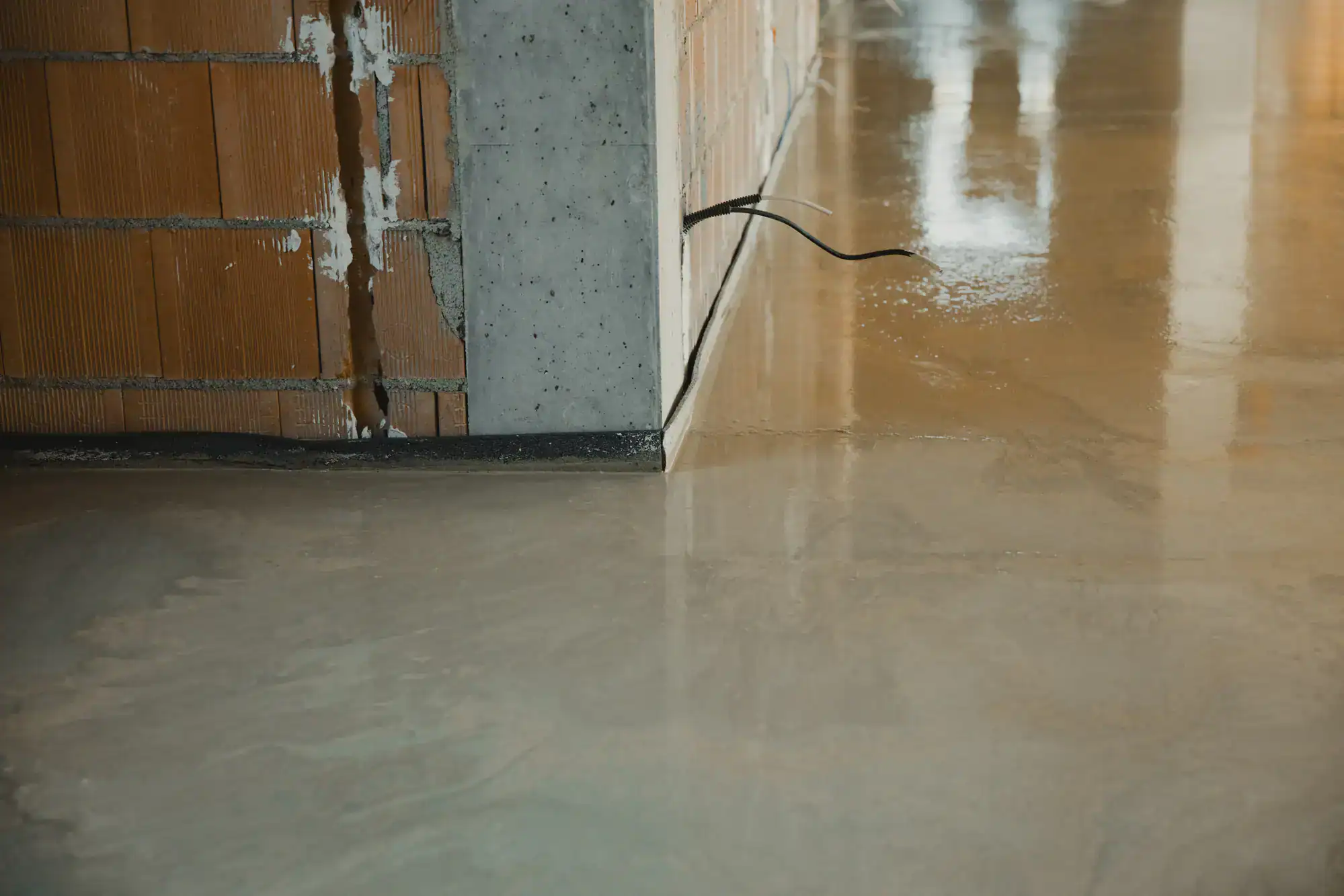
A properly installed polyaspartic system in an active apparatus bay is built to last 20 or more years under normal operational conditions. That’s not a marketing number it’s the performance expectation when the floor is diamond-ground, moisture-tested, and installed with the correct primer, base coat, and topcoat build. Standard commercial epoxy systems, by comparison, typically show failure in active bays within five to ten years, and consumer-grade coatings can start peeling in three to five.
For a Deer Park fire district board making a capital expenditure decision, that lifespan difference changes the math significantly. Two or three replacement cycles over 20 years each requiring grinding off the failed coating, disposing of it, and reinstalling from scratch will cost more than doing it right the first time. The premium system is the fiscally responsible choice when you’re accounting for the full cost over a budget cycle, not just the line item today.
Yes and for a combination department like Deer Park’s, that’s the only acceptable answer. The polyaspartic system we use in apparatus bay installations cures fast enough that foot traffic is possible within two to three hours, and apparatus can return to the bay within 24 hours of installation. That’s a fundamentally different timeline than traditional epoxy, which requires three to seven days before heavy vehicle traffic can resume.
We schedule the installation in phases or during a planned rotation so that your department’s emergency response capability is never fully offline. Career EMS staff are on site 24/7, volunteer firefighters need access, and the community depends on the department being operational. The project gets done without any of that changing. It’s a real constraint that we plan around from day one, not something figured out on the fly.
There are two main failure modes in apparatus bay floors, and both are preventable. The first is hot-tire pickup heated tires from apparatus returning from a call bond to the coating surface and peel it off when the truck pulls out. This happens almost exclusively with thin-mil epoxy systems that aren’t formulated for thermal cycling. A polyaspartic topcoat is four times more flexible than standard epoxy and is specifically engineered to stay bonded under the temperature swings that active apparatus creates.
The second failure mode is moisture-driven delamination bubbles that form under the coating when moisture vapor migrating through the concrete slab has nowhere to go. Long Island’s coastal humidity and the moisture conditions common in Suffolk County concrete slabs make this a real risk that gets ignored by contractors who skip the moisture testing step. The fix is simple: test before you coat. If there’s a moisture issue, address it at the primer stage. Skipping that step is how you end up with a floor that looks fine for six months and then starts bubbling the following summer.
Fire station flooring in Deer Park falls under the New York State Building Code for commercial construction and renovation, administered through the Town of Babylon’s code enforcement framework. Beyond that, NFPA 1500 the Standard on Fire Department Occupational Safety, Health, and Wellness creates requirements for contamination control zones within fire stations that directly affect how the apparatus bay floor needs to be specified. A porous or cracked surface can’t be effectively decontaminated, which creates both a compliance issue and a real occupational health risk for your personnel.
NFPA 1581 adds facility requirements for PPE storage and cleaning areas adjacent to the apparatus bay, and ADA compliance standards apply to floor surfaces throughout the station including coefficient of friction requirements for wet conditions. A seamless, non-porous resinous floor with aggregate broadcast for slip resistance addresses all of these requirements in a single system. It’s not about checking boxes it’s about building a floor that actually supports the safety protocols your career and volunteer members are working under every shift.
Because the coating is only as strong as what it’s bonded to. A floor that isn’t properly prepared will fail it doesn’t matter how good the product is. Diamond grinding is the correct preparation method because it physically opens the concrete surface and creates a mechanical bond profile that the primer and base coat can lock into. Acid etching, which some contractors use because it’s faster and cheaper, doesn’t create the same bond depth and leaves behind a surface that’s more prone to delamination under load.
Moisture testing matters for the same reason. If the concrete slab has a moisture vapor emission rate above the threshold for the coating system being used, the coating will eventually lift not because it was applied wrong, but because the substrate wasn’t assessed correctly. This is especially relevant for apparatus bay slabs in Suffolk County, where ground moisture conditions and the age of many fire station buildings can create elevated vapor transmission. Getting this step right at the start is what separates a 20-year floor from a 3-year problem.
Route 231 Deer Park Avenue is one of the most heavily salted corridors in central Suffolk County during winter months, carrying roughly 35,000 vehicles a day and getting treated aggressively from the first freeze through late March. Every apparatus that responds to a call on that road or any of the surrounding streets returns to the bay with salt-laden tires and undercarriages. On an unprotected or improperly coated floor, that salt infiltrates the concrete surface, accelerates freeze-thaw cracking, and corrodes the slab from within over time.
A seamless polyaspartic system eliminates the entry point. There are no pores, no seams, and no cracks for salt to work into. The surface wipes clean, the concrete underneath stays protected, and the degradation cycle that typically shows up as spalling and surface pitting after several winters simply doesn’t happen. For a department running the call volume Deer Park runs with apparatus cycling in and out of that bay multiple times a day through every winter that protection isn’t optional. It’s what keeps the floor performing for the full 20-year lifespan instead of needing attention in year five or six.