


Your floor shouldn’t be the reason productivity slows down. Cracked concrete creates tripping hazards, damages forklift wheels, and sends dust into your inventory. Unsealed joints break down under pallet jack traffic, and chemical spills eat through untreated surfaces faster than you can clean them up.
A forklift traffic resistant coating in Mineola eliminates those problems. You get a seamless surface that sheds chemicals, resists impact, and stays intact under the kind of abuse that destroys standard concrete. No more constant patching. No more dust settling on your racking systems.
The floor becomes one less thing to manage. Equipment rolls smoother, cleaning takes minutes instead of hours, and your team works on a surface that actually supports the job instead of creating new problems every week.
We’ve been installing industrial flooring systems for over 30 years. Our president, Danny Harmer, brings more than 40 years of hands-on experience to every warehouse floor project in Mineola, NY. We’ve worked everywhere from the White House kitchen to facilities across the Bahamas and Russia.
Our field supervisors—Javier, Eduardo, and Fredith—have over 40 years of combined experience. Every installer is OSHA 40 certified and trained on the latest safety standards. Most of our team has been with us for over a decade because we do this work right.
Mineola’s industrial facilities need floors that can handle the demands of modern warehousing and distribution. We understand the local market, the equipment you’re running, and what it takes to keep your operation moving without downtime.

We start with diamond grinding for warehouses in Mineola to remove any existing coatings, level uneven spots, and open up the concrete pores for proper adhesion. This step determines how well your floor performs for the next 20 years. Shortcuts here mean failures later.
Next, we repair cracks and damaged joints. We’re not covering problems—we’re fixing them before the epoxy goes down. Any structural issues get addressed so your floor has a solid foundation.
Then we apply a multi-layer epoxy system designed specifically for heavy industrial use. The base coat bonds to the prepared concrete. The build coats add thickness and impact resistance. The top coat provides chemical protection and the finish you need—whether that’s high-gloss for visibility or textured for slip resistance.
Cure times vary based on the system, but most warehouse floors in Mineola are ready for light traffic within 24 hours and full operations within 72. We schedule around your workflow to minimize downtime.

Ready to get started?
This isn’t a single-coat garage floor. Industrial warehouse floor epoxy in Mineola is a multi-layer system engineered for the punishment your facility dishes out daily. You get chemical resistance that handles oils, solvents, acids, and cleaning agents without staining or breaking down.
The coating withstands constant forklift and pallet jack traffic without wearing through at pivot points or high-traffic lanes. Impact resistance means dropped pallets and equipment won’t chip or crack the surface. The seamless finish eliminates joints where dirt hides and bacteria grows.
Mineola warehouses range from small 5,000 square foot facilities to operations over 40,000 square feet. We handle projects of any size with the same attention to surface prep and application standards. The local industrial market is growing, and facility managers are choosing high-traffic concrete sealer in Mineola because it reduces long-term maintenance costs while improving safety and appearance.
You also get a floor that’s easier to clean and brighter under existing lighting. Less dust means cleaner inventory and fewer equipment repairs. The return on investment shows up in reduced maintenance calls, longer equipment life, and fewer safety incidents.
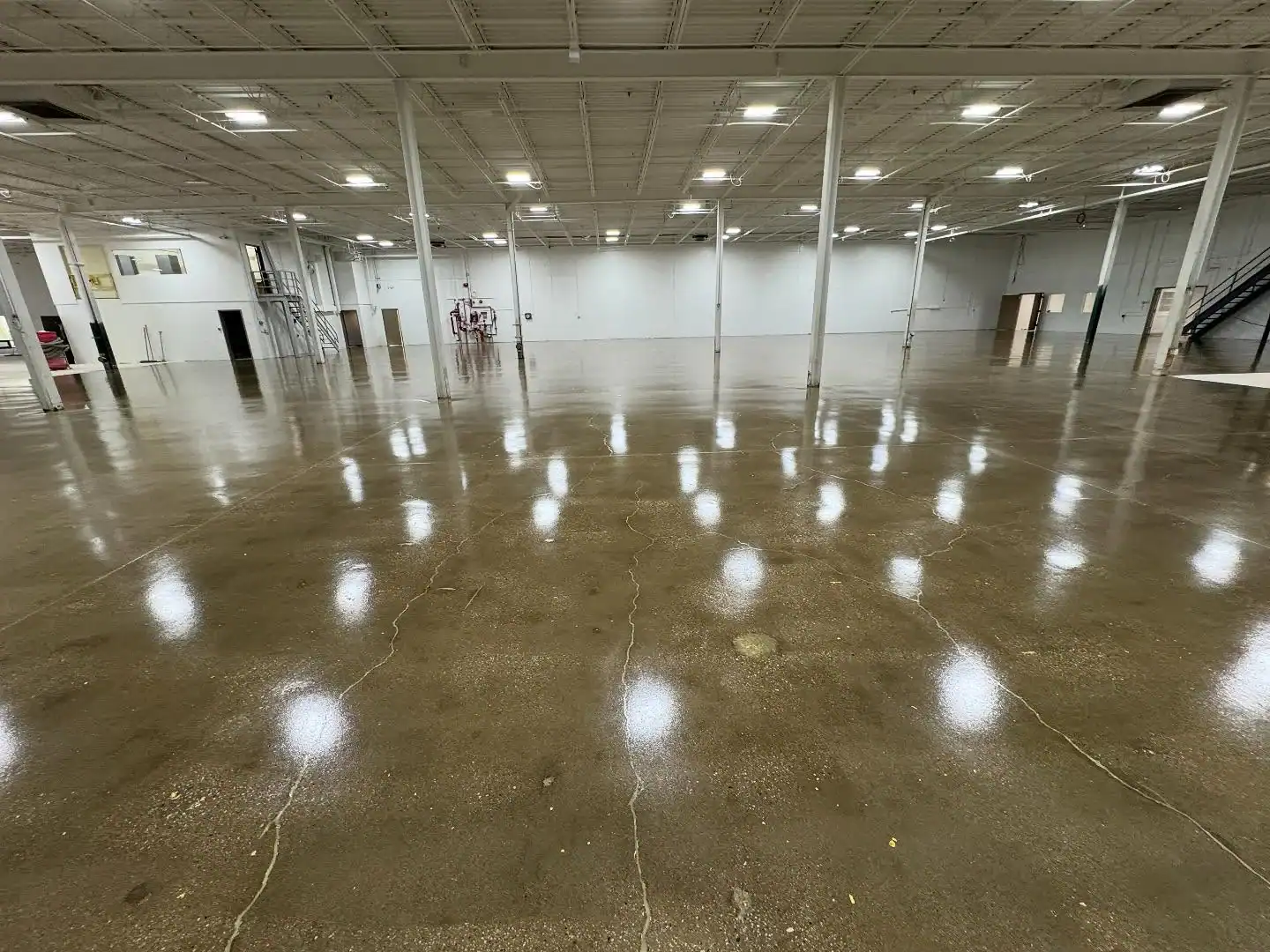
A properly installed industrial warehouse floor epoxy in Mineola typically lasts 10 to 20 years under heavy use. Some of our customers are still running on floors we installed over two decades ago with minimal wear.
The lifespan depends on three things: surface preparation, system thickness, and maintenance. If the concrete is ground properly and all repairs are made before coating, the epoxy bonds at full strength. A multi-layer system with adequate build thickness handles impacts and abrasion better than thin coatings.
Daily sweeping and occasional mopping keep the surface clean. Chemical spills should be wiped up promptly, though the epoxy won’t be damaged if they sit for a while. Avoid dragging sharp metal across the floor repeatedly in the same spot—that’s the only thing that causes premature wear in most facilities.
Epoxy provides the hardness and chemical resistance most warehouses need. It’s extremely durable under heavy loads and resists most industrial chemicals. The surface is rigid, which makes it ideal for rolling traffic and impact resistance.
Urethane topcoats add flexibility and UV resistance. If your warehouse has large door openings with direct sunlight exposure, urethane prevents yellowing. It also handles thermal shock better if you’re moving product between temperature-controlled zones.
For most warehouse floors in Mineola, a full epoxy system works perfectly. We recommend urethane topcoats when you need extra abrasion resistance in specific areas or when the floor is exposed to sunlight. The choice depends on your operation, not a one-size-fits-all sales pitch. We’ll walk the facility and recommend what actually makes sense for your traffic patterns and environment.
Yes. We phase the installation so you can keep critical areas operational. Most facilities can’t afford to shut down completely, and we plan around that reality.
We’ll map out your floor into sections based on your workflow. We coat one zone at a time, working during off-shifts or weekends if that minimizes disruption. Each section needs 24 to 72 hours before it’s ready for traffic, depending on the system and conditions.
The key is communication before we start. Tell us which areas are mission-critical, when your slow periods hit, and what kind of access we’ll have. We’ve installed large scale warehouse flooring in Mineola while operations continued in adjacent areas. It takes more planning and coordination, but it’s absolutely doable. You don’t have to choose between a new floor and running your business.
We use diamond grinding for warehouses in Mineola to mechanically abrade the concrete surface. This removes any existing sealers, oils, or weak surface material. It also opens the concrete pores so the epoxy can penetrate and bond properly.
Grinding creates a textured profile that gives the coating something to grip. Smooth concrete won’t hold epoxy long-term—it’ll eventually delaminate under stress. We’re creating a mechanical bond, not just relying on adhesion.
After grinding, we vacuum the entire surface and repair any cracks or spalled areas with epoxy patch material. Joint damage gets special attention because that’s where most floor failures start. We fill, level, and reinforce joints so they don’t telegraph through the new coating. Only after the surface is clean, level, and structurally sound do we start applying the epoxy system. Surface prep is 70% of the job, and it’s where most cheap installations fail.
Daily sweeping or dust mopping keeps dirt and debris from getting ground into the surface. That’s it for regular maintenance. The smooth, seamless finish doesn’t trap dirt like concrete or tile, so cleaning is faster and easier.
For deeper cleaning, mop with a neutral pH cleaner and water. Avoid harsh acidic or highly alkaline cleaners that can dull the finish over time. Most facilities clean their epoxy floors the same way they clean any hard surface—nothing specialized or complicated.
Chemical spills should be wiped up when convenient. The high-traffic concrete sealer in Mineola we install resists most industrial chemicals, so spills won’t damage the floor even if they sit for a few hours. You’re not racing against the clock to prevent etching or staining like you would with bare concrete. The floor is designed to handle your operation, not create extra work.
Cost depends on square footage, current floor condition, and system thickness. A basic warehouse coating starts around $3 to $5 per square foot. Heavy-duty systems with extra build coats and specialized topcoats run $6 to $10 per square foot.
If your concrete has extensive damage, needs major repairs, or requires moisture mitigation, that adds to the prep costs. We don’t know the real number until we see the floor. Anyone quoting over the phone without an inspection is guessing.
The better question is what you’re getting for that investment. A properly installed forklift traffic resistant coating in Mineola eliminates ongoing repair costs, reduces equipment damage, improves safety, and lasts 15 to 20 years. Compare that to patching concrete every few months or replacing damaged sections every few years. The upfront cost is higher than doing nothing, but the long-term savings and operational improvements make it one of the smartest facility investments you can make.