
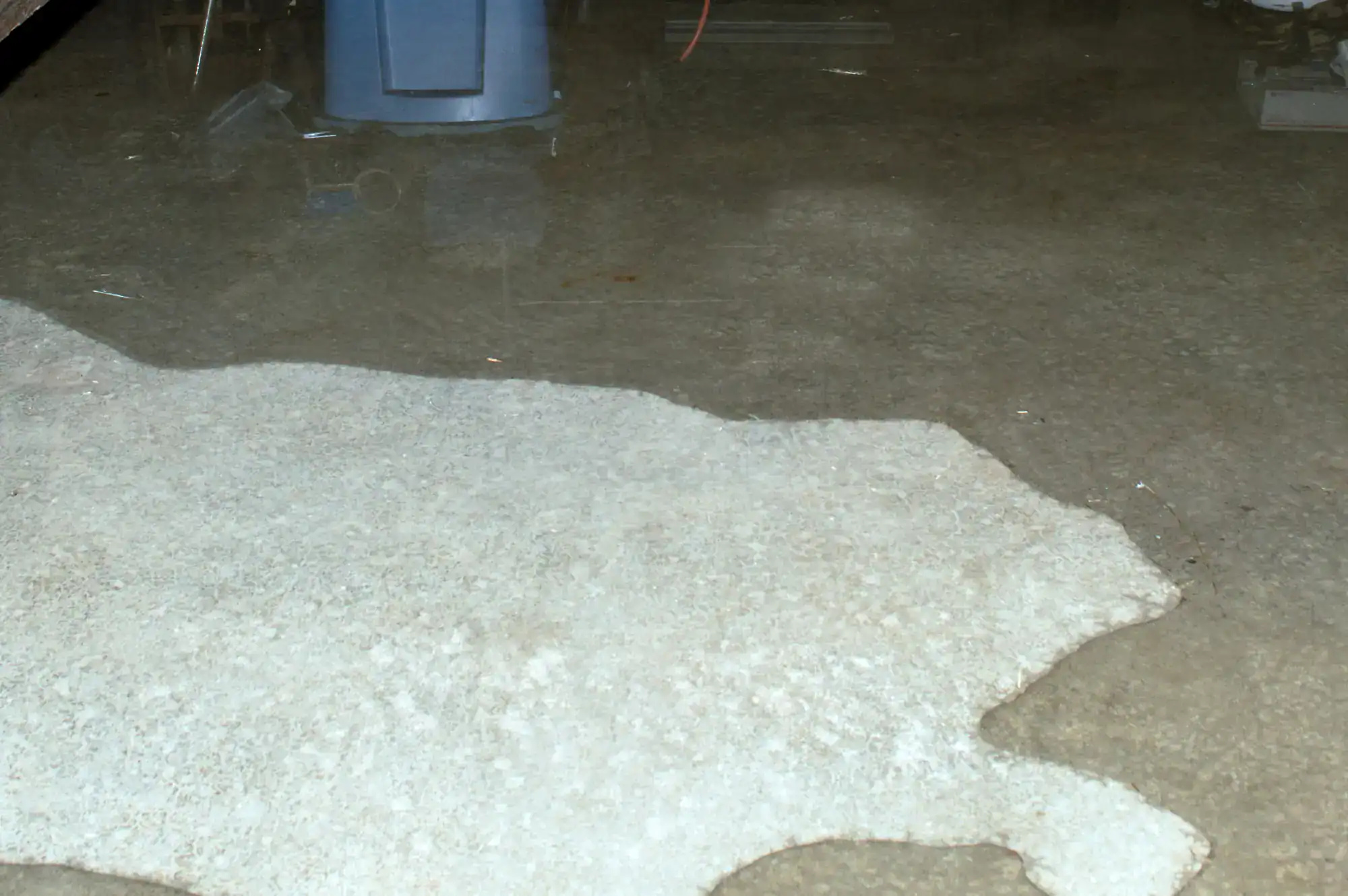
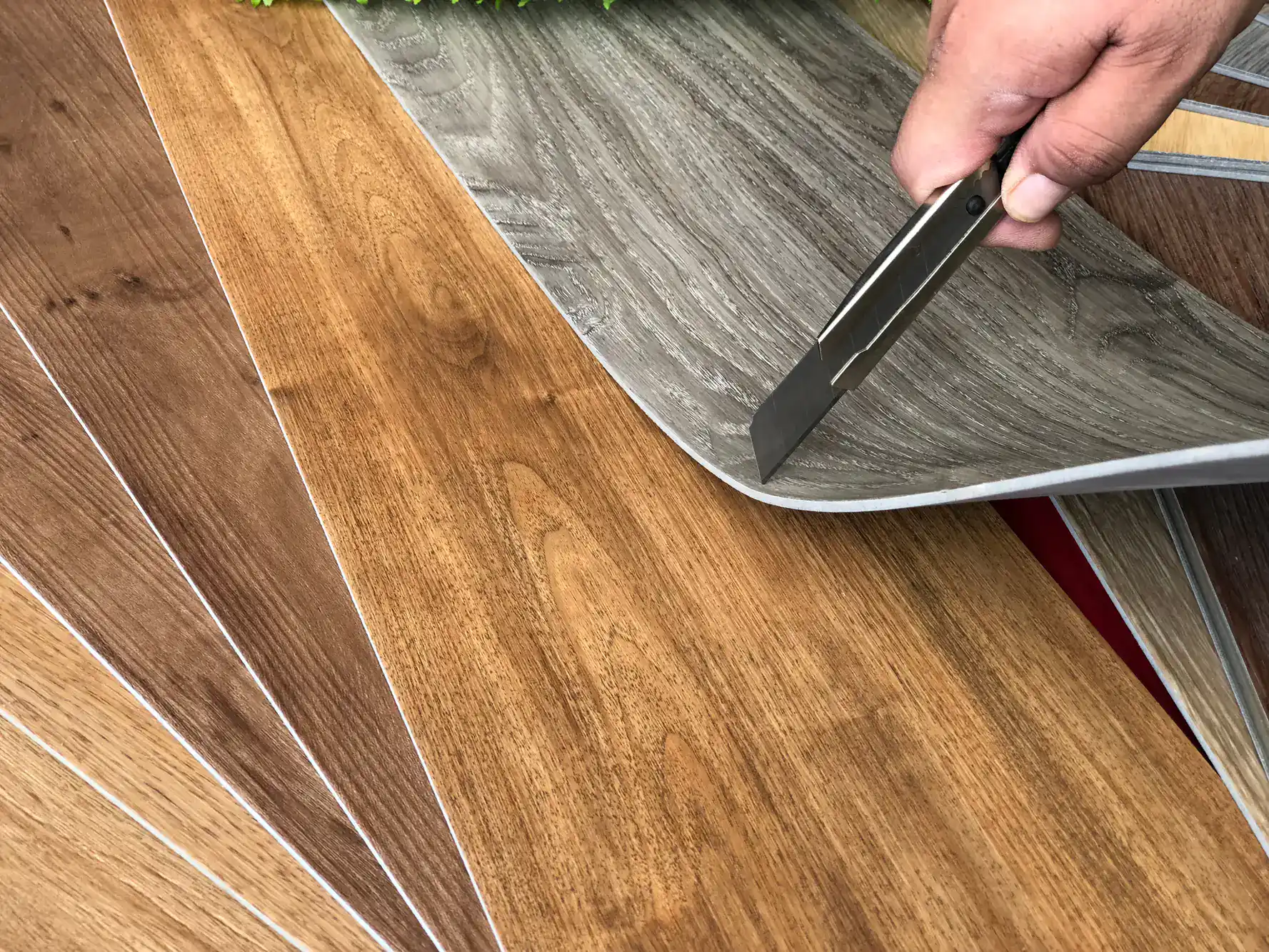
When a floor is done right, you stop thinking about it. No peeling at the bay apron, no bubbling after a humid Long Island summer, no pitting where road salt tracked in off Old Country Road has been eating at the concrete since November. That’s the baseline and it’s more than most departments around here are currently getting.
Nassau County roads get heavily treated with salt and liquid brine from November through March. Every time your apparatus rolls back in from a call, it’s bringing that chemistry straight onto your bay floor. A properly installed, seamless polyaspartic surface doesn’t absorb it. It doesn’t pit. You wash it off and move on.
The freeze-thaw cycling here is just as punishing. Bay doors open and close dozens of times a day in winter, and that temperature swing warm interior, sub-freezing outside air stresses floors that weren’t engineered for it. A system that’s four times more flexible than standard epoxy handles that movement without cracking. That’s just physics working in your favor.
We’re based in Bohemia, NY about 40 miles east of Mineola and have been doing commercial and industrial resinous flooring for over 30 years. Our CEO Danny Harmer has more than 40 years of hands-on installation experience, and most of our crew has been with us for over a decade. We weren’t built as a franchise operation or a painting company that added epoxy to the menu. We were founded specifically around this type of work.
We hold the Sherwin-Williams High Performance Flooring certification, one of the more rigorous manufacturer-approved credentials in the industry. Every installer on every job is OSHA 40 certified which matters when you’re working in an active municipal facility in the Nassau County seat, where occupational safety compliance isn’t optional.
Our portfolio includes the White House kitchen installation in 1996, international projects, and decades of Long Island commercial and industrial work. The point isn’t to impress you it’s to show that this level of project isn’t new territory for us.
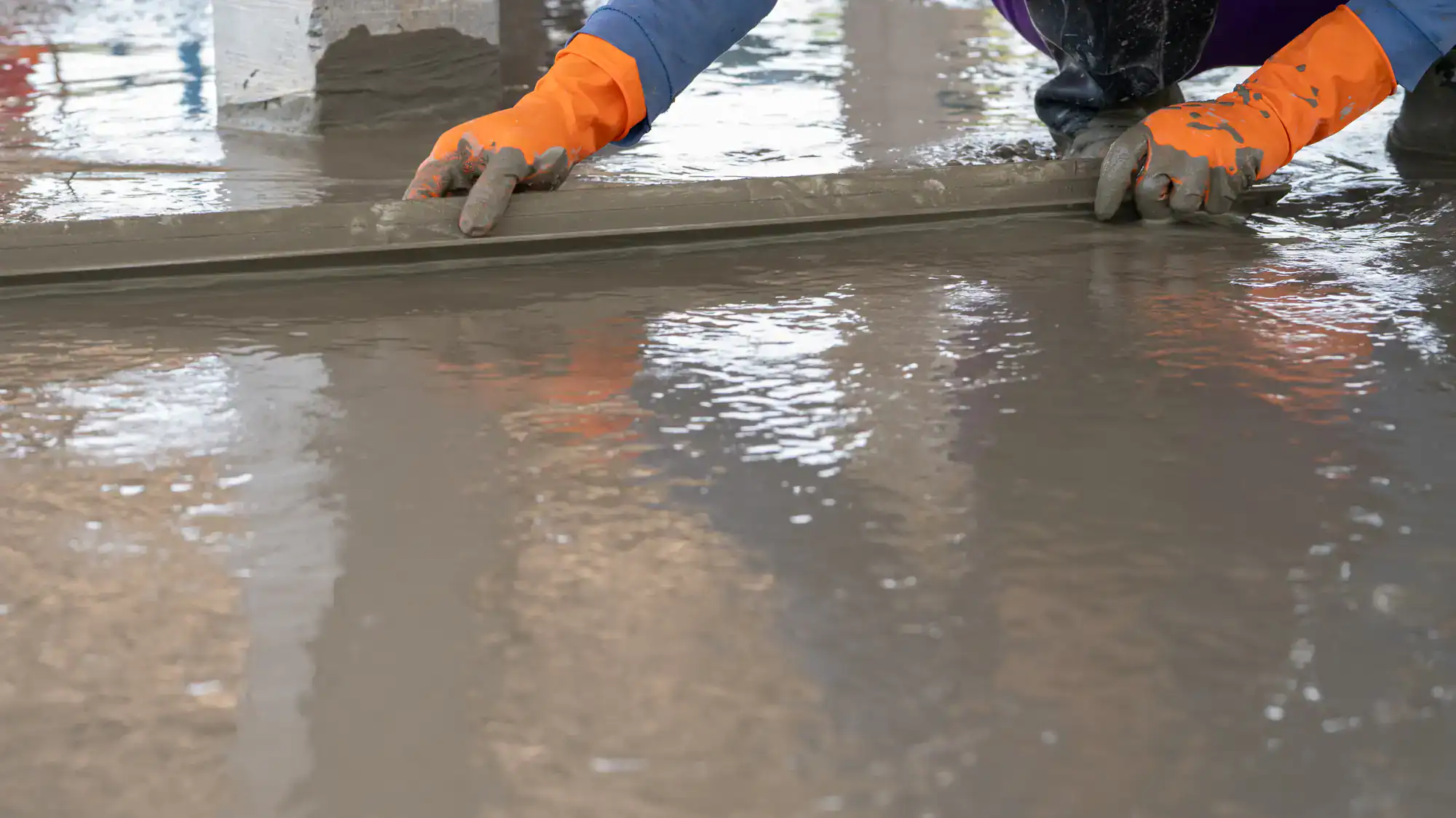
The first thing that happens on a firehouse floor project is concrete assessment. Before any product touches the slab, the surface gets diamond ground not acid etched. Acid etching introduces moisture into the concrete and causes delamination down the road. Diamond grinding opens the concrete profile mechanically and gives the coating something real to bond to.
After grinding, moisture testing is mandatory. Long Island’s humid summers create vapor transmission pressure from below the slab it’s one of the most common causes of bubbling and delamination in epoxy floors that were applied without this step. If moisture levels are outside the acceptable range, we address it before coating, not after. Once the slab is ready, any cracks or damage get repaired, a penetrating primer goes down, followed by a high-build epoxy base coat with aggregate broadcast for compressive strength, and a polyaspartic topcoat to finish.
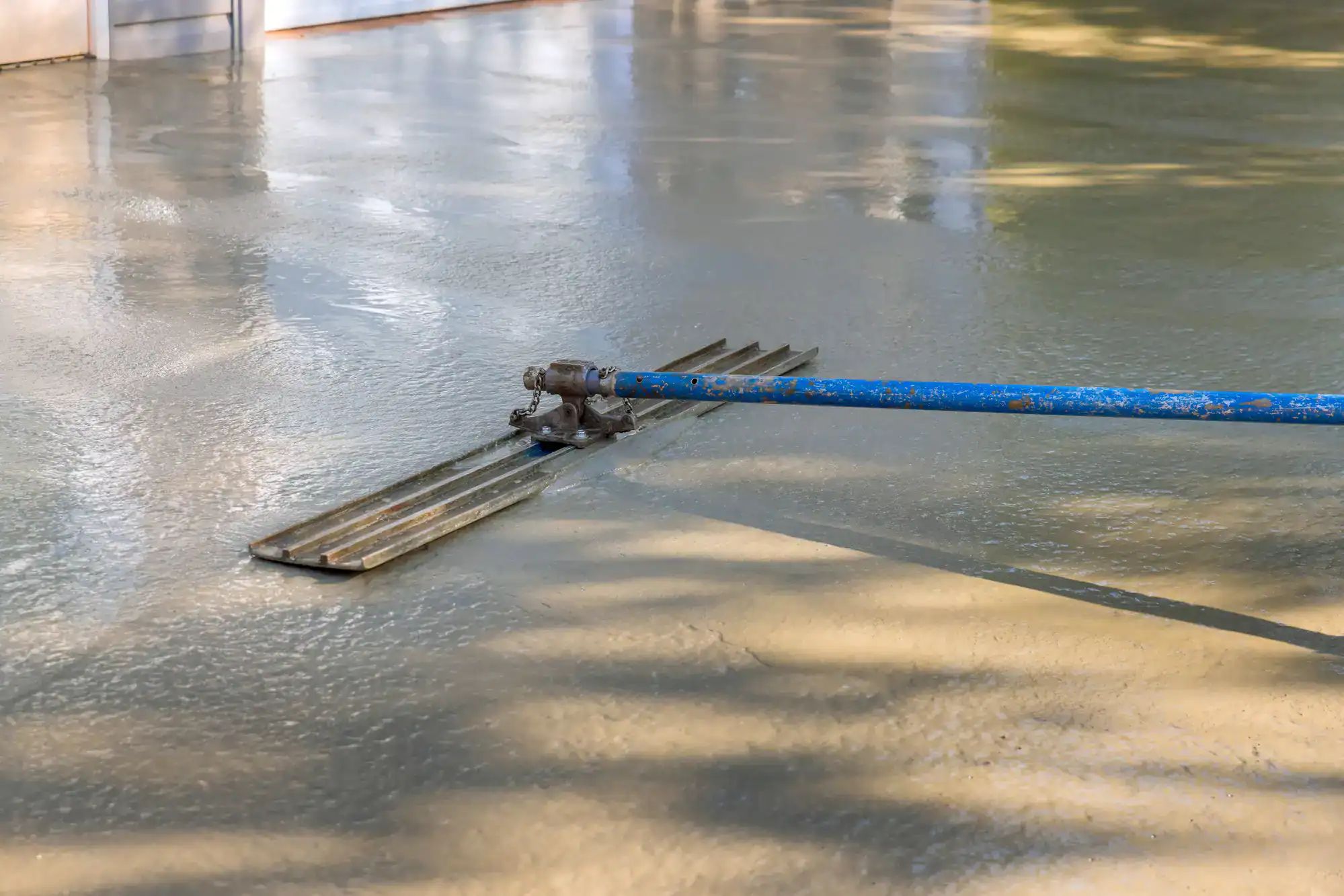
That topcoat cures in 24 hours. For a department like Mineola’s with two stations and 150 volunteer firefighters serving the Nassau County seat, apparatus can’t sit outside for a week. With this system, it doesn’t have to. Trucks are back in the bay the next day.
Ready to get started?
The new Mineola Fire Department headquarters was designed with green and red zone separation, cross-contamination controls, and carcinogenic decontamination protocols built into the floor plan. That design only works if the floor supports it. A seamless, non-porous surface eliminates the cracks and porous areas where diesel particulate, chemical contaminants, and carcinogens collect between washdowns. It’s what makes NFPA 1500 and 1585 contamination control protocols actually function in the real world.
The apparatus bay itself takes the heaviest load 40,000-pound pumpers and ladder trucks, hot tires returning from calls, hydraulic fluid, foam concentrate, and constant thermal cycling. The aggregate broadcast in the base coat isn’t decorative. It increases the compressive strength of the system and distributes load across the surface. The polyaspartic topcoat is thermally resistant and UV-stable, which means bay doors can stay open all day without the surface yellowing or degrading and hot tires won’t bond to it and peel it off when the truck backs out.
Beyond the bay, the system extends to decontamination areas, locker rooms, kitchens, and living quarters each with the right product spec for that zone. We provide one certified contractor across the entire 28,000-square-foot facility, which means consistent quality and a single point of accountability for the village and the department.
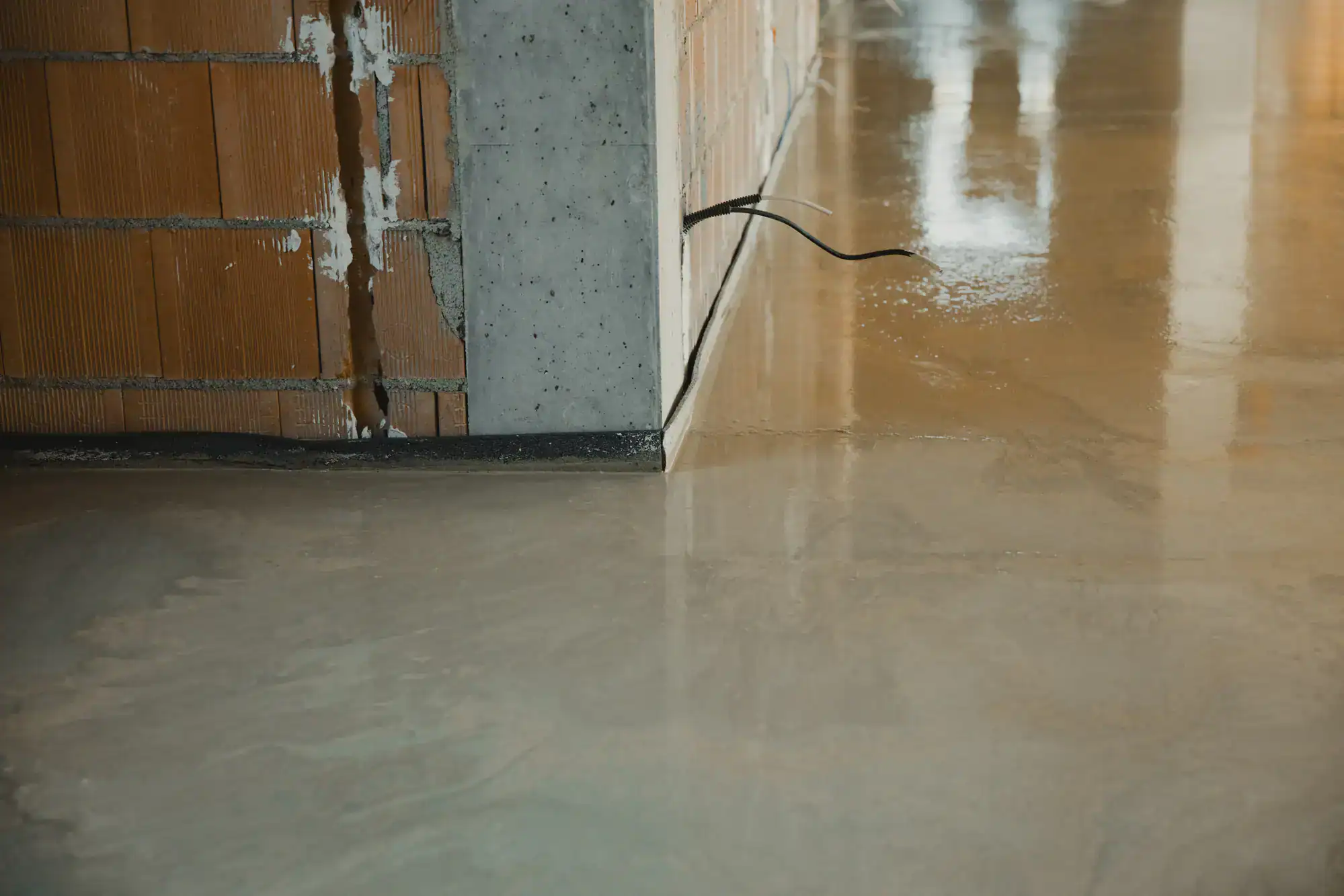
A properly installed multi-layer polyaspartic system in a firehouse apparatus bay should last 20 years or more under normal operational conditions including heavy apparatus, daily thermal cycling, and the kind of chemical exposure that comes with active fire service. The key word is “properly installed,” and that starts with surface preparation. Diamond grinding, moisture testing, and a high-build base coat with aggregate broadcast are what give the system its longevity. Skip any of those steps and you’re looking at a floor that starts failing within a few years.
For a department like Mineola’s which went over 100 years between major facility investments that lifespan matters. The new headquarters is a once-in-a-generation project. The floor going into that building should be spec’d and installed accordingly, not treated as a maintenance line item that gets replaced every five years.
Uncoated concrete and thin, improperly prepared epoxy systems are both vulnerable to road salt. Nassau County’s brine and salt application runs from November through March, and every apparatus return from a call brings that chemistry directly into your bay. Salt accelerates delamination at the concrete-coating interface and causes pitting in bare concrete over time. It’s one of the most consistent floor failure patterns on Long Island.
A seamless, non-porous polyaspartic surface stops that process entirely. There’s no interface for the salt to attack because there are no gaps, cracks, or porous areas for it to penetrate. The surface wipes clean. For Mineola’s location on Jericho Turnpike and Old Country Road, where winter salt application is heavy and frequent, that’s the difference between a floor that holds up and one that shows damage before the season is over.
Yes and it’s worth understanding why the floor choice matters so much for contamination control. The new Mineola headquarters was specifically designed with green and red zone separation and carcinogenic decontamination protocols. Those protocols require a floor that can be fully decontaminated between zones no cracks, no grout lines, no porous surfaces where diesel particulate and chemical residue can accumulate between washdowns.
A seamless epoxy and polyaspartic system is exactly what NFPA 1500 and 1585 contamination control standards call for in practice. The surface is chemically resistant, non-porous, and power-washable. Decontamination actually works on it. If the floor has cracks, joints, or porous areas even small ones contaminants harbor there regardless of how thorough the cleaning protocol is. The floor has to be part of the contamination control system, not just a surface underneath it.
The 24-hour cure time is specific to polyaspartic topcoat systems it’s not a claim made for standard epoxy, which typically requires three to seven days before apparatus can return to the bay. Polyaspartic cures faster because of its chemical structure, and when it’s applied correctly over a properly prepared and primed substrate, it reaches full working hardness within that window.
For a volunteer department like Mineola’s with two stations and 150 members serving the Nassau County seat, parking apparatus outside for a week isn’t operationally realistic. The 24-hour window means the floor gets installed, the bay stays out of service overnight, and trucks are back the next morning. That’s not a convenience it’s what makes the upgrade possible for an active station. The process does require staging: if you have multiple bays, they can typically be done in sequence so at least one bay remains operational throughout the project.
It’s one of the most important variables in the entire installation, and it’s specific to Long Island’s climate. During the summer months when humidity regularly runs between 70 and 90 percent moisture vapor transmits upward through concrete slabs from the ground below. If a coating is applied over concrete with elevated moisture content, the vapor pressure builds under the coating and causes bubbles and delamination. It’s one of the most common floor failures in the region, and it’s almost always the result of skipping or rushing the moisture testing step.
Before any coating goes down on a Long Island firehouse floor, moisture testing is mandatory. If the readings are outside the acceptable range, the slab needs to be addressed first whether that means extended drying time, a moisture-mitigation primer, or other remediation steps. It adds time to the prep phase, but it’s the only way to guarantee the system bonds correctly and stays bonded for the long term. Skipping it to save a day is how you end up with a floor that needs to be redone in three years.
For a public capital expenditure on a 28,000-square-foot municipal facility, the evaluation criteria should go well beyond price. The first thing to verify is whether the contractor holds a manufacturer certification for the specific product system they’re proposing not a general contractor license, but a product-specific, installation-specific credential like the Sherwin-Williams High Performance Flooring certification. That certification means the contractor has been trained and approved by the manufacturer to apply that system correctly, and that the installation meets the manufacturer’s quality standards.
Beyond that, OSHA 40 certification for all field installers is a practical requirement for work in an active Nassau County municipal facility. References from comparable institutional or fire service projects matter more than residential or light commercial work. And because this is a public procurement decision that goes in front of a village board, you want a contractor who can provide documented credentials not just a verbal assurance. The board needs to be able to justify the selection, and the right contractor makes that easy.