
When the floor underneath your tile, vinyl, or coating isn’t flat, everything on top of it pays the price. Grout cracks. Planks lift at the seams. Tile rocks underfoot. These aren’t just cosmetic issues they’re signs that the substrate wasn’t properly prepared before the final floor went down. Getting that right from the start is what separates a floor that lasts from one that has to be redone in two years.
Mineola’s building stock is older than most people realize. The Nassau County courthouse complex, the commercial corridors along Old Country Road and Jericho Turnpike, the medical offices surrounding NYU Langone Hospital a lot of these slabs were poured decades ago and have been through countless freeze-thaw cycles since. Nassau County’s glacial soil a mix of sand, gravel, and clay transmits ground movement and moisture stress directly to concrete over time. The result is slabs that have settled, cracked, and shifted in ways that a skim coat from a big-box store bag simply won’t fix.
Moisture is the other issue nobody talks about until it’s too late. Mineola sits in a part of Nassau County known for a high water table, and basement flooding after heavy rains is a routine complaint in the village. That same moisture migrates upward through concrete slabs, and if it isn’t measured and accounted for before a self-leveling underlayment is poured, the product will delaminate. You’ll be back to square one except now you’ve paid twice.
We’ve been installing commercial and residential floor systems on Long Island for over 30 years. Our president Danny Harmer brings more than 40 years of hands-on epoxy and resinous flooring experience to every project and most of our installation crew has been with us for over a decade. That kind of continuity means the person diagnosing your floor and the person installing it are operating from the same standard.
We’re based in Bohemia, NY, which means we know Nassau County’s conditions from the inside out. We’ve worked in the kind of older institutional and commercial buildings that make up Mineola’s core the government offices, the medical facilities, the retail and restaurant spaces along the village’s main corridors. Our OSHA 40-certified installers understand what it means to work in active, regulated environments without disrupting operations.
What sets us apart is that moisture testing, concrete prep, repair work, and the full installation all happen under one contract. There’s no handoff between a prep crew and a finishing crew. One team, one standard, one point of accountability.
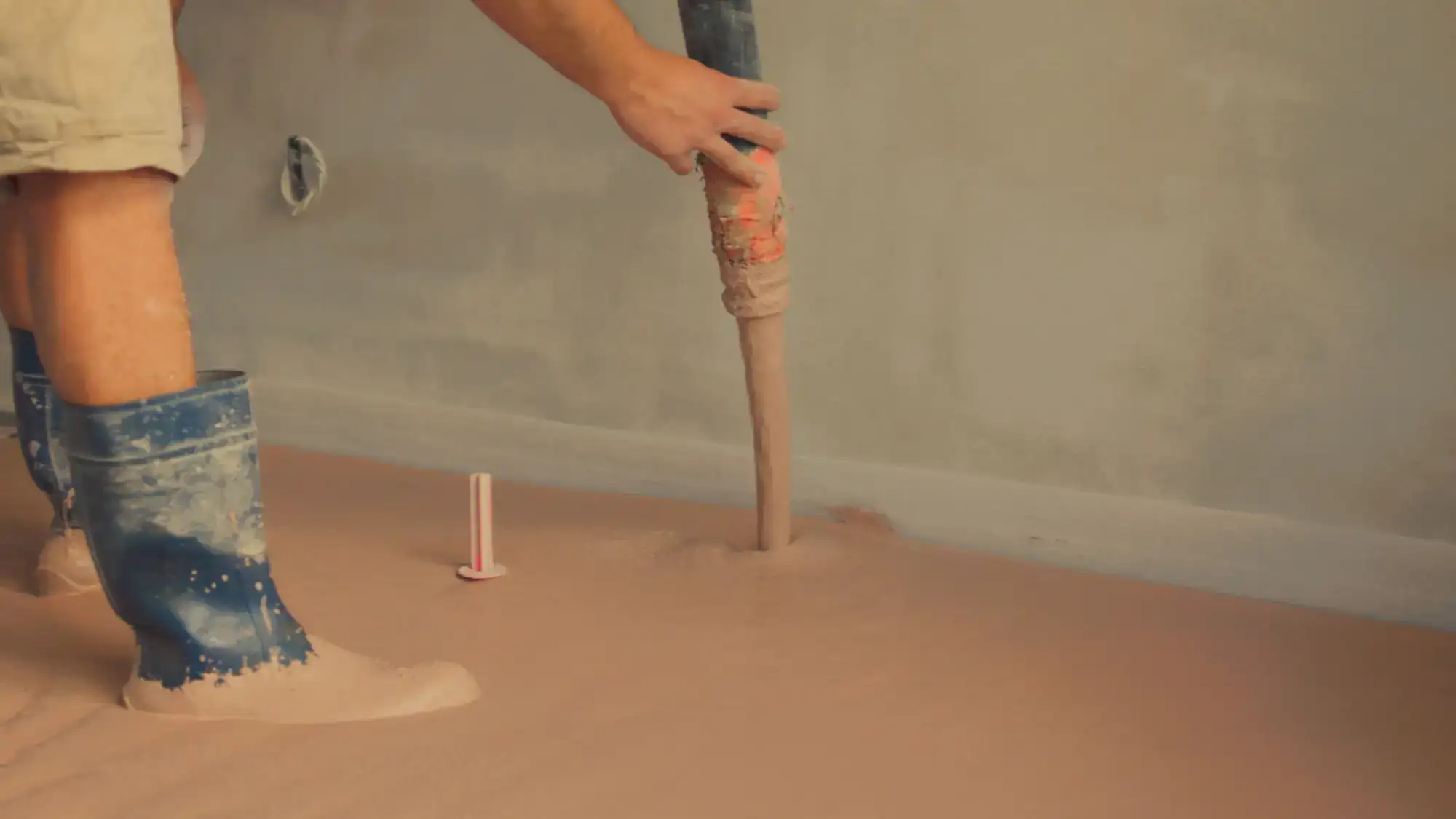
The first thing that happens on any self-leveling project is moisture testing not a visual inspection, not a guess. We test to ASTM F2170 standards, which measures relative humidity inside the concrete slab itself. In Mineola, where the water table runs high and spring rains push moisture up through aging drainage systems, this step isn’t optional. A slab that looks dry in February can read elevated moisture in April. Testing tells you what you’re actually working with.
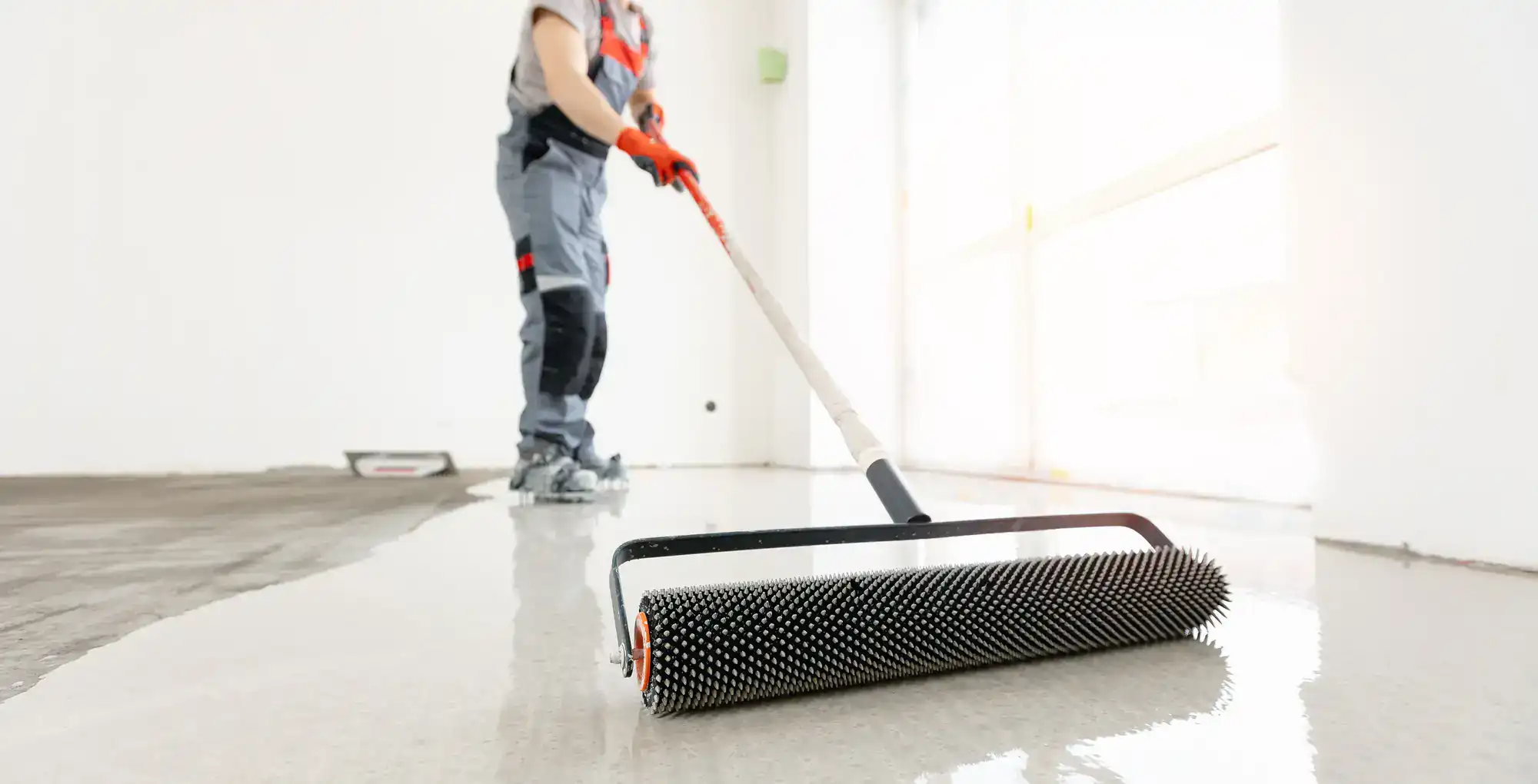
Once moisture is confirmed within acceptable range or mitigated if it isn’t the concrete surface is mechanically prepared. That means grinding, shot blasting, or scarifying the surface to create the profile the self-leveling material needs to bond properly. Any existing cracks, spalls, or damaged areas are repaired at this stage, not after the pour. Skipping repair work before leveling is one of the most common reasons self-leveling jobs fail.
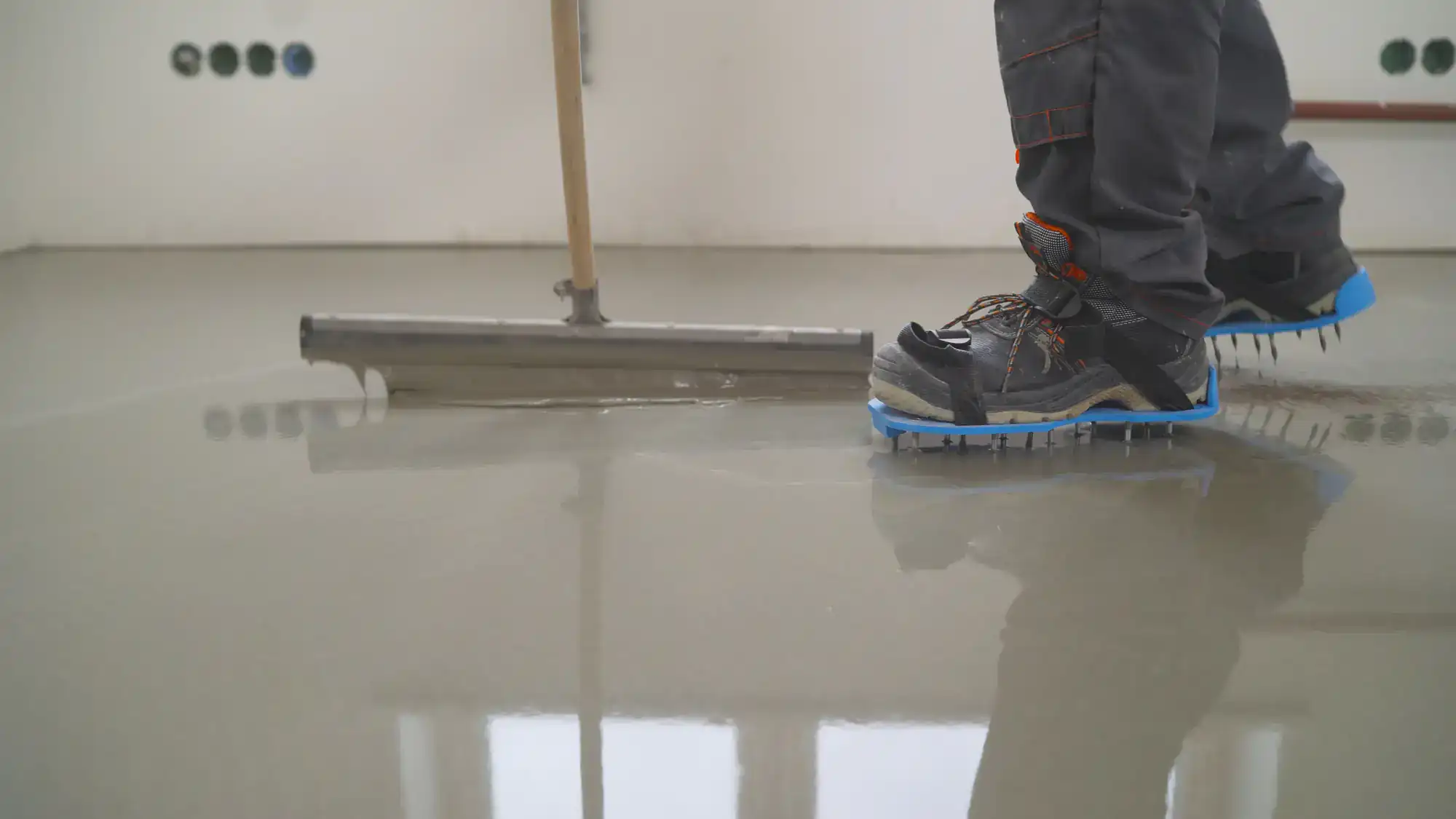
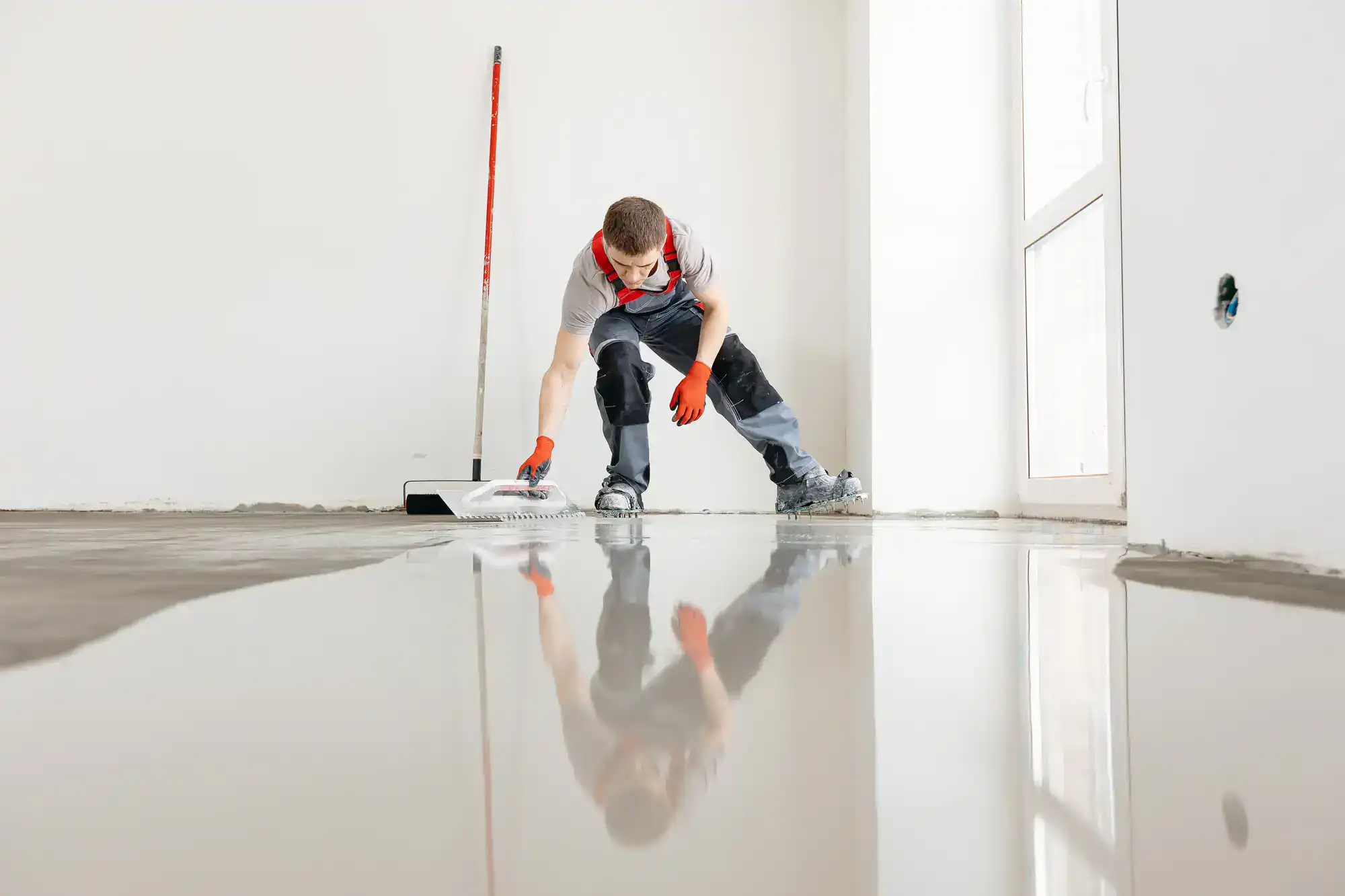
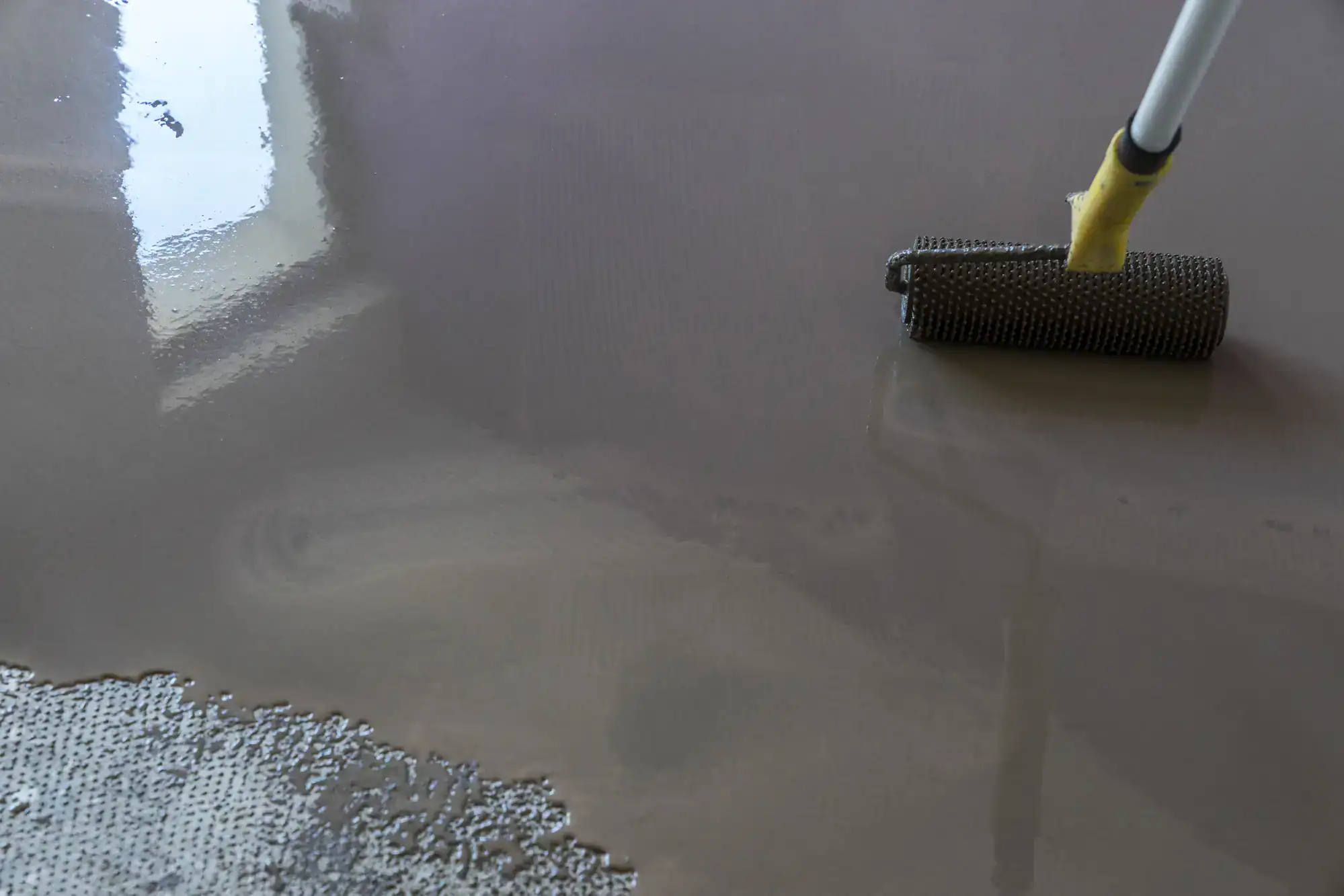
The self-leveling underlayment is then mixed and poured to the correct depth anywhere from a quarter inch for minor surface correction up to two inches or more for significant substrate work. Our systems can reach up to five inches with aggregate addition, which covers the full range of what Mineola’s older commercial and institutional slabs actually need. Foot traffic is typically possible within four to six hours. Heavy commercial use equipment, carts, high-traffic retail is usually ready within 24 to 48 hours. If your project requires a permit through the Village of Mineola’s Building Department, that’s worth confirming before work begins, particularly for commercial and food service renovations where the village has specific oversight requirements.
Ready to get started?
Self-leveling underlayment isn’t a one-size product. The cementitious systems used for a medical office corridor at NYU Langone are selected and installed differently than what goes into a residential basement renovation on a quiet street off Willis Avenue. We work with cementitious self-leveling underlayments and high-strength self-leveling concrete systems that are matched to the specific load requirements, moisture conditions, and final floor type of each project.
For commercial spaces restaurants near the LIRR station, retail along Old Country Road, government offices in the courthouse corridor the priority is a fast-curing concrete leveler that minimizes downtime without cutting corners on prep. For healthcare environments, the substrate needs to meet the seamless, hygienic standards that clinical flooring systems demand. For residential work in Mineola’s older Colonials and Cape Cods, the focus shifts to correcting basement and first-floor slabs that have shifted over decades without creating new moisture problems in the process.
Every project includes moisture testing, mechanical surface preparation, crack and spall repair, and the full self-leveling pour. There’s no version of this service where prep gets skipped to save time. The floor you’re putting on top of this substrate whether it’s large-format tile, LVT, sheet vinyl, or a resinous coating will only perform as well as what’s underneath it. That’s the part of this job most contractors rush, and it’s the part we treat as the whole job.
For most residential self-leveling projects a basement floor, a kitchen subfloor a permit is typically not required because the work is interior and doesn’t involve structural changes, plumbing, or electrical. That said, the Village of Mineola’s Building Department does require permits for interior renovation work in certain commercial contexts, particularly in food service establishments where construction affects food handling areas. If you’re a business owner on Old Country Road or operating a restaurant near the LIRR station, it’s worth a quick call to the Building Department before work starts to confirm what applies to your specific project.
For larger commercial or institutional renovations especially anything connected to the county government buildings or the NYU Langone campus the permitting picture can be more involved. We’ve worked in Nassau County’s institutional and commercial buildings long enough to understand how to navigate these conversations without creating schedule delays.
The most common reason self-leveling underlayment fails in Nassau County and everywhere else is moisture. If the concrete slab has a moisture vapor emission rate above the product’s threshold and nobody tested for it before the pour, the material will eventually lose its bond and delaminate. In Mineola specifically, this is a real risk. The village sits in an area of Nassau County known for a high water table, and the glacial soil composition clay-rich in the northern sections bordering Williston Park and Herricks holds water and transmits it upward through slabs over time.
The second most common cause is inadequate surface preparation. Self-leveling material needs a mechanically prepared surface to bond correctly. If the slab was just swept and primed without grinding or shot blasting, the bond is weak from day one and it shows up as cracking or lifting within months. If you’ve had a self-leveling job fail, the fix isn’t just repouring. It’s diagnosing why it failed first, which means moisture testing and a real look at the surface prep that was done the first time.
Thickness depends on two things: how uneven the existing slab is and what’s going on top of it. For minor surface irregularities small dips, surface roughness, light variation a quarter-inch pour is often enough. For more significant correction, you’re looking at half an inch to two inches. In cases where the slab has major damage or significant height variation, systems with aggregate addition can go up to five inches, though that’s more common in heavy commercial or industrial settings.
The final flooring material also matters. Large-format porcelain tile increasingly common in Mineola’s commercial renovations has very tight flatness tolerances. Luxury vinyl tile and plank are thinner than they used to be, which means surface imperfections telegraph through more easily. If you’re installing either of those, the substrate needs to be flatter than it did ten years ago. Getting the thickness right isn’t something to eyeball it requires measuring the actual low points in the slab and calculating the volume needed to bring the entire surface within the flatness tolerance the final floor requires.
Most professional self-leveling underlayments are ready for light foot traffic within four to six hours of installation. For the final flooring installation tile, vinyl, resinous coatings you’re typically looking at 24 hours minimum, and some systems recommend longer depending on the product and conditions. Heavy commercial traffic, like forklifts or equipment, generally needs 24 to 48 hours before the surface is ready to handle that kind of load.
Temperature and humidity affect cure time, and this matters in Mineola’s climate. During winter months, interior spaces need to be climate-controlled during and after installation cold, unheated environments slow the cure and can compromise the surface. Spring is the busiest renovation season in Nassau County, and it’s also when humidity levels fluctuate most. A professional installer will account for ambient conditions on the day of the pour and adjust accordingly.
It depends on what’s already there and what condition it’s in. Self-leveling underlayment can be installed over existing concrete, existing VCT tile, and some other hard surfaces but only after the existing surface has been properly evaluated and prepared. If the existing floor is loose, contaminated with adhesive residue, or has areas that aren’t bonded well to the substrate beneath, those issues need to be addressed before any self-leveling product goes down. Pouring over a compromised surface just buries the problem.
For Mineola’s older commercial spaces retail and restaurant buildings along Jericho Turnpike or the downtown station area that have had multiple layers of flooring installed over the decades there’s often a history of adhesive, leveling compound, and patching that has to be assessed carefully. In some cases, mechanical removal of the existing surface is the right call before leveling. In others, the existing surface can be ground and primed to accept the new underlayment. The only way to know which situation you’re in is to look at it not assume.
For most commercial self-leveling projects in the Nassau County area, you’re looking at a range of roughly $3 to $8 per square foot for the underlayment work itself, depending on the depth of correction needed, the condition of the existing slab, and whether moisture mitigation is required before the pour. A straightforward skim coat over a relatively sound slab on the lower end of that range looks very different from a two-inch build-up over a damaged, moisture-compromised substrate on the higher end. Total project costs for a mid-size commercial space typically fall somewhere between $2,000 and $10,000 or more depending on scope.
What’s worth understanding in Mineola’s market specifically is that the cost of getting this wrong is almost always higher than the cost of doing it right. A self-leveling job that fails because moisture wasn’t tested or prep was skipped means tearing out the final floor, repouring, and reinstalling which can easily double or triple the original project cost, plus the operational disruption of closing a commercial space a second time. For the businesses and institutions that anchor Mineola’s economy, that kind of setback isn’t just expensive it’s disruptive in ways that go well beyond the flooring invoice.