
Most hangar floors in Nassau County don’t fail because of bad luck. They fail because the contractor who installed them treated the job like a garage floor. Aviation environments are a different category entirely Skydrol hydraulic fluid, jet fuel, heavy rolling equipment, and the constant chemical exposure that comes with maintaining aircraft will destroy a standard epoxy system within a few years. A properly installed aviation-grade floor is engineered to handle all of it without peeling, staining, or becoming a slip hazard.
Long Island’s climate adds another layer to this. Mineola sits roughly 10 to 15 miles from the Long Island Sound, and the combination of coastal humidity and seasonal freeze-thaw cycling puts real stress on concrete slabs year after year. Water infiltrates micro-cracks, freezes, expands, and accelerates surface deterioration and moisture vapor migrating upward through a large hangar slab is one of the most common reasons coatings fail prematurely on Long Island. A high-build aviation-grade system seals the slab, stops that cycle, and gives you a floor that actually holds up through Nassau County winters.
The practical difference shows up fast. Spills are visible on a high-gloss surface instead of soaking into bare concrete. Dropped hardware is easier to spot. The floor stays cleanable. And when you’re operating in a regulated environment which every hangar in this area is you’re working with a system that meets code, not one that creates liability.
We’re based in Bohemia, NY which means the same coastal humidity, the same freeze-thaw cycles, and the same large-slab moisture challenges that affect every hangar floor near Mineola are conditions we’ve been working in for over 30 years. We’re not a national franchise sending a regional crew. We’re a company where most employees have been on the job for more than a decade, led by a president with over 40 years of personal installation experience.
The credentials behind our work are specific and verifiable. We hold dual elite certifications from Sherwin-Williams High Performance Flooring and Res Tech. Every installer is OSHA 40 certified not the basic OSHA 10 most contractors reference, but the full 40-hour training that matters in regulated commercial environments. Our non-slip topcoat meets National Flooring Safety Institute requirements. These aren’t marketing phrases they’re the kind of credentials that matter when you’re managing a facility near Republic Airport in Farmingdale and the floor has to meet code, resist aviation chemicals, and keep people safe.
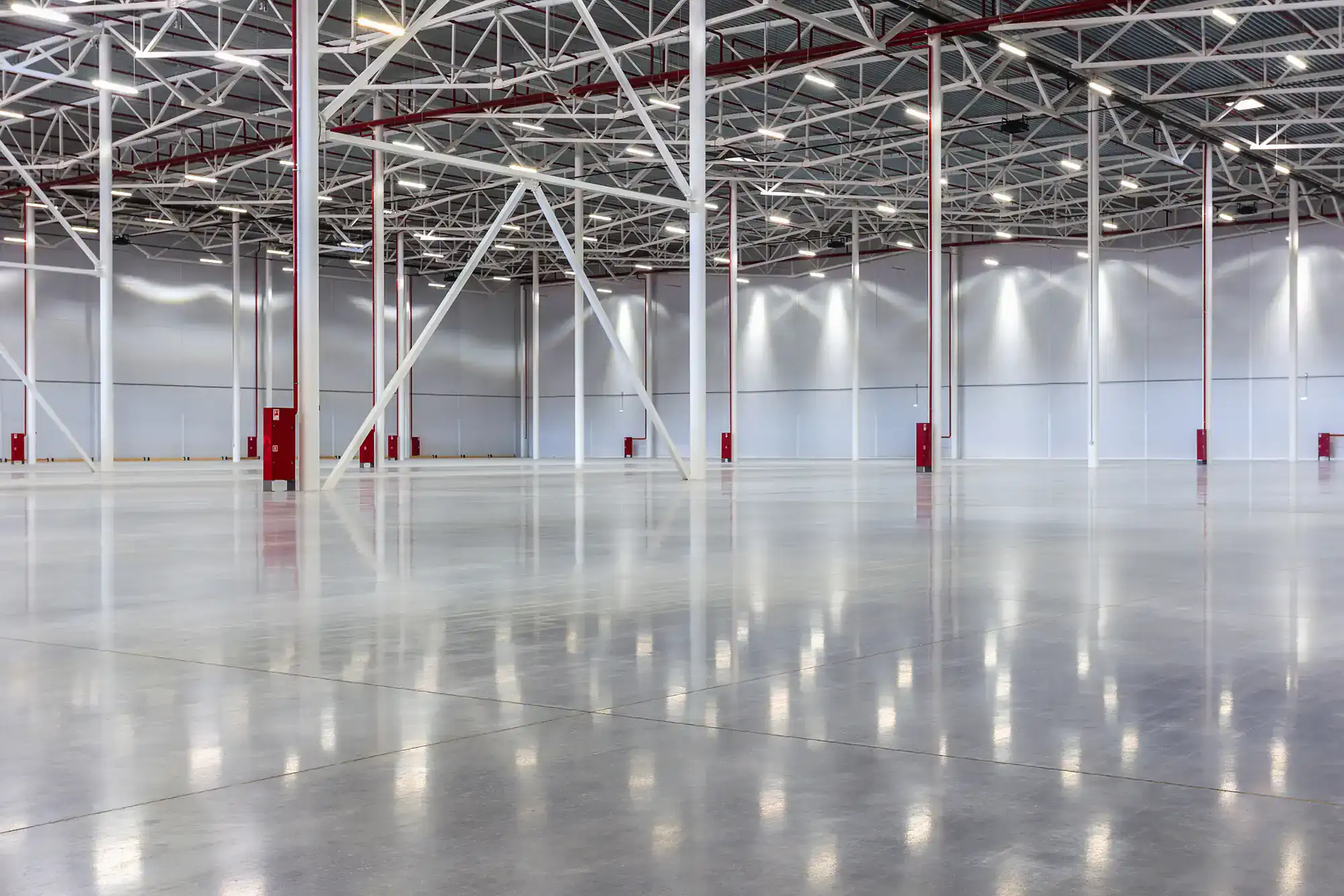
The first thing that happens before any coating goes down is a concrete assessment. That means evaluating the existing slab condition, profiling the surface through diamond grinding to create the mechanical bond the coating needs, and critically testing for moisture vapor transmission. On Long Island, skipping moisture testing on a large hangar slab isn’t just cutting corners. It’s a near-guaranteed path to delamination. Ground temperatures in Nassau County warm faster than air temperatures in spring and early summer, which drives moisture vapor upward through the slab and breaks the bond between concrete and coating. Every project starts with this conversation, before a single product is opened.
Once the slab is properly prepared, we follow a multi-coat process: primer, build coat, and topcoat, each given the cure time it needs. The system is built to a minimum of 45 mils the thickness required for aviation-grade performance. If you’re working with an active hangar and need to minimize downtime, a polyaspartic system is available that allows aircraft back into the space within 24 hours of the final coat. That’s a real operational consideration for corporate flight departments and FBO operators in the Nassau County area who can’t afford a two-week shutdown.
If your project requires a building permit through the Village of Mineola’s Building Department which enforces the New York State Uniform Code and may apply to commercial floor resurfacing in aviation-classified facilities we’ll have that conversation before the job starts, not after.
Ready to get started?
The flooring systems we install in aircraft hangars in Mineola and the surrounding Nassau County area are not the same products used in residential garages or light commercial spaces. Aviation-grade epoxy and polyaspartic systems are formulated to resist Skydrol hydraulic fluid, jet fuel, lubricants, and industrial cleaning solvents the specific chemical profile of an active hangar environment. Standard epoxy products aren’t built for this exposure, and they show it within a few years. Our systems are also noncombustible, meeting the NFPA 409 Standard on Aircraft Hangars the code requirement that governs aircraft storage and servicing areas and that many general contractors don’t know exists.
For hangar operators near Republic Airport in Farmingdale about 10 miles from Mineola who are building new facilities or refreshing existing ones, the choice between epoxy and polyaspartic comes down to timeline and long-term performance priorities. Epoxy systems offer excellent chemical resistance and durability at a strong value. Polyaspartic systems cure faster (24-hour return to service), resist UV yellowing under hangar lighting, and carry a lifespan of up to 20 years. Both are available with the NFSI-certified non-slip topcoat that meets the safety requirements of a working aviation facility.
Every installation includes concrete surface profiling, moisture assessment, crack and spall repair where needed, and a multi-coat application process. The floor you get at the end isn’t just coated it’s properly prepared, correctly installed, and built to last in the specific environment it’s going into.
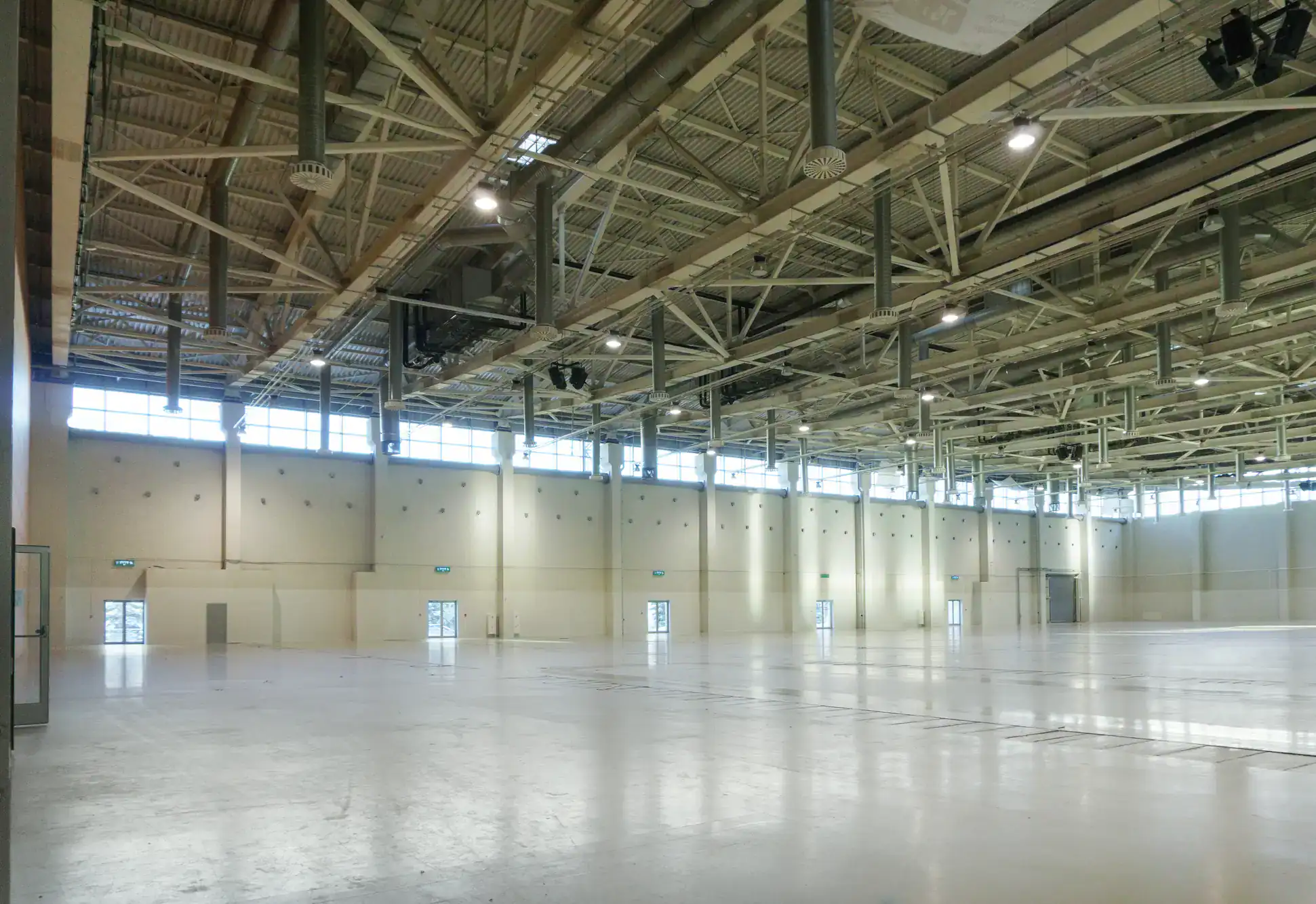
It depends on the scope of the work and how the facility is classified under local zoning. The Village of Mineola operates an active Building Department that enforces the New York State Uniform Code, and building permits are generally required for alterations, improvements, or repairs to commercial structures. For aviation-classified facilities, it’s worth confirming with the village whether floor resurfacing or coating work triggers a permit requirement before the job starts not after.
We’re equipped to have this conversation with you early in the process. Working in regulated commercial environments for over 30 years including healthcare facilities, government-adjacent work, and commercial kitchens means navigating permit requirements is part of the job, not a surprise. Getting clarity on this upfront protects you as the property owner and keeps the project on schedule.
The chemical exposure profile in an aircraft hangar is unlike anything in standard commercial flooring. Skydrol the phosphate ester-based hydraulic fluid used in most aircraft is corrosive to people, to concrete, and to standard epoxy coatings. Jet fuel, lubricants, and industrial solvents add to that exposure. A product that performs well in a warehouse or retail space can fail within a few years in an active hangar simply because it wasn’t formulated for aviation chemistry.
Beyond chemical resistance, aviation-grade systems are high-build installed at a minimum of 45 mils and must meet the NFPA 409 noncombustibility requirement for aircraft storage and servicing areas. Most general flooring contractors don’t know that standard exists. The systems we use are specifically selected and installed for aviation environments, not adapted from a residential product line and hoped for the best.
Nassau County’s climate creates two specific challenges for hangar floor coatings that don’t apply in more temperate regions. The first is freeze-thaw cycling. Through a typical Long Island winter, water infiltrates micro-cracks in concrete, freezes, expands, and accelerates surface deterioration. An uncoated or inadequately coated slab in Mineola will degrade faster than one in a warmer climate and a coating that wasn’t installed with proper surface preparation won’t stop that process, it’ll just hide it temporarily.
The second issue is moisture vapor transmission. Mineola sits close enough to both the Long Island Sound and the Atlantic Ocean that coastal humidity is a year-round factor. Large hangar slabs in Nassau County are particularly susceptible to moisture migrating upward through the concrete especially in spring when ground temperatures warm faster than air temperatures. This is the most common cause of premature epoxy delamination on Long Island, and it’s entirely preventable with proper moisture assessment before installation. Every project we do starts with that test.
A properly installed aviation-grade epoxy system in an active hangar environment typically lasts 15 to 20 years with routine maintenance. Polyaspartic systems, which cure faster and resist UV yellowing better than standard epoxy, are also rated for up to 20 years under normal aviation use conditions. The key phrase in both cases is “properly installed” the longevity of any coating system is directly tied to surface preparation, moisture testing, and the thickness of the installed system.
Floors that fail in three to five years almost always have the same story: the concrete wasn’t properly profiled, moisture testing was skipped, the system was too thin, or a product not rated for aviation chemistry was used. In Nassau County’s high-property-value market where the median property value sits above $650,000 the total cost of a floor that needs full removal and reinstallation in four years is significantly higher than the upfront investment in a system that’s done correctly the first time.
Both systems are viable for aircraft hangar floors in Mineola, and the right choice depends on your operational priorities. Epoxy offers excellent chemical resistance, strong durability, and is a proven system in aviation environments. It’s the right call when timeline flexibility exists and you want a high-performance floor at a strong value point. The tradeoff is cure time traditional epoxy systems require multi-day windows before aircraft can return to the space.
Polyaspartic systems cure fast enough to return aircraft to the hangar within 24 hours, which matters significantly for active operations near Republic Airport or corporate flight departments that can’t absorb extended downtime. Polyaspartic also holds up better under the UV exposure from hangar lighting over time epoxy can yellow under sustained artificial light, while polyaspartic maintains its appearance. Both systems are available with the NFSI-certified non-slip topcoat and meet NFPA 409 noncombustibility requirements. The conversation about which is right for your specific facility is worth having before you commit to either.
The first question to ask any contractor is whether their system meets NFPA 409 the Standard on Aircraft Hangars that requires noncombustible floor surfaces in aircraft storage and servicing areas. If they don’t know what NFPA 409 is, that tells you everything you need to know. The second question is whether they test for moisture vapor transmission before installation. On Long Island, skipping that step on a large hangar slab is the single most predictable cause of early coating failure, and a contractor who doesn’t raise it proactively hasn’t done this work in this climate before.
Beyond code knowledge, look for verifiable credentials not just a website and a sales pitch. Factory certifications from named programs like Sherwin-Williams High Performance Flooring, OSHA 40 certification for installers, and third-party safety certifications like NFSI for non-slip topcoats are the kind of specific, checkable credentials that separate specialists from generalists. Nassau County’s aviation market particularly with the active hangar expansion happening near Farmingdale has attracted contractors who aren’t equipped for this work. Asking the right questions upfront is the most reliable way to find out who actually is.