
When your floor is uneven, nothing you put on top of it is going to perform the way it should. Large-format tile shows lippage. Wide-plank hardwood squeaks. Luxury vinyl shifts. The floor covering gets blamed, but the real problem started at the substrate and that’s exactly what concrete floor leveling services in Southampton, NY are designed to fix.
Southampton’s coastal environment makes this more than a cosmetic issue. The South Fork sits on a high water table, and salt-air moisture is constant year-round. Older slabs especially in seasonal properties that spent decades being closed and reopened have absorbed years of expansion and contraction from freeze-thaw cycles. Southampton Town’s own hazard planning documents flag this specifically: freezing and thawing of snow and ice expands existing cracks in foundations and slabs over time. By the time a renovation starts, many of these floors have shifted well beyond what patching can fix.
Getting the substrate right changes everything downstream. Your tile installer works faster. Your hardwood lays flat. Your finished floor performs the way the manufacturer intended and the way your renovation budget deserves.
We’ve been installing floors on Long Island for over 30 years, and our president brings more than 40 years of hands-on experience to every project. That’s not a number for the website it means we’ve seen every version of what a Southampton slab can do, and we know how to handle it.
Our crew is OSHA 40-certified, factory-trained in advanced resinous systems, and most have been with us for over a decade. That kind of tenure matters in a trade where inconsistency is common. When you hire us for subfloor leveling in Southampton, NY, the same experienced team that bid the job is the team that shows up to do it.
From Hampton Bays to Bridgehampton, Water Mill to Sag Harbor we’ve worked across the East End and understand what makes these properties different from a standard suburban renovation. Our project history includes the White House kitchen in 1996, installations across the continental U.S., the Bahamas, and Moscow. The A+ BBB rating is just confirmation of what the work already shows.
It starts with moisture testing and in Southampton, this step is non-negotiable. Coastal proximity means elevated vapor emission rates are common, especially in older properties near the water table. We conduct ASTM F2170-compliant relative humidity testing before anything gets poured. If moisture levels are too high, that gets addressed first. Skipping this step is the single most common reason self-leveling underlayment fails, and it’s not a step that gets skipped here.
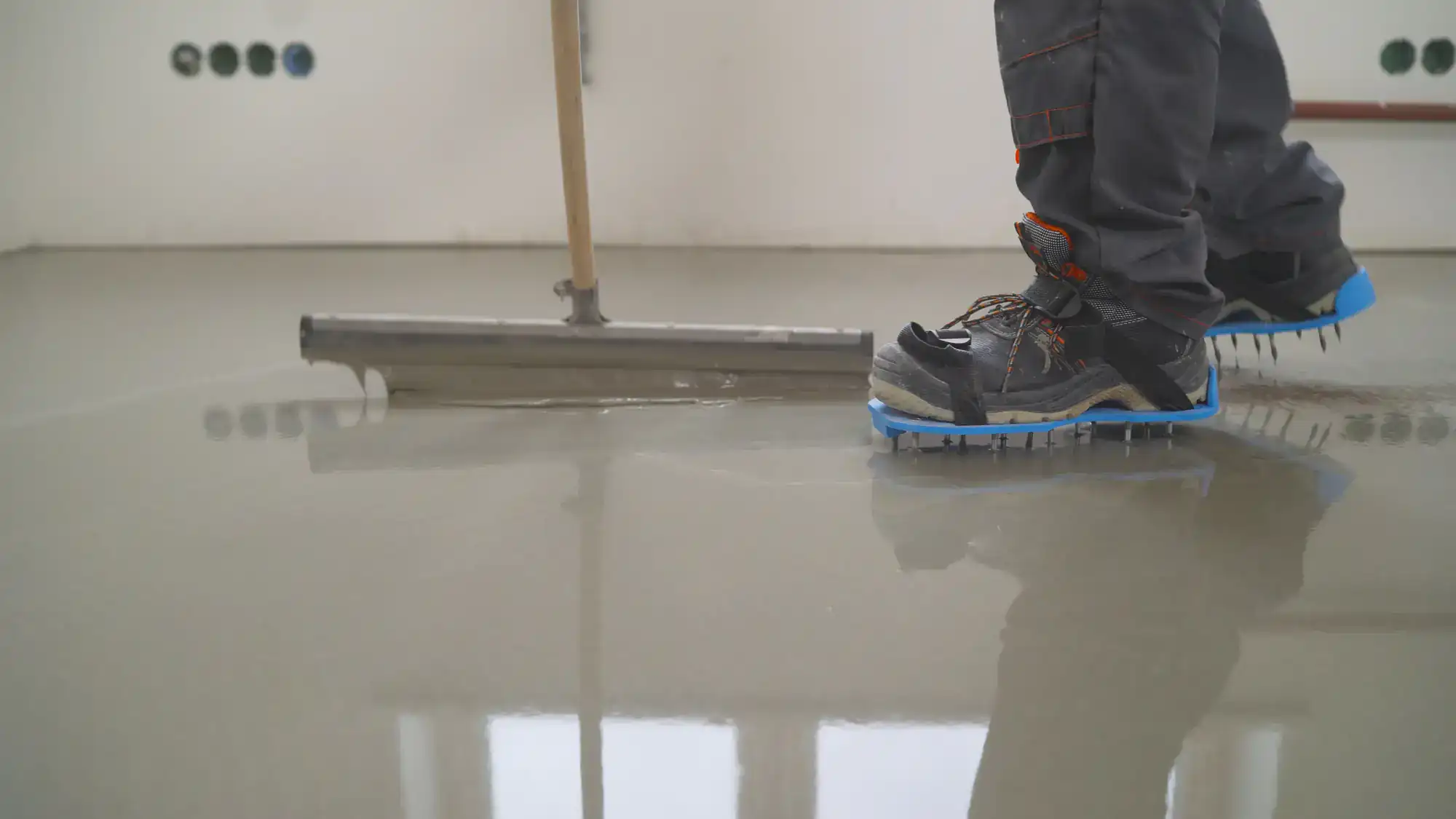
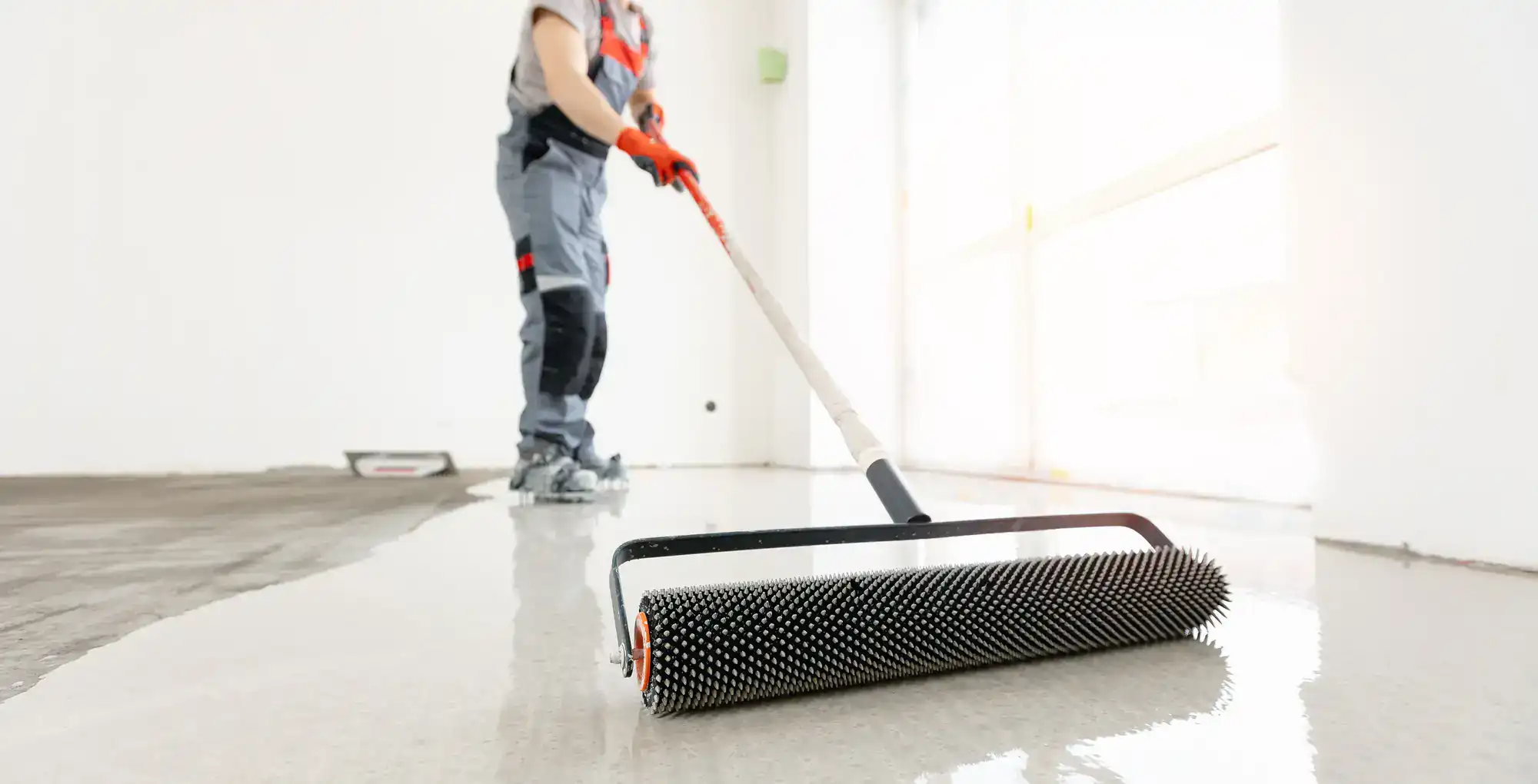
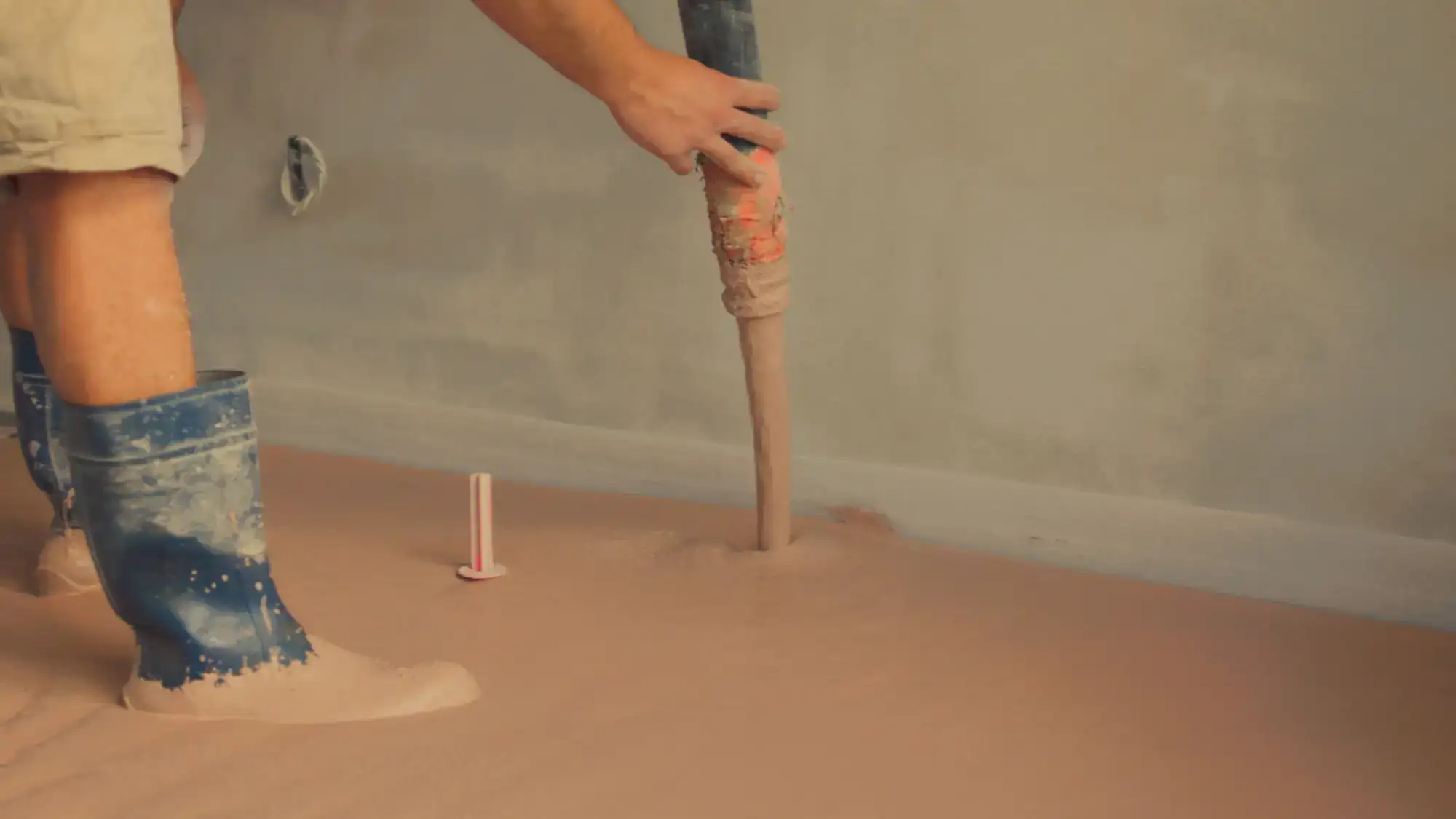
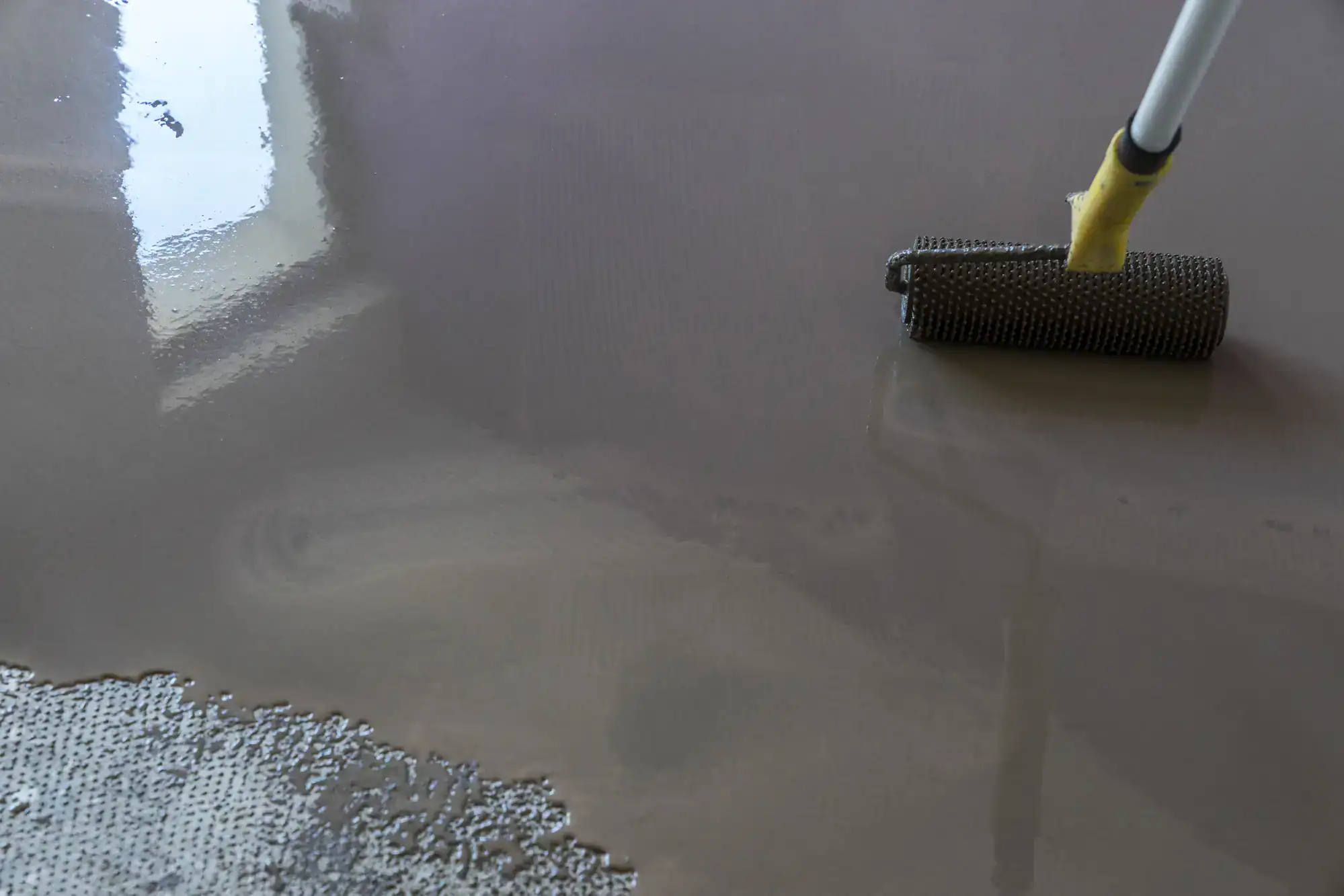
Once the slab passes moisture testing, the surface gets prepared grinding, cleaning, and repairing any cracks or voids that would compromise adhesion. Then the cementitious self leveling underlayment in Southampton, NY gets mixed and pumped to the correct depth. Our systems install from ¼” to over 2″ neat, and up to 5″ with aggregates added all in a single pour. That range matters in a market like the Hamptons, where one property might need a skim coat and the next needs significant correction after decades of seasonal movement.
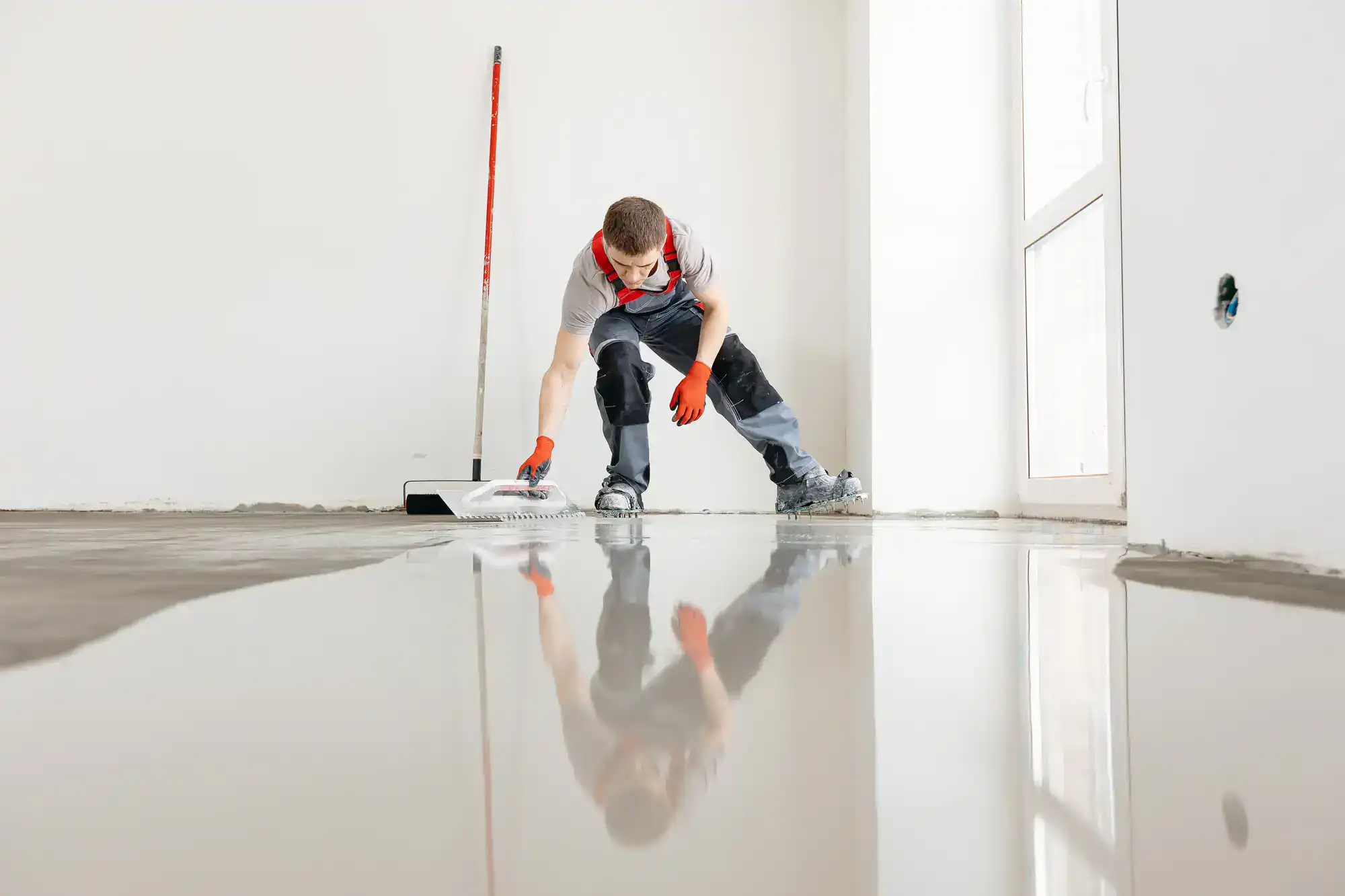
Foot traffic is typically possible within 4 to 6 hours. Heavy commercial use within 24 to 48 hours. For Southampton property owners working against a pre-Memorial Day deadline or a post-Labor Day renovation window, that turnaround isn’t a nice-to-have it’s the whole plan.
Ready to get started?
The self-leveling system we use is a high-strength, polymer-modified, cement-based material with high flow characteristics engineered for interior concrete, plywood, and other approved substrates. It’s not a hardware-store product mixed in a bucket. It’s a professional-grade system applied with pump equipment, measured for flatness, and documented with product data sheets that satisfy architects, general contractors, and interior designers working on high-specification Hamptons renovations.
What makes this particularly relevant for commercial floor leveling solutions in Southampton, NY is the full-service scope. We handle moisture testing, surface preparation, self-leveling underlayment, and the final floor coating all under one roof. Along County Road 39, in Southampton Village, and through the commercial corridors of Hampton Bays and Bridgehampton, restaurants, boutiques, and hospitality venues can’t afford the coordination risk of managing multiple subcontractors on a tight seasonal timeline. One contractor who owns the entire process from substrate to surface eliminates that risk entirely.
For residential renovations whether it’s a year-round home in North Sea or a luxury estate in Water Mill the same principle applies. There’s one warranty, one point of contact, and one crew that understands what the finished floor requires before the first bag gets mixed.
It can but only if moisture is properly addressed before installation begins. Southampton’s coastal geography puts many properties in direct proximity to a high water table, and salt-air humidity adds to the moisture load that slabs absorb over time. Elevated moisture vapor emission is one of the leading causes of self-leveling underlayment failure: it breaks the bond between the underlayment and the slab, causing delamination, cracking, and eventually floor covering failure above it.
The right approach starts with ASTM F2170 relative humidity testing to measure what’s actually happening inside the slab not just on the surface. If readings come back above the 80% threshold, that condition needs to be mitigated before any pour happens. We include this testing as a standard part of the process, not an add-on. For Southampton properties near the water, it’s the difference between a floor that lasts and one that fails within a season.
The thickness depends on how much correction the slab actually needs and in Southampton, that varies widely depending on the age and type of property. A recently built estate may only need a ¼” skim coat to hit the flatness tolerance required for large-format tile. An older seasonal cottage in Hampton Bays or East Quogue that’s been freeze-thaw cycled for 40 years may need 1″ to 2″ of correction, sometimes more.
The industry standard for large-format tile anything 15″ or larger calls for no more than 3/16″ variation over 10 feet. That’s a tight tolerance, and standard concrete patching rarely achieves it consistently. Our self-leveling systems install from ¼” to over 2″ neat and up to 5″ with aggregates, all in a single pour. So whether your renovation calls for a light correction or a full reset, it can be handled in one visit without bringing in additional subcontractors or scheduling a second mobilization.
The most common culprits in Southampton are freeze-thaw cycles, moisture movement, and the age of the original construction. Many properties on the East End were built as seasonal homes lighter foundations, thinner slabs, minimal or no moisture barriers and they’ve spent decades being closed for winter and reopened in spring. Each freeze-thaw cycle causes existing cracks in the slab to expand slightly. Over 20 or 30 years, that accumulates into visible unevenness, low spots, and surface heaving.
Moisture is the other major factor. High groundwater tables near the South Fork mean slabs are in frequent contact with moisture from below, which causes the slab to expand, contract, and eventually shift. Properties that have had repeated flooring replacements tile over tile, hardwood over old adhesive often have compounding substrate issues that weren’t properly addressed each time. Self leveling concrete in Southampton, NY gives those floors a clean, stable baseline to build from.
Most self-leveling underlayments are ready for foot traffic within 4 to 6 hours of installation. For hardwood or tile installation, you’re typically looking at a 24-hour window before light flooring work can begin, and 24 to 48 hours before the surface is ready for heavy commercial traffic or more demanding flooring systems.
One important note for Southampton property owners working in unheated seasonal homes: most self-leveling products require a minimum ambient and substrate temperature of 50°F to cure correctly. If you’re opening a property in early spring and the interior hasn’t been heated, you’ll want to bring the space up to temperature before the pour and keep it there through the cure window. This is especially relevant for properties along the South Fork that sit unheated from October through March. We account for this during project planning so there are no surprises on installation day.
Yes, and it’s one of the most practical applications for the Hamptons commercial market. Restaurants, retail boutiques, wellness studios, and hospitality venues along Route 27 and County Road 39 operate on a hard seasonal calendar they need to be open by Memorial Day and can’t afford a floor failure mid-season. Commercial floor leveling solutions in Southampton, NY using high-strength self-leveling underlayment give these spaces a flat, durable substrate that’s ready for tile, stone, polished concrete, or any other commercial floor covering, with a 24 to 48-hour return-to-service window.
For commercial occupancies, the Southampton Town Building Department and Village Building Department may require a permit depending on the scope of the renovation. We have experience working within the permit and inspection process for commercial projects across Long Island and can coordinate accordingly so your timeline doesn’t get derailed by a missed step.
Patching fills specific cracks or holes. Grinding removes high spots or surface irregularities. Self-leveling underlayment does something different it corrects the overall plane of the floor across a large area, bringing the entire surface to a consistent, flat level that patching and grinding alone can’t achieve. If your slab has multiple low spots, gradual slope, or general unevenness across a room, self-leveling is the right tool.
The material itself is engineered to flow and settle to a flat plane under its own weight, which is why it’s called self-leveling. It’s not something you trowel into a hole it’s a pourable, polymer-modified cementitious system that bonds to the existing substrate and cures to a hard, stable surface. In Southampton’s luxury renovation market, where flooring specifications are tight and the materials going on top are expensive, getting this step right is what protects the entire investment above it. A properly leveled substrate is what separates a floor that performs for decades from one that shows problems within the first year.