
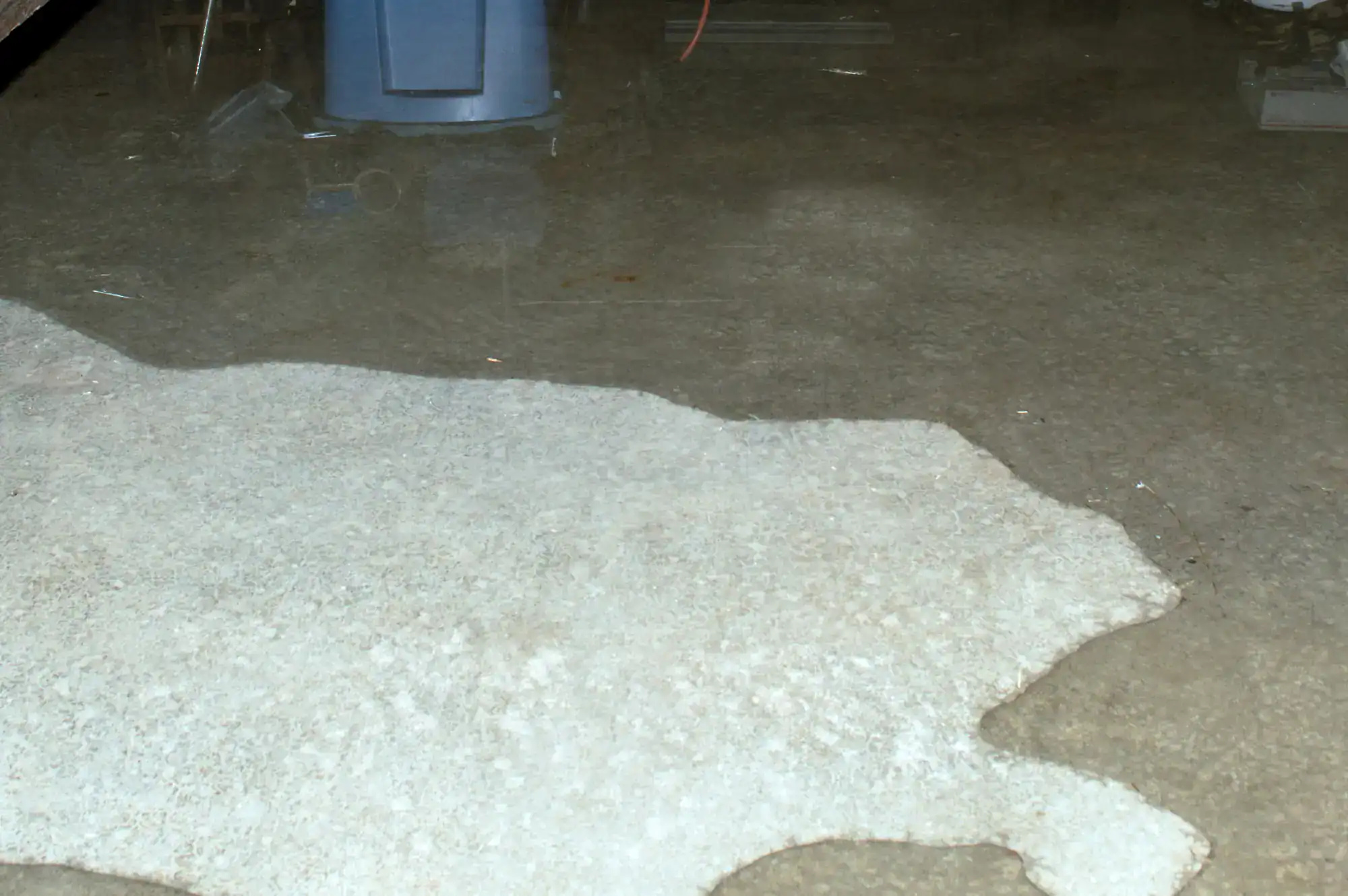
Every time your apparatus rolls back in from a winter run on Route 27, it’s tracking road salt, brine, and deicing chemicals straight onto your bay floor. If that floor isn’t sealed properly bonded at the substrate level, not just coated on top those chemicals are soaking in. Bare or poorly prepped concrete absorbs everything, and once it does, you can’t power-wash your way out of it. That’s not a cleaning problem. That’s a floor problem.
Southampton’s location on the South Fork makes this worse than most places on Long Island. Salt air off the Atlantic and Shinnecock Bay works into concrete at the microscopic level year-round. Combine that with the freeze-thaw cycling that hits Southampton every late fall and early spring, and you’ve got conditions that will destroy a standard coating or a DIY kit faster than you’d expect. A properly engineered apparatus bay floor in Southampton isn’t just a nice upgrade. It’s the only surface that actually holds up here.
When the floor is right, the difference is immediate. Spills sit on top instead of soaking in. Decontamination after a call takes minutes, not hours. Hot tires from a summer response don’t peel the surface when the truck backs out. And when your department is running at full capacity from Memorial Day through Labor Day serving a community of 200,000-plus seasonal residents the last thing you need is a floor failure pulling apparatus out of rotation.
We’ve been installing commercial and industrial resinous flooring systems for over 30 years. Our CEO, Danny Harmer, has more than 40 years of hands-on installation experience and the field supervisors who show up to your station have been with us for over a decade. This isn’t a franchise operation running subcontractors. It’s a long-tenured crew that knows exactly what we’re doing, every time.
We’re based in Bohemia, NY right here in Suffolk County. Serving Southampton and the East End isn’t a stretch for us. We know Route 27. We understand what the South Fork’s coastal environment does to concrete over time. We’ve completed projects ranging from Long Island fire stations to the White House kitchen in 1996 a credential that speaks for itself when a fire district board asks why this contractor.
We hold the Sherwin-Williams High Performance Flooring certification and Res Tech certification two of the most rigorous manufacturer-approved applicator credentials in the commercial flooring industry. All our field installers are OSHA 40 certified, which matters when our crew is working in an active station alongside volunteers, apparatus, and sensitive equipment.
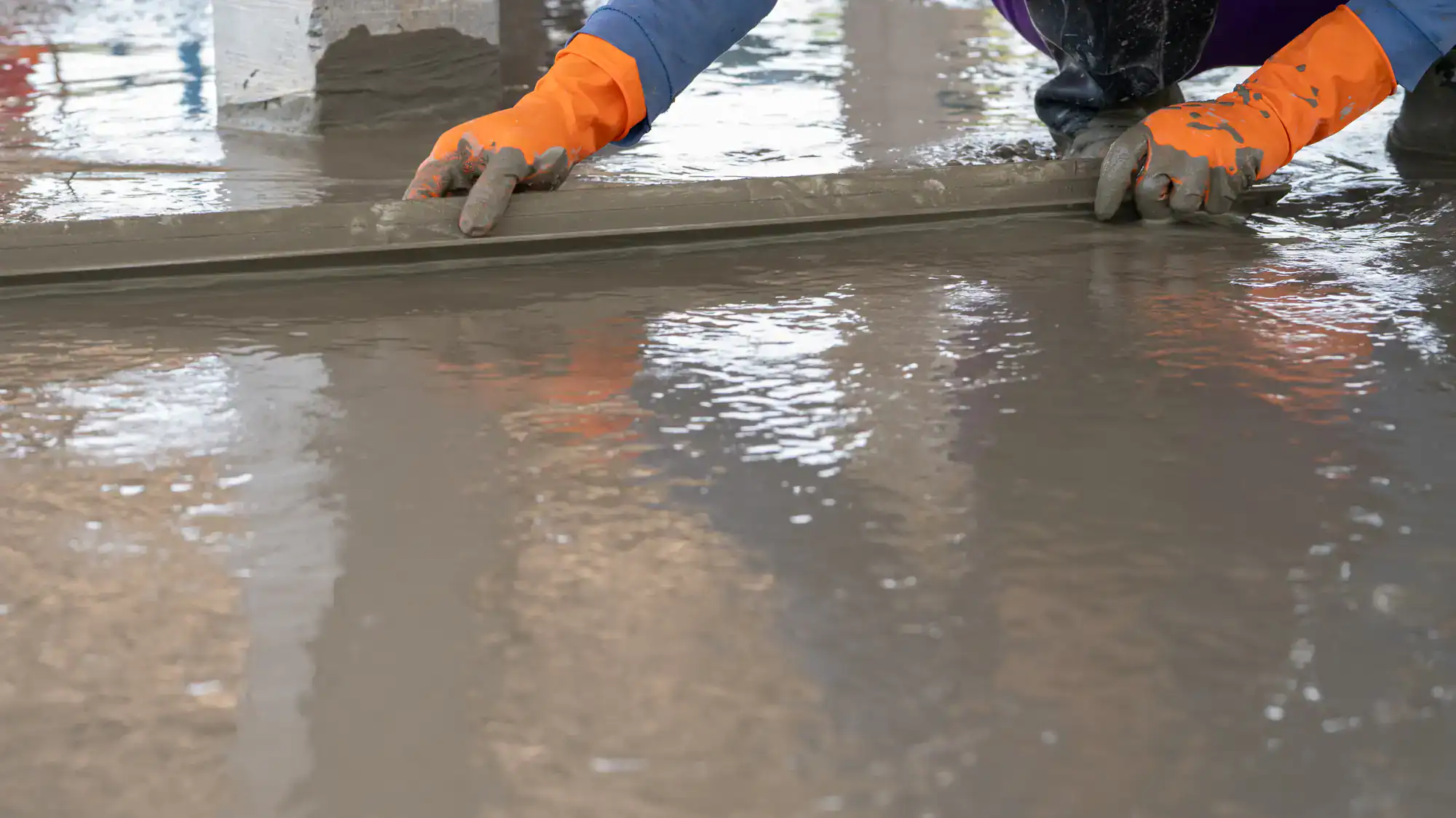
Before anything goes on the floor, we assess the concrete. That means moisture testing not skipped, not assumed because in a coastal environment like Southampton, where salt air and bay humidity are constant factors, elevated moisture in the slab is common. If the floor gets coated over moisture that wasn’t addressed, you’ll see bubbles and delamination within months. That’s the most common reason firehouse floors fail, and it’s entirely preventable.
Surface preparation starts with diamond grinding, not acid etching. Grinding mechanically opens the concrete capillaries so the penetrating primer bonds at the substrate level. Acid etching is faster and cheaper for the contractor, but it introduces moisture into the slab right before sealing exactly the wrong move in a Southampton apparatus bay. Any existing cracks get repaired before the first coat touches the floor. This step determines whether the system lasts two years or twenty.
Once prep is done, we apply the system in layers: penetrating primer, high-build base coat with aggregate broadcast for traction and compressive strength, and a polyaspartic topcoat that cures fast and holds up hard. The polyaspartic finish is UV-stable, thermally resistant, and four times more flexible than standard epoxy which means hot tires from a summer run won’t bond to it and peel it up when the truck moves. Apparatus can return to the bay within 24 hours of installation. For a volunteer department covering Southampton’s peak season, that’s not a selling point it’s a requirement.
Ready to get started?
The apparatus bay takes the most abuse, but it’s not the only floor in your station that matters. The decontamination zone where gear gets cleaned after calls needs a seamless, chemical-resistant surface that supports NFPA 1500 contamination control requirements. If that floor has grout lines, seams, or a porous surface, you can’t actually decontaminate it. A resinous coating eliminates the problem entirely.
The same logic applies to the kitchen, the locker room, and the living quarters. Each area has different demands thermal shock resistance in the kitchen, slip resistance in wet areas, durability in high-traffic hallways and the right system for each zone isn’t the same product. We install the appropriate system for every area of your station, which means one contractor, one standard of quality, and one point of accountability across the entire project. For a fire district managing upgrades across multiple stations in Southampton Town’s 7th Division whether that’s the Southampton department on Flying Point Road, Hampton Bays, East Quogue, Westhampton Beach, or Flanders that consistency matters.
The polyaspartic systems we use in apparatus bays deliver a 15-mil thickness, compared to the 4 to 8 mils of a standard epoxy. The result is a floor engineered for 40,000-pound apparatus, road salt, diesel, hydraulic fluid, and the kind of daily operational load that Southampton’s all-volunteer departments carry every single summer season.
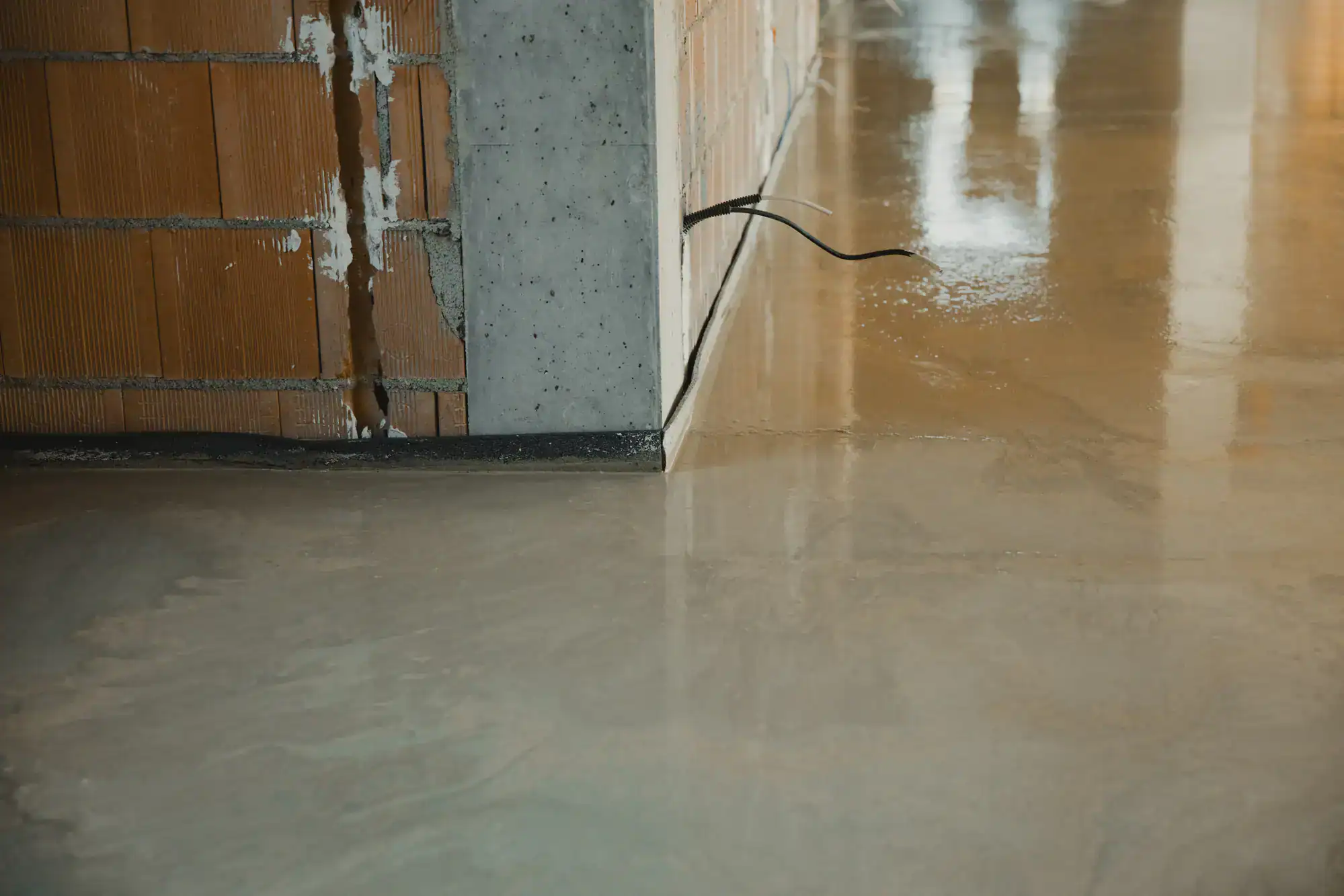
A properly installed polyaspartic system in a Southampton apparatus bay should last 20 years or more. The key word is properly meaning diamond-ground concrete, moisture-tested slab, penetrating primer, and a high-build base coat before the topcoat ever goes down. Systems that fail in two or three years almost always failed at the prep stage, not because the product was wrong.
Southampton’s coastal environment salt air off the Atlantic, humidity from Shinnecock Bay, freeze-thaw cycling through late fall and early spring is harder on floor coatings than most inland locations in Suffolk County. That’s why the prep process matters more here, not less. A contractor who skips moisture testing or uses acid etching instead of diamond grinding in a Southampton firehouse is setting that floor up to fail faster than it would anywhere else on Long Island. When the process is right, the lifespan is real.
The most common cause is moisture trapped under the coating. When concrete isn’t properly tested and ground before installation, moisture vapor in the slab has nowhere to go once it’s sealed so it pushes up through the coating, forming bubbles and eventually causing delamination. This is especially common in coastal areas like Southampton, where concrete slabs absorb ambient moisture from salt air and bay humidity year-round.
The second most common cause is hot-tire pickup. Fire apparatus returns from a call with heated tires. If the topcoat isn’t thermally resistant and flexible enough, those tires bond to the surface on cooling and literally peel the coating off when the truck moves. Standard epoxy is particularly vulnerable to this. A polyaspartic topcoat with four times the flexibility of standard epoxy is engineered to handle this specific stress cycle which happens multiple times a day during Southampton’s peak summer season.
With a polyaspartic system, apparatus can return to the bay within 24 hours of installation completion. That’s the full cure window not a partial return, not “light foot traffic only.” Trucks back in, fully operational, the next day.
This matters everywhere, but it matters especially in Southampton. From Memorial Day through Labor Day, your department is covering a community that swells from roughly 69,000 year-round residents to upward of 200,000. Call volume spikes. Apparatus needs to be available. A traditional epoxy system requires three to seven days of cure time before heavy vehicle traffic that’s simply not a viable option for a volunteer department running at full capacity during peak season. The 24-hour return isn’t a convenience. For Southampton’s summer operational tempo, it’s the baseline requirement.
Yes, and it’s one of the more overlooked aspects of apparatus bay upgrades. NFPA 1500 addresses contamination control in fire station facilities, and NFPA 1581 covers specific requirements for PPE cleaning and storage areas. Both standards point toward the same practical need: surfaces that can be fully decontaminated after every call. Grout lines, porous concrete, and seamed flooring make that impossible contaminants get into the joints and stay there.
A seamless, non-porous resinous floor coating is the correct surface for NFPA-compliant contamination control. Everything sits on top of the surface, not in it which means a power wash after apparatus return actually cleans the floor rather than redistributing contamination. The Town of Southampton’s Department of Fire Prevention oversees fire safety compliance across the town’s stations and reviews building and facility plans. Installing a floor system that meets or exceeds NFPA standards is the kind of documented decision that holds up when that review happens.
For a commercial-grade firehouse floor system diamond grinding, moisture testing, penetrating primer, high-build base coat with aggregate, and polyaspartic topcoat professional installation typically runs between $5 and $15 per square foot, depending on the size of the bay, the condition of the existing concrete, and the number of zones being coated. For a standard two-bay apparatus room, that generally puts the total project in the range of $8,000 to $20,000 depending on square footage and site conditions.
The more useful number for a Southampton fire district board is the total cost over time. A standard or consumer-grade epoxy system that fails in three to five years needs to be ground off, disposed of, and replaced at a cost that quickly adds up to more than a properly installed 20-year polyaspartic system. Southampton’s fire districts are funded by property tax levies on some of the most valuable real estate in New York State. The fiscally responsible case for doing it right the first time is straightforward, and it’s the kind of argument that holds up at a district board meeting.
Yes, and for Southampton’s fire departments, phased installation is often the most practical approach. If your station has multiple apparatus bays which is common across the 7th Division departments, from Hampton Bays to Westhampton Beach the work can be sequenced one bay at a time, keeping at least one bay operational throughout the project. With a 24-hour polyaspartic cure, each bay is back in service before the next one goes down.
This approach is particularly relevant during shoulder seasons spring before the summer surge, or fall after Labor Day when scheduling flexibility is easier to manage and the operational stakes are lower. Southampton’s all-volunteer departments run on tight coordination, and a phased installation plan that accounts for your staffing schedule, your apparatus rotation, and your peak response season is something worth discussing upfront. That’s exactly the kind of project-level planning that comes from working with a contractor who has done this in active fire stations, not just commercial warehouses.