
Southampton’s commercial season is compressed and unforgiving. What a typical business might spread across twelve months, yours absorbs in three. Restaurants on Main Street, boutiques on Jobs Lane, galleries in Bridgehampton they all face the same reality: the floor has to look sharp and hold up from the first weekend of June through the last weekend of August, with no margin for dusting, hazing, or surface breakdown.
Properly polished and densified concrete handles that load. The densification process chemically hardens the concrete from the inside out the lithium silicate reacts with the concrete matrix to create a surface that resists abrasion, repels surface contamination, and maintains its reflectivity under heavy foot traffic. You’re not waxing it every few months or worrying about coatings peeling under a busy kitchen or retail floor.
There’s also the coastal reality to consider. Southampton sits between the Atlantic Ocean and Peconic Bay, and that salt air is genuinely hard on untreated concrete. Moisture vapor migrates through slabs in coastal environments and if a contractor doesn’t account for that before polishing, you’ll see the consequences within a season or two. A floor installed with the right slab assessment and the right densifier chemistry from the start doesn’t have that problem. That’s the difference between a floor that looks great in year one and one that still looks great in year ten.
Danny Harmer has been working on commercial and industrial floors for over 40 years. He holds Sherwin-Williams High Performance Flooring certification and Res Tech certification not honorary titles, but manufacturer-issued credentials that require demonstrated knowledge of product chemistry, application standards, and real-world performance. In 1996, his work was trusted at the White House kitchen. If that facility’s standards don’t tell you something about the level of accountability he brings to every job, nothing will.
We serve the East End of Long Island, including Southampton Village, Hampton Bays, Bridgehampton, Sag Harbor, and Westhampton Beach. Danny is not dispatching a crew you’ve never met. He is personally on your job assessing your slab, making the calls, and standing behind the result. That’s not common in this industry. In a market like Southampton, where you’ve likely dealt with premium contractors across every trade, you already know the difference it makes.
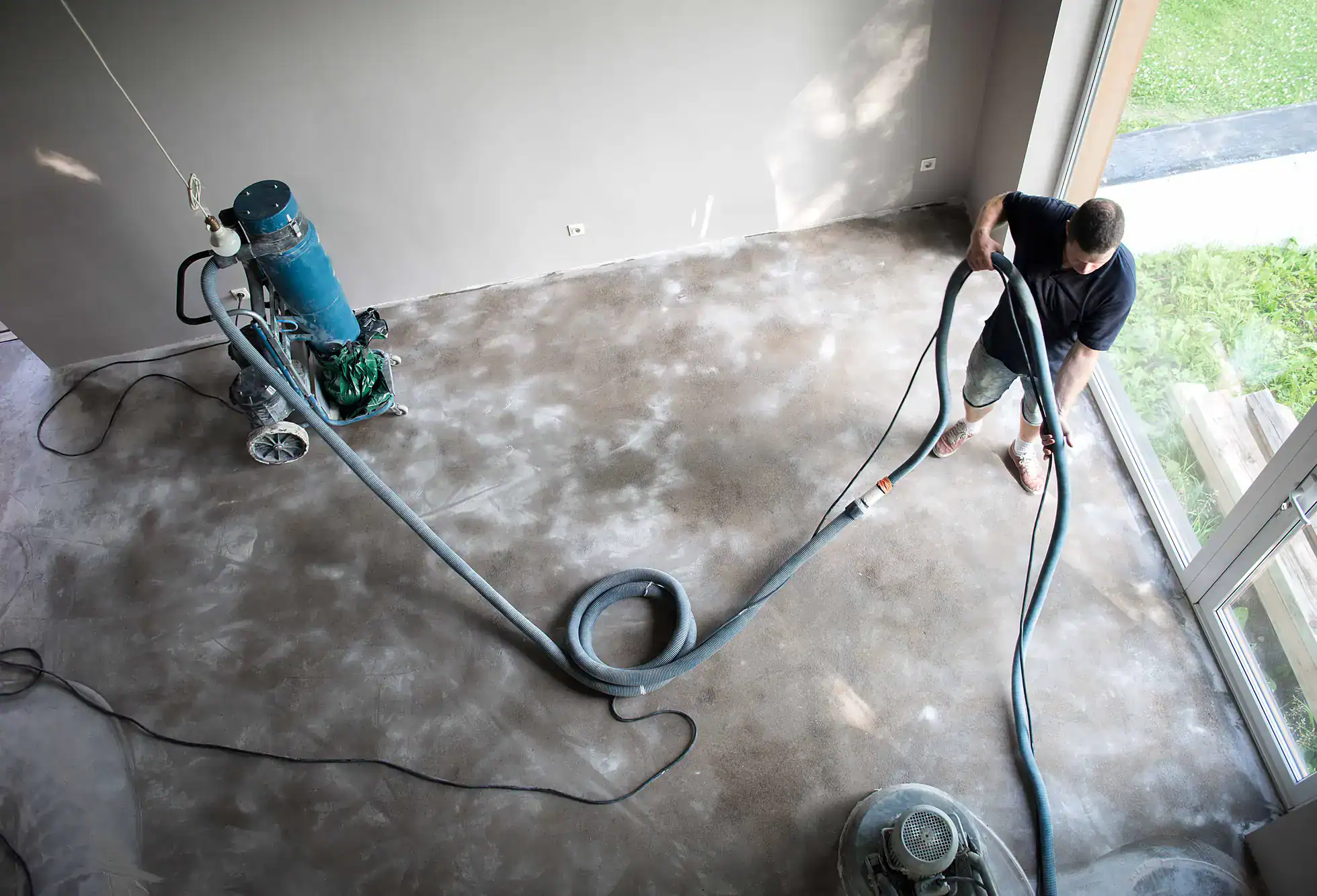
It starts with the slab and in Southampton, that matters more than most places. Commercial buildings throughout Southampton Village, Sag Harbor, and Hampton Bays vary enormously in age and construction history. Some slabs are decades old with unknown mix designs, previous coatings, or surface irregularities from years of use. Before any diamond tooling touches the floor, the slab gets a proper assessment: moisture vapor emission, surface hardness, existing contamination, and any areas that need grinding and leveling first. Skipping this step is how floors fail.
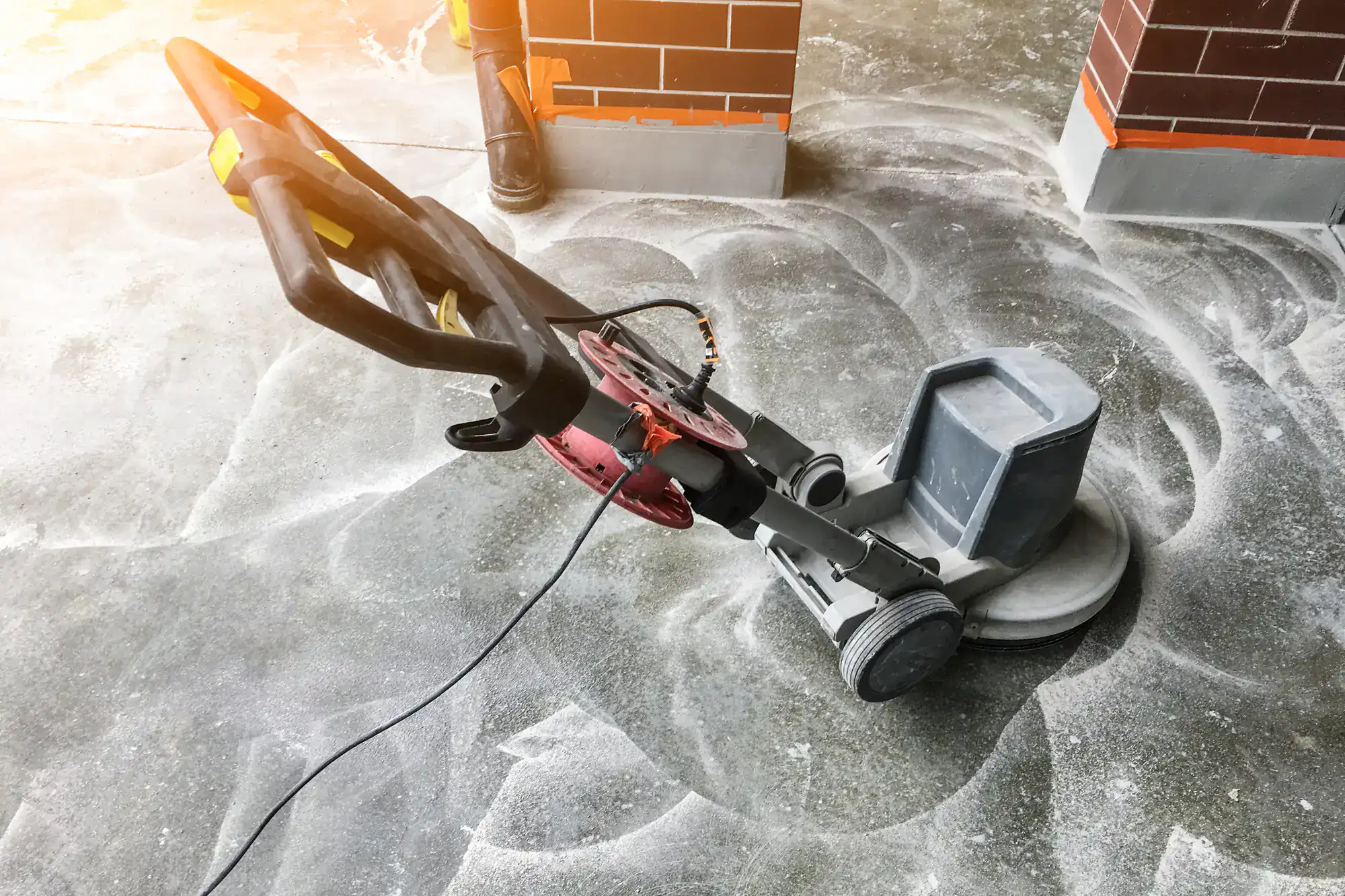
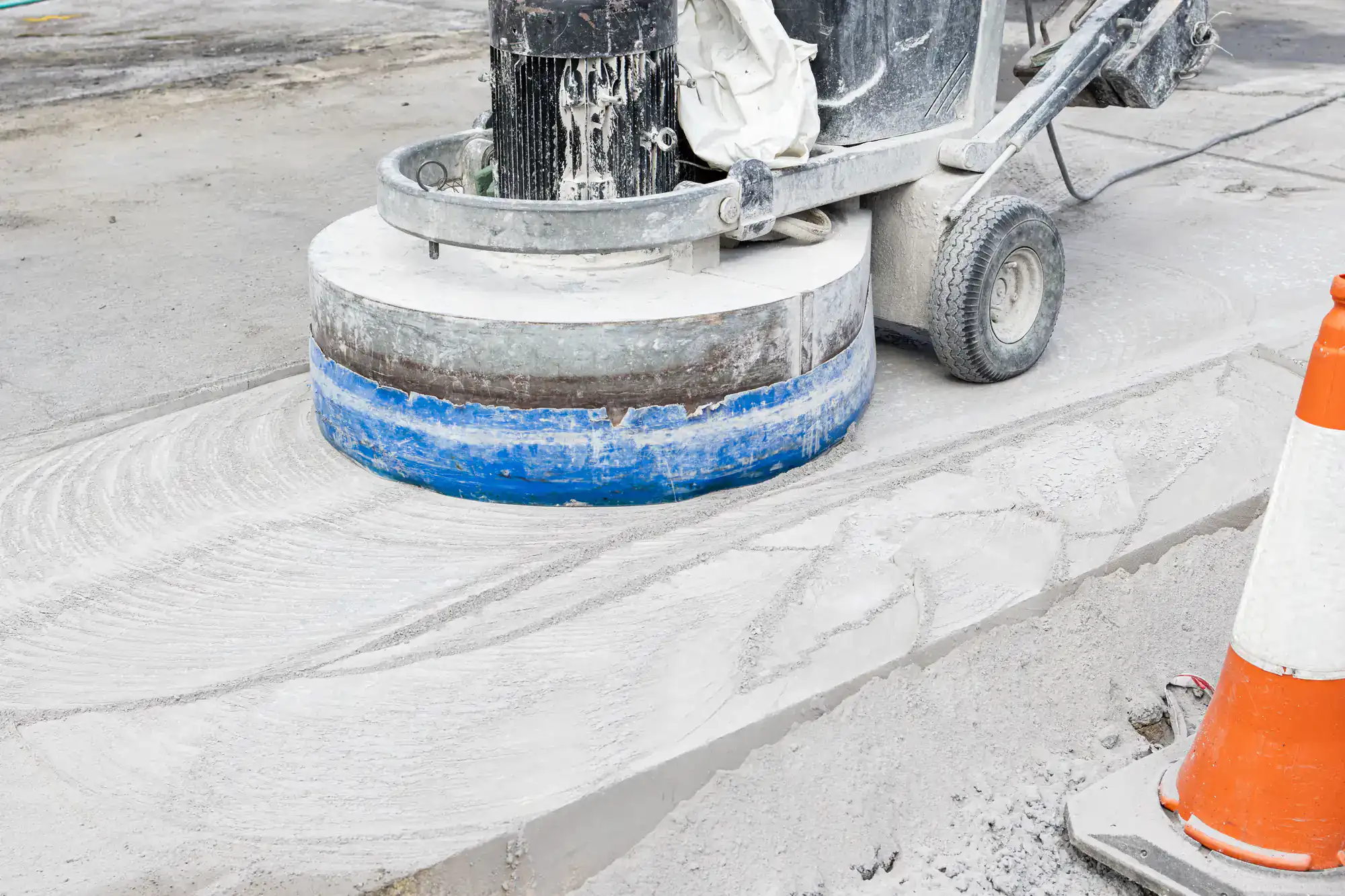
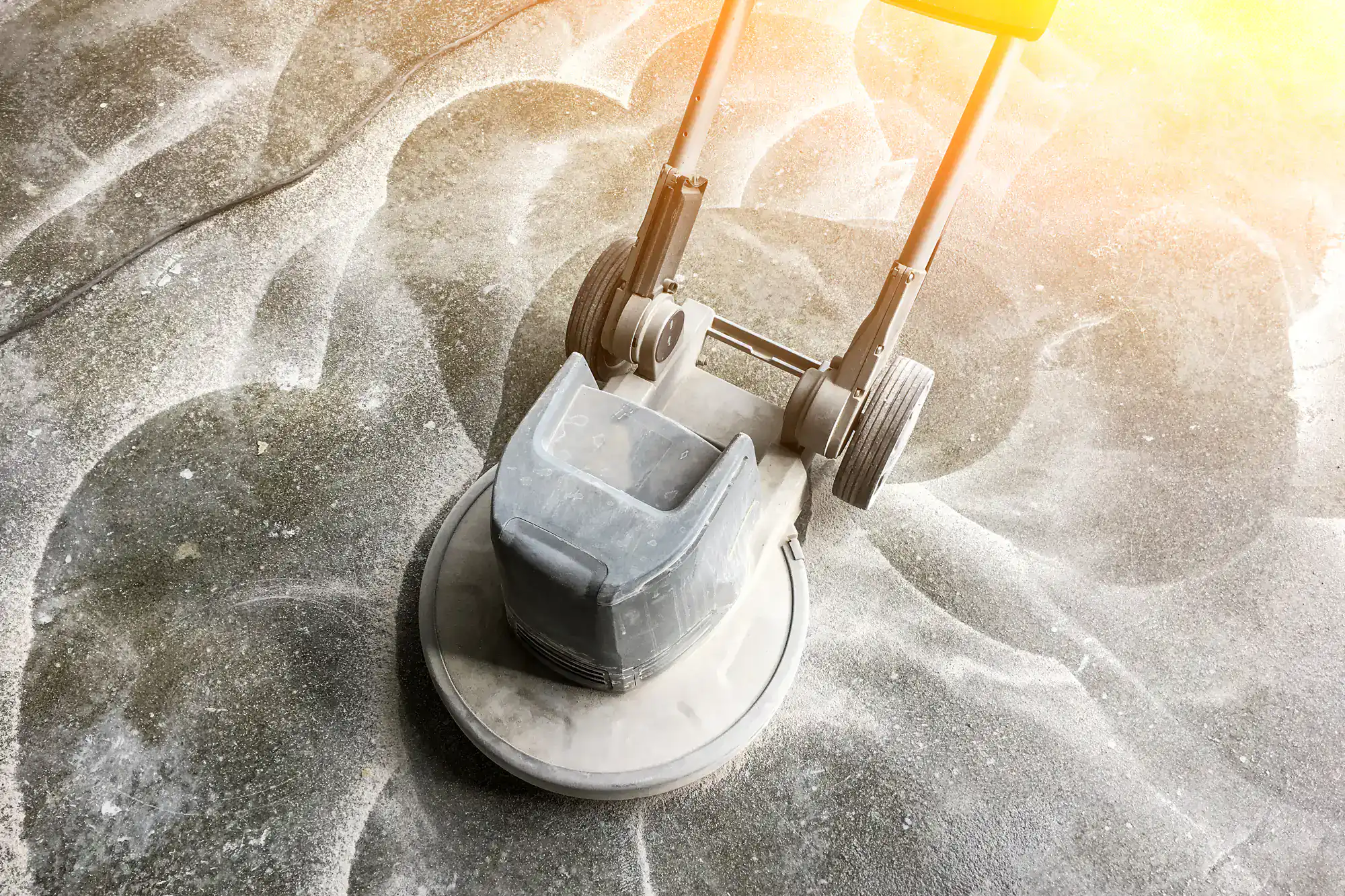
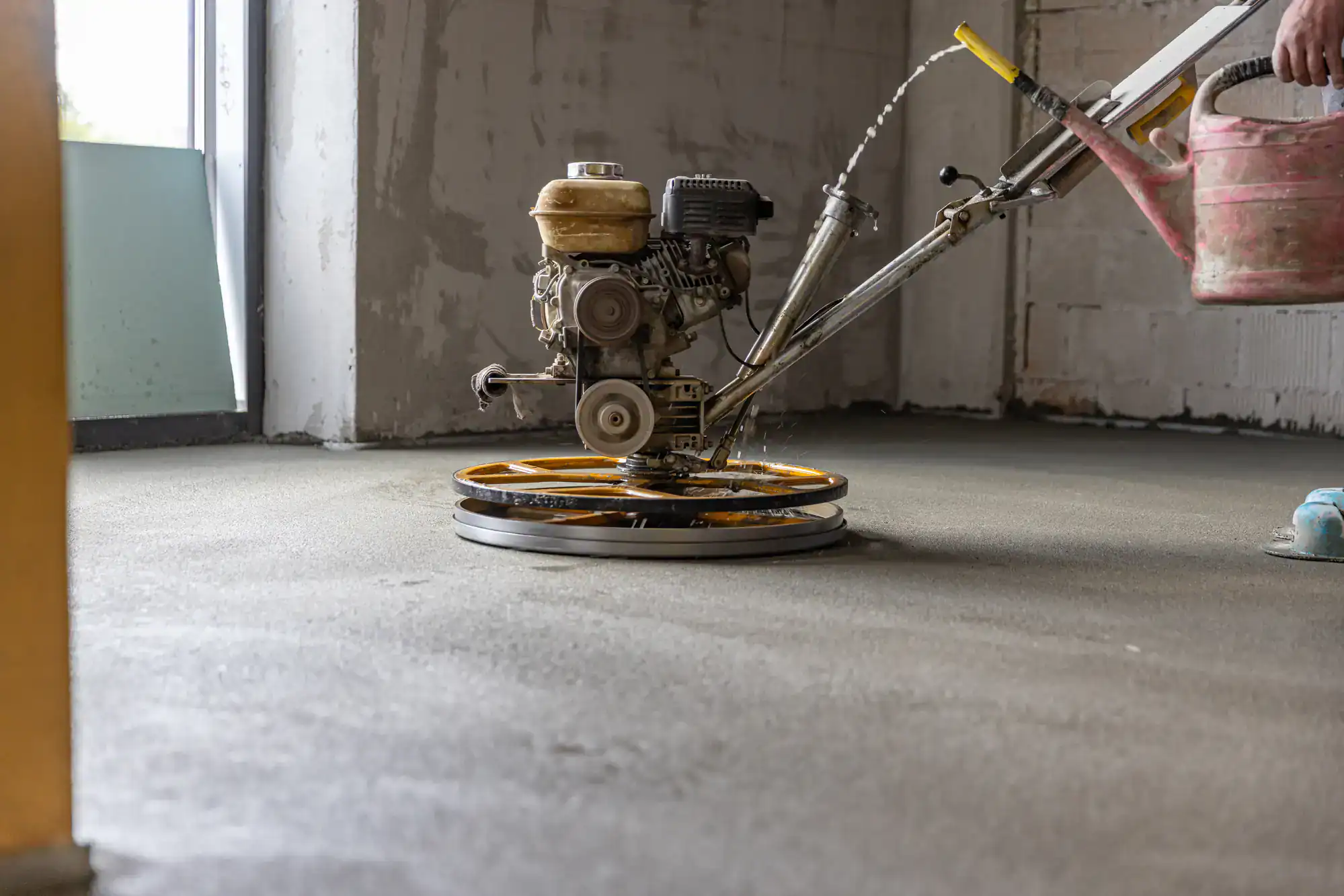
Once the slab is ready, the polishing process moves through a sequence of diamond-bonded tooling coarser grits to remove surface material and open the concrete, progressively finer grits to refine the surface and build reflectivity. We apply densifier at the right stage in that sequence, not as an afterthought. It penetrates the slab and reacts chemically with the concrete to harden the surface before the final polishing passes. This is what separates a floor that holds up from one that starts dusting by spring.
The finish class you end up with from a satin sheen to a mirror-level high gloss depends on your space, your aesthetic goals, and what the slab can support. For most Southampton retail and hospitality environments, that means a Class 3 or Class 4 finish. We sequence the process to minimize disruption, and if your business has a hard reopening deadline before the summer season, that timeline gets built into the plan from day one.
Ready to get started?
Concrete polishing in Southampton isn’t a one-size-fits-all service, and it shouldn’t be treated like one. The finish class that makes sense for a high-volume retail showroom in Bridgehampton is different from what works for a healthcare environment at Stony Brook Southampton Hospital, where seamless, hygienic, and chemically resistant surfaces are a functional requirement not just an aesthetic preference. Every project starts with an honest conversation about what the space actually needs and what the existing slab can realistically support.
For luxury retail, restaurant, and hospitality environments along the Montauk Highway corridor and in Southampton Village, the work typically targets a Class 3 semi-polished or Class 4 high-gloss finish the kind of surface that photographs well, holds up under seasonal traffic, and fits the high-design interior aesthetic that defines the best Hamptons commercial spaces. We achieve that finish through a multi-step diamond polishing system, proper densification chemistry, and a stain guard application that protects the surface without changing its appearance.
Southampton Town’s documented commitment to carbon neutrality by 2040 is worth noting here too. Polished concrete eliminates the need for floor coverings, adhesives, and recurring chemical treatments it contributes directly to LEED Indoor Environmental Quality credits and aligns with the sustainability goals that more commercial developers and property managers in this market are actively pursuing. If that matters to your project, it’s worth building into the conversation from the start.
Yes and it’s one of the better-suited floors for exactly that use case. The key is proper densification. When lithium silicate densifier is applied correctly during the polishing process, it reacts with the concrete matrix and hardens the surface from within. The result is a floor that resists abrasion, doesn’t dust under heavy foot traffic, and maintains its reflectivity through a compressed, high-intensity season.
What works against restaurant floors in Southampton specifically is the combination of seasonal traffic volume, kitchen chemical exposure, and the fact that most of these spaces can’t afford downtime during peak season. A properly installed polished concrete floor handles all three it’s chemical-resistant, easy to clean, and doesn’t require the kind of ongoing maintenance that coated or waxed floors demand. The installation needs to be done right the first time, ideally during the off-season window before Memorial Day, so the floor is fully cured and ready before your first summer guests walk through the door.
Salt air is one of the more underappreciated variables in coastal concrete work. Salt is hygroscopic it attracts and holds moisture and when it’s present in or around a concrete slab, it can contribute to elevated moisture vapor transmission. If a contractor doesn’t measure moisture vapor emission rates before beginning the polishing process, that trapped moisture can work its way through the slab after installation and compromise the surface finish, sometimes within a single season.
The right approach for Southampton slabs particularly in properties close to the Atlantic Ocean or Peconic Bay is to assess moisture vapor emission before any diamond tooling starts. If the readings are elevated, that affects the densifier selection and the timing of each stage in the process. It’s not a reason to avoid polished concrete. It’s a reason to hire a contractor who knows how to read a coastal slab and adjust accordingly, rather than one who applies the same process regardless of conditions.
For commercial projects in the Northeast, polished concrete typically runs between $3 and $12 per square foot, depending on the finish class you’re targeting, the condition of the existing slab, and the total square footage of the project. A Class 1 or Class 2 satin finish on a clean, well-prepared slab comes in at the lower end of that range. A Class 4 high-gloss finish on a slab that needs significant surface preparation grinding out old coatings, leveling inconsistencies, addressing moisture issues will come in closer to the top.
In Southampton’s luxury commercial market, most projects are targeting Class 3 or Class 4 finishes, and the slab conditions in older commercial buildings throughout Southampton Village and Hampton Bays often require meaningful prep work before polishing begins. The honest way to think about the investment is total cost of ownership. Polished concrete has a functional lifespan of 15 to 25 years with basic maintenance. Compare that to coated or tiled floors that need stripping, recoating, or replacement on a much shorter cycle, and the math shifts considerably in polished concrete’s favor.
For a retail boutique or showroom in Southampton Village particularly along Jobs Lane or Main Street where the aesthetic bar is genuinely high a Class 3 semi-polished finish (36–60 Gloss Units) or Class 4 high-gloss finish (61+ Gloss Units) is typically the right target. These are the finish levels defined by the American Concrete Institute’s ACI 310.1-20 standard, and they’re what produce the kind of reflective, design-forward surface that photographs well and holds its own in a high-end retail environment.
The right finish class for your specific space also depends on the slab you’re working with. Older concrete in Southampton Village’s historic commercial buildings can behave differently than a newer pour the aggregate composition, the surface hardness, and the history of what’s been applied to the slab all affect how the diamond polishing sequence plays out and what finish level the concrete can realistically support. That’s why the slab assessment comes before any finish specification, not after.
In most cases, yes and older slabs can actually produce some of the most visually interesting polished concrete results, particularly when the aggregate below the surface is exposed during the grinding process. That said, older slabs in Southampton’s historic commercial buildings require a more thorough assessment before work begins. Slabs of unknown mix design, with decades of surface coatings, adhesive residue, or wear patterns, need to be read carefully before a diamond grit sequence and densifier approach are determined.
The practical questions are: Is the slab structurally sound? Are there areas of significant cracking or delamination that need to be addressed first? Is there a previous coating that needs to be fully removed before polishing can start? None of these are automatic disqualifiers they’re just variables that affect the scope of prep work and the realistic finish outcome. A contractor who walks your space, assesses the slab honestly, and tells you what’s achievable before taking your deposit is the one worth hiring.
It’s actually one of the best fits for exactly that window. Most Southampton commercial businesses restaurants, retailers, hospitality venues run their heaviest operations from Memorial Day through Labor Day. That means October through April is the realistic renovation window, and polished concrete installs well within that timeframe. A typical commercial project can be completed in a matter of days to a week depending on square footage, and the floor is ready for normal use well before any spring reopening deadline.
The off-season window also matters for the installation itself. Cold-weather application of densifiers and sealers requires attention to ambient and slab temperature thresholds product chemistry behaves differently at 40 degrees than at 70. Working with a contractor who understands those parameters means the installation is done correctly regardless of the time of year, not just when conditions are ideal. If your goal is to have the floor done and fully cured before the summer season opens, planning the project for late fall or winter gives you the most flexibility and the least risk of a compressed timeline.