
Hicksville’s housing stock tells the whole story. Most of the ranches and Cape Cods built here in the 1950s and ’60s are sitting on concrete slabs that have been through decades of Nassau County winters freeze-thaw cycles, frost heave, sandy and clay soil shifting underneath. The result is a floor that looks fine until you start pulling up old tile and realize nothing is level anymore. That’s a structural problem, and patching over it with the wrong material just delays the failure.
When we install self leveling correctly with proper moisture testing, the right primer, and a high-strength polymer-modified underlayment the new surface bonds to your existing slab and creates a flat, stable base that your finish flooring can actually perform on. Large-format tile won’t crack at the corners. Luxury vinyl plank won’t telegraph every low spot. The floor holds.
For Hicksville’s commercial market, the stakes are just as real. The active development along Newbridge Road and Broadway means new retail spaces, restaurants, and mixed-use lobbies are being built right now and every one of them needs a floor that meets flatness specs before anything else goes down. Getting that right the first time isn’t optional when you’re on a construction schedule. We’ve handled dozens of these projects across Hicksville’s downtown corridor, and we understand what commercial clients need to stay on time and on budget.
We’re based in Bohemia, NY right here on Long Island, not a franchise operating out of a call center. We’ve been installing floors for over 30 years, and our president and CEO has been doing this work personally for more than 40. That kind of experience doesn’t come from a training manual. It comes from working Nassau County and Suffolk County floors through every building trend, every winter, and every problem a 1960s concrete slab can throw at you. We know Hicksville’s soil composition, its water table, and how the local building stock responds to seasonal stress because we’ve been fixing those floors for decades.
Our crew reflects that same consistency. Most of them have been with us for over a decade, which matters on a job where the prep work is just as important as the pour. We hold an A+ BBB rating, employ OSHA 40-certified installers, and have completed projects across the country including a White House kitchen installation in 1996. When you’re investing in a Hicksville property worth $600,000 or more, that track record is worth something.
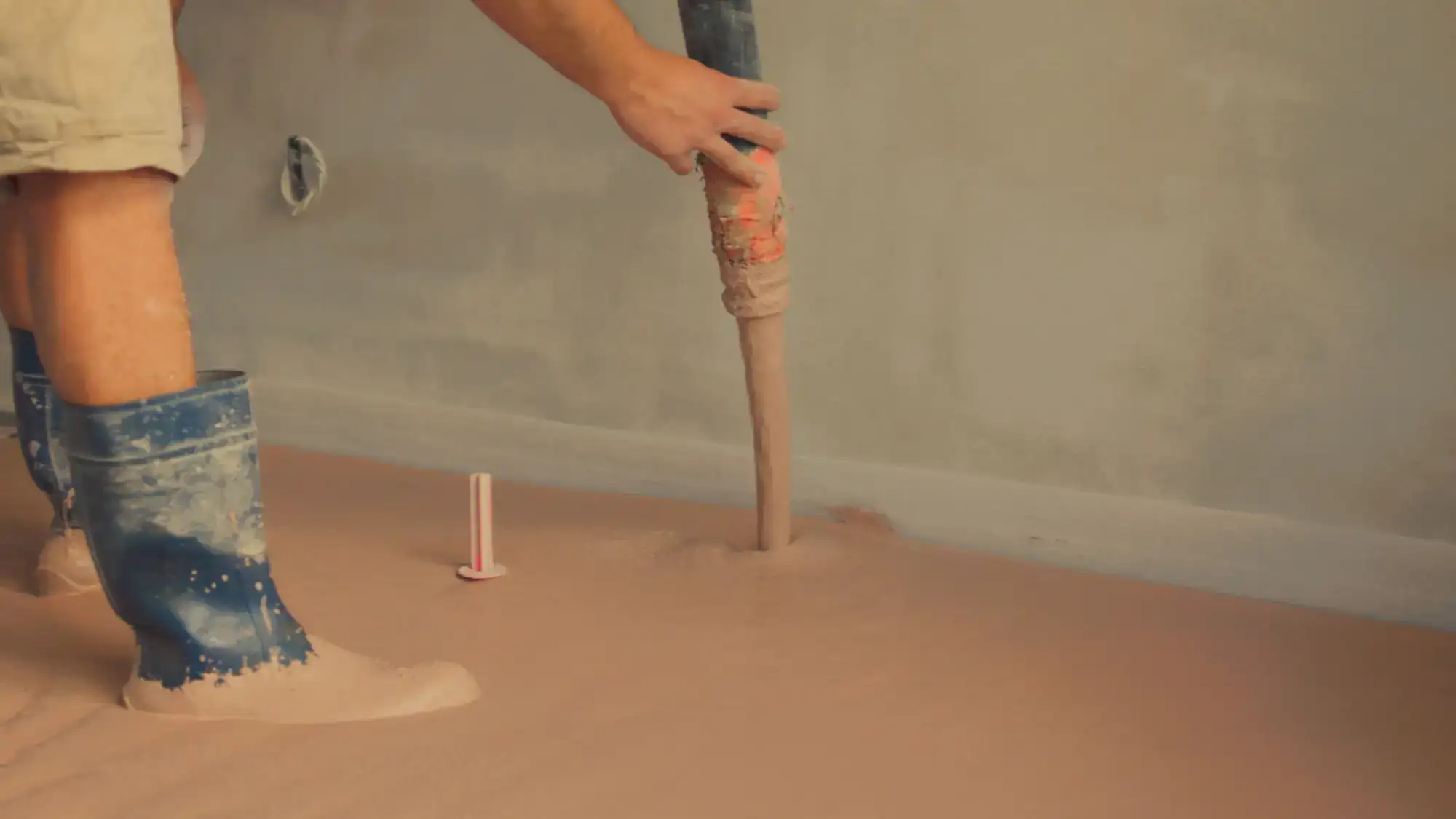
The first thing that happens on any self leveling job in Hicksville isn’t mixing it’s testing. Nassau County’s water table and the age of the local building stock mean moisture is a live issue in almost every concrete subfloor here, especially in below-grade spaces and older industrial buildings. Before anything gets poured, we test for relative humidity and moisture vapor emission using ASTM-standard methods. If the slab fails that test and nobody catches it, the underlayment fails too usually within the first year. That step doesn’t get skipped.
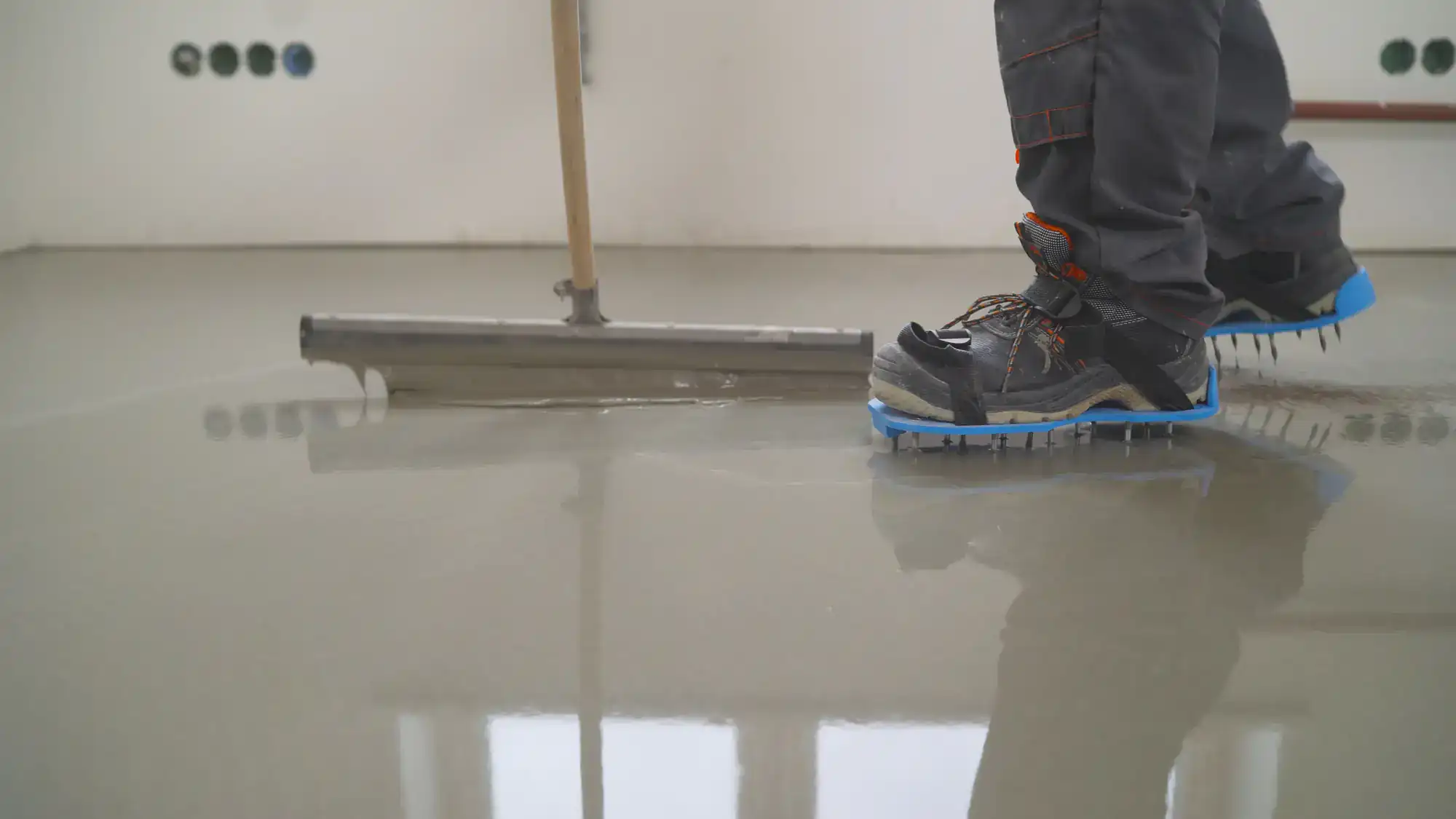
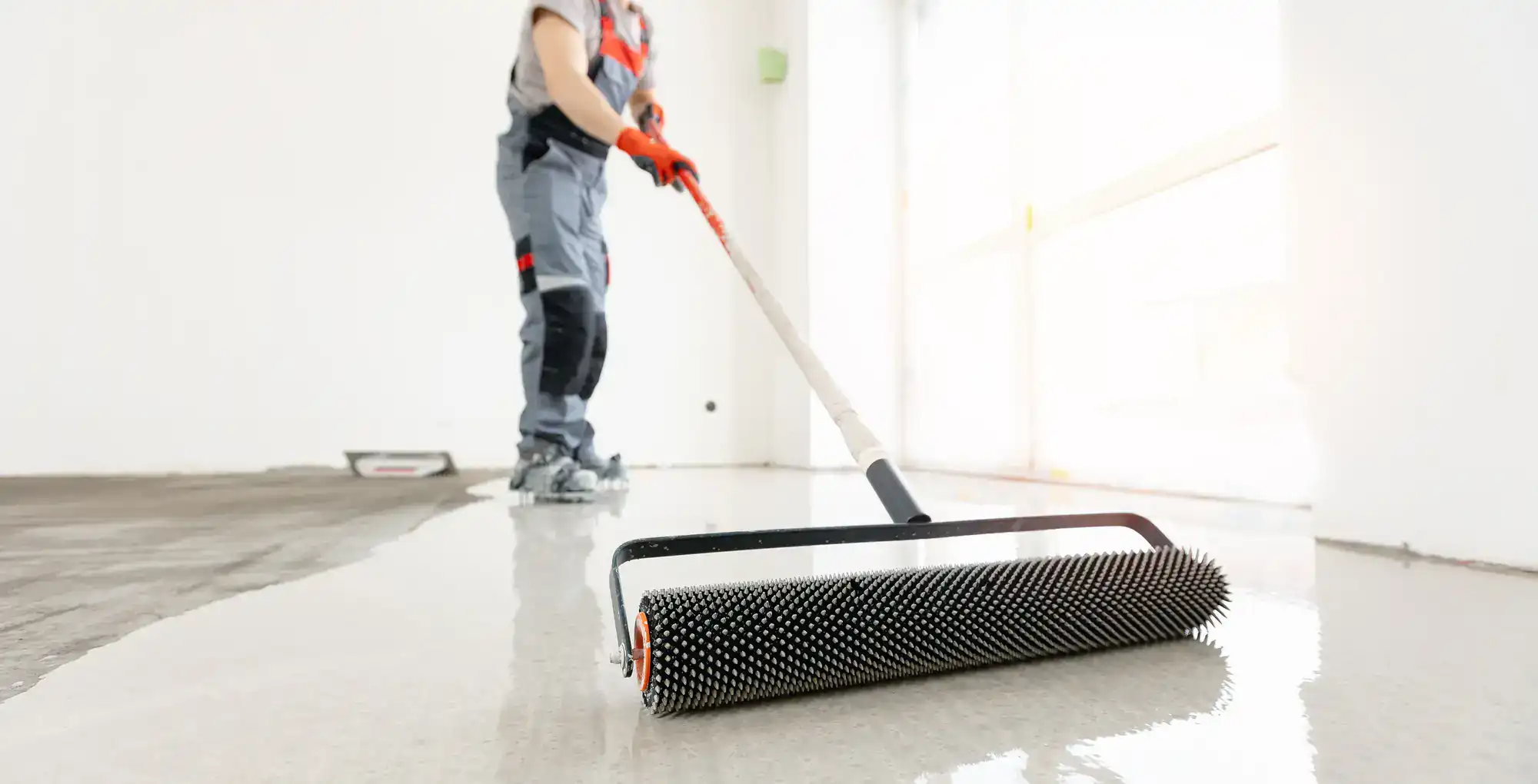
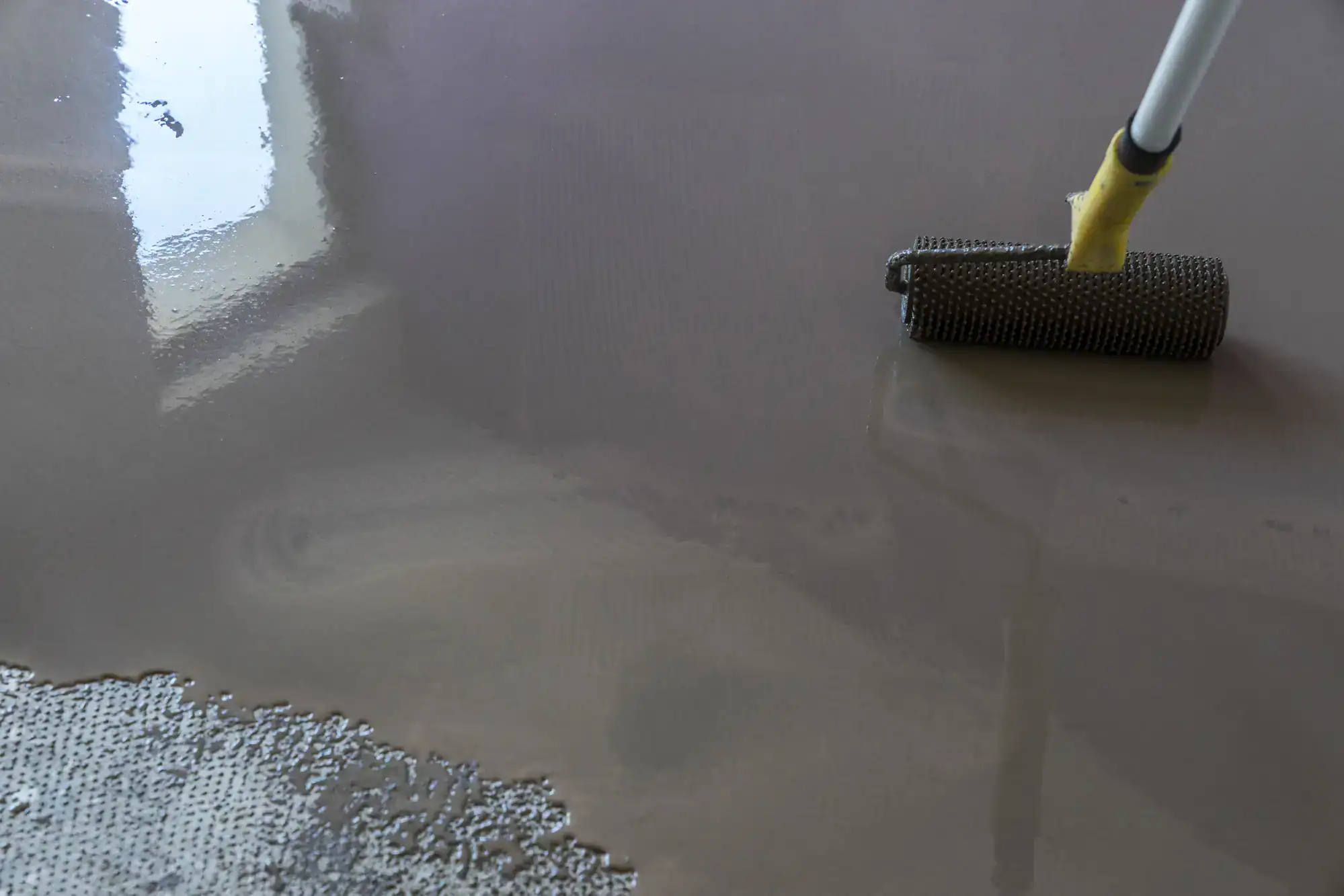
Once we’ve assessed the substrate, the surface gets ground or shot-blasted to open the concrete and give the primer something to bond to. Priming is what bridges the old slab and the new material skip it, and you’re pouring on a surface that will delaminate. The self leveling mix itself is a high-strength, polymer-modified cementitious material, not a bag of floor patch from a hardware store. It flows into low spots, self-levels by gravity, and cures to a surface that’s ready for foot traffic in as little as four to six hours.
For commercial projects tied to Hicksville’s downtown revitalization the kind happening along Broadway and Newbridge Road right now that fast cure window matters. A restaurant or retail space doesn’t have a week to wait. We design the process to get you back in operation on schedule, not around it.
Ready to get started?
The self leveling systems we install can go down anywhere from a quarter inch to over two inches neat and up to five inches when aggregate is added. That range covers almost every real-world scenario you’ll find in Hicksville: a residential slab that’s settled unevenly after 60 winters, a warehouse floor in the industrial corridor off Old Country Road that’s taken years of forklift traffic, or a new commercial space in the Newbridge Road development that needs a flat substrate before the finish floor goes in. One contractor, one assessment, one crew regardless of how much correction the floor actually needs.
What makes this different from calling a general concrete contractor is the full-service scope. We handle moisture testing, surface preparation, self leveling underlayment, and the final floor coating epoxy, polyaspartic, or polyurethane as a single integrated job. There’s no handoff between a leveling crew and a coating crew, which means no finger-pointing if something doesn’t look right later. The same experienced team that prepped your floor is the one finishing it.
For Hicksville commercial clients operating under Town of Oyster Bay jurisdiction, we understand how self leveling work fits into larger renovation permits and what documentation commercial projects in the downtown corridor may require. You don’t have to figure that out on your own.
The most common signs are tile that’s cracking along the grout lines, luxury vinyl plank that’s lifting or clicking at the seams, or a floor that visibly dips or rises in certain areas. In Hicksville’s older ranch homes and Cape Cods most of which were built in the 1950s and ’60s these problems are extremely common. The concrete slabs in those homes have been through decades of Nassau County freeze-thaw cycles, and the sandy and clay soil underneath has shifted enough over time that perfectly flat is rarely what you find when you pull up old flooring.
The honest answer is that you don’t always know until someone takes a level to the floor and measures the variance. A quarter inch of drop over ten feet is a threshold that most flooring manufacturers require you to correct before installation. If you’re planning to put down large-format tile, engineered hardwood, or LVP and your slab is 50-plus years old, it’s worth having it assessed before you commit to a flooring product not after.
Regular concrete patch is a stiff, trowel-applied material designed to fill specific voids or cracks. It doesn’t flow, it doesn’t self-level, and it doesn’t create a uniformly flat surface across a large area. Self leveling underlayment is a polymer-modified cementitious material with a high-flow consistency you pour it, and it finds its own level by gravity. It’s designed to correct unevenness across an entire floor, not just fill a hole.
The polymer modification is what gives it the strength and flexibility to bond to aged concrete without cracking under the stress of a finished floor on top. In Hicksville’s commercial buildings particularly the older industrial spaces along the Old Country Road corridor the difference between a patched floor and a properly leveled one shows up fast. Patched floors crack, telegraph through finish materials, and eventually fail. A properly installed self leveling underlayment creates a new, flat surface that performs like it was poured that way from the start.
Moisture is the leading cause of self leveling failure, and it’s a particularly relevant issue in Hicksville. Nassau County’s water table is relatively high, and the mix of sandy and clay soils in this area retains moisture in ways that show up in concrete slabs especially in below-grade spaces, older basements, and industrial buildings that weren’t built with modern vapor barriers.
If moisture vapor is migrating through the slab above the threshold the product is rated for, the underlayment will eventually delaminate. It may look fine for six months and then start bubbling, lifting, or separating from the substrate. ASTM F2170 relative humidity testing measures what’s actually happening inside the slab, not just on the surface. If the reading comes back too high, the fix is a moisture mitigation coating applied before the underlayment not skipping the test and hoping for the best. We test every job before the first bag gets mixed. That step is what separates a floor that lasts from one that doesn’t.
For most self leveling underlayment systems, foot traffic is possible within four to six hours of installation. Light flooring installation tile setting, for example can typically begin within 24 hours. Full cure for heavy commercial traffic or vehicle loads is generally 24 to 48 hours depending on the product, the depth of the pour, and ambient conditions.
Temperature matters here, and it’s worth mentioning for Hicksville specifically. During Nassau County winters, unheated warehouse and industrial spaces can drop well below the 50°F minimum that self leveling products require during installation and cure. If you’re planning a commercial project in Hicksville’s industrial corridor during December through February, the space needs to be temperature-controlled during the pour and for at least 24 hours after. We account for this as part of project planning it’s not something that gets figured out on the day of the job.
It can be used over both, but the preparation requirements are different. Over concrete, the main concerns are surface profile, contamination, and moisture. Over plywood, the subfloor needs to be structurally sound, properly fastened, and primed with a product specifically rated for wood substrates standard concrete primers won’t give you the same bond. The self leveling material itself needs to be compatible with the movement characteristics of wood, which is why not every product on the market is appropriate for plywood applications.
In Hicksville, plywood subfloor applications tend to come up most often in older homes where a wood subfloor was installed over a crawl space or in a second-story renovation. If you’re replacing flooring in a Hicksville Cape Cod and the subfloor is plywood rather than concrete, that changes the product selection and the prep process but it doesn’t change the outcome. A properly installed self leveling system over plywood creates the same flat, stable surface as a concrete application when it’s done correctly.
The honest range for most residential self leveling jobs in Hicksville runs from roughly $750 on the low end for a small, straightforward pour to $4,000 or more for larger areas with significant unevenness or deeper correction requirements. Commercial projects particularly in Hicksville’s active development corridor along Broadway and Newbridge Road are priced by square footage and scope, and large warehouse or retail floor leveling jobs can run considerably higher depending on the depth of correction needed and the condition of the existing substrate.
What affects the final number most is how much prep the floor actually needs before the pour. A slab that tests clean for moisture and just needs light grinding is a different job than one that requires moisture mitigation coating, crack repair, and two inches of underlayment. That’s why a real assessment of your specific floor not a per-square-foot quote over the phone is the only way to get a number that actually means something. Nassau County sales tax and any applicable Town of Oyster Bay permit fees for larger commercial renovations are also factors in the total project cost, and we walk through all of that before any work begins.