
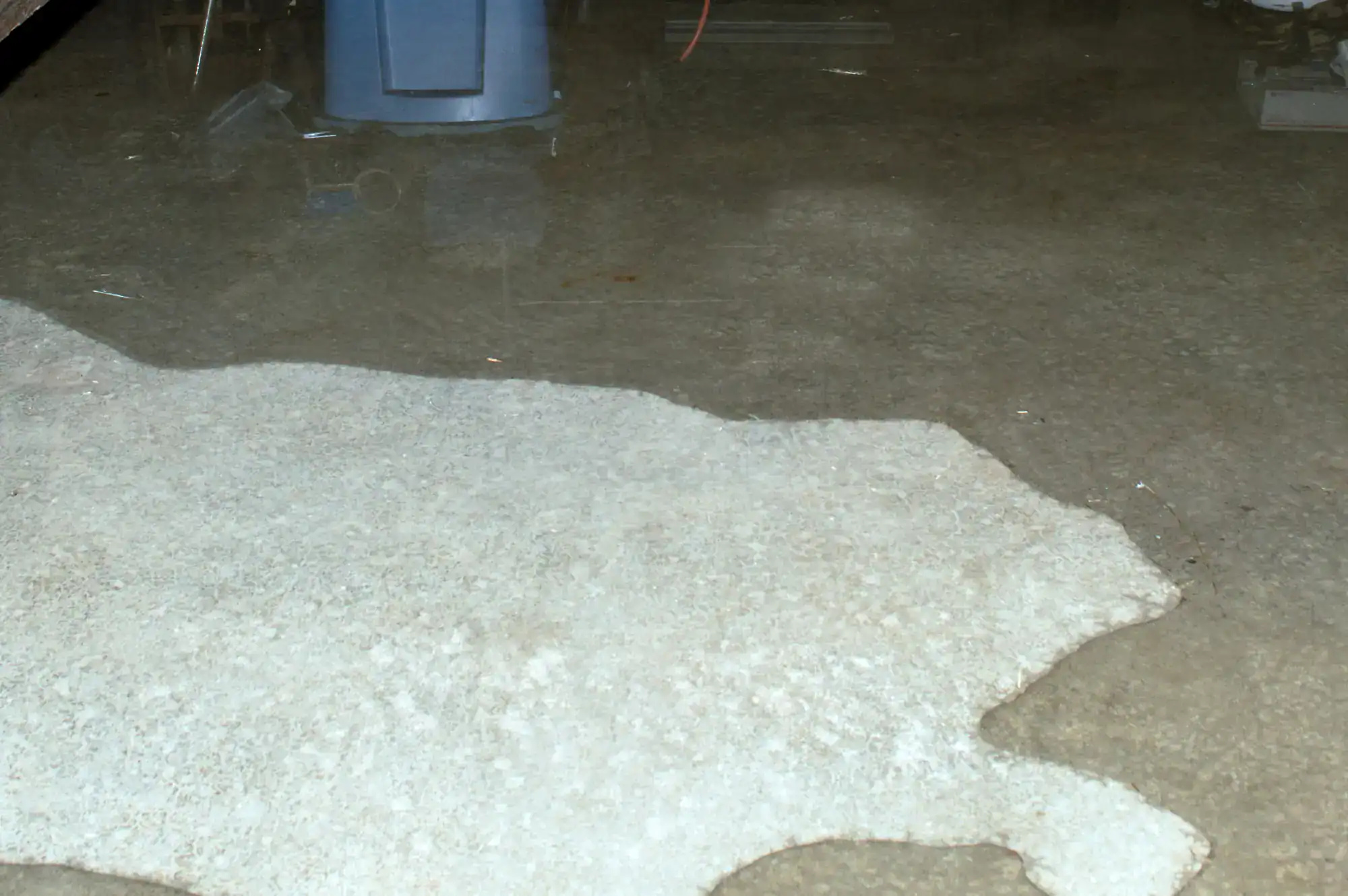
Every time a Hicksville Fire Department company returns from a run on Broadway or Old Country Road in January, that apparatus brings road salt, moisture, and heat straight into the bay. A floor that wasn’t engineered for that cycle starts failing quietly micro-cracks widen, coatings blister, and what looked fine six months ago is now peeling under the rear axle of a 40,000-pound ladder truck.
The right floor stops that pattern before it starts. A properly installed polyaspartic system applied over diamond-ground, moisture-tested concrete creates a seamless, non-porous surface that salt can’t work into, heat can’t lift, and heavy apparatus can’t deform. It wipes clean after a decon wash. It doesn’t harbor contaminants between the cracks. And it doesn’t require three to seven days of downtime to cure, which matters when you’re running four stations across 7.5 square miles with an all-volunteer department.
For Station 1 on East Marie Street a building that’s been in service since 1932 the concrete underneath has seen nine decades of Nassau County winters. That kind of age means micro-cracking that’s invisible to the naked eye but creates real problems for any coating applied without proper prep. The floor you put down is only as good as the work done before the first coat goes on.
We’re based in Bohemia, NY a Long Island contractor that has been doing commercial and industrial resinous flooring for over 30 years. Our CEO Danny Harmer has more than 40 years of hands-on installation experience, and our field supervisors Javier, Eduardo, and Fredith bring a combined 40-plus years between them. Most of our crew has been with us for over a decade. That kind of consistency shows in the work.
We hold the Sherwin-Williams High Performance Flooring certification, Res Tech certification, and all our field installers are OSHA 40 certified credentials that matter when you’re working inside an active municipal facility in Nassau County where apparatus may be moving and crew members are present. This isn’t a company that learned on your floor.
Our portfolio includes the White House kitchen, international projects, and decades of commercial and industrial installations across Long Island. When Hicksville’s fire district commissioners need to stand behind a contractor selection in front of a board and a community, that track record answers the question before it’s asked.
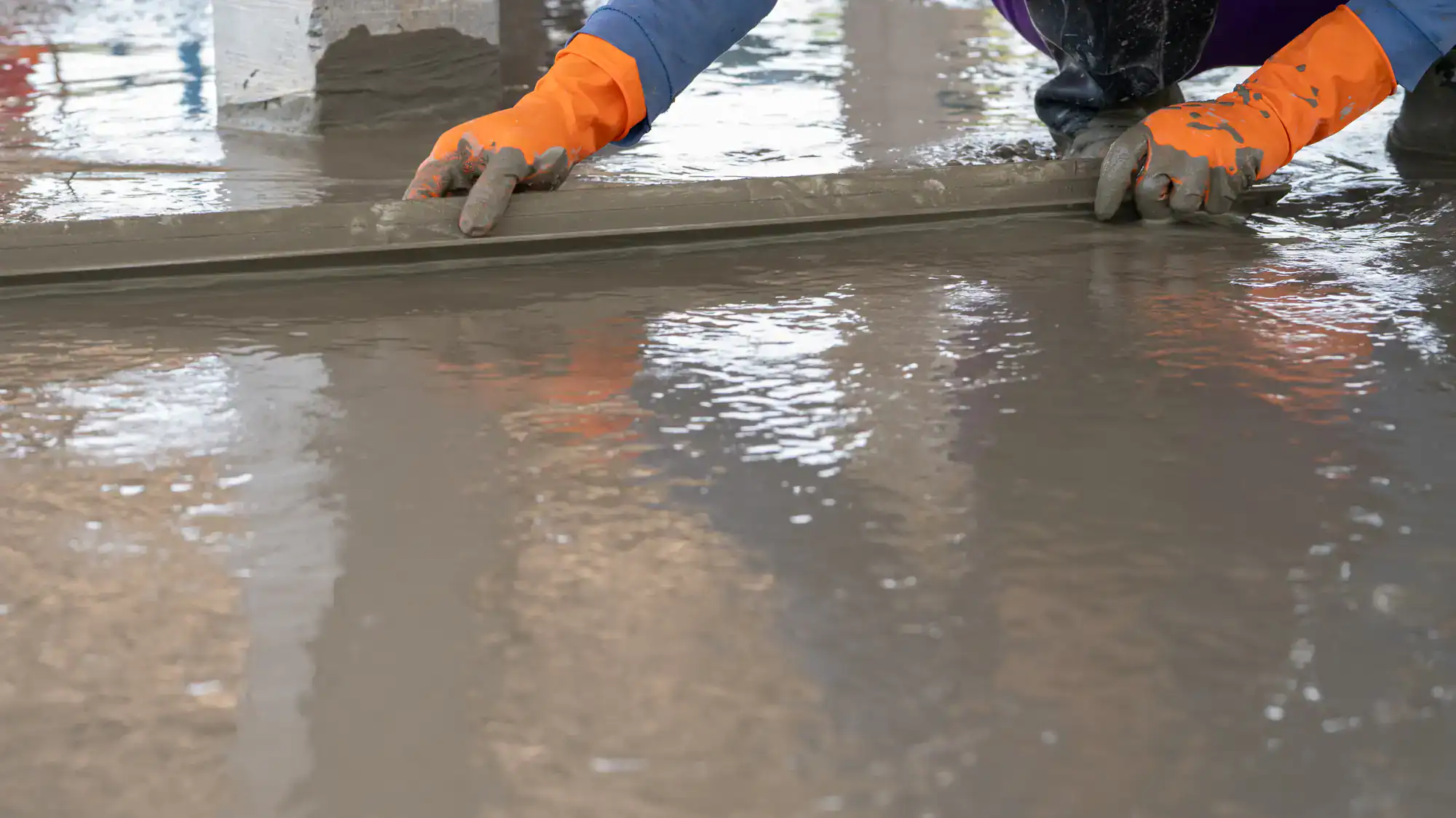
It starts with diamond grinding, not acid etching. Acid etching introduces moisture into the concrete and is one of the leading causes of delamination especially in Nassau County, where slabs in older stations like Hicksville’s 1932-era Station 1 have decades of surface micro-cracking that acid only makes worse. Diamond grinding opens the concrete’s capillaries mechanically and creates a true bond surface. That’s where the process begins.
From there, every slab gets moisture-tested before anything goes down. Long Island’s humid summers create real vapor pressure through concrete if that’s not measured and addressed, even a well-applied coating will bubble and blister within a season. Once the slab passes, a penetrating primer goes in, followed by a high-build epoxy base coat with aggregate broadcast for compressive strength and slip resistance. The topcoat is polyaspartic UV-stable, thermally resistant, and four times more flexible than standard epoxy so it handles the thermal shock of cold bay air and hot tires without cracking.
Cure time for the full system is 24 hours. For a department with four stations and no paid backup, that means apparatus is back in the bay the next day not at the end of the week. If you’re phasing the work across multiple Hicksville stations, that scheduling flexibility is built into how the job gets planned from the start.
Ready to get started?
What we install in a Hicksville apparatus bay is not a scaled-up residential product. Our system is engineered specifically for the load, chemical exposure, and operational profile of a fire station compressive strength for 40,000-plus-pound apparatus, chemical resistance for fuel, hydraulic fluid, and decontamination wash solutions, and a seamless surface that supports the contamination control protocols required under NFPA 1500 and 1585. A porous or cracked floor isn’t just a maintenance issue for a Nassau County fire department it’s a contamination control liability and a firefighter health concern.
We handle the apparatus bay floor, but the scope doesn’t have to stop there. We also install systems in decontamination zones, living quarters, commercial kitchens, and locker rooms all in one installation relationship. For a four-station department like Hicksville’s, that means one certified contractor, one consistent system spec, and one point of accountability if anything ever needs to be addressed.
For Hicksville fire district commissioners presenting a capital expenditure to the board, the long-term math is straightforward: a professionally installed polyaspartic system lasts 20-plus years. A budget-priced coating from an uncertified contractor fails in three to five and then you’re paying to grind it off, re-prep the slab, and start over. One right installation costs less than four wrong ones, and it’s a much easier case to make to a community that expects public funds to be spent wisely.
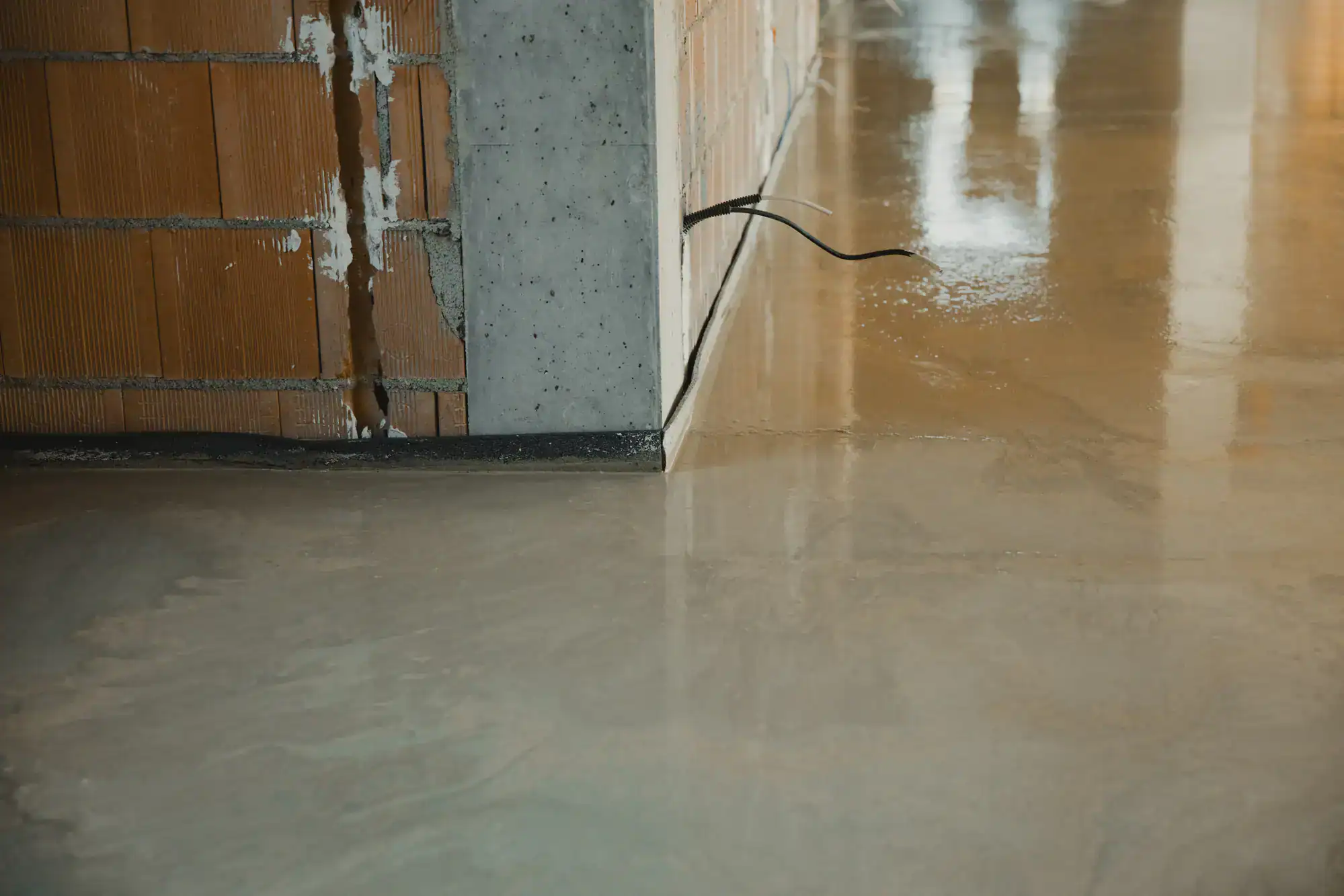
For most apparatus bay installations using a polyaspartic topcoat system, the bay is back in service within 24 hours of the final coat going down. That’s a hard number, not an estimate that stretches into three or four days depending on conditions. Traditional epoxy systems can require anywhere from three to seven days of cure time before apparatus can return which is operationally unworkable for an all-volunteer department like Hicksville’s that can’t park trucks outside for a week and maintain full coverage across a 7.5-square-mile service area.
If you’re working across multiple Hicksville stations, we sequence the installation so that no more than one bay is out of service at a time. That kind of scheduling is worked out specifically for your department’s operational calendar not a one-size approach applied to every job.
The most common cause is inadequate surface preparation before the coating goes down. If the concrete isn’t diamond-ground and moisture-tested before installation, the coating doesn’t bond to the slab it bonds to surface dust, old residue, or moisture vapor, and it’s only a matter of time before it lifts. Acid etching which some contractors still use because it’s cheaper and faster introduces moisture into the concrete surface and creates exactly the conditions that cause delamination, especially in Nassau County where freeze-thaw cycling has already opened micro-cracks in older slabs like those at Hicksville’s Station 1.
The second most common failure is using the wrong product for the application. Standard epoxy and residential-grade coatings aren’t built for the thermal shock of cold bay air meeting hot tires, the compressive load of heavy apparatus, or the chemical exposure from fuel, hydraulic fluid, and decon wash solutions. Hot-tire pickup where heated tires literally bond to a thin coating and peel it off when the truck backs out is the most predictable failure mode in the industry, and it’s entirely preventable with the right system and the right prep.
Yes, and this is worth understanding beyond just compliance. NFPA 1500, 1581, and 1585 establish occupational health and contamination control requirements for fire station facilities including apparatus bays and decontamination zones that directly implicate flooring. A porous, cracked, or delaminating floor surface cannot be fully decontaminated. Carcinogenic compounds from fire scenes absorb into exposed concrete and into the gaps of a failing coating, and standard cleaning protocols can’t fully address that.
A seamless, non-porous polyaspartic floor eliminates harborage points entirely. It can be power-washed to the surface level, supports the hot-zone and cold-zone separation that NFPA’s contamination control framework requires, and doesn’t trap residue between cracks or coating seams. For Hicksville’s volunteer firefighters who go home to their families after every call a floor that actively supports decontamination is a health protection measure, not just a regulatory checkbox. New York State fire service regulations and Nassau County inspection standards are increasingly aligned with NFPA’s contamination control framework, so this is a compliance consideration that’s only becoming more relevant.
The most effective framing is total cost of ownership over a 20-year horizon, not the upfront installation cost. A professionally installed polyaspartic system properly prepped, properly specified, installed by a Sherwin-Williams certified contractor lasts 20-plus years under normal apparatus bay conditions. A budget-priced coating from an uncertified contractor fails in three to five years. That means grinding off the failed coating, re-prepping the slab, and reinstalling three to four times over that same 20-year window, each time with associated downtime, labor, and material costs.
Beyond the math, there’s the accountability argument. A fire district commissioner who approves a floor that fails in two years has to explain that to the community. A commissioner who approves a 20-year solution backed by manufacturer certification, OSHA-trained installers, and a contractor with a 30-plus-year track record has a defensible, documented decision. Hicksville’s residents expect public funds to be spent wisely. A durable, long-term installation is exactly that.
Our system is specifically engineered for it. A multi-layer polyaspartic system with a high-build epoxy base coat and aggregate broadcast delivers compressive strength well beyond what standard commercial epoxy provides and it’s designed to handle the static and dynamic loads of 40,000-plus-pound fire apparatus, including ladder trucks and heavy rescue vehicles. The aggregate in the base coat isn’t just for slip resistance; it adds structural density to the coating system that thin single-layer products don’t have.
The flexibility of the polyaspartic topcoat roughly four times greater than standard epoxy also matters under heavy load. Rigid coatings crack under point-load stress, particularly at the edges of tire contact zones. A flexible system distributes that load without fracturing. For Hicksville’s apparatus bay floors, which see repeated heavy-load cycles every time equipment responds and returns, that combination of compressive strength and flexibility is what separates a floor that lasts from one that develops stress cracks within the first year.
Nassau County’s climate puts apparatus bay floors through a specific stress cycle that most standard coatings aren’t built for. In winter, Broadway and Old Country Road get heavy salt treatment and every run brings that chemical load back into the Hicksville bay on tires and undercarriages. On bare or poorly sealed concrete, salt accelerates spalling. On a thin or improperly bonded coating, salt-laden meltwater finds every delamination point and works it open from the inside.
The freeze-thaw cycling compounds that. Concrete in older Hicksville stations particularly Station 1, which has been in service since 1932 has micro-cracking at the surface that expands and contracts with every temperature swing. Any coating applied without addressing that movement will crack and lift. Then in summer, Long Island’s humidity creates vapor pressure through the slab that causes improperly primed coatings to bubble and blister from below. A system that’s properly prepped diamond-ground, moisture-tested, primed with a penetrating primer handles all of it. One that isn’t will show the first signs of failure before the first winter is out.