
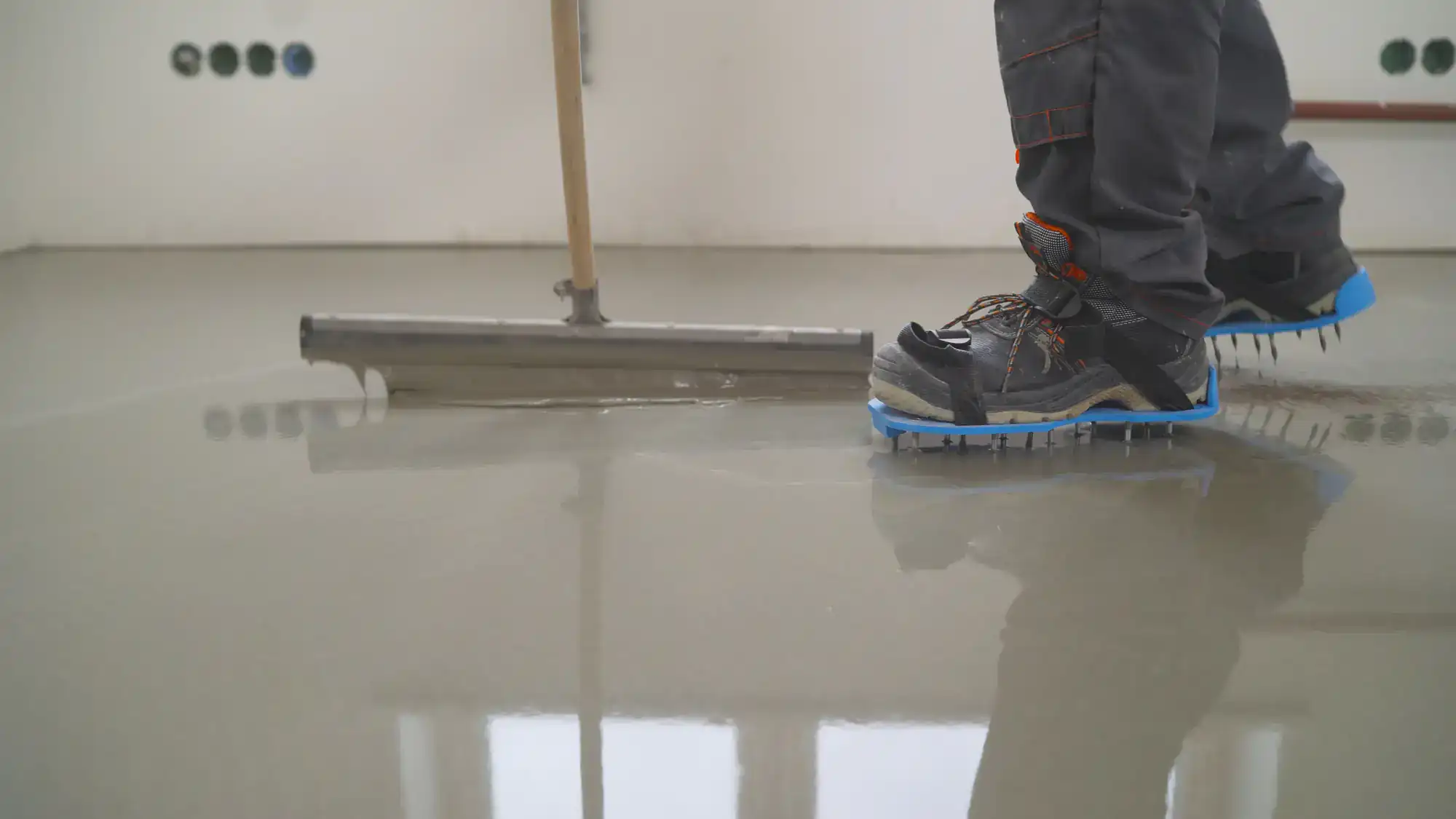
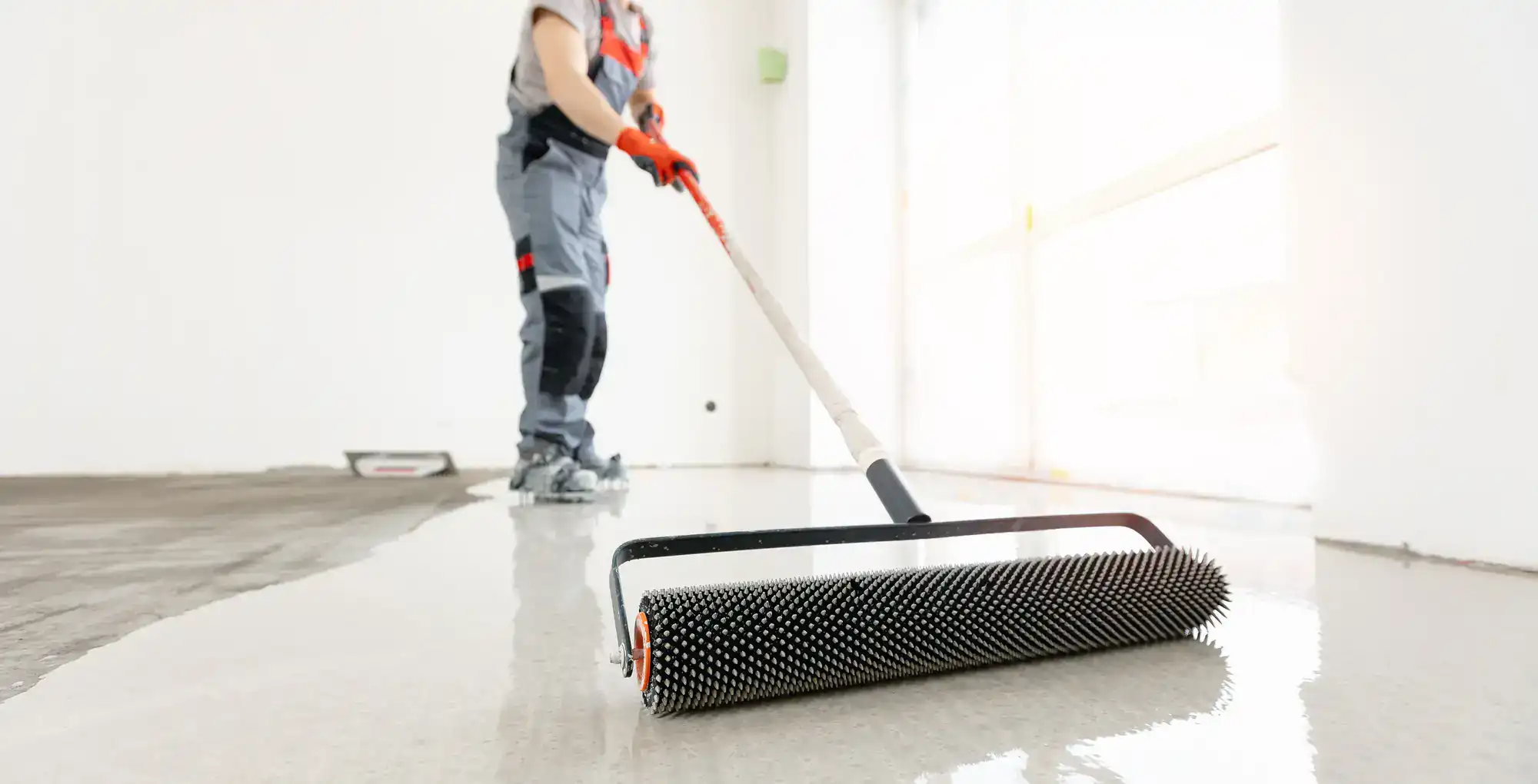
When you’re installing large-format tile, wide-plank hardwood, or luxury vinyl plank over a 60-year-old concrete slab, the margin for error is essentially zero. These floor materials are less forgiving than anything installed in the original build and any dip, ridge, or soft spot underneath will show up fast, either as a crack, a pop, or a visible wave across the surface. Self leveling underlayment is what closes that gap between an aging subfloor and a finish floor worth what you paid for it.
Garden City’s building stock is one of the older ones on Long Island. More than 90% of homes here were built before 1970, and a significant portion predate World War II. Concrete that old has settled, shifted, and in many cases absorbed decades of moisture from Nassau County’s notoriously high water table. That combination age, settlement, and moisture is exactly the scenario where skipping proper subfloor preparation becomes an expensive mistake.
The good news is that when it’s done right, self leveling concrete delivers a surface that’s flat to within the tolerances required by today’s flooring standards. You get a substrate that’s ready for whatever goes on top of it and confidence that the floor underneath your renovation investment isn’t quietly working against it.
We’ve been working on Long Island since 1996, and that means we’ve seen what Nassau County concrete actually does over time. The moisture conditions under a 1940s slab in Garden City are different from a newer pour elsewhere on the island, and the installation process has to account for that from the start.
The crew that shows up to your job has been with us for over a decade. Our supervisors bring more than 40 years of combined hands-on experience. Danny Harmer, our president, has been doing this work personally for over 40 years and that depth of knowledge informs how every job in Garden City gets assessed, planned, and executed.
From the commercial corridors along Old Country Road to the pre-war homes in Garden City’s Eastern Section, we’ve worked in the kinds of spaces that define this village. We hold an A+ BBB accreditation and OSHA 40 certification the baseline for any contractor working in Garden City’s institutional and commercial environments.
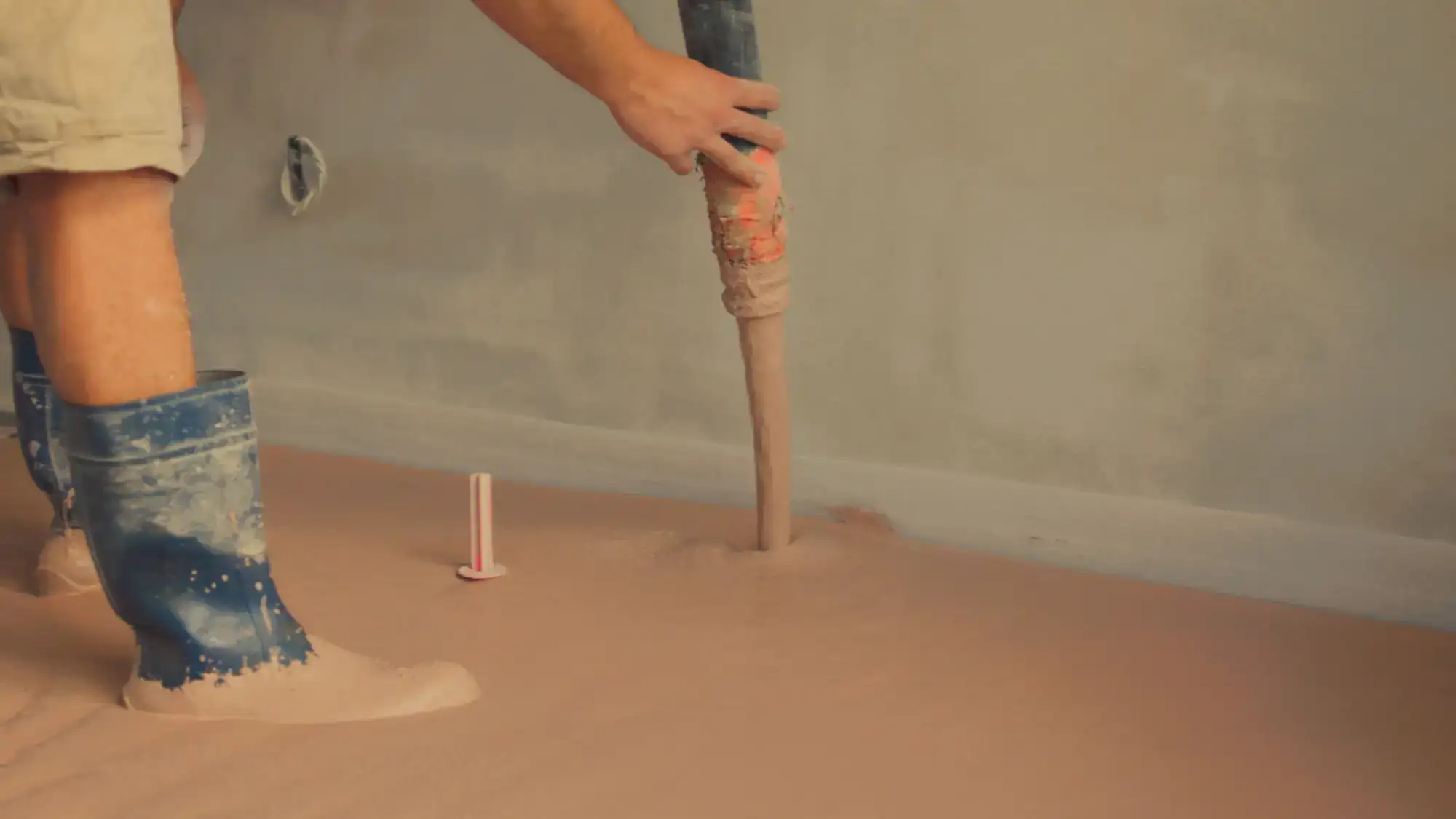
The first thing that happens on a Garden City job isn’t mixing or pouring it’s moisture testing. Nassau County’s high water table means older slabs here regularly show elevated moisture vapor emission rates, and if that number is above acceptable limits before the pour, the underlayment will eventually delaminate. We test to ASTM F2170 standards on every job, every time. If moisture mitigation is needed, that gets handled before anything else moves forward.
Once the slab passes testing, the surface gets ground and prepped to remove any contamination, loose material, or high spots that would interfere with bond strength. Then the primer goes down this is the step a lot of contractors skip, and it’s one of the main reasons DIY and budget self leveling jobs fail within the first year. Primer locks the surface, controls absorption, and gives the compound something to actually hold onto.
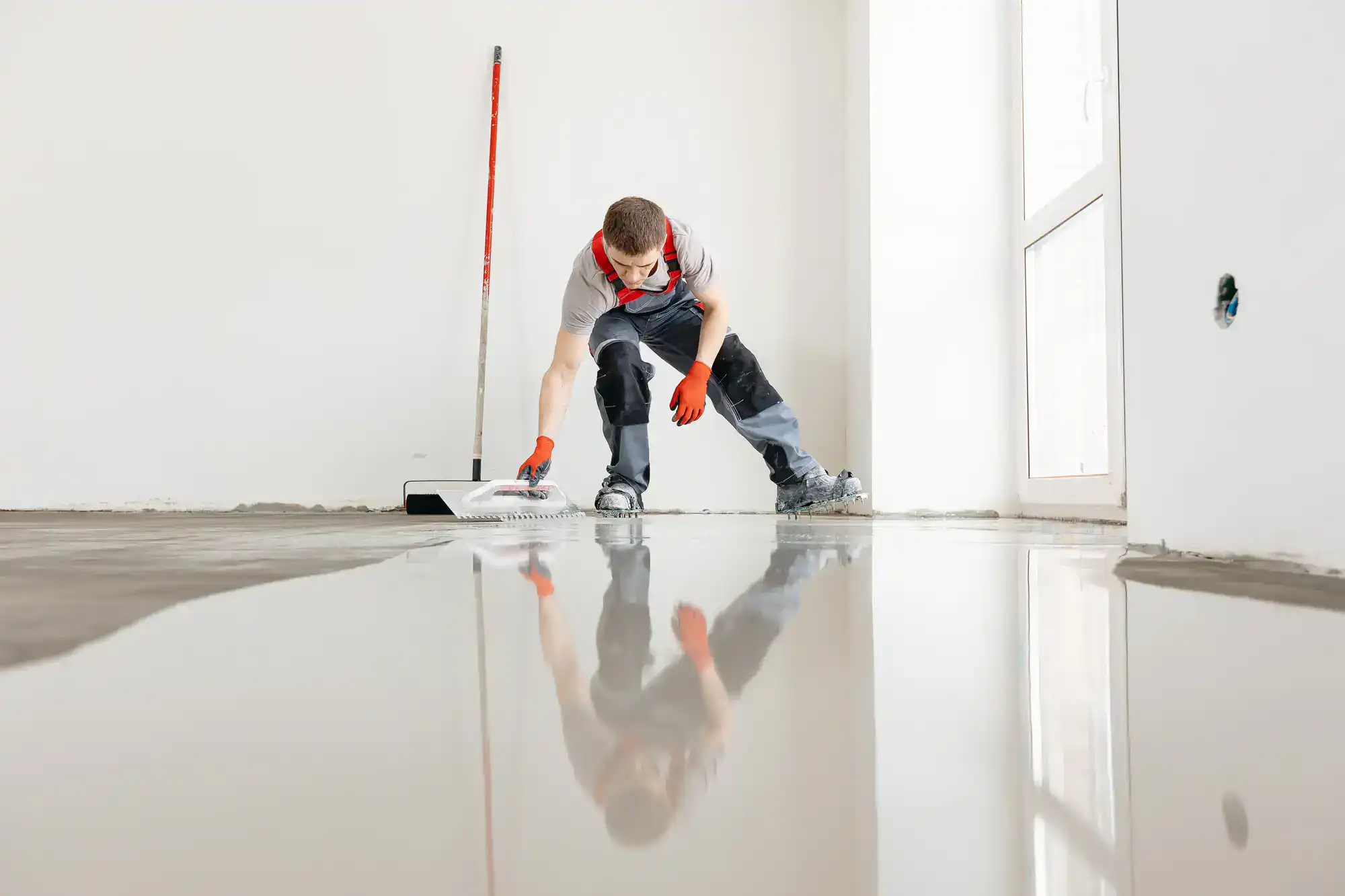
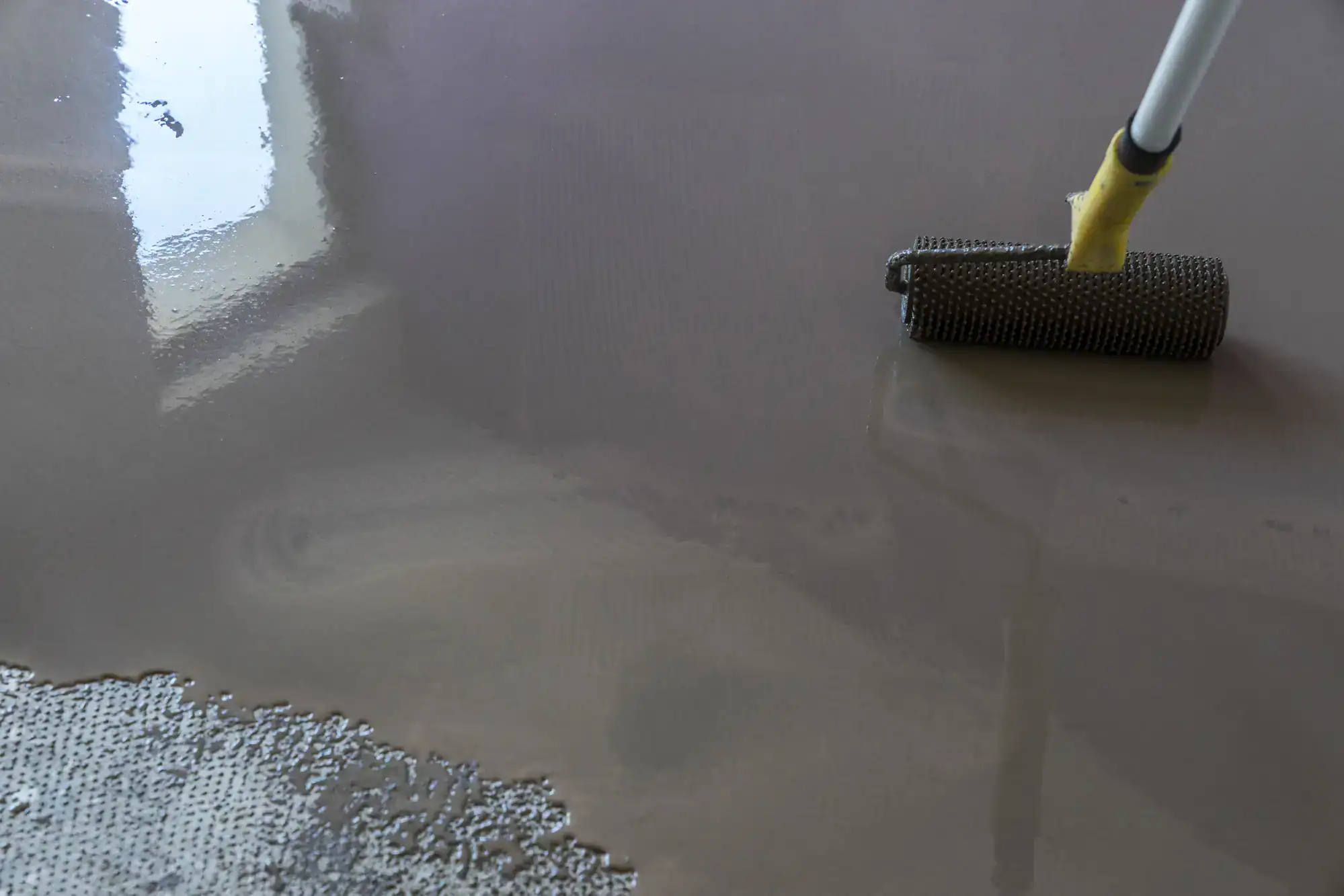
The pour itself is where experience matters most. Self leveling concrete has a limited working time, and getting the flow right across a large or irregular surface requires a crew that has done it hundreds of times. We install systems from a quarter inch to over two inches neat, and up to five inches with aggregate covering everything from a minor surface correction before tile to a significant depth rebuild in a commercial kitchen or institutional space. Once it cures, you’re typically looking at foot traffic within four to six hours and full use within 24 to 48 hours.
Ready to get started?
Not all self leveling underlayment is the same product, and the distinction matters in a place like Garden City. Gypsum-based compounds are common in multi-family new construction they’re cheaper and faster in the right environment. But in a pre-war or mid-century home with an older concrete slab and any history of moisture, a cementitious system is the right call. It bonds more reliably to aged concrete, handles moisture exposure better, and delivers the compressive strength that high-end finish floors actually require.
We use cementitious self leveling underlayment systems that are factory-certified and appropriate for residential, commercial, and institutional applications. For Garden City’s commercial environments the Garden City Hotel, Adelphi University buildings, healthcare facilities near Stewart Avenue, and the retail corridors around Old Country Road the performance requirements are higher than a standard residential pour. Faster return-to-service, higher compressive strength, and compatibility with architect-specified finish systems are non-negotiable in those settings, and our products and process are built to meet them.
On the residential side, our focus is on getting the substrate right before an expensive finish floor goes down. Whether it’s a kitchen renovation in the Eastern Section or a basement finishing project near the Merillon Avenue corridor, the process is the same: test, prep, prime, pour, and verify. No shortcuts, no subcontracted crews, no handoff to someone else when the job gets complicated.
It depends on what your slab looks like and what you’re installing on top of it. If you’re putting down large-format tile, wide-plank hardwood, or luxury vinyl plank all of which are common choices in Garden City renovations those materials have tight flatness tolerances. The Tile Council of North America requires no more than an eighth of an inch variation over ten feet for large-format tile. Most concrete slabs in Garden City, which were poured between the 1920s and 1960s, don’t meet that standard without some form of correction.
If your slab has visible dips, high spots, or cracking, the answer is almost certainly yes. If it looks fine to the eye, it still needs to be measured a floor that looks flat often isn’t flat enough for a premium finish floor. The cost of skipping this step typically shows up within the first year as cracked tile, popped planks, or visible waves across the surface all of which cost significantly more to fix than the underlayment would have.
The range for professional self leveling work in the Nassau County area runs roughly from $750 on the low end for a small, straightforward residential correction to $6,000 or more for larger commercial spaces or jobs that require significant depth of fill. The main variables are square footage, how much depth correction is needed, whether moisture mitigation is required before the pour, and the condition of the existing substrate.
In Garden City specifically, projects tend to land toward the middle to upper end of that range. Homes here are larger than the Nassau County average, renovation scopes are typically more comprehensive, and the older building stock often presents substrate conditions moisture, surface contamination, uneven settlement that require more prep work before the pour. Getting an accurate number requires a site visit and moisture testing, because quoting a self leveling job without seeing the slab isn’t possible to do responsibly.
Gypsum-based underlayment is widely used in new multi-family construction it’s lightweight, pours easily, and works well in controlled environments where moisture isn’t a concern. The problem is that gypsum is sensitive to water. In a basement, a ground-level slab, or any space with a history of moisture vapor emission, gypsum compounds can soften over time and lose bond strength, which eventually causes the finish floor above to fail.
Cementitious underlayment is a polymer-modified concrete product. It bonds directly to existing concrete, handles moisture exposure significantly better, and achieves compressive strengths that make it appropriate for commercial and institutional use. For Garden City’s older residential slabs where Nassau County’s high water table and decades of moisture cycling have already done their work on the concrete cementitious is the correct product. It’s also the right choice for any commercial space that will see heavy foot traffic, equipment loads, or rolling stock after installation.
Most professional cementitious self leveling systems allow foot traffic within four to six hours of the pour. That’s the point where the surface is hard enough to walk on without damage. For light residential use furniture placement, finish floor installation you’re typically looking at 24 hours. For heavy commercial use, wheeled equipment, or high-traffic institutional environments, 48 hours is the standard before putting the floor back into full service.
One thing that affects cure time in the Garden City area is ambient humidity. Nassau County’s proximity to the Atlantic means year-round humidity levels are higher than inland areas, and that can slightly extend surface drying times depending on the season. Spring is the most variable period snowmelt and seasonal rain elevate groundwater levels, which increases moisture vapor coming up through older slabs and can affect both the cure and the bond if the job isn’t timed and prepped correctly. This is another reason moisture testing before the pour matters more here than it might in a drier climate.
Yes, and it’s actually one of the most common commercial applications. Commercial kitchen floors take a significant amount of abuse thermal cycling from cooking equipment, chemical exposure from cleaning products, heavy rolling loads from carts and equipment, and constant foot traffic. The subfloor underneath has to be solid and flat before any finish system goes down, because even minor unevenness will cause quarry tile or epoxy topping systems to crack under that kind of load.
For commercial kitchens in Garden City whether in a hotel kitchen, a university dining facility, or a restaurant along Stewart Avenue the self leveling underlayment needs to meet higher compressive strength requirements than a standard residential pour. Our cementitious systems are rated for commercial and institutional environments and are compatible with the epoxy coating and urethane topping systems that food service floors typically require. We installed the floor in the White House kitchen in 1996, which gives you a reasonable baseline for the level of commercial work we’re equipped to handle.
In most cases, self leveling underlayment as a standalone scope of work does not require a separate building permit from the Village of Garden City. It’s typically considered part of a larger interior renovation, and the permit requirement would fall on the overall project rather than the floor prep specifically. That said, Garden City is an incorporated village with its own building department and a long history of enforcing its construction standards carefully so if your renovation involves structural changes, changes to use, or work in a commercial or institutional space, it’s worth a direct call to the Village of Garden City Building Department to confirm what’s required for your specific project.
What does apply regardless of permit status is the expectation that work is done to code and to a professional standard. Nassau County’s building environment is not one where substandard work quietly goes unnoticed, particularly in a village with the architectural history and property values that Garden City carries. Working with a contractor who is OSHA 40 certified, carries proper insurance, and follows ASTM installation standards is the baseline for doing this work in a community like this not an optional upgrade.