
Most hangar floors in Nassau County don’t fail because of heavy aircraft they fail because the coating was wrong for the environment. Standard epoxy products aren’t formulated for Skydrol hydraulic fluid, jet fuel, or de-icing chemicals. When those fluids hit the wrong coating, you get staining, softening, and delamination and you’re looking at a full redo within a few years.
Long Island’s coastal humidity adds another layer to this. Garden City sees close to 46 inches of rain annually, and that moisture doesn’t stay outside. It migrates up through large concrete slabs especially in hangars and if no one assessed vapor transmission before the coating went down, that floor is already failing from the bottom up. The right system starts with the right prep, not just the right product.
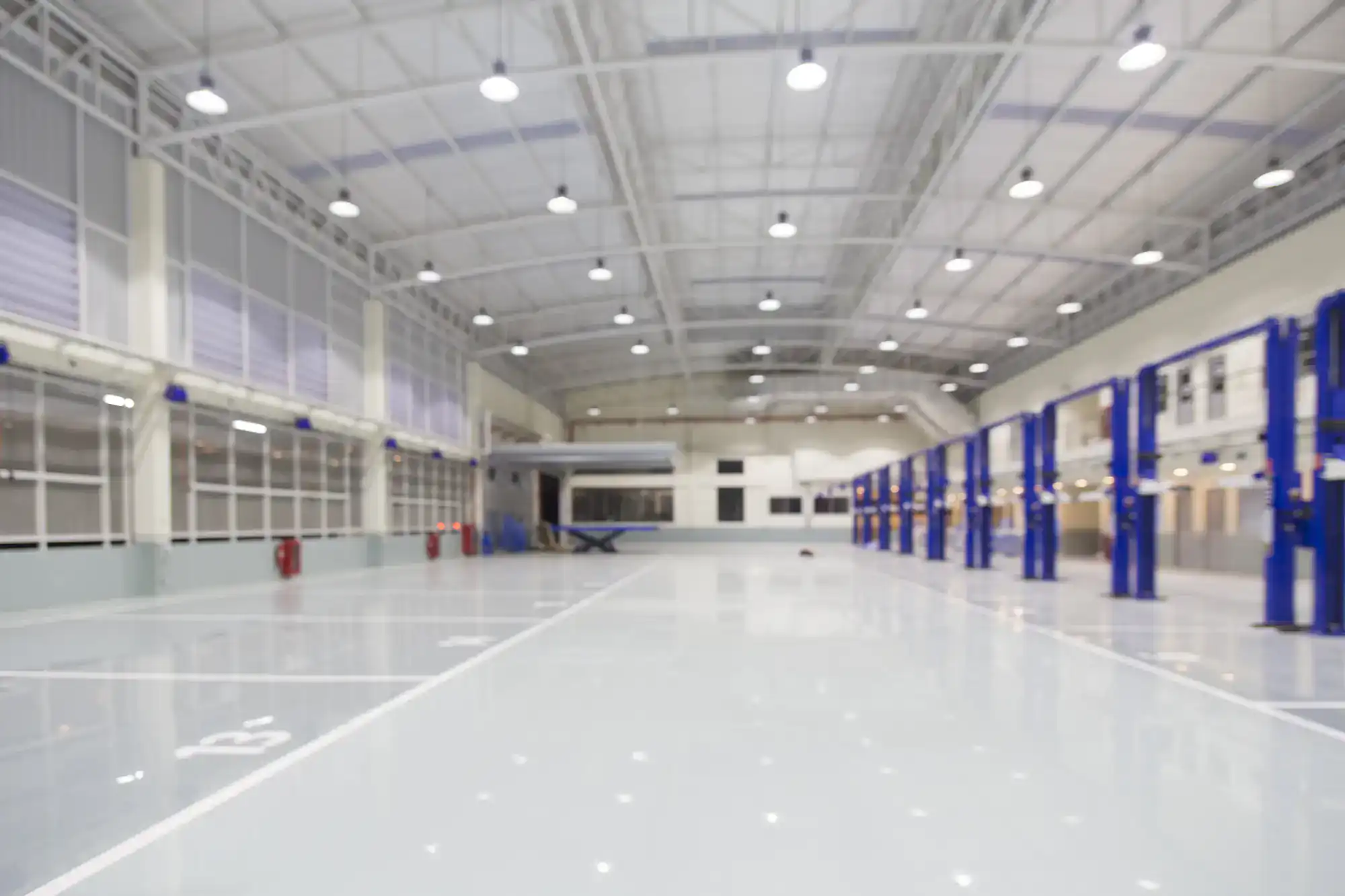
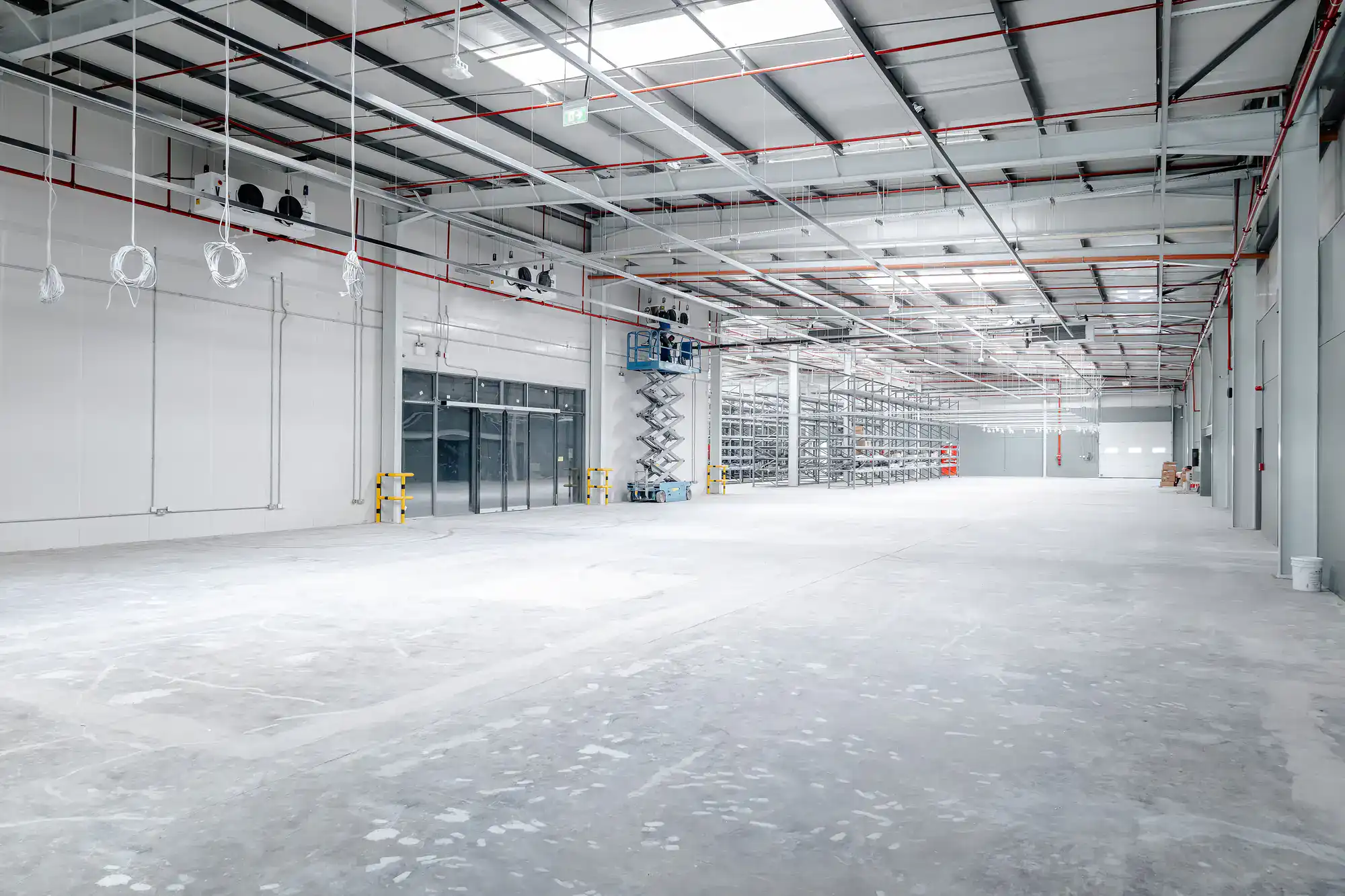
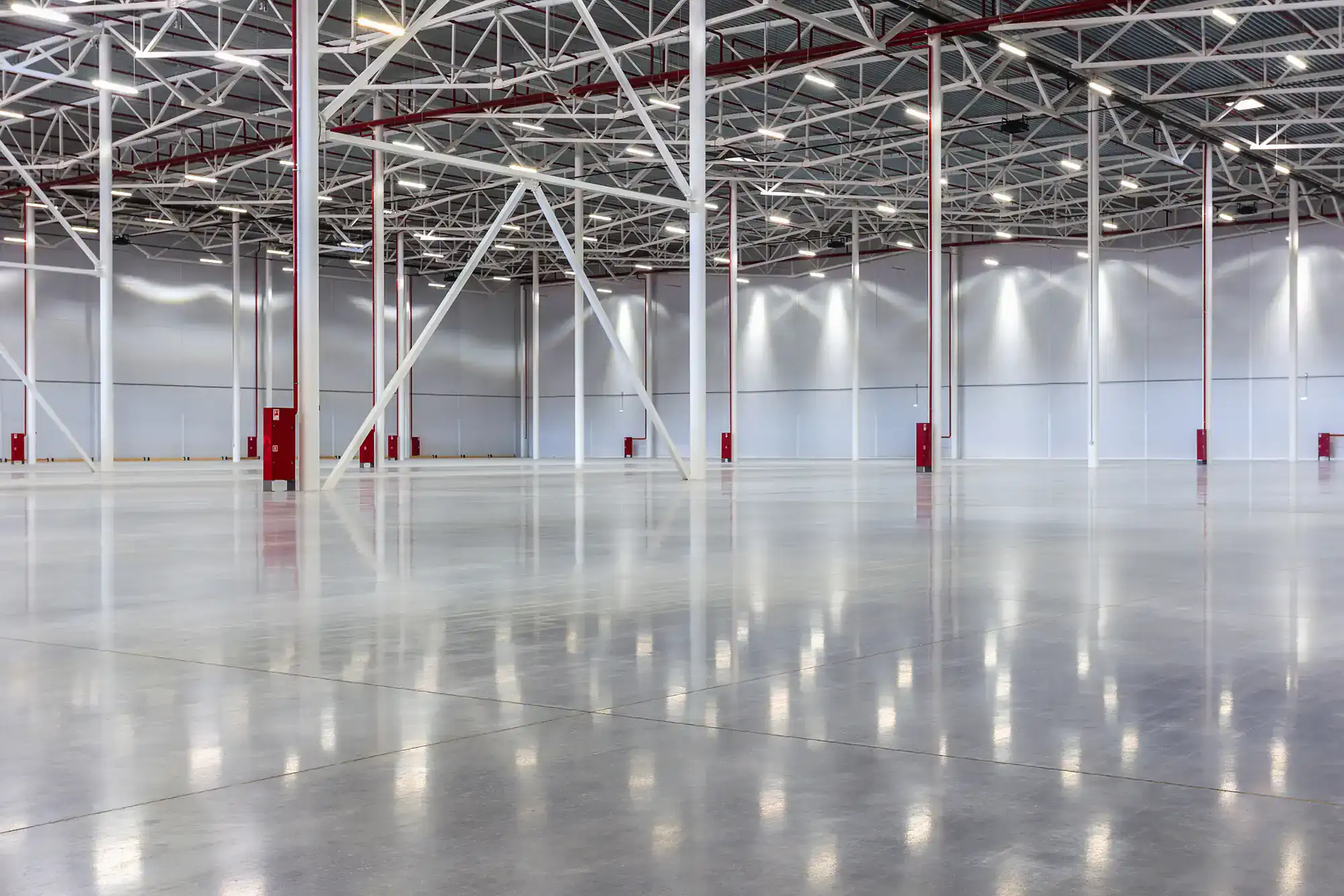
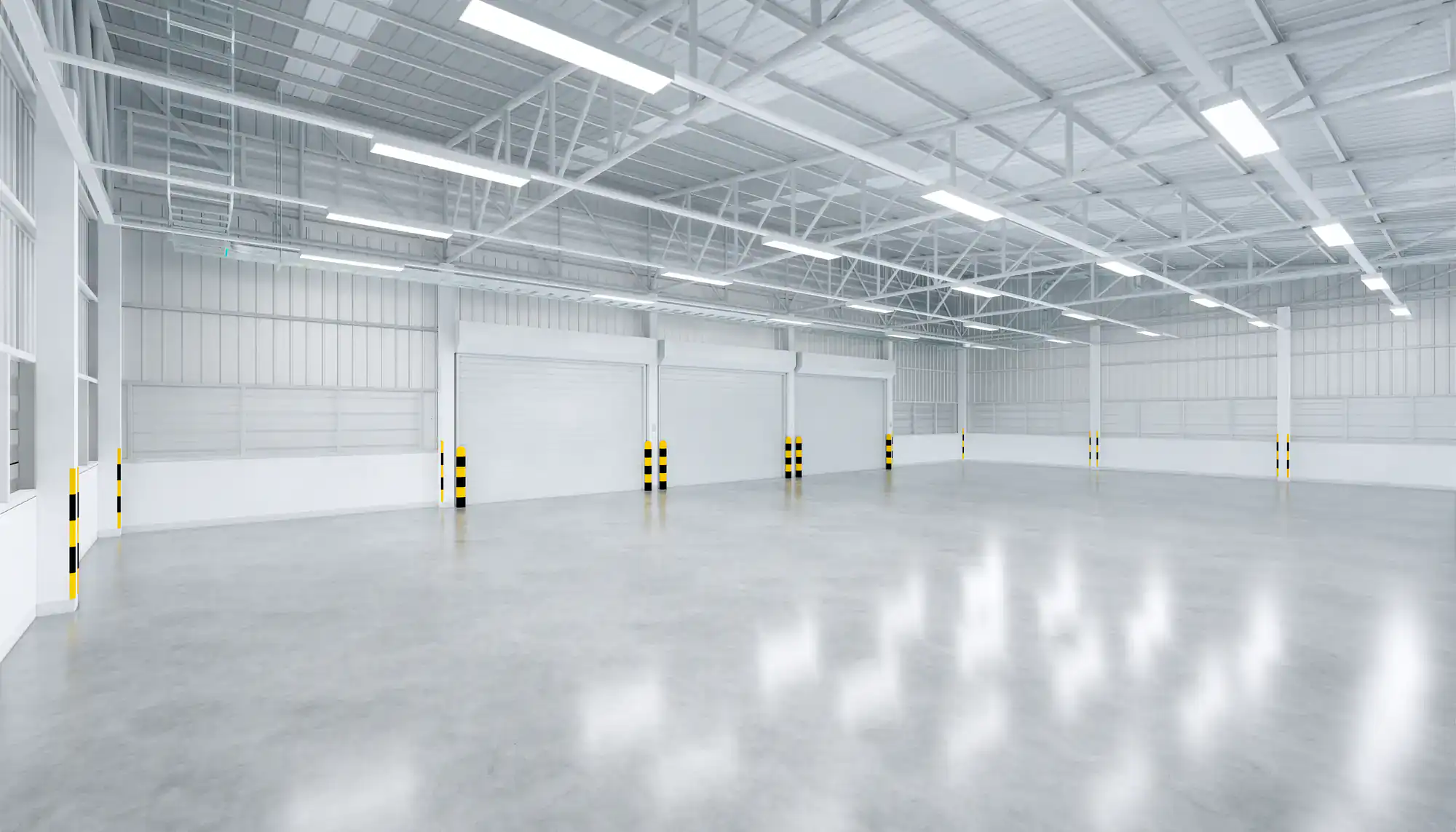
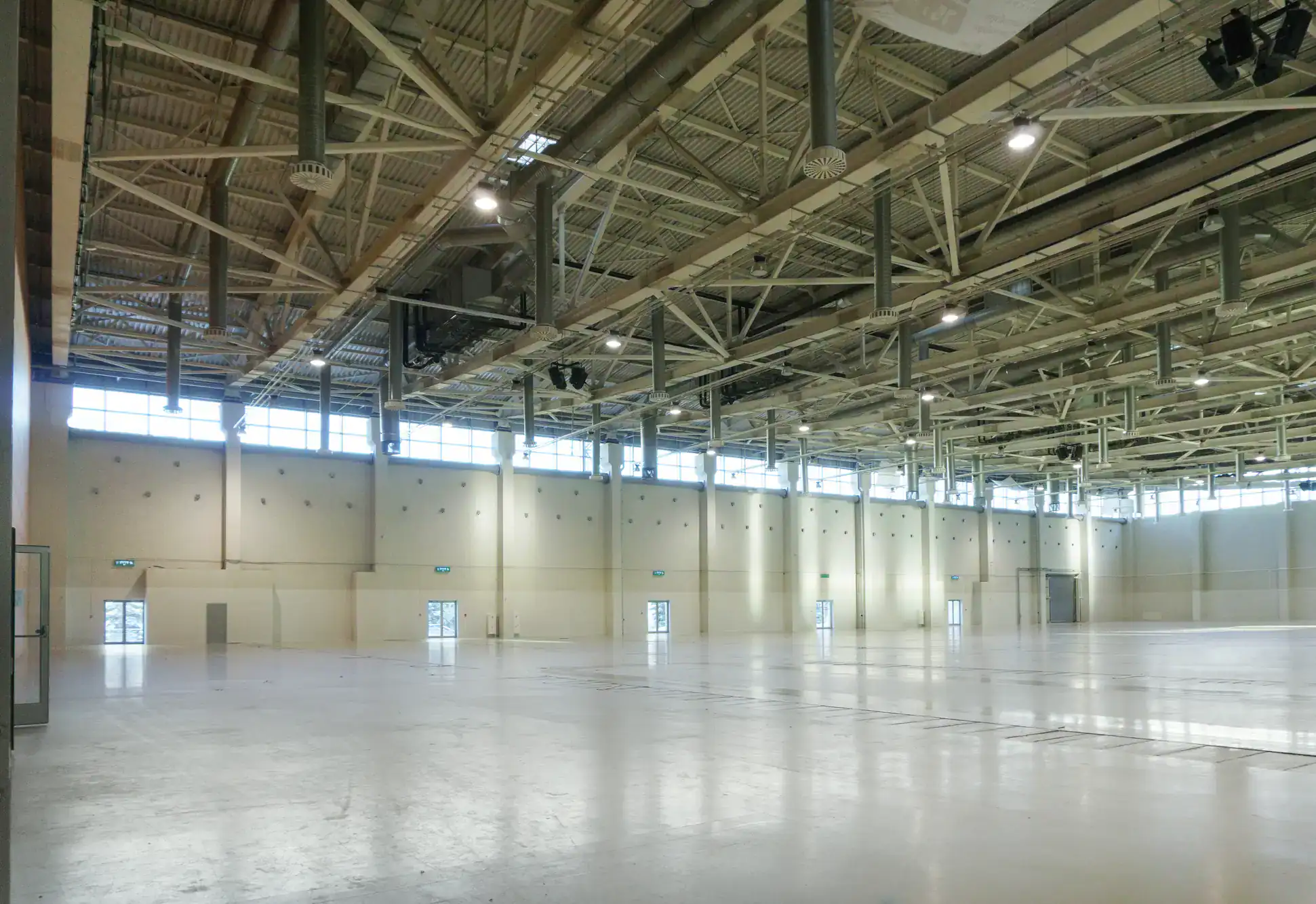
When it’s done correctly, you get a floor that reflects light across the entire hangar, makes fluid spills and foreign object debris immediately visible, and holds up for 20 years without demanding much from you in return. That’s what aviation-grade polyaspartic and epoxy systems are engineered to deliver when they’re installed by someone who actually knows the difference.
We’ve been in business for over 30 years, and our president Danny Harmer has personally installed resinous flooring systems for more than 40 years. That distinction matters in a market like Garden City, where buyers in finance, law, and aviation management know the difference between a contractor who manages crews and one who has actually done the work himself.
We hold dual elite certifications from Sherwin-Williams High Performance Flooring and Res Tech credentials that require factory-level training and aren’t held by most contractors operating in Nassau County. Every installer on every crew carries OSHA 40 certification. Our non-slip topcoat meets National Flooring Safety Institute standards tested and verified, not just textured and labeled.
We’re based in Bohemia, which means when you’re managing a hangar facility near Republic Airport or anywhere across central Nassau County, you’re working with a contractor who can actually show up for the job and for the warranty.
It starts with the concrete, not the coating. Before anything goes on the floor, the slab gets assessed for moisture vapor transmission a non-negotiable step in Long Island’s climate, where ground moisture is a year-round variable. If vapor pressure isn’t measured and addressed upfront, the coating will eventually fail from beneath, regardless of how good the product is.
Once the assessment is done, the surface gets mechanically diamond ground to create the correct adhesion profile. This isn’t acid etching or a quick pass with a floor grinder it’s the systematic removal of surface contamination, weak concrete, and anything else that would compromise the bond. Any cracks or spalled areas are repaired at this stage. The substrate has to be right before a single coat goes down.
From there, the system is applied in the correct sequence primer, base coat, and topcoat using chemistry specified for aviation environments. For active hangar operations in Garden City where downtime is a real cost, polyaspartic systems cure fast enough to return aircraft to the floor within 24 hours. Our final topcoat is NFSI-certified for slip resistance, which matters in any environment where fuel and hydraulic fluid are part of daily operations. When we leave, the floor is ready not just coated.
Ready to get started?
Every hangar floor project we take on in the Garden City area is scoped around what that specific facility actually deals with not a one-size-fits-all coating pulled from a catalog. For commercial FBO operations and corporate flight departments, that means NFPA 409-compliant systems: the National Fire Protection Association’s standard for aircraft hangars requires non-combustible floor surfaces, and not every epoxy product on the market qualifies. If the contractor quoting your project can’t name that standard, they’re not the right fit for a commercial aviation facility.
For private hangar owners and aircraft storage operations across Nassau County, the focus shifts to chemical resistance and long-term durability. Skydrol-resistant formulations, high-build thickness of 45 mils or more, and a light-reflective finish that makes the floor easier and safer to work on these are the details that separate an aviation-grade installation from a decorative coating that won’t last.
The coating system we recommend for your hangar whether that’s a polyaspartic system for fast return-to-service, a multi-coat epoxy build for maximum chemical resistance, or a hybrid approach is determined after the slab assessment, not before. Garden City’s humidity, the freeze-thaw exposure Nassau County sees each winter, and the specific use of your facility all factor into what we specify. That’s what a 30-year contractor with real aviation flooring experience brings to the table.
If you’re operating a commercial hangar an FBO, a corporate flight department, or any facility that stores or services aircraft for compensation yes, NFPA 409 applies. The standard requires that grade floor surfaces in aircraft storage and servicing areas be non-combustible. New York State building codes incorporate NFPA standards, and the Village of Garden City enforces code compliance through its building and fire inspection process. This isn’t a technicality that gets overlooked it’s an active requirement that affects what products can legally go on your floor.
For private hangar owners, the requirement may not apply in the same way, but the reasoning behind it still does. Aviation environments involve fuel, hydraulic fluid, and ignition sources a floor coating that isn’t formulated for non-combustibility is a liability regardless of whether an inspector is coming. We install systems that meet NFPA 409 requirements and can speak to the specific chemistry behind that compliance, not just check a box on a quote sheet.
The biggest practical difference is cure time. A standard multi-coat epoxy system typically requires 24 to 72 hours of cure time between coats, which means a full installation can stretch across several days before the floor is ready for aircraft. Polyaspartic systems cure significantly faster in many cases, fast enough to return aircraft to the hangar within 24 hours of the final coat. For an active hangar operation where the floor space is also the workspace, that difference is real money.
Beyond speed, polyaspartic coatings are more UV-stable than standard epoxy, which matters in hangar environments with skylights or open bay doors that let in direct sunlight. They also perform better in temperature extremes a relevant factor in Nassau County, where January temperatures can push concrete slab temperatures low enough to affect standard epoxy cure quality. Polyaspartic systems are more tolerant of those conditions, which makes them a strong choice for hangars that can’t always be climate-controlled during installation.
It’s one of the most important variables in any Long Island flooring project, and it’s the one most commonly skipped by contractors who don’t specialize in industrial or aviation applications. Garden City’s coastal climate produces year-round humidity, and large concrete slabs the kind found in aircraft hangars are particularly susceptible to moisture vapor transmission. That’s the process where moisture migrates upward through the concrete and pushes against the underside of the coating. When that pressure isn’t accounted for, the coating bubbles, blisters, and eventually peels not from the top, but from the bottom up.
The fix isn’t complicated, but it has to happen before installation begins. Moisture vapor testing establishes the transmission rate of the slab, and if it’s elevated, a moisture-mitigating primer gets applied before the base coat. Skipping this step is the single most common reason hangar floors in Nassau County fail within two to three years. We treat this assessment as mandatory on every Long Island project not an upsell, not an optional add-on.
Standard garage-grade epoxy will not hold up to Skydrol. Skydrol is a phosphate ester hydraulic fluid used in commercial aircraft, and it is highly aggressive toward conventional epoxy formulations. Regular contact with Skydrol on a standard coating will cause softening, discoloration, and surface breakdown sometimes within months of installation in an active maintenance environment. The same applies to jet fuel and many of the cleaning agents used in aviation maintenance bays.
The systems we specify for hangar floors are formulated for aviation chemical exposure. That means the resin chemistry is selected specifically for resistance to phosphate ester fluids, petroleum-based fuels, and the solvents common in aircraft servicing. This isn’t a claim made loosely it’s a function of using the right product category for the right environment, backed by the Sherwin-Williams High Performance Flooring certification that governs which systems get specified for industrial and aviation applications. If a contractor can’t tell you the specific chemical resistance profile of the system they’re proposing, that’s a gap worth asking about before you sign anything.
A properly installed aviation-grade polyaspartic system correct surface prep, moisture assessment, appropriate film thickness can last up to 20 years in a working hangar environment. That’s not a manufacturer’s best-case figure; it’s a realistic expectation when the installation is done right from the start. Standard epoxy systems installed without aviation-specific chemistry or adequate prep typically need recoating every five to seven years, sometimes sooner in high-traffic or chemically active environments.
Nassau County’s climate introduces two specific durability factors worth understanding. The first is humidity and moisture vapor, which accelerates coating failure when not properly addressed during installation. The second is freeze-thaw cycling Garden City’s winters are mild but still produce temperature swings that cause concrete to expand and contract. A coating that wasn’t bonded to a mechanically prepared surface will eventually lose adhesion through this process. The combination of diamond grinding, moisture mitigation, and aviation-grade coating chemistry is what gets you to the 20-year end of that range rather than the five-year end.
Start with certifications that are specific and verifiable not general contractor licenses, but industrial flooring credentials tied to named manufacturers and training programs. Sherwin-Williams High Performance Flooring certification and Res Tech certification are two of the most relevant in this space. They require factory-level training in resinous flooring systems and aren’t held by most general epoxy contractors operating in Nassau County. If a contractor can’t name their certifications, that tells you something.
Ask specifically about their surface preparation process. Diamond grinding versus acid etching is not a minor technical distinction it’s the difference between a floor that bonds properly and one that peels. Ask whether they perform moisture vapor testing before installation. Ask whether their topcoat carries NFSI certification for slip resistance, or whether it’s just textured and called non-slip. And ask whether they’ve worked on NFPA 409-compliant installations before not just industrial floors, but aviation facilities specifically. Garden City has one of the deepest aviation histories of any community on Long Island, and the hangar facilities here deserve a contractor who understands what that environment actually demands.