
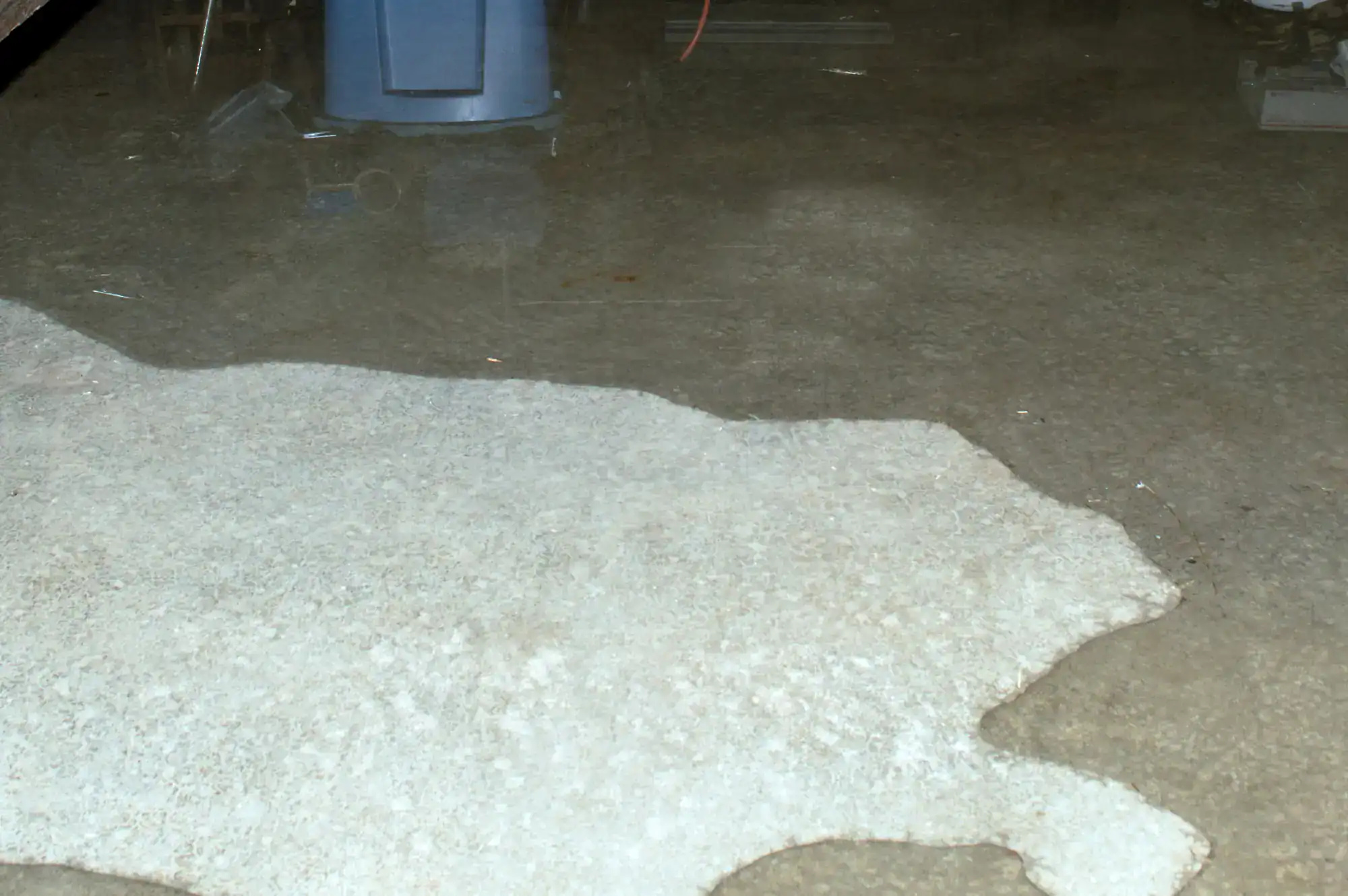
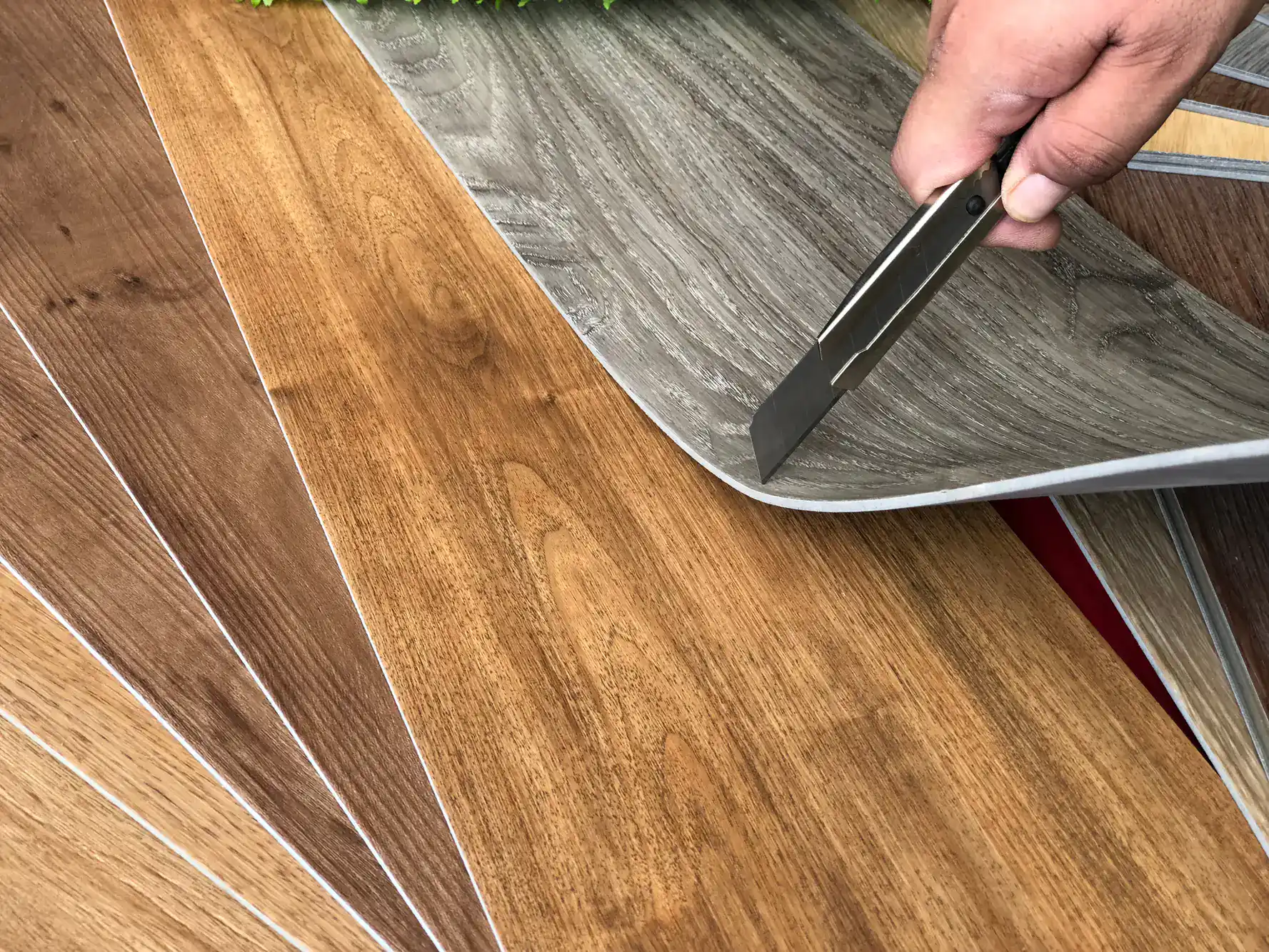
When a fire truck rolls back into the bay after a winter run on salted Nassau County roads, the floor underneath it takes the hit road brine, diesel, hydraulic fluid, and the full weight of a 40,000-pound apparatus cycling between freezing outdoor air and a heated station. Standard epoxy wasn’t built for that. It cracks, it peels, and it traps everything it absorbs. A properly installed polyaspartic system doesn’t. It stays sealed, it cleans up fast, and it holds up through the freeze-thaw cycles that Long Island winters deliver every single year.
For a department like Garden City’s all-volunteer, three stations, a fleet that includes aerial ladders and a heavy rescue the floor isn’t just a surface. It’s part of how the station functions. A seamless, non-porous coating means decontamination after a structure fire is a real wash-down, not a mop that spreads residue around. That matters for the health of your volunteers, and it matters for NFPA contamination control compliance that more and more departments on Long Island are taking seriously.
The other thing that matters here is time. Garden City’s three stations cover 5.4 square miles of one of Nassau County’s most densely built and institutionally active communities. You can’t have apparatus sitting outside for a week while a floor cures. Polyaspartic systems cure in 24 hours not three to seven days. Your trucks are back inside and ready to respond the next morning.
We’re based in Bohemia, NY about 25 miles from Garden City via the Meadowbrook State Parkway and have been doing commercial and industrial resinous flooring for over 30 years. This isn’t a general contractor who added epoxy to the service list. Our CEO Danny Harmer has more than 40 years of hands-on installation experience, and most of our field crew has been with us for over a decade.
We hold the Sherwin-Williams High Performance Flooring certification, which is one of the more rigorous manufacturer-approved applicator credentials in the industry. Every field installer is OSHA 40 certified a real requirement when you’re working inside an active, village-owned fire station where Garden City’s own liability and code compliance standards apply. Our portfolio includes work as demanding as the White House kitchen in 1996. That kind of track record doesn’t happen by accident.
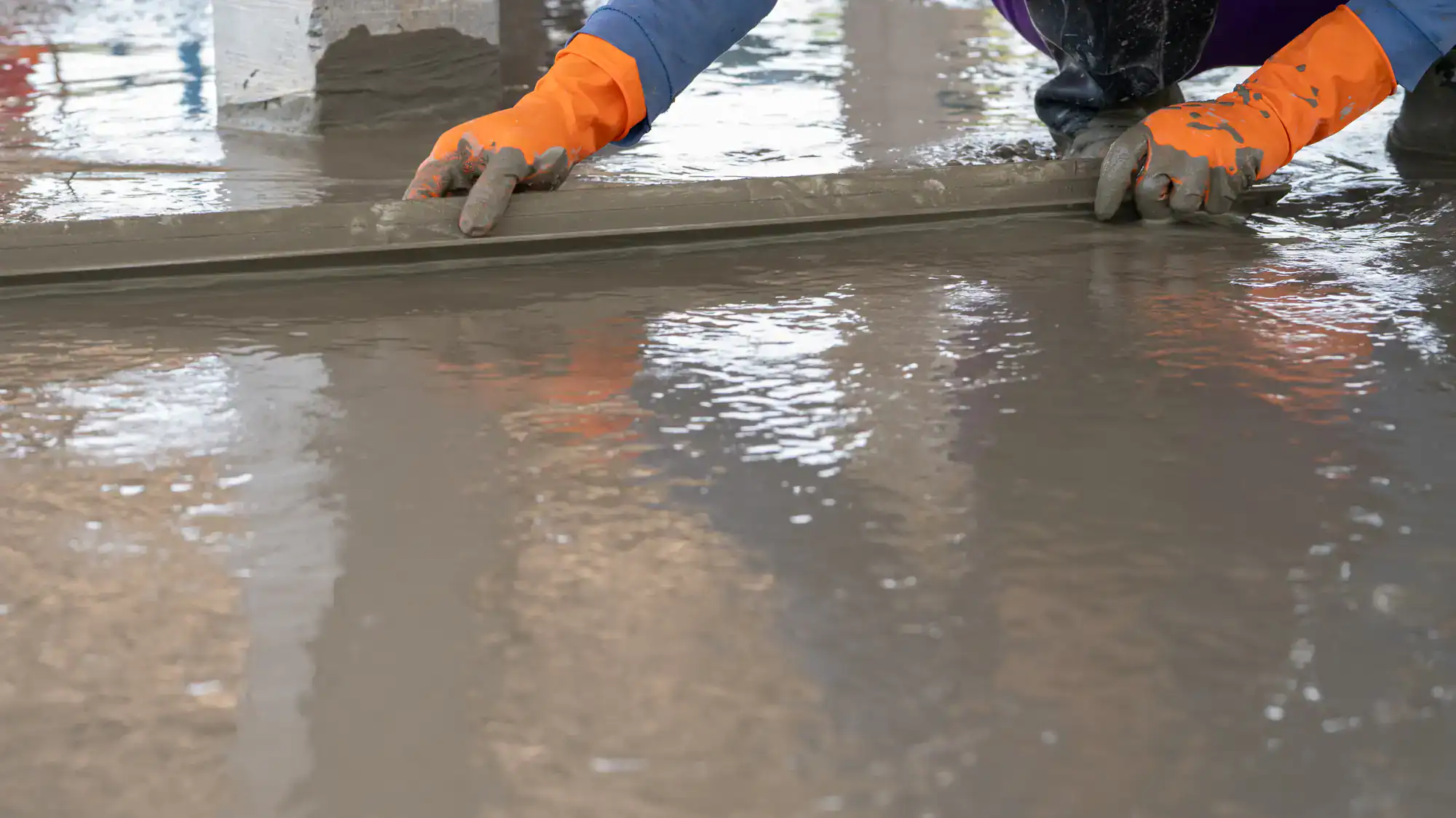
The first thing that happens on any firehouse floor project is moisture testing. Nassau County’s soil conditions and the coastal humidity that comes with Long Island’s geography mean moisture vapor transmission through concrete slabs is a real variable not a theoretical one. If moisture isn’t accounted for before the coating goes down, it will eventually drive delamination bubbles up through the surface. That’s the failure mode you’ve probably already seen on a floor somewhere.
After moisture testing, the concrete gets diamond ground not acid etched. Acid etching introduces water into the substrate before you seal it, which is counterproductive. Diamond grinding opens the concrete’s capillaries mechanically, giving the primer something real to bond to. Any existing cracks or surface damage get repaired at this stage. The floor has to be right before the coating system starts.
From there, the installation goes down in layers: a penetrating primer, a high-build epoxy base coat with aggregate broadcast for traction, and a polyaspartic topcoat at 15 mils thick. That’s two to four times the thickness of standard polyurethane or epoxy systems. Garden City’s village building department may require a permit for renovation work inside a municipal facility, and because our entire crew is OSHA 40 certified, working inside an active station is something we’re trained and equipped to do safely. The floor is ready for apparatus in 24 hours.
Ready to get started?
The apparatus bay gets the most attention, and for good reason that’s where the thermal cycling, the road salt, the hot tires, and the 40,000-pound loads are concentrated. But Garden City’s three stations have more than just apparatus bays. The decontamination zone, living quarters, kitchen, and locker rooms each have their own flooring demands, and a seamless resinous system addresses all of them.
In the decon zone specifically, the floor needs to handle power-washing and chemical exposure without absorbing contaminants into the substrate. For a department whose volunteers respond to structure fires and hazmat calls across Garden City’s residential neighborhoods and institutional properties including areas near Adelphi University and the Cathedral of the Incarnation decontamination isn’t optional. A non-porous floor that can be fully cleaned is the baseline requirement for NFPA contamination control compliance.
Using one certified contractor across all three Garden City stations means consistent system specifications, compatible materials, and a single point of accountability. If something needs attention five years from now, there’s one call to make to a Long Island contractor who knows your stations and stands behind the installation. Our polyaspartic topcoat is UV-stable, so it won’t yellow or chalk under open bay doors, and it’s rated for the kind of chemical resistance that fire station environments actually require.
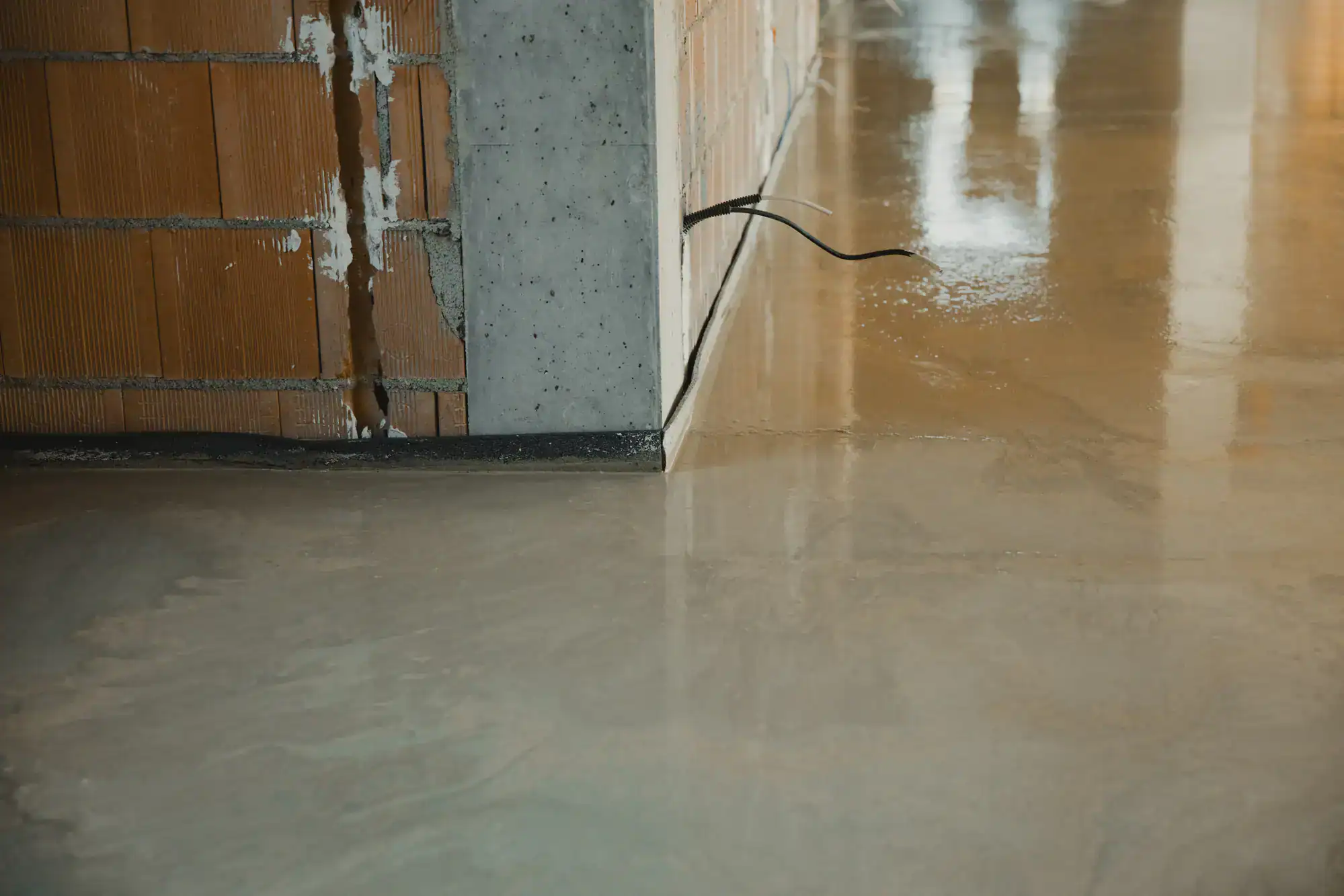
A properly installed polyaspartic system in a Garden City apparatus bay should last 20 years or more. The key word is “properly” because the lifespan depends almost entirely on surface preparation and system selection, not just the product itself. Standard commercial epoxy, when installed correctly, typically lasts 5 to 10 years. Consumer-grade or DIY epoxy in an apparatus bay environment where you have thermal cycling, road salt tracked in from Nassau County’s aggressively salted winter roads, and heavy apparatus loads often fails in three to five years, sometimes sooner.
Garden City’s freeze-thaw cycle is a real stressor. Temperatures drop into the teens overnight in January and climb back into the 30s during the day. That expansion and contraction, combined with hot tires rolling across a cold floor after a winter response, is exactly what causes standard epoxy to delaminate. Polyaspartic is four times more flexible than standard epoxy and engineered specifically for thermal shock resistance. It doesn’t become brittle in cold temperatures, and it doesn’t bond to hot tires when they cool. That’s why the lifespan difference between systems is measured in decades, not years.
No and for Garden City’s three-station layout covering 5.4 square miles, that matters. A polyaspartic topcoat cures in 24 hours, which means apparatus can be back inside and ready to respond the following morning. Traditional epoxy systems require three to seven days of cure time before they can handle vehicle traffic. For a department that can’t afford to have a station out of rotation for a week, that difference is significant.
The installation is typically scheduled in a single continuous window our crew comes in, completes the surface preparation and full coating system, and the floor is ready the next day. Coordination around your response schedule and apparatus rotation is part of the planning conversation before any work starts. The goal is to minimize the window when the bay is unavailable, and the 24-hour cure time is the biggest factor in making that possible. If you’re working across multiple stations, each one can be sequenced so coverage is maintained throughout.
Epoxy is a two-part resinous system that bonds well to concrete and provides a durable surface but it has real limitations in apparatus bay environments. It’s rigid, which means it cracks under thermal cycling. It’s sensitive to UV exposure, so it yellows and chalks when bay doors are open and sunlight hits the floor. And it takes days to cure. Polyaspartic is a newer generation of resinous coating that addresses all three of those limitations directly.
Polyaspartic is four times more flexible than standard epoxy, which is why it handles the freeze-thaw cycles and hot-tire contact that Long Island winters create without delaminating. It’s UV-stable, so the color and finish hold up even in bays with significant sun exposure. And it cures in 24 hours. It also goes down at 15 mils thick two to four times the thickness of standard polyurethane or epoxy systems which gives it the load-bearing capacity a fire apparatus fleet actually requires. For most apparatus bay applications, polyaspartic is the right system. Epoxy still has a role in certain environments, but in a working firehouse bay, the performance difference is meaningful.
It can, depending on the scope of the work. Garden City is a fully incorporated village with its own building department and code enforcement unlike many surrounding Nassau County communities that are unincorporated hamlets under the Town of Hempstead. Any renovation work inside a village-owned facility, including floor resurfacing in a fire station, may require a permit issued by the Village of Garden City Building Department. The village follows New York State Building Code, which incorporates OSHA requirements for commercial construction activity.
This is one of the reasons OSHA 40 certification for our installation crew matters in a project like this. Working inside an active municipal facility where the village’s own liability and compliance standards apply isn’t the same as working in a private warehouse. Having a fully OSHA 40 certified crew reduces the village’s exposure and satisfies the safety requirements that come with working in an occupied, active public building. The permitting question is worth raising early in the planning process before installation is scheduled so there are no delays once the project starts.
NFPA 1500 and 1581 create a framework for fire station facility requirements that includes contamination control in apparatus bays and decontamination zones. The core principle is that surfaces in these areas need to be truly cleanable not just mopped, but power-washed and chemically decontaminated after structural fire responses where carcinogen exposure is documented. A bare concrete floor or a cracked, porous coating can’t meet that standard because contaminants absorb into the substrate and can’t be fully removed.
A seamless, non-porous polyaspartic floor has no grout lines, no cracks, and no surface porosity where soot, foam concentrate, or chemical residues can harbor between cleanings. It’s power-washable and chemically resistant, which means decontamination protocols can actually work as designed. For Garden City’s volunteer firefighters who respond to structure fires, vehicle accidents, and hazmat incidents across one of Nassau County’s most active communities this isn’t a minor operational detail. Occupational cancer is the leading cause of line-of-duty death in the U.S. fire service. A floor that supports real decontamination is a health investment, and it’s one that holds up to scrutiny at the NFPA compliance level.
The most important thing to ask about is surface preparation specifically, whether the contractor uses diamond grinding or acid etching. Acid etching introduces moisture into the concrete before sealing it, which is one of the primary causes of premature delamination. Diamond grinding opens the substrate mechanically without adding moisture, and it’s the correct preparation method for a floor that needs to last 20 years under apparatus bay conditions. If a contractor can’t explain the difference or defaults to acid etching because it’s faster, that’s a meaningful signal.
Beyond preparation, look for manufacturer certifications not just a general contractor’s license, but product-specific credentials like the Sherwin-Williams High Performance Flooring certification, which requires formal training in concrete assessment, primer application, and installation quality control. OSHA 40 certification for the field crew matters when work is being performed inside an active village-owned facility in Garden City, where the village’s own liability standards apply. And ask directly about cure time a contractor who can’t return your apparatus bay to service within 24 hours is asking your department to absorb operational risk that doesn’t need to exist. The right contractor has done this work before in comparable institutional environments and can show you what that looks like.