
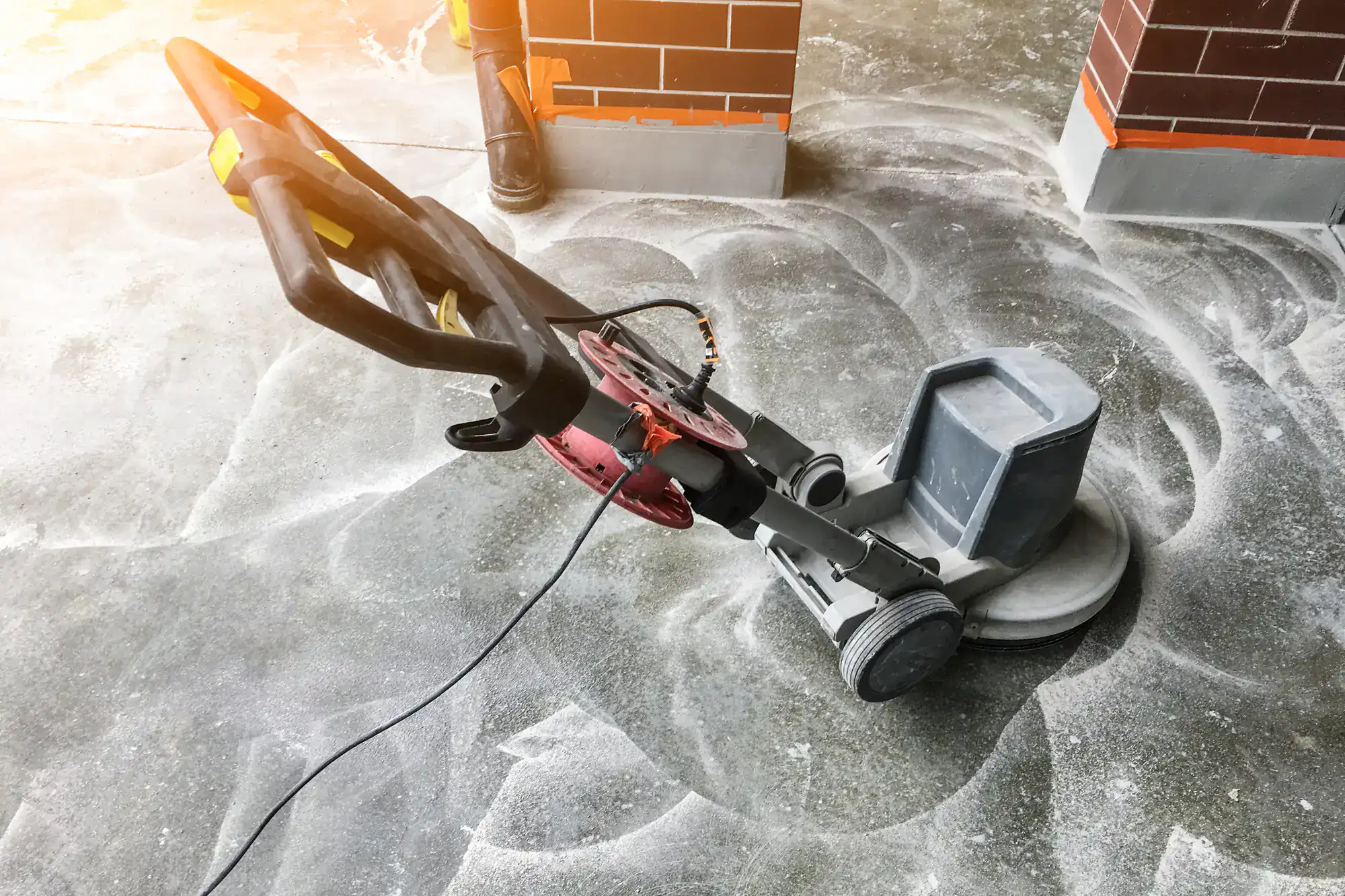
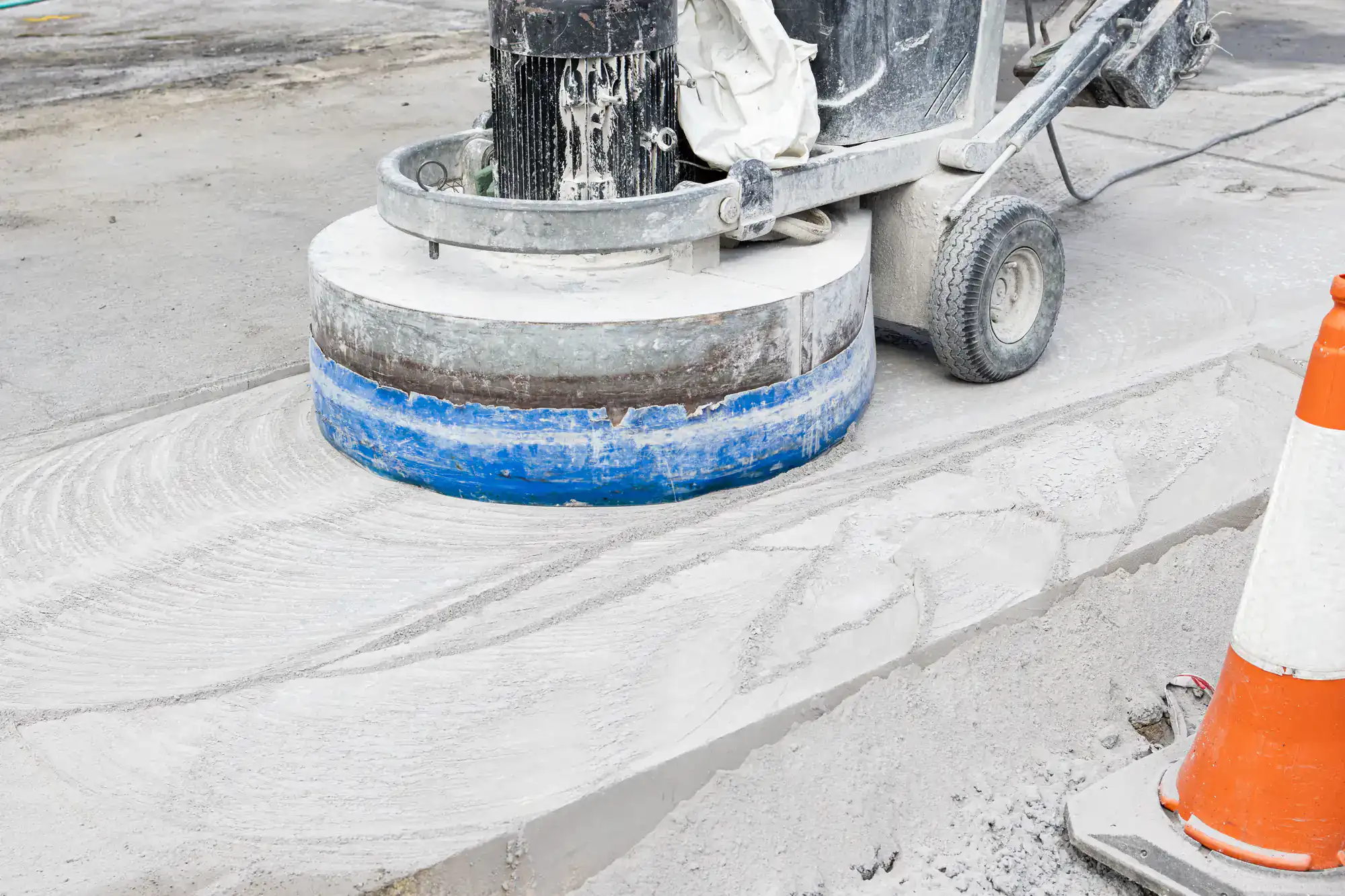
A polished concrete floor isn’t just about looks. In a commercial environment whether you’re managing office space along the Roosevelt Field corridor, running a boutique on Franklin Avenue, or overseeing a facility at one of Garden City’s Class A office buildings what you really need is a floor that holds up without constant attention. That means no annual waxing cycles, no stripping, no recoating every few years. Just a surface that stays clean, stays hard, and stays professional.
Garden City’s commercial building stock ranges from pre-war structures in the historic village core to modern office towers built in the 1980s and 90s. Older slabs in particular tend to dust, crack, and degrade faster especially when Long Island’s freeze-thaw winters push moisture into surface micro-cracks season after season. A densified, polished concrete floor seals that vulnerability at the chemistry level, hardening the surface matrix so it stops dusting, stops absorbing moisture, and stops giving you problems.
There’s also a practical financial argument. High-traffic commercial floors in Nassau County that rely on VCT or other coated systems carry real recurring maintenance costs labor, product, and downtime every time a section needs attention. Polished concrete eliminates most of that cycle. For facilities managers and business owners who think in terms of total cost over time, the math is straightforward.
We’re owned and operated by Danny Harmer, who has been doing this work personally for over 40 years. Not managing crews from an office actually on the job, assessing slabs, making calls, and standing behind the finished product. That’s not a common thing in commercial flooring, and if you’ve hired a contractor before who sent a different crew than the one you met, you already know why it matters.
Danny holds a Sherwin-Williams High Performance Flooring (HPF) certification and a Res Tech certification both named, verifiable credentials that reflect a genuine understanding of flooring chemistry, not just application technique. In 1996, we completed flooring work at the White House kitchen. That’s the kind of project that doesn’t leave room for shortcuts.
We’re based on Long Island and specifically understand the coastal humidity and ground moisture conditions that affect slab performance across Nassau County including the range of commercial buildings throughout Garden City and the surrounding East Garden City commercial zone. That’s not theoretical knowledge. It’s what we see in every Garden City project we take on.
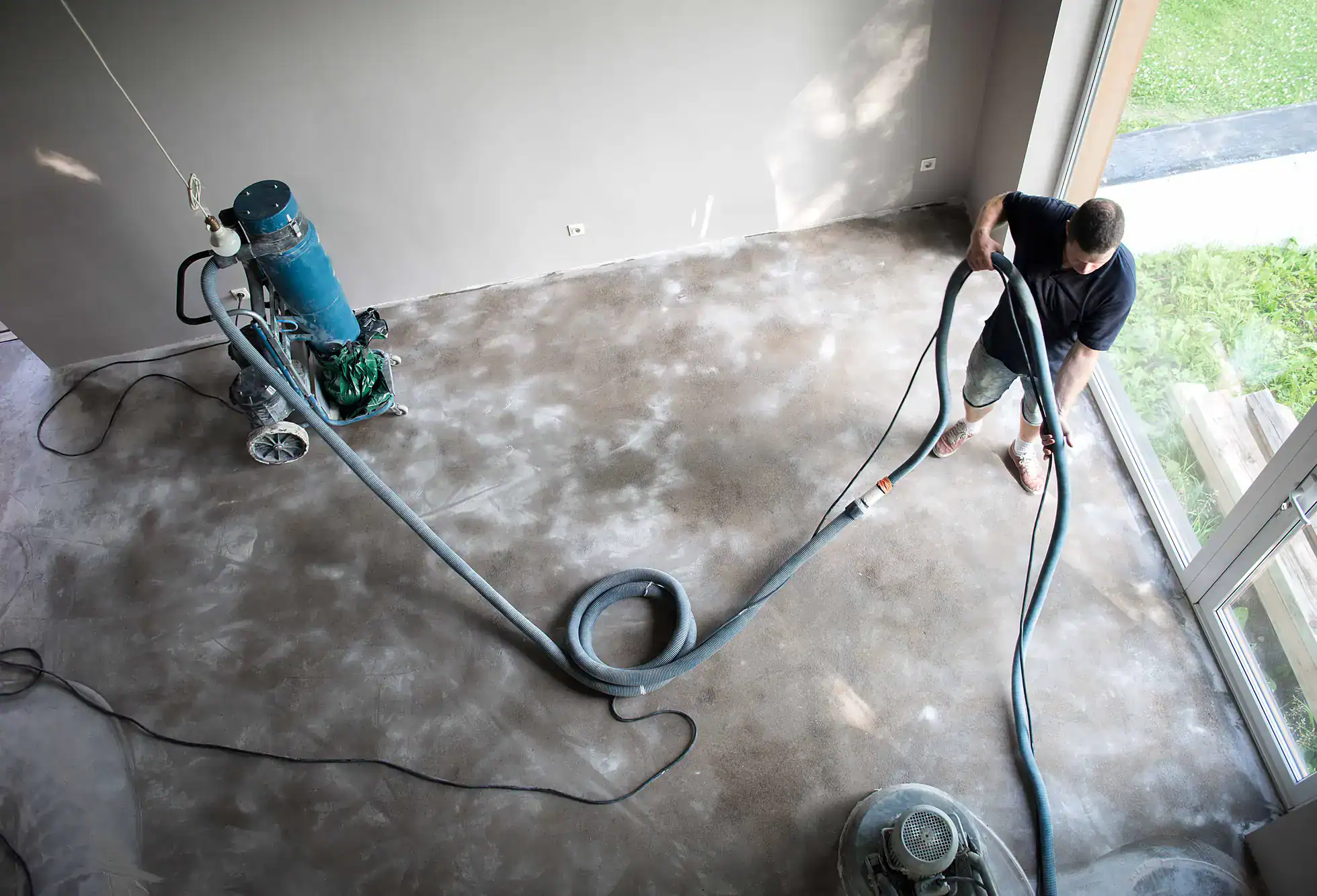
Every project starts with a real slab assessment. Before any equipment touches the floor, we evaluate the condition of the concrete PSI rating, existing coatings or adhesive residue, moisture vapor levels, and surface irregularities. In Garden City’s older commercial buildings, particularly those in or near the historic village core, slabs can carry decades of layered history: old VCT adhesive, prior sealers, surface damage from freeze-thaw cycles. That assessment determines everything that follows.
From there, the grinding sequence begins with coarse diamond tooling typically 16 to 30 grit to cut through surface imperfections and level the slab. The grit progresses through medium and fine stages, each pass refining the surface further. Once the right profile is achieved, we apply a lithium silicate densifier. This isn’t a coating it penetrates the concrete and reacts chemically with the material itself, hardening the surface from the inside. That’s what stops the dusting and gives the floor its long-term durability.
Final polishing runs through progressively finer resin-bonded diamond pads up to 1500 or 3000 grit for a high-gloss finish followed by a stain guard if the environment calls for it. For occupied commercial buildings in Garden City, we sequence projects in sections and schedule work around your operations. After-hours and weekend work is available when daytime access isn’t realistic.

Ready to get started?
The finish class you end up with depends on your environment and what you need the floor to do. For retail showroom concrete finishes in Garden City the kind of look that belongs in a Franklin Avenue boutique or a professional office lobby a Class 3 or Class 4 finish is typically the right target. Class 4 is the highest gloss level, measuring 61 or more Gloss Units, and it’s what you’d expect in a space where first impressions carry real weight. Class 3 lands in the semi-polished range and works well for high-traffic commercial corridors where durability is the priority alongside appearance.
For industrial concrete polishing services in the East Garden City commercial zone warehouse floors, distribution spaces, or facilities adjacent to the Roosevelt Field corridor a lower-gloss, densified finish may be more appropriate. The goal there is hardness, dust elimination, and resistance to wheeled equipment traffic, not necessarily reflectivity.
Regardless of finish class, every project includes full slab assessment, the complete grit progression, lithium silicate densification, and a final stain guard where applicable. Slip resistance is not compromised by gloss properly polished concrete meets OSHA’s minimum coefficient of friction standard for commercial surfaces, and we can incorporate anti-slip additives for wet-traffic environments like restaurant floors or building entrances without affecting the finished appearance.
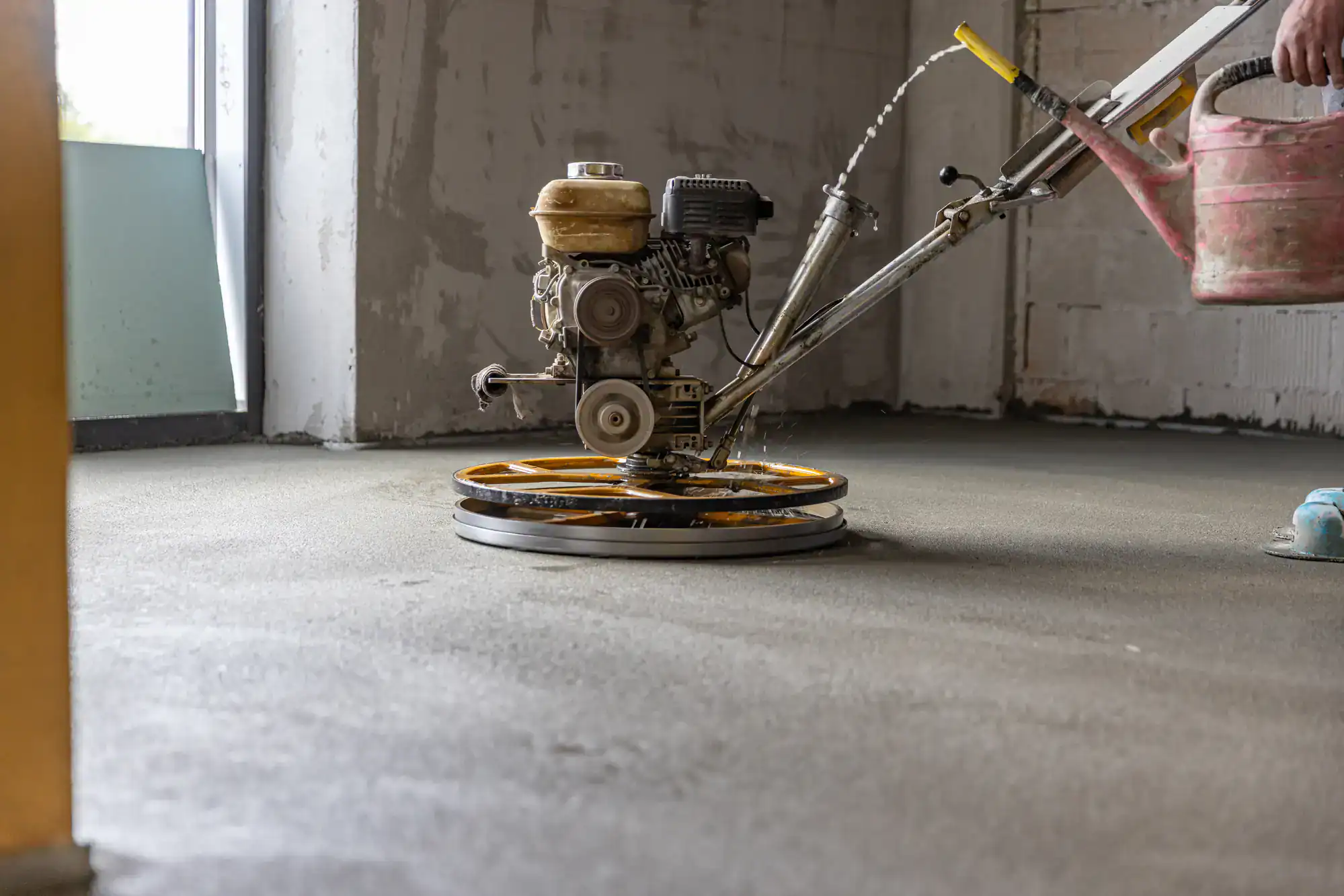
The timeline depends on square footage, slab condition, and the finish class you’re targeting but for most commercial projects in Garden City, you’re looking at two to five days for a standard-sized space. Larger floor areas in the office complexes along the Stewart Avenue and Roosevelt Field corridor are typically broken into sections and phased across multiple days or work sessions to keep disruption manageable.
If the slab has existing coatings, adhesive residue from old VCT, or significant surface damage from years of freeze-thaw stress, the prep phase takes longer. That’s not a problem it’s just honest planning. Rushing the prep to hit an arbitrary deadline is exactly how you end up with a floor that looks good for six months and then starts failing. The assessment at the beginning of every project is what determines a realistic timeline, and that’s always communicated before work starts.
Commercial concrete polishing in Nassau County generally runs between $3 and $8 per square foot, depending on the finish class, the condition of the existing slab, and the total square footage of the project. Higher-gloss finishes Class 3 and Class 4 require more passes through the grit progression and take more time, which is reflected in the cost. Slabs with significant prep work needed, like old adhesive removal or surface leveling, will also land toward the higher end of that range.
For most commercial buyers in Garden City who are comparing polished concrete against a full VCT replacement or a recoating cycle, the lifecycle math tends to favor polished concrete over a five-to-ten-year horizon. There’s no waxing, no stripping, no recoating just periodic damp mopping with a neutral cleaner. The upfront cost is real, but so is the reduction in ongoing maintenance expense, and that’s a calculation worth running before you make a decision based on the initial quote alone.
This is one of the most common concerns, and the short answer is no not when the work is done correctly. Gloss and slip resistance are independent properties. A floor can be highly reflective and still meet OSHA’s minimum coefficient of friction requirement of 0.5 for level commercial surfaces. Properly polished concrete consistently meets that standard.
For environments where wet traffic is a real factor restaurant floors, hotel lobbies, building entrances that see rain and snow tracked in from Garden City winters we can incorporate anti-slip additives into the stain guard application without any visible effect on the finish. This is a standard option, not an upgrade, and it’s something we address during the initial assessment when the use case for the floor is discussed. If your space has wet-traffic exposure, it gets accounted for in the specification before the work starts.
In many cases, yes but it depends on the nature and severity of the damage. Concrete grinding and leveling can address surface-level unevenness, high spots, and minor lippage. For slabs in Garden City’s older commercial buildings, which may carry decades of wear, prior coating layers, and surface stress from Long Island’s seasonal freeze-thaw cycles, the coarse grinding phase of the polishing process often resolves issues that look worse than they are.
What grinding can’t fix is structural damage deep cracks that go through the slab, significant settling, or areas where the concrete has spalled down past the surface layer. Those situations require repair work before polishing begins, and that’s something we identify and communicate during the slab assessment. It’s not unusual for older buildings in the historic village core or the post-war commercial buildings near Stewart Avenue to need some level of prep before the polishing sequence starts. That’s normal, and it doesn’t necessarily change the final outcome it just means the process is honest about what the floor needs.
It’s a real factor, and it’s one that contractors without Long Island experience often underestimate. Nassau County’s proximity to the Atlantic Ocean and Long Island Sound creates elevated ambient humidity relative to inland areas, and that moisture doesn’t just sit in the air it moves through concrete slabs via vapor transmission. In commercial buildings where the slab sits on grade or below grade, moisture vapor pressure can be significant enough to cause coating delamination, adhesion failures, and surface problems if it isn’t accounted for in the specification.
For polished concrete specifically, the densification step is part of what addresses this. When lithium silicate reacts with the concrete matrix and forms calcium silicate hydrate, it tightens the pore structure of the slab, reducing the surface’s permeability to moisture. That doesn’t eliminate vapor transmission entirely, but it significantly reduces the surface vulnerability that causes problems in Garden City and across Long Island’s humid coastal climate. This is one of the reasons that slab moisture assessment is part of our process before any product is applied what works in a dry inland environment doesn’t always translate directly to a Nassau County building.
For the right type of business, it’s one of the strongest flooring decisions you can make. Franklin Avenue has a long history as a premium retail corridor the kind of environment where the interior of a space is part of the brand. A Class 3 or Class 4 polished concrete floor brings a clean, architectural quality that holds up under daily foot traffic without needing the kind of ongoing maintenance that other premium flooring options require.
The practical side matters too. Retail spaces on Franklin Avenue deal with foot traffic that tracks in everything Long Island winters produce salt, moisture, sand and polished concrete handles that without staining or surface degradation when a stain guard is applied. It’s also easy to clean, which matters in a retail environment where appearance is constant. The reflectivity of a high-gloss finish also reduces the artificial lighting load needed to make a space feel bright and open, which is a real operational benefit in a boutique retail setting where lighting design is part of the customer experience.