
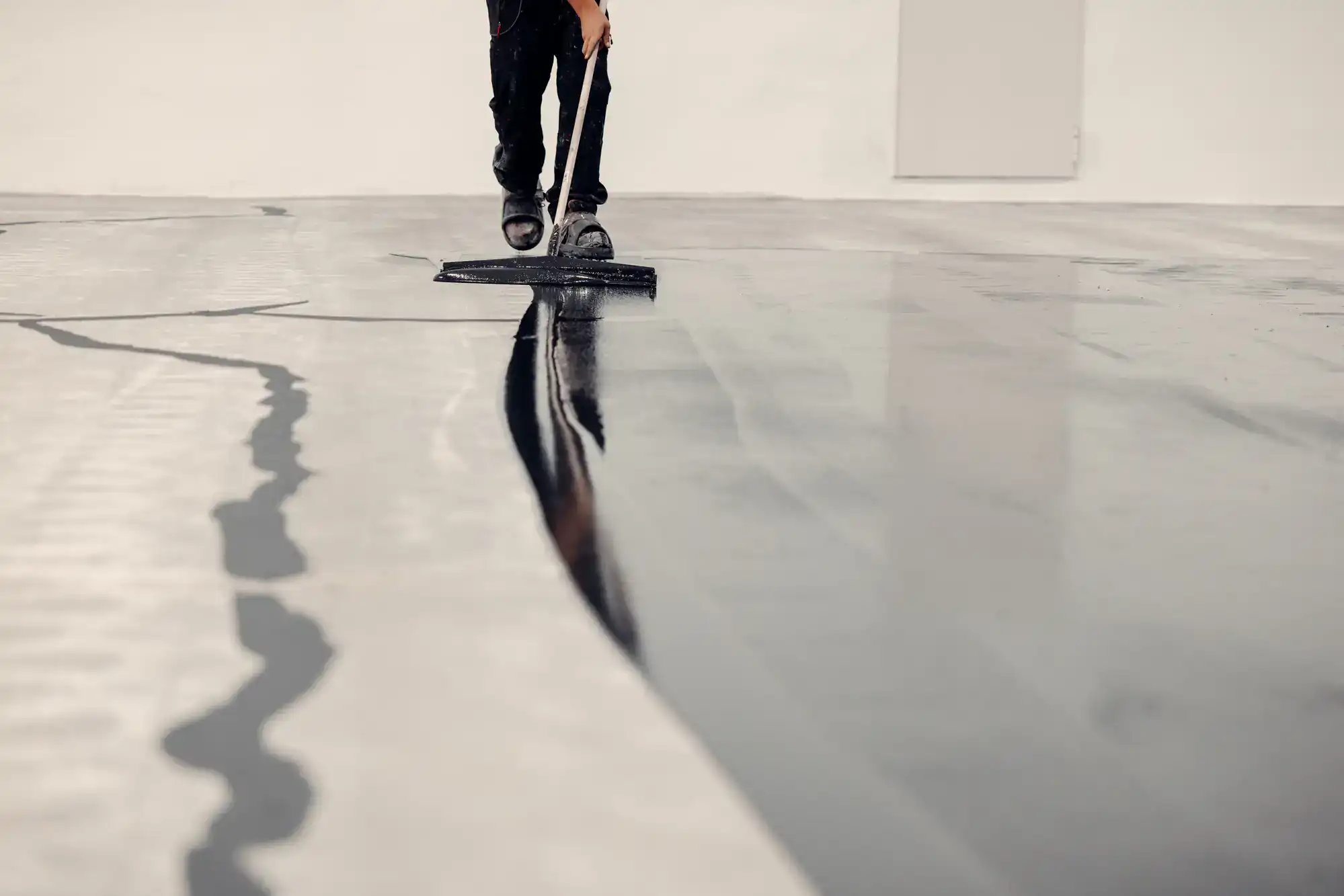
Hicksville isn’t a quiet suburb. It’s a working commercial hub warehouses on Bethpage Road, restaurants packed six nights a week on South Broadway, medical offices that can’t afford a slip or a seam. The floors in these spaces take a beating, and most coating systems aren’t built for it. When you invest in a properly installed commercial epoxy flooring system, you stop replacing floors every few years and start thinking in decades.
Nassau County’s aging concrete slab building stock much of it poured in the 1950s without modern moisture barriers is one of the most common reasons floors fail here. Moisture vapor works its way up through the slab, gets trapped under the coating, and the floor starts to bubble and peel from the inside out. It’s not a product failure. It’s a preparation failure. Every installation we do starts with moisture testing, because skipping that step is exactly how you end up with a floor that looks great in January and looks terrible by June.
The result, when it’s done right, is a seamless, chemical-resistant surface that handles forklift traffic, food-grade cleaning chemicals, rolling equipment, and daily commercial use without cracking, peeling, or becoming a liability. That’s what a properly specified industrial epoxy floor in Hicksville should do. That’s what we install.
We’ve been serving Nassau and Suffolk Counties for over 35 years. That’s not a number we throw around lightly it means we’ve been installing floors in commercial buildings on Long Island since before Hicksville’s South Broadway corridor became the regional hub it is today. We know Nassau County’s slabs, its humidity, its building stock, and what happens when any of those factors get ignored during installation.
Danny Harmer, our president and CEO, has over 40 years of hands-on installation experience. He’s installed floors in the White House kitchen, in Moscow, and across the full range of commercial and industrial environments in the United States. That depth of experience shows up in how we specify systems, how we prep surfaces, and how we approach every job whether it’s a warehouse off Bethpage Road or a commercial kitchen on South Broadway.
Our installation crew has been with us for over a decade in most cases. We’re Sherwin-Williams High Performance Flooring certified. Res Tech certified. OSHA 40 qualified. BBB Accredited with an A+ rating. These aren’t self-reported claims they’re documented credentials you can verify before you ever call us.
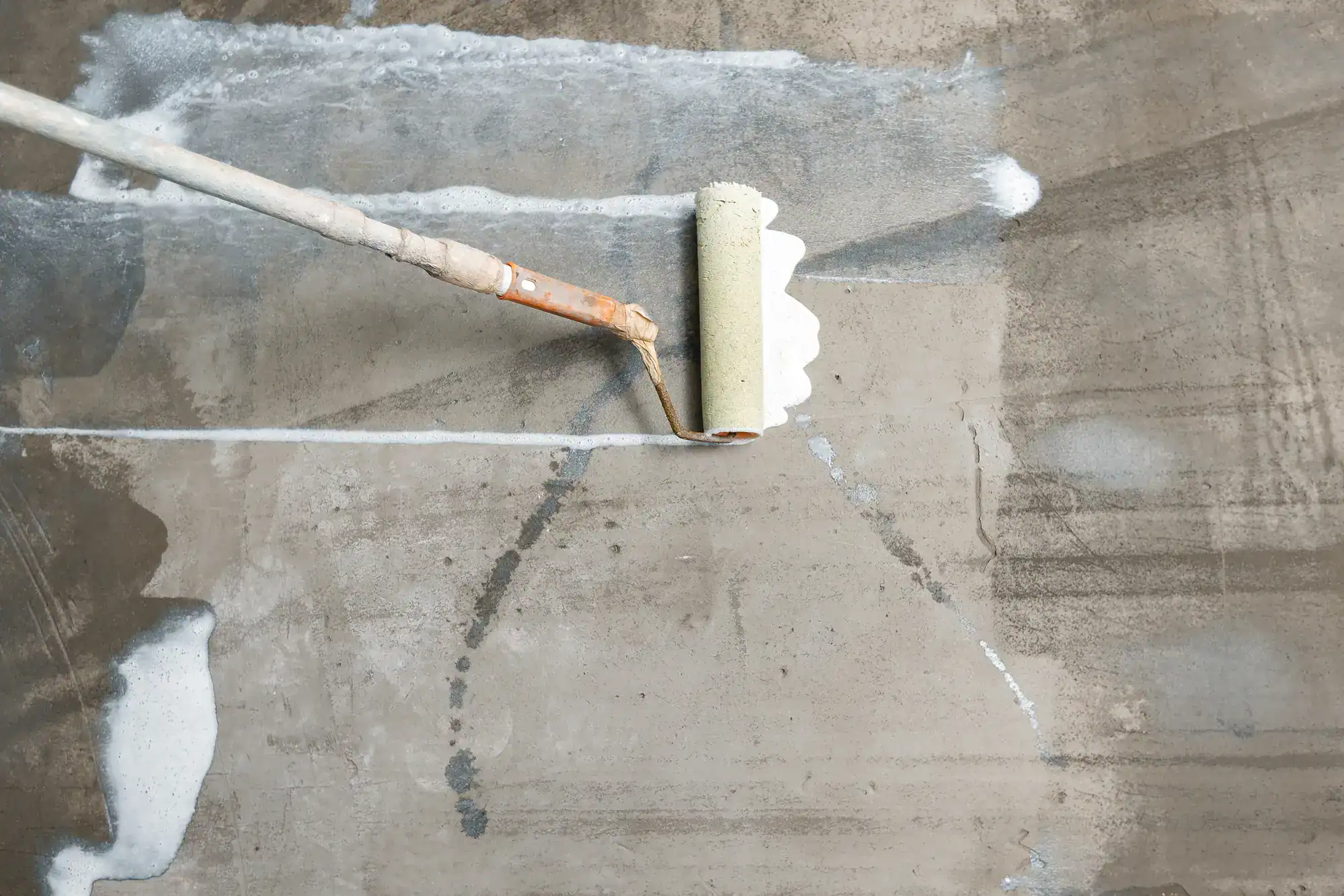
The work that determines whether your floor lasts two years or twenty happens before the first coat ever touches the slab. We start with a full assessment of your concrete surface profile, existing damage, and moisture vapor emission testing. In Hicksville’s commercial building stock, where many slabs were poured decades ago without vapor barriers, this step isn’t optional. If the slab fails the moisture threshold, we specify a moisture-mitigating primer into the system before anything else goes down.
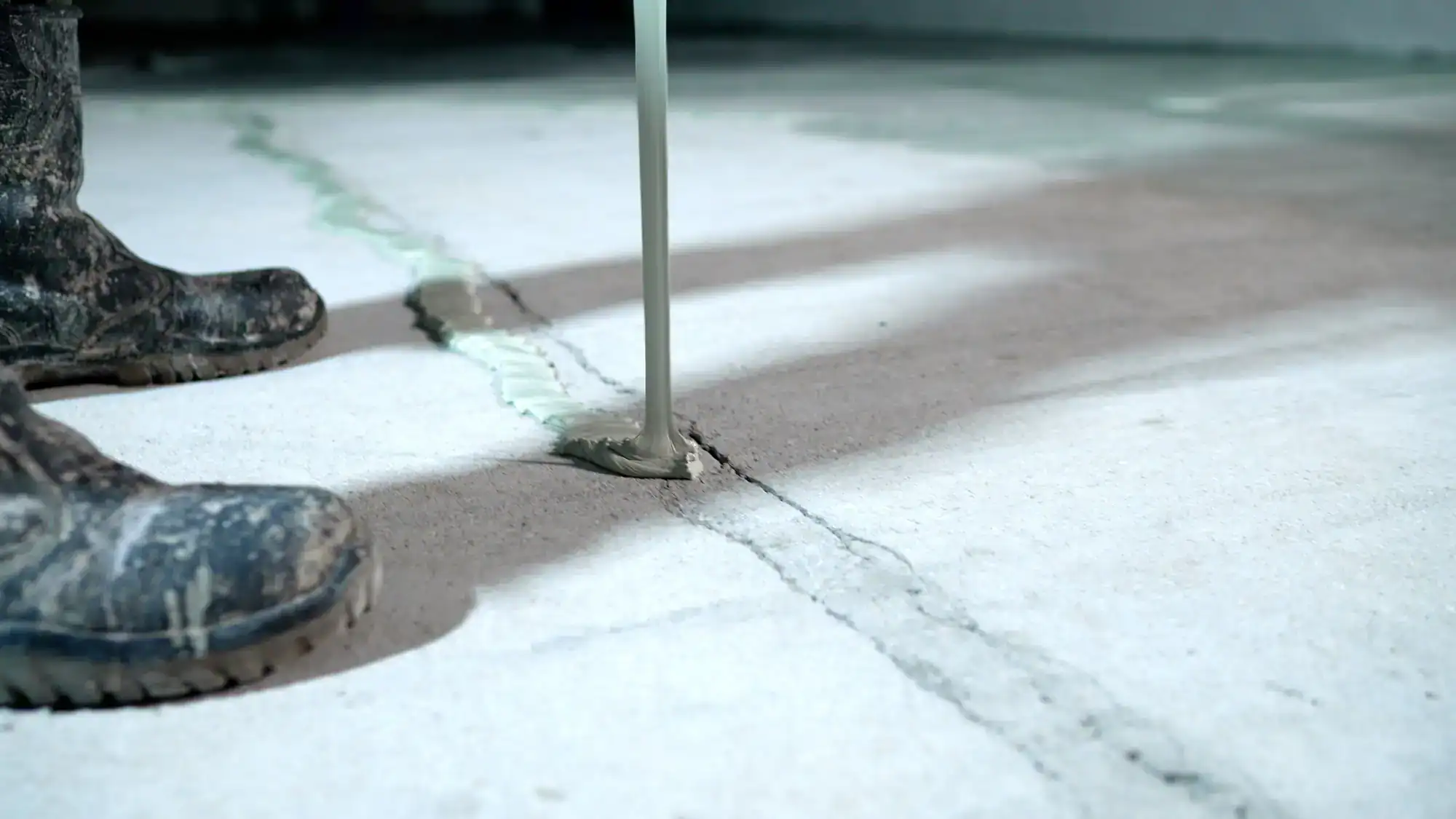
From there, the surface is diamond ground to the correct profile typically CSP-3 to CSP-5 depending on the system being applied. This is what creates the mechanical bond that keeps the coating locked to the slab under real commercial loads. We fill cracks, address joints, and clean the substrate before we ever open a bucket. Most contractors skip or rush this part. It’s the only reason floors fail.
Once prep is complete, the system goes down in the correct sequence base coat, broadcast layer if specified, topcoat with proper cure time between each stage. For commercial kitchens on South Broadway that need to be back in service by morning, we work overnight. For warehouse environments on the Bethpage Road corridor, return-to-traffic windows run 24 to 72 hours depending on the system. You’ll know the timeline before we start, not after.
Ready to get started?
The range of commercial environments in Hicksville is wider than most towns its size. Warehouses and distribution centers on the Bethpage Road industrial corridor need floors rated for forklift axle loads that can exceed 10,000 pounds that means 100% solids epoxy, 1/4-inch mortar trowel systems, and polyaspartic topcoats, not a rolled-on coating from a big-box store. Restaurants and food markets along South Broadway need USDA-compliant, seamless, thermally shock-resistant systems that pass Nassau County Department of Health inspection. Medical offices affiliated with Northwell Health need antimicrobial-grade seamless floors that meet FGI guidelines and ADA slip resistance requirements.
We also work with the general contractors and developers active in Hicksville’s downtown revitalization pipeline the mixed-use retail and restaurant spaces coming out of the Alpine Development project on Newbridge Road and the broader Shops on Broadway redevelopment. New construction commercial flooring requires the same preparation discipline and system specification as a retrofit and we bring the same certified process to both.
Every system we install is specified to the actual environment the loads, the chemical exposure, the cleaning protocols, the regulatory requirements. You’re not getting a generic coating at a professional price. You’re getting a floor engineered for what’s actually happening on it, installed by a crew that has been doing this specific work in Nassau County for over three decades.
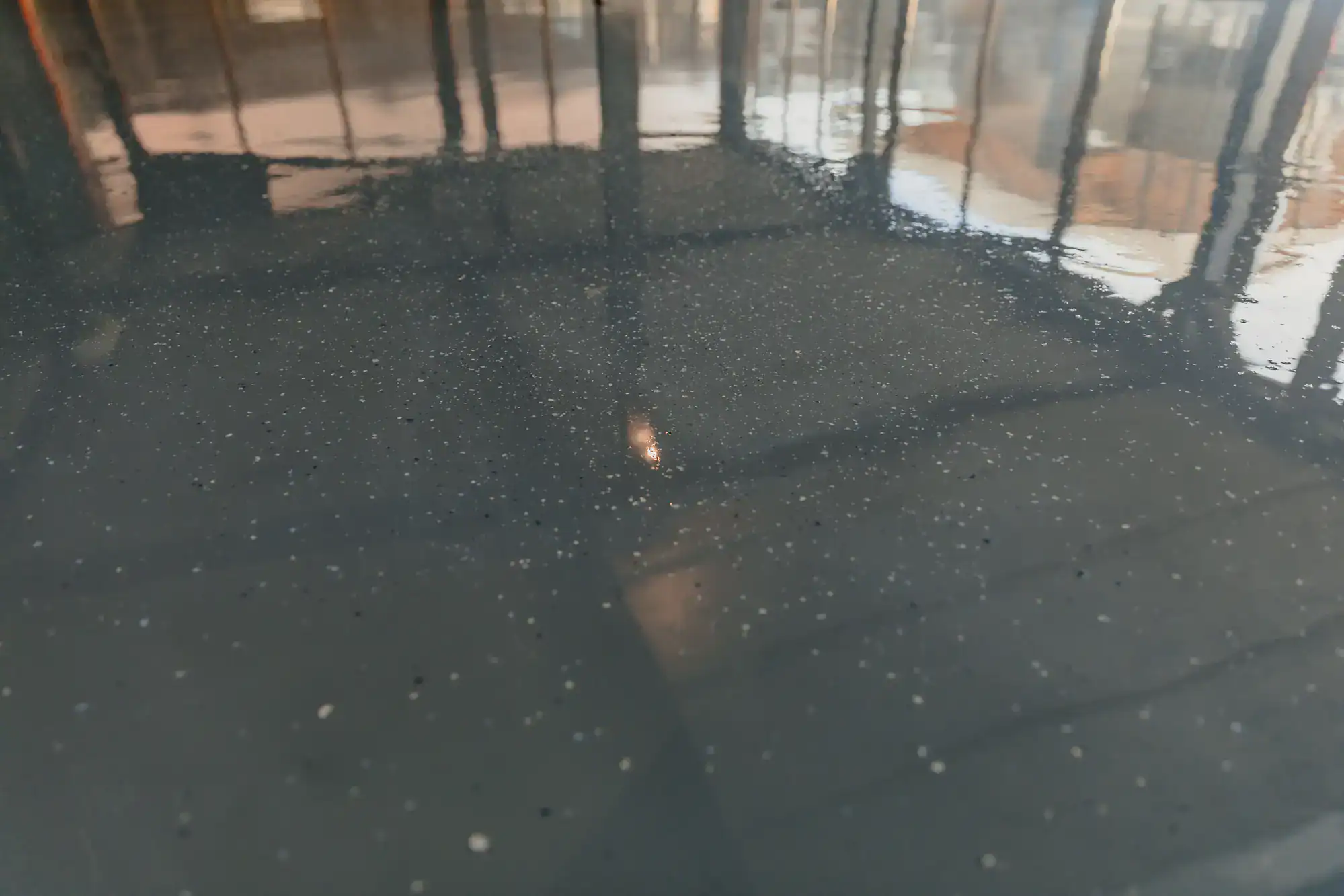
The most common cause is moisture vapor transmission water vapor migrating upward through the concrete slab and getting trapped under the coating. In Hicksville, this is a particularly common problem because a significant portion of the commercial and industrial building stock was constructed in the 1950s and 1960s without modern vapor barriers. Nassau County’s humidity compounds the issue year-round.
When a contractor skips moisture testing and applies a coating directly to a slab with elevated moisture vapor emission, the coating loses its bond from the inside out. You’ll see bubbling, blistering, and delamination sometimes within weeks of installation. The fix isn’t a better topcoat. It’s a proper moisture assessment before any product is specified, and a moisture-mitigating primer incorporated into the system when the slab requires it. That’s a standard part of our process on every Hicksville job, not an upsell.
It depends on the size of the space, the condition of the slab, and the system being installed but for most commercial jobs in Hicksville, the installation itself runs one to two days, with a return-to-traffic window of 24 to 72 hours after the final coat.
For restaurant and food service operations on South Broadway that can’t afford to lose a day of service, we schedule overnight installations. Our crew comes in after closing, completes the work, and the kitchen or dining area is ready for the morning shift. For warehouse and distribution facilities on the Bethpage Road corridor, we work around your receiving and shipping schedule to minimize operational disruption. The timeline is always confirmed before we start not figured out as we go.
Commercial kitchens in Nassau County are subject to Department of Health inspection requirements that mandate seamless, non-porous, easily cleanable floor surfaces in all food preparation and storage areas. A standard epoxy coating doesn’t always meet this standard the system needs to be USDA-compliant, thermally shock-resistant (capable of handling hot water cleaning without cracking or delaminating), and installed with integral cove base to eliminate the gap between the floor and wall where bacteria accumulate.
The appropriate system for most commercial kitchens is a urethane cement or cementitious urethane mortar floor a thicker, more impact-resistant system than standard epoxy that handles the thermal cycling of a working kitchen. We’ve installed these systems in food service environments ranging from small restaurant kitchens to large-scale food processing facilities. If you’re on South Broadway or anywhere in Hicksville’s food service corridor and you’re facing a health inspection or a floor replacement, this is the system you want.
Online cost estimators quote $3 to $15 per square foot a range wide enough to be nearly useless, because it lumps residential garage kits in with industrial-grade commercial systems. For commercial and industrial epoxy flooring in Hicksville, a realistic range is $7 to $12 per square foot for standard high-build systems, with specialty applications moisture mitigation, urethane mortar, healthcare-grade antimicrobial systems running higher depending on the scope.
The more useful number is lifecycle cost. A $3 per square foot system that needs to be replaced every two to three years costs more over a decade than a $10 per square foot system that performs for 20 years and that’s before you factor in the operational disruption of a replacement cycle. For Hicksville business owners managing warehouse space, restaurant operations, or medical facilities, the math consistently favors investing in a properly specified system the first time.
In most cases, applying an epoxy coating to an existing concrete slab in a commercial building is treated as a maintenance or surface treatment activity and does not require a building permit from the Town of Oyster Bay. Hicksville is an unincorporated hamlet governed by the Town of Oyster Bay not a village board so commercial permit questions go through the Town of Oyster Bay Building Department directly.
Where permits may come into play is if the scope of work involves structural slab repair, significant substrate modification, or construction-level changes to the floor assembly. For food service facilities, Nassau County Department of Health sign-off on flooring materials is a separate consideration from the building permit question and the flooring system needs to meet their standards for seamless, non-porous surfaces regardless of permit status. We can walk you through what applies to your specific situation before any work begins.
Epoxy performs best when applied between 50°F and 90°F with relative humidity below 85%. In Hicksville, that points to spring and fall April through May and September through October as the most reliable installation windows. January averages around 32°F, which creates real challenges for facilities without climate control, and Long Island’s summer humidity can push ambient moisture levels high enough to affect cure quality if the environment isn’t managed carefully.
That said, we can extend the installation season significantly with properly equipped facilities. Heated enclosures, dehumidification equipment, and climate-controlled application environments allow for year-round installation in most commercial facilities. If you’re planning a floor project at a warehouse or commercial kitchen in Hicksville and timing is a factor whether because of a health inspection deadline, a lease renewal, or the downtown revitalization construction schedule reach out and we’ll give you a straight answer on what’s feasible for your timeline and your space.