
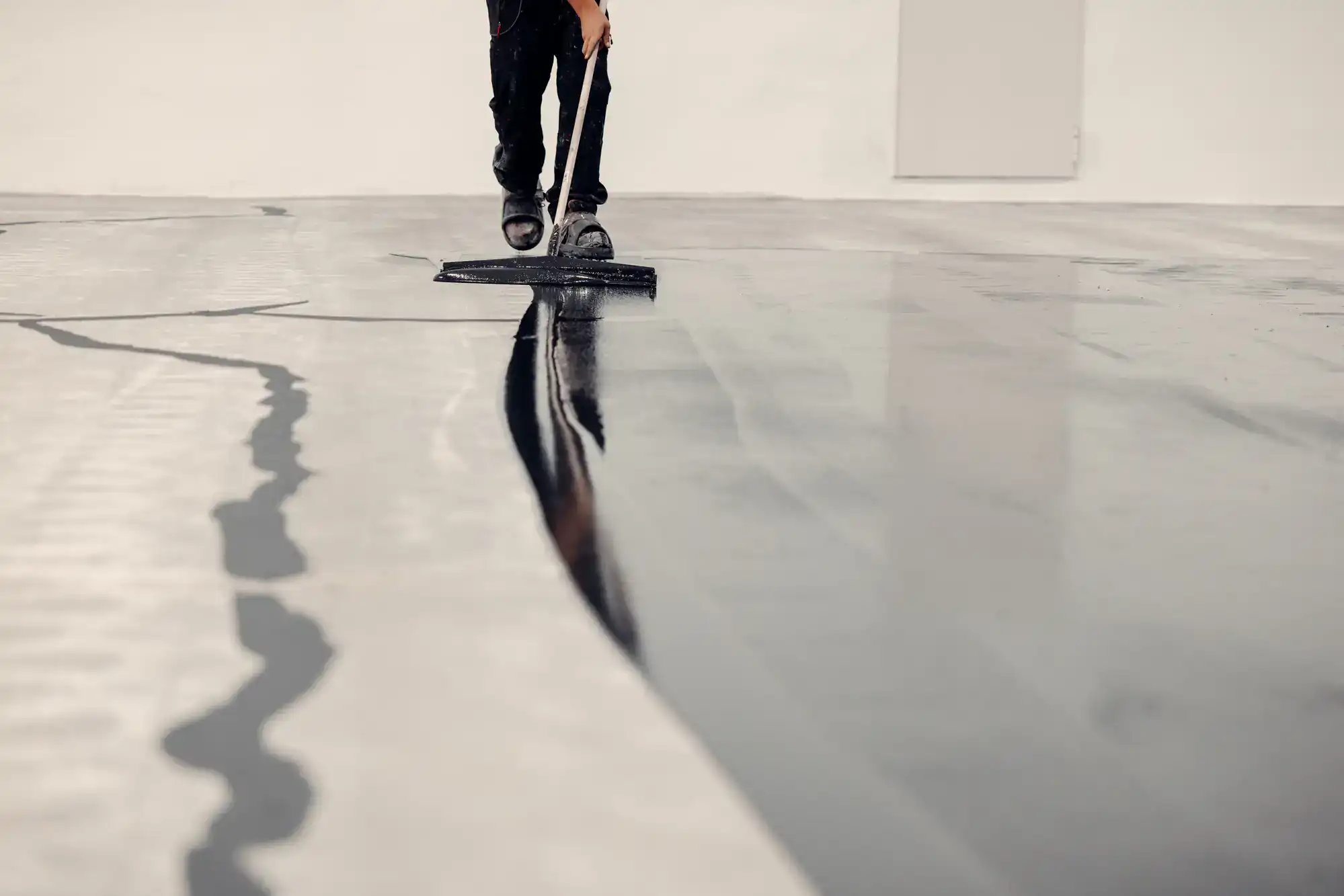
Most epoxy floors don’t fail because of foot traffic. They fail because the contractor skipped the prep work no moisture test, no diamond grinding, just a coat slapped over a slab that was never ready for it. On Long Island’s glacial outwash plain, where the water table sits close to the surface and moisture vapor pushes up through concrete year-round, that shortcut turns into bubbling, blistering, and delamination within months. Central Islip’s building stock makes this especially relevant the commercial and institutional buildings that rose from the former psychiatric center grounds in the mid-1990s are now 25 to 30 years old, and original floor coatings in those buildings are at or past their designed service life.
When the job is done right, the difference is immediate and lasting. You get a seamless, chemical-resistant surface that handles real operational loads forklift traffic, pallet jacks, chemical spills, thermal cycling from loading dock doors opening in January. For the pharmaceutical packaging operations, healthcare facilities, and food service kitchens operating throughout Central Islip, that seamless surface also eliminates the grout lines and joints where bacteria colonize and cleaning protocols break down. No gaps. No porous tile edges. Just a floor you can sanitize, maintain, and rely on.
The floor you’re walking on right now has a lifespan. A professionally installed epoxy system extends that lifespan by 15 to 20 years. A cheap system installed without proper prep shortens it to 18 months. The difference isn’t luck it’s process.
We’ve been operating out of Bohemia, NY right inside the Town of Islip for over 35 years. That means we were already installing industrial-grade epoxy systems in Central Islip before the Central Islip State Hospital closed, before the D’Amato Federal Courthouse opened, and before most of the commercial buildings along Carleton Avenue were constructed. We didn’t add Central Islip to a service area list. We’ve been working in this town, on these slabs, in this climate, for decades.
Danny Harmer, our President and CEO, brings more than 40 years of hands-on installation experience not management experience, installation experience. Our crew reflects the same standard: most installers have been with us for over a decade. We carry Sherwin-Williams High Performance Flooring and Res Tech manufacturer certifications, OSHA 40 certified installers, and a BBB A+ rating with zero complaints across 35-plus years of commercial and industrial work. In 1996 the same year Central Islip was being rebuilt from the ground up we installed the epoxy floor in the White House kitchen. That floor is still standing.
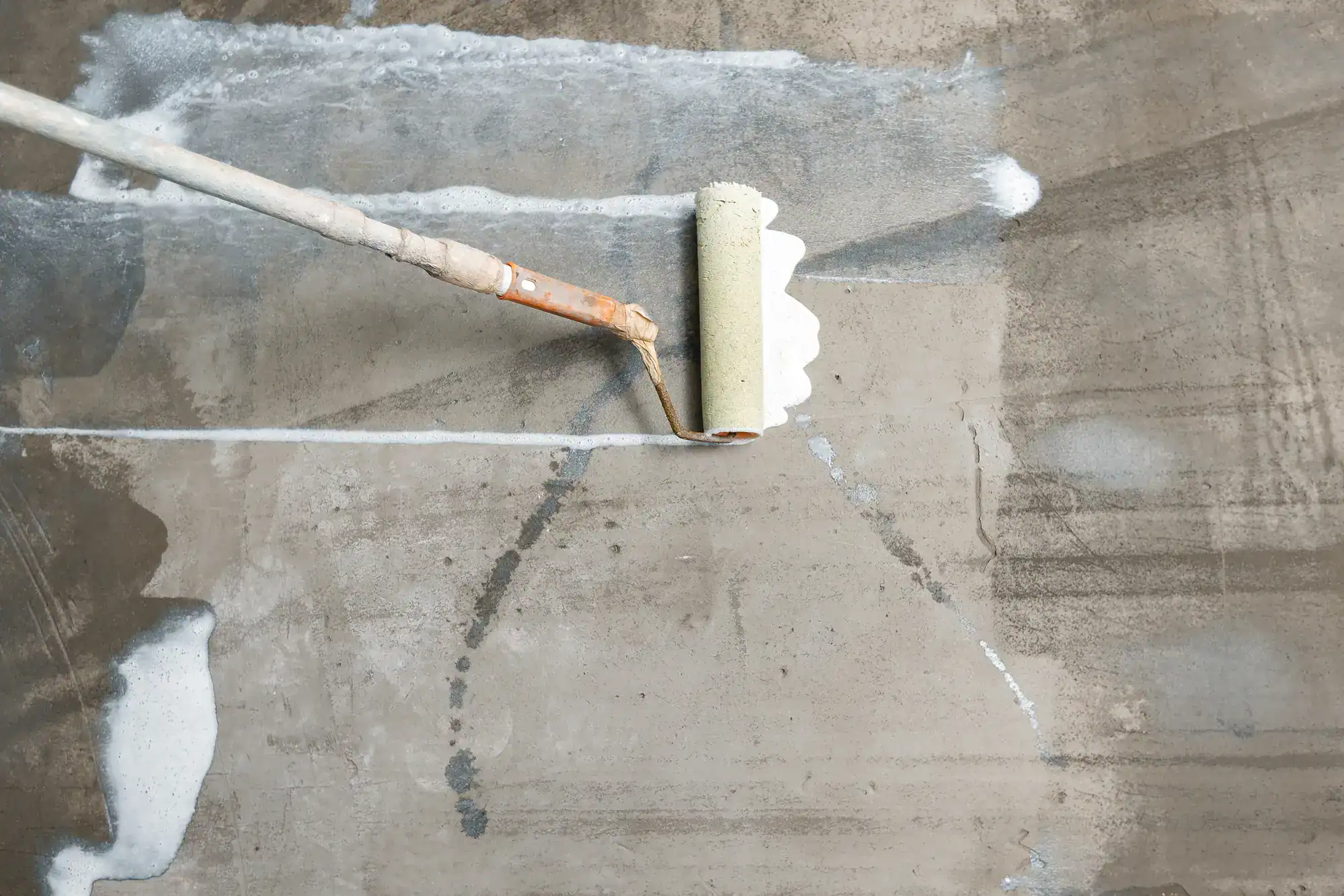
The first thing that happens on any job is a slab assessment. Before any product touches your floor, we test moisture vapor transmission. In Central Islip, this step isn’t optional the shallow water table and porous glacial soil underneath mean that moisture is almost always a factor, and any contractor who skips this test is setting you up for a failure that looks fine for six months and then peels. If moisture mitigation is needed, we address it before the coating system is specified, not after the floor starts bubbling.
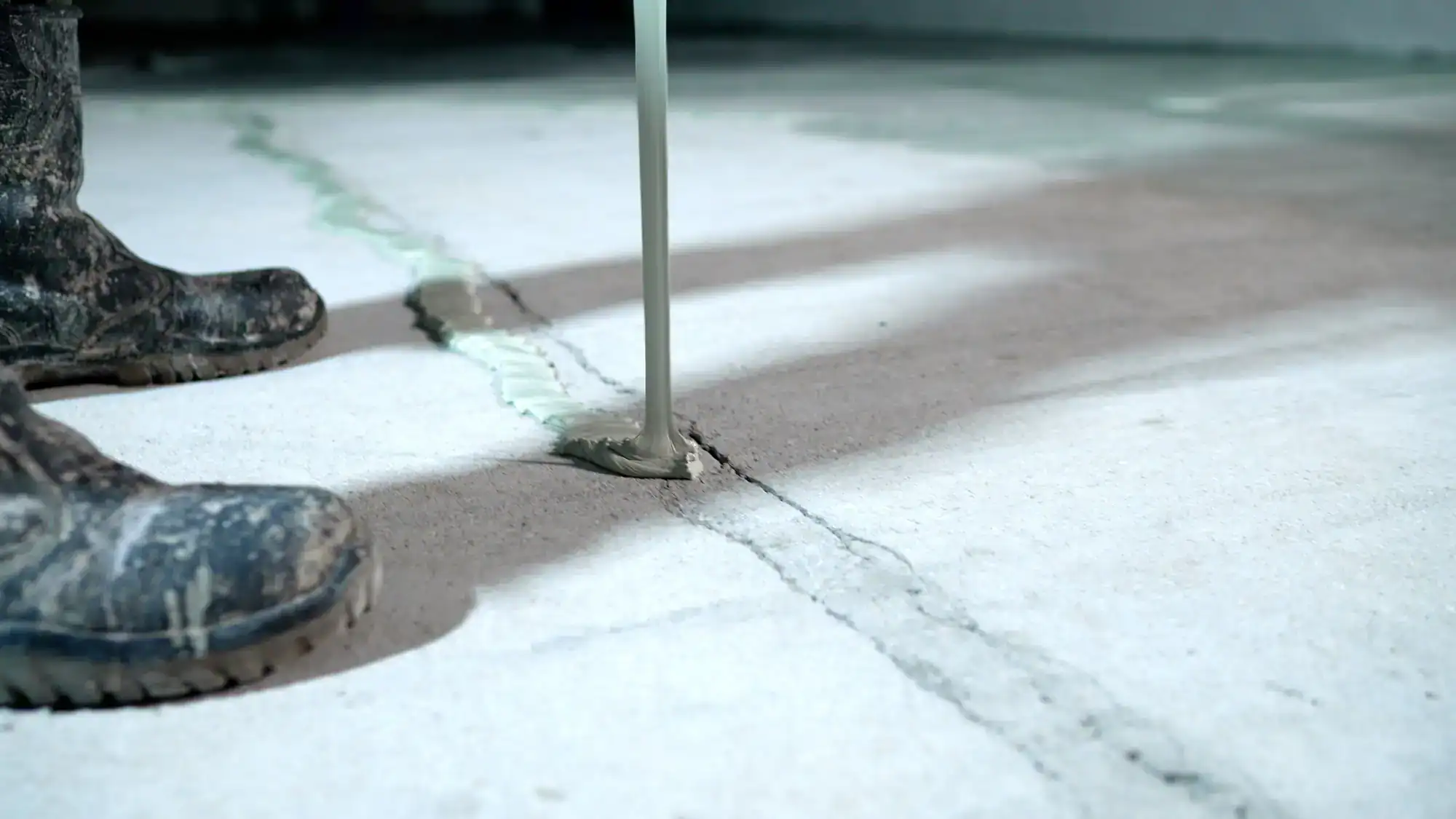
Surface preparation comes next, and this is where most low-cost installs cut corners. Every slab gets diamond ground not acid etched, not swept and coated. Diamond grinding opens the concrete’s surface profile so the epoxy bonds mechanically, not just adhesively. It also removes existing coatings, surface contaminants, and weak concrete that would otherwise cause delamination. Cracks and joints are repaired and filled before the first coat goes down.
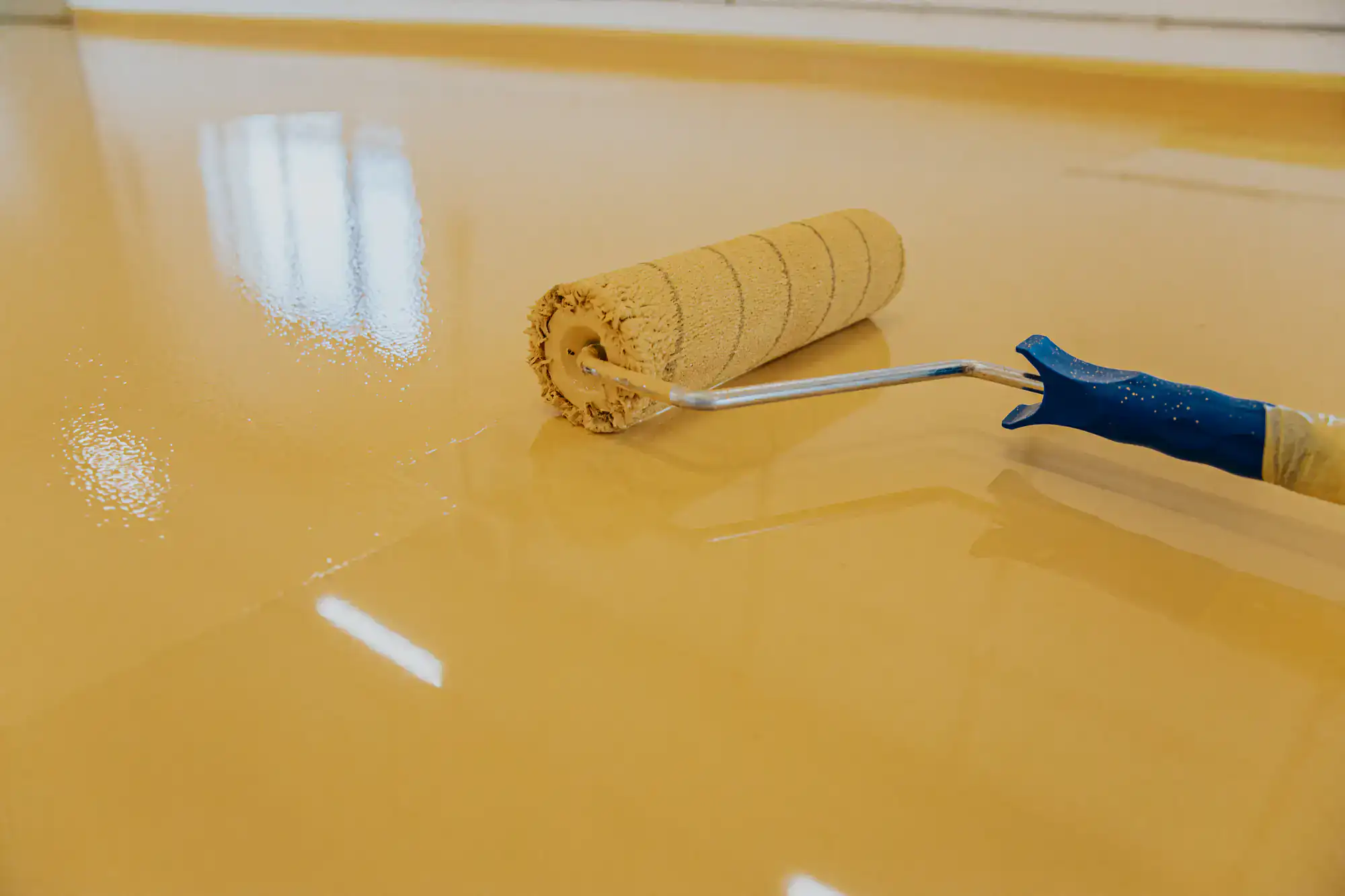
From there, the system build-up follows the specification: primer coat, base coat, broadcast layer if applicable, and topcoat with proper cure time between each layer. For Central Islip’s commercial kitchen and food service operators, we can complete this entire process overnight so you open on schedule the next morning. For warehouse and industrial clients, we coordinate the project timeline around your operational calendar. Nothing happens on your floor until the previous coat has fully cured, because rushing that step is how 10-year floors become 2-year problems.
Ready to get started?
The epoxy flooring systems we install in Central Islip, NY are specified for the actual demands of each facility not pulled from a standard menu. A pharmaceutical packaging operation like those in Central Islip’s industrial corridor needs a chemical-resistant epoxy finish rated for solvent and acid exposure. A commercial kitchen serving the courthouse complex or a healthcare facility needs a seamless, USDA-compliant resinous floor coating that passes Suffolk County Department of Health Services inspection. A warehouse handling forklift traffic needs a heavy-duty industrial epoxy floor built to withstand axle loads exceeding 10,000 pounds. These are different systems, and we specify them accordingly.
For facilities near Long Island MacArthur Airport, we also offer aircraft hangar flooring and aviation maintenance floor systems a specialty vertical that requires specific product chemistry and surface tolerance that standard flooring contractors don’t carry. All commercial work in Central Islip falls under the Town of Islip Building Division’s jurisdiction, and we handle projects requiring SCDHS sign-off or FAA proximity review with full knowledge of those requirements, because we’ve been navigating the Town of Islip permit process for over three decades.
Residential garage and basement floors in Central Islip’s established neighborhoods Coventry Village, Waddington Estates, the older cape and colonial stock from the 1950s and 1960s receive the same system discipline as commercial work. The slabs in those homes are 50 to 70 years old. They need real prep, not a kit.
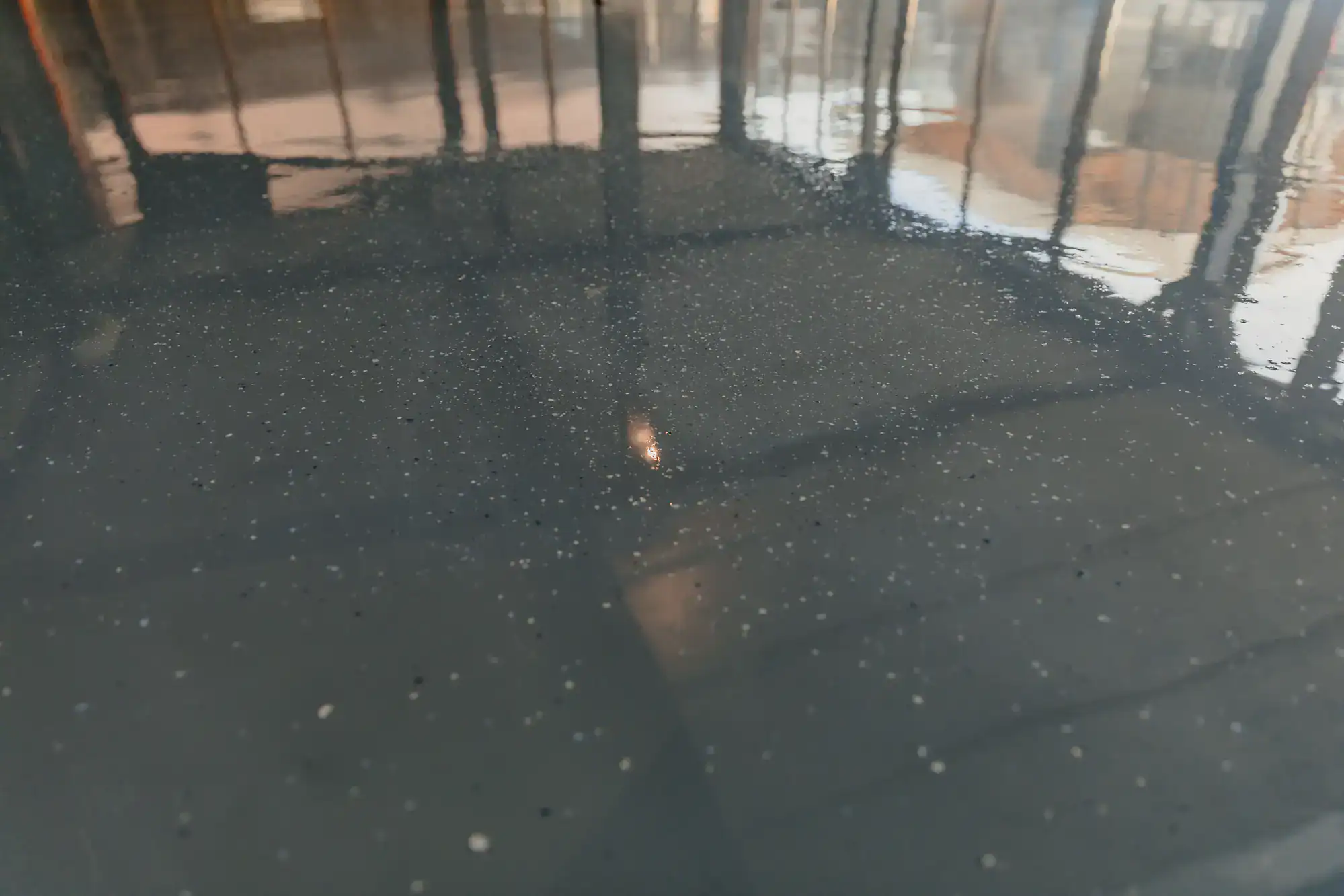
The most common reason is moisture. Central Islip sits on Long Island’s glacial outwash plain sandy, porous soil with a relatively shallow water table that pushes moisture vapor up through concrete slabs year-round. When a contractor doesn’t test for moisture vapor transmission before installation, that moisture gets trapped under the coating and causes blistering, bubbling, and delamination, sometimes within months. It’s not a product failure it’s a prep failure.
The second most common reason is surface preparation. Diamond grinding opens the concrete’s surface profile so the epoxy bonds properly. Acid etching the cheaper, faster alternative doesn’t achieve the same profile and leaves the coating with a weaker mechanical bond. In Central Islip’s climate, with its humidity swings and freeze-thaw cycles, that weaker bond doesn’t last. If your previous floor failed early, there’s a good chance one or both of these steps were skipped.
A properly installed industrial-grade epoxy system meaning full slab prep, moisture testing, diamond grinding, and a multi-layer build with appropriate cure time between coats typically lasts 15 to 20 years in a commercial or industrial environment. In a residential garage or basement with lighter use, it can last longer. The key word is “properly installed.” Consumer-grade water-based coatings applied over inadequately prepped slabs routinely fail within one to three years, especially in Central Islip where humidity, freeze-thaw cycles, and ground moisture all stress the coating from below and above simultaneously.
The lifecycle cost argument is straightforward. A professional system installed correctly costs more upfront but you’re paying for it once. A cheap system that fails in 18 months costs you removal, re-prep, and reinstallation on top of the original price. For Central Islip’s commercial and institutional facility managers overseeing buildings that are now 25 to 30 years old, the math on doing it right the first time is not a close call.
Commercial kitchens in Central Islip must meet Suffolk County Department of Health Services standards for sanitary construction, which means the floor system needs to be seamless, non-porous, chemical-resistant, and cleanable. Tile with grout joints doesn’t meet that standard in practice grout absorbs bacteria, degrades under cleaning chemicals, and becomes a compliance liability over time. A properly installed seamless resinous floor coating eliminates those failure points entirely.
The system used in a commercial kitchen is typically a cementitious urethane or high-build epoxy with a urethane topcoat products that resist the thermal shock of steam cleaning, the chemical exposure of commercial degreasers, and the impact of dropped equipment. These are not the same products used in a warehouse or a garage. For Central Islip restaurant owners and institutional food service operators, we can complete the installation overnight so your kitchen is back in service the next morning without a lost revenue day.
Humidity matters more than most people realize. Epoxy should not be applied when relative humidity exceeds 85 percent or when the slab temperature is within five degrees of the dew point conditions that trap moisture at the surface and cause the coating to cure improperly. Long Island’s summers, with July humidity regularly above 70 percent and heat that pushes ambient temperatures into the upper 80s, create a narrow daily application window during peak season. Morning installations before humidity peaks are standard practice for warm-weather work.
This is also why spring and fall are the most reliable seasons for commercial epoxy projects in Central Islip. The ambient conditions are more stable, the slab temperatures are in the right range, and the cure process runs predictably. For facility managers planning ahead, scheduling a floor project in April, May, September, or October rather than July or August typically produces a better result and a smoother installation window. If your timeline requires summer work, we can do it it just requires tighter environmental management during application.
Yes but the system has to be specified for it. Not every epoxy coating is rated for forklift axle loads, and a system built for foot traffic in a retail space will crack and degrade quickly under the point-load stress of a loaded forklift. Heavy-duty industrial epoxy floor systems use higher-build coatings, harder topcoats, and in some cases broadcast aggregate layers that increase surface hardness and slip resistance. The specification depends on the actual load profile of your facility what equipment you’re running, how frequently, and what kind of turning and braking stress the floor takes at loading dock transitions.
Central Islip’s active warehouse and distribution market with approximately 191,500 square feet of industrial space in the area includes facilities running everything from light pallet jacks to full counterbalance forklifts. The right system for your operation is the one engineered for your traffic, not the one that’s easiest to install. That’s a conversation worth having before anything gets ordered, which is why we start with a site assessment, not a product pitch.
For commercial and industrial epoxy flooring in Central Islip, NY, our installed pricing typically ranges from $7 to $12 per square foot for a complete system meaning slab prep, moisture mitigation if needed, diamond grinding, and a multi-layer build with the appropriate topcoat for your environment. Simpler systems in lower-demand environments can come in at the lower end of that range. High-build systems for chemical exposure, thermal shock, or heavy forklift traffic run toward the higher end or above it depending on the specification.
Residential garage floors in Central Islip’s older neighborhoods generally run $3 to $6 per square foot depending on slab condition, square footage, and system type. What drives cost up isn’t the product it’s the condition of the slab. A 60-year-old concrete floor in a postwar cape on the south side of Central Islip requires more prep work than a newer commercial slab, and that prep time is reflected in the price. The cost of living in Suffolk County is already high Central Islip’s cost index sits well above the national average and cutting corners on a floor system to save money upfront almost always costs more in the end. A proper quote requires a site visit, not a number pulled from a form.
Other Services we provide in Central Islip