

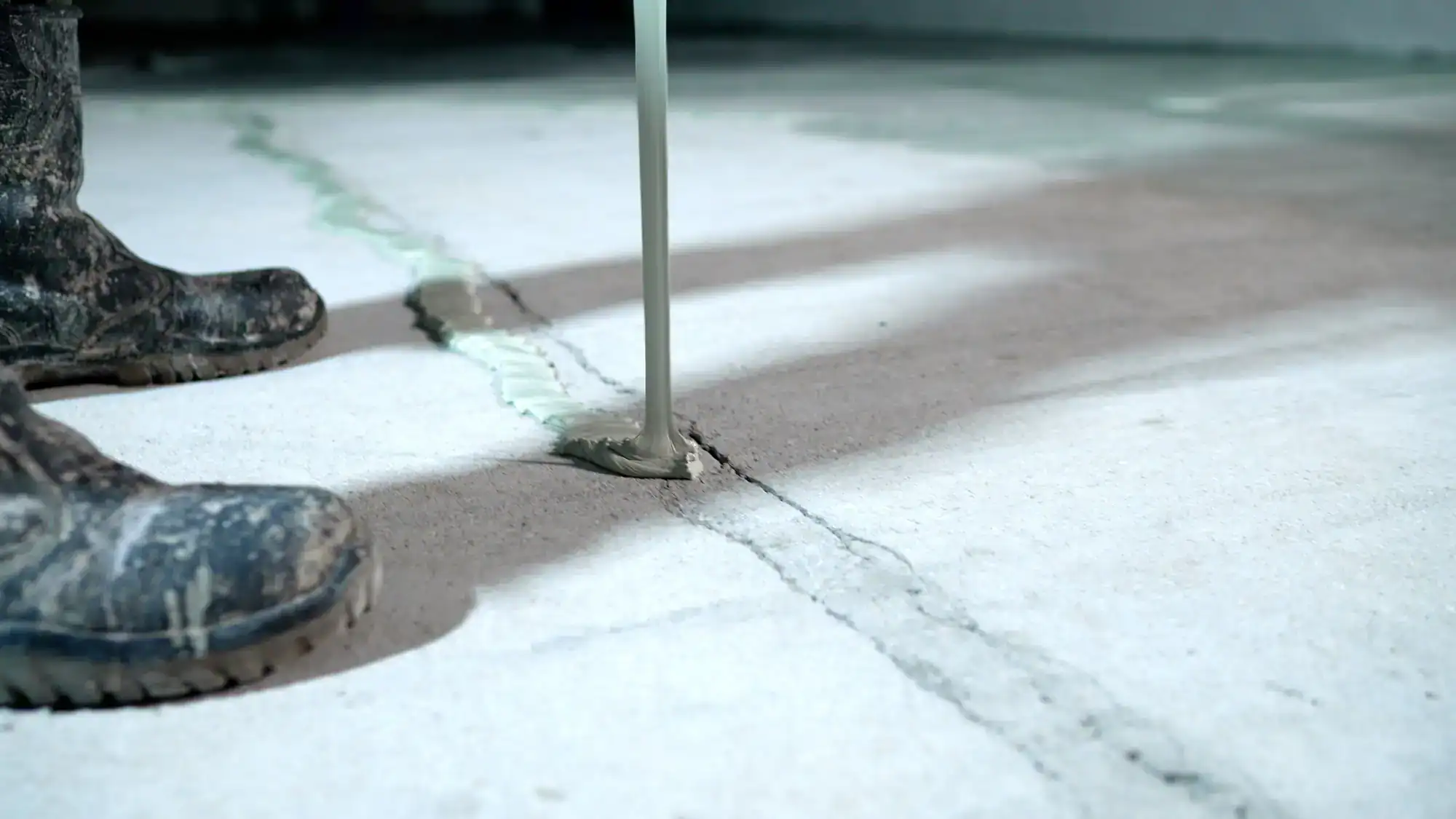
The businesses lining Middle Country Road don’t get a slow season. Restaurants, medical offices, auto shops, retail stores they run hard, and so do their floors. When that floor starts cracking, staining, or peeling, it’s not just an eyesore. It’s a liability, a failed inspection waiting to happen, and a disruption you can’t afford.
What changes after a professional epoxy installation isn’t just how the floor looks. It’s how the whole space functions. Spills wipe up in seconds. Foot traffic stops leaving marks. The floor stops absorbing everything that hits it and starts repelling it. For a healthcare facility near Coram’s Route 25 corridor where seamless, antimicrobial surfaces aren’t optional, they’re required that difference is the difference between passing an inspection and failing one.
Coram sits at the edge of the Long Island Pine Barrens, where Riverhead sandy loam is the dominant soil type. That soil profile allows moisture to migrate laterally beneath concrete slabs in ways that catch a lot of contractors off guard. Moisture vapor pushing up through an unprepared slab is the number one reason epoxy floors fail in Coram and central Suffolk County and it’s a risk that’s higher here than most people realize. A properly installed system, with real moisture testing done before the first coat goes down, doesn’t have that problem. That’s what you get when the contractor actually knows this area.
We’ve been operating out of Bohemia, NY about 10 miles from Coram down Route 112 for over 35 years. That’s not a marketing number. It means the team installing your floor has seen every way a Long Island slab can fail, and we’ve built our process specifically to prevent it.
Danny Harmer, our founder and lead installer, has over 40 years of hands-on experience. In 1996, our team installed the epoxy floor in the White House kitchen a system that’s been holding up under commercial kitchen conditions ever since. That same standard of work is what comes to your facility in Coram, whether you’re running a warehouse off the LIE corridor, a medical office serving the Longwood district, or a restaurant on Middle Country Road.
Our installers are OSHA 40 certified, factory-trained under Sherwin-Williams High Performance Flooring and Res Tech certifications, and most have been with us for over a decade. When you hire Advanced Epoxy Flooring, the crew that shows up is the crew that’s been doing this work not a rotating roster of subcontractors.
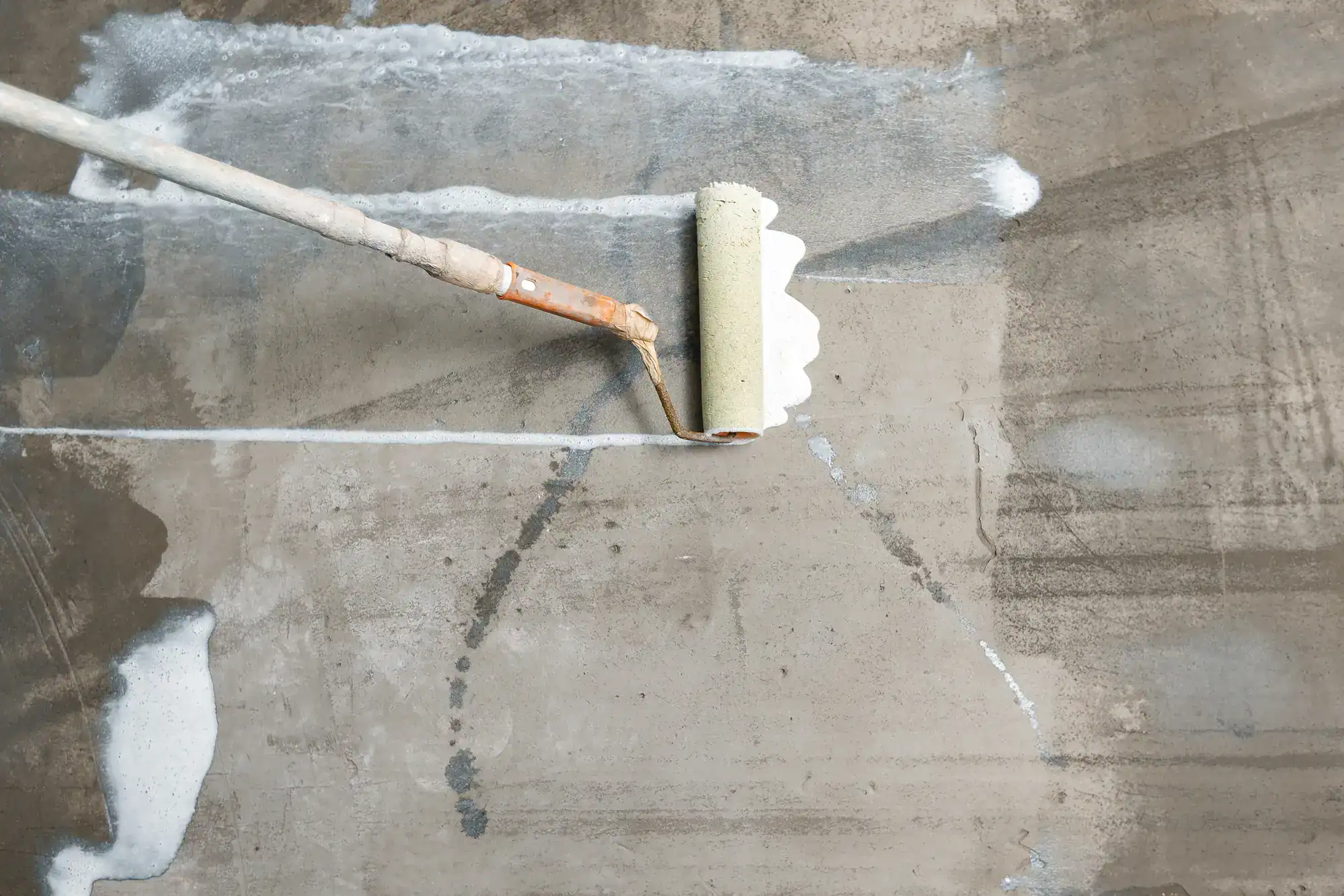
Every job starts with a slab assessment not a sales pitch. Before anything gets mixed or applied, we evaluate the concrete for moisture content, surface contamination, existing coatings, and structural condition. In Coram, where older commercial building stock along Route 25 often means slabs with decades of oil, grease, and old coatings baked in, this step isn’t optional. It’s what separates a floor that lasts from one that peels in two years.
Surface preparation comes next, and it’s where most of the work actually happens. We use diamond grinding not acid etching to open the concrete surface and create the profile that allows the epoxy to bond at a mechanical level. This step accounts for roughly 70 to 80 percent of a successful installation. It’s also the step that cheaper operators skip or rush. It shows up later, and it shows up fast.
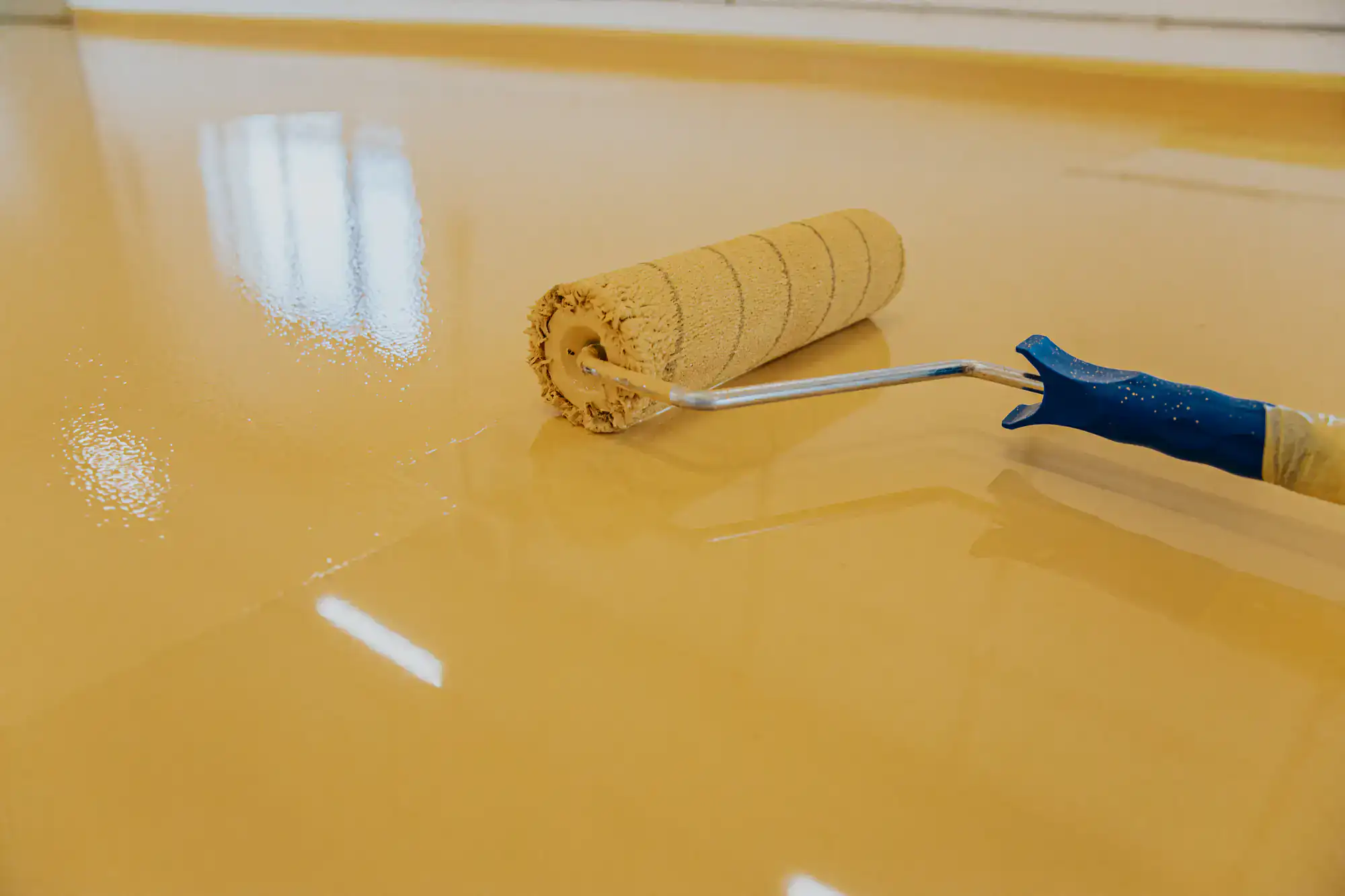
Once the surface is properly prepared and any moisture mitigation measures are in place, we apply the system in the correct sequence primer, base coat, broadcast layer if specified, and topcoat at the mil thickness the environment actually requires. Industrial and commercial systems run 14 to 30 mils of dry film thickness. That’s a fundamentally different product than what you’ll find at a hardware store. Cure time varies by system and season Long Island’s summer humidity affects the application window but most commercial installations are ready for foot traffic within 24 hours and full load within 72.
Ready to get started?
The right epoxy system depends entirely on what the floor is up against. A commercial kitchen on Middle Country Road needs something different than a warehouse near the Route 112 and LIE corridor, and both of those are different from a medical office serving Coram’s healthcare sector the largest employment vertical in the hamlet, with over 4,200 workers.
For food service environments, the system needs to meet Suffolk County Department of Health requirements for commercial kitchens seamless, non-porous, USDA-compliant, and installable overnight so the business opens on schedule the next morning. For healthcare and clinical spaces, that means antimicrobial additives built into the resin, ADA-compliant surface profiles, and finishes that hold up to institutional cleaning protocols without degrading. For automotive service shops dealing with motor oil, hydraulic fluid, and battery acid on a daily basis, chemical resistant epoxy finishes in Coram are the only flooring category that actually holds up standard concrete stains, absorbs, and eventually fails under that kind of chemical exposure.
For warehouse and industrial applications near Coram’s Route 112 corridor including new logistics and storage developments currently moving through Town of Brookhaven planning we specify heavy duty industrial epoxy floor systems at 1/4-inch mortar trowel depth, rated for forklift axle loads exceeding 10,000 lbs, and built to handle the kind of daily punishment that light commercial systems aren’t designed for. Whatever the environment, we specify the system for what’s actually there not what’s easiest to install.
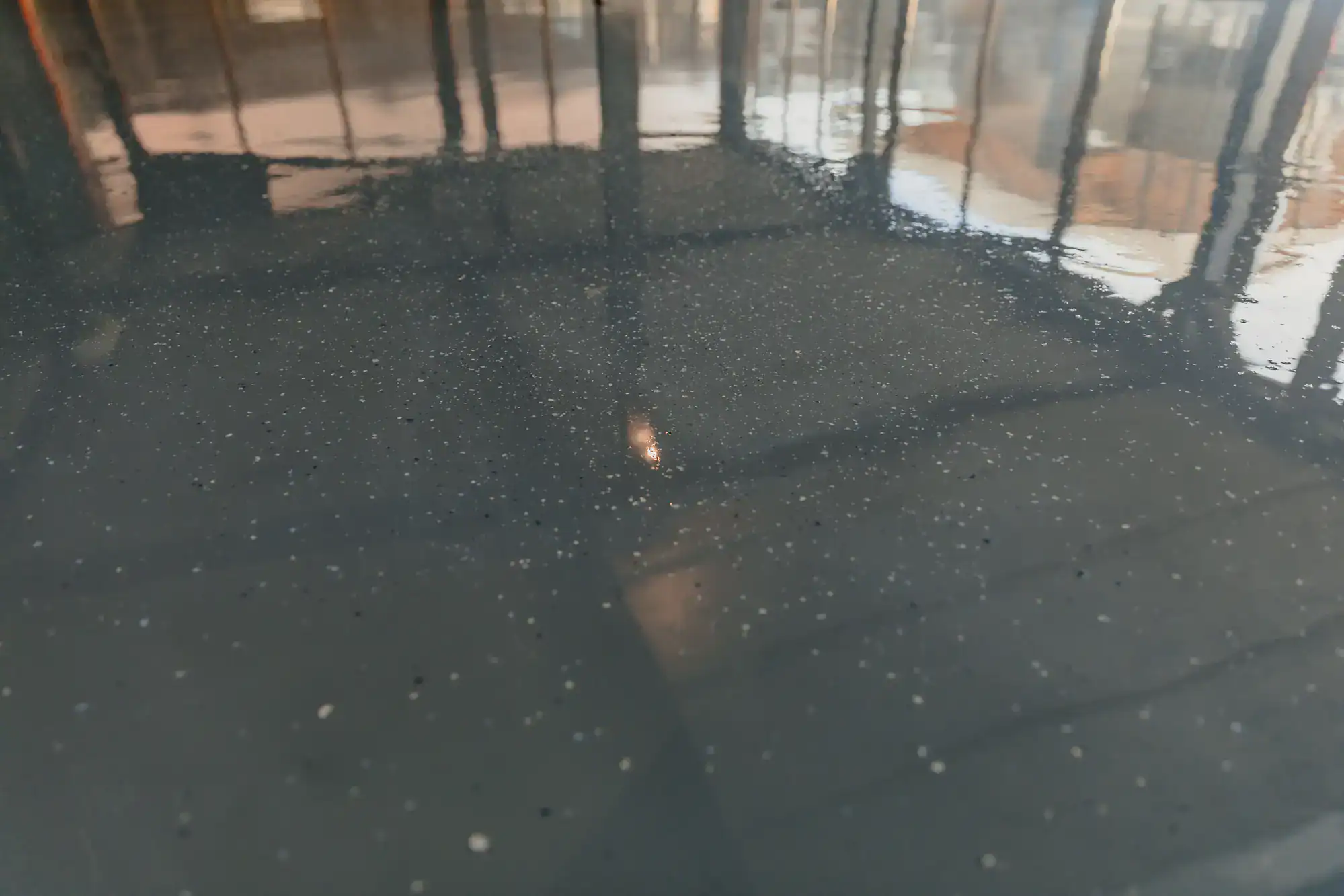
The most common reason is moisture specifically, moisture vapor pushing up through the concrete slab from below. Coram sits on Riverhead sandy loam, a soil type that drains quickly but also allows moisture to migrate laterally beneath slabs. When that moisture has nowhere to go, it builds pressure beneath the coating and causes delamination the bubbling and peeling that makes a floor look like it was installed wrong. Sometimes it was. But often the product was fine and the prep was the problem.
The second most common reason is inadequate surface preparation. A lot of operators use acid etching because it’s fast and cheap. It doesn’t create the surface profile that diamond grinding does, and it doesn’t remove the contamination oil, grease, old coatings that’s built up on older commercial slabs in Coram’s established building stock. When the bond fails, it fails from the bottom up. Moisture testing and diamond grinding aren’t upsells. They’re the reason a floor lasts 15 years instead of 18 months.
A professionally installed industrial-grade epoxy system properly prepped, correctly specified for the environment, and applied at the right mil thickness typically lasts 10 to 20 years in a commercial setting. That range depends on traffic volume, chemical exposure, and how well the floor is maintained. A restaurant on Middle Country Road with daily foot traffic and commercial cleaning will have different wear patterns than a warehouse running forklifts three shifts a day.
What shortens that lifespan dramatically is using the wrong system for the environment. Consumer-grade epoxy products cure to 3 to 8 mils of dry film thickness. Industrial systems run 14 to 30 mils. That’s not a small difference it’s a completely different product category with a completely different performance profile. If a contractor quotes you a price that seems unusually low for a commercial space in Coram, it’s worth asking what mil thickness they’re specifying and whether the product is 100% solids. Those two questions will tell you a lot about what you’re actually buying.
Yes and for most commercial kitchen installations, it’s designed to be done exactly that way. The standard approach for food service environments in Coram is overnight installation: we come in after closing, complete the work, and the floor is ready before the next morning’s open. This is how we handle commercial kitchen projects, and it’s a direct response to the reality that businesses on the Route 25 corridor in Coram can’t absorb multi-day closures.
The key is scheduling and system selection. Polyaspartic topcoat systems cure faster than standard epoxy and are well-suited to tight overnight windows. The slab still needs to be properly prepared there’s no shortcut on that but the application and cure timeline can absolutely be managed around your operating hours. If you’re running a food service operation that needs to meet Suffolk County Department of Health standards, the floor system also needs to be seamless and non-porous. That’s built into the spec from the start, not added at the end.
Professional commercial epoxy flooring in Coram typically runs $7 to $12 per square foot installed, depending on the system, the condition of the slab, and the scope of prep work required. Consumer-grade or budget contractor installs can come in at $3 to $5 per square foot. On the surface, that looks like a significant savings. Over time, it usually isn’t.
A cheap system that fails in two to three years doesn’t just cost you the replacement installation it costs you the removal of the failed floor, which adds labor and disposal expense on top of the new install. For a 2,000 square foot commercial space, a $6,000 budget install that fails in three years and requires another $8,000 to remove and replace has already cost more than the professional system would have. Coram property owners are already managing some of the highest property tax burdens in New York median annual taxes here run around $10,000. The lifecycle cost argument isn’t abstract in a market like this. It’s math.
It’s a real factor, and it’s one that we account for directly as experienced Long Island contractors. Epoxy flooring has application windows defined by temperature and relative humidity most systems shouldn’t be applied when ambient humidity exceeds 85% or when the surface temperature is within 5 degrees of the dew point. Central Suffolk County summers regularly push relative humidity into the 70 to 85% range, which means scheduling and timing matter.
This doesn’t mean epoxy can’t be installed in summer in Coram it means the contractor needs to know what they’re doing. Climate-controlled commercial spaces can be worked year-round without issue. Unheated or unventilated spaces require more scheduling discipline. The bigger humidity-related risk isn’t during application it’s the moisture already in the slab from Long Island’s seasonal cycles. That’s why moisture testing before installation isn’t a formality. It’s the step that determines whether the system you’re installing will still be there in ten years.
The question to ask isn’t “how many years have you been doing this?” it’s “what are you certified to install, and who certified you?” Manufacturer certifications like Sherwin-Williams High Performance Flooring and Res Tech aren’t self-issued. They require factory training on specific product systems and demonstrate that the contractor actually knows how to spec and apply those systems correctly. A contractor without those credentials is often working with whatever product they can source locally, not what’s engineered for your specific environment.
Beyond certifications, ask about OSHA training. On a commercial job site in Coram especially in an occupied healthcare facility, a working restaurant, or an active warehouse OSHA 40 certification means the crew knows how to work safely around other people and other trades. Ask for proof of BBB accreditation and check whether there are any complaints on record. And ask how long the crew has been together. A stable, experienced installation team produces consistent results. A rotating roster of subcontractors does not. These aren’t hard questions to ask, and a qualified contractor will answer all of them without hesitation.