
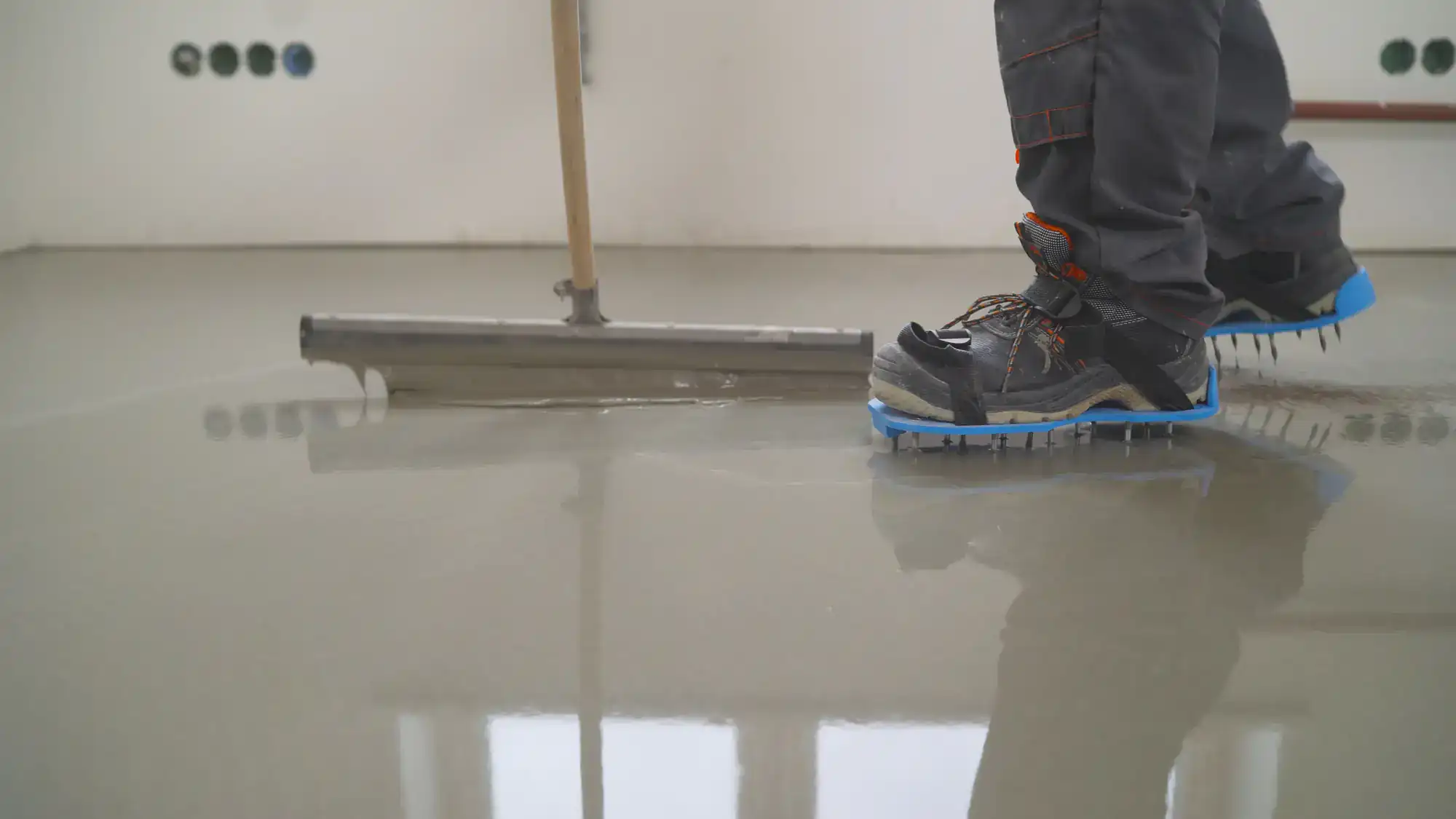
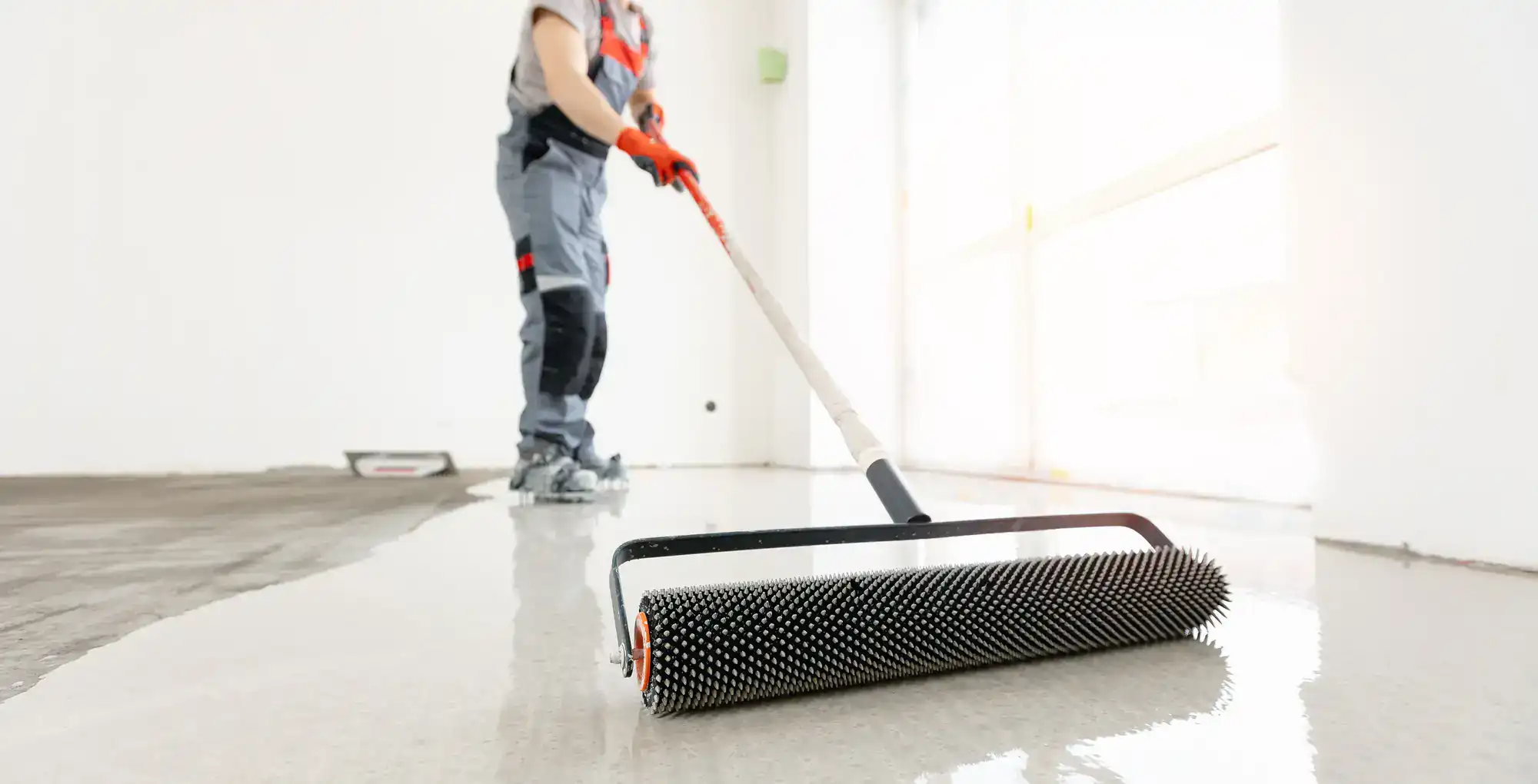
When you pull up old carpet or vinyl in a Coram home and find a slab that’s cracked, sunken, or sloping in two directions, the instinct is to just pour something over it and move on. That’s usually where the problem starts. Our self leveling work doesn’t just fill the low spots it addresses what caused them, tests for what’s hiding underneath, and uses a system that won’t shrink, crack, or delaminate six months later.
Coram’s housing stock spans from 1950s slab-on-grade homes to 1970s apartment buildings along Route 112 to newer townhouse developments in communities like Pine Ridge. That range of building ages means a wide range of subfloor conditions and not every slab needs the same fix. Some need a thin skim coat to flatten a lightly settled surface. Others need a deep fill because decades of freeze-thaw cycling have done real structural damage to the concrete. Getting that assessment right before anything is poured is what separates a floor that lasts from one you’ll be dealing with again in a year.
Moisture is the other factor that catches a lot of Coram homeowners off guard. Long Island’s climate means elevated ambient humidity year-round, and older slabs especially those near the Pine Barrens aquifer zone can push moisture vapor at levels that will destroy a self-leveling installation if nobody tests for it first. ASTM F2170 relative humidity testing before every pour isn’t optional here. It’s the step that determines whether the product we’re pouring will bond or blister.
We’ve been installing floors for over 30 years, operating out of Bohemia roughly 10 to 12 miles from Coram via Route 112 south. That’s not a regional chain dispatching crews from across the island. We’re a local contractor who has been working Suffolk County slabs long enough to know exactly what central Brookhaven’s soil conditions, building ages, and seasonal cycles do to concrete over time.
Danny Harmer, our president and CEO, brings more than 40 years of hands-on experience to every job in Coram and across Long Island. The crew that shows up has been with us for over a decade OSHA 40 certified and trained in the specific systems being installed, not learning on your floor. We hold an A+ rating with the Better Business Bureau, and our project history includes commercial and residential work across the United States and internationally.
When you hire Advanced Epoxy Flooring for self leveling in Coram, NY, you’re getting a team that has seen the worst-case scenarios and knows how to handle them before the pour starts.
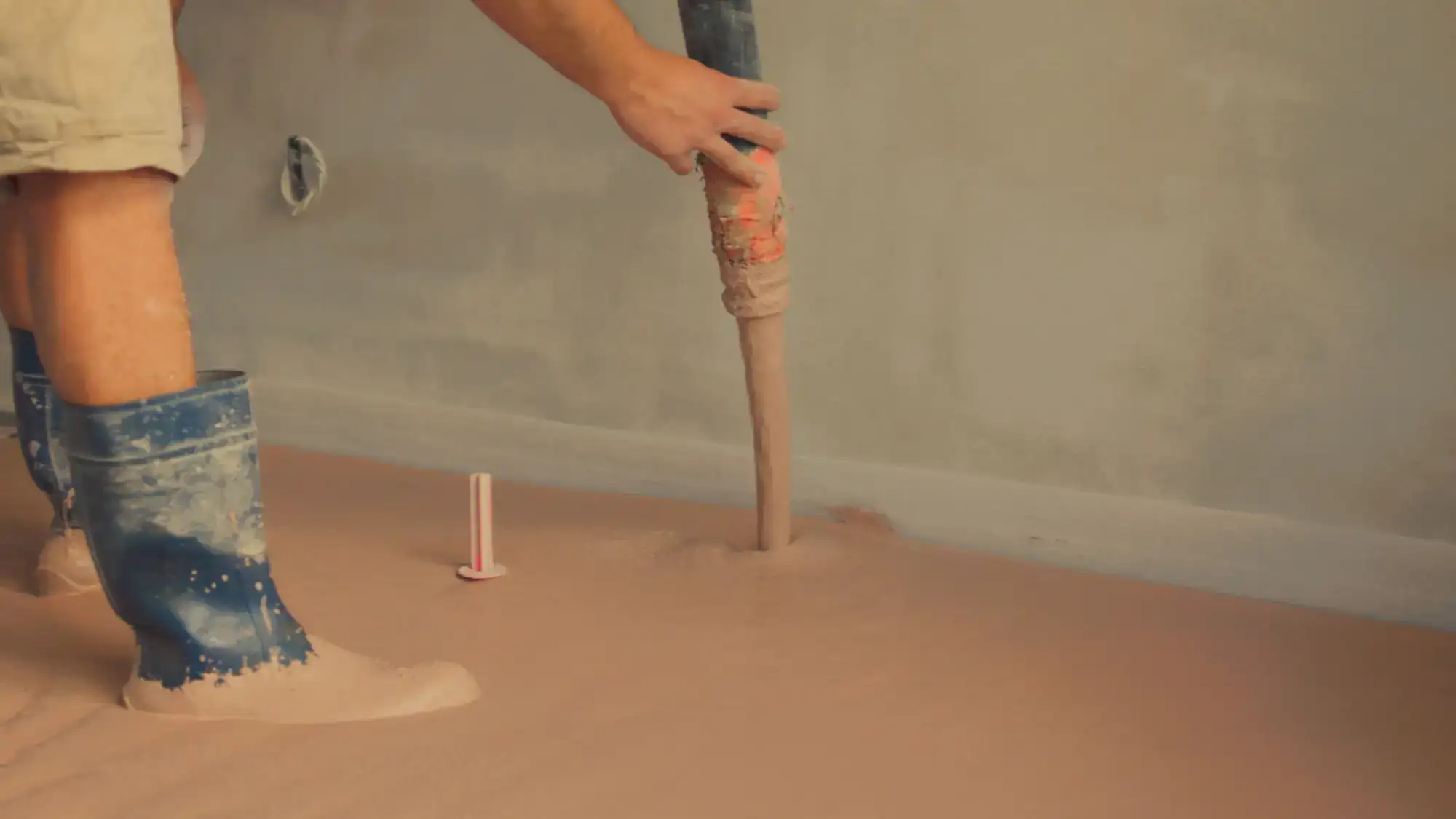
The first thing that happens on any self leveling job in Coram is an honest assessment of the slab. We look at the depth and pattern of the unevenness, check for cracks that signal settlement versus surface wear, and identify any areas where the concrete has been compromised. In a Coram home especially anything built before 1990 that assessment often turns up moisture issues that the homeowner didn’t know existed.
Moisture testing comes next. ASTM F2170 relative humidity testing and MVER testing are standard on every job. The ASTM threshold is 80% relative humidity a number that gets exceeded regularly in central Long Island homes, particularly in spring when ground moisture peaks after the freeze-thaw season ends. If moisture is present above that threshold, we address it before anything is poured. Skipping this step is how floors fail.
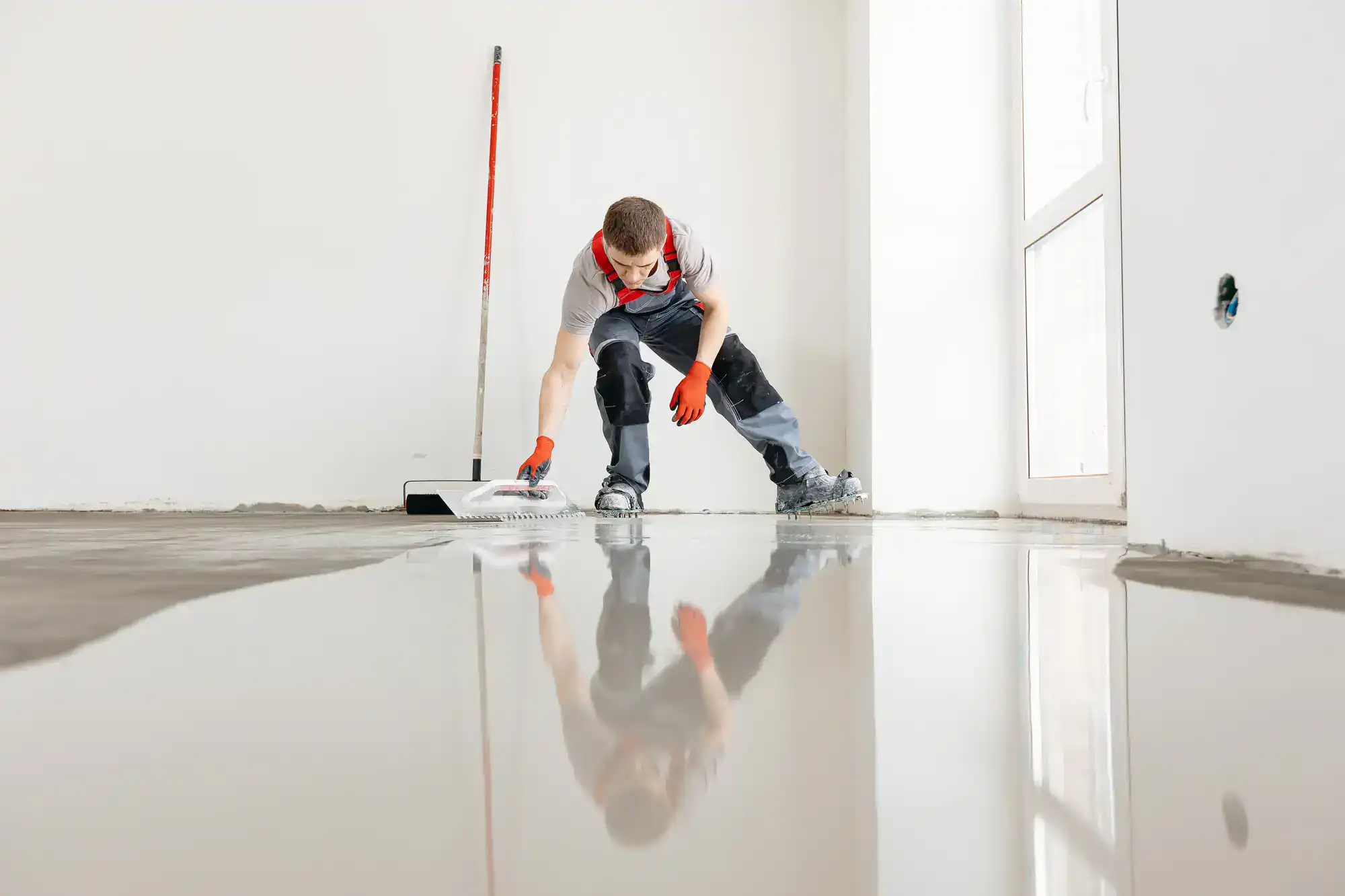
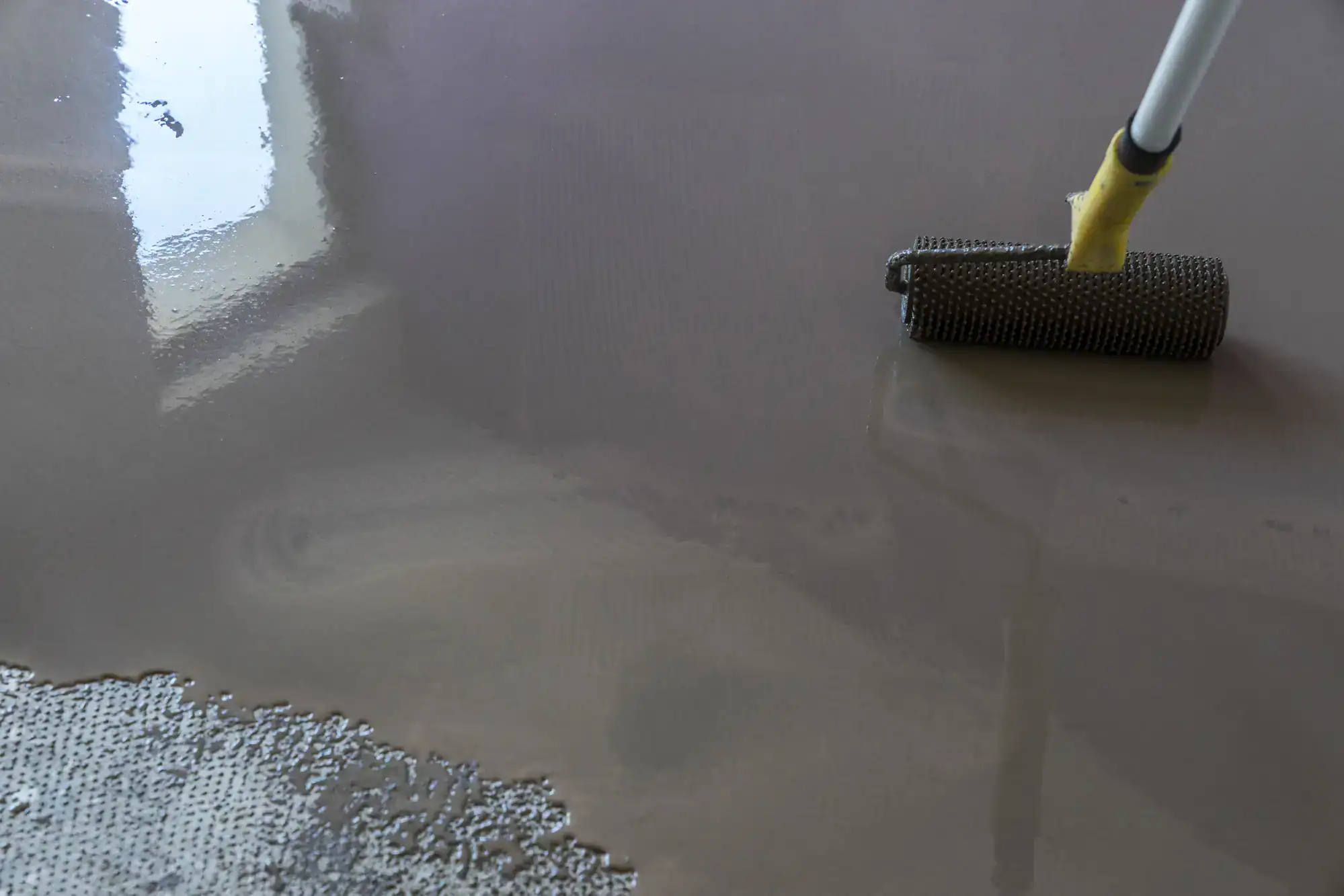
Once the substrate is confirmed ready, we grind and prime the surface to ensure proper adhesion. The self leveling compound is then mixed and poured a high-strength, low-shrinkage, polymer-modified cementitious system that installs from ¼” to over 2″ neat and up to 5″ with aggregate addition. For commercial jobs along Route 25 or Route 112 in Coram, the product achieves foot-traffic hardness in 4 to 6 hours and supports full commercial use within 24 to 48 hours. Residential or commercial, the process doesn’t change because the floor underneath doesn’t care which category you’re in.
Ready to get started?
The self leveling underlayment system we use is a cement-based, polymer-modified compound with high flow characteristics, long working time, low shrinkage, and strong bonding performance. On Long Island, where slabs expand and contract through temperature swings that range from below freezing in January to over 90°F in August, low shrinkage isn’t a product feature it’s a functional requirement. A compound that shrinks as it cures will crack. The system we use is designed to hold through those cycles.
For residential work in Coram whether you’re in a 1960s ranch near Middle Country Road, a townhouse in Fairfield or Pine Ridge, or a condo along the Route 112 corridor the installation is matched to the actual depth of correction your slab needs. There’s no one-size-fits-all approach. The product selection, primer system, and pour depth are determined by what the slab actually requires after testing and assessment, not by what’s easiest to install.
Commercial floor leveling solutions in Coram, NY follow the same diagnostic process with the added consideration of return-to-service timing. Retail tenants, restaurant operators, and property managers along the Route 25 commercial corridor need to know the floor will be ready for business quickly. Our systems achieve foot-traffic hardness within hours not days. All work is performed by OSHA 40 certified installers with over a decade of experience on the crew, and the scope runs from moisture testing and surface prep through the final poured surface handled by one team, start to finish.
Yes and it’s one of the most common reasons homeowners in central Brookhaven end up needing floor leveling work. Central Long Island sits on glacially deposited sandy soils that are prone to differential settlement, meaning one section of the soil beneath a slab compacts or shifts at a different rate than the section next to it. Over time, that uneven movement translates directly to the concrete above it one part of the slab sinks faster, creating the slopes, cracks, and low spots you’re seeing when you pull up old flooring.
This is different from what happens in coastal towns where fill soil or clay is the issue. In Coram, the sandy substrate drains well in some spots but compacts unevenly under load over decades. Homes built in the 1960s through 1980s a significant portion of Coram’s housing stock have had 40 to 60 years of this process working on their slabs. By the time a homeowner is renovating, the floor often needs more correction than they expected. That’s why the assessment step matters so much before anything is poured.
You usually can’t tell just by looking at it which is exactly why testing matters. The standard for self leveling underlayment installation requires relative humidity in the slab to be below 80% per ASTM F2170. In a lot of older Coram homes, especially those with slab-on-grade construction or crawlspaces, that number gets exceeded particularly in spring when the ground is saturated after freeze-thaw season, or in homes that sit near the Pine Barrens aquifer recharge zone where groundwater is closer to the surface.
The test involves drilling small holes in the slab, inserting humidity probes, and reading the results after a set equilibration period. It’s not a visual check it’s a measurement. If the reading comes back above threshold, the moisture source needs to be addressed and the right moisture mitigation primer applied before any leveling compound goes down. Pouring over a high-moisture slab without that step is the single most common reason self leveling installations fail in Coram. The delamination usually shows up within the first year, often after the finish floor is already installed on top.
It depends on how much correction your slab actually needs and that varies more than most people expect. For a lightly settled slab that’s just a little wavy, a skim coat in the ¼” to ½” range is often sufficient to flatten the surface enough for tile or LVP. For slabs with more significant differential settlement which is common in Coram’s older homes where sandy soil movement has been working on the foundation for decades the correction depth can go well beyond that.
The systems we use install from ¼” to over 2″ neat, and up to 5″ with the addition of aggregates. That range matters because it means the product selection and pour depth are matched to what your specific slab actually needs, not capped at what a single product can do. For tile installations especially, flatness tolerance matters large-format tile in particular requires a very flat substrate to avoid lippage at the grout joints. Getting the underlayment depth right is what makes the finish floor look the way it’s supposed to.
For most residential applications, you can walk on a self leveling surface within 4 to 6 hours of the pour. Full cure for heavy use furniture, commercial foot traffic, installation of the finish floor typically takes 24 to 48 hours depending on ambient temperature and humidity conditions in the space. In Coram, seasonal conditions affect this. Summer installs in high-humidity conditions can accelerate working time, meaning the product sets faster and leaves less time for spreading. Winter installs require the space to be maintained above 50°F below that, cementitious compounds won’t hydrate properly, and the cure will be compromised.
For commercial tenants along Route 25 or Route 112 who are preparing a space between occupancies, the 4 to 6 hour foot-traffic window is genuinely useful it means the floor can be poured in the morning and the space can be re-entered the same day. The finish flooring installation typically follows the next day once the underlayment has reached full cure. That turnaround is realistic with the right product and an experienced crew managing the pour conditions correctly.
Absolutely and commercial spaces along the Route 25 corridor in Coram are actually one of the most common applications for this type of work. The retail and service buildings along Middle Country Road include a lot of 1970s and 1980s construction that has had decades of slab movement, tenant turnover, and deferred maintenance. When a new tenant comes in or a buildout starts, the floor prep is often the first thing that reveals how much correction is needed before any finish flooring can go down.
The process for commercial work follows the same diagnostic steps as residential moisture testing, surface grinding, priming, and the pour but the product selection and crew coordination are calibrated for commercial timelines. Return-to-service speed matters in a commercial context, and our systems achieve foot-traffic hardness in 4 to 6 hours with full commercial use within 24 to 48 hours. The crew is OSHA 40 certified, which matters for commercial property managers and general contractors who carry liability for on-site safety. All work is handled by one team from assessment through finished surface no handoff between subcontractors.
They solve different problems. Concrete patching is for localized damage a specific crack, a spalled area, a section where the surface has deteriorated. It fills a defined spot. Self leveling underlayment is for correcting flatness across a larger area when the slab as a whole is uneven, sloping, or has settled in a way that would cause problems for the finish floor installed on top of it.
In Coram, where older homes have slabs that have been moving gradually for decades due to sandy soil settlement and repeated freeze-thaw cycling, patching individual cracks usually isn’t enough. The unevenness is spread across the surface, not concentrated in one spot. Self leveling compound flows under gravity to fill low areas and create a flat plane across the entire surface that’s something a trowel-applied patch can’t replicate. The two approaches aren’t mutually exclusive either. On many jobs, localized cracks and damaged areas are patched and repaired first, then the self leveling compound is poured over the prepared surface to achieve the final flatness required for tile, LVP, hardwood, or epoxy installation.