
If you’ve had a hangar floor peel, bubble, or stain within a few years of installation, you already know the frustration. The floor looked fine at first, then the Skydrol got to it, or the Long Island summer humidity worked its way up through the slab, and the coating started lifting from below. That’s not a product problem it’s a preparation problem. And it’s the most common failure mode on large concrete slabs across central Suffolk County.
Coram sits in a climate that doesn’t forgive shortcuts. Summer humidity here regularly climbs above 80%, and that moisture moves through concrete in ways that destroy coatings applied without proper testing. When the coating and the slab aren’t bonded correctly because the surface wasn’t ground to the right profile, or because moisture vapor transmission wasn’t assessed before application you’re not getting 15 years out of that floor. You’re getting three, maybe four, and then you’re doing it again.
A properly installed aviation-grade system changes that math entirely. Chemical resistance that handles Skydrol, jet fuel, and hydraulic fluid without degrading. A non-slip surface tested to a verifiable safety standard, not just described as “textured” in a brochure. Light, reflective finishes that make dropped tools and fluid spills visible immediately which matters in any working hangar near MacArthur where FOD is a real safety concern. Done right, this floor works for you every single day.
We’re based in Bohemia, NY a short drive from Coram along I-495 and Route 112. We’re not a national franchise dispatching crews from out of state. We’re a Long Island company that has been operating for over 30 years, led by Danny Harmer, who has personally installed resinous flooring systems for more than 40 years. When we talk about moisture testing, concrete grinding, or aviation chemical resistance, we’re speaking from direct experience not a training manual.
We hold dual elite certifications from Sherwin-Williams High Performance Flooring and Res Tech, and every installer carries OSHA 40 certification. That’s not a standard credential in this industry. Most of our field supervisors have been with us for over a decade, which means the crew showing up to your hangar in the Brookhaven area isn’t learning on your floor.
In 1996, we installed the kitchen floor at the White House. The same standards, the same process, and the same accountability come with every job in Coram.
Before any coating touches your slab, we assess the concrete. That means testing for moisture vapor transmission a step that’s non-negotiable on Long Island, where central Suffolk County’s humidity creates exactly the conditions that cause coatings to fail from underneath. If moisture is present and it’s not addressed at the primer stage, you’ll see the consequences within a few years regardless of what product was used.
Once the slab is assessed, the surface gets mechanically diamond ground to create the adhesion profile the coating system needs to bond properly. This is the step most failed floors skipped or rushed. Grinding isn’t optional it’s the foundation everything else depends on. After prep, the system goes down in multiple coats: primer, base coat, and topcoat, with full cure time between each layer. The topcoat is NFSI-certified for slip resistance, which matters in any hangar environment where fuel and fluid spills are routine.
For active hangars near MacArthur Airport where downtime means displaced aircraft and disrupted schedules, we offer polyaspartic systems that return to service within 24 hours. Spring and early fall are the most common installation windows in Coram better cure conditions, lower humidity risk but we run moisture assessment year-round because the slab doesn’t take a season off.
Ready to get started?
Aircraft hangar floor coatings in Coram need to meet a higher bar than any garage or commercial floor. NFPA 409 the federal standard governing aircraft hangars requires that floor surfaces in aircraft storage and servicing areas be noncombustible. Many standard epoxy products sold through retail channels don’t meet this requirement. Many general flooring contractors don’t know the standard exists. Every system we install for aviation facilities in the Brookhaven area meets NFPA 409 as a baseline, not an upgrade.
Beyond code compliance, the system needs to handle the daily reality of a working hangar. Skydrol hydraulic fluid is one of the most aggressive chemicals in any aviation maintenance environment it penetrates and destroys standard epoxy coatings, contaminates concrete, and creates environmental liability that’s expensive to address. The coating systems we use are specifically formulated for aviation chemical exposure, with build thickness starting at 45 mils to handle the point loads from jacks, equipment, and aircraft weight without cracking or separating.
Whether you’re coating a private aircraft storage hangar off Route 25, a corporate maintenance bay near MacArthur, or a larger FBO facility in Suffolk County, we size and specify the system to the actual demands of the space. Light gray and white high-gloss finishes are available and for working hangars, that’s not just aesthetics. Visibility of spills, tools, and debris on the floor is an operational safety decision.
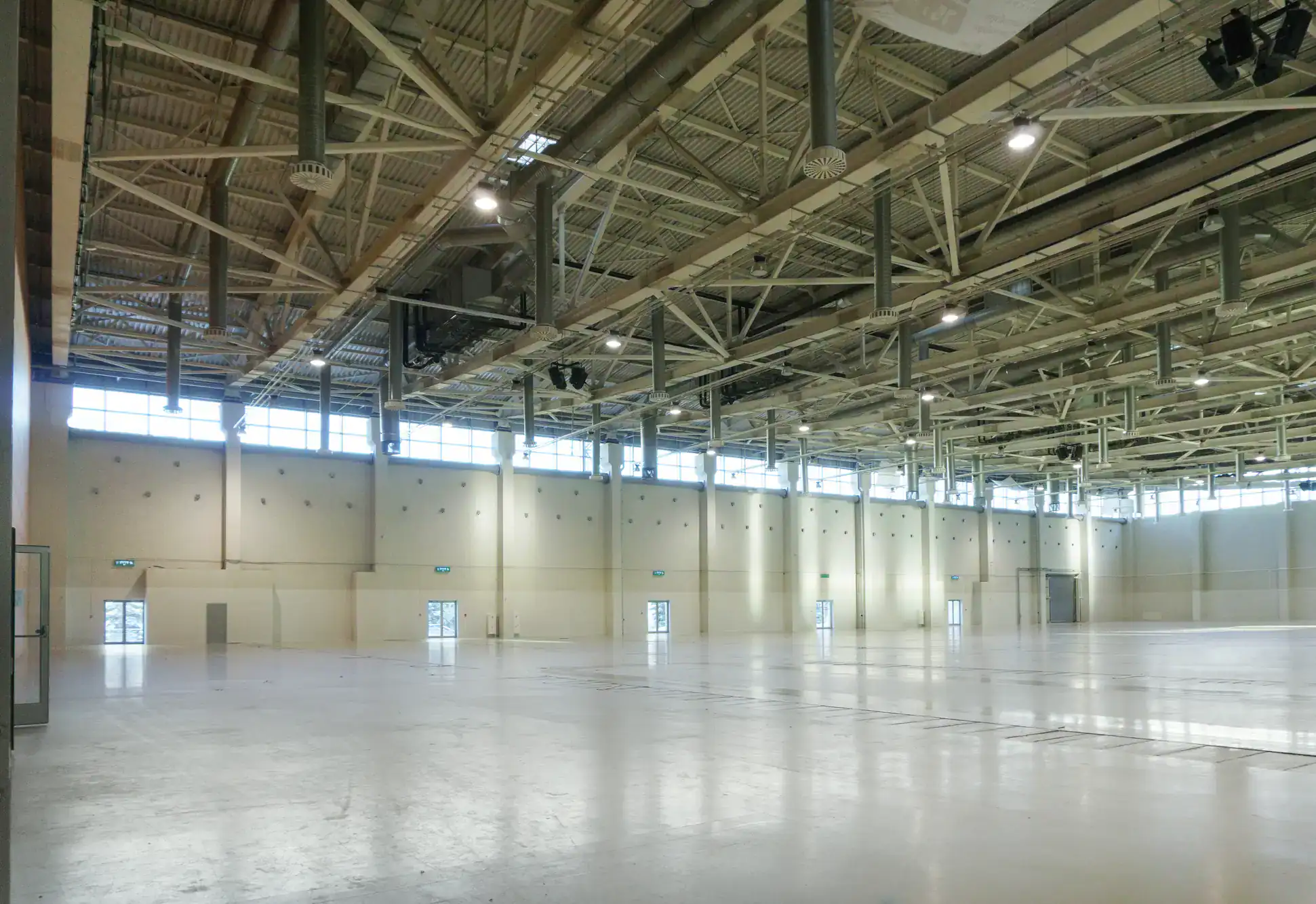
The most common reason is moisture. Central Suffolk County’s climate with summer humidity that regularly exceeds 80% creates constant moisture vapor pressure in large concrete slabs. When a contractor skips moisture testing before application, that vapor works its way up through the slab and lifts the coating from below. You’ll see bubbling, delamination, and peeling that usually shows up within two to three years of installation, sometimes sooner. We’ve removed failed floors in Coram that looked solid for the first season, then started separating as the Long Island summer humidity cycle ramped up.
The second most common cause is skipping or rushing the concrete grinding step. Mechanical diamond grinding creates the surface profile the coating needs to bond to the concrete. Without it, even a well-formulated product will eventually separate especially through Long Island’s freeze-thaw winter cycles, which put real mechanical stress on any coating that isn’t properly adhered. Both of these failure points are addressed as mandatory steps in every installation we do, not optional add-ons.
NFPA 409 is the federal standard on aircraft hangars. It requires that floor surfaces in aircraft storage and servicing areas be noncombustible. If you’re operating a commercial hangar, an FBO, or an aircraft maintenance facility anywhere in Brookhaven Town or near Long Island MacArthur Airport, this standard applies to your floor regardless of the size of the operation.
The practical issue is that many standard epoxy and coating products available through retail or home improvement channels don’t meet this requirement and many general flooring contractors who install them don’t know the standard exists. If your facility goes through an insurance review, a fire marshal inspection, or a tenant compliance check, a floor that doesn’t meet NFPA 409 becomes a real problem. Every aviation floor system we install meets this standard, and the documentation to support it is available if you need it for compliance purposes.
For most private and corporate hangars in the Coram area, the installation process runs one to two days for the prep and coating work, with return-to-service time depending on the system used. Standard epoxy systems typically require 24 to 72 hours before aircraft can be moved back in. Polyaspartic systems cure significantly faster most hangars near MacArthur Airport using polyaspartic coatings can have aircraft back on the floor within 24 hours of the final coat.
Yes, the hangar needs to be clear of aircraft during installation. The concrete grinding process alone requires full access to the slab, and coating cure requires a clean, unobstructed environment. For active operations, we schedule the conversation upfront so you can coordinate aircraft storage or temporary relocation without disrupting maintenance schedules or tenant agreements. Spring and early fall tend to be the preferred installation windows in central Suffolk County better ambient temperatures and lower humidity risk but we run jobs year-round with the moisture assessment process adjusted accordingly.
Yes, and the difference matters more than most people realize. Garage-grade epoxy systems are formulated for light vehicle traffic, occasional oil drips, and residential use. They’re typically thin-build products often under 10 mils and they’re not tested or formulated for the chemical profile of an aviation environment. Skydrol hydraulic fluid, jet fuel, and aviation solvents will degrade a garage-grade coating quickly, often staining or dissolving the surface within the first year of regular exposure.
Aviation-grade systems used in hangar floors near Long Island MacArthur Airport start at 45-mil build thickness and are specifically formulated to resist the chemicals present in aircraft maintenance and storage environments. They’re also specified to handle the point loads from aircraft jacks, maintenance equipment, and the weight distribution of aircraft on the floor loads that garage-grade products aren’t engineered for. NFPA 409 noncombustibility compliance is another hard requirement that separates aviation coatings from residential products. If a contractor is offering you a garage floor system for your hangar, that’s the conversation to have before the job starts.
Humidity is the primary environmental variable that affects every concrete coating installation on Long Island, and it’s especially relevant for large hangar slabs in central Suffolk County. When ambient humidity is high which in Coram means readings above 80% during summer months moisture vapor transmission through the concrete slab increases. If the slab isn’t tested and the coating system isn’t specified to address that moisture, the floor can fail from beneath even if the surface preparation and application were otherwise done correctly.
This is why we run moisture assessment as a mandatory step before every installation, regardless of season. Summer installations aren’t automatically ruled out, but they require more careful attention to slab moisture readings and primer selection. Spring and early fall tend to offer the best conditions lower humidity, stable temperatures, and reduced freeze-thaw risk which is why those windows see the highest demand for hangar floor work in the Coram and Brookhaven area. If you’re planning a hangar floor project, getting on our schedule in late winter for a spring installation is the most straightforward way to avoid weather-related complications.
In most cases, yes but the condition of the existing surface determines how much prep work is required before coating can begin. Staining from Skydrol, jet fuel, or hydraulic fluid that has penetrated the concrete may require additional cleaning and surface treatment before the primer coat goes down. Existing coatings that are delaminating, peeling, or otherwise failing need to be fully removed and the surface ground back to bare concrete before a new system is applied. Trying to coat over a compromised surface is one of the most reliable ways to repeat the same failure.
Coram’s climate adds a specific consideration here: if the existing floor has been through multiple Long Island winters with freeze-thaw cycling and the concrete shows surface cracking or spalling, those areas need to be assessed and addressed before coating. Surface cracks that aren’t repaired prior to application will telegraph through the new coating over time. The concrete assessment step at the beginning of every project is designed to identify exactly these conditions so the scope of prep work is clear before the job starts, not discovered halfway through.