
Concrete slabs near the Great South Bay don’t behave like slabs in inland towns. The water table is higher, the air carries salt, and documented coastal flooding means moisture vapor is working against your floor from below even on a dry day. A coating applied without testing for that first isn’t going to last. You’ll see bubbling, peeling, and delamination within a season.
When the prep is done right and the system is matched to your actual slab conditions, you get a floor that performs for years not months. For the restaurant operators along Main Street and Deer Park Avenue in Babylon, that means a seamless, USDA-compliant kitchen floor that went in overnight and didn’t cost you a weekend of service. For the warehouse and light industrial operators off Route 109, it means a surface rated for real forklift loads that doesn’t crack, stain, or degrade under daily use.
The older building stock throughout Babylon Village adds another layer to this. Many commercial buildings here have legacy coatings, uneven slabs, and moisture history that goes back decades. That’s not a problem if the contractor assesses the slab honestly before a single drop of material goes down. It becomes a very expensive problem when they don’t.
We’ve been serving Nassau and Suffolk Counties since 1991, with deep roots in the Babylon area and surrounding communities. This isn’t a franchise operation or a general contractor who picked up epoxy as a side service we’re a company built entirely around resinous flooring, led by someone who has been doing this work hands-on for over 40 years.
Danny Harmer, our President and CEO, personally installed the epoxy floor in the White House kitchen in 1996. He’s also done work internationally. What that tells you isn’t just that we have range it’s that our standard has always been set at the top. The same attention to prep, product selection, and execution that goes into a high-security federal kitchen goes into every commercial and industrial project we handle in Babylon and across Suffolk County.
Our crew is OSHA 40 certified, manufacturer-trained through Sherwin-Williams High Performance Flooring and Res Tech, and most installers have been with us for over a decade. Our BBB Accreditation and A+ rating with zero complaints on record reflects what happens when a company’s reputation is built entirely on the quality of its work.
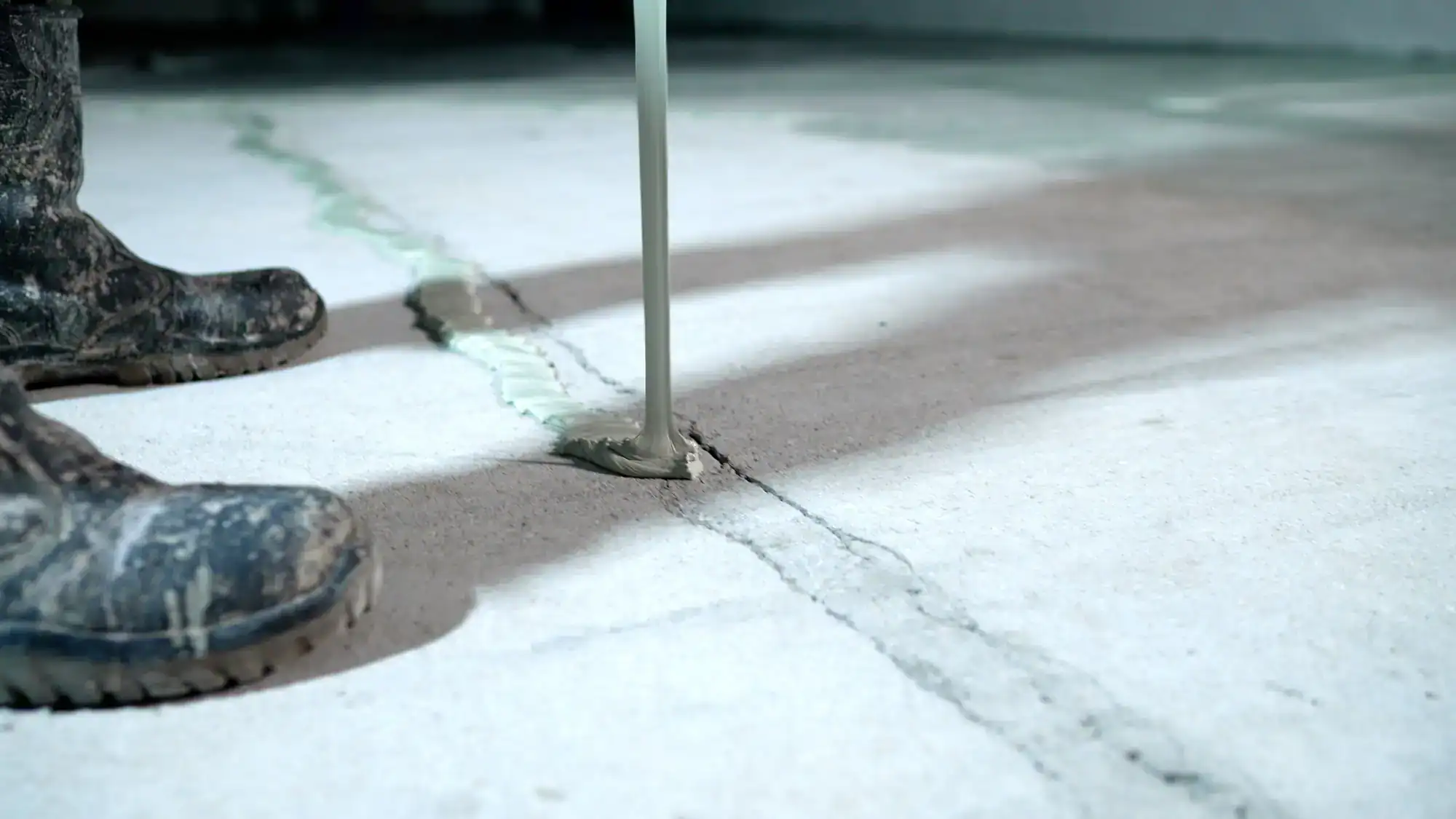
Every project starts with a slab assessment not a sales pitch. We conduct moisture testing, surface profile evaluation, documentation of any cracks or previous coatings, and a system recommendation based on what’s actually there. In Babylon, this step is especially important. Ground saturation near the bay, older slabs with moisture history, and the town’s documented coastal flooding risk all affect what system belongs on your floor. Skipping this step is how floors fail.
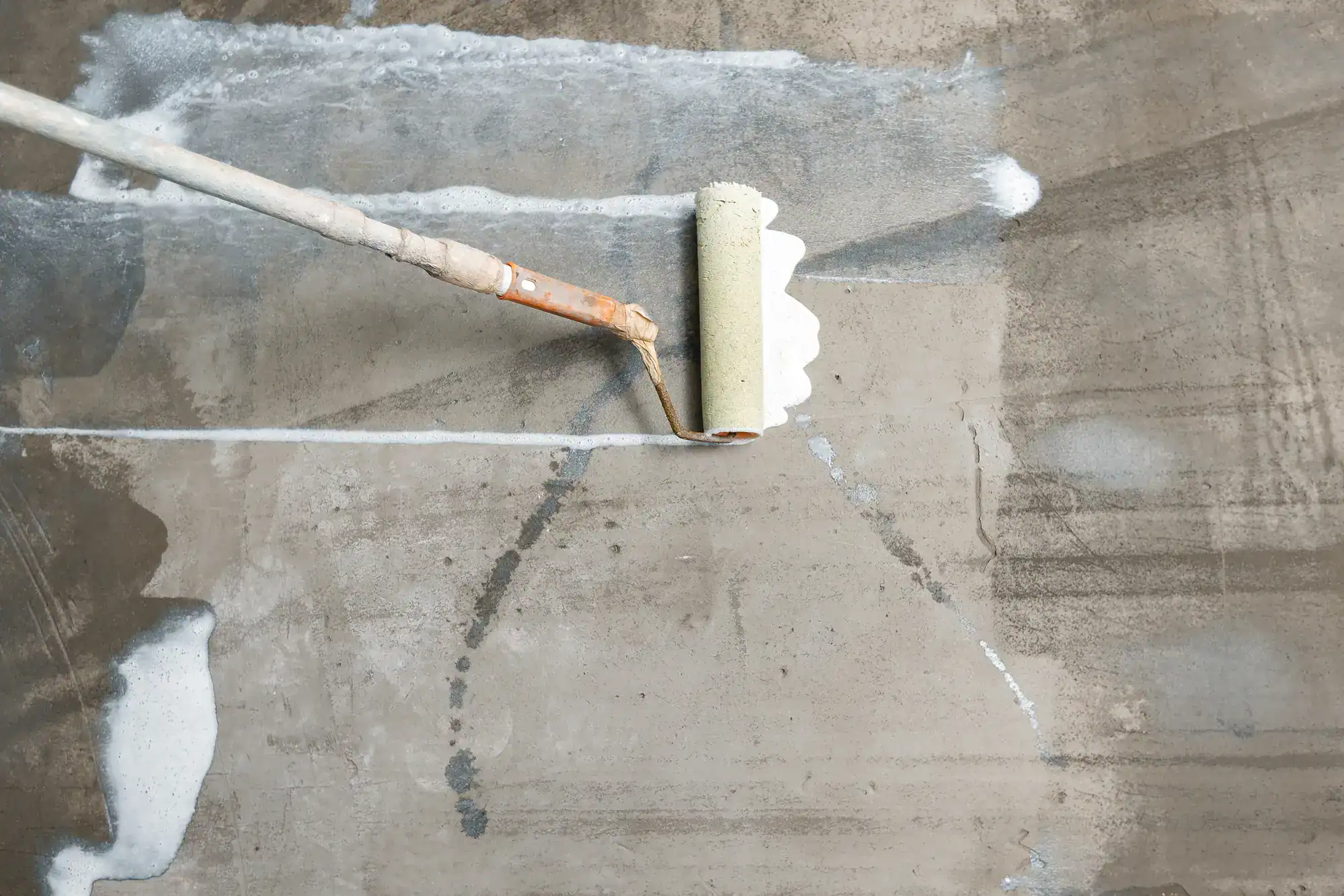
Once the assessment is complete, surface preparation begins. We use diamond grinding to open the concrete pores and create the mechanical bond profile the coating needs to adhere properly. This is where 70 to 80 percent of a successful installation happens and it’s the step most low-cost operators skip or rush. Any cracks, spalls, or substrate issues get addressed before material goes down.
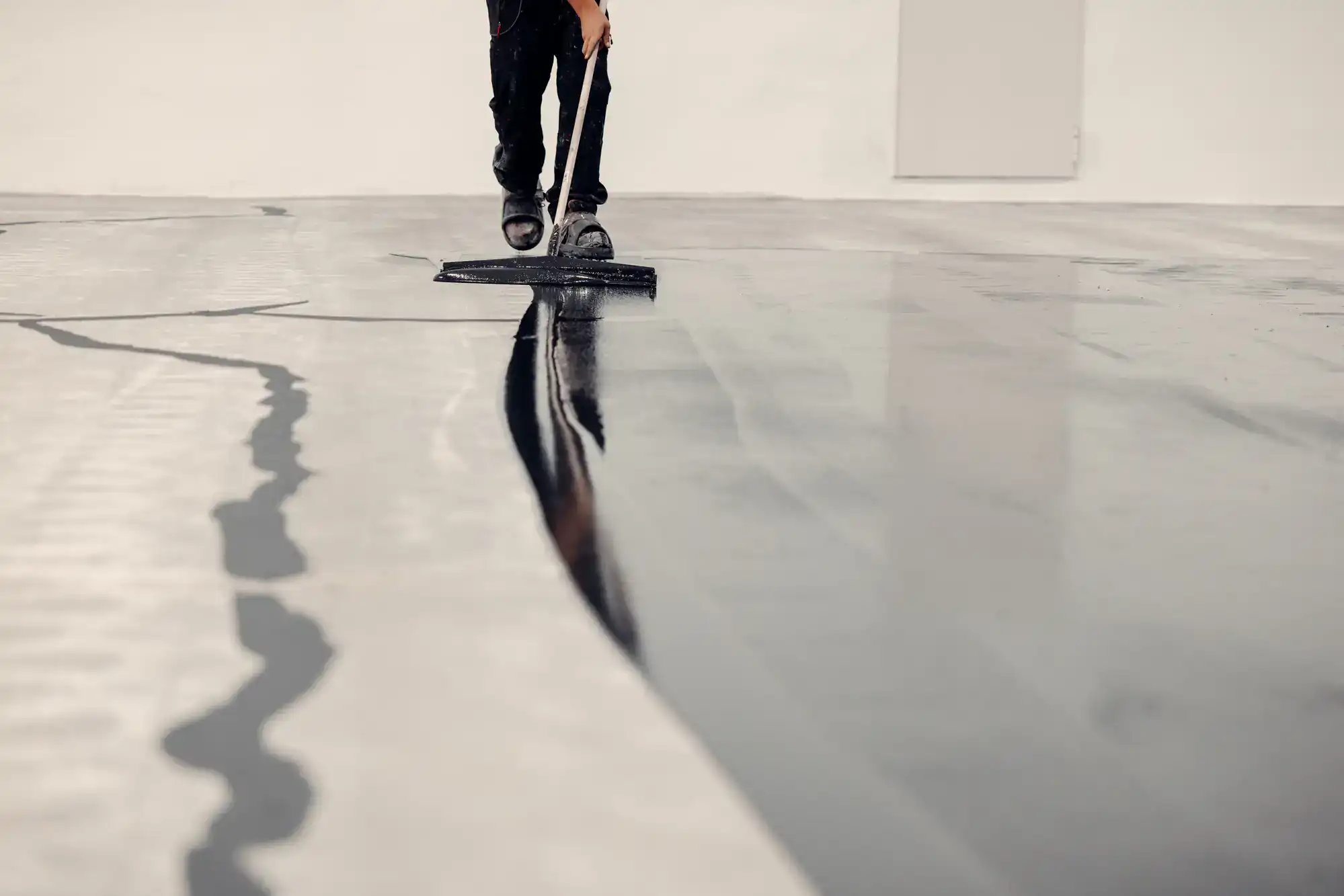
From there, we apply the system in the correct sequence primer, body coat, topcoat using 100% solids or high-solids industrial materials specified at 14 to 30 mils of dry film thickness. These are not the consumer-grade, water-based products you find in a box store. For commercial kitchen clients along Babylon’s Main Street corridor, we schedule installation overnight so you’re open for business the next morning. For warehouse and industrial clients off Sunrise Highway or Route 109, we schedule around temperature and humidity windows to ensure the system cures correctly. When the job is done, your floor is documented, your system is specified, and you know exactly what you have.
Ready to get started?
The range of environments we work in across Babylon and the surrounding Suffolk County area is wide and the system we specify for each one is different. For commercial kitchens, our standard is a USDA-compliant, seamless resinous floor coating with coved bases, thermal shock resistance, and the slip profile required to pass a Suffolk County Department of Health inspection. For healthcare and professional services facilities a major employment sector in Babylon Village we include antimicrobial additives, seamless installation that eliminates pathogen-trapping grout lines, and full compliance with ADA, OSHA, CDC, and FGI guidelines.
For warehouse and distribution operations along the commercial corridors of West Babylon and North Babylon, we engineer the floor for forklift axle loads exceeding 10,000 lbs, with urethane mortar trowel systems available at 1/4-inch thickness for the heaviest applications. Automotive service bays get our chemical-resistant epoxy finishes that handle oil, hydraulic fluid, and impact without staining or degrading. Firehouse apparatus bays get polyaspartic topcoats that are four times more flexible than standard epoxy and twice as abrasion-resistant built for the thermal cycling and heavy equipment that standard coatings can’t handle.
Every system we install in Babylon also accounts for the coastal environment. Salt air, bay-adjacent humidity, and the moisture vapor transmission rates common in this area are factored into our product selection and topcoat specification. That’s not a standard consideration for most contractors. It is here.
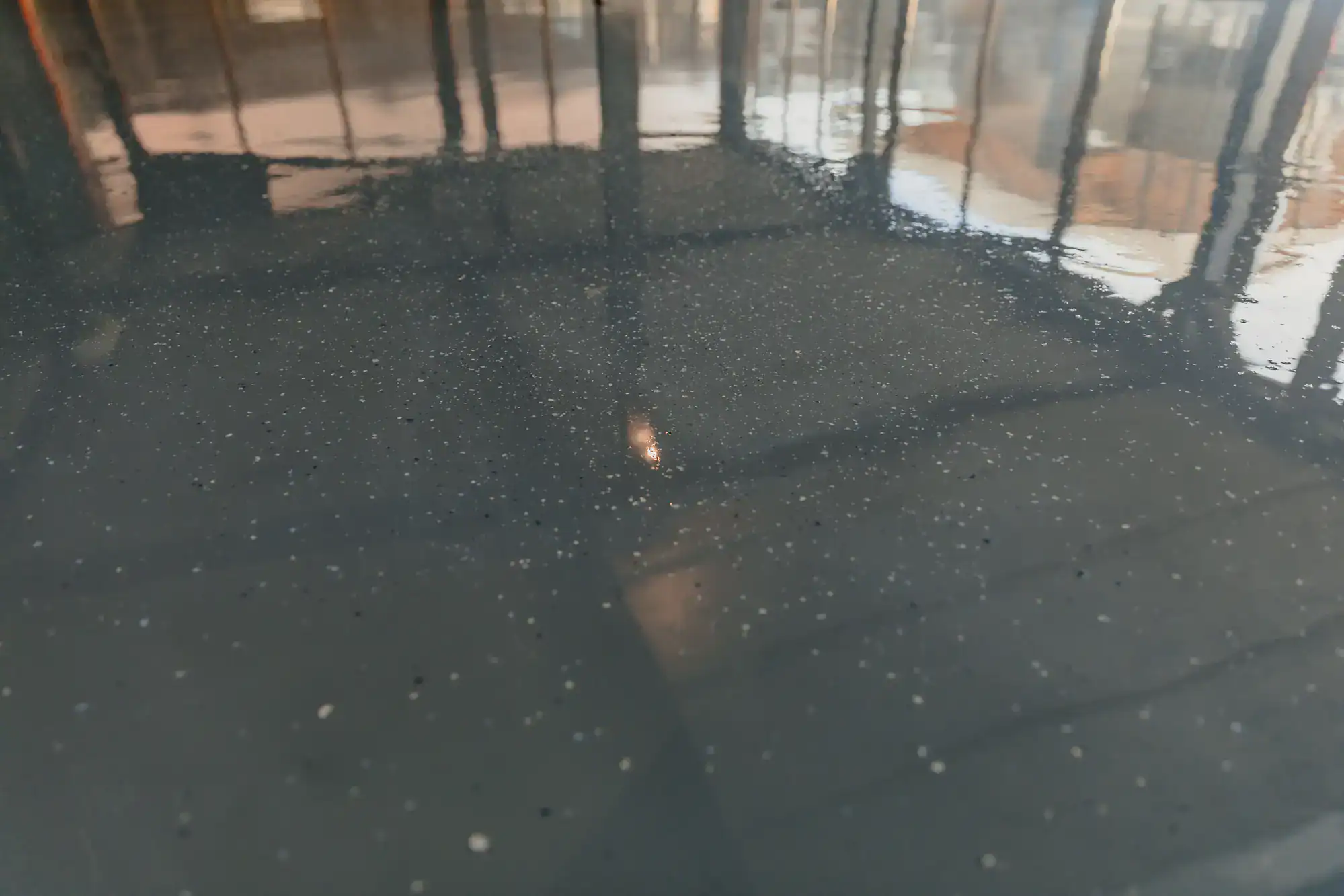
The short answer is moisture. Concrete is porous, and slabs near the Great South Bay especially in Babylon’s canal communities and waterfront commercial buildings are dealing with elevated ground moisture and higher water tables year-round. When moisture vapor pushes up through the slab and hits a coating that wasn’t applied with that in mind, the bond breaks down. You get bubbling, peeling, and delamination sometimes within a single season.
The fix isn’t a better product applied the same way. It’s moisture testing before anything goes down, and a system specified to manage vapor transmission rather than ignore it. That means the right primer, the right film thickness, and in some cases a dedicated moisture mitigation layer before the epoxy system begins. Babylon’s documented coastal flooding risk and FEMA flood map updates make this a near-universal concern here not an edge case. Any contractor who doesn’t bring up moisture before you do isn’t thinking about your floor the right way.
A professionally installed, 100% solids industrial epoxy system properly prepped and correctly specified for the environment routinely lasts 10 to 20 years in a commercial or industrial setting. A consumer-grade, water-based coating applied at 3 to 8 mils of dry film thickness? You’re looking at 18 months to 3 years before it starts showing real wear, and often less in a high-traffic or chemically exposed environment.
The difference in Babylon, with its coastal environment, is that salt air, humidity swings between the bay and inland areas, and seasonal moisture fluctuations mean a marginal system fails faster here than it would in a drier, inland location. When the system is specified correctly 14 to 30 mils of dry film thickness, the right topcoat for the traffic and chemical exposure, and diamond-ground surface prep the floor holds up through all of it. The lifecycle cost math is straightforward: a professional system at $7 to $12 per square foot that lasts 20 years costs less in the long run than a cheap system you’re replacing every few years.
Yes and for most restaurant operators along Babylon Village’s Main Street and Deer Park Avenue corridor, overnight installation is the only practical option. Closing a kitchen for two or three days during a normal operating week isn’t just inconvenient, it’s a real revenue loss. We schedule commercial kitchen installations overnight: the kitchen closes after evening service, the floor goes in, and you’re open for the next morning’s prep.
This works because the systems we use are fast-cure, high-performance resinous coatings not slow-setting consumer products that need 72 hours before foot traffic. Our USDA-compliant kitchen floor system includes coved bases at the wall-floor junction (required for sanitary compliance), a seamless surface with no grout lines where bacteria can accumulate, and a slip-resistant finish that meets Suffolk County Department of Health standards. We plan scheduling around your operating hours, not the other way around. If you’ve been putting off a kitchen floor because you couldn’t figure out how to make the downtime work, that’s the answer.
For most standard epoxy flooring installations applying a coating system over an existing concrete slab without structural changes a building permit is typically not required. However, the Village of Babylon has its own Building Department, separate from the Town of Babylon’s building department, and it enforces New York State Building and Fire Codes along with Village Zoning Codes for all commercial construction and alteration within village boundaries.
If your project involves changes to drainage, structural modifications to the floor system, or alterations that affect a commercial building’s use classification, the village building department may require a permit before work begins. The Village of Babylon Building Department can be reached at 631-669-1300 and operates Monday through Friday, 9 AM to 5 PM. For commercial kitchen and food service environments, the relevant compliance standard is USDA approval for food-contact surface areas and that’s a product and installation specification issue, not a permit issue. We handle the compliance documentation side of that as part of the project scope.
The products sold at retail stores are water-based coatings, typically 40 to 55 percent solids, applied at 3 to 8 mils of dry film thickness. They’re designed for light residential use a home garage, maybe a basement. They’re not engineered for forklift traffic, chemical exposure, commercial kitchen thermal shock, or the moisture vapor transmission rates common in bay-adjacent slabs throughout Babylon.
The systems we install are 100% solids or high-solids industrial materials, applied at 14 to 30 mils of dry film thickness. The chemistry is different, the bond strength is different, and the surface preparation required to make them perform diamond grinding, moisture testing, crack repair is not something a box store kit includes or accounts for. The other factor is the prep itself. Even if you had access to the same industrial product, applying it over a slab that hasn’t been properly profiled and tested for moisture would still result in a failed floor. The product and the process work together. One without the other doesn’t hold up especially in a coastal environment like Babylon where the slab conditions are working against a marginal system from day one.
Epoxy and polyaspartic systems have application windows temperature and humidity ranges outside of which the material won’t cure correctly. Standard epoxy shouldn’t be applied below 50°F or above 90°F, and humidity above 85 percent can trap moisture in a fresh coating and cause blistering. Babylon’s position on the Great South Bay pushes summer humidity consistently higher than inland Suffolk County towns, which makes summer installations more scheduling-sensitive here.
Fall is typically the best installation season in Babylon temperatures moderate, bay humidity drops, and the ground moisture from summer stabilizes. Spring installations require extra attention to moisture testing because ground saturation from winter runoff is at its peak, especially on slabs near the water. Winter installations are possible in heated commercial environments, but below-freezing conditions outside require modified cure-profile systems and controlled interior temperatures. The practical takeaway is that installation timing in Babylon isn’t arbitrary it’s matched to actual site conditions on the day of the job. We check moisture readings, ambient temperature, and slab temperature before work begins, because a floor installed under the wrong conditions fails regardless of how good the material is.