


When your warehouse floor starts cracking under forklift weight, it doesn’t just look bad. It creates safety hazards, damages equipment, and costs you more every month you wait.
The right high-traffic concrete sealer in Babylon, NY eliminates those issues. You get a surface that handles 9,000 pounds of force without pitting or spalling. Your forklifts move smoothly without the vibration that wears down machinery and rattles operators.
Chemical spills don’t eat through the surface. Dropped pallets don’t leave craters. And you’re not scheduling emergency repairs during your busiest seasons because the floor finally gave out.
Your operation keeps moving. Your maintenance budget stops bleeding. And your facility looks like you actually run a professional operation instead of patching problems every other week.
We’ve been handling large scale warehouse flooring in Babylon, NY since 1990. Every installer on our crew is OSHA 40 certified, and most have been with us for over a decade.
Our field supervisors bring over 40 years of combined experience. That matters when you’re dealing with moisture issues in Long Island facilities or coordinating installs around your shipping schedule.
We’ve worked in Suffolk County warehouses long enough to know what fails and what holds up. You’re not getting a generic coating system. You’re getting a floor built specifically for the traffic, climate, and operational demands your facility deals with every day.

First, we test your concrete for moisture. Long Island facilities often have issues that need addressing before any coating goes down, and skipping this step is how floors fail in year two.
Next comes diamond grinding for warehouses in Babylon, NY. We’re not just smoothing the surface—we’re opening the concrete’s pores so the epoxy actually bonds instead of sitting on top waiting to peel. Any cracks, spalling, or damaged areas get repaired with the right materials, not quick fixes that fail under load.
Then we apply the coating system matched to your traffic level. Light warehouse use gets different treatment than a facility running forklifts 24/7. The system cures fast enough that you’re not shut down for weeks, but not so fast that it compromises durability.
You end up with a seamless surface that handles your equipment, resists your chemicals, and doesn’t need constant attention. The floor becomes something you stop thinking about, which is exactly what it should be.

Ready to get started?
Industrial warehouse floor epoxy in Babylon, NY isn’t one-size-fits-all. Your facility might need a thin grind-and-seal if traffic is moderate, or a full 1/4″ trowel-down system if you’re running heavy equipment constantly.
We handle the concrete prep, moisture mitigation, crack repair, and the actual coating application. You get a system engineered for forklift traffic resistant coating in Babylon, NY—not a residential garage floor stretched into commercial use.
The Long Island industrial market is tight right now, with vacancy rates around 6% and facilities pushing their existing space harder. That means your floors are taking more abuse than they were designed for. Upgrading to a proper epoxy system isn’t just about appearance—it’s about keeping operations running when you can’t afford downtime or equipment damage from deteriorating concrete.
Your coating resists the oils, acids, and chemicals common in warehouse environments. It creates a dust-free surface that’s easier to maintain. And it lasts years instead of months, which matters when your budget is already stretched across rising rent and operational costs.
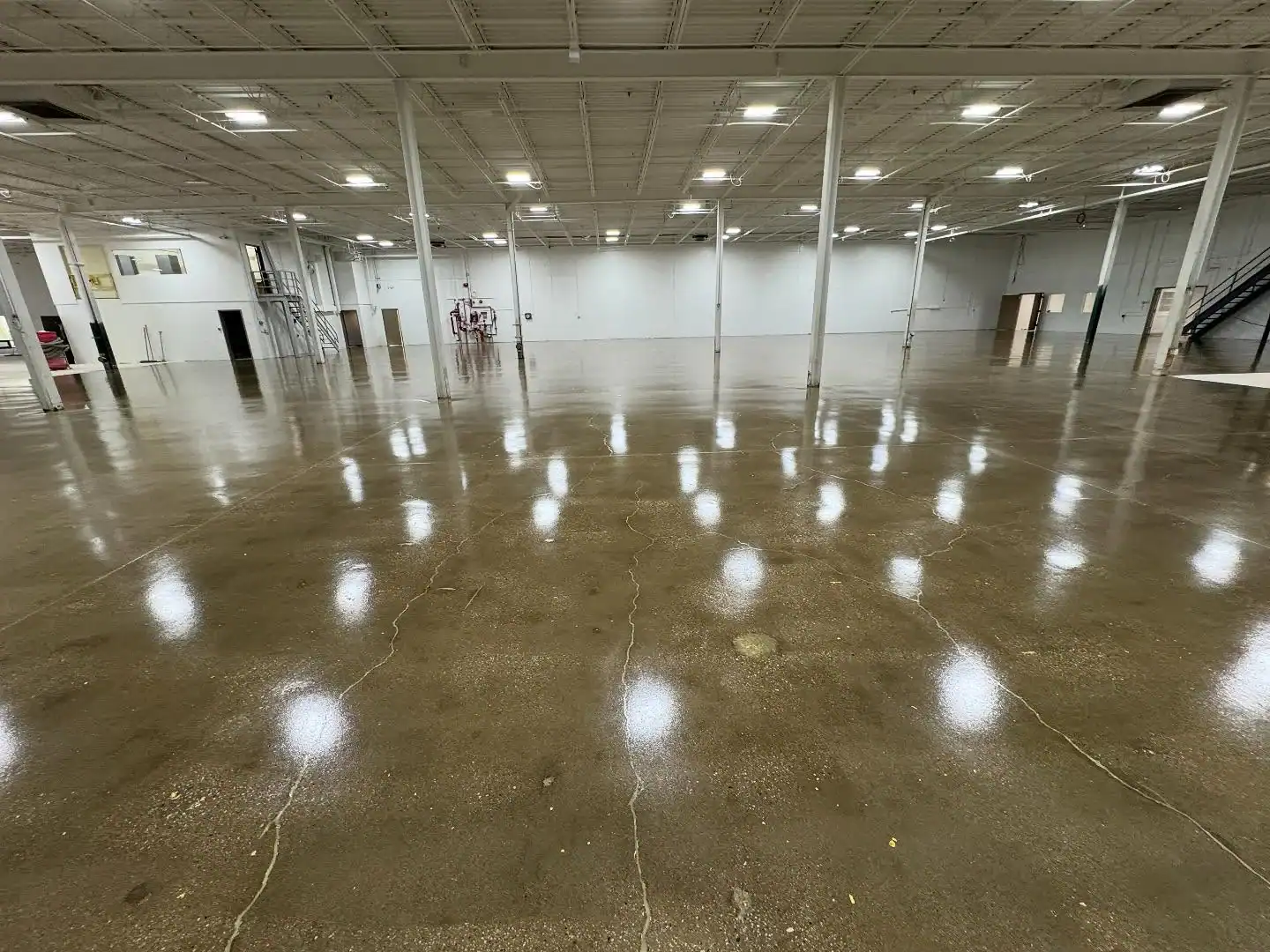
A properly installed industrial epoxy system in a Babylon, NY warehouse typically lasts 7-15 years under heavy forklift traffic, depending on the coating thickness and your maintenance routine.
The key word is “properly installed.” If the concrete wasn’t prepped correctly, or if moisture issues weren’t addressed, you’ll see failure in 1-3 years regardless of the epoxy quality. That’s why diamond grinding and moisture testing aren’t optional steps—they’re what separates a floor that lasts from one that delaminates.
Thicker systems like 1/4″ trowel-down coatings handle abuse better than thin seals. If you’re running forklifts constantly, making sharp turns, and dropping heavy loads, you need a system built for that specific use. Maintenance matters too—keeping the floor clean and addressing small issues before they spread will extend the life significantly.
Yes, but only if you’re using the right epoxy formulation. Industrial-grade epoxy systems resist most chemicals, oils, and acids found in warehouse operations. Residential or light-commercial coatings will break down quickly under the same exposure.
The epoxy creates a non-porous barrier that prevents chemicals from penetrating into the concrete. That’s important in Long Island facilities where the concrete itself may already have moisture issues—you don’t want chemicals accelerating deterioration underneath the coating.
Different chemicals require different resistance levels. If you’re storing or handling harsh acids, solvents, or petroleum products regularly, that needs to be part of the system design. A standard epoxy might handle occasional spills fine but fail under constant exposure. We match the coating chemistry to what your facility actually deals with, not just what looks good in a brochure.
Most warehouse floor installations in Babylon, NY take 3-7 days from start to finish, depending on the size of your space and the coating system you need. Fast-cure options can reduce that timeline, but rushing the process often creates problems down the road.
The concrete prep and repair work takes the most time. If your floor has significant damage, moisture issues, or needs extensive diamond grinding, that adds days to the schedule. But skipping or rushing those steps means the coating won’t bond properly, and you’ll be dealing with failures within a year or two.
We can work in phases if you can’t shut down your entire facility at once. Many Babylon warehouses operate 24/7, so we’ll coordinate around your shipping schedule and stage the work to minimize disruption. The goal is getting you a floor that lasts, not just getting done fast and leaving you with problems six months later.
Polished concrete is concrete that’s been ground down and densified to create a hard, shiny surface. Epoxy is a coating applied on top of concrete. Both work for warehouses, but they solve different problems.
Polished concrete is extremely durable and low-maintenance once it’s done. It handles forklift traffic well and doesn’t require recoating. But it won’t hide existing damage, it doesn’t seal against chemicals as effectively, and the upfront cost is often higher. If your concrete is in good shape and you don’t deal with a lot of chemical exposure, polishing might make sense.
Epoxy coatings can cover damaged concrete, provide better chemical resistance, and offer more customization in terms of thickness and finish. They’re often faster to install and more cost-effective for facilities that need serious protection against spills and impacts. The tradeoff is that epoxy eventually needs recoating, while polished concrete just needs occasional maintenance. Your choice depends on your current concrete condition, your budget, and what your operation actually puts the floor through daily.
Significantly. A sealed epoxy surface doesn’t produce concrete dust, doesn’t absorb spills, and can be cleaned with basic equipment instead of specialized concrete treatments.
Bare or deteriorating concrete in Babylon warehouses creates constant maintenance headaches. The surface breaks down under traffic, producing dust that gets into equipment and inventory. Spills soak in and stain. Cracks spread and require patching. You’re either paying for constant cleaning and repairs, or you’re letting the floor deteriorate until it becomes a safety issue.
Epoxy eliminates most of that. Spills sit on the surface where you can wipe them up instead of soaking into porous concrete. The smooth, seamless finish means you’re not sweeping debris out of cracks and joints. And because the coating protects the concrete underneath, you’re not dealing with progressive deterioration that gets worse every month. You’ll still need to clean the floor, but it’s basic maintenance instead of damage control.
If the concrete slab itself is structurally sound—meaning it’s not heaving, sinking, or completely disintegrated—you can usually repair and coat it instead of replacing it. Full replacement is expensive and disruptive, so it’s only necessary when the concrete has failed beyond repair.
Common issues like surface cracks, spalling, pitting from forklift traffic, and minor settling can be addressed with proper repair and a good coating system. We evaluate the concrete’s condition, test for moisture problems, and determine whether the existing slab can support a long-term epoxy installation.
The key is acting before small problems become structural ones. Once concrete starts breaking down, it accelerates. A crack that’s manageable today becomes a safety hazard in six months. Spalling that affects a small area spreads under continued traffic. The sooner you address it, the more cost-effective the repair. Waiting until the floor is completely destroyed means you’re looking at removal and replacement, which costs significantly more than a repair and coating would have.