
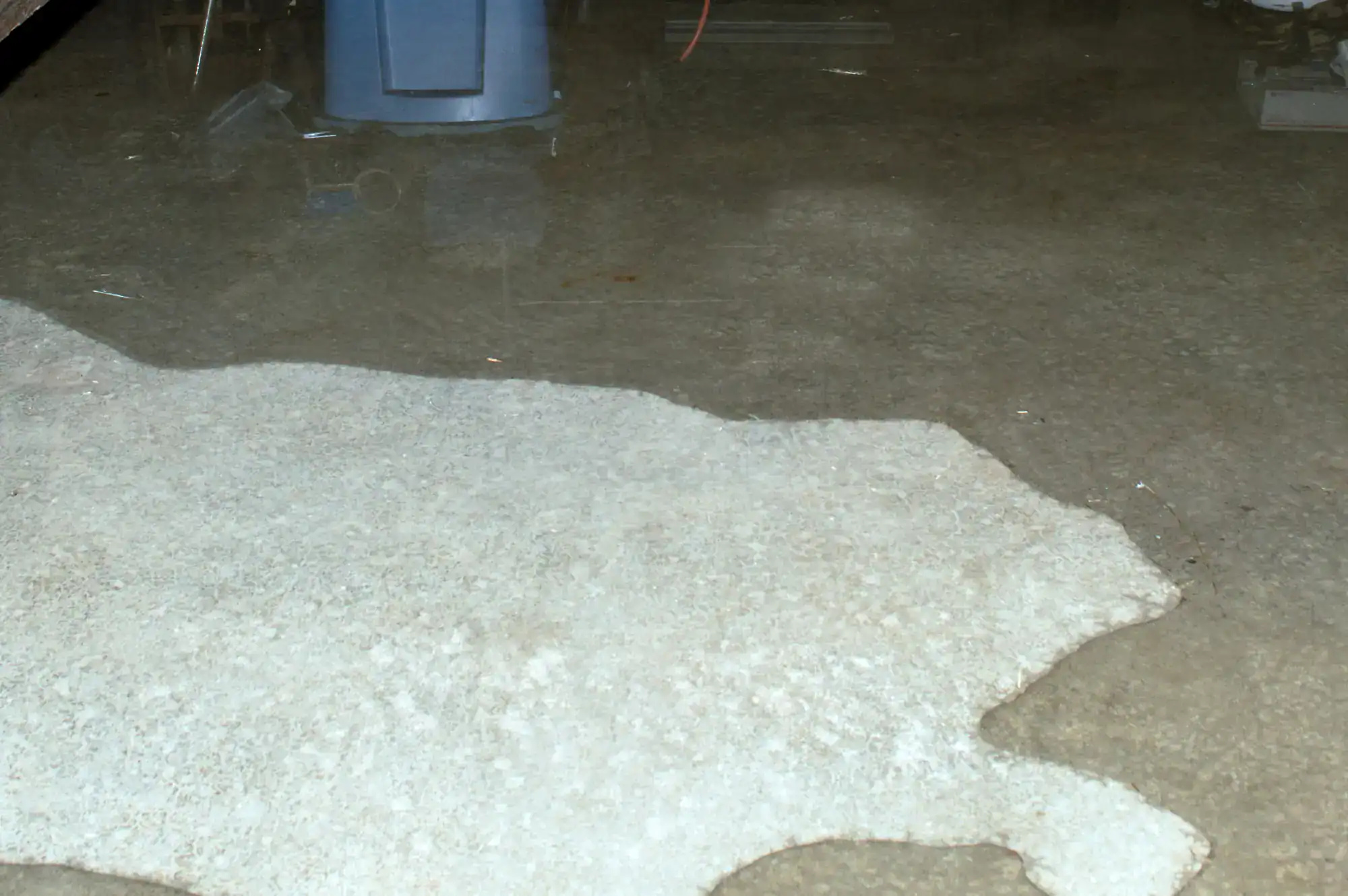
When a fire truck rolls back into the bay after a call hot tires, road salt, hydraulic fluid the floor takes the hit. If that floor is bare concrete or a coating that wasn’t built for this kind of use, you already know what happens next. Staining that won’t clean up. Peeling around the tire contact points. Cracks that collect contamination. And eventually, a floor that’s more of a liability than an asset.
Babylon sits right on the Great South Bay, and that matters more than most people realize when it comes to flooring. The ambient humidity along the South Shore is consistently elevated, and moisture vapor migrating up through a concrete slab is the number one reason epoxy floors fail in coastal stations. It doesn’t matter how good the coating looks when it goes down if moisture testing was skipped and the surface wasn’t properly prepared, it’s only a matter of time before it starts lifting.
The right system properly installed, with mandatory moisture testing, diamond grinding, and a polyaspartic topcoat rated for heavy apparatus holds up in this environment. It’s chemical-resistant, thermally stable when bay doors swing open in January, and seamless enough to power-wash clean after every call. For Babylon’s volunteer departments, from the Main Street station to the companies serving North Babylon, West Babylon, and Copiague, that kind of durability isn’t optional. It’s the baseline.
We’re based in Bohemia, NY about 15 miles east of Babylon along the South Shore corridor. That proximity isn’t just a convenience. It means our crew understands what Long Island’s coastal climate actually does to a floor over time. We’ve seen it. We’ve fixed it. We know what to look for before the first coat ever goes down.
Our CEO Danny Harmer has been installing commercial and industrial epoxy systems for over 40 years. We hold the Sherwin-Williams High Performance Flooring certification a manufacturer-approved credential that requires formal training in concrete assessment, surface prep, and installation quality control. Every installer on our crew is OSHA 40 certified, which matters when you’re working in an active fire station where apparatus is staged and members may be present at any hour.
Our portfolio includes the White House kitchen in 1996, international projects, and decades of commercial and industrial work across Long Island. Most of our field crew has been with us for over ten years. When Babylon’s fire district boards ask for references and credentials, those answers hold up.
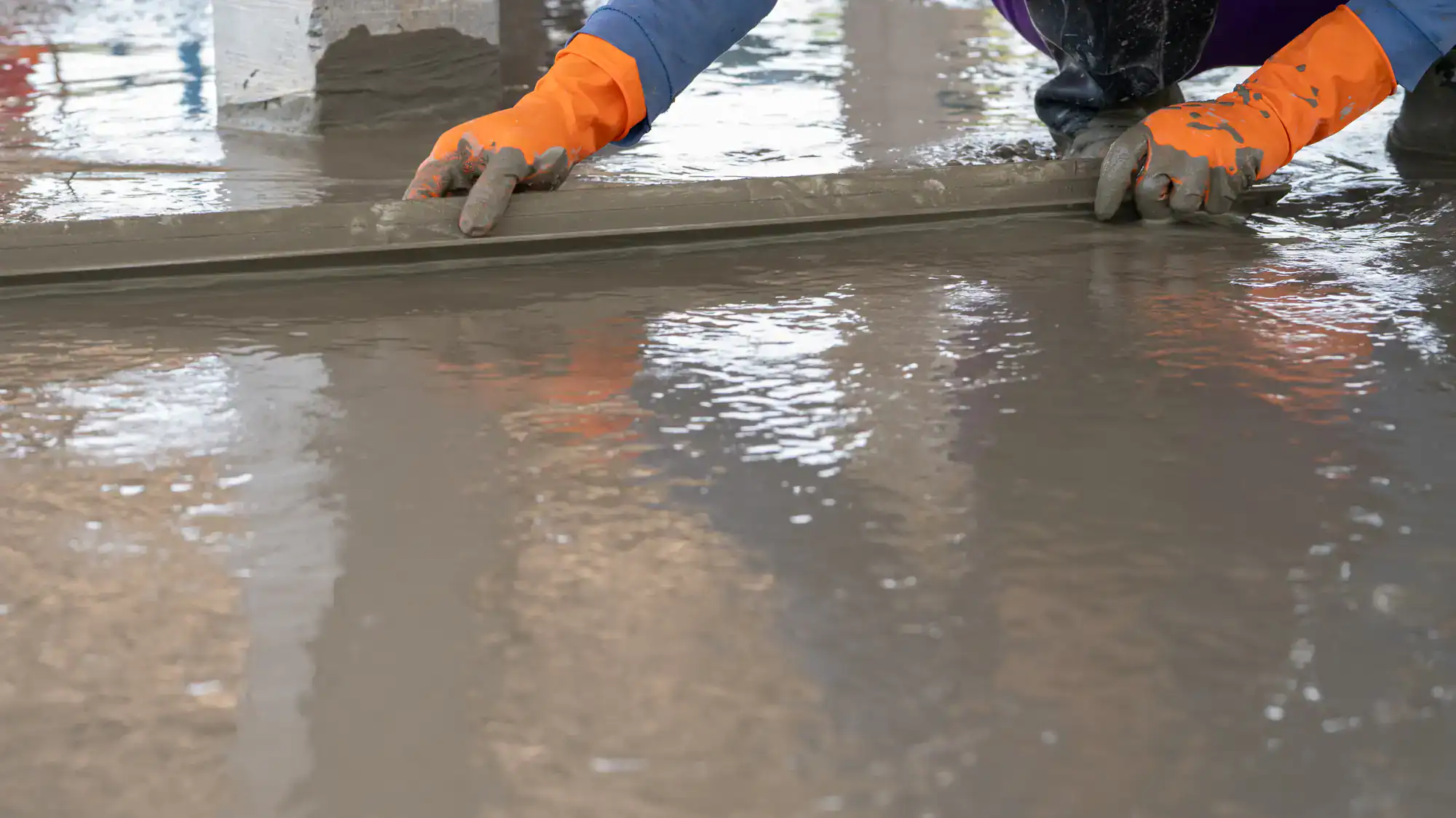
The first thing that happens on any apparatus bay project in Babylon is a moisture assessment. Given the South Shore’s proximity to the Great South Bay and the consistently elevated humidity in this area, skipping that step isn’t an option. We test moisture vapor pressure, evaluate the slab condition, and select the right primer system based on what’s actually happening beneath the surface not what looks fine from above.
From there, we diamond grind the concrete, not acid etch it. Diamond grinding creates a mechanical profile in the surface a physical texture our coating bonds into rather than relying on a chemical reaction that can leave residue and inconsistent adhesion. It’s a more thorough process, and on a floor that’s going to carry 40,000-pound apparatus every day, that bond strength is the whole game.
Our installation uses a multi-layer system: penetrating primer, high-build epoxy base with aggregate broadcast for slip resistance, and a polyaspartic topcoat. That topcoat cures in 24 hours. For Babylon’s volunteer departments where apparatus redundancy is limited and the trucks need to be back in the bay and ready that turnaround is the difference between a project that works operationally and one that doesn’t. One day of coordinated downtime. That’s it.
Ready to get started?
The apparatus bay is the hardest-working floor in the building, but it’s not the only one that matters. Decontamination zones, locker rooms, kitchens, and living quarters all have their own flooring demands and in Babylon’s volunteer stations, where members return from calls and move directly into shared spaces, the contamination control piece has become a real operational priority. NFPA 1500 and 1585 protocols call for seamless, non-porous surfaces in hot zones that can be fully decontaminated after exposure. A properly installed resinous floor in the apparatus bay directly supports that standard.
For the bay itself, we rate our system for the full load profile of modern fire apparatus pumpers, ladder trucks, and rescue units that push 40,000 pounds. The polyaspartic topcoat handles hot tire contact without bonding to the rubber, resists road salt and hydraulic fluid without absorbing either, and stays stable through the thermal cycling that comes with Babylon’s winters, when bay doors open repeatedly against a heated interior. It’s also UV-stable, which matters for stations with skylights or open bay configurations.
We handle the entire station floor plan under one contract. One crew, one certified system, one point of contact if anything ever needs attention. For fire district boards in Babylon and across the Town’s hamlets from Deer Park to Lindenhurst that single-contractor accountability simplifies both the project and the paperwork.
This is the question every volunteer department asks first, and it’s the right one to ask. Traditional epoxy systems require three to seven days of cure time before they can handle vehicle traffic which means your apparatus is either staged outside or relocated to another station for the better part of a week. For a volunteer department in Babylon with limited apparatus redundancy and a service area that includes waterfront and barrier beach communities along the Robert Moses Causeway corridor, that kind of downtime isn’t realistic.
We use rapid-cure polyaspartic systems specifically for apparatus bay work. The topcoat reaches full vehicle-traffic hardness within 24 hours of application. That means a coordinated one-day window planned around your department’s schedule is all that’s required. The trucks go back in the next morning. The project gets done without compromising your response capability, and your district board doesn’t have to explain a week-long apparatus relocation to anyone.
Delamination the bubbling and peeling you’re seeing is almost always a moisture problem. Babylon sits on the Great South Bay, and the ambient humidity along the South Shore is consistently higher than inland Long Island communities. Concrete is porous, and moisture vapor migrates upward through the slab from the water table and soil below. When a coating is applied without testing for that vapor pressure first, the trapped moisture eventually builds enough pressure to break the bond between the coating and the concrete.
The fix isn’t a different brand of epoxy. It’s a different process. We require mandatory moisture testing before installation to identify exactly what’s happening in the slab. Diamond grinding not acid etching creates a mechanical bond profile that moisture is far less likely to break. And a penetrating primer system seals the slab against vapor transmission before the topcoat ever goes down. Departments along the South Shore that have had floors fail before usually failed because one or more of those steps was skipped.
The load profile is the biggest difference. A commercial warehouse floor handles forklifts and pallet jacks. An apparatus bay floor handles fire trucks that can weigh 40,000 pounds or more, rolling in and out multiple times a day, often with hot tires from a run. Standard commercial epoxy systems aren’t engineered for that combination of dynamic load, thermal stress, and chemical exposure. Hot tire pickup where the coating bonds to warm rubber on cooling and peels away when the truck backs out is one of the most common failure modes in apparatus bays that used the wrong system.
Beyond load and heat, the chemical exposure in a firehouse bay is more varied and aggressive than most commercial environments. Road salt tracked in from Suffolk County’s winter treatments, hydraulic fluid, diesel, and fire suppression agents all hit the floor regularly. We specify a high-build epoxy base for compressive strength, a broadcast aggregate layer for slip resistance, and a polyaspartic topcoat that’s chemically resistant, thermally stable, and flexible enough to absorb the thermal cycling that comes with bay doors opening in January. That’s a different specification than a standard commercial floor, and it requires a contractor who understands the difference.
Babylon’s South Shore location creates a specific set of stressors that accelerate floor coating wear faster than you’d see in an inland community. Elevated ambient humidity from the Great South Bay increases moisture vapor pressure in concrete slabs year-round. Freeze-thaw cycling in winter combined with the thermal shock of cold bay doors opening against a heated interior stresses coatings at their bond points. And road salt applied heavily on South Shore roads through the winter gets tracked directly onto the bay floor with every return from a call.
A floor coating that wasn’t specified or installed with those conditions in mind will typically start showing problems within two to five years bubbling from moisture, cracking from thermal cycling, or chemical degradation from salt and fluid exposure. A properly installed polyaspartic system, with moisture testing, diamond grinding, and a chemically resistant topcoat, is rated for 15 to 20 years in heavy-use commercial environments. The coastal conditions in Babylon don’t change that lifespan when the system is right they only shorten it when it isn’t.
Yes, and this has become a more pressing question for Suffolk County volunteer departments over the last several years. NFPA 1500 and 1585 set the framework for contamination control in fire stations specifically, the separation of hot zones (the apparatus bay, where carcinogenic combustion byproducts accumulate on gear and apparatus) from cold zones (living quarters, kitchens, administrative areas). The goal is to prevent firefighters from tracking those contaminants into the parts of the building where they eat, sleep, and spend time between calls.
A seamless, non-porous resinous floor in the apparatus bay directly supports that protocol. There are no grout lines, no cracks, and no porous surface where combustion byproducts can accumulate and resist cleaning. After a call, the bay can be power-washed and chemically decontaminated completely something that’s not possible with bare concrete or a deteriorating coating. For Babylon’s volunteer firefighters, who return to their families and jobs after every call, that’s a practical health measure that the flooring either supports or undermines.
Most fire districts in the Town of Babylon operate on a calendar-year budget cycle, with capital improvement requests submitted in the fall for the following year. An apparatus bay floor coating typically qualifies as a capital expenditure, which means it goes through the fire district board of commissioners for approval not just a chief officer’s discretionary budget. That approval process is easier when the request is framed around total cost of ownership rather than upfront cost alone.
A properly installed polyaspartic system in a Babylon apparatus bay runs in the range of $8 to $15 per square foot depending on bay size, slab condition, and the number of coats required. That’s a meaningful investment, but it’s one that lasts 15 to 20 years with normal maintenance. Compare that to a cheaper system that fails in three to five years and requires full removal and reinstallation the math shifts quickly. Departments also frequently pursue FEMA Assistance to Firefighters Grants, which have annual application cycles and can cover facility improvement projects. Framing the floor as a firefighter health and safety investment which it genuinely is, given the contamination control angle strengthens that grant narrative considerably.