
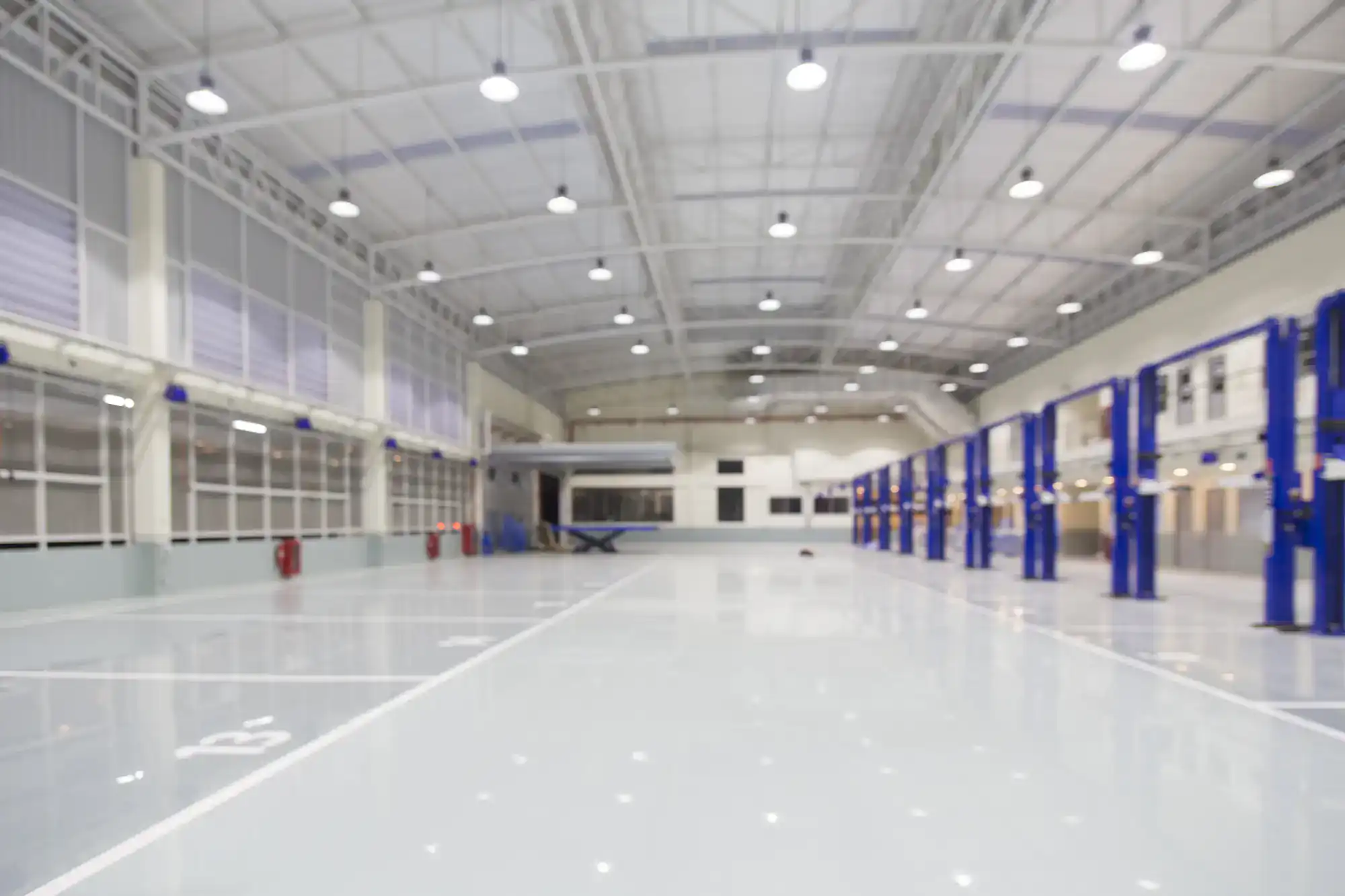
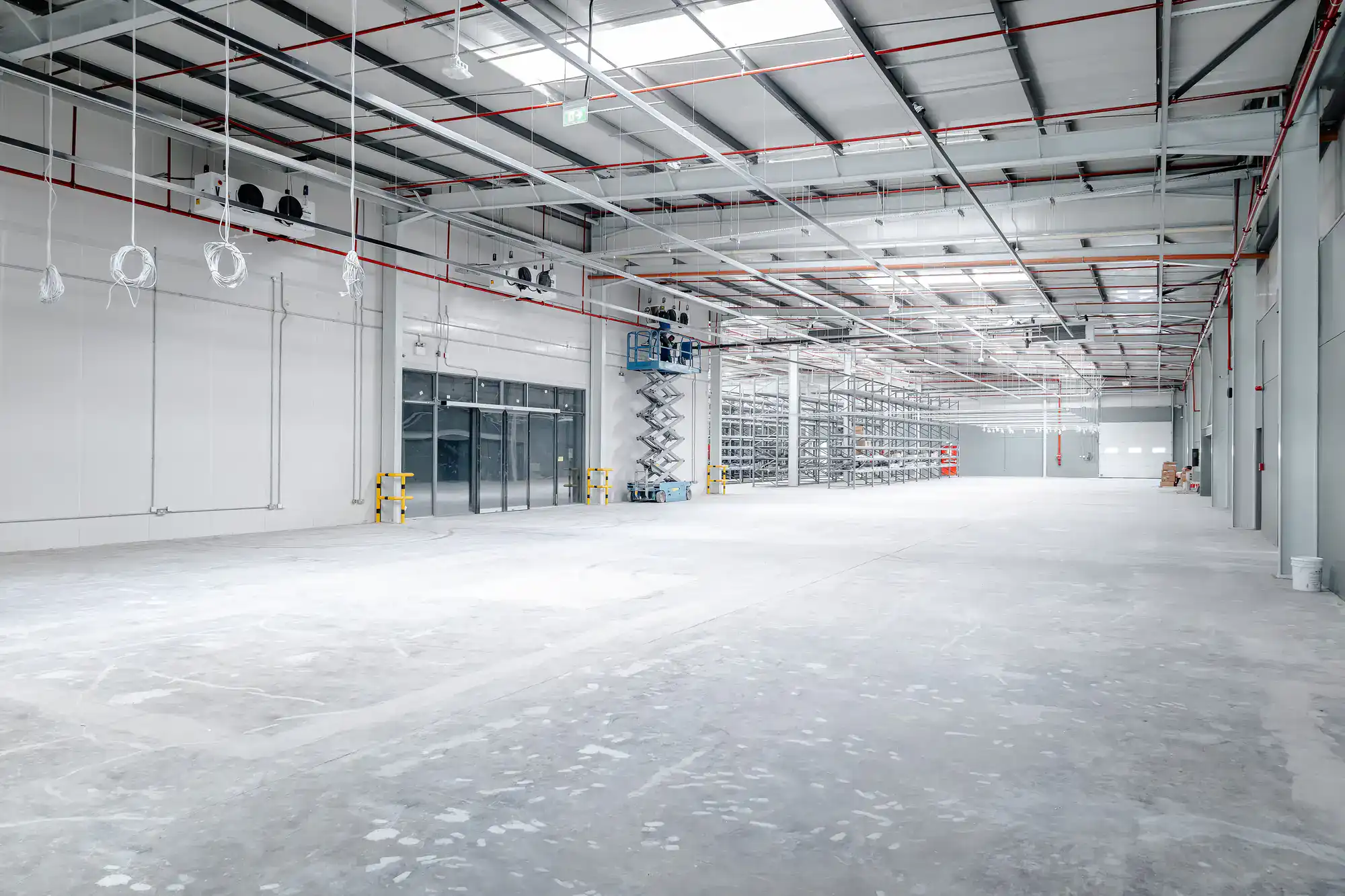
Most hangar floors don’t fail because of heavy use. They fail because the prep was skipped, the wrong product was used, or nobody accounted for what the ground beneath the slab was doing. In Babylon, that last part matters more than almost anywhere else on Long Island. The south shore sits on low-lying marsh land the Town’s own public works documentation puts much of the shorefront at one to two feet above sea level. That means the water table is close, ambient moisture is a year-round factor, and any coating system that doesn’t start with a proper moisture assessment is already working against itself.
Salt air compounds the problem. If your hangar is anywhere near the Great South Bay or the barrier beach communities, you’re dealing with a coastal environment that accelerates concrete degradation and shortens the lifespan of any coating that wasn’t specified for it. A properly installed aviation facility epoxy flooring system one that starts with diamond-ground concrete prep, includes moisture mitigation, and finishes with a chemical-resistant, UV-stable topcoat creates a sealed surface that actually holds up in these conditions.
The result is a floor that’s safer to work on, easier to maintain, and built to last through Babylon’s winters, nor’easters, and the daily chemical exposure that comes with any active aircraft environment. That’s not a bonus feature. In Babylon, it’s the baseline requirement.
We’ve been installing resinous flooring systems across Long Island and beyond for over 30 years. Our operation is based in Bohemia, NY about 20 miles east of Babylon in Suffolk County which means the crews showing up to your hangar know exactly what Babylon’s south shore climate does to concrete. This isn’t a national brand dispatching a crew from out of state. It’s a local company with real accountability to the communities we serve.
Danny Harmer, our president, has over 40 years of hands-on installation experience. He’s installed floors in aircraft hangars, commercial kitchens, firehouses, healthcare facilities, and even the White House kitchen in 1996. Every project follows the same standard no exceptions. We hold dual certifications from Sherwin-Williams High Performance Flooring and Res Tech, all our installers carry OSHA 40 certification, and most of our crew has been with us for over a decade. When you’re investing in an airplane hangar polyaspartic floor or a full epoxy system near Babylon, that kind of consistency matters.
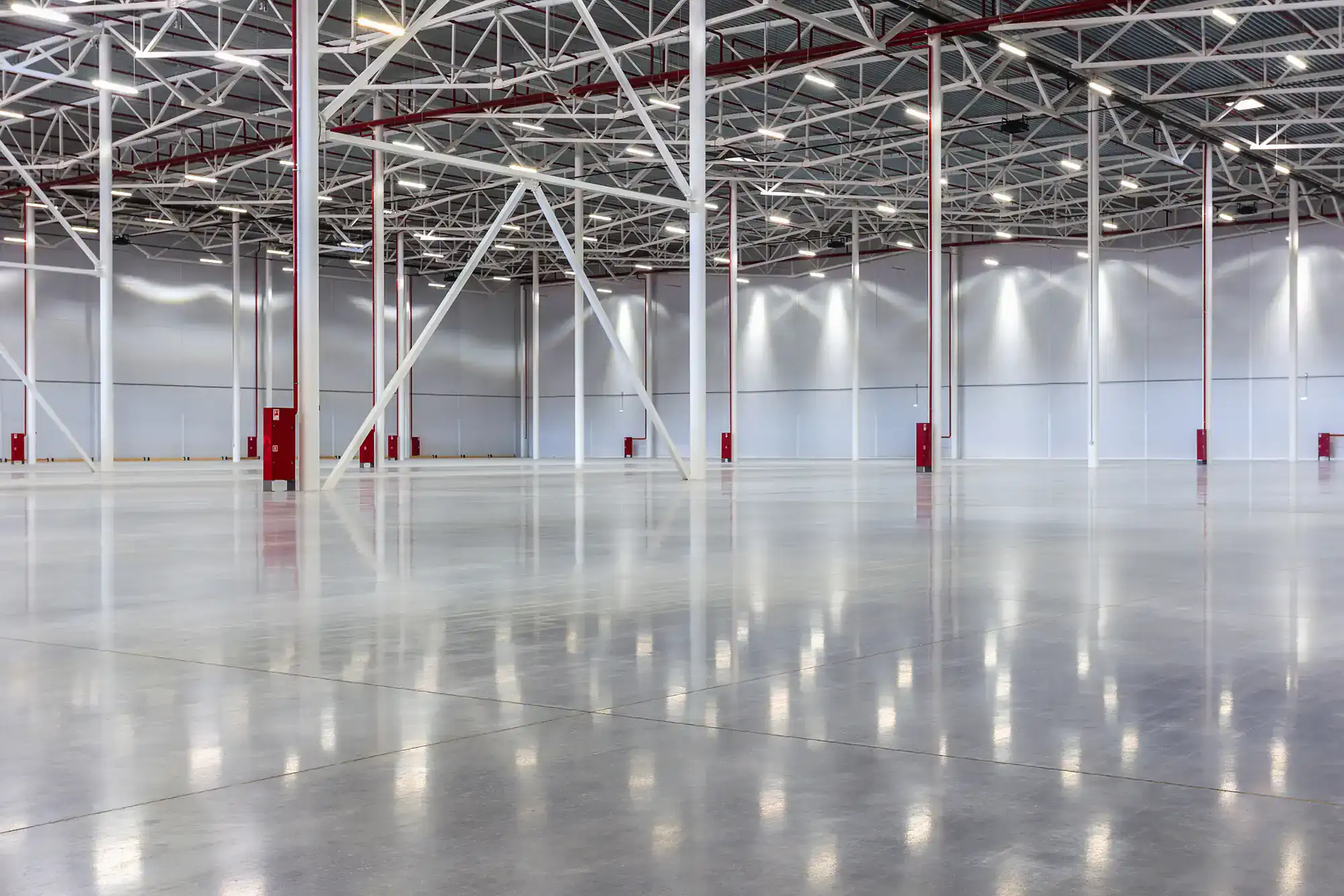
The process starts before any product is mixed. We evaluate the concrete slab surface condition, existing cracks or spalls, and critically, moisture vapor transmission. In Babylon’s coastal environment, this step is non-negotiable. Slabs that have been exposed to flooding, storm surge, or the chronic moisture that comes with sitting near the Great South Bay can have subsurface conditions that aren’t visible from above. Skipping the moisture test is one of the most common reasons epoxy floors fail on Long Island, and it’s the first thing we check.
Once the assessment is complete, we diamond-grind the surface to the correct profile not acid-etched, not pressure-washed. Mechanical preparation gives the coating something real to bond to. We repair any cracks or spalled areas before the first coat touches the floor. From there, the system builds in layers: primer, base coat, and a UV-stable topcoat that meets NFSI non-slip requirements. For active aircraft environments near Republic Airport, we can specify Skydrol-resistant formulations and NFPA 409-compliant systems where required.
If your timeline is tight, polyaspartic systems cure fast enough to return aircraft to the hangar within 24 hours. That matters if you’re running an active operation and can’t afford days of downtime. The whole process is designed around one outcome: a floor that performs correctly from day one and keeps performing.
Ready to get started?
Aircraft maintenance bay flooring in Babylon, NY has to handle more than foot traffic. Jet fuel, Skydrol hydraulic fluid, de-icing agents, and cleaning solvents are part of the routine in any active hangar and your floor needs to resist all of them without breaking down. The coating systems we install are formulated specifically for aviation chemical exposure. That’s a chemistry specification, not a marketing description.
For commercial hangars and FBO facilities operating in Suffolk County, NFPA 409 compliance is a code requirement the grade floor of any aircraft storage or servicing area must be noncombustible. Most general flooring contractors don’t know this standard exists, let alone how to meet it. We install systems that satisfy this requirement, and our NFSI-certified non-slip topcoat provides documented safety compliance for working surfaces where fuel spills and hydraulic fluid are a real risk.
Whether you’re coating a private aircraft storage bay off NY-109, a corporate flight department facility near Deer Park, or a commercial maintenance space in the East Farmingdale corridor, we specify the system to match the application. Light, high-reflectivity finishes are available to improve visibility and FOD detection on the floor. The goal is a surface that works as hard as the facility it’s in and holds up to Babylon’s coastal environment while doing it.
It does, and it’s one of the most important factors to account for before any coating goes down. Babylon sits on the south shore of Long Island, where the ground is low-lying and the water table is close to the surface. The Town’s own public works documentation describes much of the shorefront as approximately one to two feet above sea level. That proximity to the Great South Bay and the Atlantic means moisture vapor transmission through concrete slabs is elevated year-round not just during wet seasons.
If a coating is applied over a slab with high moisture vapor emission and no mitigation primer, the moisture pushes up from below and breaks the bond between the coating and the concrete. That’s what causes the bubbling and peeling you see on floors that were installed cheaply or without proper testing. Every installation we do in Babylon starts with a moisture assessment. If the slab needs a moisture-mitigating primer before the base coat, that’s what it gets. There’s no shortcut around it if you want the floor to last.
The main differences come down to chemical resistance, safety compliance, and how the system is specified. A standard residential or light commercial epoxy product the kind used on garage floors isn’t formulated to handle the chemicals present in an active aircraft environment. Jet fuel, Skydrol hydraulic fluid, de-icing compounds, and industrial cleaning agents will break down a standard epoxy over time. Aviation facility epoxy flooring uses formulations engineered specifically for that chemical exposure profile.
On the safety side, commercial hangars in New York are subject to NFPA 409, which requires the grade floor of aircraft storage and servicing areas to be noncombustible. Most standard epoxy products don’t meet this requirement. Beyond that, the non-slip topcoat on an aviation-grade floor needs to perform on surfaces that may be wet with fuel or hydraulic fluid not just dry foot traffic. Our topcoat is certified by the National Flooring Safety Institute, which is a tested, third-party standard rather than a manufacturer’s claim about texture.
A properly installed aviation-grade system in a coastal environment like Babylon can last 15 to 20 years with normal maintenance. The key phrase there is “properly installed” because the south shore’s combination of high ambient humidity, salt air, and the potential for storm flooding creates conditions that will find every weakness in a coating system that was rushed or under-specified.
The biggest factors affecting lifespan are concrete prep and moisture management. A floor that was diamond-ground to the correct surface profile, tested for moisture vapor transmission, and built with a moisture-mitigating primer as the foundation is going to perform very differently than one that was acid-etched and coated in a single pass. Nor’easters and coastal flooding events which Babylon experiences regularly can introduce salt water beneath slabs and compromise coatings that weren’t properly sealed at the edges and transitions. When the system is installed correctly from the start, it handles these conditions. When it isn’t, you’re looking at a recoat much sooner than you should be.
Both systems can perform well in an aircraft hangar environment the right choice depends on your timeline, your budget, and how the facility is used. Epoxy systems are well-established in aviation applications, offer excellent chemical resistance, and can be built up in multiple layers for a high-build, durable finish. They’re a strong option for facilities that can accommodate a standard multi-day cure window before aircraft return to the floor.
Polyaspartic systems cure significantly faster fast enough to return a hangar to service within 24 hours in most cases. For active operators near Republic Airport who can’t afford extended downtime, that’s a real operational advantage. Polyaspartic coatings also handle temperature fluctuations well, which matters on Long Island where freeze-thaw cycles in winter can stress a slab and its coating. The tradeoff is that polyaspartic systems require precise application they cure quickly, which means the installer needs to work efficiently and know the product. We install both systems and can walk you through which one fits your specific facility and schedule.
For commercial hangars, the primary code requirement to understand is NFPA 409 the national standard on aircraft hangars, which requires the grade floor surface of aircraft storage and servicing areas to be noncombustible. This applies to commercial and FBO facilities operating in New York, including those in the Town of Babylon and Suffolk County. It’s not a preference or a guideline it’s a code requirement, and a coating system that doesn’t meet it creates a compliance problem.
For permit requirements specific to the Town of Babylon, the scope of the flooring work typically determines whether a building permit is required. The Babylon Industrial Development Agency offers fast-track permit processing for commercial facility improvements, which can be relevant if you’re undertaking a larger renovation that includes floor resurfacing. For private aircraft storage facilities, the requirements are generally less involved, but it’s worth confirming with the town before starting work. We can advise on what documentation is typically needed based on the type of facility and the scope of the installation.
The most common reason is inadequate surface preparation specifically, skipping or rushing the concrete profiling step and not testing for moisture. On Long Island’s south shore, where Babylon’s ground sits close to the water table and coastal flooding is a documented reality, these aren’t optional steps. A coating applied to a slab that hasn’t been properly profiled or that has active moisture vapor transmission will delaminate. It’s not a matter of if it’s a matter of when.
The second most common reason is using the wrong product for the application. A lot of contractors apply the same system they use for residential garage floors to aircraft hangars. Those products aren’t formulated for aviation chemical exposure, and they aren’t rated for the traffic and spill conditions present in an active maintenance environment. The floor looks fine on day one and starts breaking down within a year or two. The fix stripping the failed coating, re-prepping the concrete, and reinstalling the correct system costs significantly more than doing it right the first time. That’s the total-cost-of-ownership argument that matters most for Babylon hangar owners making a real capital investment in their facility.