
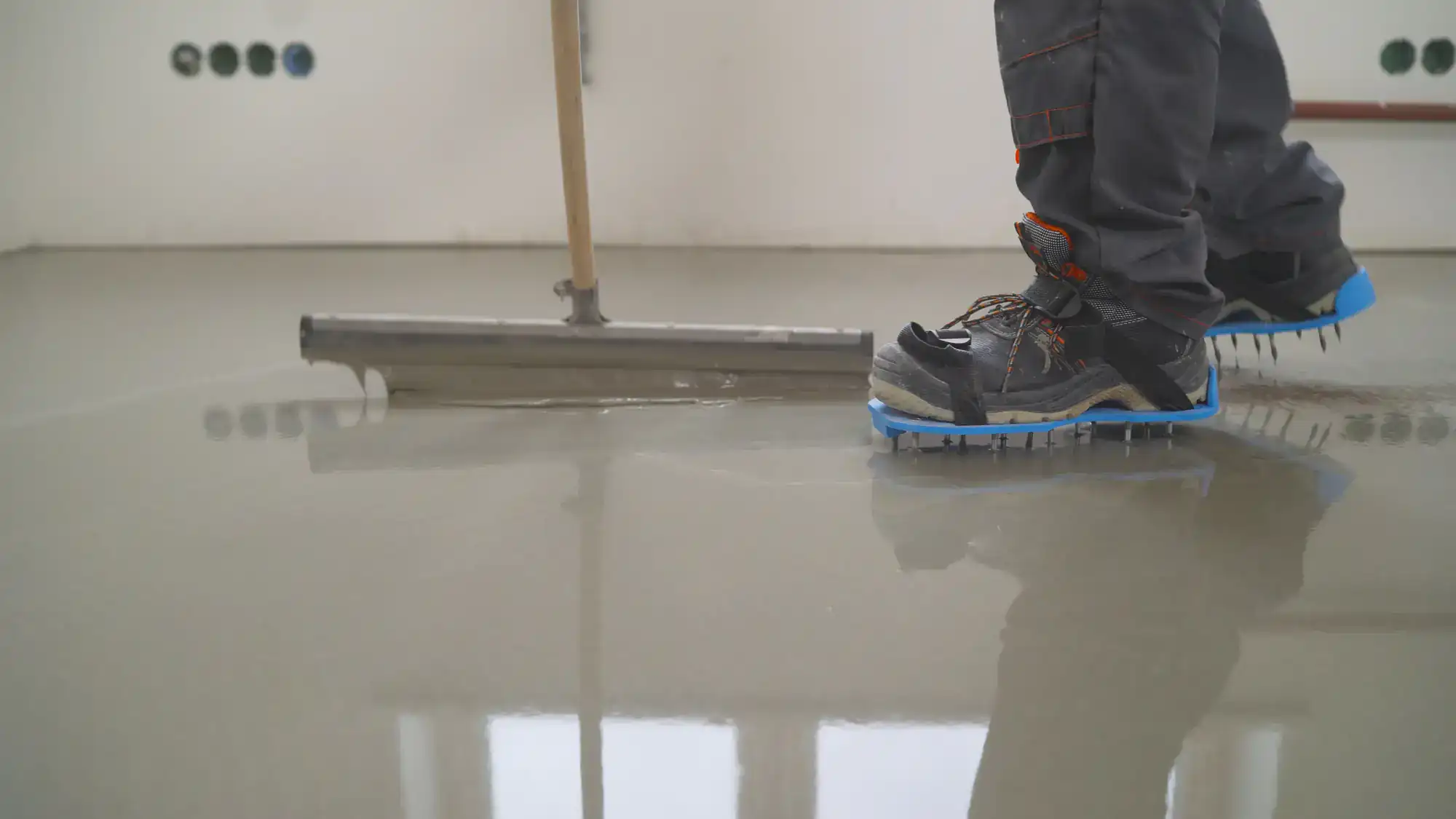
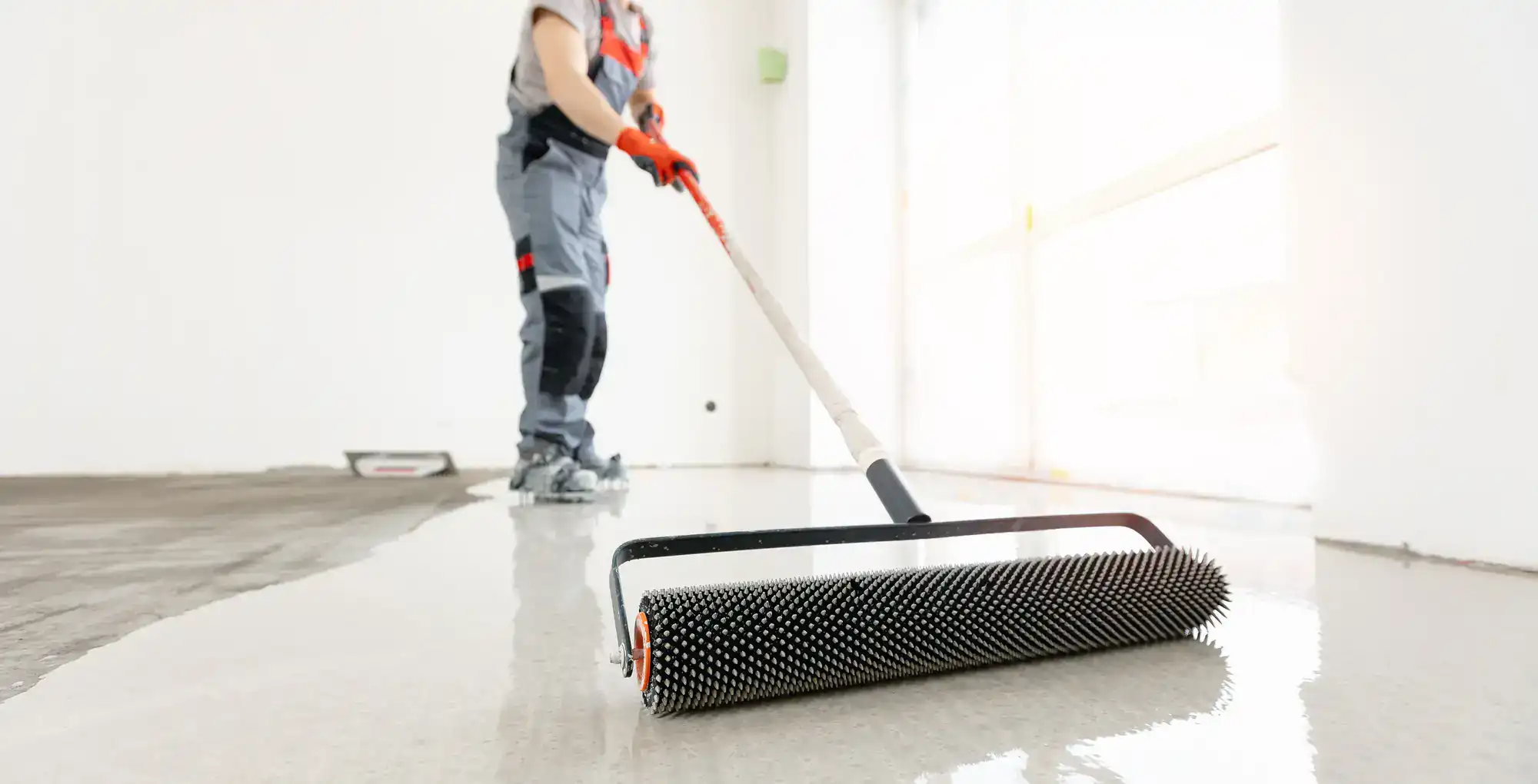
When you’re renovating a home in Rockville Centre that’s been standing since the 1940s, the subfloor is rarely where you want it to be. Decades of settlement, ground moisture creeping up through aging concrete, and the occasional flood from a South Shore storm all of it adds up to a slab that’s uneven, compromised, or both. Self leveling underlayment in Rockville Centre, NY corrects that. Not with a patch, but with a properly bonded, polymer-modified system that gives your new floor the flat, stable base it actually needs.
For homeowners, that means large-format tile, luxury vinyl plank, and hardwood installations that don’t crack, buckle, or shift after a year. For the restaurants, retail businesses, and professional offices along Village Avenue and Merrick Road, it means equipment that sits level, flooring that meets spec, and a renovation timeline that doesn’t drag out for weeks. Our self leveling concrete is ready for foot traffic in four to six hours and heavy commercial use within 24 to 48 hours.
The real difference between a floor that lasts and one that fails within a few years usually comes down to what happened before the finish material went down. In a coastal community like Rockville Centre where humidity runs high, slabs are old, and home values are close to a million dollars getting the substrate right isn’t optional. It’s the whole job.
Advanced Epoxy Flooring has been installing floors on Long Island for over 30 years. Our president, Danny Harmer, has more than 40 years of hands-on experience, and our crew has been with us for over a decade. That kind of tenure means the same experienced hands show up on every job not a rotating crew that learned the process last month.
We’re based in Bohemia, NY, which puts us about 30 to 40 minutes from Rockville Centre via the Southern State Parkway or Sunrise Highway. We’ve been working in Nassau County’s coastal environment long enough to know exactly what the slabs in Rockville Centre deal with the ground moisture that sits below pre-war foundations, the humidity that never fully leaves the basement, the hydrostatic pressure that pushes up through concrete in older homes. That’s not something you figure out on a client’s job. You either know it or you don’t.
Everything we do is in-house. Moisture testing, surface prep, the self leveling pour, and the final floor coating one crew, one contract, one point of contact. If something ever needs to be addressed, there’s no second contractor to track down. That’s not a small thing when your home or business is on the line.
The first thing we do on every job in Rockville Centre is test for moisture. We use ASTM F2170 relative humidity testing and MVER testing before any pour begins. ASTM F2170 requires slab RH to be below 80% before self leveling installation proceeds and on Long Island’s South Shore, where aging concrete and coastal ground conditions push moisture levels higher than most people expect, this step isn’t a formality. It’s what separates a floor that lasts from one that delaminates in 18 months.
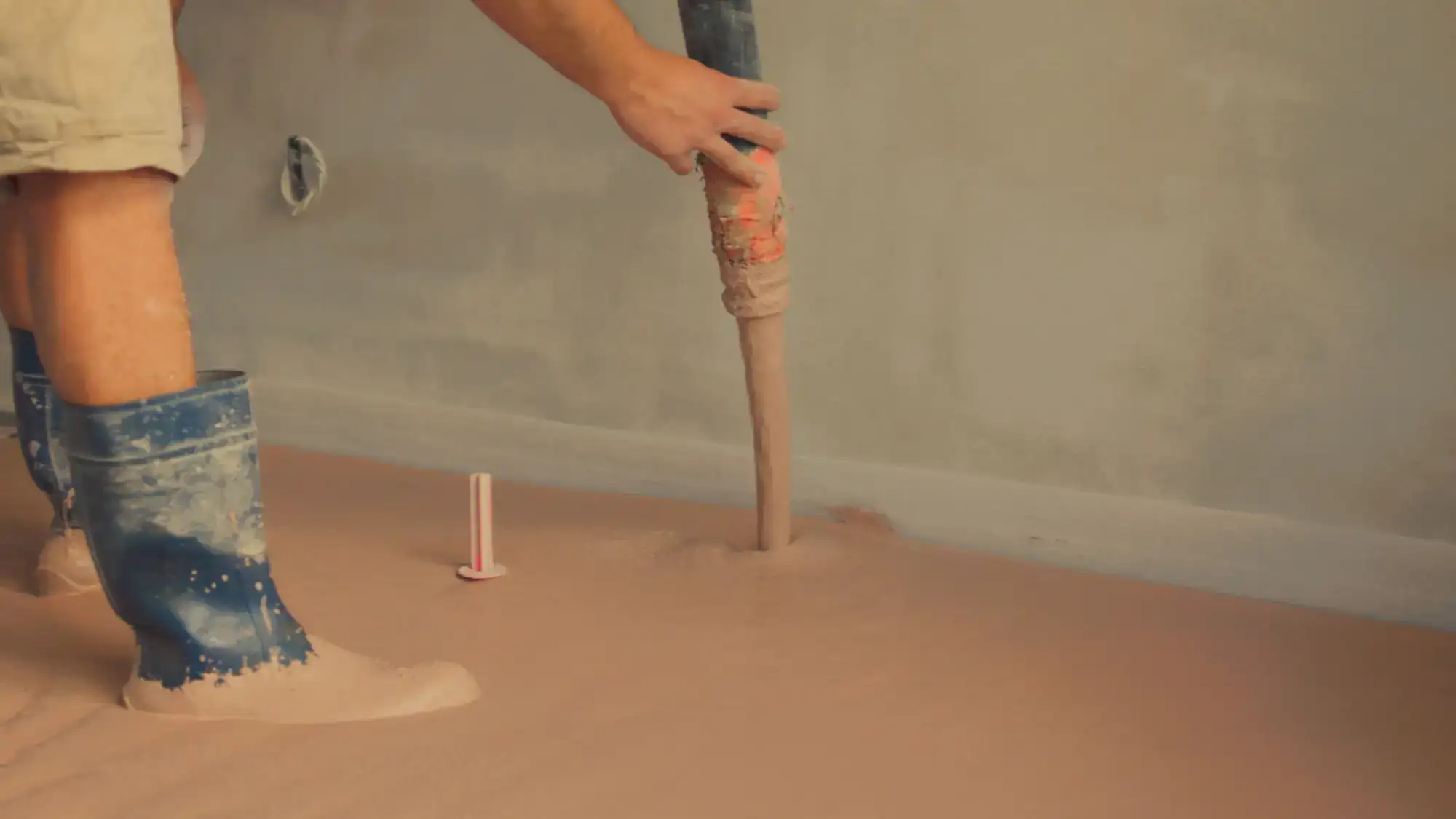
Once the slab passes moisture testing, we move into surface preparation. That means cleaning, repairing cracks, and priming the concrete so the self leveling material bonds correctly. Skipping or rushing this step is one of the most common reasons self leveling jobs fail the product flows beautifully but won’t hold if the surface underneath isn’t properly prepared. Our polymer-modified, cementitious self leveling underlayment installs from a quarter inch to over two inches neat, and up to five inches with aggregate so whether you’re correcting minor unevenness before a tile installation or dealing with significant settlement in a pre-war basement, we have the depth range to handle it without switching products or bringing in a second contractor.
After the pour, cure time depends on the application. Foot traffic is typically possible within four to six hours. Heavy commercial use restaurant kitchens, medical facility corridors, retail floors is generally ready within 24 to 48 hours. Full cure takes 28 days. If your project requires a permit through the Rockville Centre Building Department, we’re familiar with the Village Code and can work within that process without slowing the job down.
Ready to get started?
More than half of the homes in Rockville Centre were built before 1950. That means most of the slabs we work on have had 70 to 90 years to settle, crack, and absorb ground moisture from below. Our self leveling underlayment system is a high-strength, polymer-modified, cementitious material not a bag of hardware-store patch compound. The polymer modification is what gives it both the flow to self-level and the compressive strength to hold up under real use. That combination matters in a South Shore community where the slab conditions are consistently challenging.
On the commercial side, Rockville Centre’s downtown corridor Village Avenue, Park Avenue, the stretch along Sunrise Highway runs a steady cycle of restaurant renovations, retail buildouts, and tenant improvements. These projects need a fast curing concrete leveler that can keep the job on schedule, and they need a contractor who understands what commercial floor leveling solutions actually require: a level substrate, a tight flatness tolerance, and a finish that holds up under daily traffic. We’ve handled that kind of work at healthcare facilities, restaurants, and institutional spaces across Nassau and Suffolk County.
For both residential and commercial clients, our process includes moisture testing, full surface preparation, the self leveling pour, and the final coating system all under one roof. No handoff to a second contractor, no gap in accountability. Whether you’re updating a kitchen in a 1940s Colonial off Merrick Road or renovating a space near the Mercy Medical Center campus on North Village Avenue, the process is the same: diagnose first, prep correctly, and pour with the right material at the right depth.
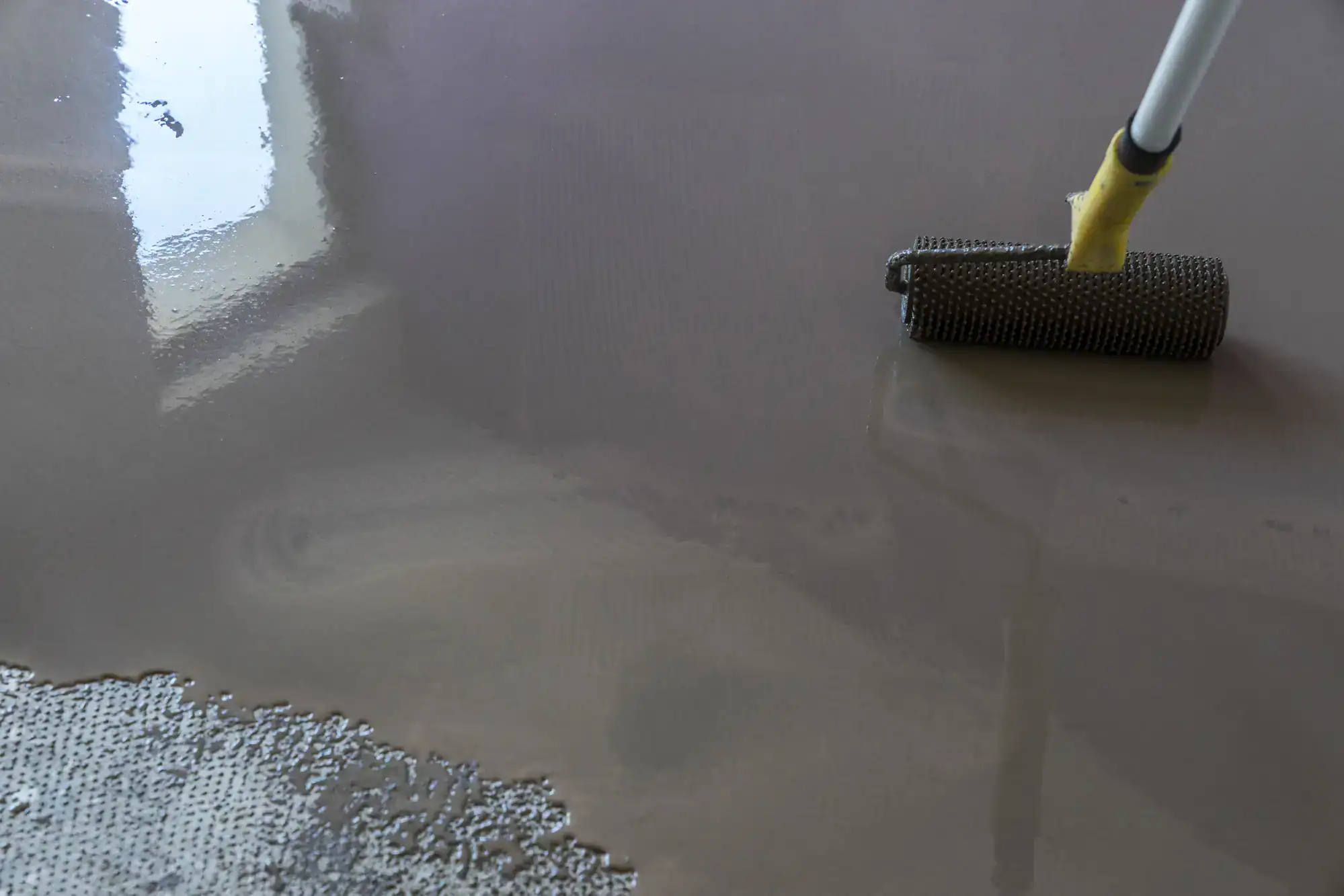
Yes and in Rockville Centre specifically, it’s one of the most important steps in the entire process. The village sits on Long Island’s South Shore, close to sea level, which means ground moisture is a chronic issue in older concrete slabs. Add in the fact that most homes here were built before 1950, and you’ve got slabs that have been absorbing moisture from below for decades. When relative humidity in the slab exceeds 80% the ASTM F2170 threshold and self leveling underlayment gets poured anyway, the bond fails. The material may look fine initially, but delamination, bubbling, and cracking follow.
We test every slab before every pour using ASTM F2170 RH testing and MVER testing. If the numbers are too high, we address the moisture issue before we proceed. Skipping that step doesn’t save time it just moves the problem forward to a point where fixing it costs significantly more.
It depends on how uneven the floor is and what’s going on with the slab. Our self leveling system installs from a quarter inch up to over two inches neat meaning without any added aggregate. For deeper corrections, we can go up to five inches with aggregate. That range covers most of what we see in Rockville Centre’s older housing stock, where settlement over 70 to 90 years can create significant variation across a single room.
The minimum depth is also important. If you’re installing large-format tile or luxury vinyl plank both of which require tight flatness tolerances even minor unevenness needs to be corrected before the finish material goes down. A pour that’s too thin won’t give you the structural performance you need. We assess the floor during the initial inspection and recommend the right pour depth based on what’s actually there, not a one-size-fits-all answer.
For most residential projects in Rockville Centre, self leveling concrete is ready for light foot traffic within four to six hours. That’s enough time to let other trades work in adjacent areas or for the homeowner to move carefully through the space. For the final flooring installation tile, vinyl plank, hardwood you’ll typically want to wait until the underlayment has cured sufficiently for adhesive or mechanical fastening, which is usually 24 hours at minimum depending on the product being installed over it.
For commercial projects along Rockville Centre’s Village Avenue corridor or at facilities like Mercy Medical Center, the 24 to 48 hour window for heavy traffic is the more relevant benchmark. A restaurant that closes for a floor renovation can realistically reopen within a day or two after the pour, not a week. Full structural cure takes 28 days, but that doesn’t affect when you can install the finish floor or resume normal operations.
The most common causes are over-watering the mix, skipping the primer coat, pouring over a slab with unresolved moisture issues, or using the wrong product for the required depth. Each of these is a process failure, not a product failure and they’re entirely preventable with the right prep work.
In Rockville Centre’s older housing stock, the moisture issue is the one we see most often. A contractor who skips moisture testing and pours over a slab with elevated RH is setting up a bond failure. The material cures, looks flat, and then starts to lift or crack as moisture vapor continues to move through the slab. The primer coat is equally important without it, the self leveling material doesn’t bond to the concrete substrate the way it needs to. We don’t skip either step on any job, regardless of how straightforward the project looks on the surface.
It can be, but only after the moisture issue has been fully resolved. If a basement in Rockville Centre flooded whether from hydrostatic pressure, a failed sump pump, or storm surge off the South Shore the slab needs to be dry, clean, and tested before any self leveling work begins. Pouring over a slab that’s still holding moisture is one of the fastest ways to guarantee a failed installation.
Once the slab is dry and moisture levels are within acceptable range per ASTM F2170, self leveling underlayment is an excellent way to restore a damaged or uneven basement floor before installing new flooring. It corrects the surface, provides a clean bonding plane for the finish material, and gives you a flat, durable base that holds up under normal residential use. The key is sequencing it correctly remediation first, testing second, pour third.
For most straightforward residential self leveling projects correcting an uneven slab before a new floor installation a permit is typically not required on its own. However, if the self leveling work is part of a broader renovation that involves structural changes, a change in use, or modifications to mechanical, electrical, or plumbing systems, the Rockville Centre Building Department will require a permit for the overall project.
Rockville Centre is an incorporated village with its own Building Department operating under the Village Code not the Town of Hempstead or Nassau County’s permit system. Some older homes in the village also carry historic designations that can add a layer of review to renovation work. If your project is commercial a restaurant buildout on Village Avenue, a tenant improvement along Merrick Road, or work at a medical facility permit requirements are more likely to apply, and the Village Code governs the process. We’re familiar with how the Rockville Centre Building Department operates and can help you understand what’s required before the job starts.
Other Services we provide in Rockville Centre