
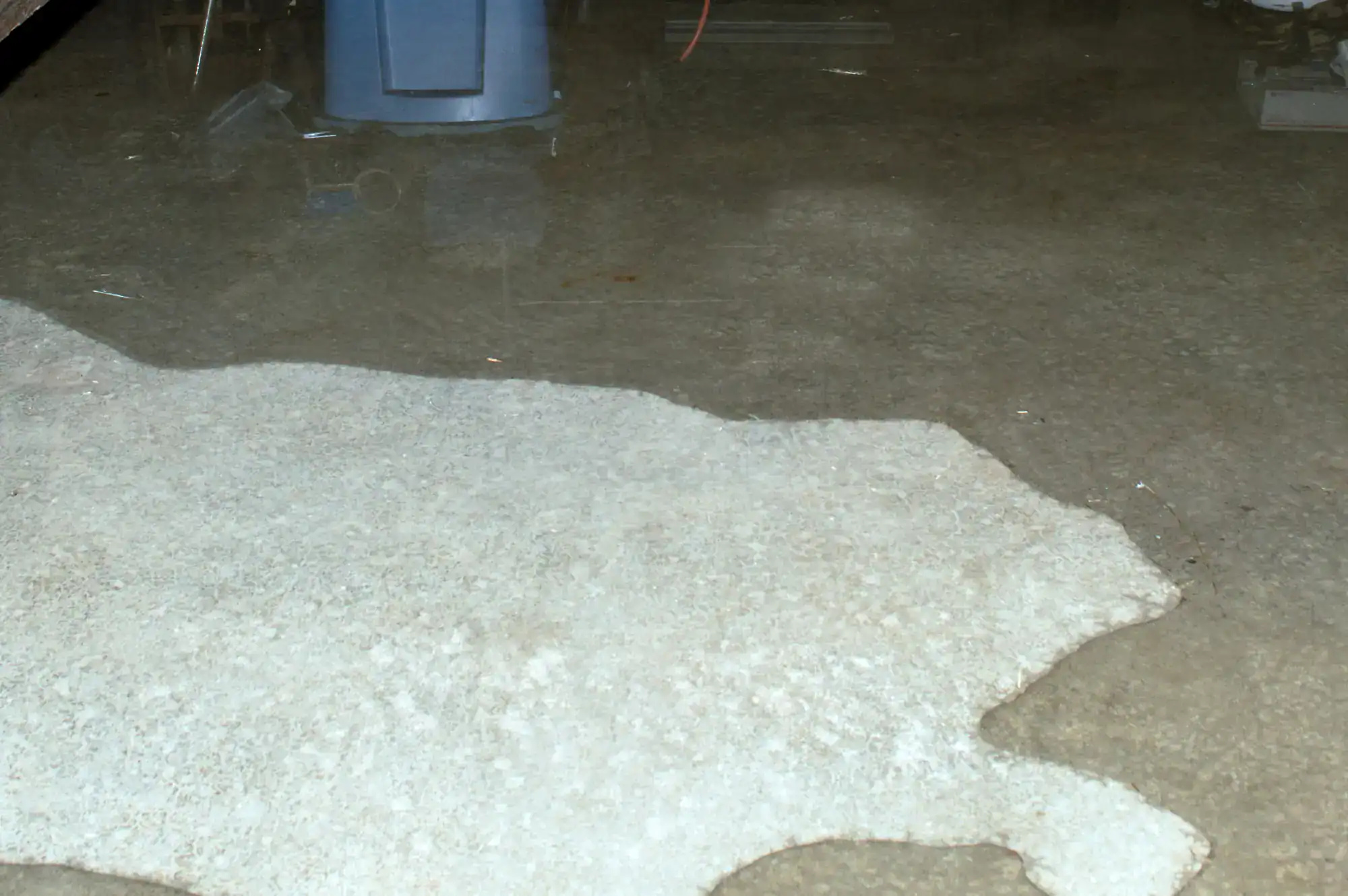
Every time a truck rolls back into the bay after a call, it brings Nassau County’s road salt, coastal moisture, and freeze-thaw grime with it. That combination is relentless on concrete. Standard epoxy the kind a lot of departments end up with wasn’t designed for it. It absorbs, it cracks, it peels. And then you’re doing it all over again in three years.
The right system seals the concrete completely. Salt and moisture sit on top, get squeegeed off, and never reach the substrate. In Rockville Centre’s South Shore climate where bay doors open and close dozens of times a day against a cold, coastal winter that thermal protection isn’t a bonus feature. It’s what separates a 20-year floor from a 3-year failure.
Beyond durability, a seamless, non-porous surface directly supports the contamination control protocols your department should already be running. NFPA 1500 and 1585 aren’t suggestions and a floor with cracks and seams is a floor where combustion byproducts hide between calls. Your 341 volunteers deserve better than that.
We’ve been doing this work for over 30 years, based right here on Long Island in Bohemia accessible to Rockville Centre via the Southern State Parkway and Sunrise Highway. This isn’t a franchise operation or a residential garage floor company that occasionally takes commercial work. We were built specifically around commercial and industrial resinous systems, and fire stations are one of the most technically demanding environments we work in.
We hold the Sherwin-Williams High Performance Flooring certification one of the most rigorous manufacturer-approved applicator credentials in the industry. Every installer is OSHA 40 certified. Most have been with us for over a decade. And the work speaks: in 1996, we installed the White House kitchen floor. If that standard was met, yours will be too.
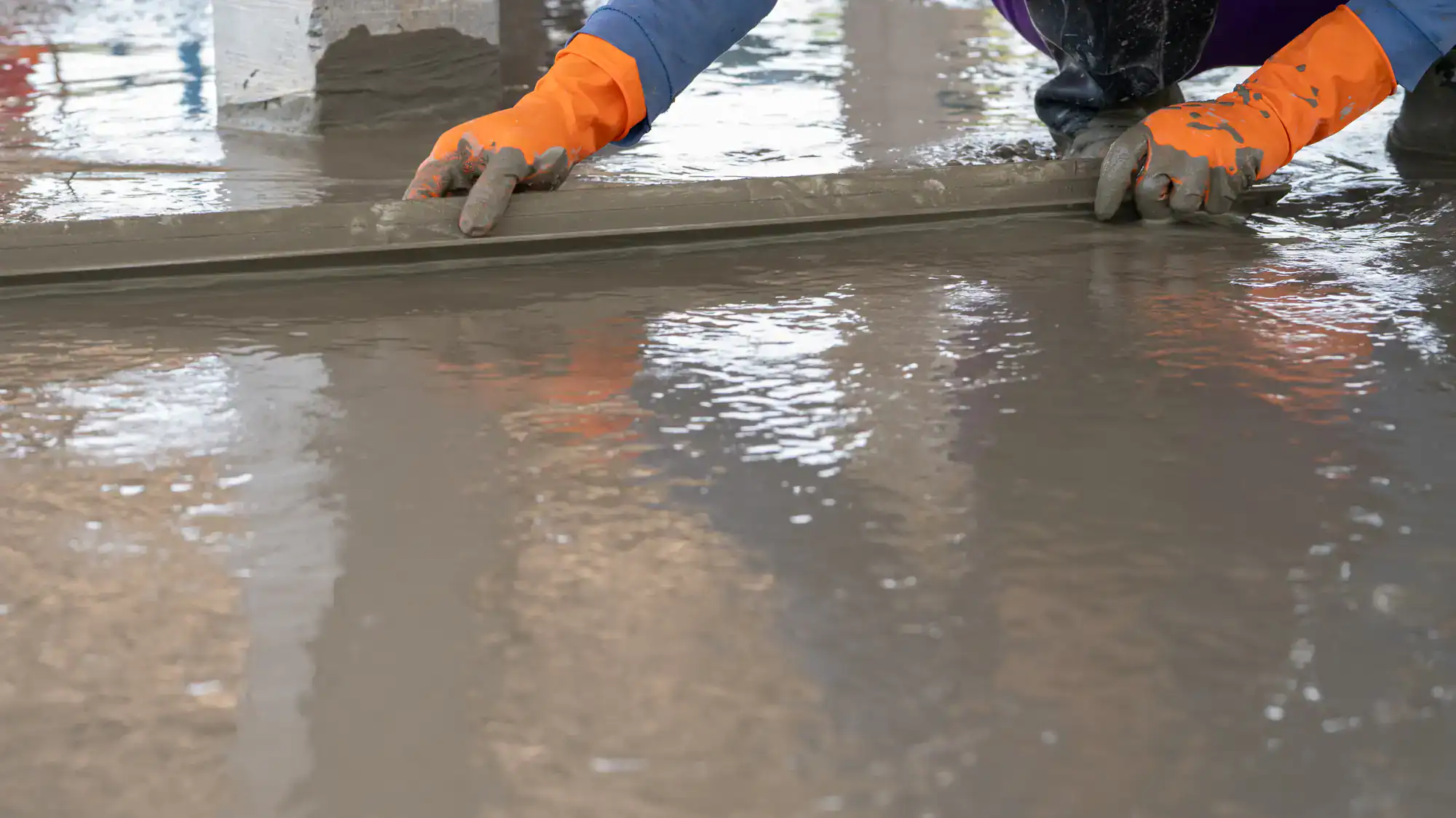
The first thing that happens on any firehouse floor job is concrete assessment. Before any product touches the floor, we diamond grind the substrate not acid etch. Diamond grinding opens the concrete’s capillaries and creates a true mechanical bond. Acid etching is faster and cheaper, but it introduces moisture before sealing, which sets up the delamination bubbles you’ve probably already seen on a floor somewhere. In Rockville Centre’s coastal humidity environment, skipping this step isn’t just cutting corners it’s guaranteeing a premature failure.
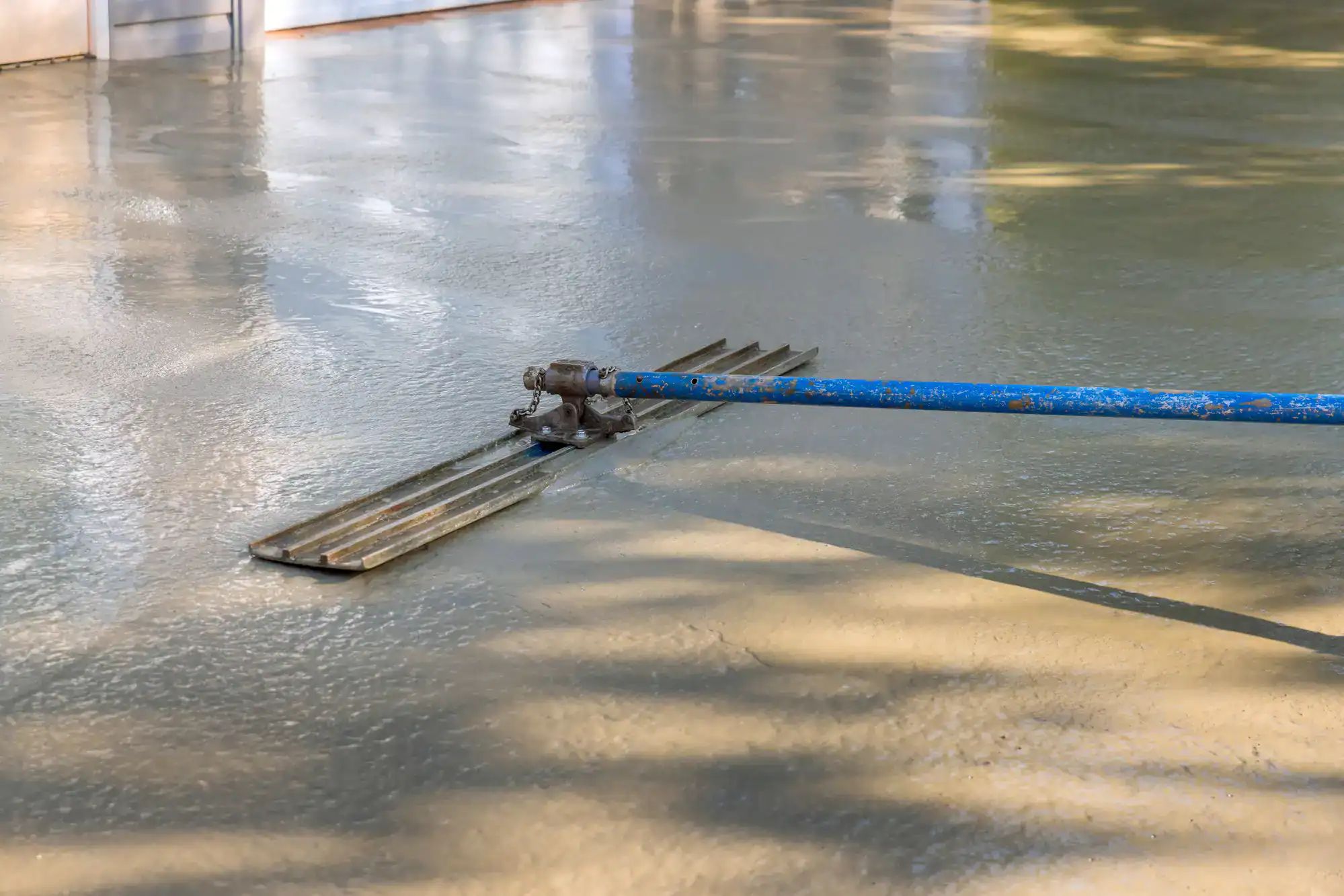
After grinding comes moisture testing and crack repair. Only then does the coating go down: a penetrating primer, a high-build epoxy base coat with aggregate broadcast for slip resistance and compressive strength, and a polyaspartic topcoat. That topcoat is applied at approximately 15 mils compared to 4 to 8 mils on standard epoxy and it’s four times more flexible and twice as abrasion-resistant.
The polyaspartic system cures in 24 hours. Not three to seven days. Not a week with apparatus parked outside on North Centre Avenue. The trucks go back in the next day. For a department running five active stations, that’s the only timeline that makes operational sense.
Ready to get started?
The apparatus bay gets the most attention and it should. The RVCFD’s fleet includes a 2023 Spartan ER Gladiator, a 2008 Ferrara Inferno 100-foot tower ladder, and a 2015 Pierce Velocity aerial ladder. These vehicles weigh between 30,000 and 60,000 pounds. The floor system underneath them needs to be engineered for that load, not scaled up from a garage floor product.
But the apparatus bay isn’t the only floor that matters. Decontamination zones, locker rooms, kitchens, and living quarters each have their own performance requirements and in a station where firefighter health and contamination control are increasingly under the microscope, every surface that can harbor byproducts is a liability. We cover all of it. One contractor, one compatible system, one accountable relationship across every station in your network.
The hot-tire pickup problem where heated apparatus tires bond to standard epoxy on cooling and peel the coating off when the truck backs out is the most common failure mode in apparatus bays. It’s also completely avoidable with the right topcoat. The polyaspartic system we use is thermally resistant and flexible enough that it doesn’t bond under heat. That’s the chemistry.
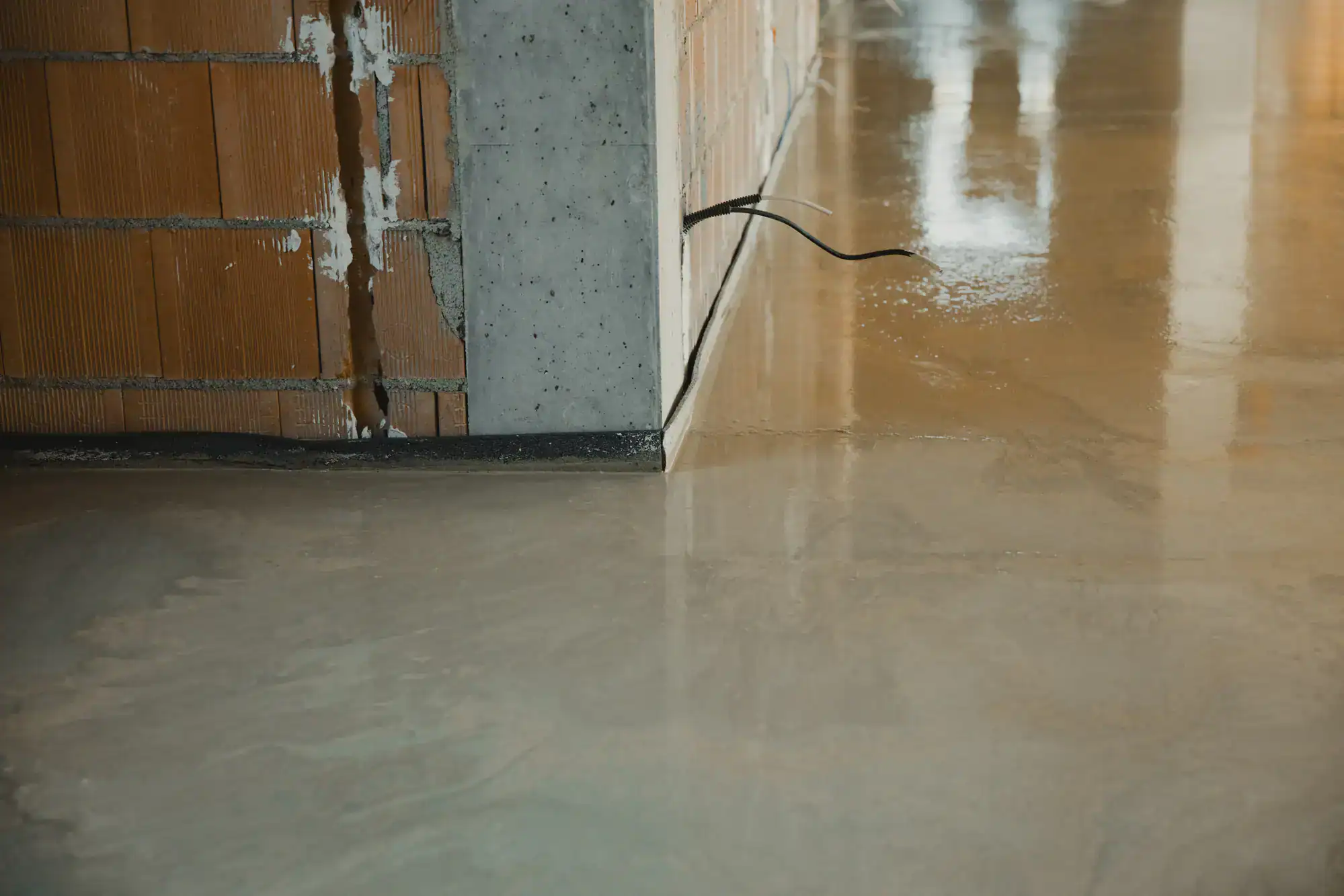
A properly installed polyaspartic system should last 20 or more years in an apparatus bay environment. That’s based on the performance characteristics of the system: 15-mil application thickness, four times the flexibility of standard epoxy, twice the abrasion resistance, and full chemical resistance against diesel, hydraulic fluid, and road salt.
Rockville Centre’s South Shore climate is one of the more demanding environments for floor coatings on Long Island. The combination of heavy road salt application on Nassau County streets, coastal humidity year-round, and the constant thermal cycling of bay doors opening and closing in winter puts real stress on coatings that aren’t specified for it. Standard commercial epoxy in this environment typically lasts five to ten years before it needs to be ground out and recoated. A polyaspartic system installed with proper surface preparation is the only option that holds up across the full range of what this climate and this use case demand.
There are two main causes. The first is hot-tire pickup heated apparatus tires bond to standard epoxy on cooling and physically peel the coating when the truck backs out. The second is moisture-driven delamination, where vapor transmitting through the concrete lifts the coating from below, usually appearing as bubbles within the first year.
Both failures are preventable, but only if the right system is selected and the surface preparation is done correctly. Hot-tire pickup is eliminated by using a polyaspartic topcoat with thermal resistance and flexibility standard epoxy doesn’t have either. Moisture delamination is prevented by diamond grinding the concrete before application and performing moisture testing before any product goes down. In Rockville Centre, where ambient humidity is elevated year-round due to the South Shore’s coastal proximity, skipping moisture testing is the single most common reason a floor fails ahead of schedule. If a contractor isn’t doing both of those things before they start coating, the failure is already built into the job.
Yes and for most fire departments, that’s the deciding factor. Traditional epoxy systems require three to seven days of cure time before heavy vehicles can return to the bay. For a volunteer department like the RVCFD running five active stations, parking apparatus outside on the street for a week isn’t operationally realistic. Rockville Centre is a dense South Shore village with a high call volume relative to its size the equipment needs to be accessible.
The polyaspartic systems we use cure in 24 hours. The trucks go back in the next day. That’s the entire reason polyaspartic became the standard for apparatus bay flooring in working fire stations not because it’s a premium upsell, but because it’s the only system that respects how a fire department actually operates. The cure timeline is built into how the job is scheduled, so there’s no guesswork about when the bay is ready.
Floor coating in an existing apparatus bay is generally considered maintenance work rather than a structural alteration, which typically means it doesn’t require a building permit under New York State building code. That said, the RVCFD operates under the governance of the Village of Rockville Centre, and capital expenditures for facility improvements flow through the village budget process. Any project of meaningful scope should be coordinated with the village’s Department of Public Works or the appropriate administrative contact to confirm whether local procurement procedures apply.
It’s also worth noting that Nassau County and New York State both have grant programs that have historically supported fire district capital improvements, including facility upgrades. If the department is planning a multi-station flooring project, it may be worth consulting with the village’s grants administrator or the Nassau County Office of Emergency Management to determine whether any current funding opportunities apply.
Decontamination zones have a different set of requirements than apparatus bays. The primary concern isn’t load-bearing capacity it’s chemical resistance, ease of cleaning, and the elimination of any surface feature that can harbor contamination between uses. Grout lines, seams, cracks, and porous surfaces are all liabilities in a decon zone, because combustion byproducts and carcinogenic particulates can settle into those spaces and resist standard cleaning protocols.
A seamless, non-porous polyaspartic or urethane system is the appropriate choice. It’s fully resistant to the cleaning agents and decontamination solutions used in fire service protocols, it can be power-washed without surface degradation, and it gives you a floor you can visually inspect for contamination rather than guessing what’s hiding in the texture. NFPA 1500 and 1585 both speak to contamination control in fire station design a seamless floor system is one of the most direct ways to support compliance with those standards and reduce occupational cancer risk for the department’s volunteers.
Professional apparatus bay floor coating in Nassau County typically runs between $5 and $12 per square foot, depending on the condition of the existing concrete, the size of the bay, the system specified, and the scope of surface preparation required. A standard single apparatus bay roughly 1,000 to 1,500 square feet generally falls in the $6,000 to $15,000 range for a full multi-layer polyaspartic system with proper preparation.
The more useful way to think about cost is over time. A polyaspartic system installed correctly is a 20-year floor. Standard epoxy, in the conditions Rockville Centre’s apparatus bays see road salt, coastal humidity, heavy apparatus loads, thermal cycling is realistically a five-to-seven-year floor before it needs to be ground out and recoated. When you factor in the cost of a second installation, the downtime, and the disruption to operations, the polyaspartic system is almost always the more cost-effective choice over the life of the facility. For a department accountable to village taxpayers across five stations, that long-term math matters.
Other Services we provide in Rockville Centre