
The South Shore’s coastal humidity doesn’t just affect the air outside it works its way through your concrete slab from below. Moisture vapor transmission is one of the leading causes of epoxy delamination, and on a large hangar slab near Rockville Centre, it happens faster than most people expect. A properly installed aviation-grade coating system seals that slab against moisture before it has a chance to lift your floor from the inside out.
Beyond moisture, the chemistry inside a working hangar is aggressive. Skydrol hydraulic fluid, jet fuel, and the cleaning solvents used in active maintenance bays will break down a standard coating in months. The systems we install are formulated specifically for that kind of exposure not repurposed from a garage product line and applied with a brush.
There’s also the safety side. A high-gloss, light-reflective floor in white or light gray makes dropped hardware, fluid spills, and foreign object debris immediately visible. In a working hangar, that’s not an aesthetic preference it’s an operational one. When the floor is doing its job, everything else in the hangar runs cleaner, safer, and more efficiently.
We’ve been installing resinous floor systems for over 30 years, operating out of Bohemia, NY close enough to Rockville Centre and the Nassau County South Shore to understand exactly what Long Island’s coastal climate does to concrete over time. This isn’t a national franchise with rotating crews. The same experienced hands show up on every job, and most of our field team has been with us for more than a decade.
Danny Harmer, our founder and CEO, has over 40 years of personal, hands-on installation experience. That kind of background means our process is built on what actually works in the field not on what looks good in a brochure. We hold dual elite certifications from Sherwin-Williams High Performance Flooring and Res Tech, and every installer carries OSHA 40 certification. For facility operators near Republic Airport or private hangar owners throughout Nassau County, that combination of credentials and longevity is hard to find in one place.
The first thing that happens on any hangar floor project near Rockville Centre is moisture testing. Given the South Shore’s coastal environment where humidity regularly climbs above 80% in summer and the National Weather Service issues coastal flood statements for this area moisture assessment isn’t optional. Skipping it is the single most common reason coatings fail before their time, and it’s a step we complete before anything else.
Once the slab passes moisture testing, the surface gets diamond ground down to bare, open concrete. This creates the mechanical adhesion profile that actually holds the coating in place. In Rockville Centre’s established commercial buildings many of which have been painted, sealed, or previously coated this step is what separates a floor that lasts from one that peels in two years. Old coatings, sealers, and surface contamination all come off before the new system goes on.
From there, the system is applied in layers primer, base coat, and topcoat with proper cure time between each stage. For active hangars that can’t afford extended downtime, we offer polyaspartic systems that return aircraft to the floor within 24 hours. The right system gets matched to the actual use case: private T-hangar, corporate flight facility, or full-service FBO. That decision gets made before installation starts, not during.
Ready to get started?
Aviation flooring has specific requirements that standard commercial epoxy products don’t meet. Under NFPA 409 the standard that governs aircraft hangar construction and safety floor surfaces in aircraft storage and servicing areas must be noncombustible. That requirement eliminates a significant portion of off-the-shelf coating products, and it’s a code detail that matters to facility managers and FBO operators throughout Nassau County. Every system we install meets that standard.
The coating itself is selected based on what the floor will actually encounter. Skydrol-resistant formulations are used in maintenance bays and service areas where hydraulic fluid exposure is routine. Chemical-resistant topcoats handle jet fuel, lubricants, and industrial cleaning agents without breaking down. The non-slip topcoat meets National Flooring Safety Institute standards a tested certification, not just a textured finish which matters in any environment where fuel and fluid spills are part of the daily routine.
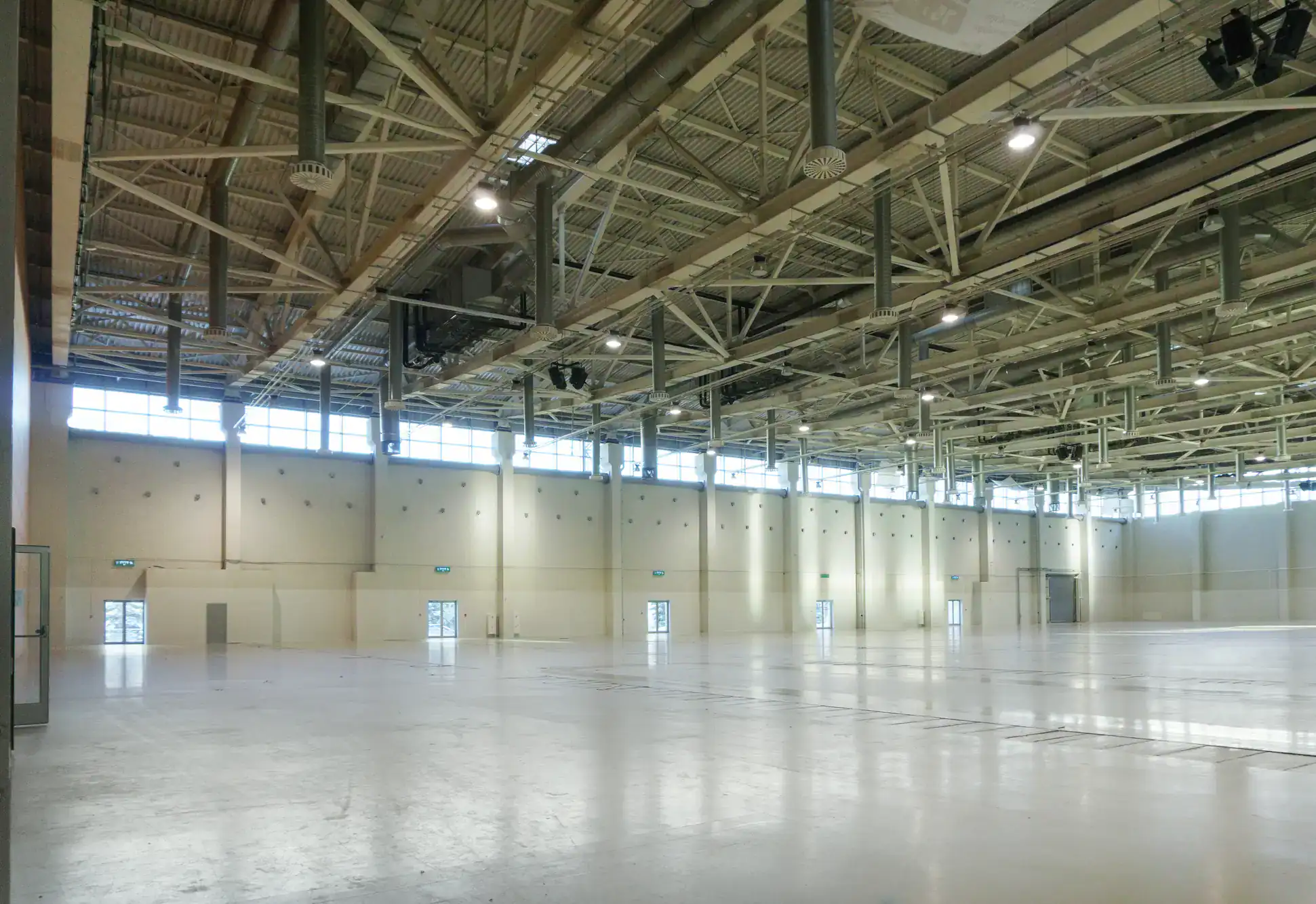
For hangar owners and operators in the Rockville Centre area, the finish options most commonly specified are high-gloss white and light gray. Both maximize light reflectivity across the floor surface, making it easier to spot FOD, track fluid leaks, and maintain a clean, professional facility. Whether the project is a private hangar near Republic Airport, a corporate flight facility, or a maintenance bay that runs full shifts, the system gets built around what that floor is actually going to face.
Yes, and it’s a requirement that catches a lot of facility owners off guard. NFPA 409 is the national standard governing aircraft hangars, and it specifically requires that floor surfaces in aircraft storage and servicing areas be noncombustible. That rules out a wide range of standard epoxy products that would otherwise be acceptable in a commercial or industrial setting.
For hangar operators in Rockville Centre and throughout Nassau County, this matters both for code compliance and for insurance purposes. A floor that doesn’t meet NFPA 409 can create liability exposure and complicate coverage claims if something goes wrong. Before any coating goes down on a commercial aviation facility, confirming the system meets that standard is a non-negotiable part of the conversation and it’s something we address upfront on every project, not after the fact.
The most common cause is moisture specifically, moisture vapor transmission through the concrete slab. Rockville Centre sits on Long Island’s South Shore, where coastal humidity is a year-round factor and summer humidity levels regularly exceed 80%. Large hangar slabs have more surface area for vapor to migrate through, and when that moisture has nowhere to go, it builds pressure beneath the coating and causes it to bubble and delaminate from below.
The second most common cause is inadequate surface preparation. If the concrete isn’t diamond ground before coating, the product is essentially sitting on top of a sealed or contaminated surface rather than bonded to open concrete. That adhesion failure shows up as peeling, usually within the first year or two. Both of these issues are preventable but only if they’re addressed before installation starts, not after the floor is already failing.
A properly installed polyaspartic system in an aviation environment can last up to 20 years with routine maintenance. Standard epoxy systems in high-traffic conditions typically need reapplication every five to seven years. The difference comes down to both the product and the preparation a high-build polyaspartic applied over properly ground and moisture-tested concrete will dramatically outlast a standard epoxy applied over a surface that wasn’t fully prepared.
In a coastal environment like Rockville Centre, where freeze-thaw cycling in winter and persistent humidity in summer both stress the concrete, the quality of the initial installation matters even more. A floor that was done right the first time doesn’t need to be redone. The cost of a second installation including grinding up the failed coating, the material, the labor, and the operational downtime of shutting down a working hangar again almost always exceeds the cost difference between a standard product and an aviation-grade system from the start.
It depends on the system. Traditional epoxy coatings require multi-day cure windows before aircraft can return to the floor typically 48 to 72 hours minimum, sometimes longer depending on temperature and humidity conditions. For active hangars near Republic Airport or private facilities in the Nassau County area, that kind of downtime has real operational and scheduling consequences.
Polyaspartic systems cure significantly faster and can return to service within 24 hours in most conditions. For hangar operators managing tight maintenance schedules or aircraft that need to move daily, polyaspartic is the practical choice. The project scope, slab size, and system type all factor into the final timeline, and those specifics get worked out before installation begins not on the day the crew arrives. Getting the scheduling right upfront is part of how the project gets done without disrupting operations more than necessary.
For most active aviation facilities in the Rockville Centre area, polyaspartic is the stronger choice. It cures faster, which reduces downtime. It handles UV exposure without yellowing, which matters in hangars with large door openings that let in direct sunlight. And it performs better under the freeze-thaw cycling that Long Island winters put concrete through, maintaining its bond and flexibility where standard epoxy can become brittle over time.
That said, the right answer depends on the specific facility and how it’s used. A private T-hangar that sees limited chemical exposure and doesn’t need to turn over quickly might be well-served by a high-build epoxy system at a lower cost per square foot. A full-service FBO or corporate flight facility with daily operations, fuel exposure, and Skydrol contact is a different scenario entirely. The system gets selected based on what the floor will actually face not on what’s easiest or fastest to install.
Start with moisture testing. Ask whether they test the slab for moisture vapor transmission before any coating goes down. In Nassau County’s coastal environment where South Shore humidity and proximity to the water create real vapor pressure through large concrete slabs a contractor who skips this step is setting you up for a delamination failure within a few years. If they don’t bring it up, bring it up yourself.
Second, ask about NFPA 409 compliance and whether the system they’re proposing is noncombustible as required for aircraft storage and servicing areas. A qualified aviation flooring contractor knows this standard without being educated on it. Third, ask about surface preparation process specifically whether they diamond grind before coating. These three questions will tell you quickly whether you’re talking to someone who has actually done aviation flooring before, or someone who does garages and is quoting a hangar for the first time.
Other Services we provide in Rockville Centre