
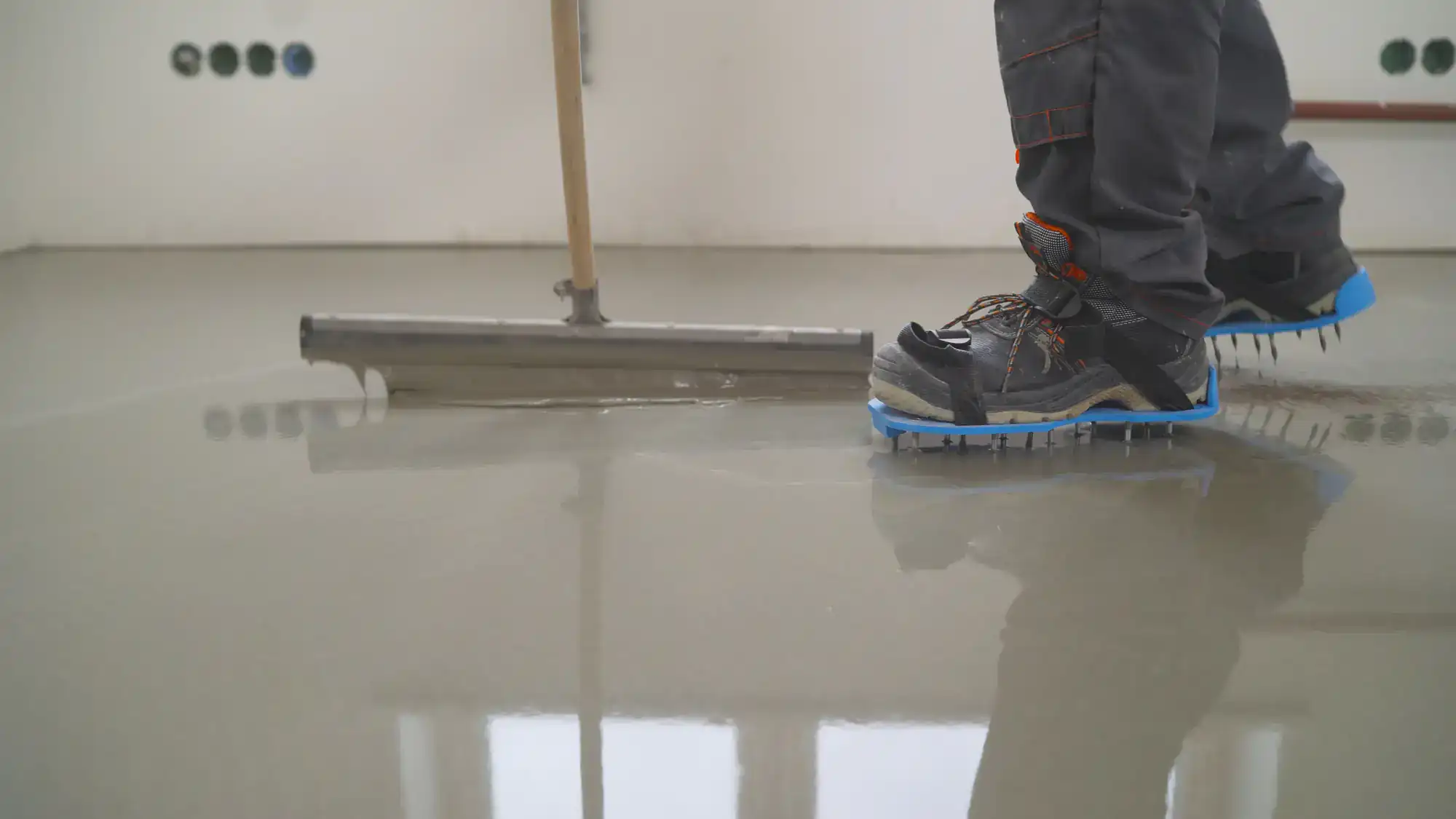
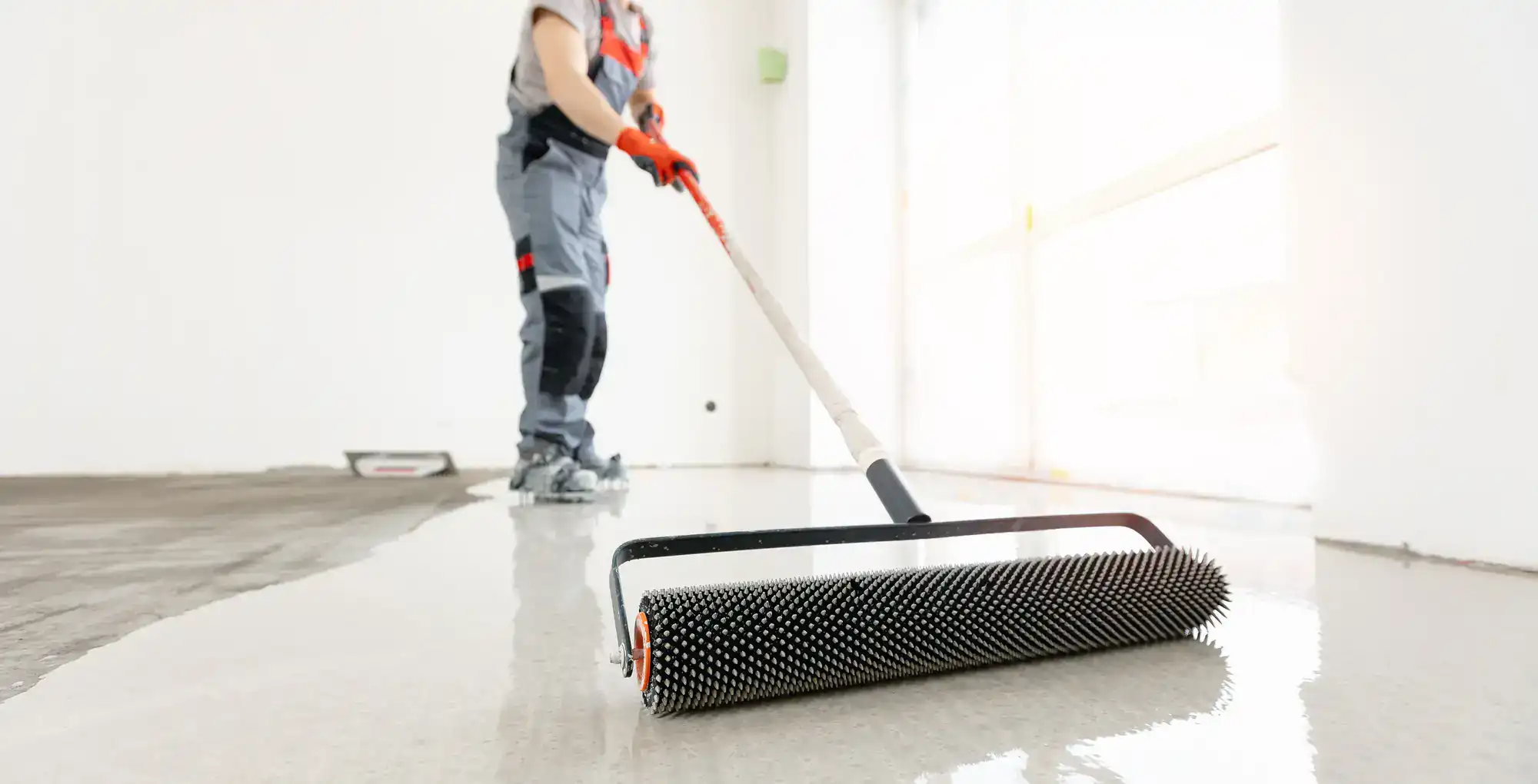
When your floor is finally level, everything else falls into place. Tile stops cracking. LVP stops lifting at the seams. Doors start closing the way they should. You stop noticing the floor and start enjoying the room which is exactly how it should be.
That matters more in Medford than people realize. The clay-bearing soils throughout Suffolk County expand and contract with every freeze-thaw cycle, and Long Island gets plenty of those between November and March. That movement works against your slab year after year. By the time you’re ready to install new flooring over a slab that’s been through 40 or 50 winters, you’re dealing with more than cosmetic imperfections. You’re dealing with a substrate that needs real correction not a bag of hardware store leveler and a prayer.
For homeowners in neighborhoods like Eagle Estates or Old Medford, where the housing stock runs mostly from the 1960s through the 1980s, a properly leveled floor also means protecting the equity in a home you’ve invested in. A floor that fails within a year isn’t just frustrating it’s money you’re spending twice.
We’re based in Bohemia, NY just down Route 112 from Medford, roughly 10 to 15 minutes depending on traffic at the LIE interchange. We’ve been installing self leveling underlayment and epoxy floor systems across Suffolk County for over 30 years, and our owner has been doing this work personally for over 40. That’s not a marketing number it’s just how long it takes to have seen every floor condition Long Island can throw at you, including the specific challenges Medford’s aging housing stock presents.
Our crew is OSHA 40 certified, and most of our installers have been with us for more than a decade. We hold an A+ rating with the Better Business Bureau and factory training in advanced resinous systems. We’ve installed floors in the White House kitchen, completed projects in multiple countries, and come back to the Medford and central Suffolk County market every day because this is where we’re from and where we understand the real problems homeowners face.
Before anything gets mixed or poured, we test. Every project starts with ASTM F2170 relative humidity testing and moisture vapor emission rate testing on your concrete slab. This step is non-negotiable on Long Island. Older slabs in Medford especially those in homes built before 1980 regularly show elevated moisture levels that would cause a self leveling product to fail if you skip this step. If moisture mitigation is needed, we handle it before we move forward.
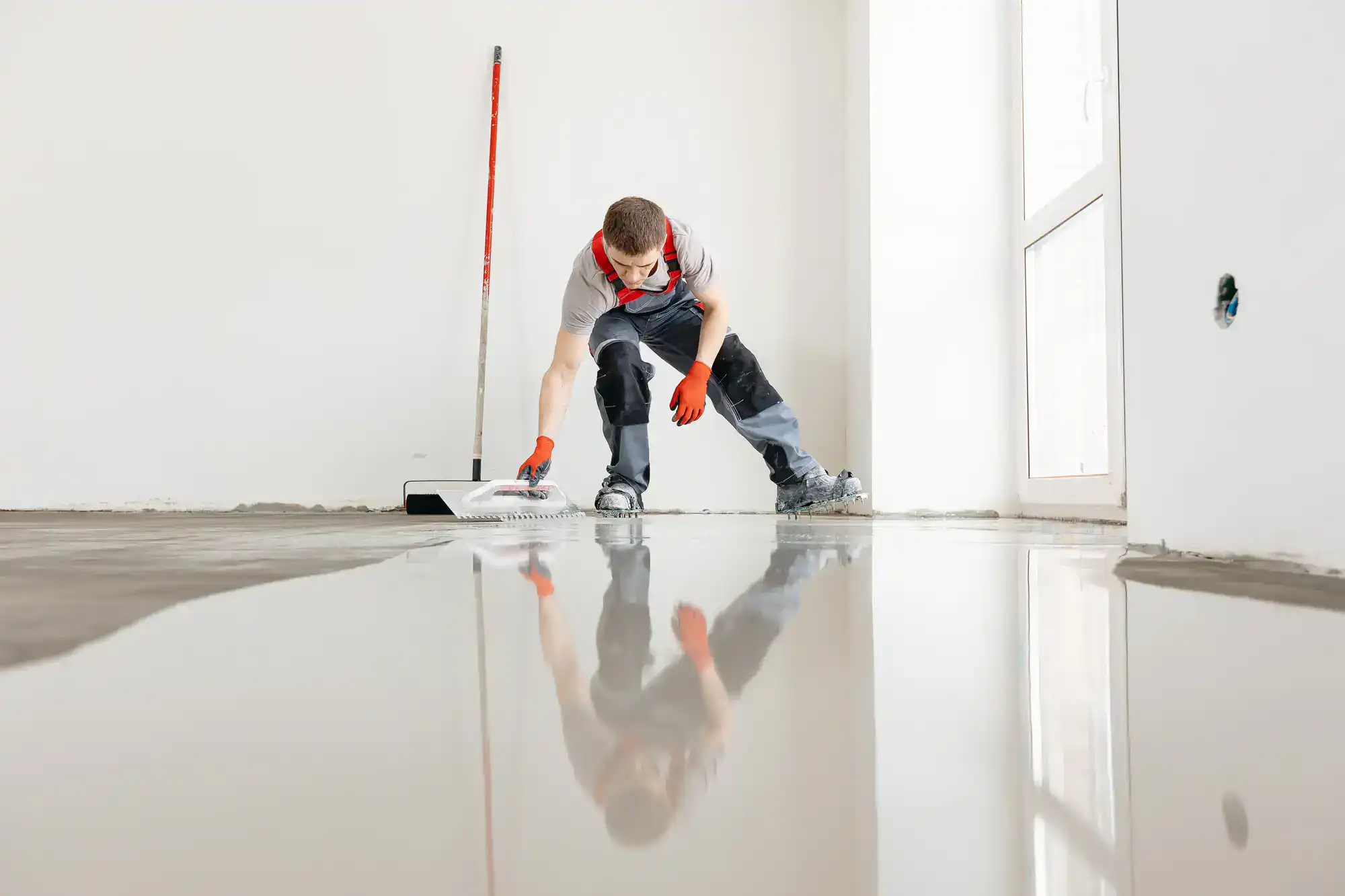
Once the slab passes testing, we grind and prepare the surface. That means removing old adhesive, addressing cracks, and creating the mechanical profile the self leveling material needs to bond correctly. No primer, no bond and a lot of contractors skip it. We don’t.
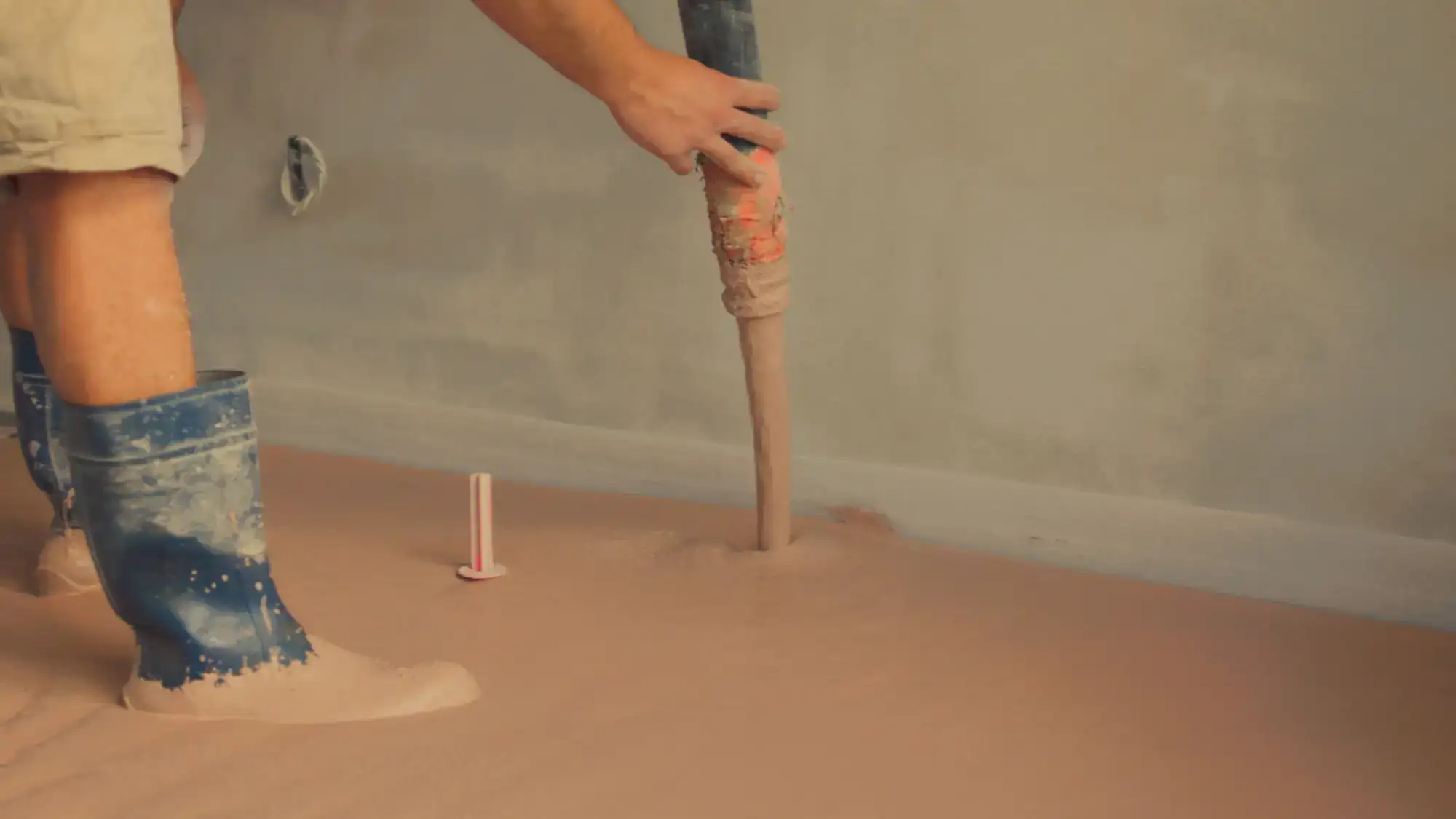
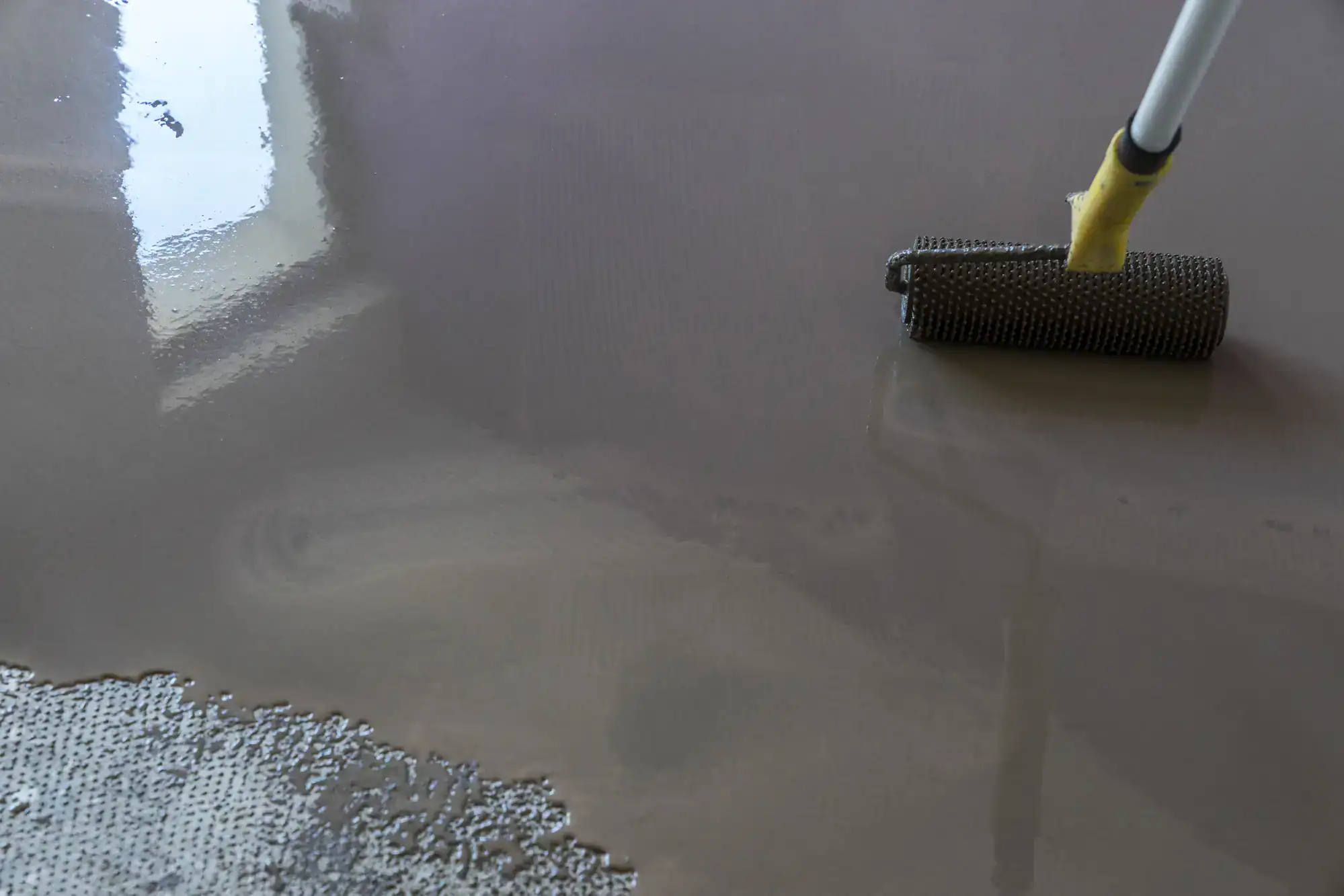
Then we mix and pour the high-strength, polymer-modified cementitious self leveling underlayment. Our systems install from a quarter inch up to two inches neat, and up to five inches with aggregate added so whether you need a thin correction before tile or a full build-up in a commercial space, one crew handles the whole job. You’re typically walking on it within four to six hours. Heavy commercial traffic is usually ready to go within 24 to 48 hours.
Ready to get started?
The self leveling work we do in Medford covers both ends of the market. On the residential side, it’s usually homeowners preparing a kitchen, bathroom, or main living area for new tile, luxury vinyl plank, or hardwood and discovering the existing slab isn’t flat enough to support it. On the commercial side, it’s often businesses in the Route 112 corridor dealing with 60- or 70-year-old warehouse floors that need to meet the flatness tolerances of new racking systems, commercial equipment, or finished floor coverings.
For residential projects in Medford, the scope typically includes moisture testing, surface grinding, crack repair, and the self leveling pour itself everything needed to get your subfloor to the tolerance your flooring manufacturer requires. For commercial clients, that same process scales up with OSHA-compliant site management, larger equipment, and the ability to handle deep corrections in high-traffic industrial spaces. We’ve worked in aging commercial buildings throughout central Suffolk County, and we understand what it takes to minimize downtime for a business that can’t afford to be closed for days.
What you get in either case is a single, accountable team that handles the full scope from the first moisture reading to the finished surface. No handoffs, no finger-pointing between a prep crew and a flooring crew, and no surprises after the pour.
It depends on the condition of your slab, but if your home was built in Medford between the 1950s and 1980s, there’s a reasonable chance the answer is yes. Most flooring manufacturers especially for large-format tile and luxury vinyl plank require the subfloor to be flat within 3/16 of an inch over a 10-foot span. Slabs that have been through decades of freeze-thaw cycles and soil movement in Suffolk County often don’t meet that spec without correction.
The way to know for sure is to have the floor assessed before you commit to a new flooring installation. If a tile installer or flooring contractor has already told you the floor isn’t flat enough, that’s your answer. A self leveling underlayment applied correctly will bring the surface into tolerance and give your new floor the stable base it needs to last.
Moisture is the most common reason self leveling fails and it’s also the most commonly skipped step. If the relative humidity inside your concrete slab is above 80 percent, most self leveling products will not bond correctly. They can bubble, crack, or delaminate, and the floor covering you install on top of them will eventually fail too.
In Medford and throughout Suffolk County, older slabs regularly test above that threshold particularly in the spring after a wet winter, or in below-grade spaces where vapor migration is ongoing. We use ASTM F2170 in-slab probes to get an accurate reading before we mix anything. If moisture levels are elevated, we address that first with a moisture mitigation system before the self leveling pour. Skipping this step to save time is exactly how a floor ends up needing to be redone within a year.
The required thickness depends on how much correction your slab actually needs. For a minor residential correction say, a kitchen floor that’s slightly out of tolerance before tile a quarter inch to half inch pour is often enough. For more significant irregularities, or in commercial spaces where the original concrete has deteriorated significantly, you may need anywhere from one to two inches, or even deeper with aggregate added.
Our systems install from a quarter inch up to two inches neat, and up to five inches with the addition of aggregates. That range matters because using the wrong product for the required depth is another common failure point. A thin-section product poured too deep will crack. A heavy-build product applied too thin won’t flow correctly. We assess the actual depth of correction needed before we recommend a product, not after.
For most residential applications, the self leveling surface is walkable within four to six hours of the pour. That said, walkable and ready for flooring installation are two different things. Most self leveling underlayments need 24 hours before light floor covering installation can begin, and some products or thicker pours may require longer cure times depending on ambient temperature and humidity.
One thing worth noting in Medford specifically: if you’re scheduling a project in the colder months, unheated spaces a garage, a ground-floor commercial unit, or a basement need to be above 50 degrees Fahrenheit during the pour and cure. Self leveling concrete will not cure correctly in cold conditions, and forcing it will compromise the finished surface. We account for that during project planning so there are no surprises on install day.
Grinding and self leveling solve different problems. Grinding is used to knock down high spots a raised section of concrete, a hump at a control joint, or a ridge where one section of slab has heaved above another. Self leveling underlayment is used to fill low spots and bring the entire surface up to a uniform plane. Most real-world floors have both, which is why proper surface preparation almost always involves some grinding before the self leveling pour.
If a contractor shows up and goes straight to pouring without grinding or profiling the surface first, that’s a red flag. The self leveling material needs a clean, mechanically prepared surface to bond to. Without it, you’re pouring over contamination, old adhesive, or a glazed surface that won’t hold and the result will eventually separate from the slab underneath. The prep work is what makes the pour last.
The honest answer is that it varies, and any contractor who gives you a firm number without seeing the floor is guessing. The cost of a self leveling project in Medford depends on the square footage, the depth of correction needed, the condition of the existing slab, and whether moisture mitigation is required before the pour. For most residential projects, you’re generally looking at a range somewhere between $750 and $3,500. Larger commercial pours in spaces along the Route 112 corridor can run higher depending on scope.
What tends to drive cost up is finding conditions during prep that weren’t visible before work started significant cracking, old adhesive that needs grinding, or elevated moisture that requires a mitigation layer before the self leveling can go down. That’s not a bait-and-switch; it’s the reality of working on older concrete in a market like Medford where a lot of slabs have been through 50 or 60 years of Long Island winters. The way to avoid surprises is to work with a contractor who does a real assessment upfront, not one who quotes low and adjusts later.