
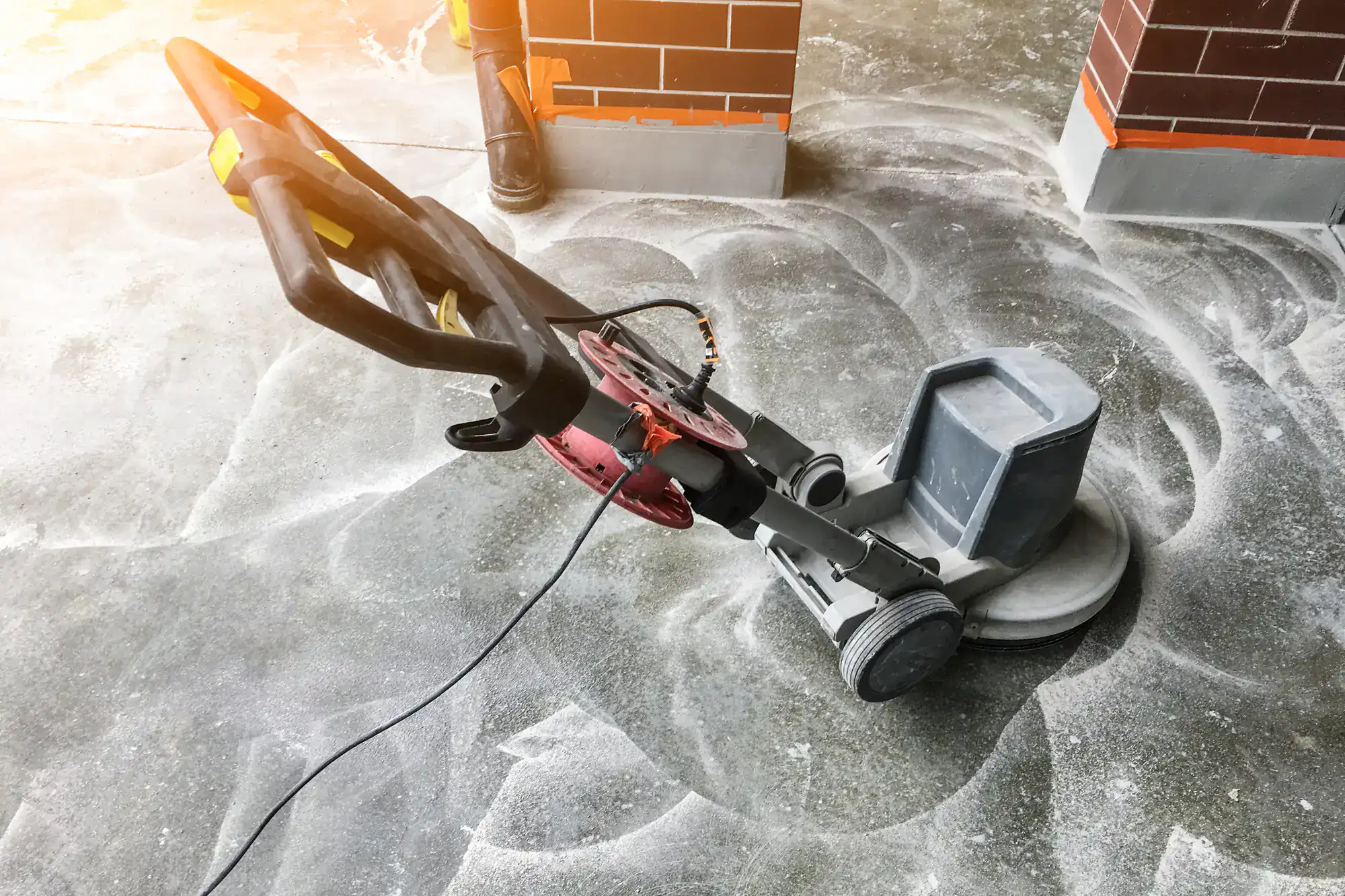
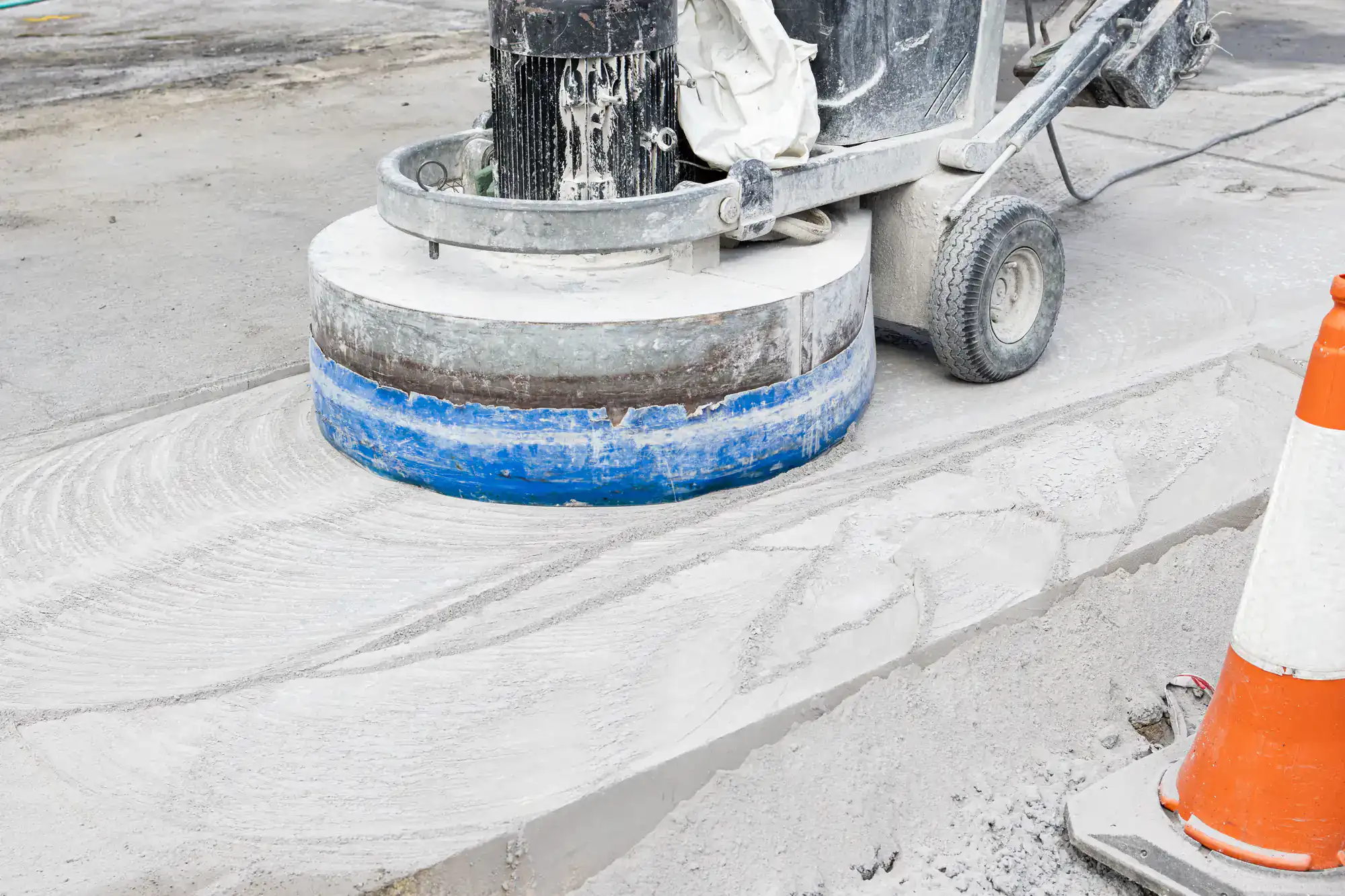
Most commercial and industrial floors in Medford were poured decades ago many during the postwar building boom that shaped central Suffolk County. That means your slab has been through a lot: Long Island winters with their back-and-forth freeze-thaw swings, forklift traffic, chemical spills, and years of surface wear that no amount of sweeping fixes. Polished and densified concrete addresses all of that at the source, not just on the surface.
When concrete is properly densified, the chemistry inside the slab changes. Lithium silicate reacts with the calcium hydroxide already present in the concrete, filling the pore structure and making the floor dramatically harder and more resistant to moisture. That matters specifically here in Medford, because our winters can swing from 15 degrees to 45 degrees in the same week and every one of those cycles is working against an untreated slab.
The result on the other end is a floor that doesn’t dust, doesn’t absorb spills, and doesn’t require waxing or recoating year after year. For a warehouse in the National Boulevard industrial park or a retail space on Route 112, that’s not just a cosmetic upgrade it’s a real operational and financial win that compounds over time.
Danny Harmer started Advanced Epoxy Flooring because he was tired of watching contractors apply flooring systems they didn’t understand. After more than four decades working on Medford and Long Island commercial and industrial floors through every era of building and every shift in product chemistry, he built a business around knowing why things work, not just how to follow instructions.
That depth matters when you’re dealing with a 1970s slab in a Medford warehouse that’s been through decades of use, or a Route 112 retail space where the existing coating needs to come off before anything can go down right. We hold a Sherwin-Williams High Performance Flooring certification and a Res Tech certification two named, manufacturer-level credentials that most contractors in this market simply don’t have. In 1996, we completed flooring work at the White House kitchen. That’s the kind of track record that doesn’t need embellishment.
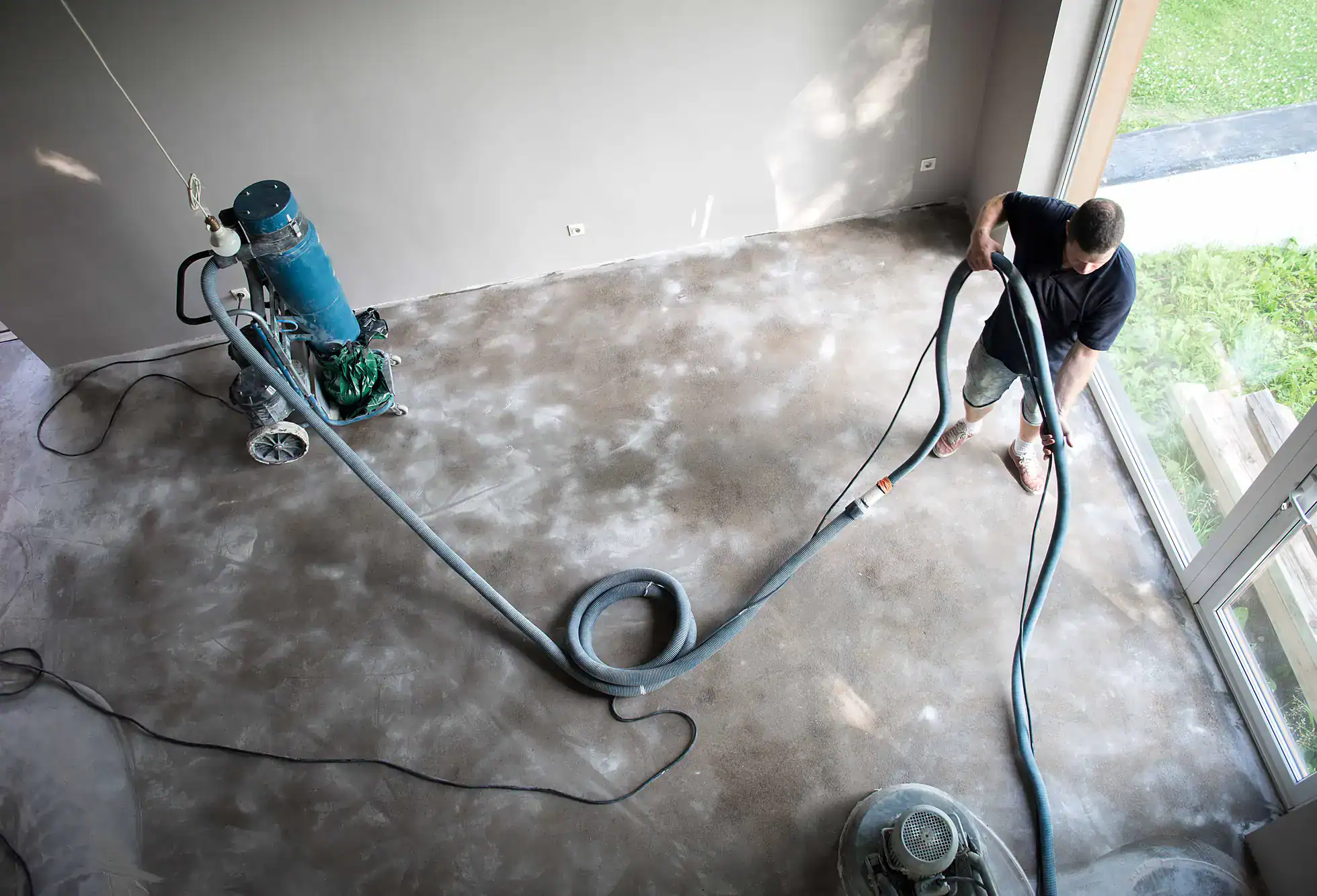
It starts with an honest assessment of your slab. Before any equipment hits the floor, we evaluate the condition of the concrete surface hardness, existing coatings, cracks, contamination, and whether any prior treatments are going to affect adhesion or finish quality. In Medford’s older commercial buildings, that assessment often turns up oil contamination, old adhesive residue, or surface irregularities from decades of settling. None of that is a dealbreaker, but it does determine what preparation is needed before polishing begins.
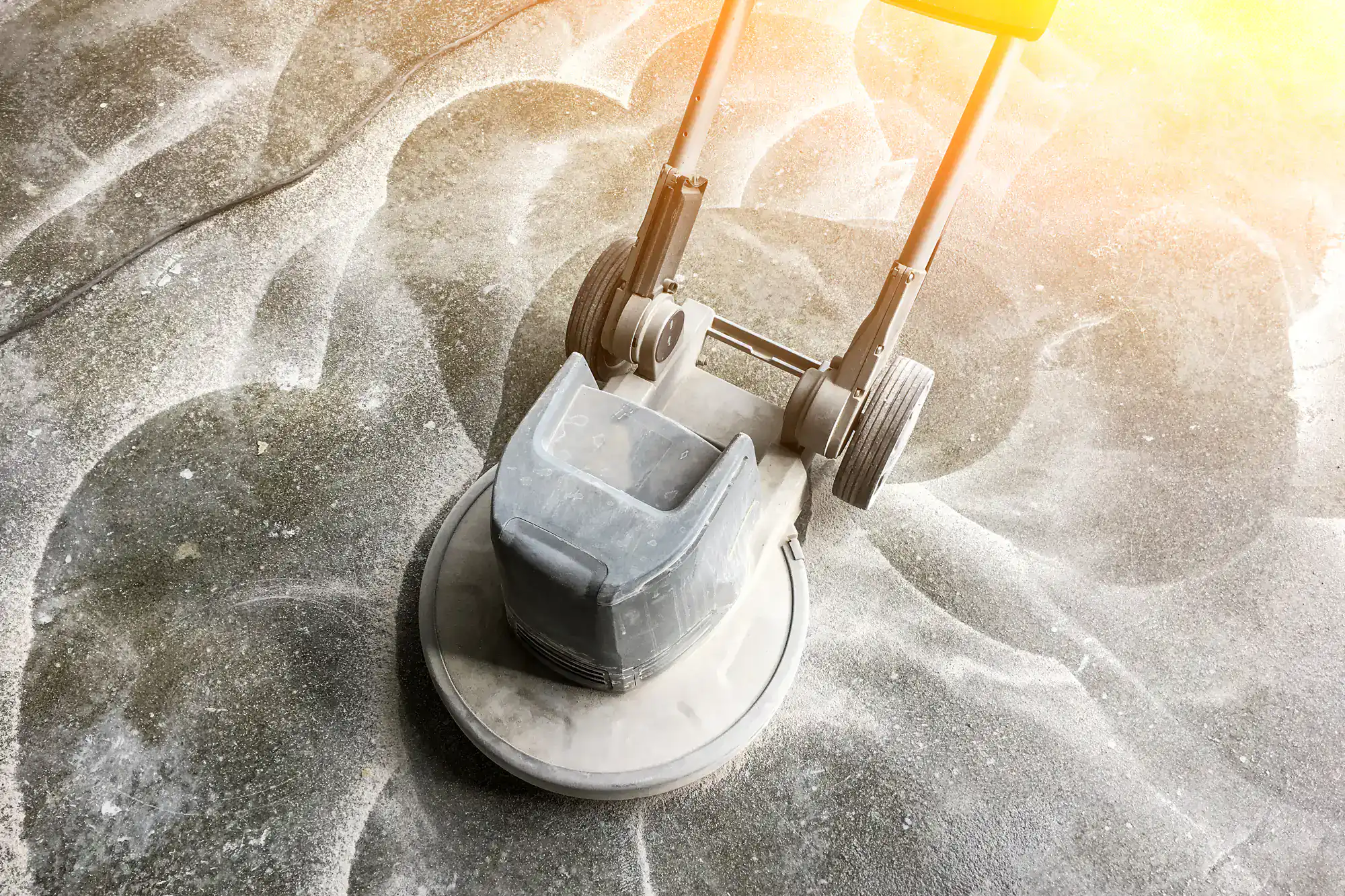
From there, the process moves through a diamond tooling progression coarser grits to open the surface and remove damage, finer grits to refine and build the finish. We apply densifier at the right point in the sequence, not as an afterthought. The chemistry needs time to penetrate and react, and cutting that step short is one of the most common reasons polished floors fail within a few years. The finish class from a flat matte to a high-gloss surface gets dialed in based on what your space actually needs, whether that’s a Class 2 satin for a Medford industrial facility or a Class 4 high-gloss for a showroom on Route 112.
For active facilities that can’t shut down, we sequence work in sections. If you’re running a distribution operation in the National Boulevard area and downtime isn’t an option, the schedule gets built around your operation not the other way around.
Ready to get started?
Medford’s commercial real estate spans a wide range from state-of-the-art logistics facilities like the Medford Logistics Center on National Boulevard to older warehouse stock along Route 112 that’s been in continuous operation for 40 or 50 years. The concrete polishing work that’s right for a brand-new 129,000-square-foot industrial facility is different from what an older slab in a mid-century commercial building needs, and we adjust our approach accordingly.
For warehouse and industrial clients in Medford, the priority is performance: a densified, polished concrete floor that handles forklift traffic, resists moisture from dock doors, and doesn’t dust under daily operational load. For retail and showroom clients on the Route 112 corridor where roughly 24,000 vehicles pass by every day the finish class matters more, and the goal is a surface that makes a visible impression without sacrificing durability. Both applications are well within our scope, and both get the same level of technical attention.
Interior concrete polishing in Medford’s commercial zones typically doesn’t require a building permit through the Town of Brookhaven, but any work involving removal of old coatings in pre-1980 buildings may involve New York State regulations around hazardous materials. That’s not something to figure out on the fly it’s something we account for in the assessment before work begins, because getting it wrong creates problems that no amount of polishing can fix.
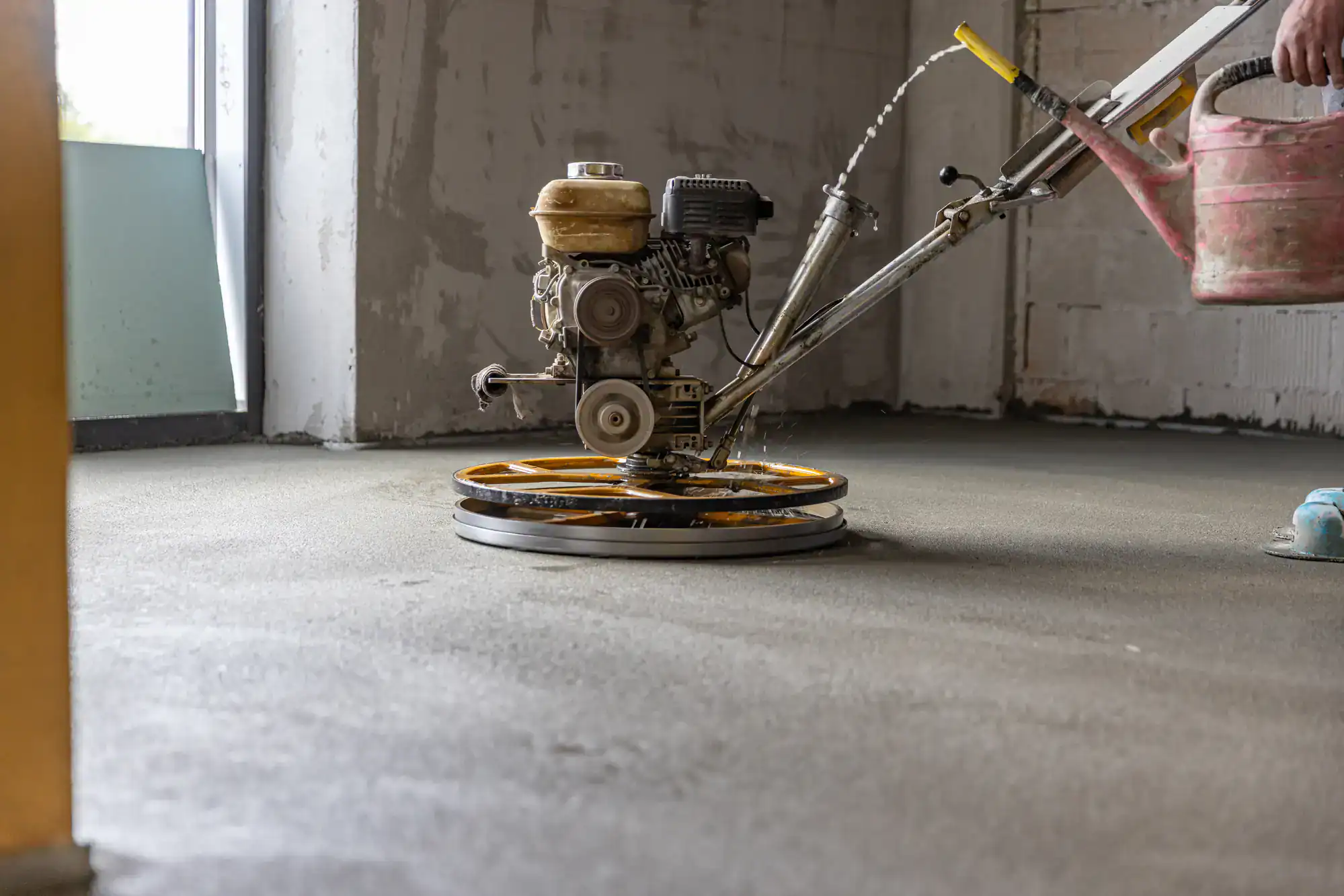
This is probably the most common concern among commercial property owners in Medford, and the honest answer is that most existing slabs are workable even the ones that look rough. Surface dusting, old coatings, oil contamination, and minor cracking are all conditions that surface preparation can address before polishing begins. The assessment determines what prep work is needed, not whether the project is possible.
The slabs that tend to give people the most pause are the ones poured in the 1960s and 1970s, which is a significant portion of Medford’s older industrial building stock. These mixes were lower-strength by modern standards and have had decades to accumulate damage. But lower-strength concrete is actually easier to open up with diamond tooling, and densification does more for it the chemistry has more to work with. A slab that looks like a lost cause on the surface is often a strong candidate once the assessment is done.
The timeline depends on three things: the square footage, the condition of the slab, and the finish class you’re targeting. A straightforward industrial floor in good condition say, a mid-sized warehouse in Medford’s National Boulevard area can typically be completed in two to four days for 10,000 to 20,000 square feet. Larger facilities or slabs that need significant preparation work will take longer, and that gets factored into the project plan upfront.
For facilities that can’t afford full operational shutdowns, we break the work into sections. You keep part of the facility running while one section gets completed, then the equipment moves to the next zone. It’s a more logistically involved approach, but it’s the standard for active commercial and industrial operations in the Medford area and it’s something we’ve been doing in Long Island facilities for decades. The timeline conversation happens at the assessment stage, so there are no surprises once work begins.
They’re different systems that solve different problems. Polished concrete is a mechanical process diamond tooling progressively refines the surface of the existing slab, and densification hardens it from within. The result is a floor that’s part of the concrete itself, not a coating sitting on top of it. There’s nothing to peel, chip, or delaminate, which makes it a strong choice for high-traffic industrial environments like Medford’s warehouse sector.
Epoxy coatings are applied on top of the concrete and bond to the surface. They offer excellent chemical resistance and can be a better fit for environments with specific containment needs or where the slab condition isn’t suitable for polishing. In some cases, the right answer is a combination a prepared and densified slab with a topical sealer or coating for a specific performance requirement. The assessment tells you which direction makes sense for your floor and your operation, and there’s no pressure to go one way or the other.
The concern is understandable a high-gloss floor looks like it should be slippery. But gloss and friction are independent properties of a concrete surface, and properly polished concrete meets OSHA’s minimum coefficient of friction standard of 0.5 for level commercial surfaces. A Class 4 high-gloss finish can be fully compliant with slip resistance requirements without any compromise to the appearance.
For environments where wet traffic is a regular factor a food service operation, a commercial kitchen, or a retail space near Medford’s Route 112 corridor that sees heavy foot traffic in wet weather anti-slip additives can be incorporated into the stain guard. This doesn’t affect the finish visually, but it raises the friction coefficient for wet conditions. It’s a straightforward specification decision that gets made during the design phase, not something that has to be retrofitted after the fact.
Long Island winters are genuinely hard on untreated concrete. The freeze-thaw cycles that hit central Suffolk County temperatures dropping below freezing overnight and climbing back above it by midday infiltrate surface pores and hairline cracks, expand as they freeze, and progressively widen the damage over time. In an unheated or partially heated Medford warehouse with dock doors that open to the outside, that cycle is happening directly at floor level every winter.
Densification is the primary defense. When lithium silicate penetrates the slab and reacts with the calcium hydroxide in the concrete matrix, it forms calcium silicate hydrate that fills the pore structure. The result is a slab that’s significantly less permeable to moisture which means the freeze-thaw cycle has far less to work with. A properly densified and polished floor in a Medford commercial building isn’t impervious to everything, but it’s in a completely different category than an untreated slab when it comes to winter durability.
Pricing for commercial polished concrete in the New York metro area typically runs between $3 and $12 per square foot, depending on the finish class, the condition of the existing slab, and the total square footage of the project. A large, straightforward warehouse floor in good condition will come in toward the lower end of that range. A retail showroom floor requiring significant surface preparation and a high-gloss Class 4 finish will be toward the higher end.
The more useful number for most Medford business owners isn’t the upfront cost it’s the 10-year comparison. A polished and densified concrete floor requires no waxing, no stripping, no recoating, and no replacement for 15 to 25 years with basic maintenance. The flooring systems it replaces VCT, epoxy recoats, floor coverings carry ongoing maintenance costs that compound significantly over a decade. For a warehouse operator or commercial property owner in Medford making a capital expenditure decision, the lifecycle math consistently favors polished concrete over the alternatives.