
When your floor is uneven, everything built on top of it is at risk. Tile cracks. Vinyl lifts at the seams. Grout lines fail. And if the substrate was never properly leveled before installation, no amount of quality finish flooring will save it. Self leveling concrete in Babylon, NY gives you a surface that’s genuinely flat, structurally sound, and ready to hold whatever goes on top of it for the long run.
Here’s what makes Babylon different from a lot of other Long Island towns: the ground itself works against your floors. The Village of Babylon sits at roughly seven feet above sea level, right on the edge of the Great South Bay. The water table is high. Moisture wicks upward through concrete slabs year-round not just after a storm, but on a regular Tuesday in July when the humidity is rolling in off the bay. If a contractor pours self leveling underlayment over a slab that hasn’t been properly tested for moisture vapor, that system will delaminate. It’s not a matter of if it’s when.
The other reality is the housing stock. The Town of Babylon grew by 485% between 1940 and 1960. Those homes most of them built fast, on concrete slabs, using assembly-line methods are now 60 to 70 years old. Their slabs have been through decades of freeze-thaw cycles, coastal humidity, and slow settling. When you’re renovating a kitchen in Babylon Village or finishing a basement in West Babylon, what you’re working with underneath is rarely in good shape. Self leveling concrete fixes that cleanly, efficiently, and with a cure window fast enough that your life doesn’t stop while it happens.
We’ve been working on Long Island for over 30 years, operating out of Bohemia, NY about 15 miles east of Babylon Village. Our president brings more than 40 years of hands-on installation experience to every project, and most of our crew has been with us for a decade or more. That kind of continuity isn’t something you find everywhere in this trade, and it shows in the work.
This isn’t a team learning south shore conditions on your job. The combination of Great South Bay humidity, aging post-war slabs, and the specific moisture challenges that come with Suffolk County’s coastal geography that’s familiar territory. We’ve installed floors across Long Island, across the country, and internationally, including the White House kitchen in 1996. The same process that earned that kind of trust is the same process we apply to every Babylon project, whether it’s a restaurant on Deer Park Avenue or a home renovation in North Babylon.
We hold an A+ rating with the Better Business Bureau, and our installers are OSHA 40 certified which matters especially for commercial clients in Babylon who have compliance obligations and can’t afford to bring an unqualified crew onto their property.
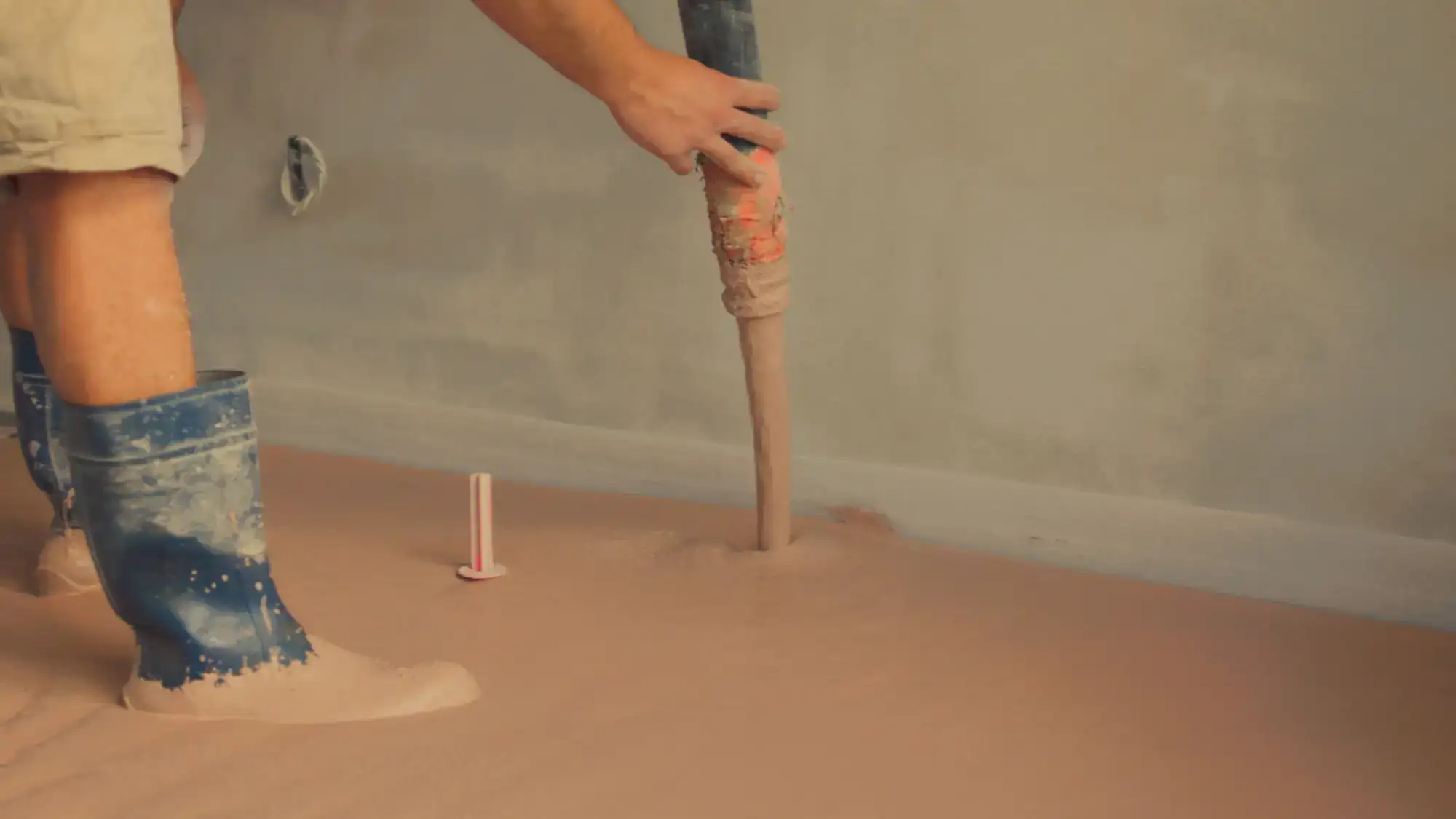
The first thing that happens on any job in Babylon is moisture testing and that’s not a formality. Using ASTM F2170 relative humidity testing and MVER testing, the slab gets evaluated before anything else. Given the water table conditions throughout the town’s south shore hamlets and the village itself, this step has prevented more floor failures than any other single part of the process. If moisture vapor emission is above acceptable limits and you pour over it anyway, the floor will fail. Testing tells you exactly what you’re working with.
Once the slab is assessed, surface preparation comes next. That means grinding, repairing cracks, addressing any structural issues in the concrete, and priming the surface so the self leveling material bonds properly. Skipping or rushing prep is the most common reason self leveling jobs fail the material needs a clean, sound surface to flow into and adhere to. This step takes as long as it takes, and it doesn’t get cut short.
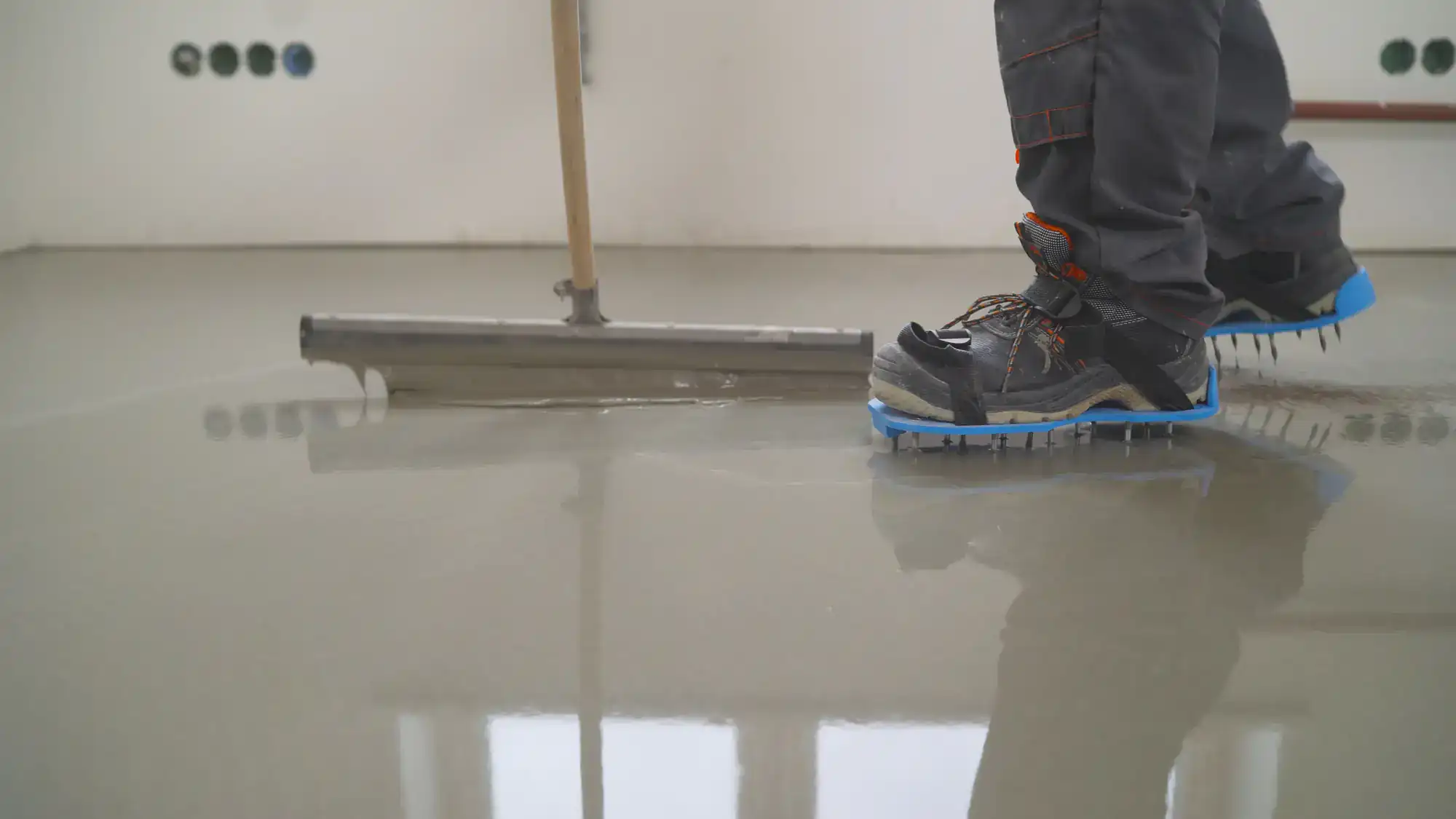
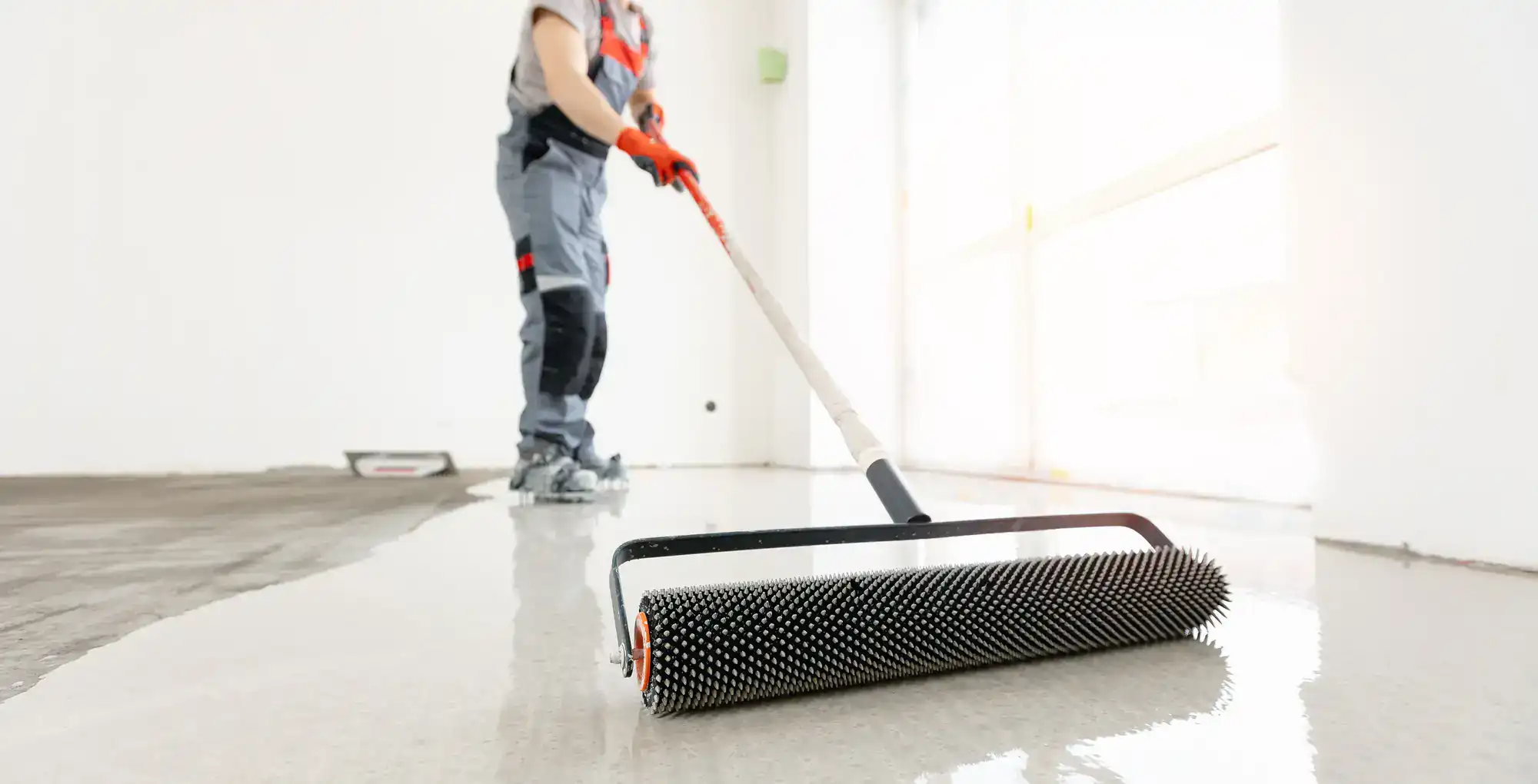
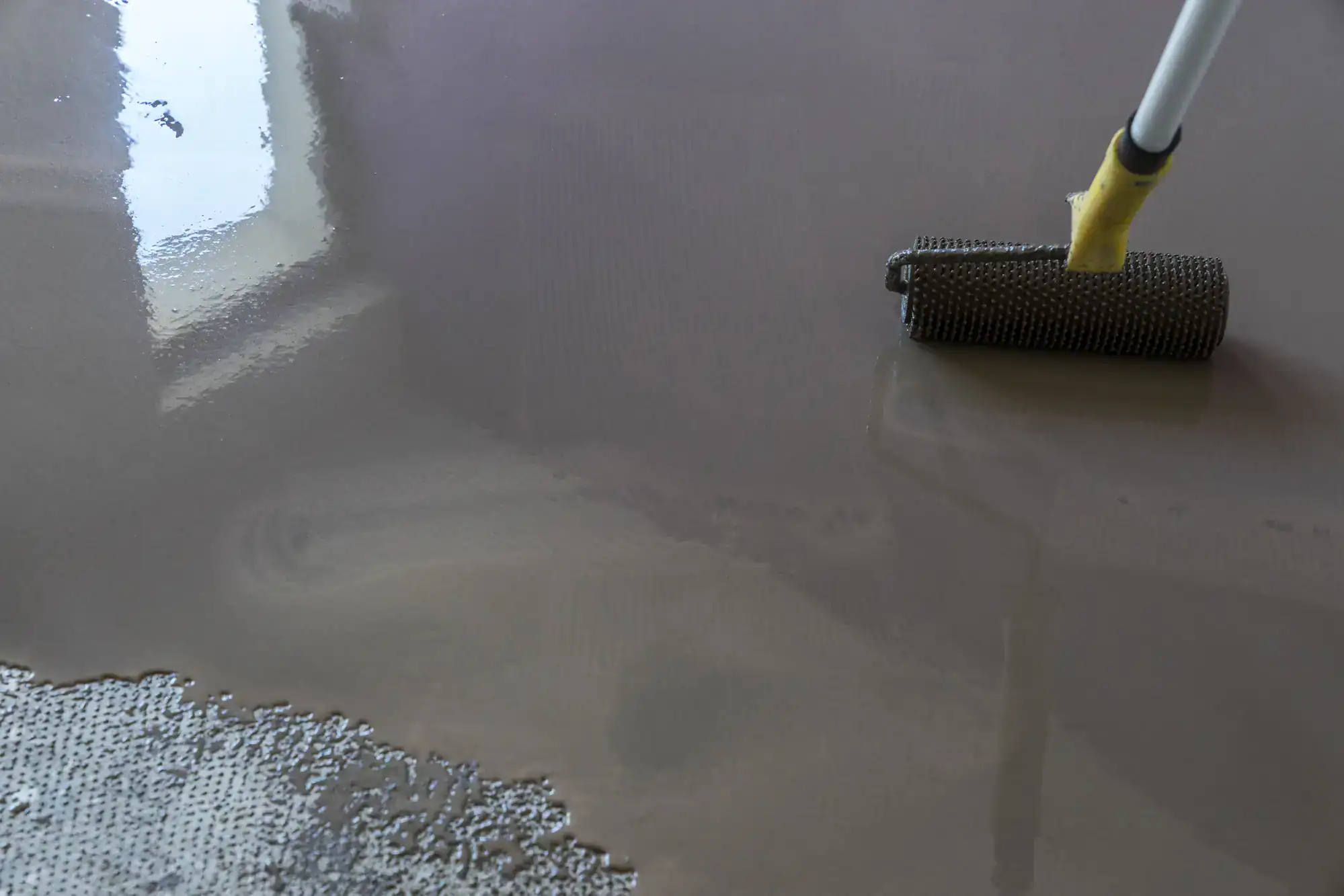
Then the pour happens. The self leveling underlayment we use is a high-strength, polymer-modified, cementitious system not a consumer-grade bag mix. It can be installed from a quarter inch up to five inches in a single pour, which covers the full range of what Babylon slabs typically need. Foot traffic is generally possible within four to six hours. Heavy commercial use is typically ready within 24 to 48 hours. For a restaurant on the Route 109 corridor or a homeowner catching the LIRR the next morning, that turnaround matters. The Village Building Department enforces NYS Building Code compliance on all construction and alteration work, and the process accounts for any permit coordination your project may require.
Ready to get started?
Self leveling in Babylon, NY isn’t a one-size situation. A 1950s ranch home in West Babylon with a slab that’s settled unevenly over 65 years needs something different than a commercial kitchen on Deer Park Avenue being renovated for a new restaurant tenant. We match the system to what the floor actually needs not what’s fastest or cheapest to install.
For residential projects, the most common scenario is subfloor leveling before new tile, luxury vinyl plank, or engineered hardwood goes down. Modern floor coverings especially large-format tile and wider-plank vinyl are unforgiving of even minor unevenness. A quarter-inch dip that wasn’t a problem under old linoleum becomes a cracked tile or a buckled seam under a new installation. The self leveling underlayment creates a genuinely flat surface across the full area, not just a spot repair.
For commercial floor leveling solutions in Babylon, NY restaurants, retail spaces, medical offices, light industrial facilities along the Sunrise Highway and Route 109 corridors the requirements go further. We install high-strength systems that can handle heavy traffic, forklift loads, or the specific demands of a commercial kitchen environment. Moisture mitigation is often included for older commercial buildings near the bay where vapor emission is a documented issue. Our full service covers moisture testing, concrete prep, self leveling underlayment, and final coating or covering one contractor, one scope, one point of accountability.
It does, and it’s one of the most important things to address before any pour happens. Babylon Village sits at roughly seven feet above sea level with the Great South Bay directly to the south. The water table throughout the town’s south shore hamlets is genuinely high moisture wicks upward through concrete slabs on a regular basis, not just after heavy rain events. If that moisture vapor isn’t tested and accounted for before the self leveling underlayment goes down, the system will eventually delaminate from the slab.
The fix isn’t complicated, but it requires the right first step: ASTM F2170 relative humidity testing and MVER testing before anything gets poured. If vapor emission rates are above the product’s acceptable threshold, a moisture mitigation layer gets applied first. That adds a step, but it’s the step that determines whether the floor lasts five years or twenty. Any contractor skipping that test in a coastal south shore community like Babylon is taking a shortcut that the homeowner or business owner ends up paying for.
The short answer: foot traffic in four to six hours, full commercial use in 24 to 48 hours. That’s the general window for the high-strength, polymer-modified cementitious systems we use on professional installations not the consumer-grade bag mixes you’d find at a home improvement store, which behave differently and aren’t appropriate for most of the applications you’d encounter in Babylon.
A few things affect that timeline. Ambient temperature and humidity both play a role in how the material cures, and in Babylon’s coastal environment, summer humidity from the Great South Bay can be a factor especially overnight when temperatures drop and a cool slab meets warm humid air. We account for that on every job. For commercial projects on the Route 109 corridor or in Babylon Village’s downtown, the 24-to-48-hour heavy-use window is usually the more relevant number and most jobs can be scheduled to minimize the disruption to your operation.
Yes but the cracks need to be addressed first, not buried. Self leveling underlayment is not a crack repair product. If there are active cracks in the existing slab, those get filled and stabilized during the surface preparation phase before anything gets poured. If you pour self leveling material directly over an unrepaired crack, that crack can telegraph through the new surface over time especially in an environment like Babylon’s, where freeze-thaw cycling and moisture movement continue to stress the slab seasonally.
What self leveling concrete does exceptionally well is correct unevenness across a large area the kind of gradual settling, low spots, and surface deterioration that’s extremely common in the post-war concrete slabs throughout the Town of Babylon. Homes built during the town’s rapid expansion in the 1950s and 1960s have slabs that are now six to seven decades old. The concrete itself is often still structurally sound, just uneven and worn. Self leveling underlayment brings that surface back to flat, from a quarter inch up to five inches deep in a single pour.
Concrete patching is a spot fix you fill a hole, repair a crack, address a specific damaged area. It’s useful for what it is, but it doesn’t give you a flat surface across the whole floor. Self leveling underlayment is a flow-applied system that spreads across the entire area, finds the low spots, and creates a consistently flat plane from wall to wall. That’s the difference between fixing a problem in one place and actually preparing the floor for what goes on top of it.
For anyone in Babylon planning to install large-format tile, luxury vinyl plank, or engineered hardwood, that distinction matters a lot. Tile manufacturers and flooring installers have flatness tolerances typically no more than three-sixteenths of an inch over a ten-foot span and if your slab doesn’t meet that, the finish floor installation either can’t proceed or won’t hold up. Patching individual low spots rarely gets you there. Self leveling concrete does.
The range is wide because the variables are wide. On the lower end, a straightforward residential project with minimal depth correction might run in the $750 to $1,500 range. Larger commercial spaces, deeper corrections, or projects that require moisture mitigation before the pour can push costs considerably higher $3,000 to $6,000 or more depending on square footage and scope.
A few things drive cost in the Babylon market specifically. Long Island labor rates are higher than national averages, and the cost of living index for Babylon runs around 151 compared to a national baseline of 100. That’s not unique to flooring it’s the reality of the market. What it means practically is that the cheapest bid you get is probably skipping something: moisture testing, proper surface prep, a quality product, or all three. In a coastal environment where moisture is a constant factor and many slabs are already compromised by age, those shortcuts tend to show up as callbacks within a year or two. Getting an accurate quote requires a site assessment square footage, depth of correction needed, current slab condition, and moisture levels all factor in.
In most cases, self leveling underlayment installed as subfloor preparation doesn’t independently require a permit it’s not a structural change to the building. But the broader project it’s part of often does. If you’re renovating a kitchen, finishing a basement, or doing a commercial buildout in Babylon Village, the renovation work itself typically requires a permit from either the Village of Babylon Building Department at (631) 669-1300 or the Town of Babylon Building Division at (631) 957-3058, depending on whether your property is within the incorporated village or the broader town.
For commercial projects specifically, the Village Building Department enforces NYS Building Code compliance on all construction and alteration work, and any commercial renovation including floor replacement in a restaurant or retail space generally falls under that requirement. The practical approach is to confirm permit requirements with the appropriate building department before work begins, and to work with a contractor who understands how self leveling fits into the broader project scope. Our full-service model covers the whole floor system, which makes coordinating that process straightforward rather than something you’re managing across multiple subcontractors.