
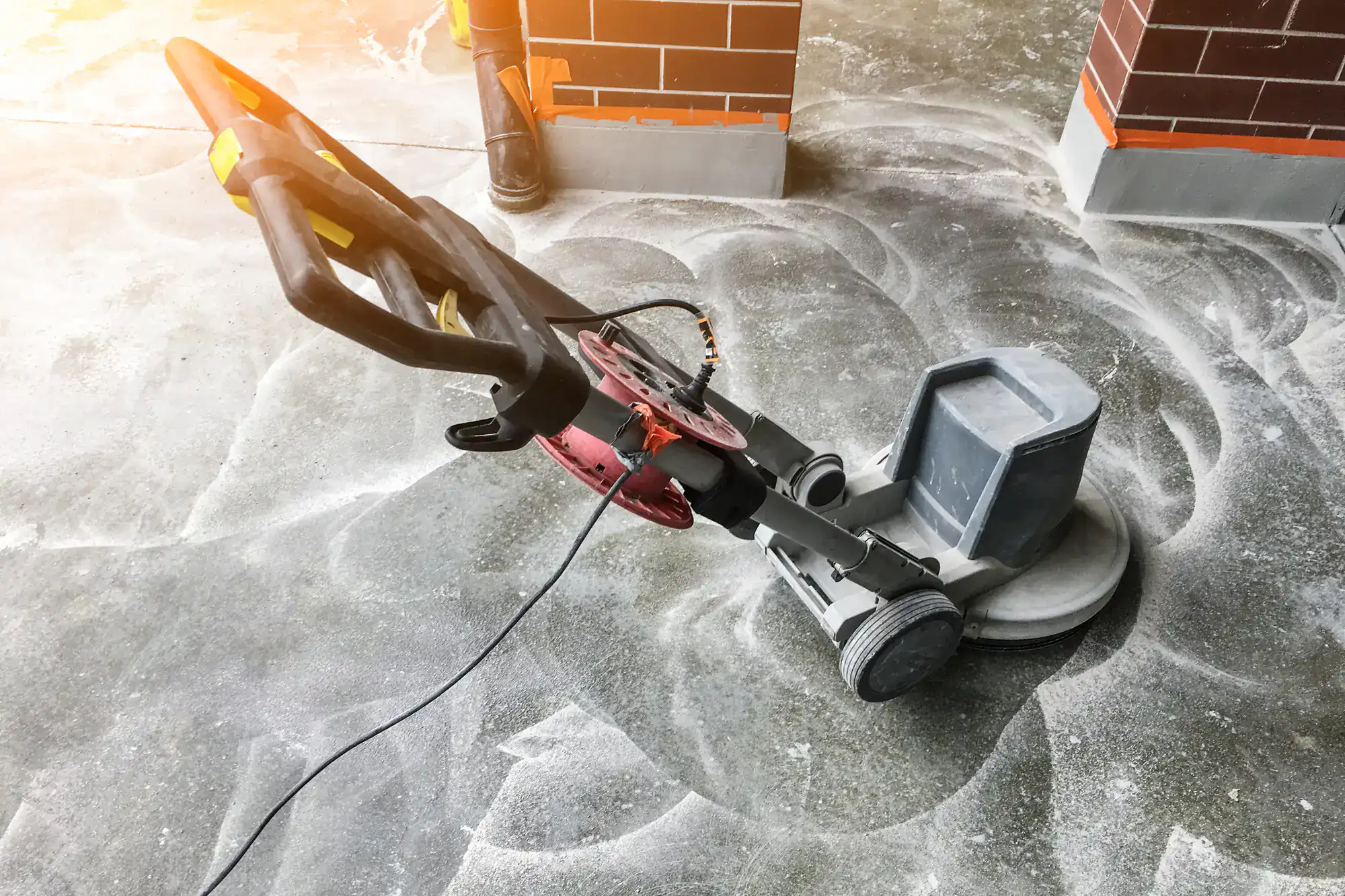
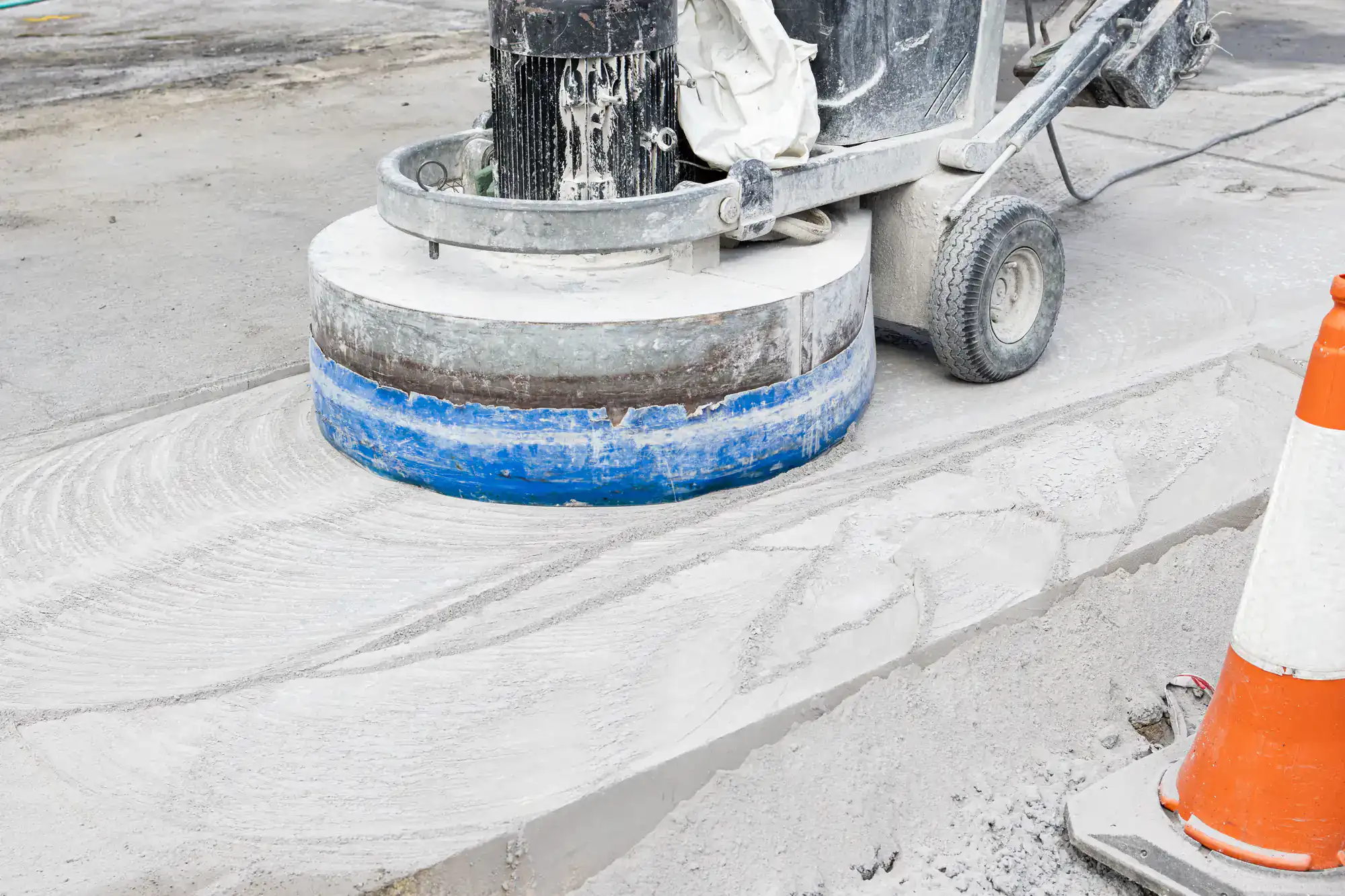
A polished concrete floor isn’t just a design choice it’s a long-term decision that affects how your space looks, performs, and holds up under real use. For commercial properties in East Hampton, that means a floor that can handle peak summer foot traffic on Newtown Lane, a full restaurant service in Amagansett, or a busy gallery opening at a Springs venue and still look exactly the same the next morning.
East Hampton’s coastal environment adds a layer of complexity that most contractors don’t account for. With nearly 47 inches of rain annually and persistent humidity off the Atlantic, concrete slabs here carry more moisture than slabs in inland Long Island communities. A properly densified floor accounts for that. The lithium silicate densifier reacts with the slab itself, hardening it from within and dramatically reducing how much moisture the surface can absorb. That’s not a finishing touch it’s what separates a floor that lasts a decade from one that hazes and dusts within 18 months.
Beyond durability, polished concrete reflects ambient light, reduces the need for additional lighting, and creates a clean, seamless surface that’s easy to maintain a real advantage in commercial kitchens, retail floors, and hospitality spaces where health department compliance and daily cleaning are non-negotiable. In a market where your floor is part of your brand, the finish class matters. We deliver Class 3 and Class 4 finishes the semi-polished to highly polished range that match the visual standard East Hampton’s commercial spaces are built around.
Danny Harmer has been doing this work by hand for over 40 years. Not managing crews from an office actually on the job, assessing slabs, running diamond tooling, and making the technical calls that determine whether a floor holds up or falls apart. That kind of experience doesn’t come from a training course. It comes from decades of real work on real floors across Long Island, including the coastal conditions, older building stock, and variable slab environments that define properties throughout East Hampton and the surrounding East End.
We hold a Sherwin-Williams High Performance Flooring certification and a Res Tech certification both manufacturer-issued credentials that verify technical competence, not just years in business. In 1996, we completed flooring work at the White House kitchen. If that standard was good enough for the most scrutinized commercial kitchen in the country, it’s more than enough for your space in East Hampton.
This isn’t a franchise. There’s no subcontracted crew showing up to your job. When you work with us, Danny is there and that accountability shows in the finished product.
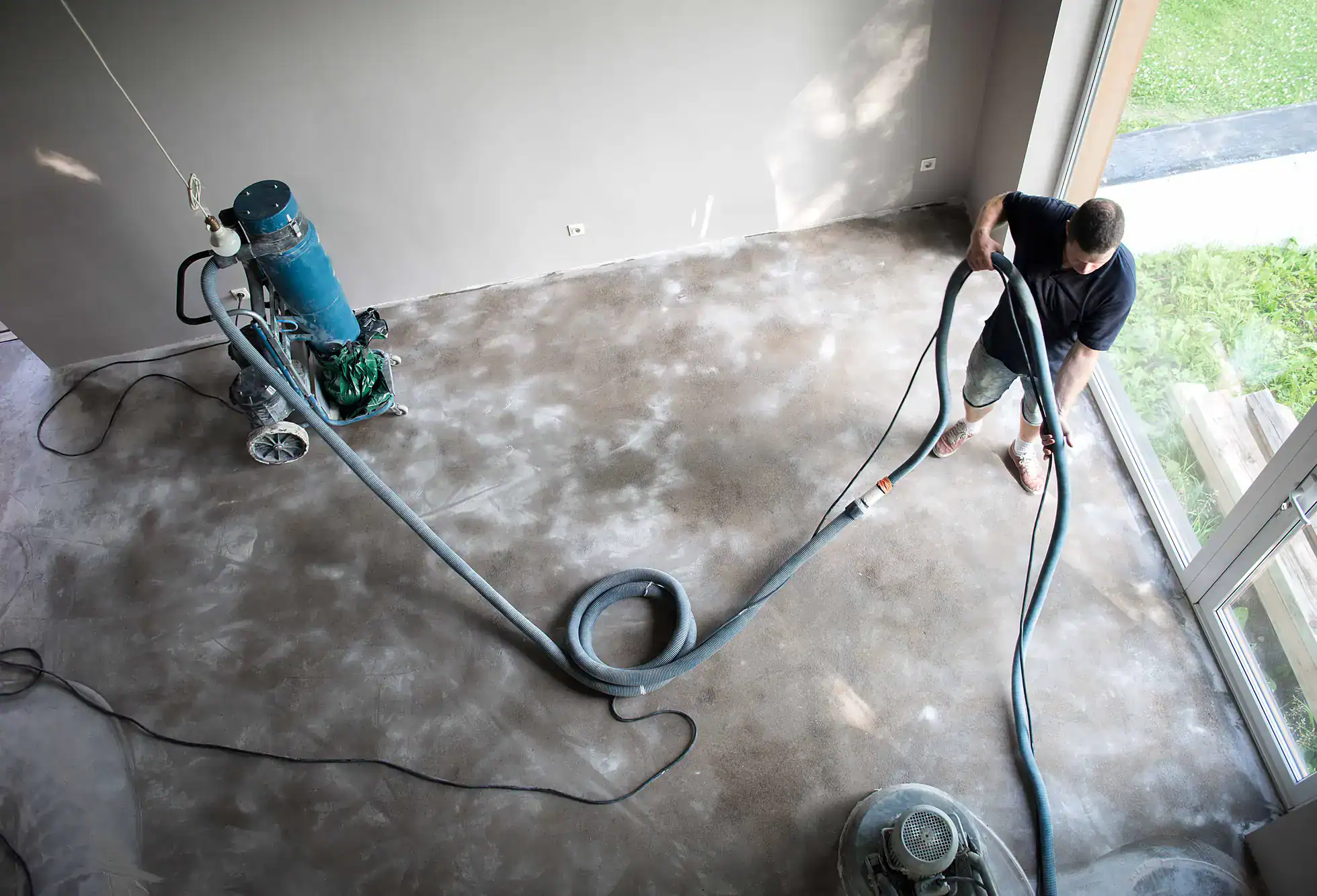
It starts with a real slab assessment not a quick look and a quote. In East Hampton, that assessment includes moisture testing, because coastal slabs behave differently than inland ones. High moisture vapor emission rates can compromise a densifier or sealer if they’re not accounted for upfront. That’s the kind of thing that gets skipped when a contractor doesn’t understand the chemistry, and it’s exactly why the assessment phase isn’t optional here.
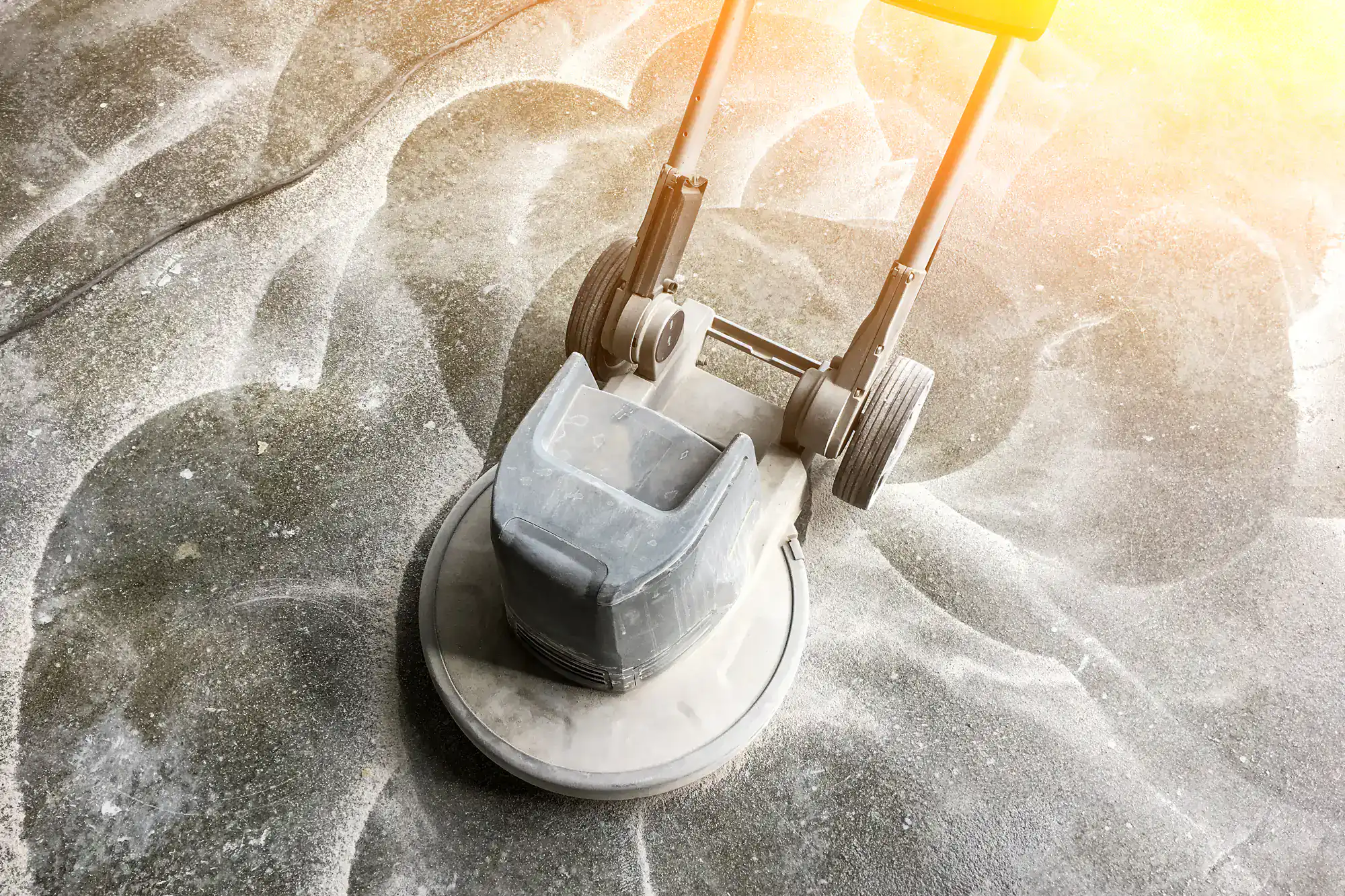
Once the slab is evaluated, the preparation work begins. That means grinding down to the right profile, removing any existing coatings, filling cracks with color-matched materials, and leveling uneven areas especially relevant in East Hampton’s older commercial buildings, where slab conditions can vary significantly from one section of a floor to the next. The grit progression then moves through a defined sequence, each pass refining the surface until the specified finish class is reached.
Densification happens mid-process, not as an afterthought. The sealer goes on last, selected specifically for the slab’s moisture profile and the demands of the space. For East Hampton commercial clients, timing matters too most projects are scheduled in the off-season window between October and April so the floor is fully cured and ready before the summer season opens. That’s not a suggestion; it’s how you protect your peak revenue window.
Ready to get started?
The commercial flooring needs across East Hampton aren’t one-size-fits-all. A luxury retail space on Newtown Lane has different finish requirements than a working kitchen in Montauk or a gallery in Springs. We work across all of them retail showroom concrete finishes, high gloss polished concrete for hospitality environments, industrial concrete polishing services for commercial facilities in Wainscott and the broader East Hampton area, and densified floors built to handle the specific demands of each space.
Every project includes a full slab assessment, preparation work appropriate to the condition of the floor, the correct densification chemistry for the slab’s moisture profile, and a finish class specified before work begins not estimated after the fact. The American Concrete Institute’s ACI 310.1-20 standard defines four finish classes measured in Gloss Units. Class 3 and Class 4 finishes are the standard for East Hampton’s luxury commercial market, and that’s what we deliver here.
Work in East Hampton Town is governed by the building departments for both the Town and the Village, and contractors may work from 7 a.m. to 8:30 p.m. seven days a week. For commercial clients in occupied buildings or multi-tenant properties, we work within those hours in a way that minimizes disruption to neighboring tenants and keeps the project on schedule. Because in this market, showing up on Memorial Day weekend with an unfinished floor isn’t an option.
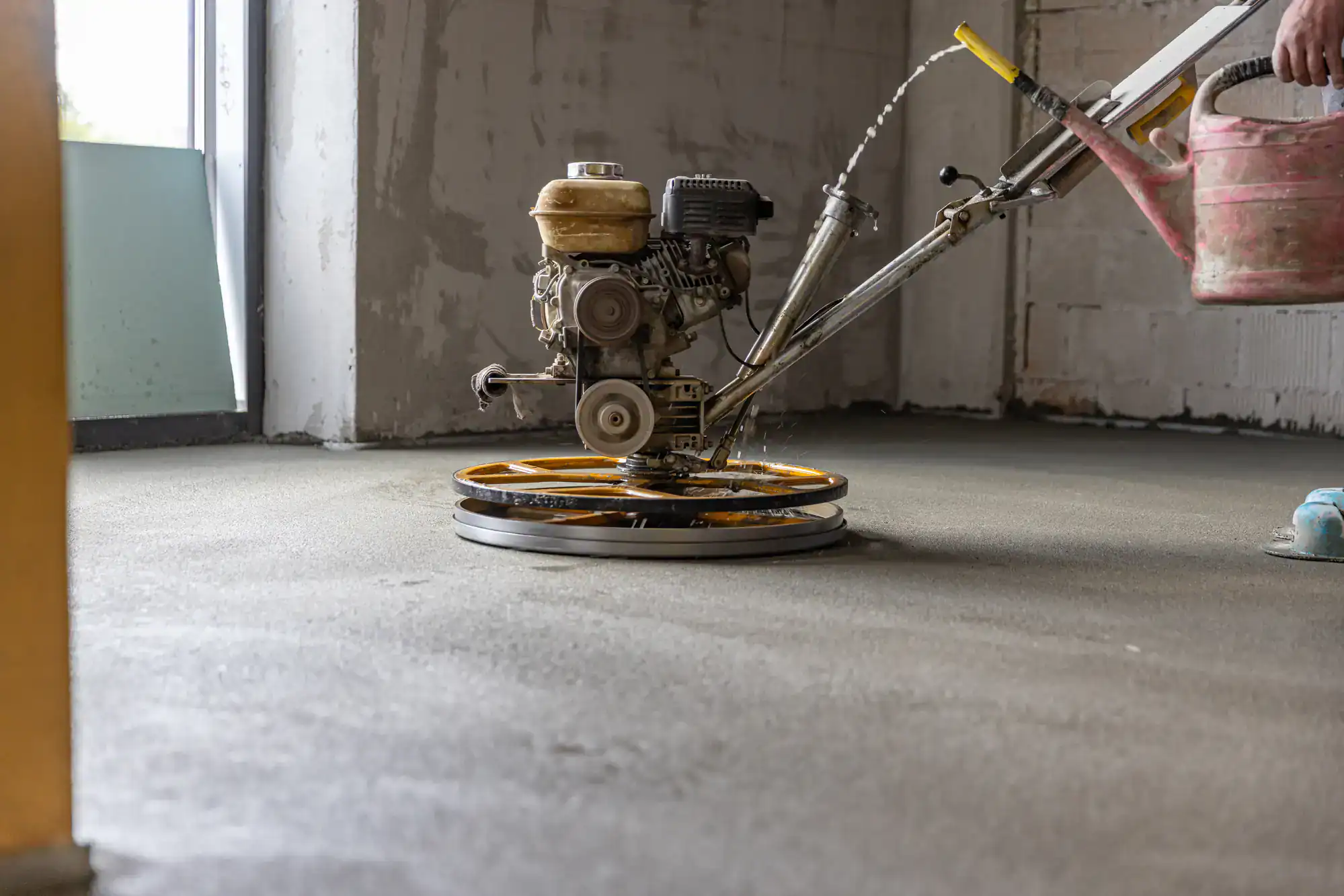
Yes and this comes up often on the East End, where a significant portion of the commercial building stock includes older structures with slabs that have been around for decades. The assumption that an old or worn slab can’t be polished is usually wrong. What it actually means is that the slab needs more preparation before polishing can begin.
That preparation might include grinding off old coatings or adhesive residue, filling cracks with color-matched epoxy or cementitious filler, and leveling uneven sections that have shifted over time. None of that disqualifies a floor it just defines the scope of work. After 40 years of working on Long Island slabs, Danny Harmer has successfully polished floors that other contractors walked away from. The assessment process is what determines what’s possible, and that conversation starts before any work is quoted.
It affects it more than most people realize, and it’s one of the most common oversights when a contractor isn’t familiar with coastal conditions. East Hampton receives close to 47 inches of rain annually, and the combination of Atlantic humidity, seasonal water table changes, and salt air means concrete slabs here tend to hold more moisture than slabs in inland communities. If that moisture isn’t accounted for before densification and sealing, the floor can bubble, haze, or delaminate within months of installation.
The fix isn’t complicated but it requires actually doing the work. Moisture vapor emission rate testing is part of the assessment process on every project we take on in East Hampton. The densifier and sealer are then selected based on what the slab’s moisture profile actually calls for, not just what’s easiest to apply. That step is what gives a polished concrete floor in East Hampton the same lifespan as one installed anywhere else.
For most commercial spaces in East Hampton restaurants, boutiques, hospitality venues, galleries a Class 3 or Class 4 finish is the right range. The American Concrete Institute’s ACI 310.1-20 standard defines these as semi-polished (36–60 Gloss Units) and highly polished (61+ Gloss Units). Class 3 is the most common choice for dining environments because it delivers strong visual impact while maintaining the slip resistance needed for a working floor. Class 4 is typically specified for retail showroom floors and lobby spaces where the aesthetic standard is the primary driver.
The finish class gets locked in before work begins not estimated or adjusted after the fact. For East Hampton’s luxury commercial market, where the floor is as much a design element as a functional surface, that specificity matters. If you’re working with an interior designer who has a particular finish in mind, that specification can be matched to the ACI standard and delivered consistently.
Project timelines vary based on square footage, slab condition, and the finish class being specified. A straightforward commercial floor in good condition can typically be completed in two to four days. A floor that requires more extensive preparation crack filling, coating removal, leveling will take longer, and that scope is determined during the slab assessment before any timeline is committed to.
For East Hampton commercial operators, the timing question is really about the seasonal calendar. The businesses here restaurants, boutiques, hotels generate the bulk of their annual revenue between Memorial Day and Labor Day. That means flooring projects need to be planned and completed in the off-season window, roughly October through April. Scheduling in that window gives the floor adequate cure time and ensures the space is fully operational before the summer season opens. If you’re planning a renovation or build-out for next season, the earlier you get on the schedule, the better that window fills up.
It’s one of the best options available for that environment, and here’s why. A properly densified concrete floor is seamless, which means there are no grout lines, no seams, and no places for food, grease, or bacteria to accumulate a real advantage when health department compliance is part of the equation. The surface is resistant to the oils, acids, and cleaning chemicals used in commercial kitchens, and it holds up under the kind of constant foot traffic that Hamptons hospitality spaces see during peak season.
The slip resistance question comes up often in restaurant environments. A Class 3 polished finish meets OSHA’s 0.5 coefficient of friction standard for commercial floors, which covers both front-of-house and kitchen areas when the appropriate sealer is applied. For hotel lobbies and common areas, a Class 4 finish can be specified with a matte-sheen sealer that maintains the visual standard without compromising traction. The finish class and sealer are specified together based on how the space is actually used.
For commercial polished concrete in the Northeast, typical pricing runs from roughly $3 to $12 per square foot depending on finish class, slab condition, and total square footage. In East Hampton’s luxury commercial market, most projects fall in the $7 to $12 range Class 3 and Class 4 finishes on commercial slabs that often require thorough preparation given the age and condition of buildings throughout the town and its hamlets.
What affects cost most is slab condition. A new construction slab in a Montauk build-out requires less preparation than a decades-old floor in a historic East Hampton Village commercial building that needs coating removal, crack repair, and leveling before polishing can begin. That’s why the assessment comes before the quote so the number you get reflects what the job actually requires, not a lowball figure that grows once work starts. The goal is a floor that performs for 15 to 20 years under real commercial use. In a market like East Hampton, where remediation costs and lost business during re-work are both extremely high, the upfront investment in doing it right the first time is the more economical choice.