
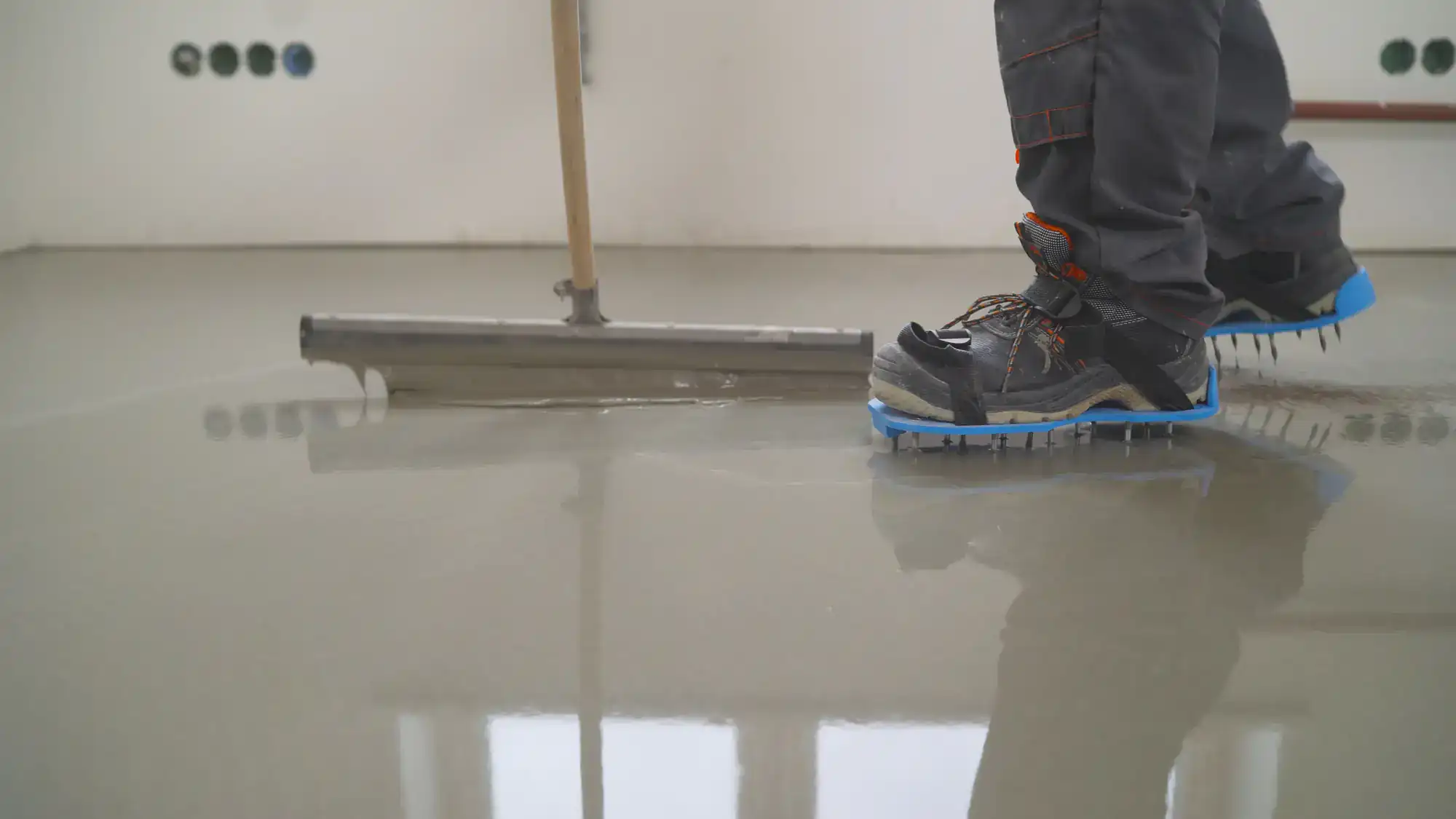
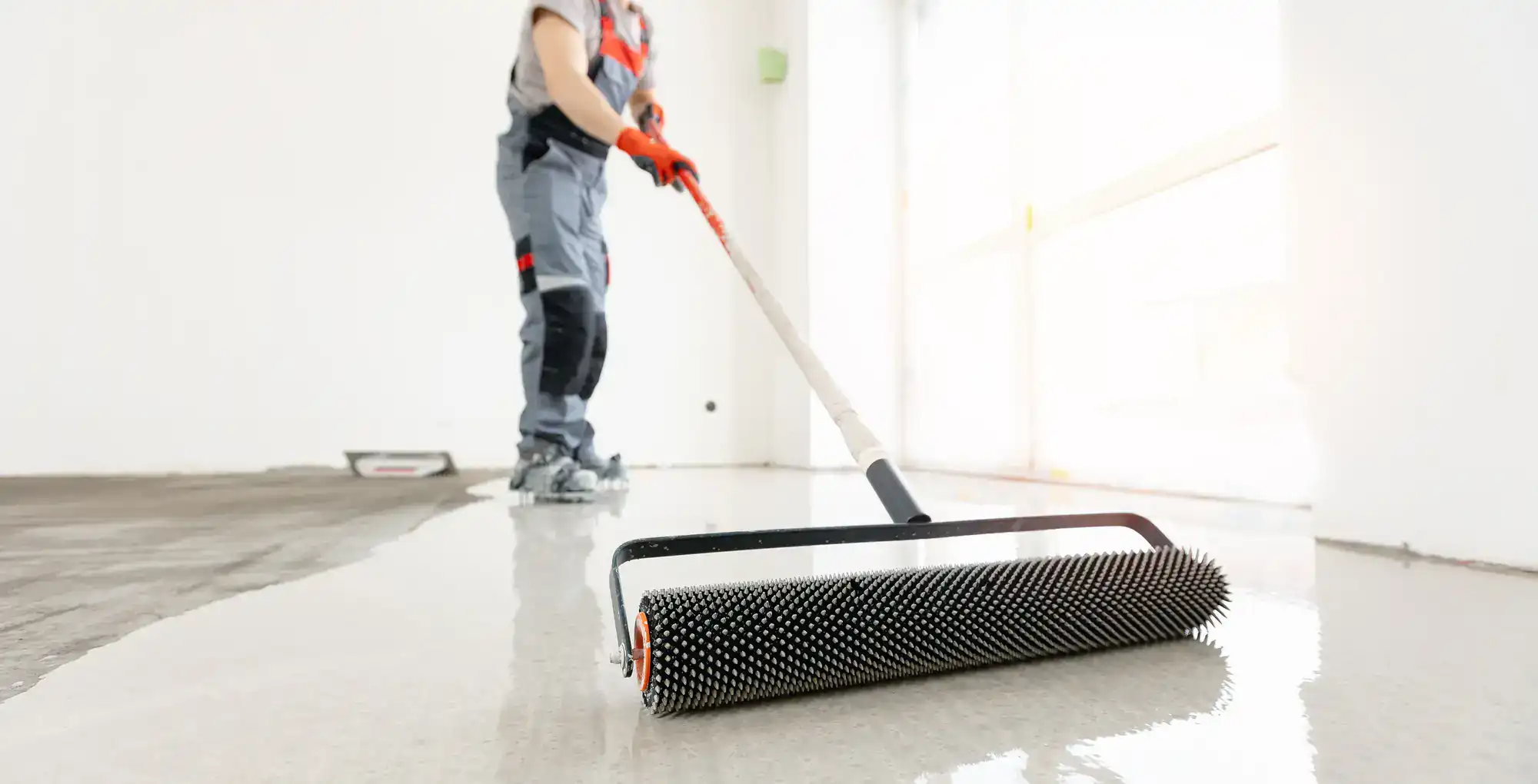
The renovation window in East Hampton is tight. Whether you’re prepping a Wainscott estate before Memorial Day or finishing a Montauk restaurant before the summer rush, you don’t have room for a pour that cracks, delaminates, or telegraphs unevenness through your finished floor. You need it done right the first time and fast enough to stay on schedule.
East Hampton’s coastal position changes the stakes on self leveling in ways that inland jobs simply don’t face. With the Atlantic to the south, Gardiners Bay to the north, and the water table doing what it does on the South Fork, vapor transmission through older concrete slabs is a real and persistent condition here. A self leveling underlayment poured without proper moisture testing in this environment isn’t a floor it’s a liability waiting to surface mid-season.
What you get when the job is done correctly is a subfloor that performs the way the finish material above it requires. Large-format porcelain, wide-plank hardwood, polished concrete, seamless epoxy all of them demand a flatter, more consistent base than most slabs in older East Hampton homes and converted Montauk commercial spaces actually have. Getting that base right means your finish floor stays flat, your grout lines stay clean, and you’re not having that conversation with your GC six months from now.
We’ve been installing floors across Long Island for over 30 years, operating out of Bohemia and covering the full East End from Sag Harbor and Springs all the way out to Montauk. Our president, Danny Harmer, has more than 40 years of personal installation experience. He’s installed floors in the White House kitchen, across the United States, in the Bahamas, and internationally. The credentials aren’t a marketing angle they’re the reason we get called for jobs where failure isn’t an option.
Our crew is OSHA 40 certified, factory-trained in advanced resinous and cementitious systems, and most of them have been with us for over a decade. In a market like East Hampton, where seasonal labor turnover is the norm and too many contractors show up once and disappear, that kind of stability matters. You’re not getting a different crew every time you’re getting people who’ve seen what coastal slabs do and know exactly how to handle them.
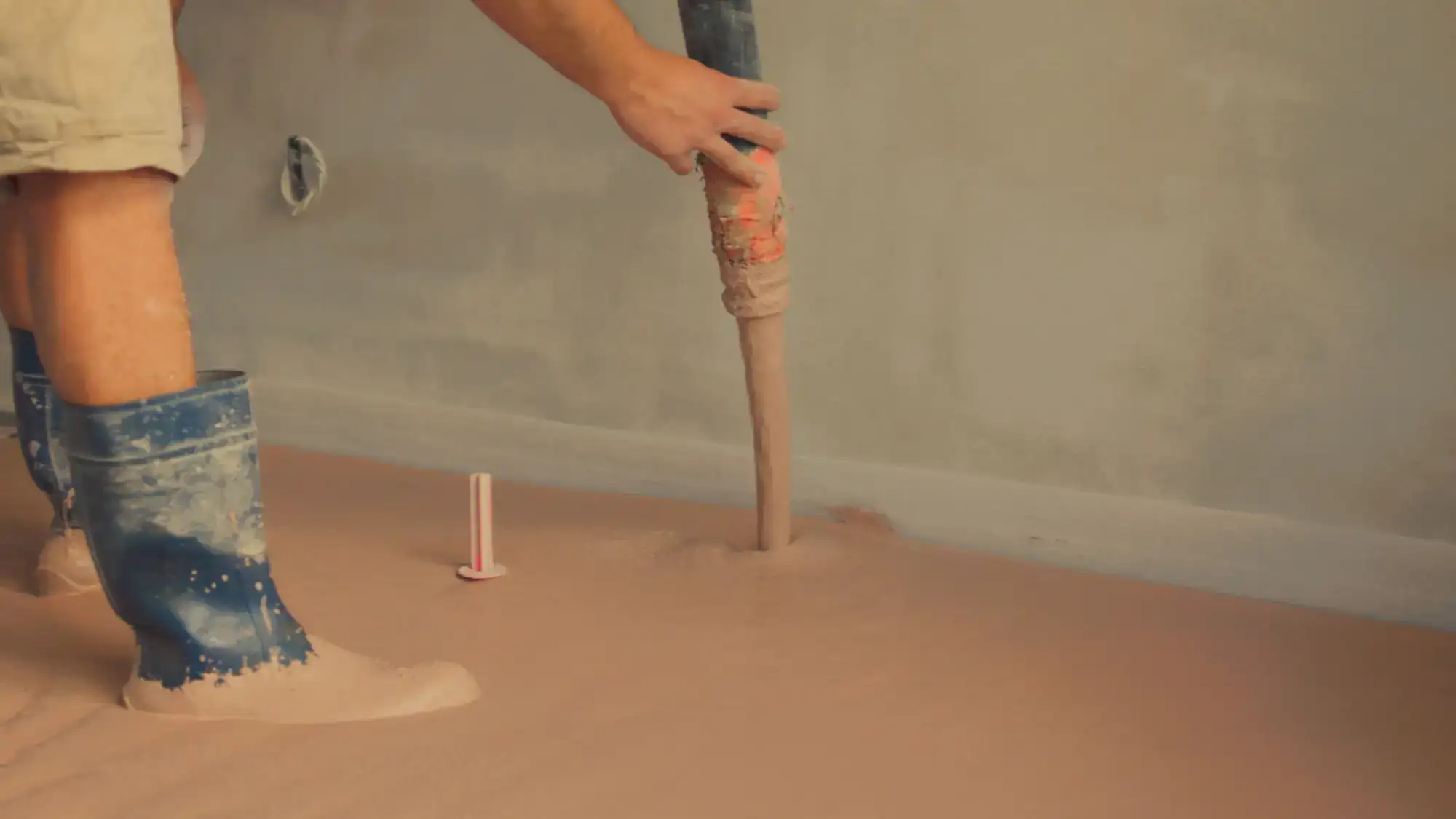
The first thing that happens on any self leveling job in East Hampton isn’t mixing compound it’s reading the slab. That means moisture testing to ASTM F2170 standards, checking relative humidity levels, and assessing the vapor emission rate before a single bag gets opened. On the South Fork, where older homes in Springs or Amagansett may have slabs that have been absorbing coastal humidity for decades, skipping this step is how you end up with a delaminated floor and a callback no one wants.
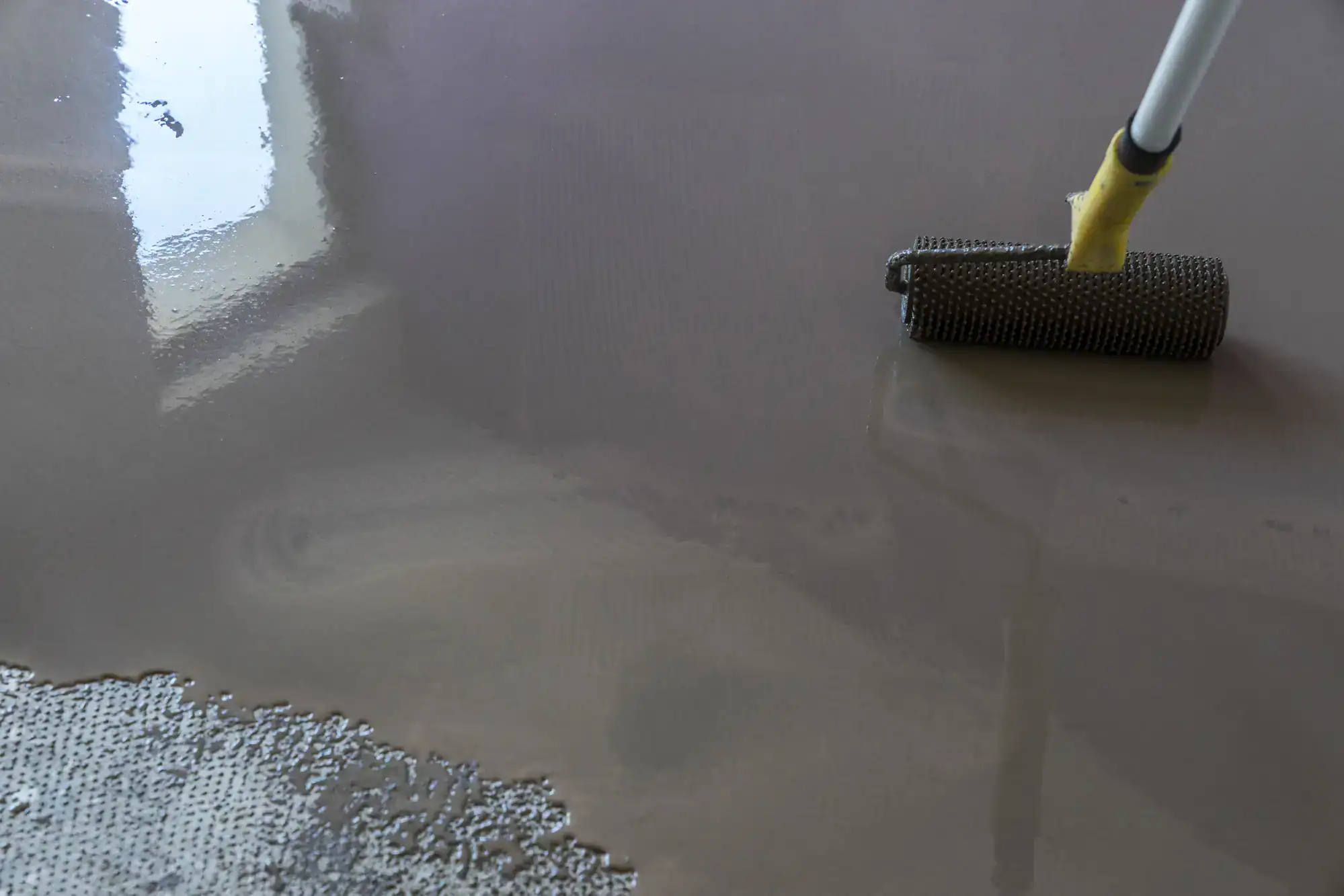
Once the slab is assessed, the surface gets prepared grinding, patching, and priming as needed to give the underlayment something to bond to properly. The self leveling compound we use is a high-strength, polymer-modified cementitious material with low shrinkage and long working time. It can be installed from a quarter inch to over two inches neat, and up to five inches with aggregate which matters in older East Hampton properties where decades of freeze-thaw cycling have produced significant surface variation.
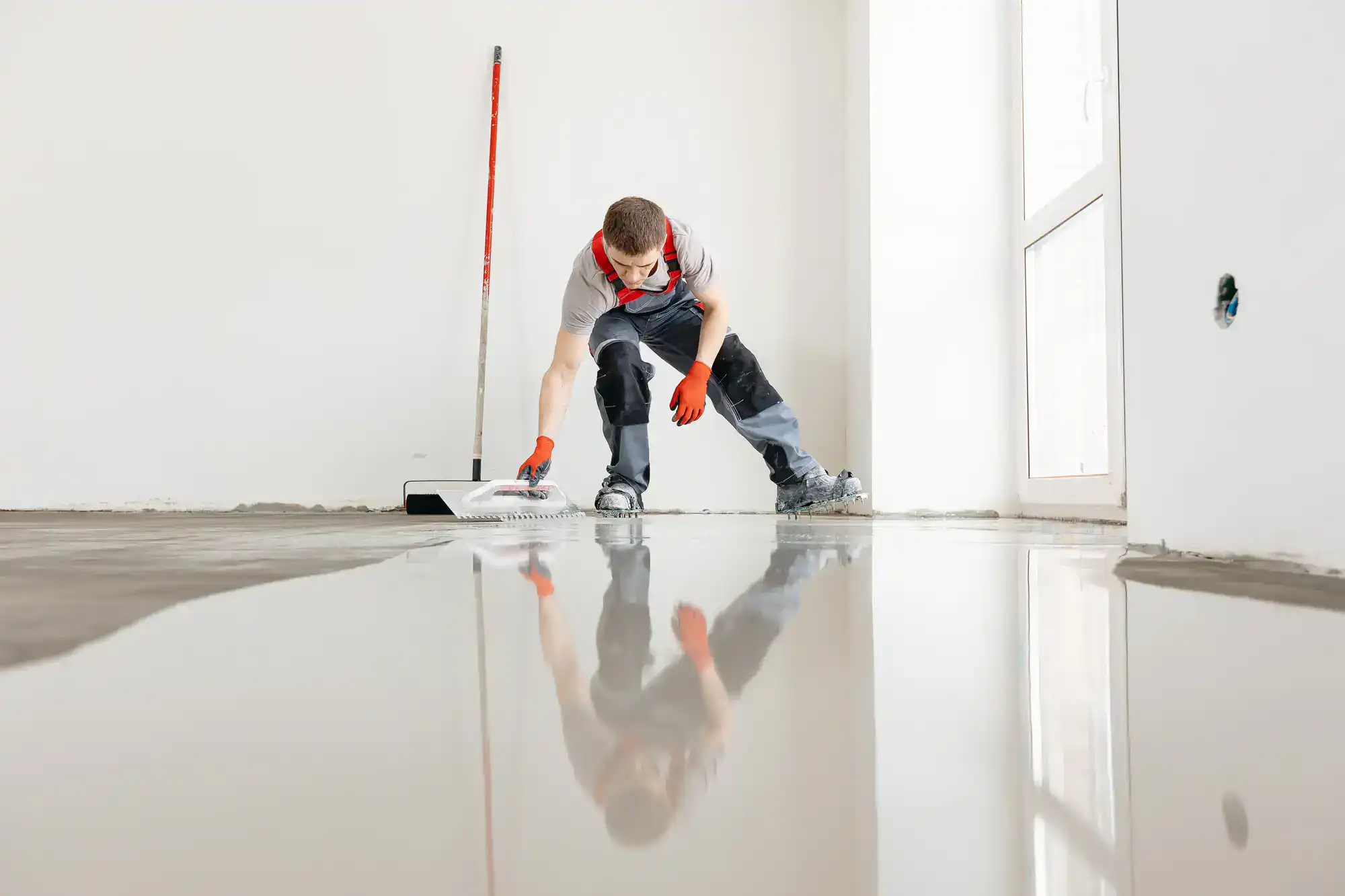
After the pour, the material self-levels by design, filling low spots and producing a flat, consistent surface. Foot traffic is typically possible within four to six hours. Heavy commercial use in 24 to 48 hours. That turnaround is built into the product specification not a shortcut. For a property owner working against a pre-Memorial Day renovation deadline, that cure window is a real scheduling asset, not a talking point.
Ready to get started?
Self leveling isn’t a one-size pour. The product, thickness, and compressive strength all need to match what’s going on top and in East Hampton’s renovation market, that means accounting for large-format porcelain slabs, wide-plank hardwood, polished concrete, and seamless epoxy systems that have near-zero tolerance for subfloor deviation. Specifying the wrong underlayment for the finish material above it is one of the most common and expensive mistakes in high-end residential renovation.
For commercial work restaurant dining rooms in East Hampton Village, hotel lobbies in Montauk, event venues completing off-season renovations the requirements shift again. Commercial kitchens need cementitious urethane systems that handle thermal shock and chemical exposure. High-traffic hospitality floors need underlayment with the compressive strength to support the load without cracking over time. We are factory-trained in all of these systems, hold advanced certification in specialized coating applications, and carry OSHA 40 certification for every crew member on commercial job sites.
The Town of East Hampton requires licensed and insured contractors for permitted work, and the incorporated Village of East Hampton runs its own separate permit process with a typical two-to-four-week processing window. That’s a timeline factor worth knowing before your renovation schedule gets set. We handle our side of that process correctly so it doesn’t become a problem on yours.
Yes and it’s one of the most important factors to address before any pour on the South Fork. East Hampton sits between the Atlantic Ocean, Gardiners Bay, and Block Island Sound, which means virtually every property in the town exists in a persistent coastal moisture environment. That moisture doesn’t just affect basements it moves through concrete slabs as vapor, and if it’s not properly measured and accounted for before self leveling compound is applied, you’re looking at adhesion failure, delamination, and surface cracking down the line.
The right approach is ASTM F2170 in-situ relative humidity testing and moisture vapor emission rate (MVER) assessment before the pour. This tells you exactly what the slab is doing and whether it needs a moisture mitigation layer before the underlayment goes down. In older homes in Springs, Amagansett, or East Hampton Village where slabs may have been in place for 40 or 50 years this step isn’t optional. It’s the difference between a floor that lasts and one that fails before the next rental season.
The thickness depends on two things: how much correction the slab actually needs, and what the finish material requires in terms of flatness tolerance. Large-format porcelain the kind commonly used in East Hampton kitchen and bathroom renovations has a much tighter flatness requirement than standard 12-by-12 tile. The larger the tile, the more visible any subfloor deviation becomes, and the more likely you are to see lippage, cracking, or grout failure if the underlayment wasn’t specified correctly.
For minor corrections, a quarter-inch skim coat is often sufficient. For slabs with more significant settlement or surface variation which is common in older East Hampton Village homes and historic cottages that have gone through decades of freeze-thaw cycling the pour may need to go deeper. Our systems can be installed from a quarter inch to over two inches neat, and up to five inches with aggregate. The right depth gets determined during the site assessment, not assumed in advance.
It can, but the product selection matters a lot more in a commercial kitchen than in a residential setting. Standard cementitious self leveling underlayment isn’t designed to handle the thermal cycling, chemical exposure, and continuous wet conditions that a working commercial kitchen produces. For food service environments and Montauk and East Hampton Village have a dense concentration of high-volume restaurants and event venues the right system is typically a cementitious urethane underlayment, which is engineered specifically for those conditions.
We are factory-trained in cementitious urethane systems and have installed commercial kitchen floors across Long Island. OSHA 40 certification is required for most commercial job sites, and our full crew carries it. If you’re completing a kitchen renovation during the October-to-April off-season window and need to be open by Memorial Day, the product selection and cure timeline both need to be planned from the start not figured out on the fly once the old floor is already gone.
For most high-quality polymer-modified cementitious underlayments, foot traffic is possible within four to six hours of the pour. The finish floor tile, hardwood, epoxy, or other systems typically goes down after 24 hours, though some applications in heavy commercial environments may benefit from waiting the full 48 hours before introducing load.
That said, ambient temperature and substrate temperature both affect cure time, and this is a real consideration in East Hampton’s seasonal context. Unheated vacation homes in the off-season and a significant portion of East Hampton’s housing stock sits vacant for months at a time can have slab temperatures well below what’s appropriate for a self leveling pour. Pouring into a cold slab without proper temperature management produces a compromised result regardless of how good the product is. Part of what experienced installers bring to the job is the judgment to assess whether conditions are right before the pour starts, not after.
The most common causes of self leveling failure are over-watering the mix, skipping or rushing the priming step, ignoring moisture vapor emissions from the slab, and selecting a product that isn’t rated for the required thickness or application environment. These are contractor errors, not product failures and they happen most often when the crew doing the work doesn’t have the technical training to know what they’re doing or why.
In East Hampton specifically, moisture is the most frequently overlooked variable. A slab that tests high for vapor emission needs a mitigation layer before the underlayment goes down not a hope that it’ll be fine. Freeze-thaw cycling is another factor in older East Hampton properties: slabs that have expanded and contracted over decades develop micro-fractures that need to be properly addressed during surface prep before the pour. A thorough grinding and priming process before the self leveling compound is applied is what separates a floor that holds for 20 years from one that starts showing problems in the first winter.
For most older homes in East Hampton Village and the surrounding hamlets, yes self leveling underlayment is typically the most efficient and reliable way to correct subfloor irregularities before a finish floor installation. The historic homes and older cottages in this area, particularly in Springs and Amagansett, often have concrete slabs that have accumulated decades of settlement, surface wear, and moisture-related movement. Grinding and patching alone rarely produces the consistent flatness that modern finish materials require.
The key is matching the product to what the slab actually needs. A thorough site assessment checking for moisture, measuring the degree of correction required, evaluating the condition of the existing surface determines whether a standard skim coat is sufficient or whether a deeper pour with aggregate is the right call. The East Hampton Village Building Department and the Town Building Department both require licensed and insured contractors for permitted renovation work, so whoever is doing the underlayment needs to be properly credentialed. That’s a baseline requirement, not a differentiator but it’s worth confirming before you schedule the job.
Other Services we provide in East Hampton